
Internet Of Energy Market Report 2026
Global Outlook – By Component (Hardware, Software, Services), By Technology (Internet Of Things, Artificial Intelligence And Machine Learning, Big Data And Analytics, Cloud Computing, Edge Computing, Blockchain, Communication Technologies), By Deployment Mode (On-Premises, Cloud-Based), By Application (Smart Grid Management, Energy Distribution And Transmission Monitoring, Demand Response And Load Management, Renewable Energy Integration, Energy Storage Optimization, Electric Vehicle Charging Management, Predictive Maintenance), By End User (Utilities, Industrial, Commercial, Residential, Transportation) – Market Size, Trends, Strategies, and Forecast to 2030
Internet Of Energy Market Overview
• Internet Of Energy market size has reached to $175.67 billion in 2025 • Expected to grow to $379.99 billion in 2030 at a compound annual growth rate (CAGR) of 16.7% • Growth Driver: Surge In Iot Device Deployment Driving The Growth Of The Market Due To Increasing Demand For Real-Time Monitoring And Predictive Maintenance Across Industrial Operations • Market Trend: Focus On AI-Enabled Digital Energy Ecosystem Platforms For Real-Time, Integrated Management Of Distributed Energy Resources • North America was the largest region in 2025 and Europe is the fastest growing region.Market Gains By 2030 – Top Opportunities By Segment
Market Gain identifies the most promising market opportunities by highlighting the segments or products expected to generate the highest incremental revenue growth over the next five years.
What Is Covered Under Internet Of Energy Market?
The Internet of energy is a smart, connected energy system that uses digital technologies, IoT, and data networks to efficiently generate, distribute, and manage electricity. It enables two-way communication between energy producers and consumers, improving efficiency, reliability, and integration of renewable energy sources. The main components of Internet of Energy include hardware, software, and services. Hardware refers to physical devices and infrastructure such as smart meters, sensors, and connected energy devices that enable real-time monitoring and control of energy systems. They utilize technologies include Internet of Things, artificial intelligence and machine learning, big data and analytics, cloud computing, edge computing, blockchain, and communication technologies, they are different deployment modes include on-premises and cloud-based. The various applications involved are smart grid management, energy distribution and transmission monitoring, demand response and load management, renewable energy integration, energy storage optimization, electric vehicle charging management, and predictive maintenance, while the end-use includes utilities, industrial, commercial, residential, and transportation sectors.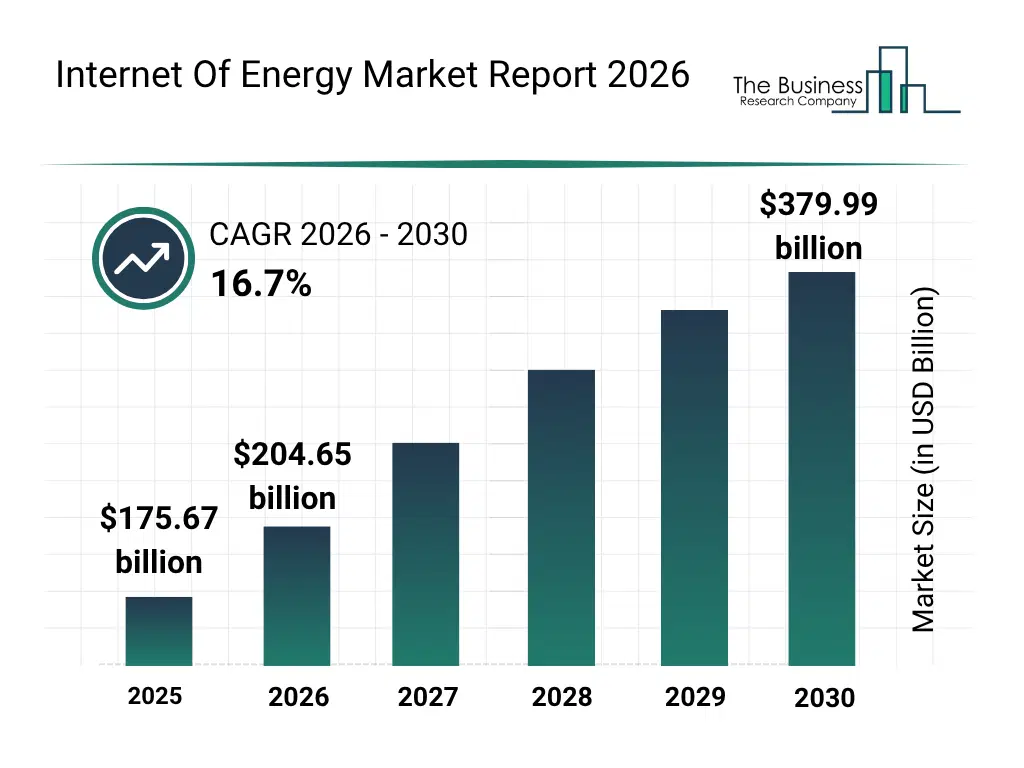
What Is The Internet Of Energy Market Size and Share 2026?
The internet of energy market size has grown rapidly in recent years.It will grow from $175.67 billion in 2025 to $204.65 billion in 2026 at a compound annual growth rate (CAGR) of 16.5%. The growth in the historic period can be attributed to rising broadband penetration demand, expansion of telecom networks, increasing mobile data consumption, early fiber deployment programs, growth in cloud and data center traffic.What Is The Internet Of Energy Market Growth Forecast?
The internet of energy market size is expected to see rapid growth in the next few years.It will grow to $379.99 billion by 2030 at a compound annual growth rate (CAGR) of 16.7%. The growth in the forecast period can be attributed to 5G infrastructure rollout acceleration, surge in iot-connected devices, government-led digital connectivity initiatives, increasing demand for low-latency applications, expansion of edge computing networks.Major trends in the forecast period include decentralized electricity generation networks, transactive energy trading platforms, virtual power plant aggregation models, peer-to-peer energy exchange systems, grid balancing and flexibility markets.
Global Internet Of Energy Market Segmentation
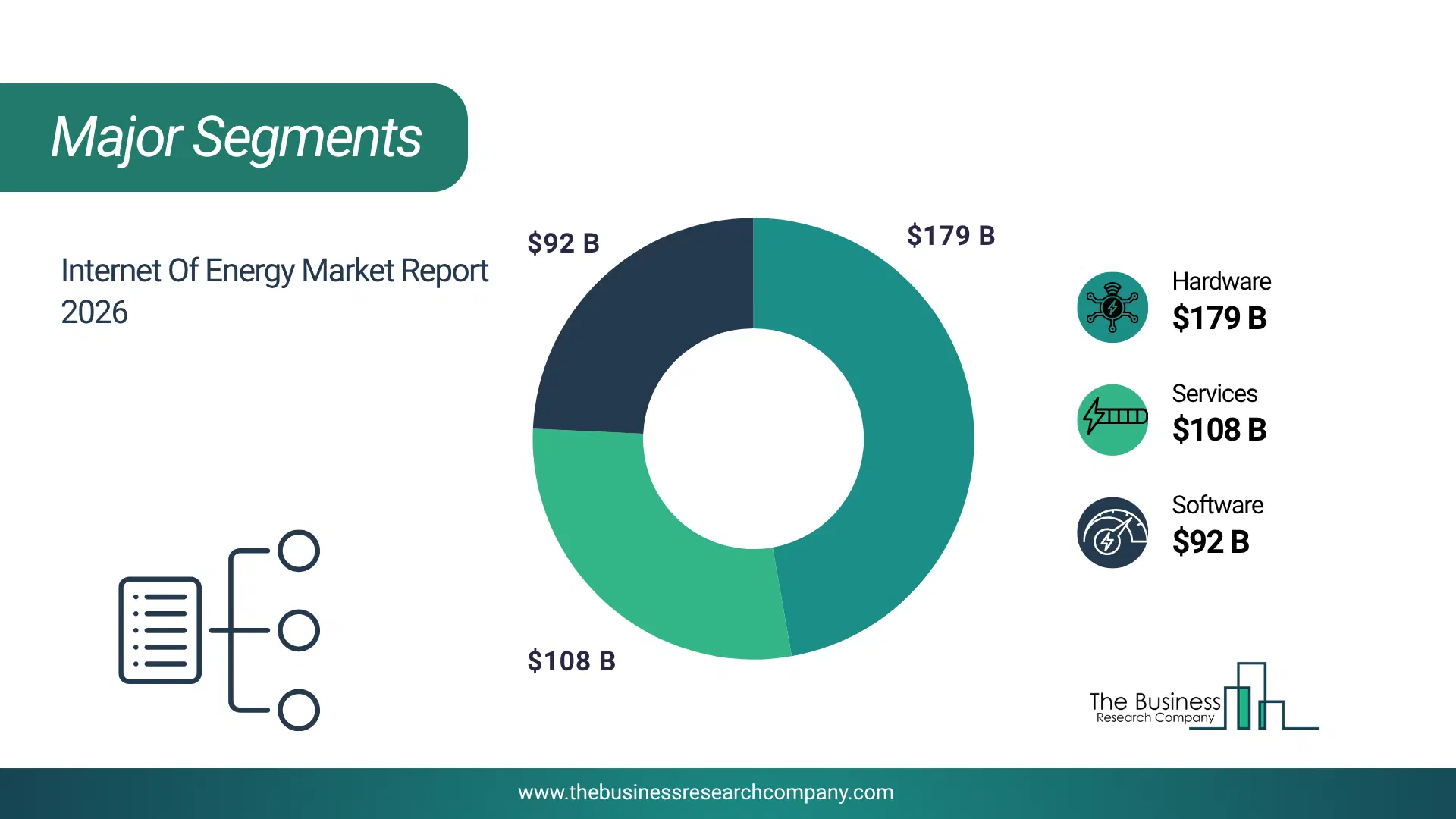
1) By Component: Hardware, Software, Services 2) By Technology: Internet Of Things, Artificial Intelligence And Machine Learning, Big Data And Analytics, Cloud Computing, Edge Computing, Blockchain, Communication Technologies 3) By Deployment Mode: On-Premises, Cloud-Based 4) By Application: Smart Grid Management, Energy Distribution And Transmission Monitoring, Demand Response And Load Management, Renewable Energy Integration, Energy Storage Optimization, Electric Vehicle Charging Management, Predictive Maintenance 5) By End User: Utilities, Industrial, Commercial, Residential, Transportation Subsegments: 1) By Hardware: Smart Grids Infrastructure, Energy Storage Systems, Edge Computing Devices 2) By Software: Energy Management Systems, Grid Management Software, Data Analytics And Artificial Intelligence Platforms 3) By Services: System Integration Services, Consulting And Advisory Services, Maintenance And Support Services The top segments in the internet of energy market will be: • Hardware will reach $179.36 Billion by 2030. • Services will reach $108.21 Billion by 2030. • Software will reach $92.41 Billion by 2030.What Is The Driver Of The Internet Of Energy Market?
The rising deployment of internet of things (IoT) devices is expected to propel the growth of the engineered pumps market going forward.IoT devices are physical objects embedded with sensors and internet connectivity that collect, exchange, and act on data automatically.The number of internet of things (IoT) devices is increasing mainly due to rising demand for automation, as connected devices enable real-time monitoring and control that improves efficiency and reduces human effort across homes, industries, and cities.The rapid deployment of IoT devices necessitates the demand for the Internet of energy as it requires a digitally interconnected energy management ecosystem based on smart grid principles to efficiently monitor, balance, and dynamically distribute electricity in real time as millions of devices generate fluctuating and decentralized energy consumption patterns.For instance, in July 2025, the European Commission, a Belgium-based governing body, reported that in 2023, the number of installed IoT-connected devices was around 40 billion and is projected to grow to 49 billion by 2026, representing an annual growth rate of 7%.Therefore, the rising deployment of IoT devices is driving the growth of the engineered pumps market.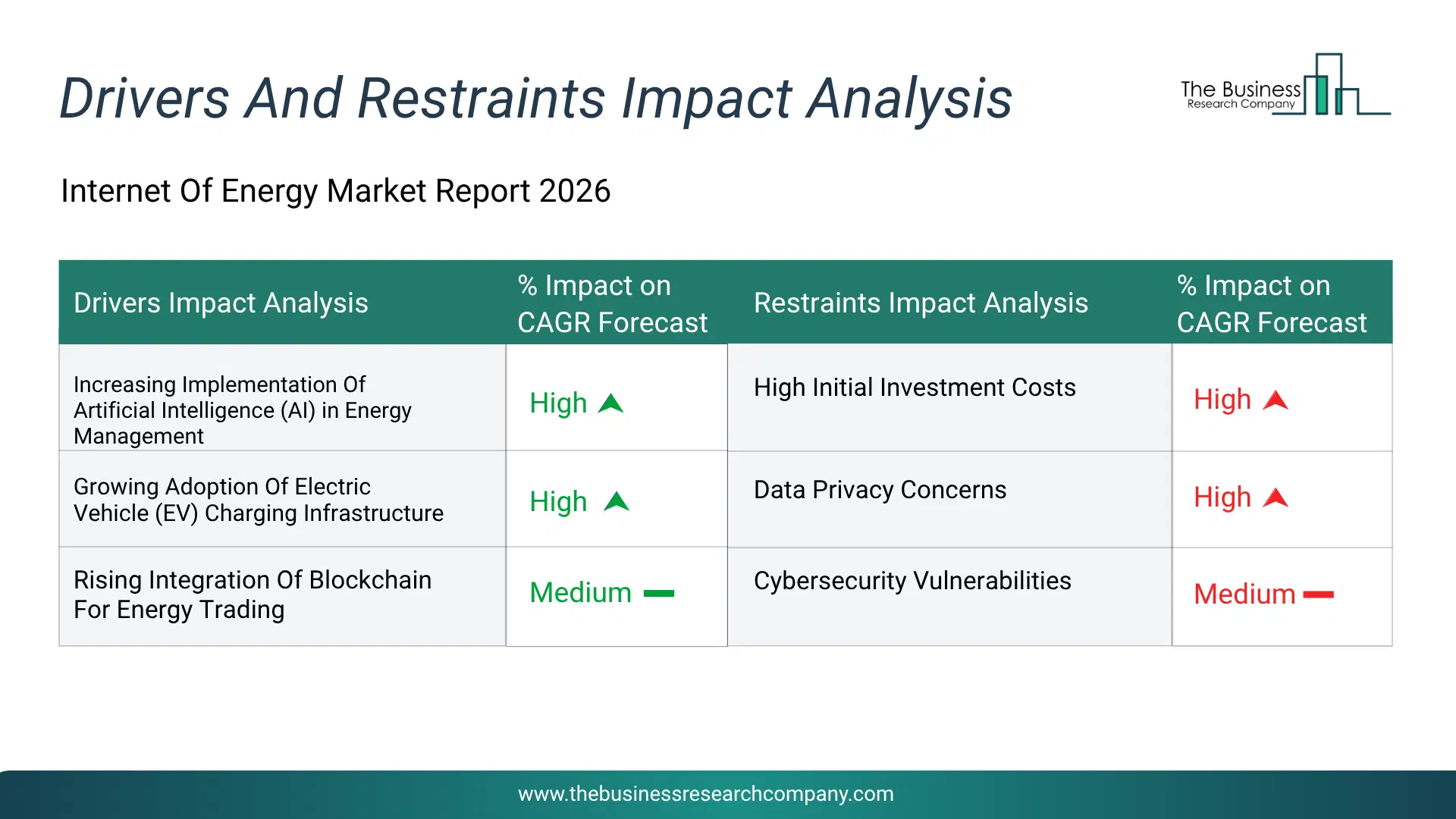
Infographic Chart Showing Key Market Drivers Analysis And Restraints For Internet Of Energy Market
The chart presents an impact analysis of key drivers and restraints, quantifying their relative influence on the market's growth rate and helping assess the balance between growth enablers and limiting factors. This chart offers a high-level perspective; the full report contains more detailed insights.
How Will The Drivers Impact Growth In The Global Internet Of Energy Market?
• Increasing Implementation Of Artificial Intelligence (AI) in Energy Management (High) – During the forecast period, the increasing implementation of artificial intelligence (AI) in energy management is expected to become a key growth driver for the internet of energy market by 2030. The rising deployment of AI technologies is enhancing the efficiency and intelligence of energy systems by enabling real-time data analysis, predictive analytics, and automated decision-making. Utilities and energy providers are leveraging AI to optimize grid operations, forecast demand, and reduce energy losses, thereby improving overall system performance. Additionally, AI supports the integration of diverse and decentralized energy sources by enabling dynamic load balancing and efficient resource allocation. The growing reliance on intelligent energy platforms is further accelerating the adoption of AI-enabled solutions across industrial and commercial sectors. • Growing Adoption Of Electric Vehicle (EV) Charging Infrastructure (High) – During the forecast period, the growing adoption of electric vehicle (EV) charging infrastructure is expected to emerge as a significant factor driving the expansion of the internet of energy market by 2030. The rapid increase in electric vehicle adoption is creating a strong need for advanced and connected charging networks integrated with energy management systems. Smart charging infrastructure enables efficient load distribution, minimizes grid stress, and supports demand-side management strategies. Energy providers are increasingly deploying IoE-enabled platforms to monitor, control, and optimize charging activities across residential, commercial, and public networks. Furthermore, the integration of EV charging systems with renewable energy sources enhances sustainability and energy efficiency. This growing ecosystem encourages investments in intelligent energy solutions and digital grid technologies. • Rising Integration Of Blockchain For Energy Trading (Medium) – During the forecast period, the rising integration of blockchain for energy trading is expected to act as a key growth catalyst for the internet of energy market by 2030. The adoption of blockchain technology is enabling secure, transparent, and decentralized energy transactions across distributed energy networks. It facilitates peer-to-peer energy trading, allowing consumers and producers to exchange energy directly without intermediaries. This enhances market efficiency, reduces transaction costs, and improves trust among stakeholders. Additionally, blockchain supports the tracking of energy generation sources, enabling better verification of renewable energy usage. The increasing adoption of decentralized energy systems is further accelerating the demand for blockchain enabled platforms.How Will The Restraints Impact Growth In The Global Internet Of Energy Market?
• High Initial Investment Costs (High) – During the forecast period, the deployment of IoE solutions often requires substantial upfront capital to install smart meters, sensors, communication systems, and energy storage units. These high initial costs can discourage smaller utilities or organizations from adopting IoE technologies. Consequently, the pace of market expansion is slowed as enterprises weigh return on investment against financial outlay. Reducing these costs is essential for broader adoption of energy networking solutions. • Data Privacy Concerns (High) – During the forecast period, IoE systems collect and transmit vast amounts of energy usage and operational data. Without strict privacy measures, sensitive consumer or industrial information could be exposed, leading to mistrust. Organizations must address data protection regulations and implement secure handling practices. Privacy concerns can significantly limit adoption by both residential and commercial users. • Cybersecurity Vulnerabilities (Medium) – During the forecast period, IoE networks are susceptible to cyberattacks due to the interconnection of critical energy infrastructure. Breaches can disrupt energy distribution, compromise sensitive data, and result in operational losses. Continuous monitoring, robust encryption, and proactive security measures are vital to mitigate risks. Cybersecurity challenges can reduce trust and delay IoE deployment.Key Players In The Global Internet Of Energy Market
Major companies operating in the internet of energy market are Siemens AG, Schneider Electric SE, ABB Ltd., General Electric (GE Vernova), Cisco Systems Inc., IBM Corporation, Microsoft Corporation, Honeywell International Inc., Oracle Corporation, SAP SE, Intel Corporation, Huawei Technologies Co. Ltd., Infosys Limited, HCL Technologies Limited, Rockwell Automation Inc., Johnson Controls International plc, Landis+Gyr Group AG, Itron Inc., Accenture plc, Trilliant Holdings Inc.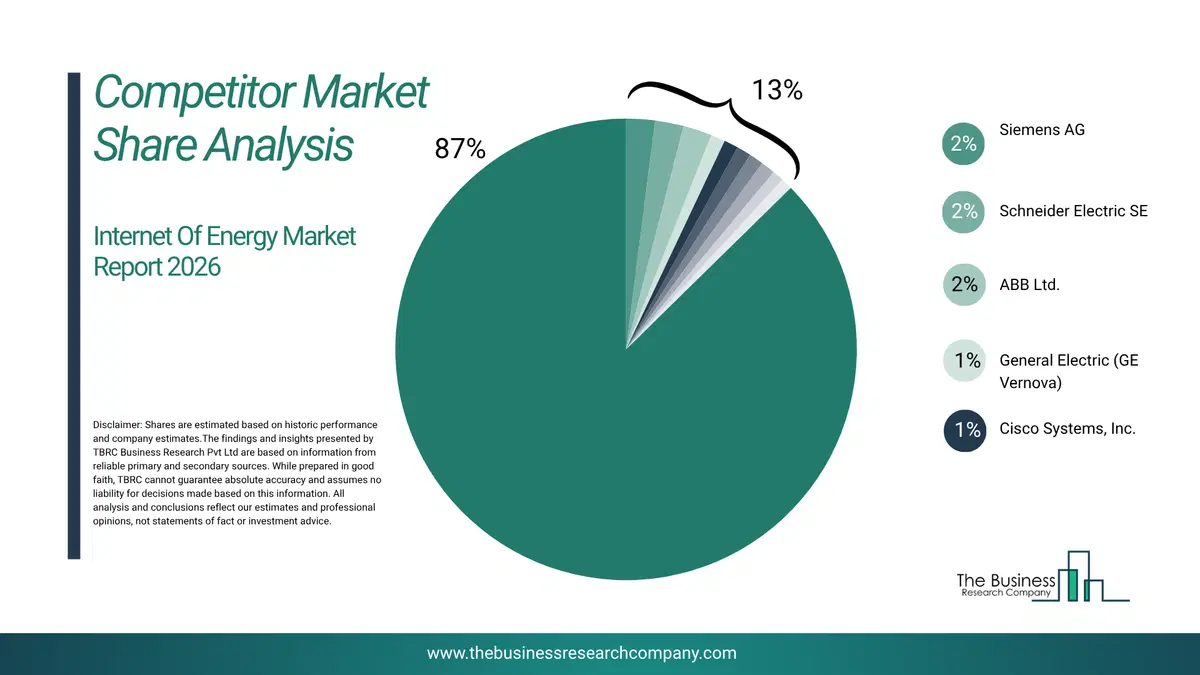
This chart is for illustrative purposes; the full report includes a detailed competitor analysis and comprehensive overview of the top 10 companies in the market.
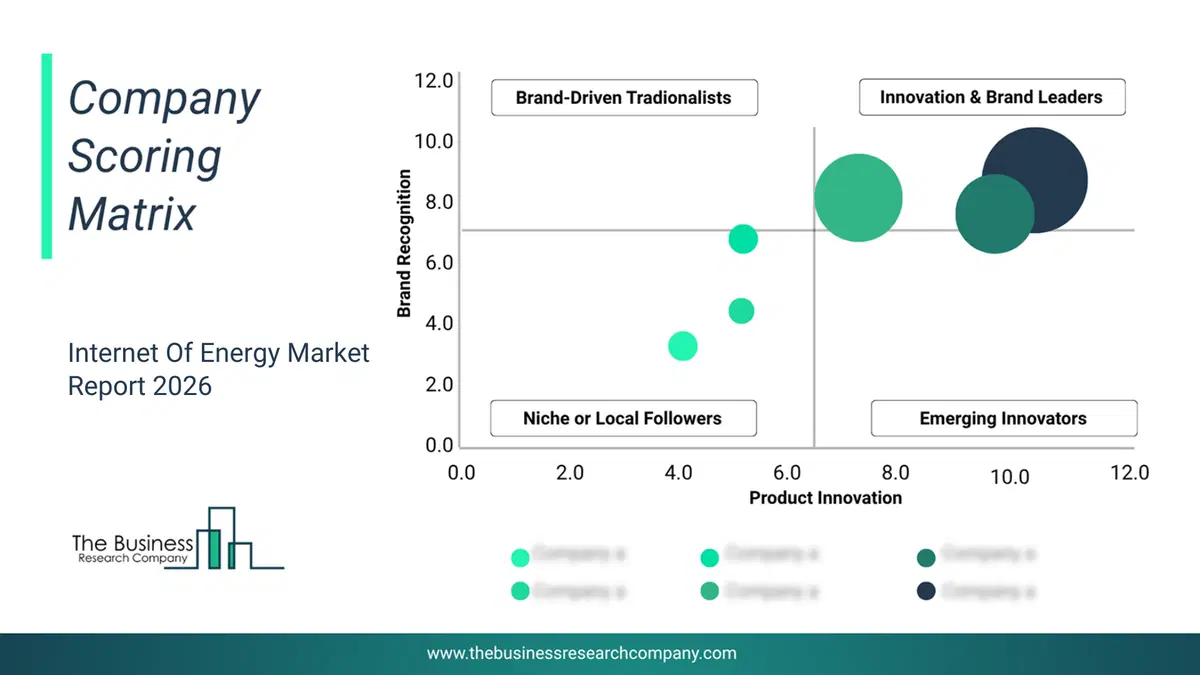
This chart maps companies by product innovation and brand strength, with bubble size indicating relative revenue, helping identify market leaders, challengers, and niche players. This is an illustrative chart; the full report provides a complete and accurate competitive analysis.
Global Internet Of Energy Market Trends and Insights
Major companies operating in the internet of energy market are focusing on developing innovative solutions, such as the energy internet ecosystem platform to enable integrated, data-driven energy management; optimize distributed energy resources; and enhance real-time coordination between generation, storage, and consumption. An energy internet ecosystem platform is a digital system that integrates and manages energy generation, storage, and consumption in real time to improve efficiency and enable intelligent, decentralized energy coordination. For instance, in March 2026, Haier Energy Technology Co. Ltd., a China-based energy company, launched a NaHui Energy Internet Ecosystem Platform, designed to shift renewable energy management from basic capacity expansion to high-performance, intelligence-driven optimization. Utilizing a cloud-edge-terminal architecture, the platform integrates proprietary AI models and specialized AI energy robots to provide real-time, predictive control over distributed energy assets such as solar, storage, and HVAC systems.What Are Latest Mergers And Acquisitions In The Internet Of Energy Market?
In November 2023, Gridspertise S. r. l., an Italy-based technology company, acquired Aidon Oy for an undisclosed amount. With this acquisition, Gridspertise aims to expand its presence in the Nordic markets while enhancing its smart metering and grid automation capabilities through the integration of Aidon’s regional expertise and customer-centric solutions. Aidon Oy is a Finland-based technology company that offers Internet of energy technologies.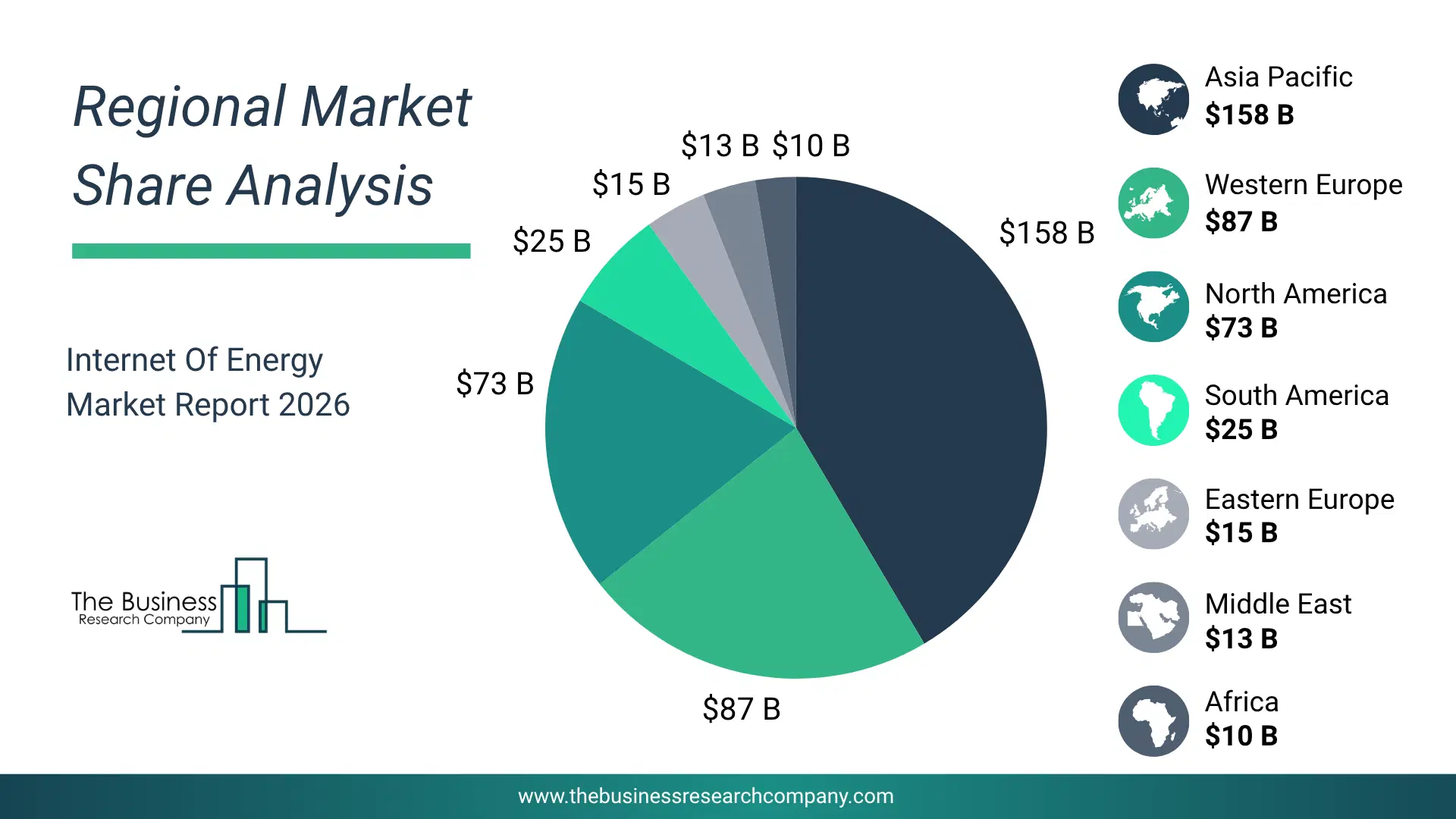
Regional Insights
North America was the largest region in the internet of energy market in 2025. Europe is expected to be the fastest-growing region in the forecast period. The regions covered in this market report are Asia-Pacific, South East Asia, Western Europe, Eastern Europe, North America, South America, Middle East and Africa. The countries covered in this market report are Australia, Brazil, China, France, Germany, India, Indonesia, Japan, Taiwan, Russia, South Korea, UK, USA, Canada, Italy, Spain.What Defines the Internet Of Energy Market?
The Internet of energy market consists of revenues earned by entities by providing services such as real-time energy monitoring, energy consumption analytics, and smart grid management. The market value includes the value of related goods sold by the service provider or included within the service offering. The Internet of energy market also includes sales of smart meters, smart grids, and energy management systems. Values in this market are ‘factory gate’ values, that is the value of goods sold by the manufacturers or creators of the goods, whether to other entities (including downstream manufacturers, wholesalers, distributors and retailers) or directly to end customers. The value of goods in this market includes related services sold by the creators of the goods.What is the Market Assessment and Strategic Outlook for the Internet Of Energy Industry?
The internet of energy market research report is one of a series of new reports from The Business Research Company that provides market statistics, including industry global market size, regional shares, competitors with the market share, detailed market segments, market trends and opportunities, and any further data you may need to thrive in the internet of energy industry. The market research report delivers a complete perspective of everything you need, with an in-depth analysis of the current and future state of the industry.
This chart presents market attractiveness based on a quantitative evaluation of growth, competition, strategic alignment, and risk, offering a clear view of opportunity areas for decision-making. This chart is for illustrative purposes; the full report contains the complete analysis.

This chart highlights the Total Addressable Market (TAM) by estimating the maximum revenue opportunity using an assumption-driven approach, supporting strategic planning and opportunity sizing across markets. The chart is illustrative; the full report provides a more comprehensive analysis.
What is the Market Assessment and Strategic Outlook for the Internet Of Energy Market Report 2026?
The internet of energy market research report is one of a series of new reports from The Business Research Company that provides internet of energy market statistics, including internet of energy industry global market size, regional shares, competitors with a internet of energy market share, detailed internet of energy market segments, market trends and opportunities, and any further data you may need to thrive in the internet of energy industry. This internet of energy market research report delivers a complete perspective of everything you need, with an in-depth analysis of the current and future scenario of the industry.Internet Of Energy Market Report Forecast Analysis
| Report Attribute | Details |
|---|---|
| Market Size Value In 2026 | $204.65 billion |
| Revenue Forecast In 2030 | $379.99 billion |
| Growth Rate | CAGR of 16.7% from 2026 to 2030 |
| Base Year For Estimation | 2025 |
| Actual Estimates/Historical Data | 2020-2025 |
| Forecast Period | 2026 - 2030 |
| Market Representation | Revenue in USD Billion and CAGR from 2026 to 2030 |
| Segments Covered | Component, Technology, Deployment Mode, Application, End User |
| Regional Scope | Asia-Pacific, Western Europe, Eastern Europe, North America, South America, Middle East, Africa |
| Country Scope | The countries covered in the report are Australia, Brazil, China, France, Germany, India, Indonesia, Japan, Taiwan, Russia, South Korea, UK, USA, Canada, Italy, Spain. |
| Key Companies Profiled | Siemens AG, Schneider Electric SE, ABB Ltd., General Electric (GE Vernova), Cisco Systems Inc., IBM Corporation, Microsoft Corporation, Honeywell International Inc., Oracle Corporation, SAP SE, Intel Corporation, Huawei Technologies Co. Ltd., Infosys Limited, HCL Technologies Limited, Rockwell Automation Inc., Johnson Controls International plc, Landis+Gyr Group AG, Itron Inc., Accenture plc, Trilliant Holdings Inc. |
| Customization Scope | Request for Customization |
| Pricing And Purchase Options | Explore Purchase Options |