
Invasive Ductal Carcinoma Therapeutics Market Report 2026
Global Outlook – By Therapeutics (Targeted Therapy, Hormone Therapy), By Type (Hormone Receptor, Human Epidermal Growth Factor Receptor 2 (HER2+), Triple-Negative Breast Cancer), By End Use (Hospitals, Oncology Clinics, Other End Uses) - Market Size, Trends, Strategies, and Forecast to 2030
Invasive Ductal Carcinoma Therapeutics Market Overview
• Invasive Ductal Carcinoma Therapeutics market size has reached to $9.03 billion in 2025 • Expected to grow to $13.6 billion in 2030 at a compound annual growth rate (CAGR) of 8.5% • Growth Driver: Rising Incidence Of Breast Cancer Fueling The Growth Of The Market Due To Lifestyle-Related Risk Factors And Increasing Patient Numbers • Market Trend: Targeted Cancer Treatment Enhances Efficacy And Reduces Side Effects • North America was the largest region in 2025.What Is Covered Under Invasive Ductal Carcinoma Therapeutics Market?
Invasive ductal carcinoma (IDC) therapeutics refers to the medical treatments used to manage and treat invasive ductal carcinoma (IDC), a common type of breast cancer that begins in the milk ducts and spreads to surrounding tissue. The main purpose is to remove or destroy cancer cells, prevent spread or recurrence, and improve patient survival and quality of life. These include surgery, chemotherapy, and radiation therapy. The main drug types of invasive ductal carcinoma therapeutics are targeted therapy and hormone therapy. Targeted therapy refers to treatments that specifically attack cancer cells based on certain molecular markers or genetic features of the tumor, without harming most normal cells. The various types include hormone receptor, human epidermal growth factor receptor 2 (HER2+), and triple-negative breast, with end users comprising hospitals, oncology clinics, and others.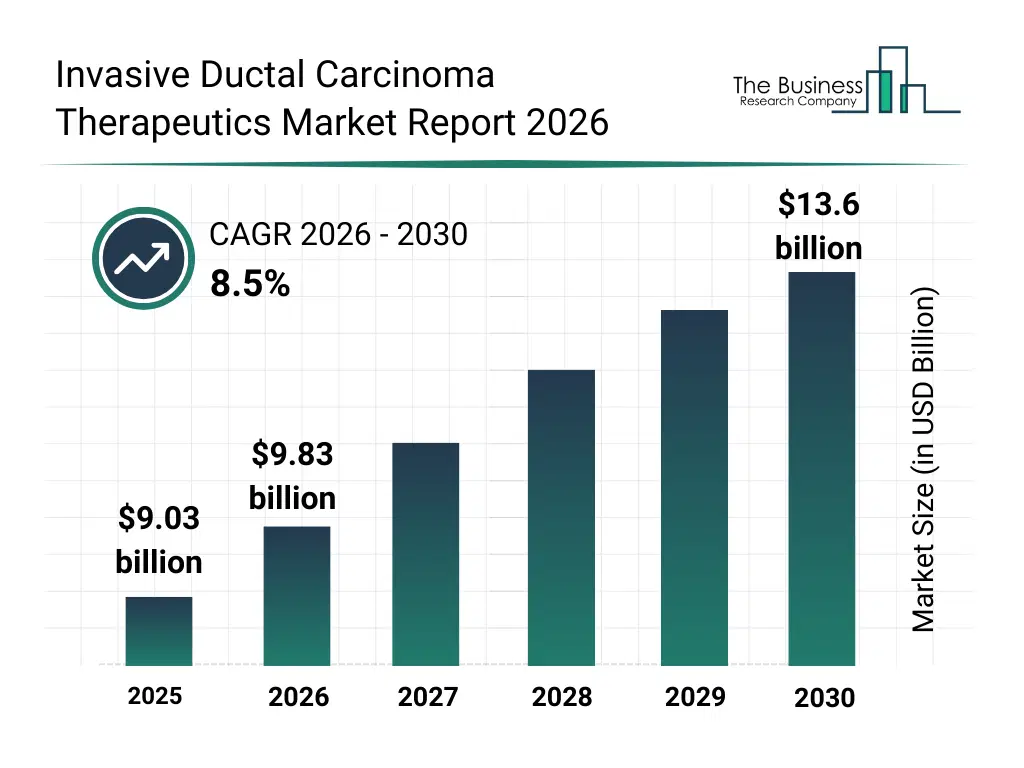
What Is The Invasive Ductal Carcinoma Therapeutics Market Size and Share 2026?
The invasive ductal carcinoma therapeutics market size has grown strongly in recent years. It will grow from $9.03 billion in 2025 to $9.83 billion in 2026 at a compound annual growth rate (CAGR) of 8.8%. The growth in the historic period can be attributed to increasing breast cancer incidence rates, wider availability of chemotherapy regimens, expansion of hospital oncology departments, increased adoption of hormone therapy, improved cancer screening practices.What Is The Invasive Ductal Carcinoma Therapeutics Market Growth Forecast?
The invasive ductal carcinoma therapeutics market size is expected to see strong growth in the next few years. It will grow to $13.6 billion in 2030 at a compound annual growth rate (CAGR) of 8.5%. The growth in the forecast period can be attributed to growing development of novel targeted drugs, increasing use of biomarker-driven treatment selection, expansion of precision oncology trials, rising focus on reducing recurrence rates, advancement of immuno-oncology combinations. Major trends in the forecast period include increasing use of targeted and hormone-based therapies, rising adoption of her2-targeted treatments, growing integration of personalized oncology regimens, expansion of combination therapy approaches, enhanced focus on early-stage treatment optimization.
Global Invasive Ductal Carcinoma Therapeutics Market Segmentation
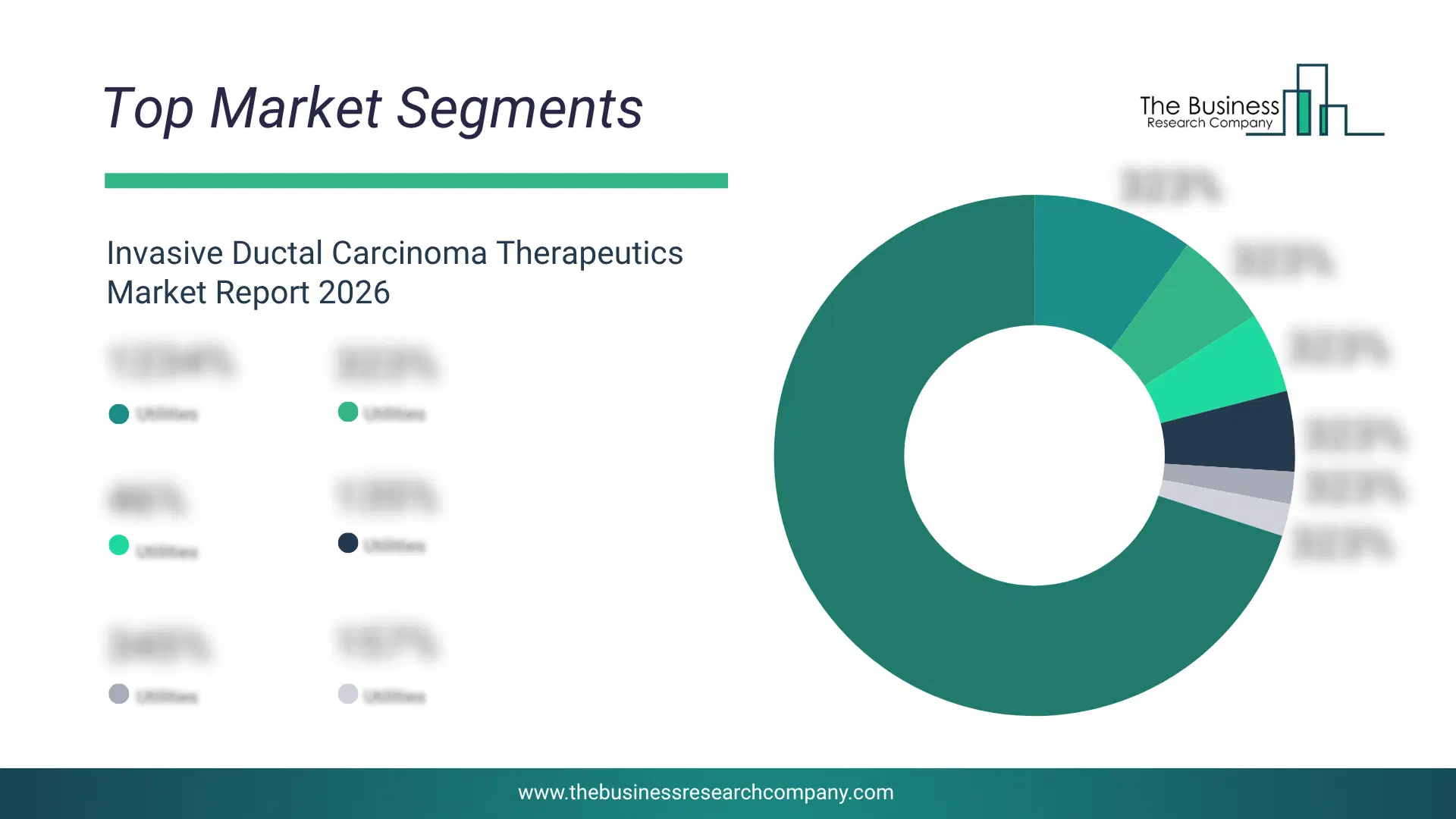
1) By Therapeutics: Targeted Therapy, Hormone Therapy 2) By Type: Hormone Receptor, Human Epidermal Growth Factor Receptor 2 (HER2+), Triple-Negative Breast Cancer 3) By End Use: Hospitals, Oncology Clinics, Other End Uses Subsegments: 1) By Targeted Therapy: Monoclonal Antibodies, Tyrosine Kinase Inhibitors, Poly ADP Ribose Polymerase (PARP) Inhibitors, Proteasome Inhibitors 2) By Hormone Therapy: Aromatase Inhibitors, Selective Estrogen Receptor Modulators, Estrogen Receptor Downregulators, Luteinizing Hormone-Releasing Hormone AgonistsWhat Is The Driver Of The Invasive Ductal Carcinoma Therapeutics Market?
The rising incidence of breast cancer is expected to propel the growth of the invasive ductal carcinoma therapeutics market going forward. Breast cancer refers to a disease in which cells in the breast grow uncontrollably, forming a malignant tumor that can invade surrounding tissues or spread to other parts of the body. The rising incidence of breast cancer is due to lifestyle-related factors, such as obesity and physical inactivity, which increase the risk of developing malignant tumors in breast tissue. Invasive ductal carcinoma therapeutics treat breast cancer by offering targeted and effective therapies, making them essential for managing the most common type of breast cancer. They reduce tumor growth and spread by using precision medicines, improving patient outcomes and quality of life. For instance, according to the American Cancer Society Facts and Figures, a US-based nonprofit organization, the number of new breast cancer cases rose from 300,590 in 2023 to 313,510 in 2024. Therefore, the rising incidence of breast cancer is driving the growth of the invasive ductal carcinoma therapeutics industry.Key Players In The Global Invasive Ductal Carcinoma Therapeutics Market
Major companies operating in the invasive ductal carcinoma therapeutics market are Pfizer Inc., F. Hoffmann-La Roche AG, Merck And Co. Inc., AbbVie Inc., Bayer AG, Novartis International AG, AstraZeneca plc, Sanofi S.A., Bristol-Myers Squibb Company, Takeda Pharmaceutical Company Limited, Eli Lilly and Company, Gilead Sciences Inc., Amgen Inc., Macrogenics Inc., Celldex Therapeutics Inc., Johnson & Johnson, GlaxoSmithKline plc, Genzyme Corporation, Onyx Pharmaceuticals Inc., BioNumerik Pharmaceuticals Inc., Puma Biotechnology, Teva Pharmaceutical Industries Ltd., Biocon Limited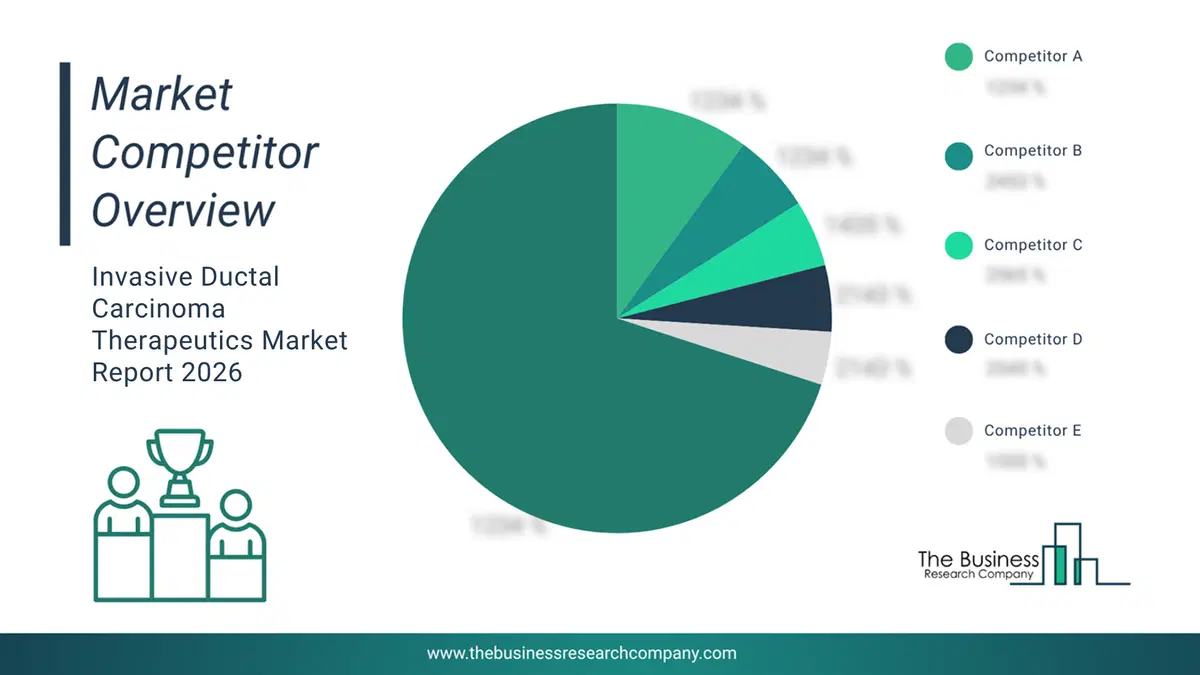
This chart is for illustrative purposes; the full report includes a detailed competitor analysis and comprehensive overview of the top 10 companies in the market.
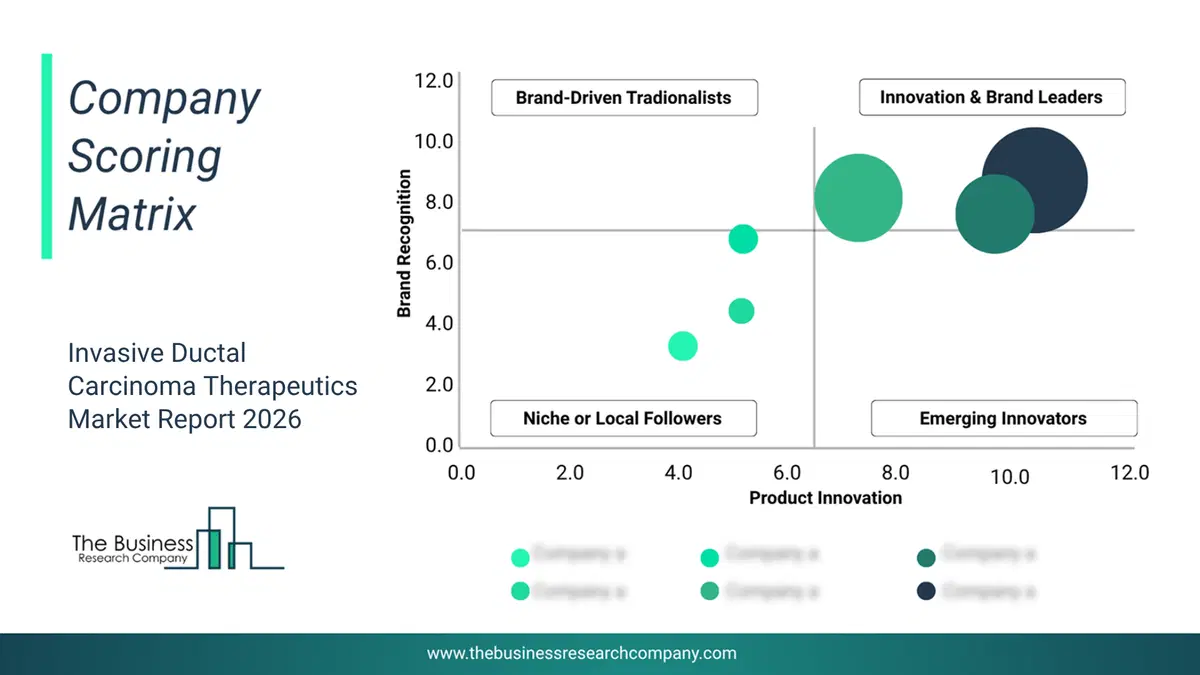
This chart maps companies by product innovation and brand strength, with bubble size indicating relative revenue, helping identify market leaders, challengers, and niche players. This is an illustrative chart; the full report provides a complete and accurate competitive analysis.
Global Invasive Ductal Carcinoma Therapeutics Market Trends and Insights
Major companies operating in the invasive ductal carcinoma (IDC) therapeutics market are focusing on developing innovative therapies, such as antibody-drug conjugates, to improve targeted treatment efficacy and reduce side effects. Antibody-drug conjugates (ADCs) are targeted cancer therapies that consist of an antibody linked to a cytotoxic drug, designed to deliver the drug directly to cancer cells, minimizing damage to healthy tissues. For instance, in January 2024, AstraZeneca Pharma India Limited, an India-based pharmaceutical company, in collaboration with Daiichi Sankyo Company, Limited, a Japan-based pharmaceutical company, launched trastuzumab deruxtecan. This antibody-drug conjugate therapy is designed for adult patients with unresectable or metastatic HER2-positive breast cancer. It works by delivering a potent topoisomerase I inhibitor (deruxtecan) directly to HER2-expressing cancer cells, resulting in targeted DNA damage and cell death.What Are Latest Mergers And Acquisitions In The Invasive Ductal Carcinoma Therapeutics Market?
In December 2024, Pfizer Inc., a US-based pharmaceutical company, acquired Seagen Inc. for $43 billion. With this acquisition, Pfizer Inc. aims to strengthen its leadership in oncology by expanding its cancer drug portfolio, accelerating the development of innovative therapies, and driving long-term growth in the cancer treatment market. Seagen Inc. is a US-based biotechnology company developing targeted therapies for invasive ductal carcinoma.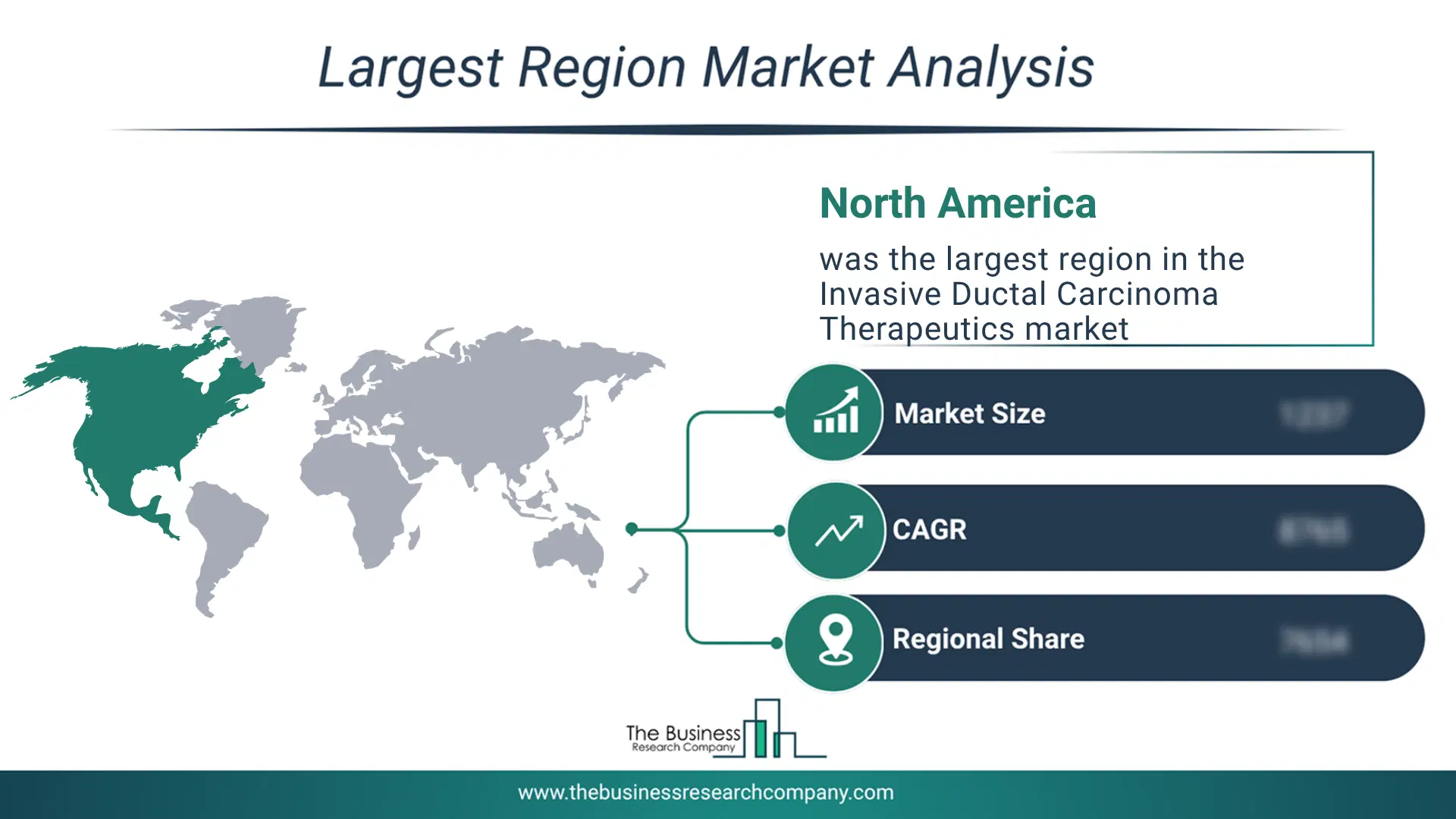
Regional Outlook
North America was the largest region in the invasive ductal carcinoma therapeutics market in 2025. The regions covered in this market report are Asia-Pacific, South East Asia, Western Europe, Eastern Europe, North America, South America, Middle East, Africa. The countries covered in this market report are Australia, Brazil, China, France, Germany, India, Indonesia, Japan, Taiwan, Russia, South Korea, UK, USA, Canada, Italy, Spain.What Defines the Invasive Ductal Carcinoma Therapeutics Market?
The invasive ductal carcinoma therapeutics market consists of revenues earned by entities by providing services such as diagnostic imaging, biopsy procedures, hormone therapy, immunotherapy, and post-treatment monitoring and support care. The market value includes the value of related goods sold by the service provider or included within the service offering. The invasive ductal carcinoma therapeutics market also includes sales of diagnostic kits, biopsy tools, and medical devices used in surgical and radiation treatments. Values in this market are ‘factory gate’ values, that is the value of goods sold by the manufacturers or creators of the goods, whether to other entities (including downstream manufacturers, wholesalers, distributors and retailers) or directly to end customers. The value of goods in this market includes related services sold by the creators of the goods.How is Market Value Defined and Measured?
The market value is defined as the revenues that enterprises gain from the sale of goods and/or services within the specified market and geography through sales, grants, or donations in terms of the currency (in USD unless otherwise specified). The revenues for a specified geography are consumption values that are revenues generated by organizations in the specified geography within the market, irrespective of where they are produced. It does not include revenues from resales along the supply chain, either further along the supply chain or as part of other products.
This chart presents market attractiveness based on a quantitative evaluation of growth, competition, strategic alignment, and risk, offering a clear view of opportunity areas for decision-making. This chart is for illustrative purposes; the full report contains the complete analysis.

This chart highlights the Total Addressable Market (TAM) by estimating the maximum revenue opportunity using an assumption-driven approach, supporting strategic planning and opportunity sizing across markets. The chart is illustrative; the full report provides a more comprehensive analysis.
What Key Data and Analysis Are Included in the Invasive Ductal Carcinoma Therapeutics Market Report 2026?
The invasive ductal carcinoma therapeutics market research report is one of a series of new reports from The Business Research Company that provides market statistics, including industry global market size, regional shares, competitors with the market share, detailed market segments, market trends and opportunities, and any further data you may need to thrive in the invasive ductal carcinoma therapeutics industry. The market research report delivers a complete perspective of everything you need, with an in-depth analysis of the current and future state of the industry.Invasive Ductal Carcinoma Therapeutics Market Report Forecast Analysis
| Report Attribute | Details |
|---|---|
| Market Size Value In 2026 | $9.83 billion |
| Revenue Forecast In 2030 | $13.6 billion |
| Growth Rate | CAGR of 8.5% from 2026 to 2030 |
| Base Year For Estimation | 2025 |
| Actual Estimates/Historical Data | 2020-2025 |
| Forecast Period | 2026 - 2030 |
| Market Representation | Revenue in USD Billion and CAGR from 2026 to 2030 |
| Segments Covered | Therapeutics, Type, End Use |
| Regional Scope | Asia-Pacific, Western Europe, Eastern Europe, North America, South America, Middle East, Africa |
| Country Scope | The countries covered in the report are Australia, Brazil, China, France, Germany, India, Indonesia, Japan, Taiwan, Russia, South Korea, UK, USA, Canada, Italy, Spain |
| Key Companies Profiled | Pfizer Inc., F. Hoffmann-La Roche AG, Merck And Co. Inc., AbbVie Inc., Bayer AG, Novartis International AG, AstraZeneca plc, Sanofi S.A., Bristol-Myers Squibb Company, Takeda Pharmaceutical Company Limited, Eli Lilly and Company, Gilead Sciences Inc., Amgen Inc., Macrogenics Inc., Celldex Therapeutics Inc., Johnson & Johnson, GlaxoSmithKline plc, Genzyme Corporation, Onyx Pharmaceuticals Inc., BioNumerik Pharmaceuticals Inc., Puma Biotechnology, Teva Pharmaceutical Industries Ltd., Biocon Limited |
| Customization Scope | Request for Customization |
| Pricing And Purchase Options | Explore Purchase Options |