

Joint Pain Injections Market Report 2026
Global Outlook – By Type Of Injection (Steroid Joint Injection, Hyaluronic Acid Injections), By Joint Type (Hip Joint, Knee And Ankle, Shoulder And Elbow, Facet Joints Of The Spine, Other Joint Types), By Distribution channel (Hospital Pharmacies, Retail Pharmacies) – Market Size, Trends, Strategies, and Forecast to 2030
Joint Pain Injections Market Overview
• Joint Pain Injections market size has reached to $6.12 billion in 2025 • Expected to grow to $10.96 billion in 2030 at a compound annual growth rate (CAGR) of 12.3% • Growth Driver: Elevated Prevalence Of Arthritis And Musculoskeletal Disorders Drives Growth In The Joint Pain Injections Market • Market Trend: Innovative Single-Injection Formulations Transform Joint Pain Management • North America was the largest region in 2025.What Is Covered Under Joint Pain Injections Market?
Joint pain injections reduce inflammation and discomfort and are typically injected directly into the joint for pain relief. Joint pain is very frequent among the elderly or as a result of pre-existing medical problems or disorders. It can happen as a result of musculoskeletal illnesses such as arthritis, which causes pain and inflammation. The joint pain injections are used to relieve joint pain and inflammation quickly through non-surgical treatments. The main types of injection for joint pain includes steroid joint injection, hyaluronic acid injections, platelet-rich plasma (PRP) injections, placental tissue matrix (PTM) injections and others. The steroid joint injection are anti-inflammatory medications that are used to treat a joint pain. Steroid joint injections, also called corticosteroid injections, help to reduce inflammation in the people with rheumatoid arthritis and other types of inflammatory arthritis. Joint pain injection is used to for various types of joints including hip joint, knee and ankle, shoulder and elbow, facet joints of the spine and others. These are mainly distributed though hospital pharmacies, retail pharmacies, online pharmacies.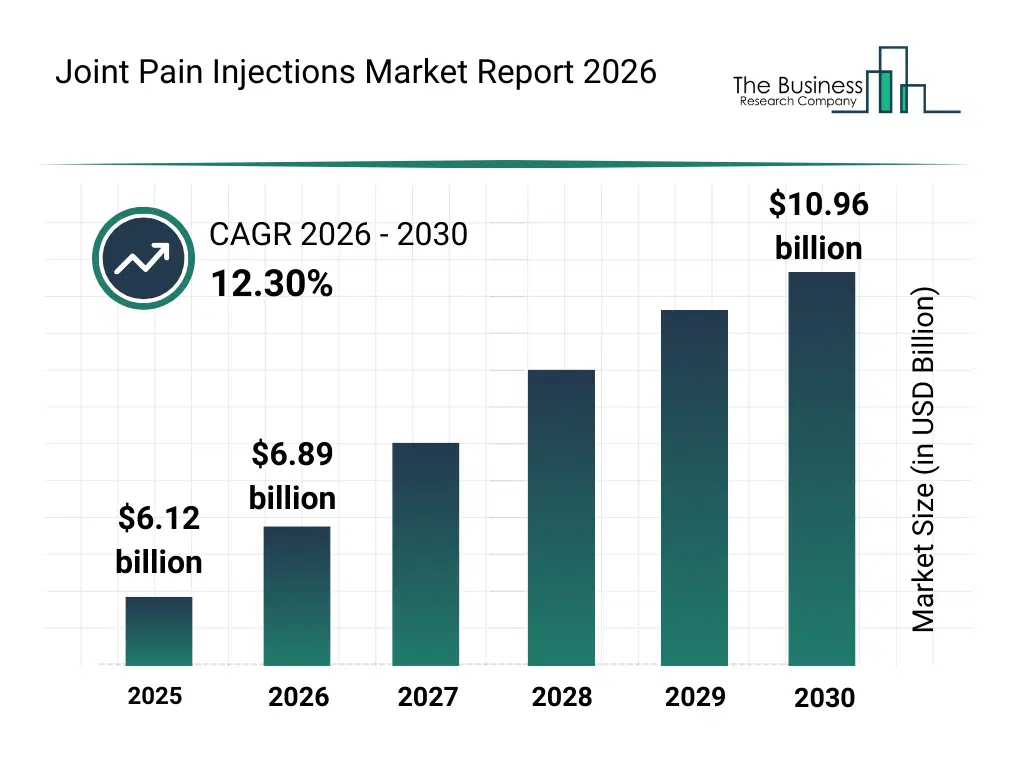
What Is The Joint Pain Injections Market Size and Share 2026?
The joint pain injections market size has grown rapidly in recent years. It will grow from $6.12 billion in 2025 to $6.89 billion in 2026 at a compound annual growth rate (CAGR) of 12.5%. The growth in the historic period can be attributed to increasing prevalence of arthritis and joint disorders, aging global population, rising demand for minimally invasive pain treatments, growing awareness of regenerative therapies, expansion of orthopedic specialty care.What Is The Joint Pain Injections Market Growth Forecast?
The joint pain injections market size is expected to see rapid growth in the next few years. It will grow to $10.96 billion in 2030 at a compound annual growth rate (CAGR) of 12.3%. The growth in the forecast period can be attributed to increasing adoption of biologic pain therapies, rising focus on personalized medicine, expansion of sports injury management, growing investments in regenerative medicine, increasing preference for non-opioid pain management. Major trends in the forecast period include increasing adoption of non-surgical pain management therapies, rising use of hyaluronic acid and prp injections, growing demand for personalized pain treatment approaches, expansion of regenerative medicine-based injections, enhanced focus on outpatient pain relief solutions.
Global Joint Pain Injections Market Segmentation
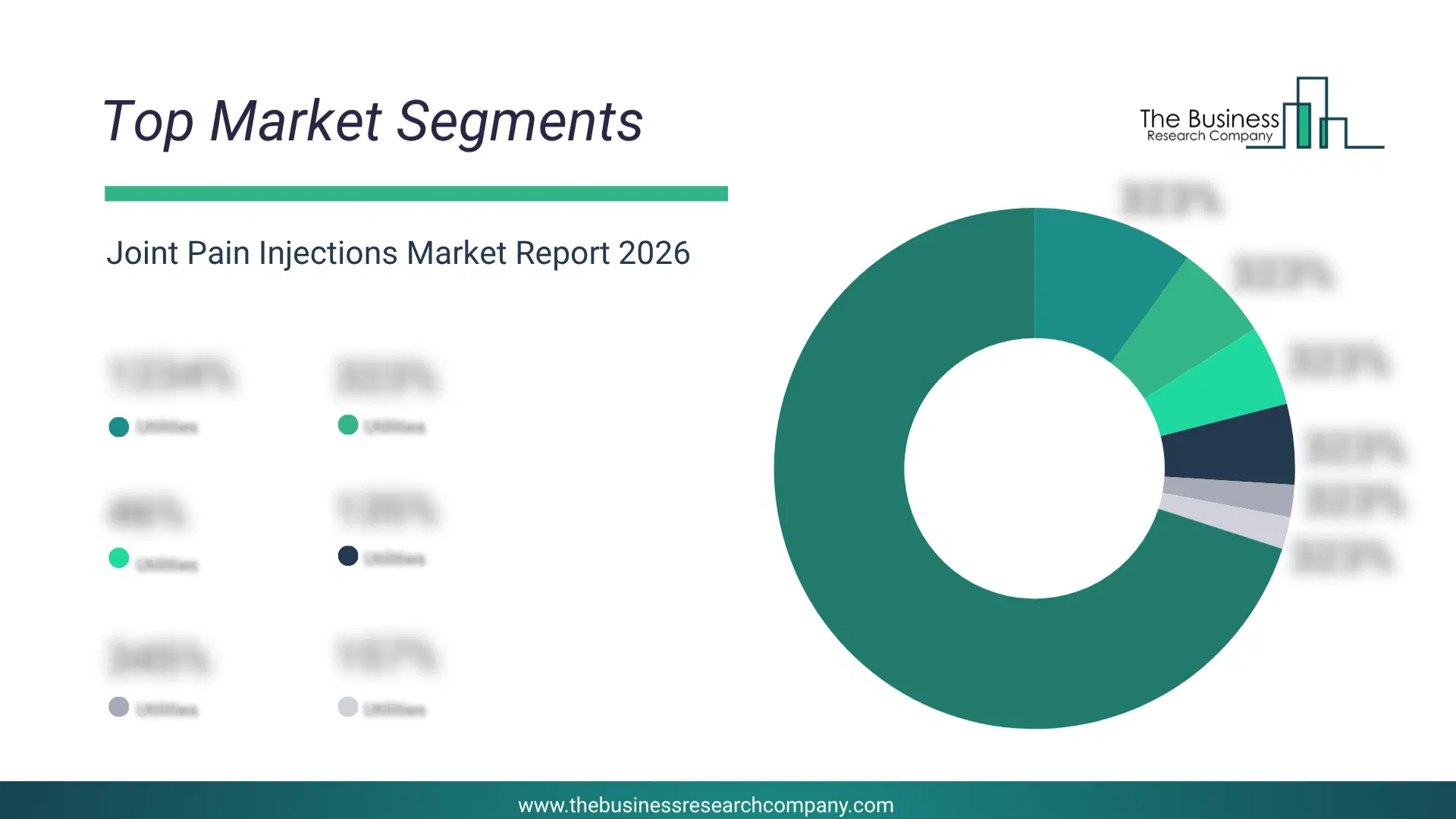
1) By Type Of Injection: Steroid Joint Injection, Hyaluronic Acid Injections 2) By Joint Type: Hip Joint, Knee And Ankle, Shoulder And Elbow, Facet Joints Of The Spine, Other Joint Types 3) By Distribution channel: Hospital Pharmacies, Retail Pharmacies Subsegments: 1) By Steroid Joint Injection: Corticosteroid Injections, Combination Steroid Injections 2) By Hyaluronic Acid Injections: Single-Dose Hyaluronic Acid Injections, Multi-Dose Hyaluronic Acid InjectionsWhat Is The Driver Of The Joint Pain Injections Market?
The rise in the prevalence of arthritis and musculoskeletal disorders will propel the growth of the joint pain injections market. Musculoskeletal disorders are the biggest cause of disability worldwide, with low back pain being the single most common cause of impairment in 160 nations. Patients are taking injections for pain relief and inflammatory conditions. For instance, in August 2023, the Institute for Health Metrics and Evaluation (IHME), a U.S.-based independent health research organization, reported that by 2050, nearly 1 billion people are projected to have osteoarthritis. Therefore, the rising prevalence of arthritis and musculoskeletal disorder drives the joint pain injections industry.Key Players In The Global Joint Pain Injections Market
Major companies operating in the joint pain injections market are Seikagaku Corporation, Anika Therapeutics Inc., Bioventus Inc., Flexion Therapeutics Inc., Ferring Pharmaceuticals Inc., Sanofi S.A., AbbVie Inc., Pfizer Inc., Teva Pharmaceutical Industries Limited, Merck & Co. Inc., Johnson & Johnson, Sun Pharmaceutical Industries Ltd., Zydus Lifesciences Limited, Wockhardt Ltd., Mallinckrodt Pharmaceuticals Ltd., Mylan N.V., Bayer AG, Eli Lilly and Company, Ipsen SA, Takeda Pharmaceutical Company Limited, AstraZeneca plc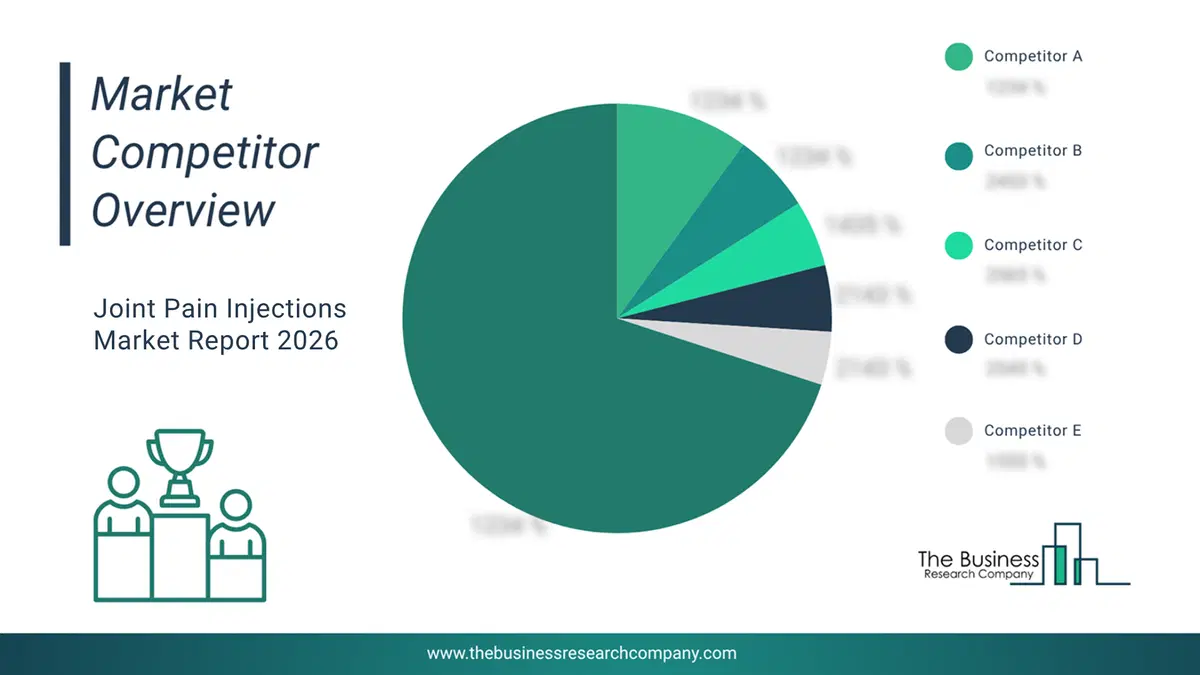
This chart is for illustrative purposes; the full report includes a detailed competitor analysis and comprehensive overview of the top 10 companies in the market.
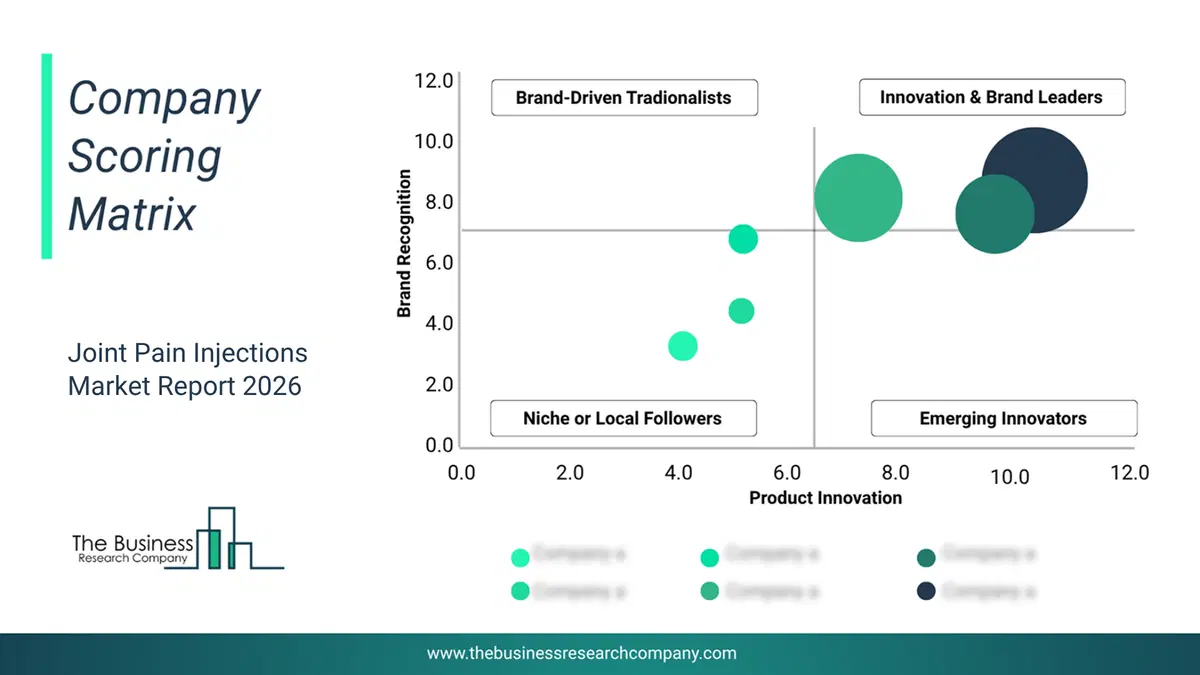
This chart maps companies by product innovation and brand strength, with bubble size indicating relative revenue, helping identify market leaders, challengers, and niche players. This is an illustrative chart; the full report provides a complete and accurate competitive analysis.
Global Joint Pain Injections Market Trends and Insights
Major companies operating in joint pain injections are focusing on developing innovations, such as single-injection formulations, which emphasize convenience for patients. A single-injection formulation refers to a type of drug delivery system designed to administer a specific dose of medication in a single injection, providing sustained therapeutic effects over a prolonged period without the need for multiple doses. For instance, in July 2024, LG Chem Ltd., a South Korea-based chemicals company, launched Synovian, a new treatment for knee osteoarthritis in China that offers a convenient single-injection formulation, making it the first of its kind in the country. The product aims to tap into a significant market estimated at around KRW 200 billion (approximately USD 150 million). Developed using proprietary technology, it showcases innovation in addressing patient needs. The focus is on providing effective relief with minimal administration hassle.What Are Latest Mergers And Acquisitions In The Joint Pain Injections Market?
In July 2025, Johnson & Johnson MedTech, a US-based provider of medical devices and healthcare solutions, partnered with Pacira BioSciences to expand early intervention offerings for osteoarthritis of the knee. With this partnership, the companies aim to expand the market adoption of ZILRETTA, a triamcinolone acetonide extended-release injectable, enhance product accessibility, and increase penetration in the knee osteoarthritis segment. Pacira BioSciences is a US-based specialty pharmaceutical company that develops and commercializes non-opioid pain management and local analgesic products, including intra-articular injections for joint pain.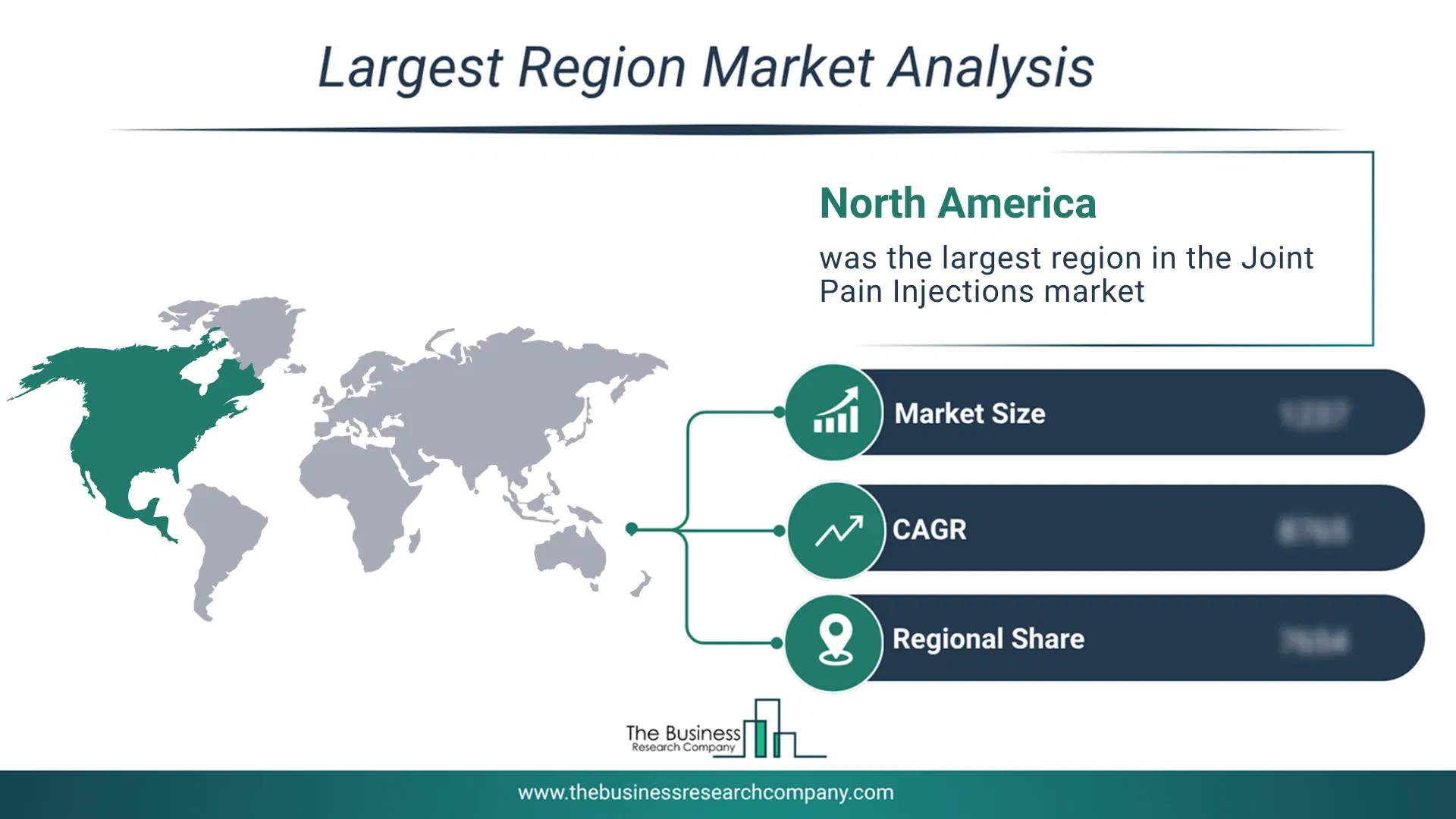
Regional Outlook
North America was the largest region in the joint pain injections market in 2025. The regions covered in this market report are Asia-Pacific, South East Asia, Western Europe, Eastern Europe, North America, South America, Middle East, Africa. The countries covered in this market report are Australia, Brazil, China, France, Germany, India, Indonesia, Japan, Taiwan, Russia, South Korea, UK, USA, Canada, Italy, SpainWhat Defines the Joint Pain Injections Market?
The joint pain injections market consists of sales of epidural steroid injections, facet joint injections, viscosupplementation injections, corticosteroid injections and hyaluronic acid injections. Values in this market are ‘factory gate’ values, that is the value of goods sold by the manufacturers or creators of the goods, whether to other entities (including downstream manufacturers, wholesalers, distributors and retailers) or directly to end customers. The value of goods in this market includes related services sold by the creators of the goods.How is Market Value Defined and Measured?
The market value is defined as the revenues that enterprises gain from the sale of goods and/or services within the specified market and geography through sales, grants, or donations in terms of the currency (in USD unless otherwise specified). The revenues for a specified geography are consumption values that are revenues generated by organizations in the specified geography within the market, irrespective of where they are produced. It does not include revenues from resales along the supply chain, either further along the supply chain or as part of other products.
This chart presents market attractiveness based on a quantitative evaluation of growth, competition, strategic alignment, and risk, offering a clear view of opportunity areas for decision-making. This chart is for illustrative purposes; the full report contains the complete analysis.

This chart highlights the Total Addressable Market (TAM) by estimating the maximum revenue opportunity using an assumption-driven approach, supporting strategic planning and opportunity sizing across markets. The chart is illustrative; the full report provides a more comprehensive analysis.
What Key Data and Analysis Are Included in the Joint Pain Injections Market Report 2026?
The joint pain injections market research report is one of a series of new reports from The Business Research Company that provides market statistics, including industry global market size, regional shares, competitors with the market share, detailed market segments, market trends and opportunities, and any further data you may need to thrive in the joint pain injections industry. The market research report delivers a complete perspective of everything you need, with an in-depth analysis of the current and future state of the industry.Joint Pain Injections Market Report Forecast Analysis
| Report Attribute | Details |
|---|---|
| Market Size Value In 2026 | $6.89 billion |
| Revenue Forecast In 2030 | $10.96 billion |
| Growth Rate | CAGR of 12.3% from 2026 to 2030 |
| Base Year For Estimation | 2025 |
| Actual Estimates/Historical Data | 2020-2025 |
| Forecast Period | 2026 - 2030 |
| Market Representation | Revenue in USD Billion and CAGR from 2026 to 2030 |
| Segments Covered | Type Of Injection, Joint Type, Distribution channel |
| Regional Scope | Asia-Pacific, Western Europe, Eastern Europe, North America, South America, Middle East, Africa |
| Country Scope | The countries covered in the report are Australia, Brazil, China, France, Germany, India, Indonesia, Japan, Taiwan, Russia, South Korea, UK, USA, Canada, Italy, Spain. |
| Key Companies Profiled | Seikagaku Corporation, Anika Therapeutics Inc., Bioventus Inc., Flexion Therapeutics Inc., Ferring Pharmaceuticals Inc., Sanofi S.A., AbbVie Inc., Pfizer Inc., Teva Pharmaceutical Industries Limited, Merck & Co. Inc., Johnson & Johnson, Sun Pharmaceutical Industries Ltd., Zydus Lifesciences Limited, Wockhardt Ltd., Mallinckrodt Pharmaceuticals Ltd., Mylan N.V., Bayer AG, Eli Lilly and Company, Ipsen SA, Takeda Pharmaceutical Company Limited, AstraZeneca plc |
| Customization Scope | Request for Customization |
| Pricing And Purchase Options | Explore Purchase Options |