

Knee Bursitis Market Report 2026
Global Outlook – By Diagnosis (Clinical Evaluation, Imaging Techniques, Laboratory And Procedural Tests, Differential Diagnosis Support), By Treatment (Medication, Therapy, Surgery, Other Treatments), By End User (Hospitals And Clinics, Diagnostic Centers, Research Centers, Academic Institutes, Other End Users) - Market Size, Trends, Strategies, and Forecast to 2030
Knee Bursitis Market Overview
• Knee Bursitis market size has reached to $2.86 billion in 2025 • Expected to grow to $3.92 billion in 2030 at a compound annual growth rate (CAGR) of 6.4% • Growth Driver: Impact of Bone-Related Disease Prevalence On The Knee Bursitis Market • North America was the largest region in 2025 and Asia-Pacific is the fastest growing region.What Is Covered Under Knee Bursitis Market?
Knee bursitis refers to the inflammation of one or more bursae, the small fluid-filled sacs near the knee joint. These bursae cushion and reduce friction between tissues, such as between bones and tendons or muscles. When inflamed, they cause pain, swelling, and restricted movement in the knee. The main diagnosis of knee bursitis is an imaging test and others. Knee bursitis imaging typically refers to ultrasound or MRI scans to visualize inflammation and fluid accumulation in the bursae around the knee joint. The treatment includes data medication and surgery, which are used by end users such as hospital and clinics, diagnostic centers, and research centers, academic institutes, and others.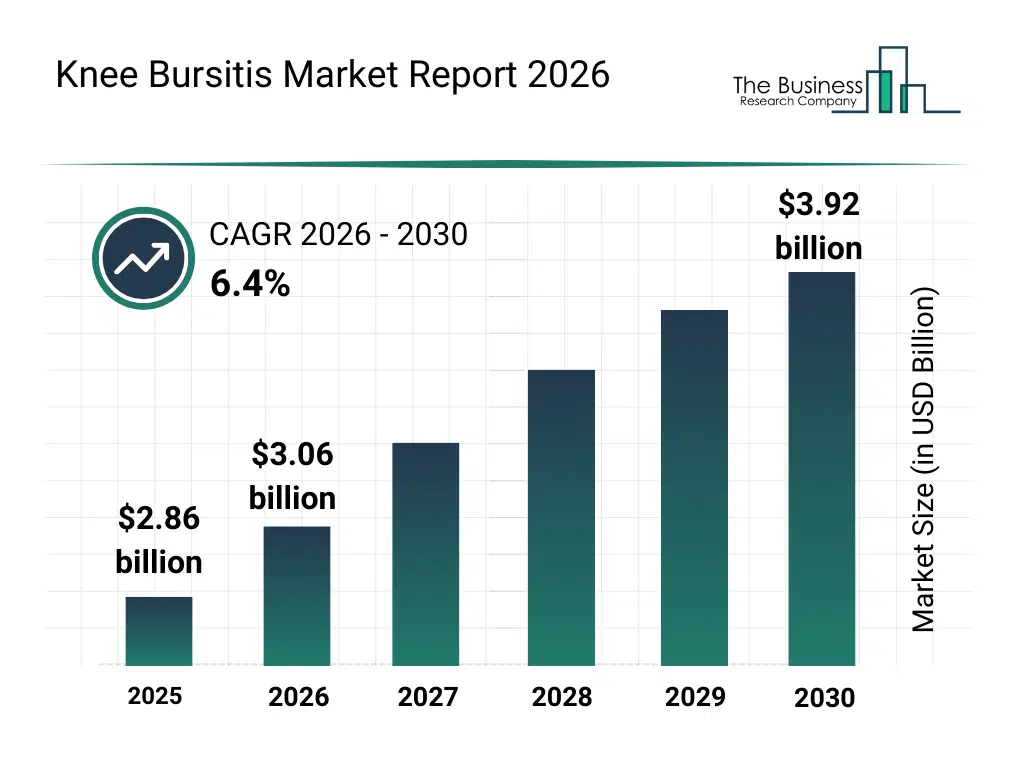
What Is The Knee Bursitis Market Size and Share 2026?
The knee bursitis market size has grown strongly in recent years. It will grow from $2.86 billion in 2025 to $3.06 billion in 2026 at a compound annual growth rate (CAGR) of 7.3%. The growth in the historic period can be attributed to increasing incidence of knee injuries and repetitive stress conditions, growing participation in sports and physical activities, established use of imaging in musculoskeletal diagnosis, rising aging population with joint disorders, availability of anti-inflammatory medications.What Is The Knee Bursitis Market Growth Forecast?
The knee bursitis market size is expected to see strong growth in the next few years. It will grow to $3.92 billion in 2030 at a compound annual growth rate (CAGR) of 6.4%. The growth in the forecast period can be attributed to growing demand for minimally invasive treatments, increasing focus on early diagnosis and prevention, rising adoption of physiotherapy services, expansion of orthopedic care infrastructure, improving access to diagnostic imaging in emerging markets. Major trends in the forecast period include growing preference for non-surgical knee bursitis management, increasing use of imaging for accurate diagnosis, rising adoption of physical therapy and rehabilitation, expansion of outpatient and conservative treatment approaches, improved patient awareness of early knee injury care.
Global Knee Bursitis Market Segmentation
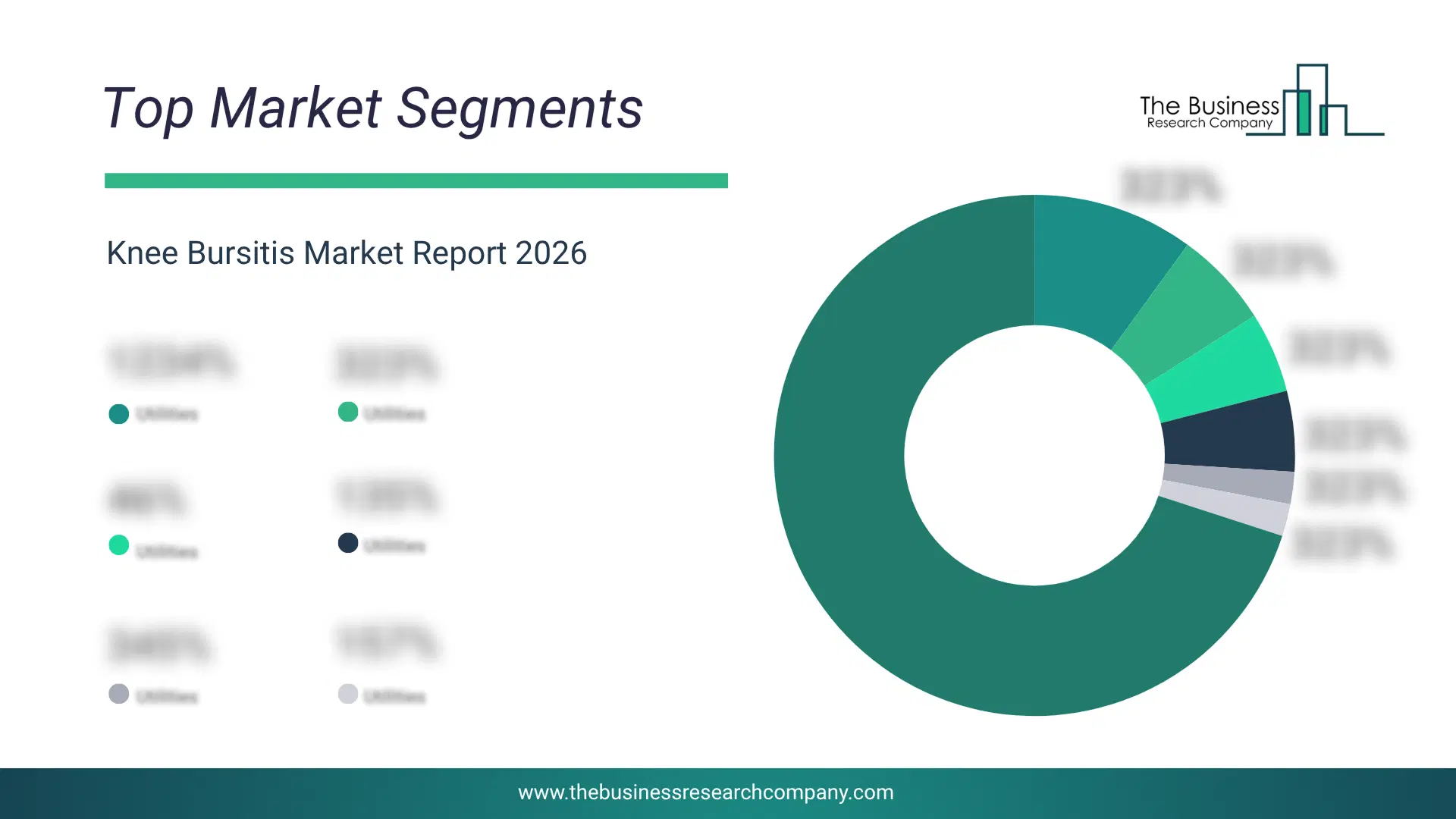
1) By Diagnosis: Clinical Evaluation, Imaging Techniques, Laboratory And Procedural Tests, Differential Diagnosis Support 2) By Treatment: Medication, Therapy, Surgery, Other Treatments 3) By End User: Hospitals And Clinics, Diagnostic Centers, Research Centers, Academic Institutes, Other End Users Subsegments: 1) By Clinical Evaluation: Medical History Assessment, Physical Examination 2) By Imaging Techniques: X-Ray, Ultrasound, Magnetic Resonance Imaging 3) By Laboratory And Procedural Tests: Bursa Fluid Aspiration, Blood Tests 4) By Differential Diagnosis Support: Infection Exclusion Tests, Inflammatory Marker Assessment, Trauma-Related AssessmentWhat Are The Drivers Of The Knee Bursitis Market?
The increasing prevalence of bone-related diseases is expected to propel the growth of the knee bursitis market going forward. Bone-related diseases encompass conditions such as osteoporosis, arthritis, and bone cancer, affecting the structure, strength, and function of the skeletal system. The increasing prevalence of bone-related diseases is attributed to factors such as aging populations, sedentary lifestyles, poor nutrition, and environmental changes. Bone-related diseases such as osteoarthritis and rheumatoid arthritis can lead to knee bursitis by causing inflammation and excessive pressure on the knee bursa. This inflammation results in pain, swelling, and reduced joint function. For instance, in October 2024, according to Healthy Bones Australia, an Australia-based national nonprofit organization focused on osteoporosis prevention and bone health awareness, an estimated 6.2 million Australians aged 50 and over, about 67% of this age group, were living with poor bone health. This number is projected to rise sharply, reaching approximately 7.7 million people with osteopenia or osteoporosis by 2033. Therefore, the increasing prevalence of bone-related retailers is driving the growth of the knee bursitis industry. The increasing diabetic population is expected to propel the growth of the knee bursitis market going forward. Diabetes is a chronic condition where the body cannot properly regulate blood sugar levels, either due to insufficient insulin production or ineffective insulin use. The rise in diabetic cases can be attributed to factors such as sedentary lifestyles, unhealthy dietary habits, and genetic predispositions. Diabetic patients may develop knee bursitis due to inflammation caused by prolonged pressure on the knees, impaired immune function, or complications related to diabetes. For instance, in June 2024, according to a report by the National Health Service (NHS), a UK-based public health organization, in 2023, the number of people registered with a pre-diabetes increased to 3,615,330, up from 3,065,825 in 2022, marking an 18% rise. Therefore, the increasing diabetic population is driving the growth of the knee bursitis industry. The increasing geriatric population is expected to propel the growth of the knee bursitis market going forward. The geriatric population refers to individuals typically aged 65 years and older, characterized by specific health considerations related to aging. The geriatric population is rising due to advancements in healthcare leading to longer life expectancy and declining birth rates in many regions globally. The geriatric population commonly experiences knee bursitis due to age-related joint wear and tear, leading to inflammation of the bursae sacs around the knee joint. For instance, in February 2025, according to the World Health Organization (WHO), a Switzerland-based international public health organization, the global population aged 60 years and older was estimated at 1.1 billion in 2023 and is projected to rise to 1.4 billion by 2030. Therefore, the increasing geriatric population is driving the growth of the knee bursitis industry.Key Players In The Global Knee Bursitis Market
Major companies operating in the knee bursitis market are Pfizer Inc., Merck & Co. Inc., Bayer AG, Novartis AG, Eli Lilly and Company, AbbVie Inc., Johnson & Johnson, Sanofi SA, GlaxoSmithKline plc, Takeda Pharmaceutical Company Limited, Stryker Corporation, Zimmer Biomet Holdings Inc., Arthrex Inc., Smith & Nephew plc, Medtronic plc, Exactech Inc., Conformis Inc., Bioventus LLC, Horizon Therapeutics plc, Amneal Pharmaceuticals Inc.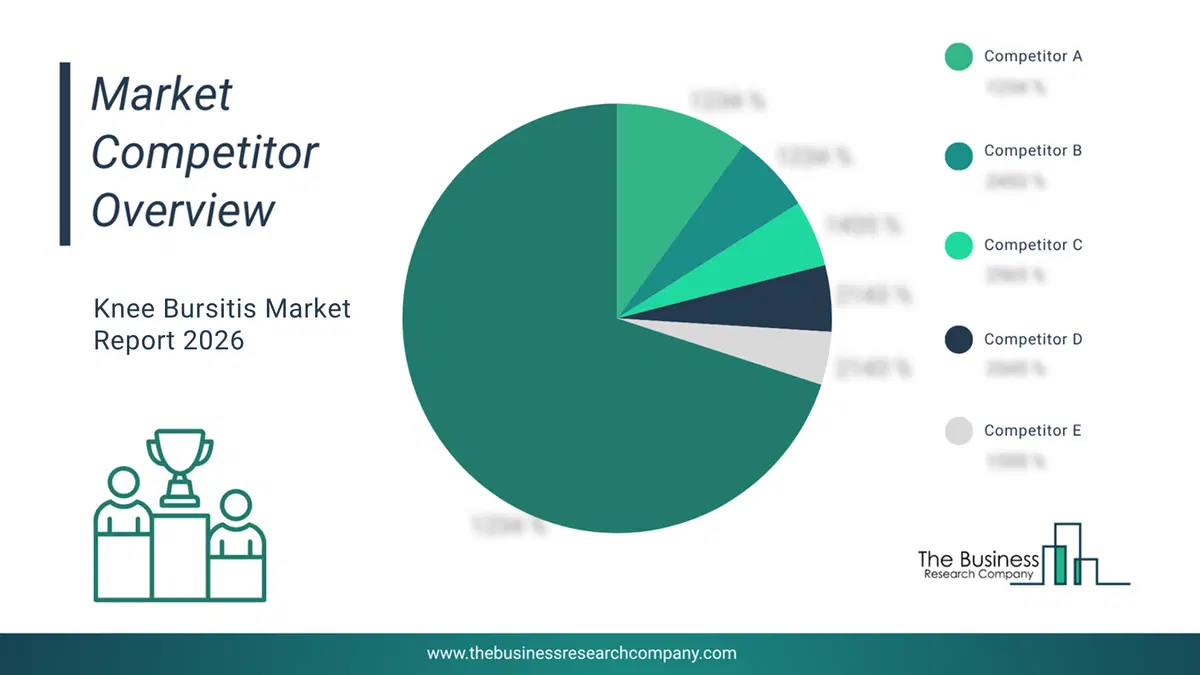
This chart is for illustrative purposes; the full report includes a detailed competitor analysis and comprehensive overview of the top 10 companies in the market.
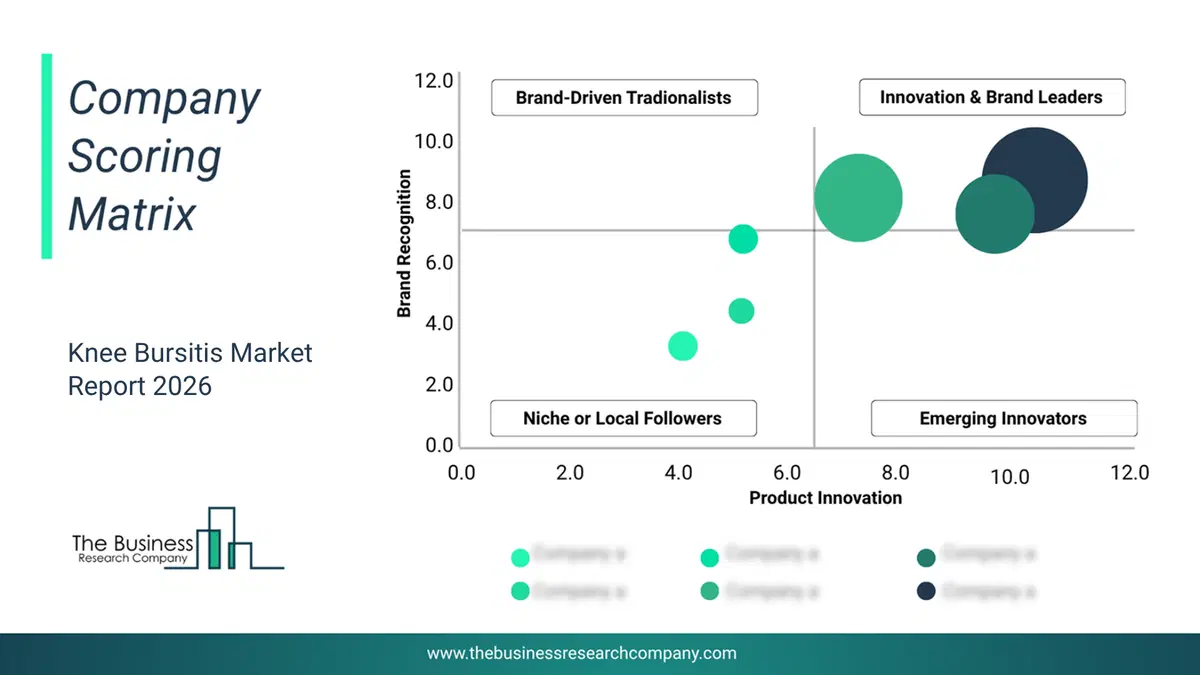
This chart maps companies by product innovation and brand strength, with bubble size indicating relative revenue, helping identify market leaders, challengers, and niche players. This is an illustrative chart; the full report provides a complete and accurate competitive analysis.
Regional Outlook
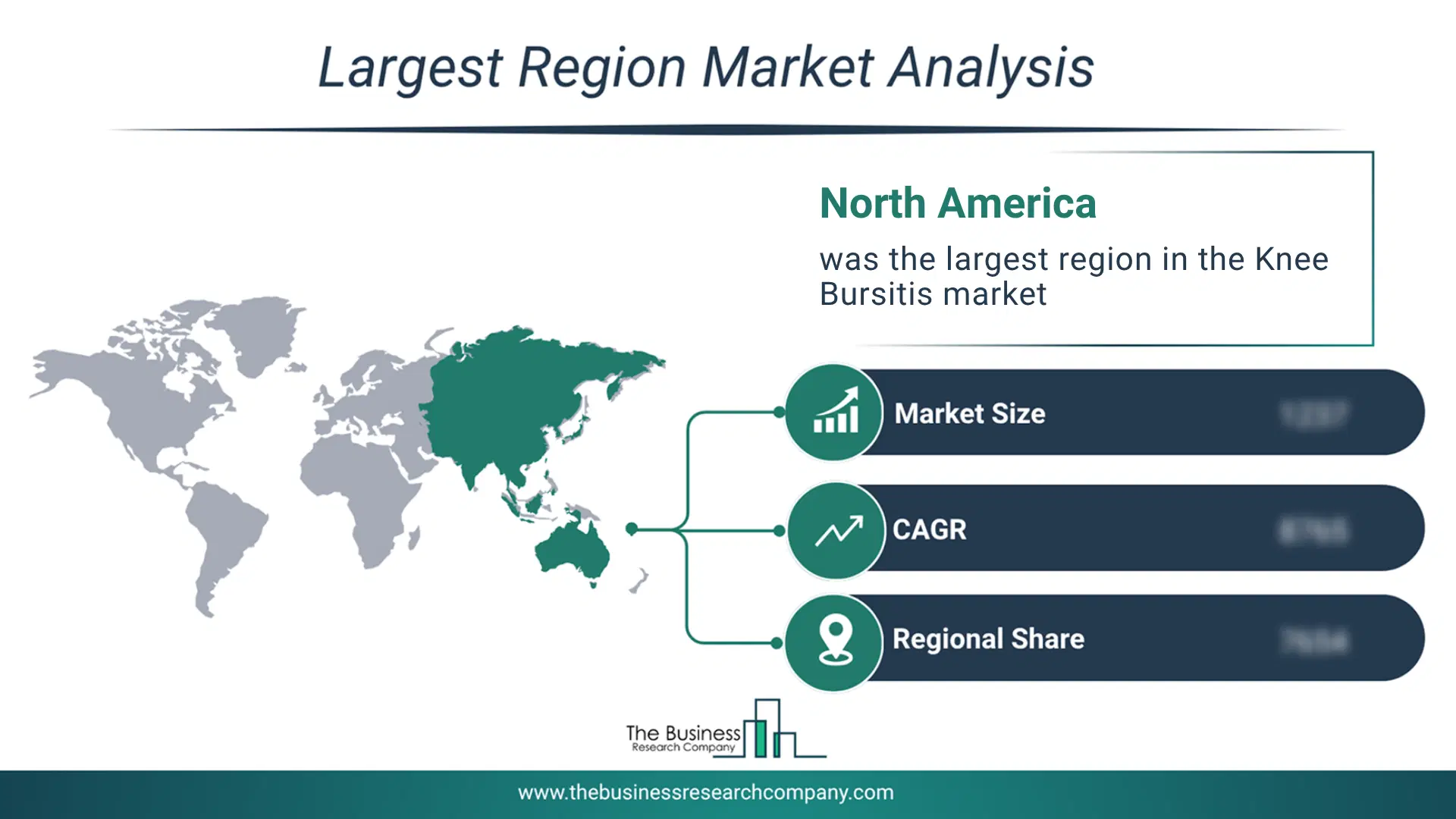
North America was the largest region in the knee bursitis market in 2025. Asia-Pacific is expected to be the fastest-growing region in the forecast period. The regions covered in this market report are Asia-Pacific, South East Asia, Western Europe, Eastern Europe, North America, South America, Middle East, Africa. The countries covered in this market report are Australia, Brazil, China, France, Germany, India, Indonesia, Japan, Taiwan, Russia, South Korea, UK, USA, Canada, Italy, Spain.What Defines the Knee Bursitis Market?
The knee bursitis market consists of revenues earned by entities by providing services such as medical consultation, medication management, surgical intervention, and rehabilitation services. The market value includes the value of related goods sold by the service provider or included within the service offering. The knee bursitis market also includes sales of knee braces and supports, cold packs and heat wraps, anti-inflammatory medications, and corticosteroid injections. Values in this market are ‘factory gate’ values, that is the value of goods sold by the manufacturers or creators of the goods, whether to other entities (including downstream manufacturers, wholesalers, distributors and retailers) or directly to end customers. The value of goods in this market includes related services sold by the creators of the goods.How is Market Value Defined and Measured?
The market value is defined as the revenues that enterprises gain from the sale of goods and/or services within the specified market and geography through sales, grants, or donations in terms of the currency (in USD unless otherwise specified). The revenues for a specified geography are consumption values that are revenues generated by organizations in the specified geography within the market, irrespective of where they are produced. It does not include revenues from resales along the supply chain, either further along the supply chain or as part of other products.
This chart presents market attractiveness based on a quantitative evaluation of growth, competition, strategic alignment, and risk, offering a clear view of opportunity areas for decision-making. This chart is for illustrative purposes; the full report contains the complete analysis.

This chart highlights the Total Addressable Market (TAM) by estimating the maximum revenue opportunity using an assumption-driven approach, supporting strategic planning and opportunity sizing across markets. The chart is illustrative; the full report provides a more comprehensive analysis.
What Key Data and Analysis Are Included in the Knee Bursitis Market Report 2026?
The knee bursitis market research report is one of a series of new reports from The Business Research Company that provides market statistics, including industry global market size, regional shares, competitors with the market share, detailed market segments, market trends and opportunities, and any further data you may need to thrive in the knee bursitis industry. The market research report delivers a complete perspective of everything you need, with an in-depth analysis of the current and future state of the industry.Knee Bursitis Market Report Forecast Analysis
| Report Attribute | Details |
|---|---|
| Market Size Value In 2026 | $3.06 billion |
| Revenue Forecast In 2030 | $3.92 billion |
| Growth Rate | CAGR of 6.4% from 2026 to 2030 |
| Base Year For Estimation | 2025 |
| Actual Estimates/Historical Data | 2020-2025 |
| Forecast Period | 2026 - 2030 |
| Market Representation | Revenue in USD Billion and CAGR from 2026 to 2030 |
| Segments Covered | Diagnosis, Treatment, End User |
| Regional Scope | Asia-Pacific, Western Europe, Eastern Europe, North America, South America, Middle East, Africa |
| Country Scope | The countries covered in the report are Australia, Brazil, China, France, Germany, India, Indonesia, Japan, Taiwan, Russia, South Korea, UK, USA, Canada, Italy, Spain |
| Key Companies Profiled | Pfizer Inc., Merck & Co. Inc., Bayer AG, Novartis AG, Eli Lilly and Company, AbbVie Inc., Johnson & Johnson, Sanofi SA, GlaxoSmithKline plc, Takeda Pharmaceutical Company Limited, Stryker Corporation, Zimmer Biomet Holdings Inc., Arthrex Inc., Smith & Nephew plc, Medtronic plc, Exactech Inc., Conformis Inc., Bioventus LLC, Horizon Therapeutics plc, Amneal Pharmaceuticals Inc. |
| Customization Scope | Request for Customization |
| Pricing And Purchase Options | Explore Purchase Options |