
Lab-On-Skin Microfluidic Patch Market Report 2026
Global Outlook – By Product Type (Diagnostic Patches, Monitoring Patches), By Material Type (Polymer-Based, Hybrid, Other Material Types), By Application (Healthcare Monitoring, Disease Diagnosis, Sports And Fitness, Other Applications), By End-User (Hospitals And Clinics, Homecare, Research Institutes, Sports And Fitness Centers, Other End-Users) – Market Size, Trends, Strategies, and Forecast to 2030
Lab-On-Skin Microfluidic Patch Market Overview
• Lab-On-Skin Microfluidic Patch market size has reached to $1.44 billion in 2025 • Expected to grow to $3.57 billion in 2030 at a compound annual growth rate (CAGR) of 19.9% • Growth Driver: Increasing Emphasis On Personalized Medicine Fuelling The Growth Of The Market Amid Rising Demand For Precision Healthcare • Market Trend: Integration Of Microfluidic Technologies To Improve Real-Time Biosensing And Health Monitoring • North America was the largest region in 2025 and Asia-Pacific is the fastest growing region.What Is Covered Under Lab-On-Skin Microfluidic Patch Market?
Lab-on-skin microfluidic patch refers to a wearable device that integrates microfluidic technology onto a flexible, skin-conforming substrate to continuously collect and analyze biofluids such as sweat, interstitial fluid, or tears. It functions as a miniaturized laboratory on the skin, enabling real-time monitoring of physiological parameters like electrolytes, glucose, lactate, or hydration levels for health diagnostics, athletic performance, or personalized medicine applications. The main product types of lab-on-skin microfluidic patches are diagnostic patches, therapeutic patches, monitoring patches, and others. Diagnostic patches are skin-worn devices that detect and identify biomarkers such as ions, metabolites, or proteins to indicate disease state or physiological conditions. These patches are made from materials including polymer-based, paper-based, hybrid, and others. They are applied in healthcare monitoring, disease diagnosis, drug delivery, sports and fitness, and others, serving end-users including hospitals and clinics, homecare, research institutes, sports and fitness centers, and others.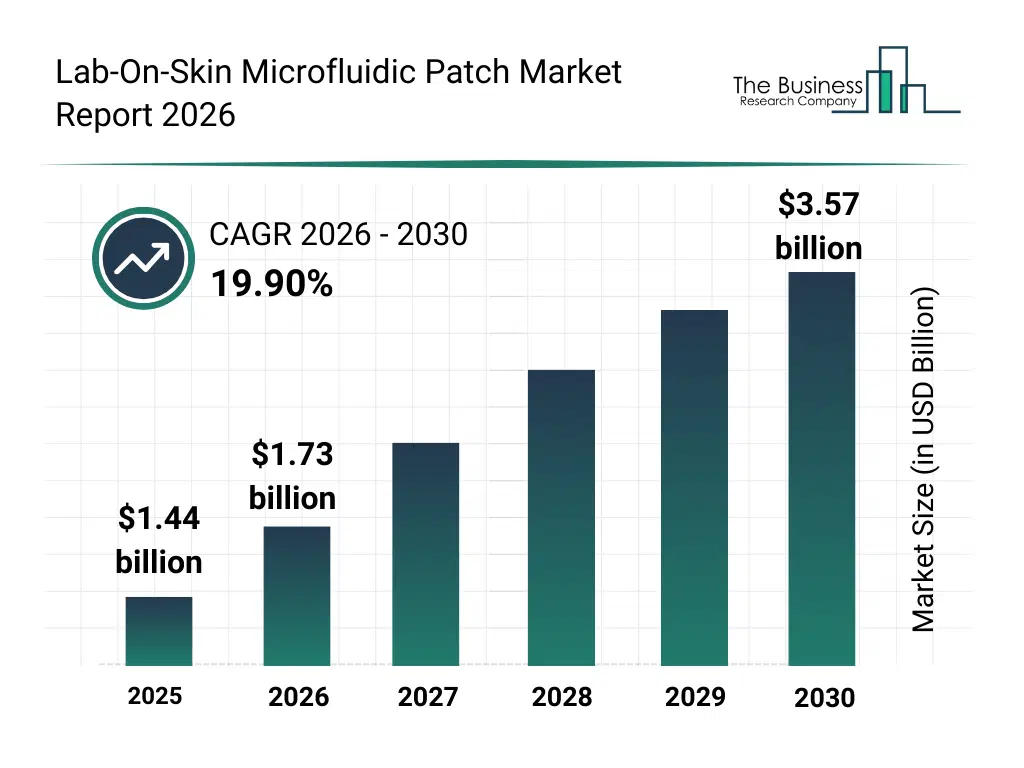
What Is The Lab-On-Skin Microfluidic Patch Market Size and Share 2026?
The lab-on-skin microfluidic patch market size has grown exponentially in recent years. It will grow from $1.44 billion in 2025 to $1.73 billion in 2026 at a compound annual growth rate (CAGR) of 20.1%. The growth in the historic period can be attributed to advances in microfluidics, wearable healthcare technology adoption, growth of sports analytics, increasing demand for non-invasive diagnostics, research in biofluid analysis.What Is The Lab-On-Skin Microfluidic Patch Market Growth Forecast?
The lab-on-skin microfluidic patch market size is expected to see rapid growth in the next few years. It will grow to $3.57 billion in 2030 at a compound annual growth rate (CAGR) of 19.9%. The growth in the forecast period can be attributed to integration with AI-driven analytics, expansion in personalized medicine, remote patient monitoring growth, adoption in fitness & wellness sectors, technological innovation in patch materials. Major trends in the forecast period include continuous health monitoring, non-invasive diagnostics, personalized medicine devices, sports & fitness analytics, real-time biomarker detection.
Global Lab-On-Skin Microfluidic Patch Market Segmentation
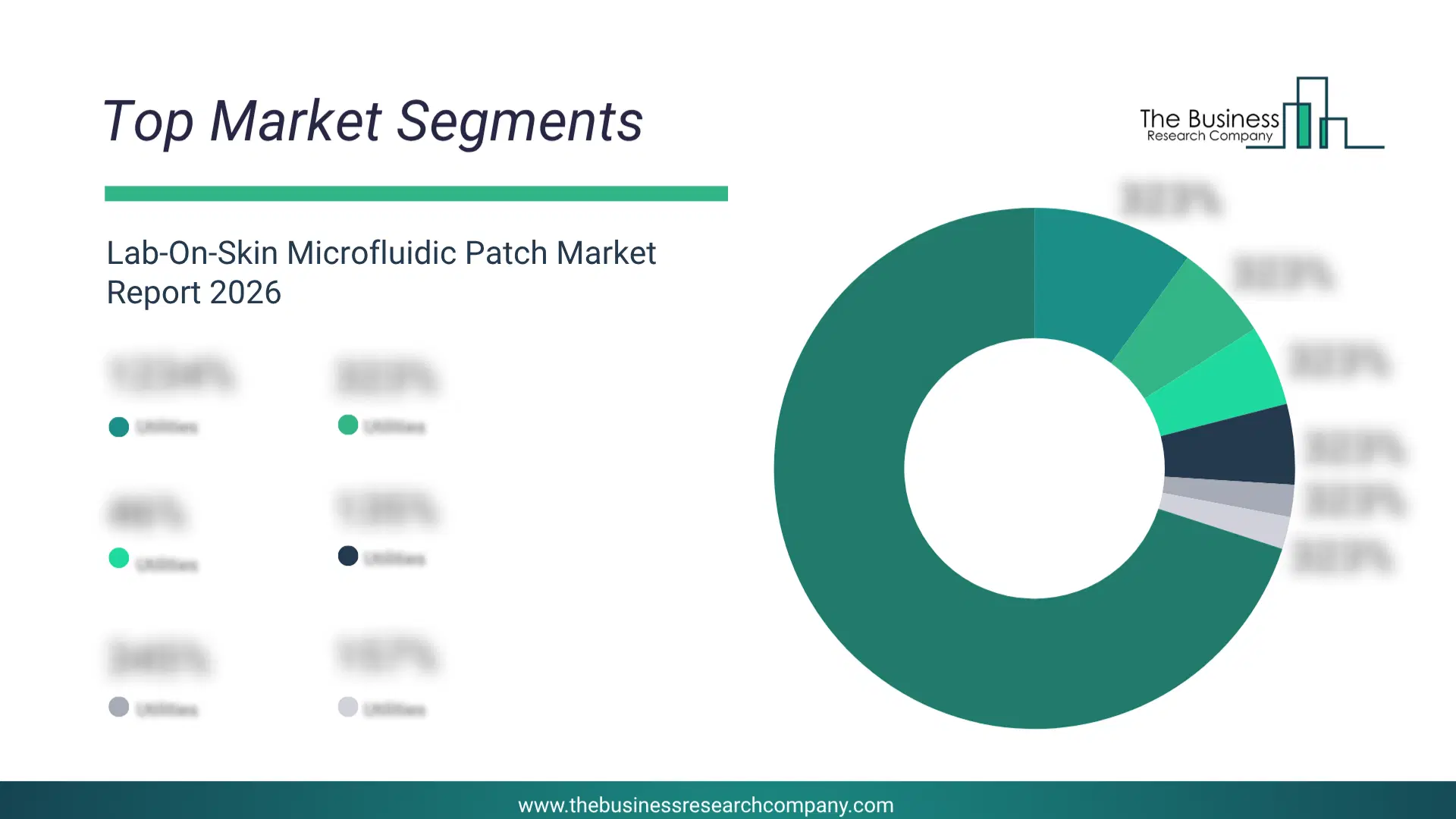
1) By Product Type: Diagnostic Patches, Monitoring Patches 2) By Material Type: Polymer-Based, Hybrid, Other Material Types 3) By Application: Healthcare Monitoring, Disease Diagnosis, Sports And Fitness, Other Applications 4) By End-User: Hospitals And Clinics, Homecare, Research Institutes, Sports And Fitness Centers, Other End-Users Subsegments: 1) By Diagnostic Patches: Sweat-Based Microfluidic Diagnostic Patches, Interstitial Fluid Microfluidic Diagnostic Patches, Glucose and Metabolite Detection Microfluidic Patches, Electrolyte and Biomarker Analysis Microfluidic Patches, Multi-Analyte Lab-on-Skin Diagnostic Patches 2) By Monitoring Patches: Continuous Hydration Monitoring Microfluidic Patches, Continuous Lactate Monitoring Microfluidic Patches, Electrolyte Balance Monitoring Microfluidic Patches, Stress and Fatigue Monitoring Microfluidic Patches (Biochemical-Based), Personalized Health Monitoring Lab-on-Skin PatchesWhat Is The Driver Of The Lab-On-Skin Microfluidic Patch Market?
The increasing emphasis on personalized medicine is expected to propel the growth of the lab-on-skin microfluidic patch market going forward. Personalized medicine refers to a healthcare approach that customizes medical care to the individual characteristics of each patient, focusing on genetic, biomarker, and clinical information to optimize treatment outcomes. Rising use of personalized medicine is driven by advances in genomics and biotechnology, enabling precise diagnosis and targeted treatments that improve patient outcomes and minimize ineffective therapies. Lab-on-skin microfluidic patches support personalized medicine by continuously monitoring individual biomarkers to enable real-time, tailored treatment decisions. For instance, in February 2024, according to the Personalized Medicine Coalition (PMC), a US-based nonprofit organization promoting personalized medicine, the US Food and Drug Administration (FDA) approved 16 new personalized treatments for rare disease patients in 2023, up from six in 2022. Therefore, the increasing emphasis on personalized medicine is driving the growth of the lab-on-skin microfluidic patch industry.Key Players In The Global Lab-On-Skin Microfluidic Patch Market
Major companies operating in the lab-on-skin microfluidic patch market are Epicore Biosystems, Xsensio SA, Persperity Health Inc., Nutromics Pty Ltd., Biolinq Inc., Flow Bio Ltd., GraphWear Technologies Inc., GENTAG Inc., Nemaura Medical Inc., Kenzen Inc., Aline Inc., Eccrine Systems Inc., Nix Biosensors, Sonera, Zansors LLC, PointFit Technology Co. Ltd., Bitome Inc., Arma Biosciences, VivaLNK Inc., MC10 Inc., BioIntelliSense Inc.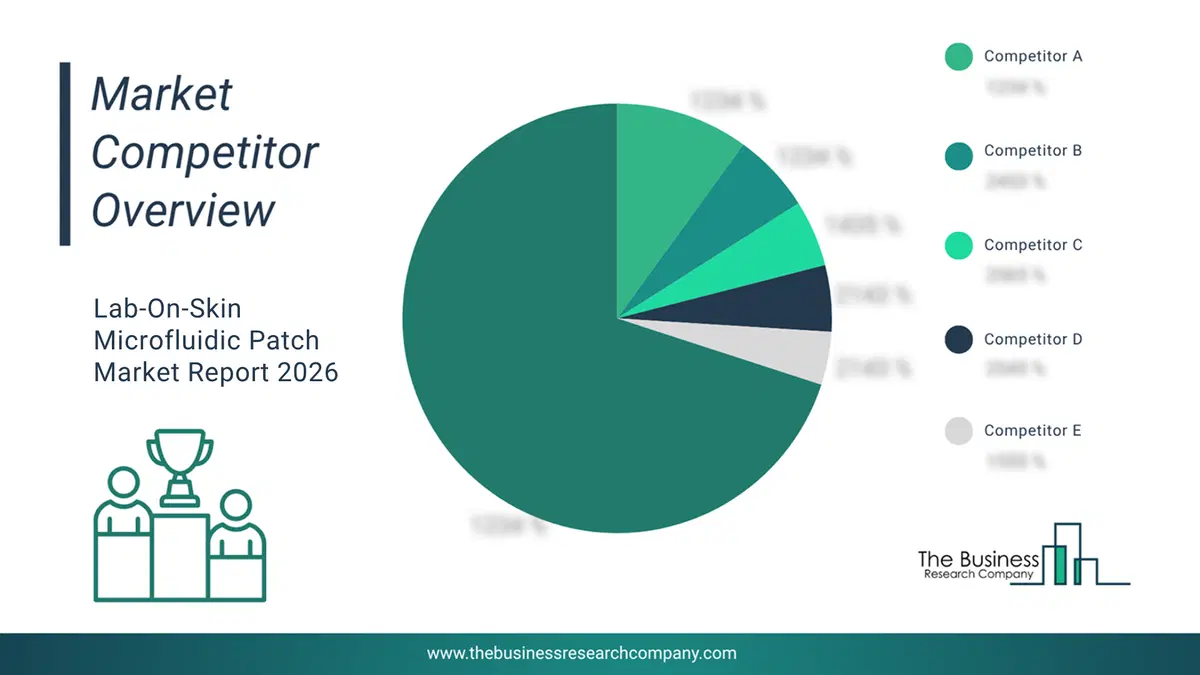
This chart is for illustrative purposes; the full report includes a detailed competitor analysis and comprehensive overview of the top 10 companies in the market.
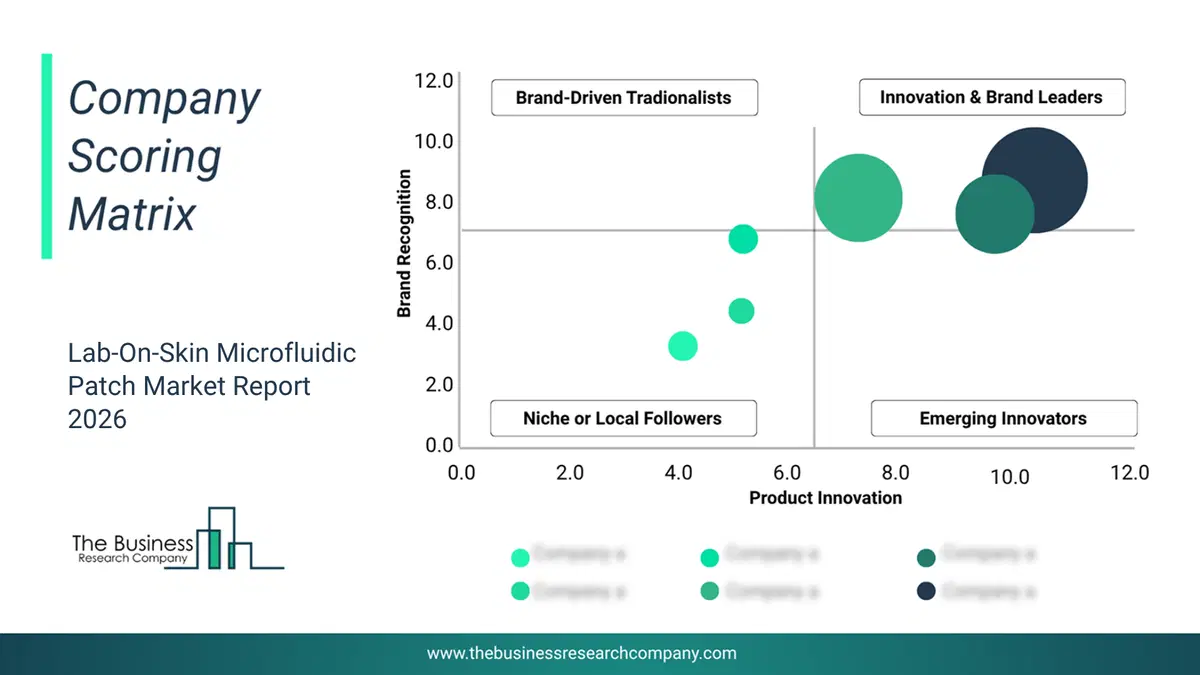
This chart maps companies by product innovation and brand strength, with bubble size indicating relative revenue, helping identify market leaders, challengers, and niche players. This is an illustrative chart; the full report provides a complete and accurate competitive analysis.
Global Lab-On-Skin Microfluidic Patch Market Trends and Insights
Major companies operating in the lab-on-skin microfluidic patch market are focusing on developing technological advancements such as sweat-sensing patches to enable real-time health monitoring and personalized diagnostics. A sweat-sensing patch refers to a wearable device that collects and analyzes sweat to monitor biomarkers, electrolytes, and other physiological parameters in real time. For instance, in April 2024, Epicore Biosystems Inc., a US-based digital health company, launched Connected Hydration, a wearable microfluidic patch and mobile app designed to help industrial workers prevent dehydration and heat stress through continuous sweat and electrolyte monitoring. It provides real-time personalized hydration insights, vibration alerts, and AI-driven guidance to optimize fluid intake before fatigue or injury occurs. By combining lab-on-skin sensing, cloud analytics, and a long-life battery design, Connected Hydration enhances worker safety, productivity, and resilience in extreme heat environments across global industrial sectors.What Are Latest Mergers And Acquisitions In The Lab-On-Skin Microfluidic Patch Market?
In February 2024, Epicore Biosystems Inc., a US-based digital health company, partnered with the US Anti-Doping Agency (USADA) to deploy its microfluidic sweat patch technology for doping control. Through this collaboration aims to expand its lab-on-skin microfluidic patch application by enabling non-invasive sweat biomarker collection for drug detection, improving the convenience and timeliness of anti-doping testing, and offering real-time health data feedback to athletes. The US Anti-Doping Agency is a US-based non-profit, non-governmental organization that offers a comprehensive anti-doping program for ParaPan American sports in the United States.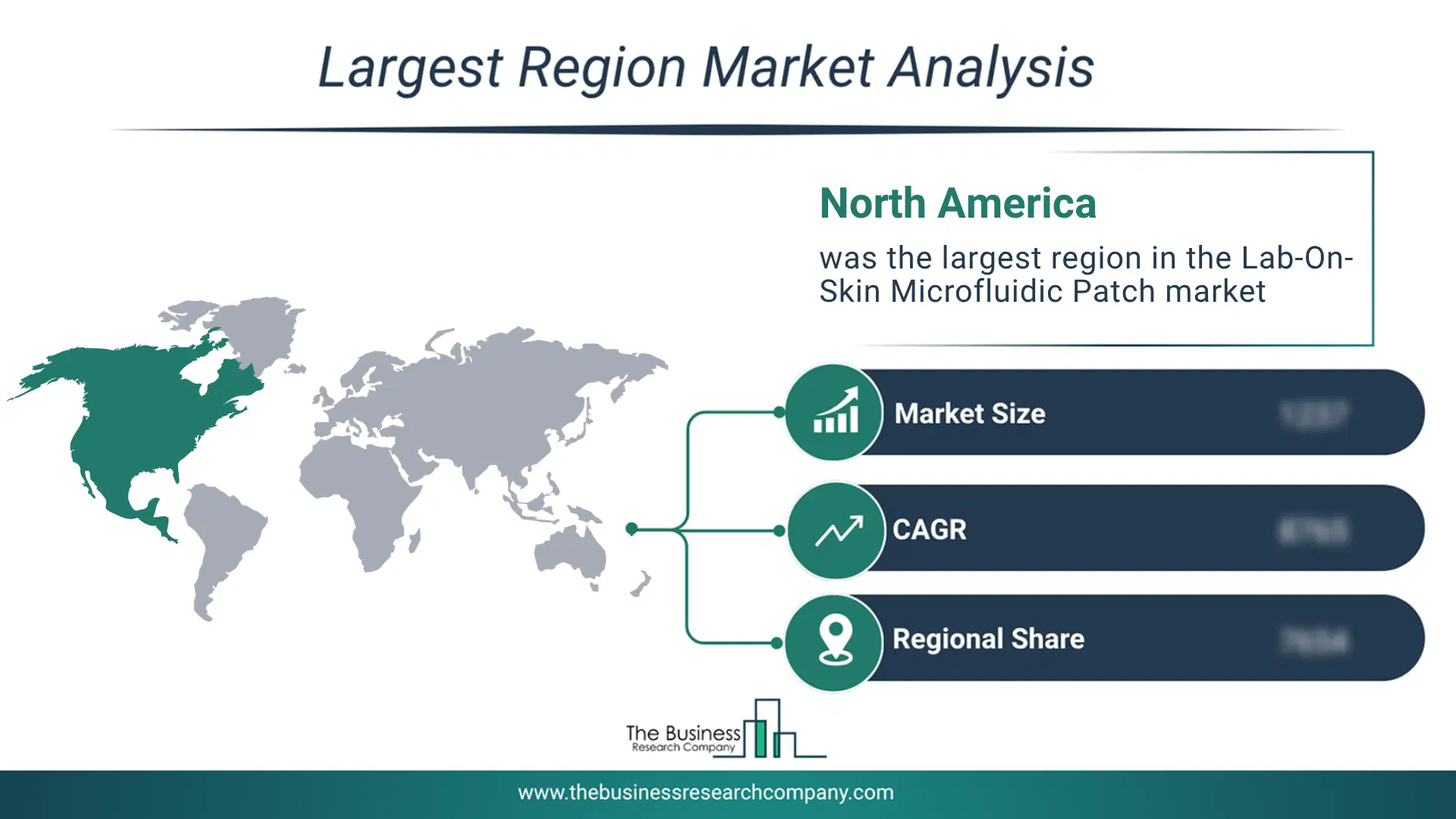
Regional Outlook
North America was the largest region in the lab-on-skin microfluidic patch market in 2025. Asia-Pacific is expected to be the fastest-growing region in the forecast period. The regions covered in this market report are Asia-Pacific, South East Asia, Western Europe, Eastern Europe, North America, South America, Middle East, Africa. The countries covered in this market report are Australia, Brazil, China, France, Germany, India, Indonesia, Japan, Taiwan, Russia, South Korea, UK, USA, Canada, Italy, SpainWhat Defines the Lab-On-Skin Microfluidic Patch Market?
The lab-on-skin microfluidic patch market consists of sales of sensors, microfluidic chips, flexible substrates, electrodes, biosensors, hydrogels, and wearable bands. Values in this market are ‘factory gate’ values, that is the value of goods sold by the manufacturers or creators of the goods, whether to other entities (including downstream manufacturers, wholesalers, distributors and retailers) or directly to end customers. The value of goods in this market includes related services sold by the creators of the goods.How is Market Value Defined and Measured?
The market value is defined as the revenues that enterprises gain from the sale of goods and/or services within the specified market and geography through sales, grants, or donations in terms of the currency (in USD unless otherwise specified). The revenues for a specified geography are consumption values that are revenues generated by organizations in the specified geography within the market, irrespective of where they are produced. It does not include revenues from resales along the supply chain, either further along the supply chain or as part of other products.
This chart presents market attractiveness based on a quantitative evaluation of growth, competition, strategic alignment, and risk, offering a clear view of opportunity areas for decision-making. This chart is for illustrative purposes; the full report contains the complete analysis.

This chart highlights the Total Addressable Market (TAM) by estimating the maximum revenue opportunity using an assumption-driven approach, supporting strategic planning and opportunity sizing across markets. The chart is illustrative; the full report provides a more comprehensive analysis.
What Key Data and Analysis Are Included in the Lab-On-Skin Microfluidic Patch Market Report 2026?
The lab-on-skin microfluidic patch market research report is one of a series of new reports from The Business Research Company that provides market statistics, including industry global market size, regional shares, competitors with the market share, detailed market segments, market trends and opportunities, and any further data you may need to thrive in the lab-on-skin microfluidic patch industry. The market research report delivers a complete perspective of everything you need, with an in-depth analysis of the current and future state of the industry.Lab-On-Skin Microfluidic Patch Market Report Forecast Analysis
| Report Attribute | Details |
|---|---|
| Market Size Value In 2026 | $1.73 billion |
| Revenue Forecast In 2030 | $3.57 billion |
| Growth Rate | CAGR of 19.9% from 2026 to 2030 |
| Base Year For Estimation | 2025 |
| Actual Estimates/Historical Data | 2020-2025 |
| Forecast Period | 2026 - 2030 |
| Market Representation | Revenue in USD Billion and CAGR from 2026 to 2030 |
| Segments Covered | Product Type, Material Type, Application, End-User |
| Regional Scope | Asia-Pacific, Western Europe, Eastern Europe, North America, South America, Middle East, Africa |
| Country Scope | The countries covered in the report are Australia, Brazil, China, France, Germany, India, Indonesia, Japan, Taiwan, Russia, South Korea, UK, USA, Canada, Italy, Spain. |
| Key Companies Profiled | Epicore Biosystems, Xsensio SA, Persperity Health Inc., Nutromics Pty Ltd., Biolinq Inc., Flow Bio Ltd., GraphWear Technologies Inc., GENTAG Inc., Nemaura Medical Inc., Kenzen Inc., Aline Inc., Eccrine Systems Inc., Nix Biosensors, Sonera, Zansors LLC, PointFit Technology Co. Ltd., Bitome Inc., Arma Biosciences, VivaLNK Inc., MC10 Inc., BioIntelliSense Inc. |
| Customization Scope | Request for Customization |
| Pricing And Purchase Options | Explore Purchase Options |