

Lentiviral Vector Market Report 2026
Global Outlook – By Product Type (Kits, Reagents And Consumables), By Indication (Cancer, Genetic Disorder, Infectious Disease, Veterinary Disease, Other Indications), By End User (Biotechnology Companies, Pharmaceutical Companies, Contract Research Organization (CRO), Academic And Research Institutes) – Market Size, Trends, Strategies, and Forecast to 2030
Lentiviral Vector Market Overview
• Lentiviral Vector market size has reached to $16.48 billion in 2025 • Expected to grow to $30.66 billion in 2030 at a compound annual growth rate (CAGR) of 12.8% • Growth Driver: Lentiviral Vectors Market Driven By Rising Prevalence Of Chronic Diseases • Market Trend: Technological Advancements In Lentiviral Vector Production For Immuno-Oncology Therapies • North America was the largest region in 2025 and Asia-Pacific is the fastest growing region.Market Gains By 2030 – Top Opportunities By Segment
Market Gain identifies the most promising market opportunities by highlighting the segments or products expected to generate the highest incremental revenue growth over the next five years.
What Is Covered Under Lentiviral Vector Market?
A lentiviral vector refers to a type of viral vector derived from lentiviruses, a subgroup of retroviruses known for their ability to integrate genetic material into the DNA of the host cell's genome. These vectors are commonly used in molecular biology and gene therapy applications to deliver genetic material into target cells for various purposes, including gene expression, gene silencing, or genetic modification. The main types of products in the lentiviral vector are kits, reagents and consumables. Lentiviral vector kits encompass a comprehensive set of tools and components required for the generation and manipulation of lentiviral vectors. It can be used for various indications, including cancer, genetic disorders, infectious diseases, veterinary diseases, and others, and it includes various users such as biotechnology companies, pharmaceutical companies, contract research organizations (CROs), and academic and research institutes.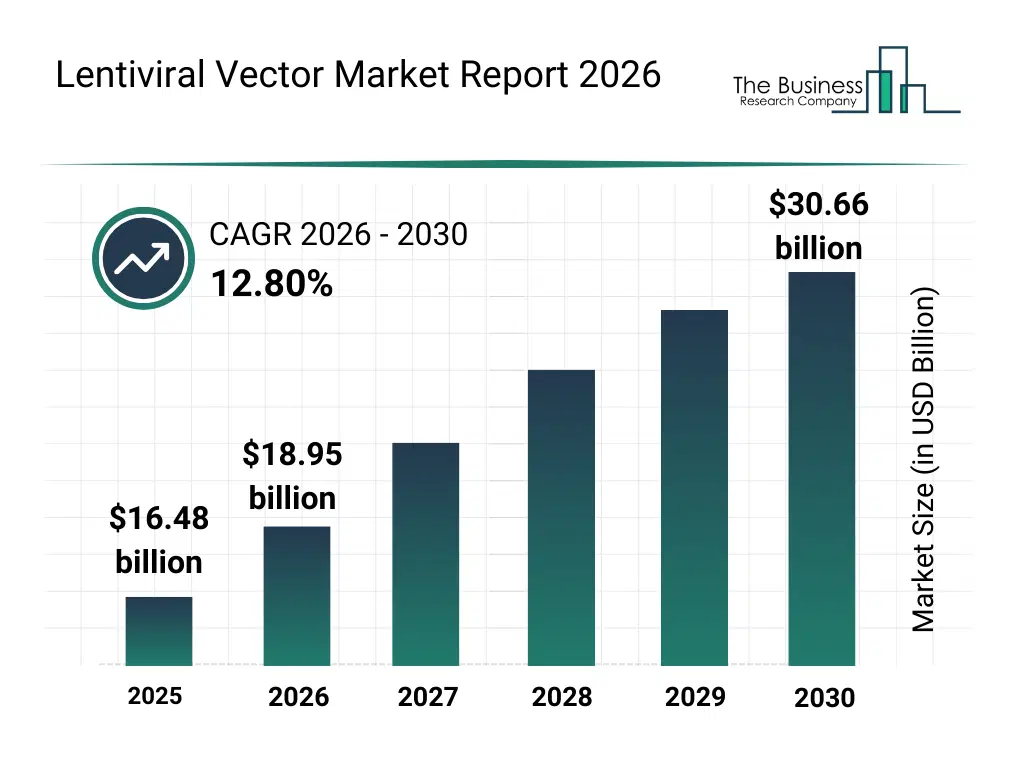
What Is The Lentiviral Vector Market Size and Share 2026?
The lentiviral vector market size has grown rapidly in recent years. It will grow from $16.48 billion in 2025 to $18.95 billion in 2026 at a compound annual growth rate (CAGR) of 15.0%. The growth in the historic period can be attributed to development of stable lentiviral production methods, increasing prevalence of genetic disorders, growth in academic and clinical research, rising investments in gene therapy R&D, availability of transduction and packaging kits.What Is The Lentiviral Vector Market Growth Forecast?
The lentiviral vector market size is expected to see rapid growth in the next few years. It will grow to $30.66 billion in 2030 at a compound annual growth rate (CAGR) of 12.8%. The growth in the forecast period can be attributed to expansion of gene therapy pipelines, adoption of automated vector production systems, collaborations between biotech and pharma companies, emergence of novel lentiviral vector applications, increased demand from emerging markets. Major trends in the forecast period include gene therapy adoption growth, viral vector engineering advancements, regulatory compliance & approval acceleration, increased research funding for genetic disorders, expansion of contract manufacturing capabilities.
Global Lentiviral Vector Market Segmentation
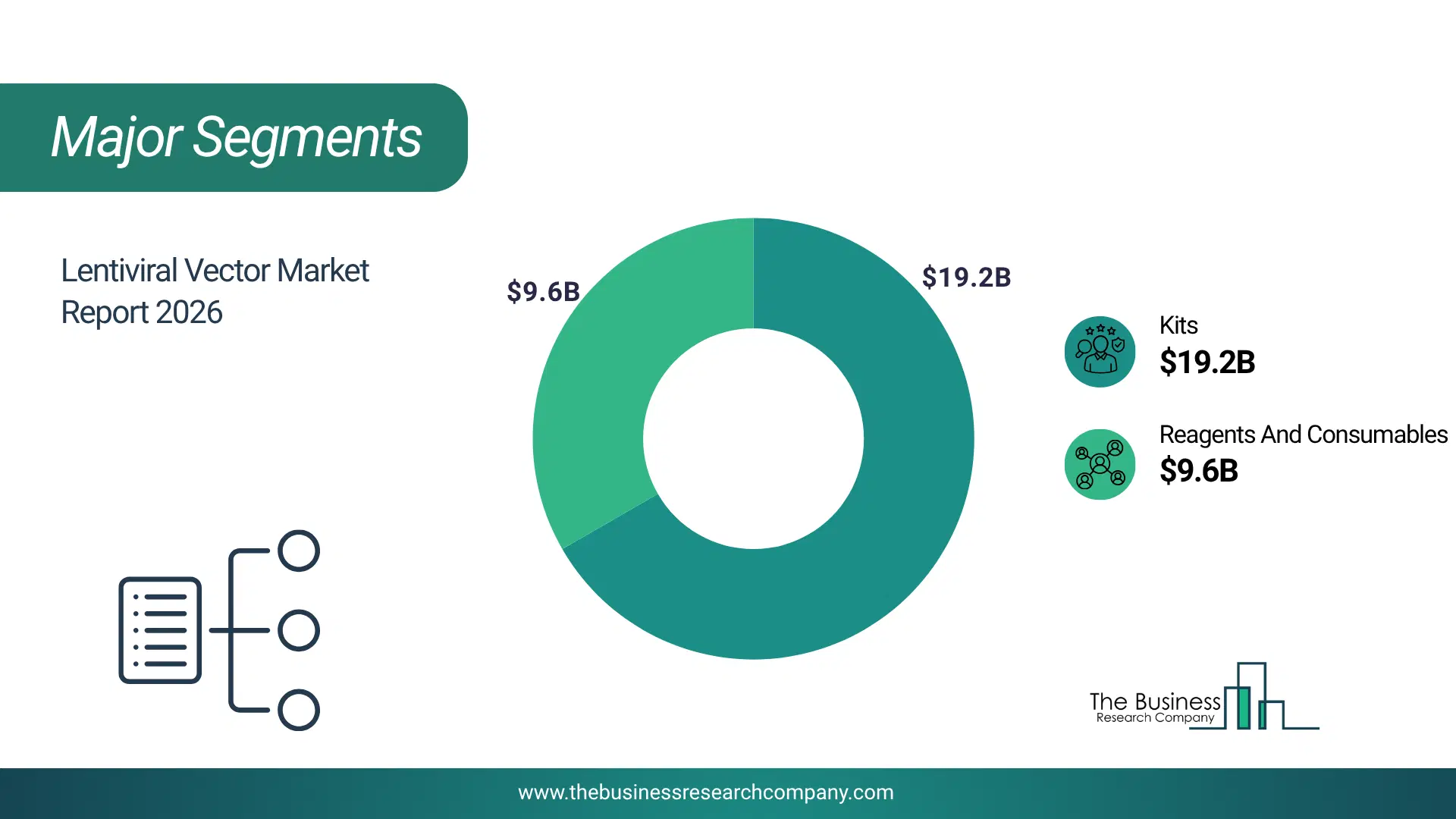
1) By Product Type: Kits, Reagents And Consumables 2) By Indication: Cancer, Genetic Disorder, Infectious Disease, Veterinary Disease, Other Indications 3) By End User: Biotechnology Companies, Pharmaceutical Companies, Contract Research Organization (CRO), Academic And Research Institutes Subsegments: 1) By Kits: Lentiviral Transduction Kits, Lentiviral Packaging Kits, Lentiviral Vector Production Kits 2) By Reagents and Consumables: Lentiviral Packaging Reagents, Lentiviral Vector Concentration Reagents, Transfection Reagents for Lentiviral Vectors The top segments in the lentiviral vector market will be: • Kits will reach $19.13 billion by 2030. • Reagents And Consumables will reach $9.53 billion by 2030.What Is The Driver Of The Lentiviral Vector Market?
The increasing prevalence of chronic diseases is expected to propel the lentiviral vectors market going forward. Chronic diseases refer to long-term medical conditions that typically progress slowly over time and often persist for years or even a lifetime. The prevalence of chronic diseases is increasing due to aging populations, unhealthy lifestyles, urbanization, and environmental factors. Lentiviral vectors offer versatile and efficient tools for developing vaccines and treatment strategies for chronic diseases, addressing unmet medical needs, and improving patient outcomes. For instance, in September 2024, according to the British Heart Foundation, a UK-based cardiovascular research charity, in the UK, approximately 7.6 million people are affected by heart and circulatory diseases, with around 4 million males and 3.6 million females living with these conditions. These diseases are responsible for about 27% of all deaths in the UK, translating to over 170,000 deaths annually, or roughly 480 deaths each day, equating to one death every three minutes. Therefore, the increasing prevalence of chronic diseases is driving the growth of the lentiviral vectors industry.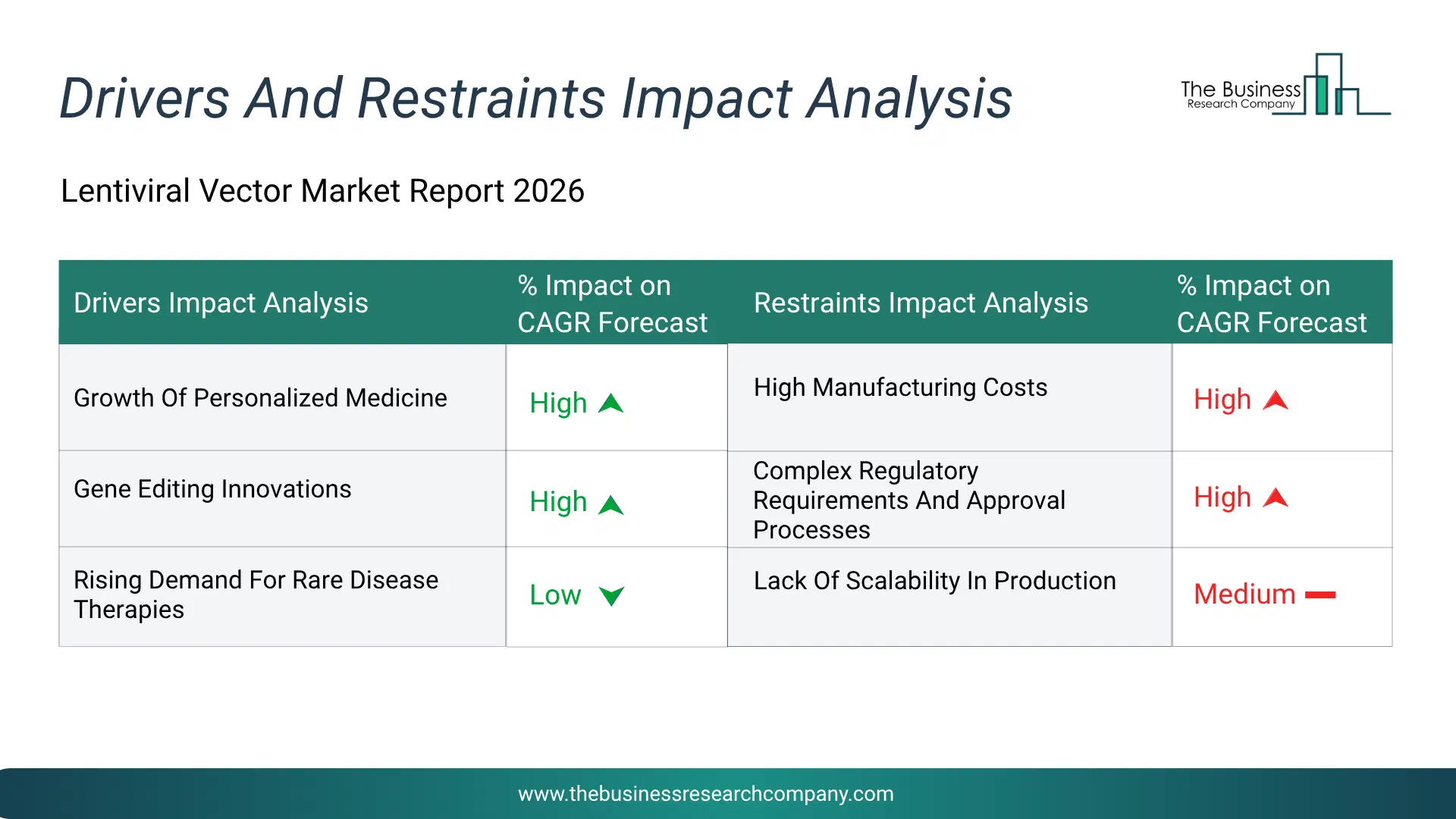
Infographic Chart Showing Key Market Drivers Analysis And Restraints For Lentiviral Vector Market
The chart presents an impact analysis of key drivers and restraints, quantifying their relative influence on the market's growth rate and helping assess the balance between growth enablers and limiting factors. This chart offers a high-level perspective; the full report contains more detailed insights.
How Will The Drivers Impact Growth In The Global Lentiviral Vector Market?
• Growth Of Personalized Medicine (High) – During the forecast period, the growth of personalized medicine is expected to become a key growth driver for the lentiviral vector market by 2030. Precision medicine increasingly depends on gene modification technologies that tailor treatments to a patient’s genetic profile. Lentiviral vectors are widely used to deliver therapeutic genes into patient -derived cells, especially in applications such as car -t cell therapy and ex vivo gene editing. As healthcare systems move toward targeted and individualized treatments, biotechnology firms and research institutions are investing heavily in vector engineering and scalable manufacturing, supporting steady market growth. • Gene Editing Innovations (High) – During the forecast period, gene editing innovations are expected to emerge as a major factor driving the expansion of the lentiviral vector market by 2030. Breakthrough technologies such as crispr genome editing, base editing, and gene insertion increasingly require efficient viral delivery systems to transport genetic material into target cells. Lentiviral vectors are widely used due to their ability to enable stable gene expression and effectively transduce both dividing and non -dividing cells. As gene editing platforms advance, demand for high -quality viral vectors for research, preclinical studies, and therapeutic development is rising, supported by growing collaborations among biotechnology companies, academic institutions, and pharmaceutical firms. • Rising Demand For Rare Disease Therapies (Low) – During the forecast period, the rising demand for rare disease therapies is expected to act as a key growth catalyst for the lentiviral vector market by 2030. Many rare genetic disorders are caused by single -gene mutations that can potentially be corrected through gene replacement or gene modification using lentiviral vectors. These vectors are particularly effective for treating inherited blood disorders and metabolic diseases because they enable stable integration of therapeutic genes for long -term expression. Increasing regulatory approvals for advanced therapies, along with growing investment in orphan drug development and strong patient advocacy support, are accelerating research and expanding treatment pipelines for rare diseases.How Will The Restraints Impact Growth In The Global Lentiviral Vector Market?
• High Manufacturing Costs (High) – During the forecast period, the high manufacturing costs act as a restraint for the lentiviral vector market because producing these vectors requires advanced biotechnology infrastructure, specialized laboratory equipment, and highly controlled manufacturing processes. The production involves complex cell culture techniques, purification procedures, and strict quality control measures to ensure safety and effectiveness. These requirements significantly increase the overall cost of production for manufacturers. Smaller biotechnology companies and research institutions may find it difficult to manage these high expenses, which can limit large-scale production and commercialization. As a result, the high manufacturing costs can slow the overall growth and accessibility of lentiviral vector-based therapies. • Complex Regulatory Requirements And Approval Processes (High) – During the forecast period, the complex regulatory requirements and approval processes act as a restraint for the lentiviral vector market because gene therapy products must comply with strict safety and regulatory standards before reaching commercialization. Regulatory authorities require extensive clinical trials, detailed documentation, and rigorous testing to ensure the safety and effectiveness of lentiviral vector-based therapies. These approval procedures can be lengthy, costly, and technically demanding for biotechnology companies. Delays in regulatory clearance may slow the development and market entry of new therapies. As a result, complex regulatory frameworks can limit the speed at which lentiviral vector technologies are adopted in clinical applications. • Lack Of Scalability In Production (Medium) – During the forecast period, the lack of scalability in production acts as a restraint for the lentiviral vector market because producing these vectors in large quantities while maintaining quality and safety standards is technically challenging. The manufacturing process involves complex cell culture systems, precise purification steps, and strict quality control procedures. Scaling up production for commercial use can require significant infrastructure upgrades and specialized expertise. Inconsistent yields and production limitations may also affect supply for large clinical trials or widespread therapeutic use. As a result, difficulties in scaling up manufacturing can slow the expansion of the lentiviral vector market.Key Players In The Global Lentiviral Vector Market
Major companies operating in the lentiviral vector market are Thermo Fisher Scientific Inc., Lonza Group AG, Cytiva, Takara Bio Inc., Promega Corporation, Bio-Rad Laboratories Inc., Merck KGaA, Agilent Technologies Inc., Oxford Biomedica, Sirion-Biotech GmbH, Yposkesi, Applied Biological Materials Inc., OriGene Technologies Inc., Sino Biological Inc., Charles River Laboratories, Vigene Biosciences, VectorBuilder, Cell Biolabs Inc., Addgene, GeneCopoeia Inc.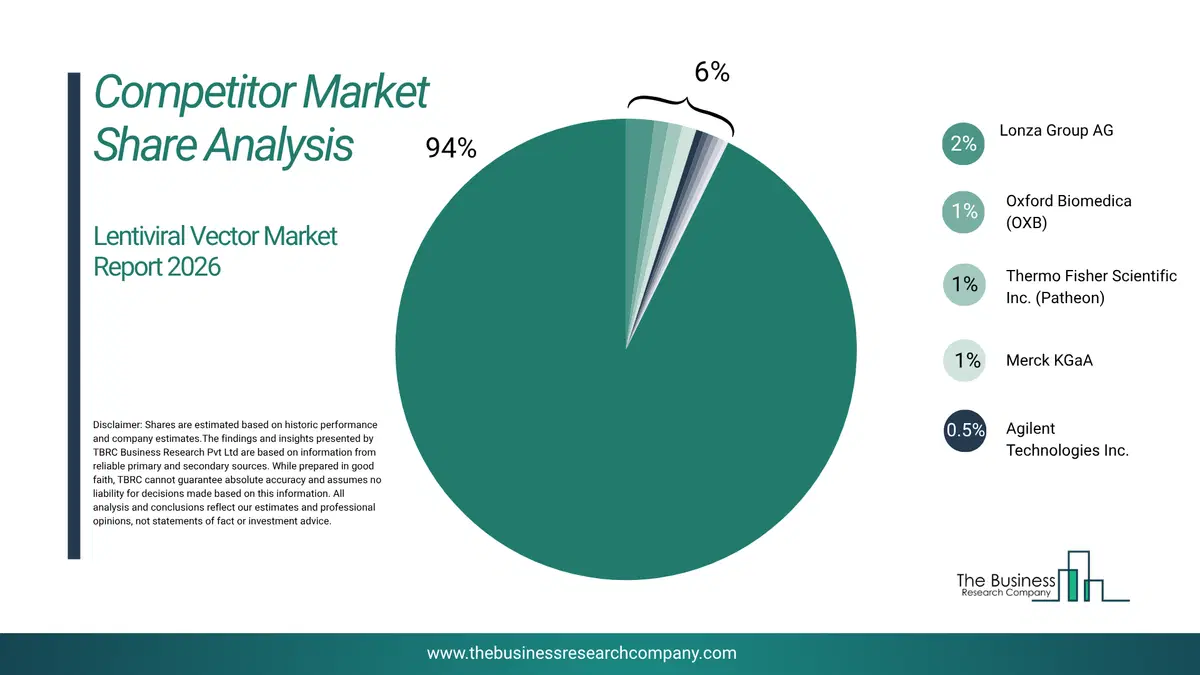
This chart is for illustrative purposes; the full report includes a detailed competitor analysis and comprehensive overview of the top 10 companies in the market.
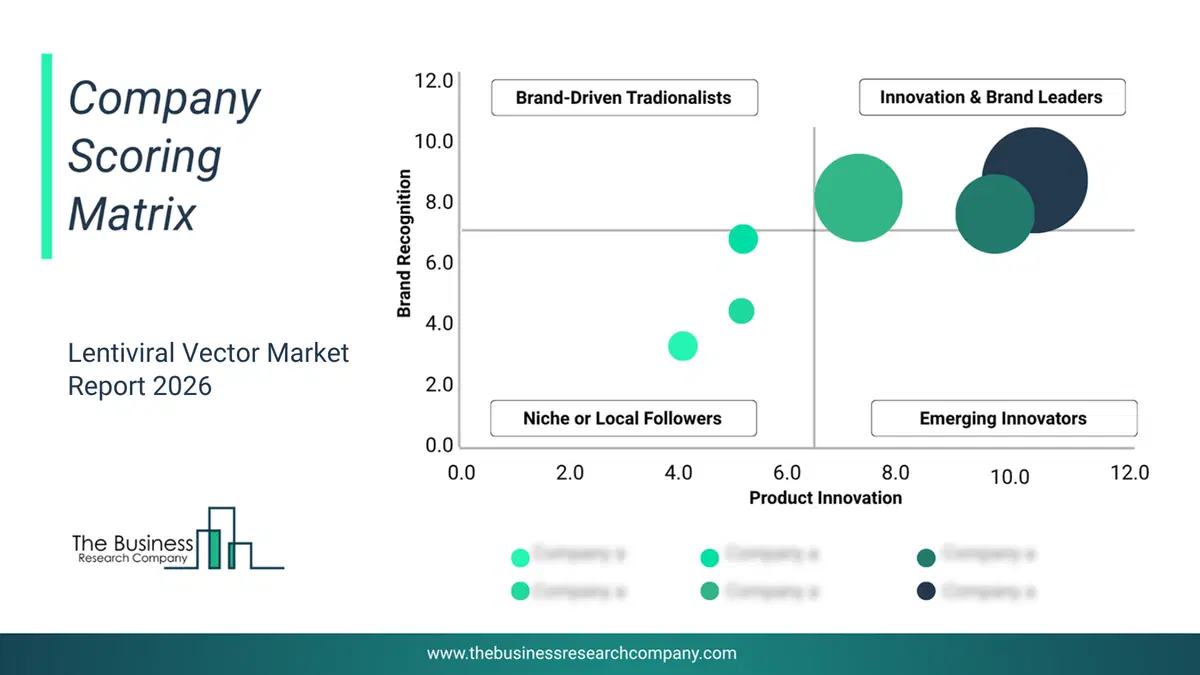
This chart maps companies by product innovation and brand strength, with bubble size indicating relative revenue, helping identify market leaders, challengers, and niche players. This is an illustrative chart; the full report provides a complete and accurate competitive analysis.
Global Lentiviral Vector Market Trends and Insights
Major companies operating in the lentiviral vectors market are focusing on developing LV vector production platforms, such as LentiSure, to enhance the efficiency and robustness of producing lentivirus vectors for cell-based immuno-oncology therapies. LentiSure is the LV vector production platform producing lentiviral vectors used in cell-based immuno-oncology therapies. It is designed to enhance efficiency and robustness in generating vectors. For instance, in May 2023, Yposkesi sk pharmteco, a France-based manufacturer of viral vectors, launched LentiSure, an advanced platform designed to enhance the production of lentiviral (LV) vectors, aiming to improve the resilience and efficiency of lentivirus production. This platform addresses the growing demand for robust and economically scalable viral-vector manufacturing technologies in cell and gene therapies. It offers consistent product quality with average titers at cell culture harvest at 10e7 IG/mL bioreactor volume, ensuring higher productivity and success for cell therapy developers.What Are Latest Mergers And Acquisitions In The Lentiviral Vector Market?
In September 2024, Kyverna Therapeutics Inc., a US-based clinical-stage biopharmaceutical company, signed a license and supply agreement for the LentiVector platform with Oxford Biomedica. This partnership enables Kyverna to leverage Oxford Biomedica’s proprietary lentiviral vector technology for developing gene therapies, particularly for autoimmune diseases. The agreement supports growth and innovation within the lentiviral vector market by providing scalable, reliable vector supply to meet increasing demand. Oxford Biomedica is a UK-based biotechnology company, specializes in providing lentiviral vector platform.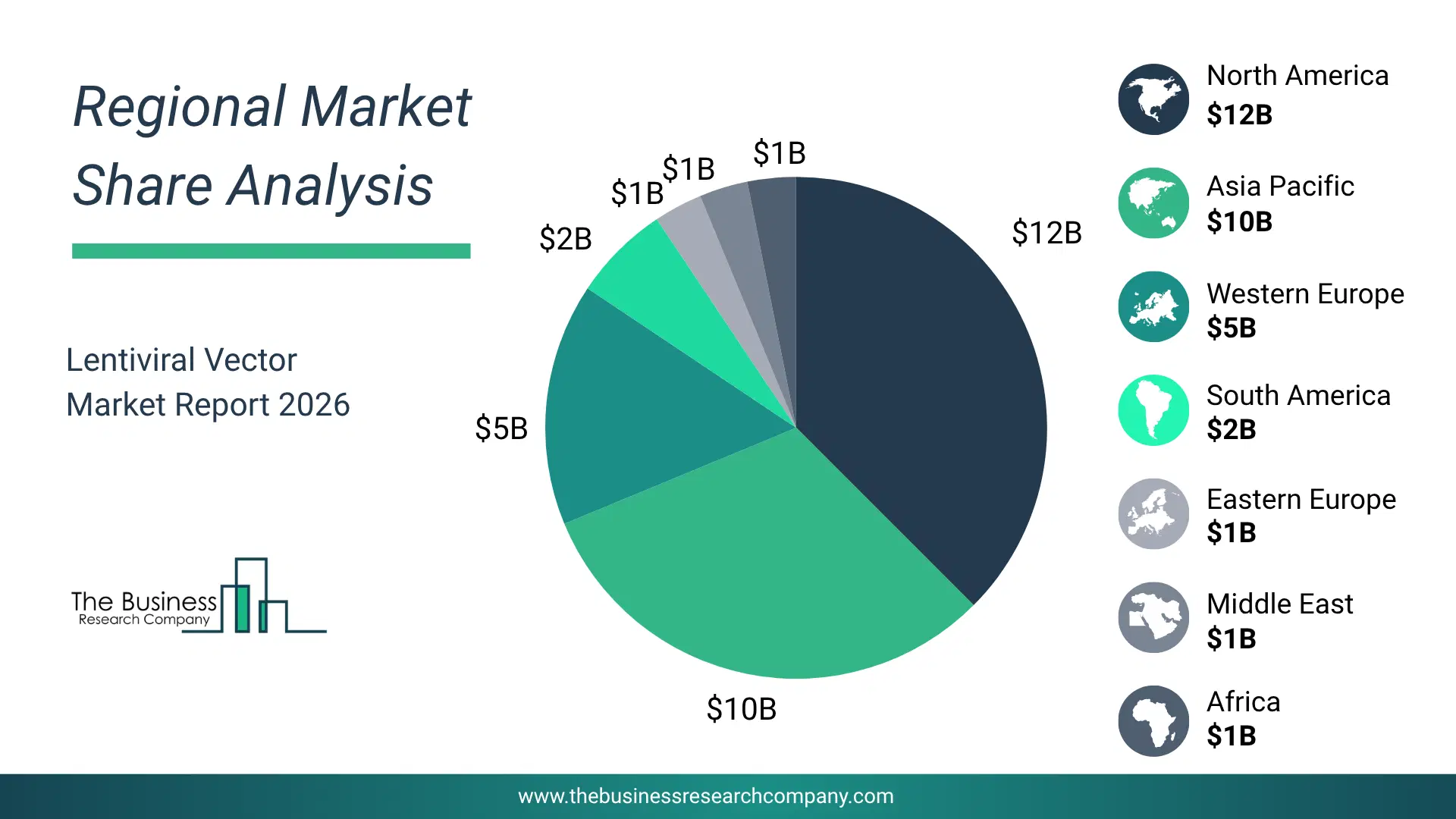
Regional Insights
North America was the largest region in the lentiviral vector market in 2025. Asia-Pacific is expected to be the fastest-growing region in the forecast period. The regions covered in this market report are Asia-Pacific, South East Asia, Western Europe, Eastern Europe, North America, South America, Middle East, Africa. The countries covered in this market report are Australia, Brazil, China, France, Germany, India, Indonesia, Japan, Taiwan, Russia, South Korea, UK, USA, Canada, Italy, Spain.What Defines the Lentiviral Vector Market?
The lentiviral vector market consists of sales of 3rd generation lentiviral vectors, Lenti-ORF clones, and lentiviral particles. Values in this market are ‘factory gate’ values, that is, the value of goods sold by the manufacturers or creators of the goods, whether to other entities (including downstream manufacturers, wholesalers, distributors, and retailers) or directly to end customers. The value of goods in this market includes related services sold by the creators of the goods.How is Market Value Defined and Measured?
The market value is defined as the revenues that enterprises gain from the sale of goods and/or services within the specified market and geography through sales, grants, or donations in terms of the currency (in USD unless otherwise specified). The revenues for a specified geography are consumption values that are revenues generated by organizations in the specified geography within the market, irrespective of where they are produced. It does not include revenues from resales along the supply chain, either further along the supply chain or as part of other products.
This chart presents market attractiveness based on a quantitative evaluation of growth, competition, strategic alignment, and risk, offering a clear view of opportunity areas for decision-making. This chart is for illustrative purposes; the full report contains the complete analysis.

This chart highlights the Total Addressable Market (TAM) by estimating the maximum revenue opportunity using an assumption-driven approach, supporting strategic planning and opportunity sizing across markets. The chart is illustrative; the full report provides a more comprehensive analysis.
What Key Data and Analysis Are Included in the Lentiviral Vector Market Report 2026?
The lentiviral vector market research report is one of a series of new reports from The Business Research Company that provides market statistics, including industry global market size, regional shares, competitors with the market share, detailed market segments, market trends and opportunities, and any further data you may need to thrive in the lentiviral vector industry. The market research report delivers a complete perspective of everything you need, with an in-depth analysis of the current and future state of the industry.Lentiviral Vector Market Report Forecast Analysis
| Report Attribute | Details |
|---|---|
| Market Size Value In 2026 | $18.95 billion |
| Revenue Forecast In 2030 | $30.66 billion |
| Growth Rate | CAGR of 12.8% from 2026 to 2030 |
| Base Year For Estimation | 2025 |
| Actual Estimates/Historical Data | 2020-2025 |
| Forecast Period | 2026 - 2030 |
| Market Representation | Revenue in USD Billion and CAGR from 2026 to 2030 |
| Segments Covered | Product Type, Indication, End User |
| Regional Scope | Asia-Pacific, Western Europe, Eastern Europe, North America, South America, Middle East, Africa |
| Country Scope | The countries covered in the report are Australia, Brazil, China, France, Germany, India, ... |
| Key Companies Profiled | Thermo Fisher Scientific Inc., Lonza Group AG, Cytiva, Takara Bio Inc., Promega Corporation, Bio-Rad Laboratories Inc., Merck KGaA, Agilent Technologies Inc., Oxford Biomedica, Sirion-Biotech GmbH, Yposkesi, Applied Biological Materials Inc., OriGene Technologies Inc., Sino Biological Inc., Charles River Laboratories, Vigene Biosciences, VectorBuilder, Cell Biolabs Inc., Addgene, GeneCopoeia Inc. |
| Customization Scope | Request for Customization |
| Pricing And Purchase Options | Explore Purchase Options |