

Load Balancer Market Report 2026
Global Outlook – By Type (Local Load Balancer, Global Load Balancer), By Component (Hardware, Software, Services), By Enterprise Size (Large Enterprises, Small And Medium-sized Enterprises), By Deployment (On-Premise, Cloud), By Industry Vertical (Banking, Financial Services And Insurance (BFSI), Information Technology (IT) And Telecom, Retail, Government, Media And Entertainment, Healthcare, Other Industries) – Market Size, Trends, Strategies, and Forecast to 2030
Load Balancer Market Overview
• Load Balancer market size has reached to $6.97 billion in 2025 • Expected to grow to $15.97 billion in 2030 at a compound annual growth rate (CAGR) of 18% • Growth Driver: Driving Factors Of The Load Balancer Market Amid Rising Network Traffic • Market Trend: Strengthening Performance In The Load Balancer Market • North America was the largest region in 2025 and Asia-Pacific is the fastest growing region.What Is Covered Under Load Balancer Market?
A load balancer refers to a device that serves as a reverse proxy and distributes network or application traffic among several servers. The load balancer is used to increase the overall speed of applications and helps to boost the application dependability and increase the capacity by executing application-specific tasks and reducing the load on servers involved with managing and maintaining network sessions and applications. The main types of load balancer markets are local load balancers and global load balancers. Local load balancers are used to improve application availability and responsiveness and prevent server overload. The local load balancer is a load balancing within the data center and distributing network traffic across multiple servers. The components are hardware, software, and services and the enterprise sizes are large enterprises and small and medium-sized enterprises. The various Industry Verticals are BFSI, IT and telecom, retail, government, manufacturing, media and entertainment, healthcare, and other industry.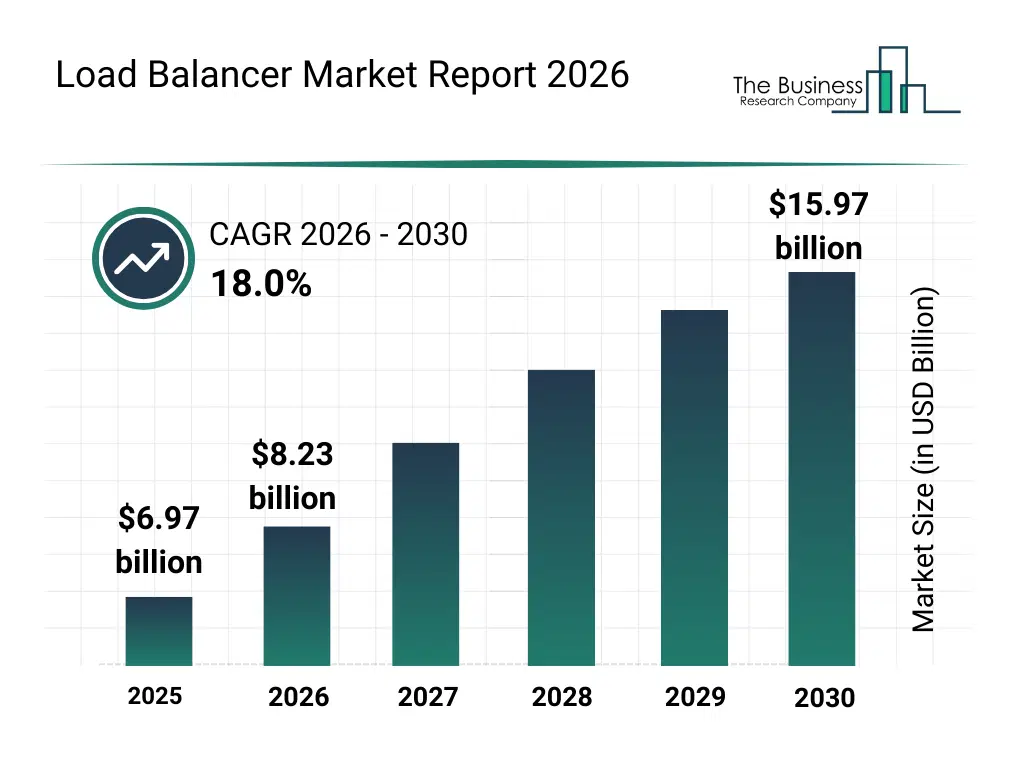
What Is The Load Balancer Market Size and Share 2026?
The load balancer market size has grown rapidly in recent years. It will grow from $6.97 billion in 2025 to $8.23 billion in 2026 at a compound annual growth rate (CAGR) of 18.0%. The growth in the historic period can be attributed to growth in web-based applications, increasing enterprise network traffic, expansion of data center infrastructure, rising adoption of virtualization technologies, demand for improved application uptime.What Is The Load Balancer Market Growth Forecast?
The load balancer market size is expected to see rapid growth in the next few years. It will grow to $15.97 billion in 2030 at a compound annual growth rate (CAGR) of 18.0%. The growth in the forecast period can be attributed to increasing migration to cloud environments, rising adoption of microservices architectures, growing emphasis on application scalability, expansion of edge computing deployments, increasing demand for secure traffic management. Major trends in the forecast period include increasing adoption of cloud-native load balancing solutions, rising demand for application-level traffic optimization, growing use of software-based load balancers, expansion of multi-cloud traffic management, enhanced focus on high availability and fault tolerance.
Global Load Balancer Market Segmentation
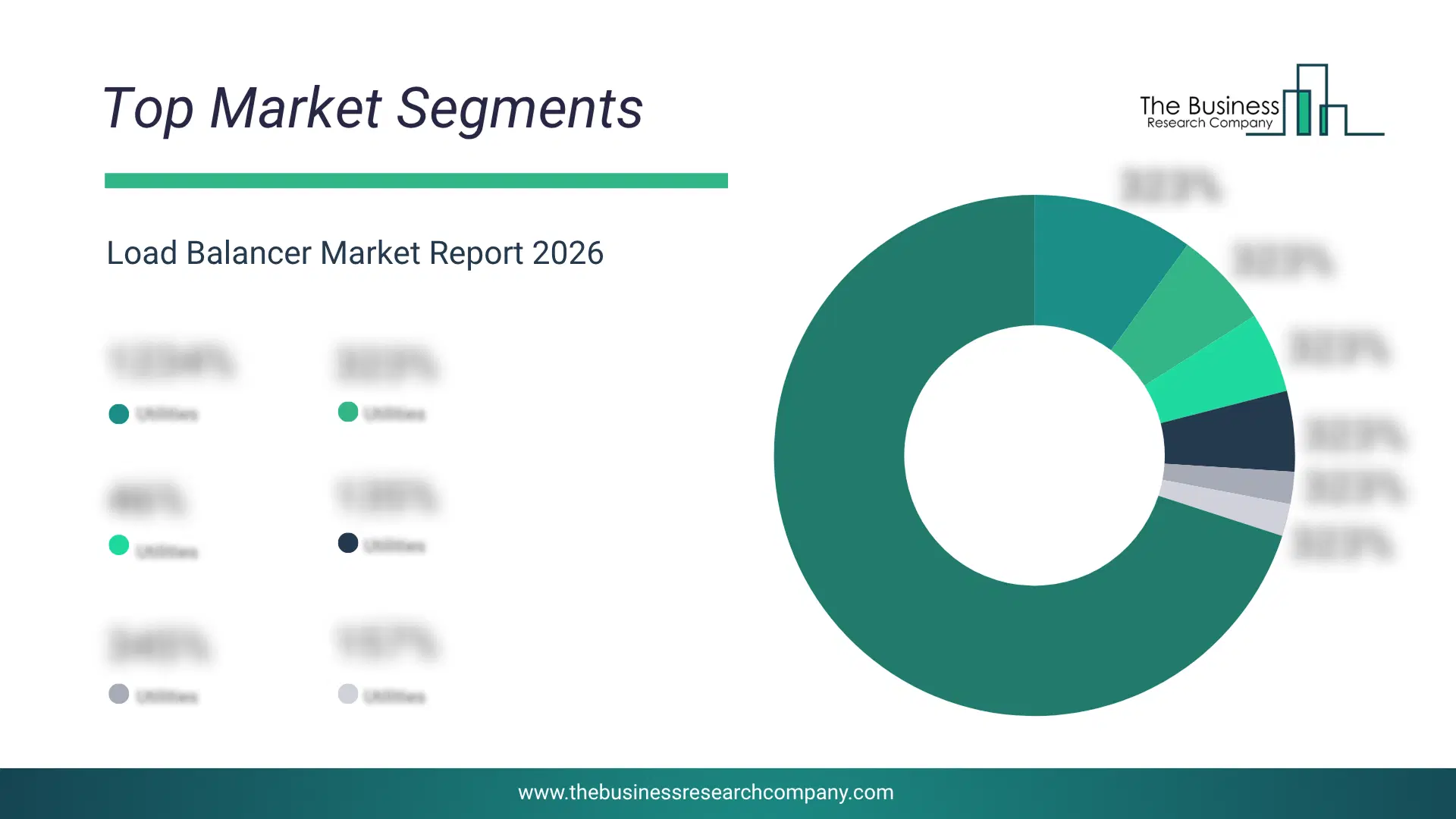
1) By Type: Local Load Balancer, Global Load Balancer 2) By Component: Hardware, Software, Services 3) By Enterprise Size: Large Enterprises, Small And Medium-sized Enterprises 4) By Deployment: On-Premise, Cloud 5) By Industry Vertical: Banking, Financial Services And Insurance (BFSI), Information Technology (IT) And Telecom, Retail, Government, Media And Entertainment, Healthcare, Other Industries Subsegments: 1) By Local Load Balancer: Hardware Load Balancers, Software Load Balancers, Virtual Load Balancers 2) By Global Load Balancer: DNS-Based Load Balancers, Application Delivery Controllers (ADCs), Global Server Load Balancing (GSLB) SolutionsWhat Is The Driver Of The Load Balancer Market?
The increasing network traffic is driving the load balancer market going forward. Network traffic refers to the flow and movement of data, such as messages, files, and communication, across a network system at any given time. Load balancers efficiently manage network traffic by evenly distributing incoming data requests across multiple servers or resources, ensuring optimal performance and reliability. For instance, in October 2023, the International Telecommunication Union (ITU), a Switzerland-based specialized agency of the United Nations, reported that approximately 67% of the world’s population (5.4 billion people) were online in 2023, reflecting and contributing to increased global data traffic. Therefore, increased network traffic is driving the growth of the load balancer industry.Key Players In The Global Load Balancer Market
Major companies operating in the load balancer market are A10 Networks Inc.; KEMP Technologies Inc.; Hewlett-Packard Development Company L. P.; Inlab Networks GmbH; Nginx Inc.; F5 Networks Inc.; Citrix Systems Inc.; Radware Ltd.; Barracuda Networks Inc.; Fortinet Inc.; Pulse Secure LLC; HAProxy Technologies Inc.; Avi Networks Inc.; Loadbalancer. org Ltd.; Array Networks Inc.; Imperva Inc.; H3C Technologies Co. Limited; Zevenet S. L.; Riverbed Technology Inc.; Cloudflare Inc.; Cisco Systems Inc.; Sangfor Technologies Co. Ltd.; Juniper Networks Inc.; NFWare Ltd.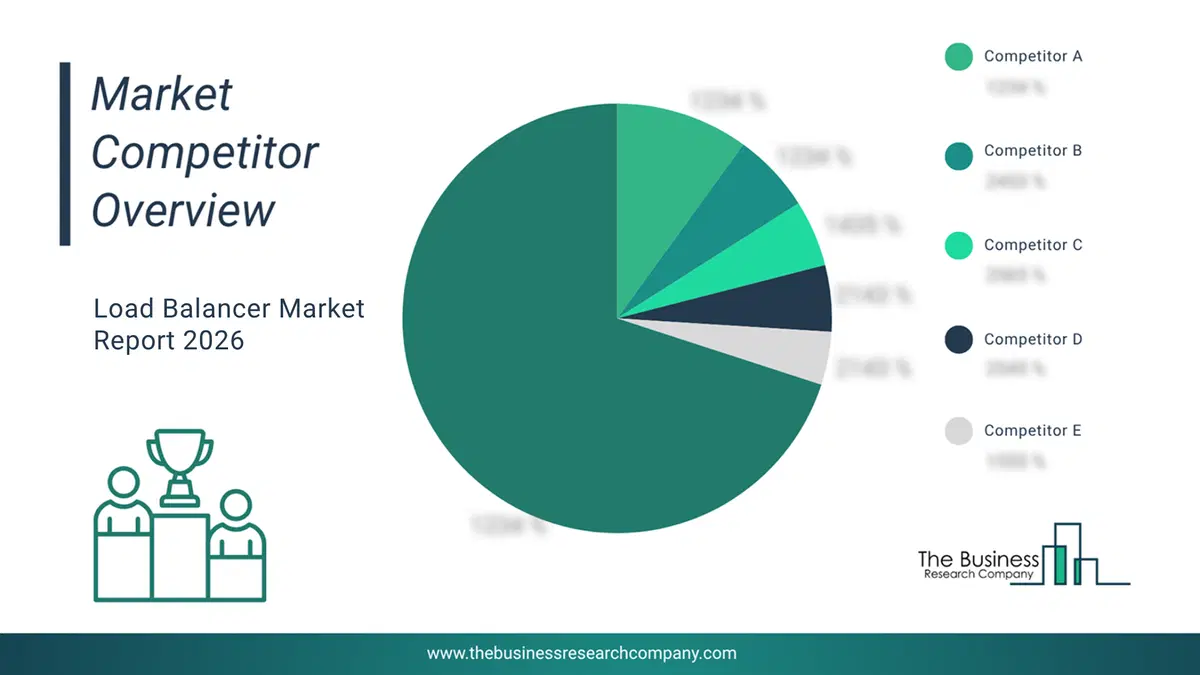
This chart is for illustrative purposes; the full report includes a detailed competitor analysis and comprehensive overview of the top 10 companies in the market.
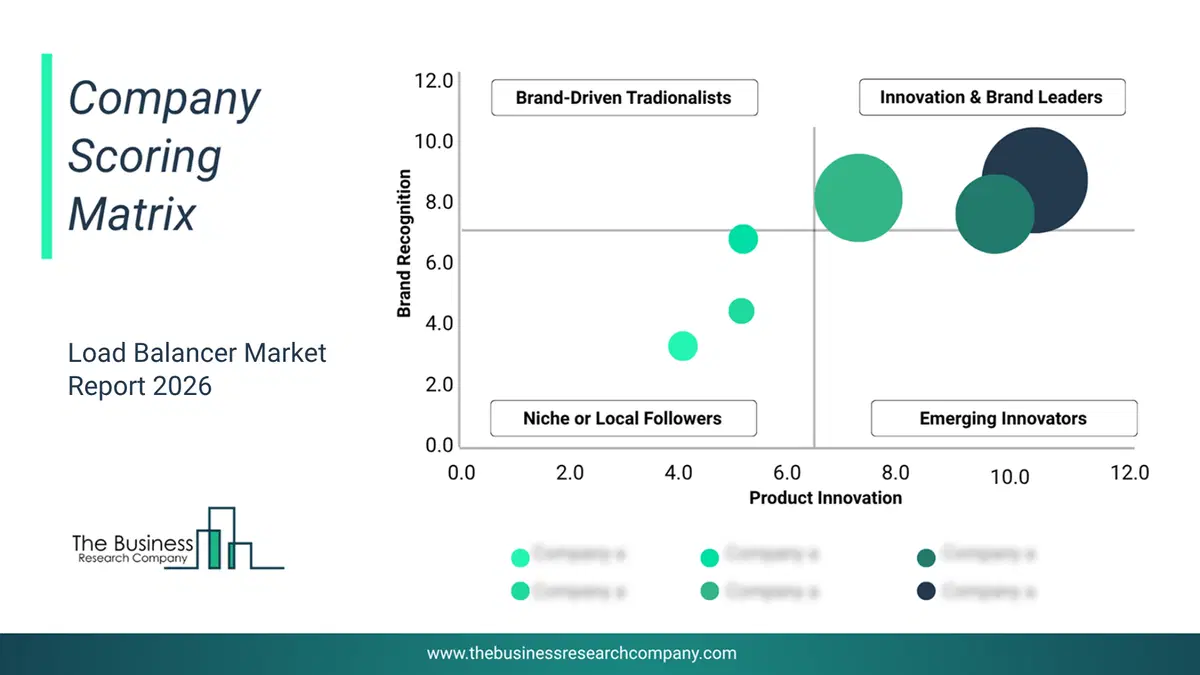
This chart maps companies by product innovation and brand strength, with bubble size indicating relative revenue, helping identify market leaders, challengers, and niche players. This is an illustrative chart; the full report provides a complete and accurate competitive analysis.
Global Load Balancer Market Trends and Insights
Major companies operating in the load balancer market are adopting a strategic partnership approach to strengthen performance. Strategic partnerships refer to a process in which companies leverage each other's strengths and resources to achieve mutual benefits and success. For instance, in July 2024, HPE Ezmeral, a US-based technology company, partnered with Loadbalancer.org, a US-based commercial business that provides load balancing solutions. The partnership seeks to enhance the performance and reliability of HPE Ezmeral Data Fabric Software by optimizing storage capabilities and improving the overall user experience for businesses utilizing this platform. Loadbalancer's expertise in load balancing solutions is expected to significantly enhance the performance of HPE Ezmeral Data Fabric, as its robust load balancing solutions add an extra layer of reliability and redundancy to HPE Ezmeral's data storage infrastructure.What Are Latest Mergers And Acquisitions In The Load Balancer Market?
In August 2024, Hewlett Packard Enterprise (HPE), a U.S.-based enterprise technology company, announced the acquisition of Morpheus Data, a provider of hybrid cloud automation and FinOps software. Through this acquisition, HPE aims to strengthen its HPE GreenLake offering by integrating Morpheus Data a US-based company, providing multicloud provisioning, orchestration, and cost-optimization capabilities thereby positioning the company to better serve enterprises managing complex hybrid and cloud-native IT environments.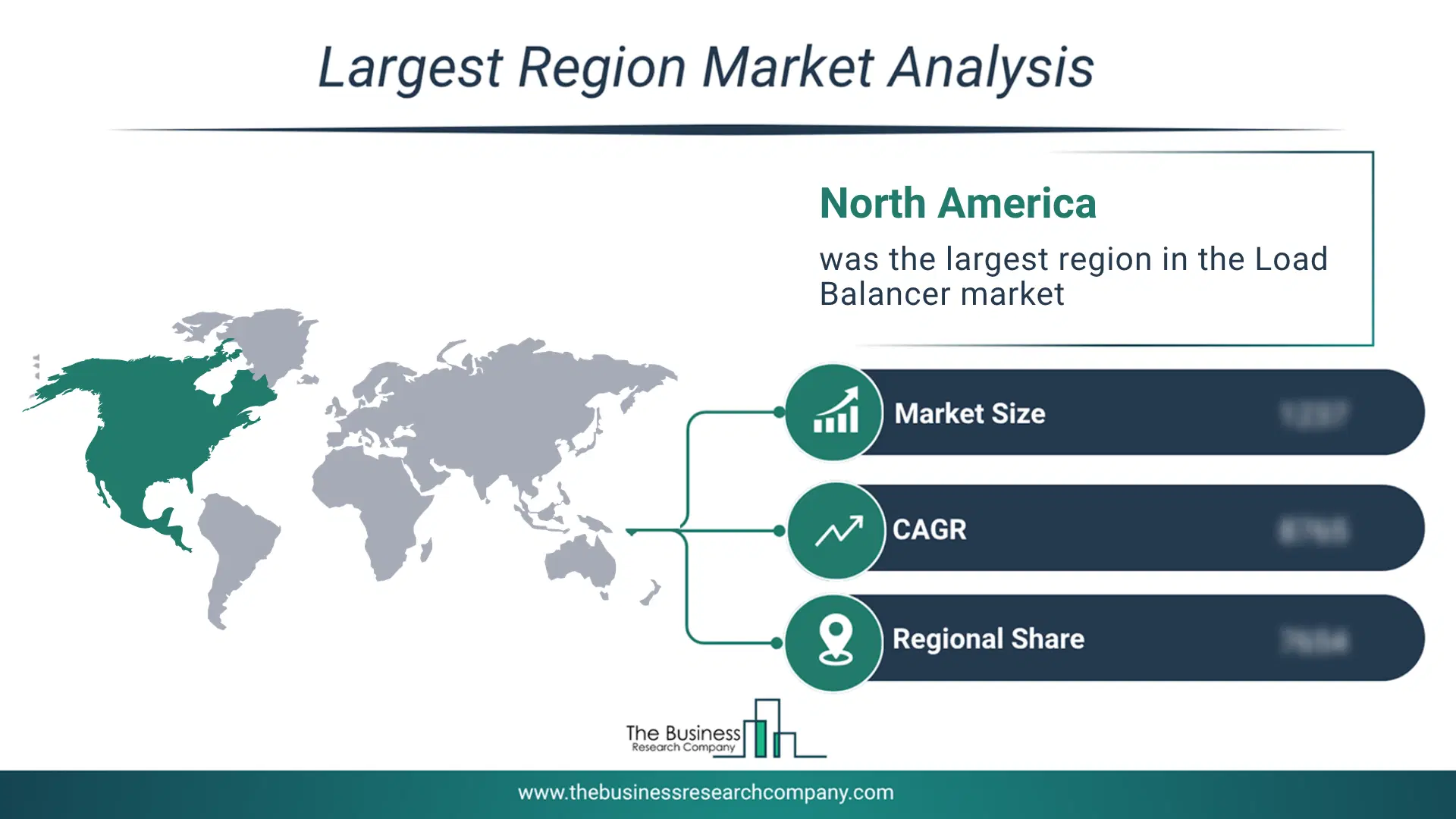
Regional Insights
North America was the largest region in the load balancer market in 2025. Asia-Pacific is expected to be the fastest-growing region in the forecast period. The regions covered in this market report are Asia-Pacific, South East Asia, Western Europe, Eastern Europe, North America, South America, Middle East, Africa. The countries covered in this market report are Australia, Brazil, China, France, Germany, India, Indonesia, Japan, Taiwan, Russia, South Korea, UK, USA, Canada, Italy, SpainWhat Defines the Load Balancer Market?
The load balancer market consists of sales of network load balancer and application load balancer. Values in this market are ‘factory gate’ values, that is the value of goods sold by the manufacturers or creators of the goods, whether to other entities (including downstream manufacturers, wholesalers, distributors, and retailers) or directly to end customers. The value of goods in this market includes related services sold by the creators of the goods.How is Market Value Defined and Measured?
The market value is defined as the revenues that enterprises gain from the sale of goods and/or services within the specified market and geography through sales, grants, or donations in terms of the currency (in USD unless otherwise specified). The revenues for a specified geography are consumption values that are revenues generated by organizations in the specified geography within the market, irrespective of where they are produced. It does not include revenues from resales along the supply chain, either further along the supply chain or as part of other products.
This chart presents market attractiveness based on a quantitative evaluation of growth, competition, strategic alignment, and risk, offering a clear view of opportunity areas for decision-making. This chart is for illustrative purposes; the full report contains the complete analysis.

This chart highlights the Total Addressable Market (TAM) by estimating the maximum revenue opportunity using an assumption-driven approach, supporting strategic planning and opportunity sizing across markets. The chart is illustrative; the full report provides a more comprehensive analysis.
What Key Data and Analysis Are Included in the Load Balancer Market Report 2026?
The load balancer market research report is one of a series of new reports from The Business Research Company that provides market statistics, including industry global market size, regional shares, competitors with the market share, detailed market segments, market trends and opportunities, and any further data you may need to thrive in the load balancer industry. The market research report delivers a complete perspective of everything you need, with an in-depth analysis of the current and future state of the industry.Load Balancer Market Report Forecast Analysis
| Report Attribute | Details |
|---|---|
| Market Size Value In 2026 | $8.23 billion |
| Revenue Forecast In 2030 | $15.97 billion |
| Growth Rate | CAGR of 18% from 2026 to 2030 |
| Base Year For Estimation | 2025 |
| Actual Estimates/Historical Data | 2020-2025 |
| Forecast Period | 2026 - 2030 |
| Market Representation | Revenue in USD Billion and CAGR from 2026 to 2030 |
| Segments Covered | Type, Component, Enterprise Size, Deployment, Industry Vertical |
| Regional Scope | Asia-Pacific, Western Europe, Eastern Europe, North America, South America, Middle East, Africa |
| Country Scope | The Countries Covered In This Market Report Are Australia, Brazil, China, France, Germany, India, Indonesia, Japan, Taiwan, Russia, South Korea, Uk, Usa, Canada, Italy, Spain. |
| Key Companies Profiled | A10 Networks Inc., KEMP Technologies Inc., Hewlett-Packard Development Company L. P., Inlab Networks GmbH, Nginx Inc., F5 Networks Inc., Citrix Systems Inc., Radware Ltd., Barracuda Networks Inc., Fortinet Inc., Pulse Secure LLC, HAProxy Technologies Inc., Avi Networks Inc., Loadbalancer. org Ltd., Array Networks Inc., Imperva Inc., H3C Technologies Co. Limited, Zevenet S. L., Riverbed Technology Inc., Cloudflare Inc., Cisco Systems Inc., Sangfor Technologies Co. Ltd., Juniper Networks Inc., NFWare Ltd. |
| Customization Scope | Request for Customization |
| Pricing And Purchase Options | Explore Purchase Options |