

Long QT Syndrome Treatment Market Report 2026
Global Outlook – By Type (Long QT Syndrome Type 1, Long QT Syndrome Type 2, Long QT Syndrome Type 3, Other Types), By Treatment (Medication, Surgical Procedures), By Diagnosis (Tests, Electrocardiogram, Genetic Testing, Other Diagnosis) - Market Size, Trends, Strategies, and Forecast to 2030
Long QT Syndrome Treatment Market Overview
• Long QT Syndrome Treatment market size has reached to $2.22 billion in 2025 • Expected to grow to $3.82 billion in 2030 at a compound annual growth rate (CAGR) of 11.4% • Growth Driver: Impact Of Rising Arrhythmia Incidence On Long QT Syndrome Treatment Market Growth • Market Trend: Medtronic's Breakthrough In Long QT Syndrome Treatment With Aurora EV-ICD System • North America was the largest region in 2025 and Asia-Pacific is the fastest growing region.What Is Covered Under Long QT Syndrome Treatment Market?
Long QT syndrome (LQTS) treatment refers to the medical and lifestyle interventions used to manage and mitigate the risks associated with this heart condition. The goal of treatment is to prevent abnormal heart rhythms (arrhythmias) and reduce the risk of sudden cardiac events. The main types of long QT syndrome treatment are long QT syndrome type 1, long QT syndrome type 2, long QT syndrome type 3, and others. LQT1 is a genetic disorder characterized by a prolonged QT interval on the electrocardiogram (ECG) and an increased risk of life-threatening arrhythmias, particularly triggered by exercise or stress. It provides both medication and surgical procedures, and it uses various types of diagnosis, such as tests, electrocardiograms, genetic testing, and others.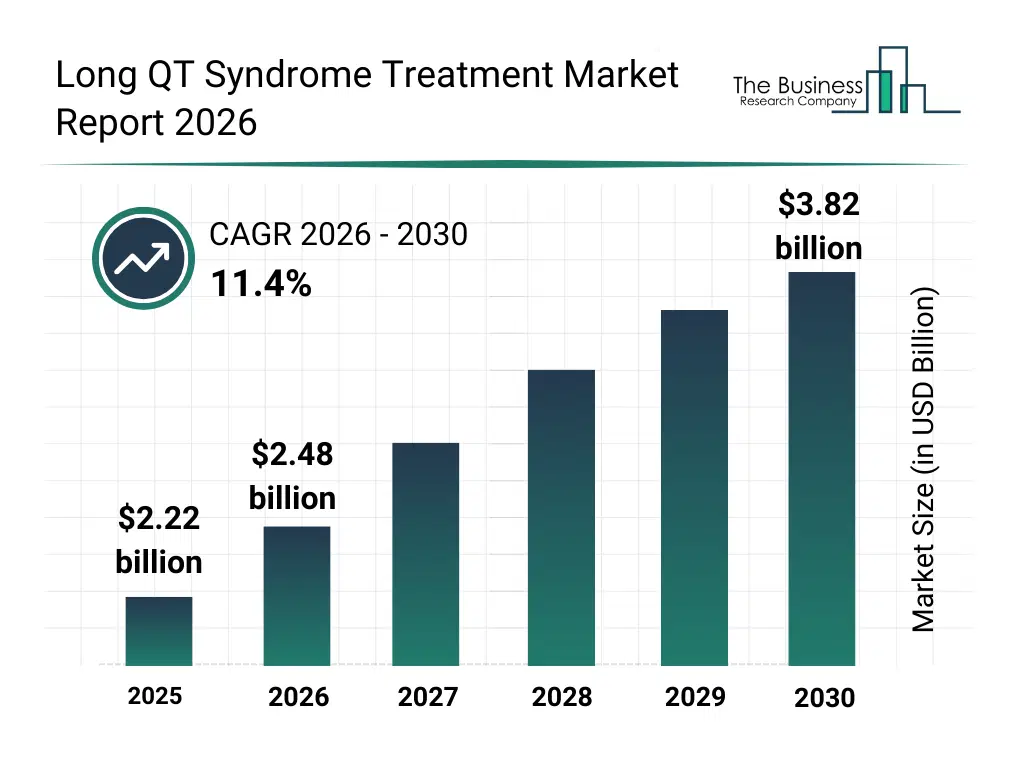
What Is The Long QT Syndrome Treatment Market Size and Share 2026?
The long qt syndrome treatment market size has grown rapidly in recent years. It will grow from $2.22 billion in 2025 to $2.48 billion in 2026 at a compound annual growth rate (CAGR) of 11.7%. The growth in the historic period can be attributed to improvements in cardiac diagnostic capabilities, increasing awareness of inherited cardiac disorders, adoption of beta-blocker therapies, expansion of electrophysiology services, availability of implantable defibrillator technologies.What Is The Long QT Syndrome Treatment Market Growth Forecast?
The long qt syndrome treatment market size is expected to see rapid growth in the next few years. It will grow to $3.82 billion in 2030 at a compound annual growth rate (CAGR) of 11.4%. The growth in the forecast period can be attributed to increasing development of gene-based therapies, rising adoption of precision cardiology approaches, expansion of wearable cardiac monitoring, growing integration of digital health tools, increasing investments in rare disease treatment research. Major trends in the forecast period include increasing adoption of genetic testing for risk stratification, rising use of implantable cardiac devices, growing focus on personalized treatment protocols, expansion of remote patient monitoring solutions, enhanced integration of clinical decision support tools.
Global Long QT Syndrome Treatment Market Segmentation
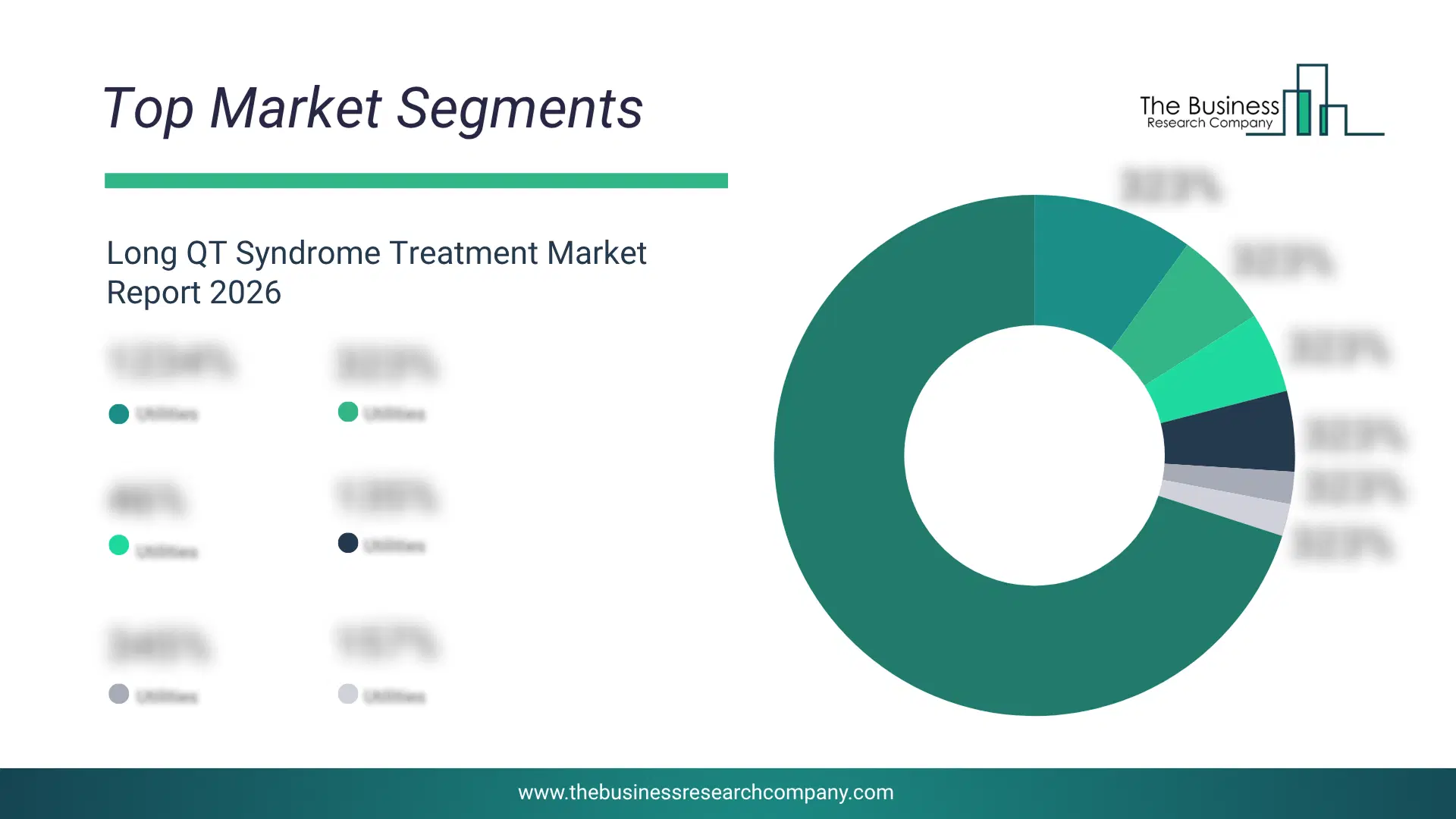
1) By Type: Long QT Syndrome Type 1, Long QT Syndrome Type 2, Long QT Syndrome Type 3, Other Types 2) By Treatment: Medication, Surgical Procedures 3) By Diagnosis: Tests, Electrocardiogram, Genetic Testing, Other Diagnosis Subsegments: 1) By Long QT Syndrome Type 1: Pharmacological Treatment for Type 1 (Beta-Blockers, Etc.), Implantable Cardioverter-Defibrillators (ICD) for Type 1, Gene Therapy for Long QT Type 1, Surgical Interventions for Type 1 2) By Long QT Syndrome Type 2: Beta-Blockers for Type 2 Treatment, Implantable Cardioverter-Defibrillators (ICD) for Type 2, Gene Therapy for Type 2, Potassium Channel Blockers for Type 2, Lifestyle Modifications and Monitoring for Type 2 3) By Long QT Syndrome Type 3: Sodium Channel Blockers for Type 3, Beta-Blockers for Type 3 Treatment, Implantable Cardioverter-Defibrillators (ICD) for Type 3, Gene Therapy and Cell Therapy for Type 3, Pharmacological Interventions for Type 3 4) By Other Types: Congenital Long QT Syndrome Treatment, Acquired Long QT Syndrome Treatment, Combination Treatments for Long QT Syndrome, Novel and Experimental Treatments for Long QT SyndromeWhat Are The Drivers Of The Long QT Syndrome Treatment Market?
The rising incidence of arrhythmia is expected to propel the growth of the long QT syndrome treatment market going forward. Arrhythmia is a medical condition characterized by an irregular heartbeat, where the heart beats too fast, too slow, or erratic. The increasing incidence of arrhythmia is due to several factors, such as the aging population, improved diagnostic tools, and the growing prevalence of cardiovascular risk factors. Long QT syndrome treatment is used for the management of arrhythmia to prevent life-threatening irregular heart rhythms that can lead to sudden cardiac arrest or death. For instance, in 2023, according to the National Library of Medicine (NLM), a US-based world's largest medical library, arrhythmias are expected to affect 1.5% to 5% of the general population every year, with atrial fibrillation being the most prevalent type. Therefore, the rising incidence of arrhythmia is driving the growth of the long QT syndrome treatment industry. The increasing prevalence of genetic abnormalities is expected to propel the growth of the long QT syndrome treatment market going forward. Genetic abnormalities are harmful or pathogenic variations in genes or chromosomes that can lead to inherited diseases or predispositions. The prevalence of genetic abnormalities is increasing due to advances in genomic medicine, wider access to molecular diagnostics, and improved clinical genetics infrastructure. Long QT syndrome treatment addresses the growing prevalence of genetic abnormalities by enhancing detection, diagnosis, and treatment through genetic testing, personalized medicine, preventive measures, and continued research into gene therapy. For instance, in May 2024, according to the National Health Service, a UK-based government department, in England, approximately 17,000 people live with sickle cell disease, an inherited blood disorder, with around 250 new cases diagnosed each year. Therefore, the increasing prevalence of genetic abnormalities drives the growth of the long QT syndrome treatment industry.Key Players In The Global Long QT Syndrome Treatment Market
Major companies operating in the long qt syndrome treatment market are Pfizer Inc., Novartis AG, Sanofi S.A., Bristol Myers Squibb, AstraZeneca Plc, Bayer AG, Eli Lilly and Company, Johnson & Johnson, Roche Holding AG, Takeda Pharmaceutical Company Limited, Medtronic Plc, Boston Scientific Corporation, Abbott Laboratories, Biotronik SE & Co. KG, LivaNova PLC, MicroPort Scientific Corporation, GE Healthcare, Philips Healthcare, Nihon Kohden Corporation, AliveCor Inc.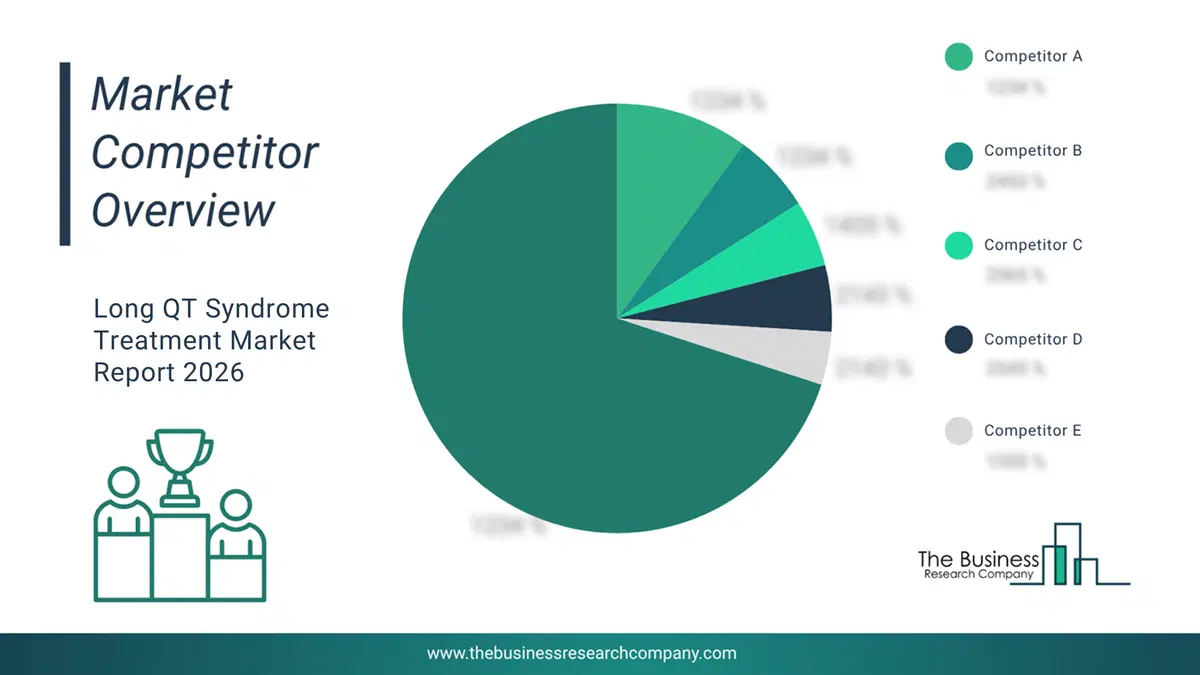
This chart is for illustrative purposes; the full report includes a detailed competitor analysis and comprehensive overview of the top 10 companies in the market.
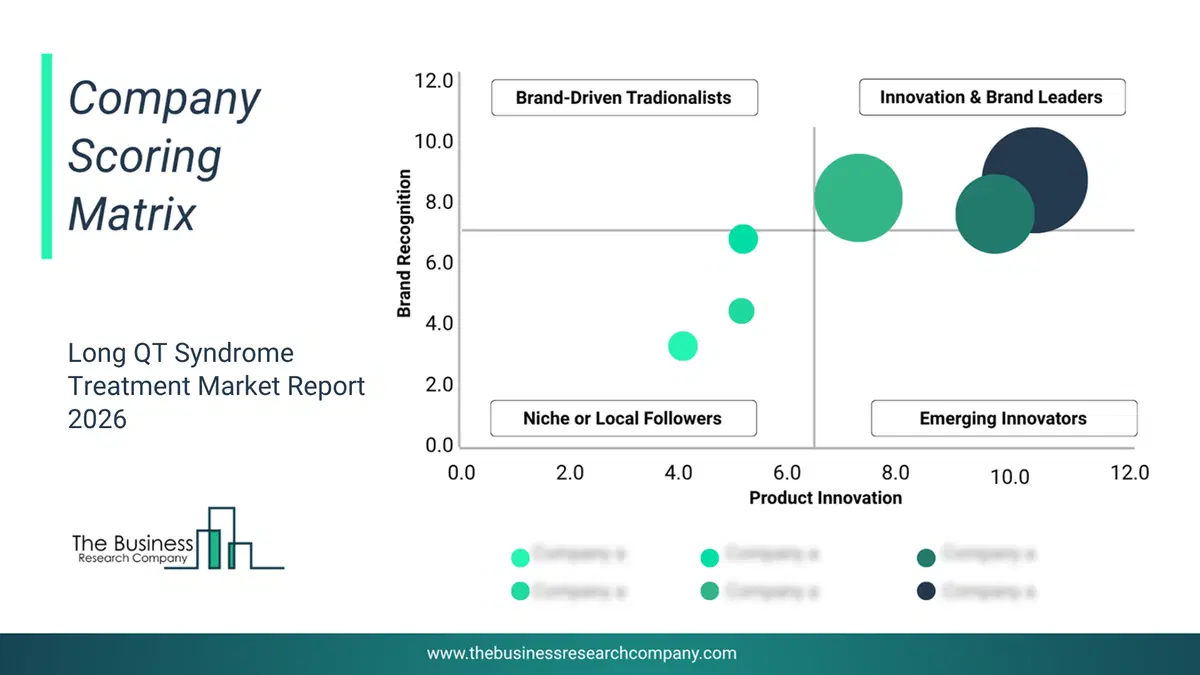
This chart maps companies by product innovation and brand strength, with bubble size indicating relative revenue, helping identify market leaders, challengers, and niche players. This is an illustrative chart; the full report provides a complete and accurate competitive analysis.
Global Long QT Syndrome Treatment Market Trends and Insights
Major companies operating in the long QT syndrome treatment market are focused on developing technologically advanced products, such as cardiac devices, to provide convenient, real-time monitoring of heart rhythms. A cardiac device is a medical device implanted or used in patients to help manage heart rhythm disorders, improve heart function, or support circulation. These devices are typically used to treat conditions such as arrhythmias (irregular heartbeats), heart failure, or other cardiovascular diseases. For instance, in October 2023, Medtronic Plc, an Ireland-based medical device company, announced the U.S. Food and Drug Administration (FDA) approval for the Aurora EV-ICD MRI SureScan, an Extravascular Implantable Cardioverter-Defibrillator (EV-ICD) system designed to treat fast heart rhythms that can lead to sudden cardiac arrest. This approval marks a significant advancement in implantable defibrillator technology, reducing the risk of long-term complications and enhancing the safety and efficacy of ICD technology. This strategy is expected to enhance the company's product offerings.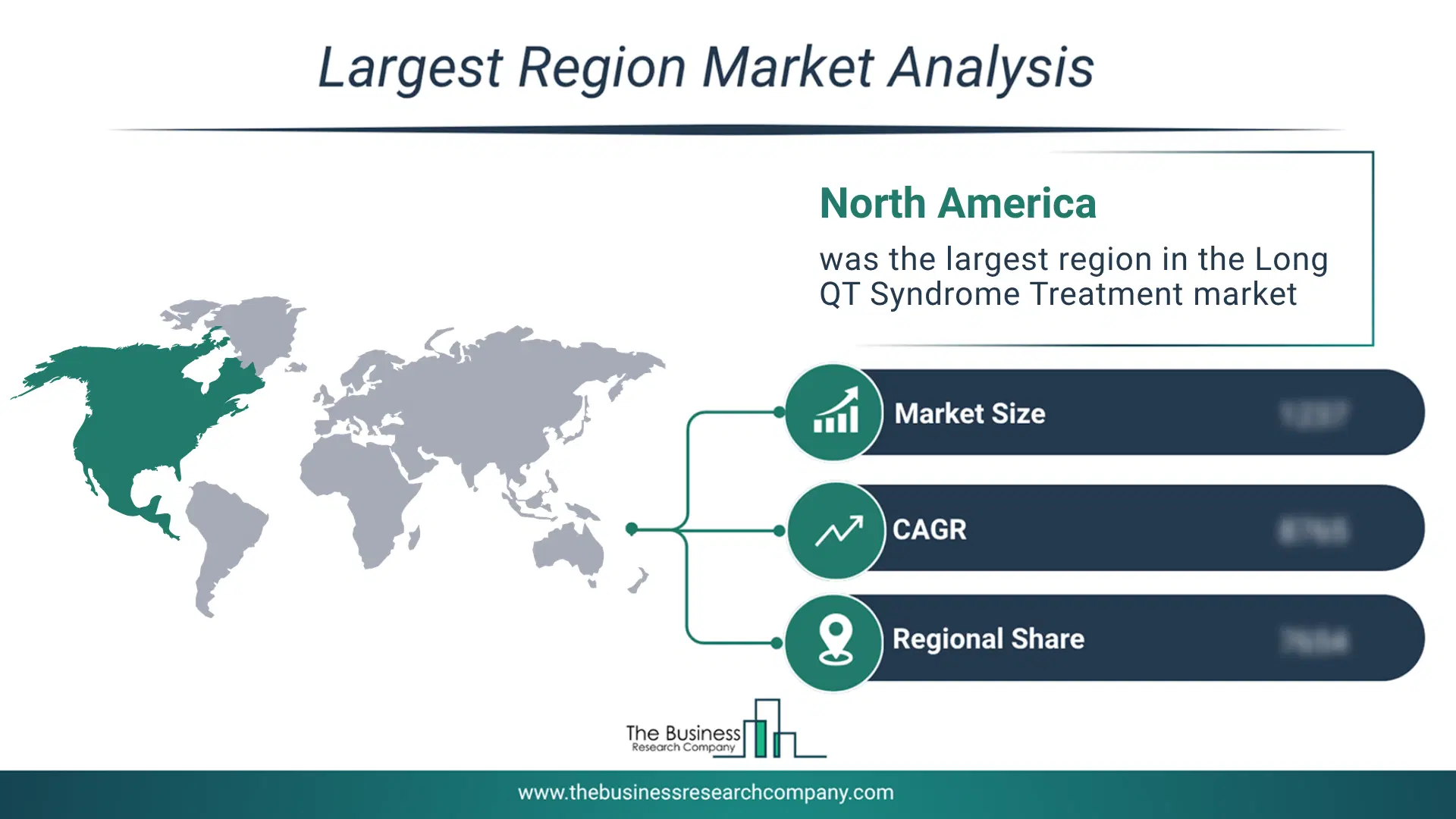
Regional Outlook
North America was the largest region in the long QT syndrome treatment market in 2025. Asia-Pacific is expected to be the fastest-growing region in the forecast period. The regions covered in this market report are Asia-Pacific, South East Asia, Western Europe, Eastern Europe, North America, South America, Middle East, Africa. The countries covered in this market report are Australia, Brazil, China, France, Germany, India, Indonesia, Japan, Taiwan, Russia, South Korea, UK, USA, Canada, Italy, Spain.What Defines the Long QT Syndrome Treatment Market?
The long QT syndrome treatment market consists of revenues earned by entities by providing services such as cardiac evaluation, beta-blocker therapy management, implantable cardioverter defibrillator (ICD) implantation and monitoring, remote cardiac monitoring and pediatric LQTS services. The market value includes the value of related goods sold by the service provider or included within the service offering. The long QT syndrome treatment market also includes sales of holter monitors, wearable heart monitors, pacemakers, automated external defibrillators and potassium supplements. Values in this market are ‘factory gate’ values, that is the value of goods sold by the manufacturers or creators of the goods, whether to other entities (including downstream manufacturers, wholesalers, distributors and retailers) or directly to end customers. The value of goods in this market includes related services sold by the creators of the goods.How is Market Value Defined and Measured?
The market value is defined as the revenues that enterprises gain from the sale of goods and/or services within the specified market and geography through sales, grants, or donations in terms of the currency (in USD unless otherwise specified). The revenues for a specified geography are consumption values that are revenues generated by organizations in the specified geography within the market, irrespective of where they are produced. It does not include revenues from resales along the supply chain, either further along the supply chain or as part of other products.
This chart presents market attractiveness based on a quantitative evaluation of growth, competition, strategic alignment, and risk, offering a clear view of opportunity areas for decision-making. This chart is for illustrative purposes; the full report contains the complete analysis.

This chart highlights the Total Addressable Market (TAM) by estimating the maximum revenue opportunity using an assumption-driven approach, supporting strategic planning and opportunity sizing across markets. The chart is illustrative; the full report provides a more comprehensive analysis.
What Key Data and Analysis Are Included in the Long QT Syndrome Treatment Market Report 2026?
The long qt syndrome treatment market research report is one of a series of new reports from The Business Research Company that provides market statistics, including industry global market size, regional shares, competitors with the market share, detailed market segments, market trends and opportunities, and any further data you may need to thrive in the long qt syndrome treatment industry. The market research report delivers a complete perspective of everything you need, with an in-depth analysis of the current and future state of the industry.Long QT Syndrome Treatment Market Report Forecast Analysis
| Report Attribute | Details |
|---|---|
| Market Size Value In 2026 | $2.48 billion |
| Revenue Forecast In 2030 | $3.82 billion |
| Growth Rate | CAGR of 11.4% from 2026 to 2030 |
| Base Year For Estimation | 2025 |
| Actual Estimates/Historical Data | 2020-2025 |
| Forecast Period | 2026 - 2030 |
| Market Representation | Revenue in USD Billion and CAGR from 2026 to 2030 |
| Segments Covered | Type, Treatment, Diagnosis |
| Regional Scope | Asia-Pacific, Western Europe, Eastern Europe, North America, South America, Middle East, Africa |
| Country Scope | The countries covered in the report are Australia, Brazil, China, France, Germany, India, Indonesia, Japan, Taiwan, Russia, South Korea, UK, USA, Canada, Italy, Spain |
| Key Companies Profiled | Pfizer Inc., Novartis AG, Sanofi S.A., Bristol Myers Squibb, AstraZeneca Plc, Bayer AG, Eli Lilly and Company, Johnson & Johnson, Roche Holding AG, Takeda Pharmaceutical Company Limited, Medtronic Plc, Boston Scientific Corporation, Abbott Laboratories, Biotronik SE & Co. KG, LivaNova PLC, MicroPort Scientific Corporation, GE Healthcare, Philips Healthcare, Nihon Kohden Corporation, AliveCor Inc. |
| Customization Scope | Request for Customization |
| Pricing And Purchase Options | Explore Purchase Options |