
Longevity BioTech Market Report 2026
Global Outlook – By Service (Longevity Consultation, Biological Age Testing, Preventive Health Programs), By Therapeutic Approach (Senolytics, Gene Therapies, Regenerative Medicine, Metabolic Modulators, Mitochondrial Therapies), By Technology (Gene Editing Technology, Artificial Intelligence And Machine Learning, Stem Cell And Regenerative Medicine, Multi-Omics Analysis Platforms, Advanced Drug Screening), By Application (Healthcare, Biotech, Pharmaceuticals, Wellness, Aging Population), By End User (Clinics, Hospitals, Research Institutes, Direct-To-Consumer) – Market Size, Trends, Strategies, and Forecast to 2030
Longevity BioTech Market Overview
• Longevity BioTech market size has reached to $20.90 billion in 2025 • Expected to grow to $34.82 billion in 2030 at a compound annual growth rate (CAGR) of 10.7% • Growth Driver: Surge In Global Focus On Extending Healthy Lifespan And Aging Prevention Fueling Growth Of The Market Through Development Of Therapies, Interventions, And Diagnostics Targeting Age-Related Conditions • Market Trend: Advancing Longevity Biotech With DNA Methylation-Based Epigenetic Tests For Biological Age Assessment • North America was the largest region in 2025 and Asia-Pacific is the fastest growing region.Market Gains By 2030 – Top Opportunities By Segment
Market Gain identifies the most promising market opportunities by highlighting the segments or products expected to generate the highest incremental revenue growth over the next five years.
What Is Covered Under Longevity BioTech Market?
Longevity biotech is a field focused on developing biological innovations that slow aging, prevent age-related decline, and extend healthy human lifespan. It uses advanced tools such as genetics, cellular engineering, and artificial intelligence (AI)-driven discovery to identify and target the mechanisms of aging. It helps to create therapies and technologies that maintain health and function for a longer portion of life. The main services of longevity biotech include longevity consultation, biological age testing, preventive health programs, and other longevity-focused services. Longevity consultation refers to personalized clinical and scientific advisory services aimed at assessing individual aging processes, genetic predispositions, lifestyle factors, and health risks to develop customized longevity and healthy aging strategies. The therapeutic approaches such as senolytics, gene therapies, regenerative medicine, metabolic modulators, and mitochondrial therapies. The technologies including gene editing technology, artificial intelligence and machine learning, stem cell and regenerative medicine, multi-omics analysis platforms, and advanced drug screening. The applications across healthcare, biotechnology, pharmaceuticals, wellness, and aging population and the key end users such as clinics, hospitals, research institutes, and direct-to-consumer.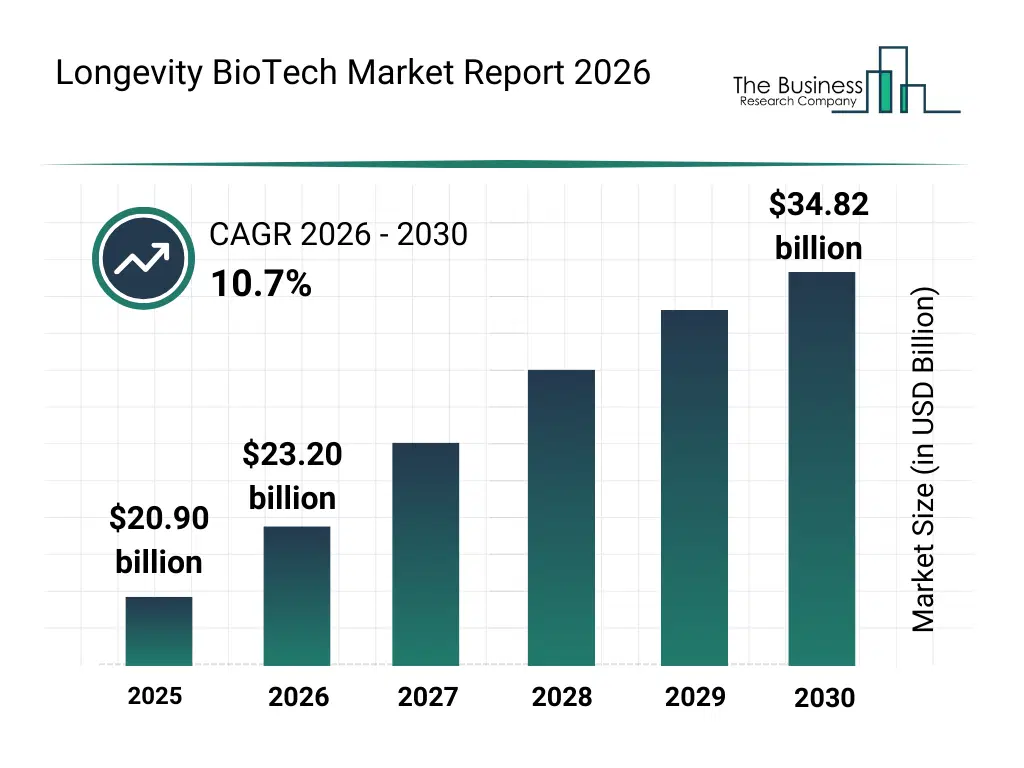
What Is The Longevity BioTech Market Size and Share 2026?
The longevity biotech market size has grown rapidly in recent years. It will grow from $20.90 billion in 2025 to $23.20 billion in 2026 at a compound annual growth rate (CAGR) of 11.0%. The growth in the historic period can be attributed to increasing investment in anti-aging research, rising prevalence of age-related chronic diseases, growing interest in extending healthspan, increasing funding from biotech venture capital, and rising adoption of genetic and cellular therapies.What Is The Longevity BioTech Market Growth Forecast?
The longevity biotech market size is expected to see rapid growth in the next few years. It will grow to $34.82 billion in 2030 at a compound annual growth rate (CAGR) of 10.7%. The growth in the forecast period can be attributed to the expansion of regenerative medicine pipelines, rising partnerships between pharma and longevity biotech firms, increasing demand for gene-based therapies, growth of personalized wellness diagnostics, and rising collaboration between research institutes and biotech companies. Major trends in the forecast period include advancement in cellular rejuvenation therapies, advancement in gene-editing technologies, advancement in stem-cell-based regeneration, innovation in senolytic drug development, and innovation in epigenetic reprogramming tools.
Global Longevity BioTech Market Segmentation
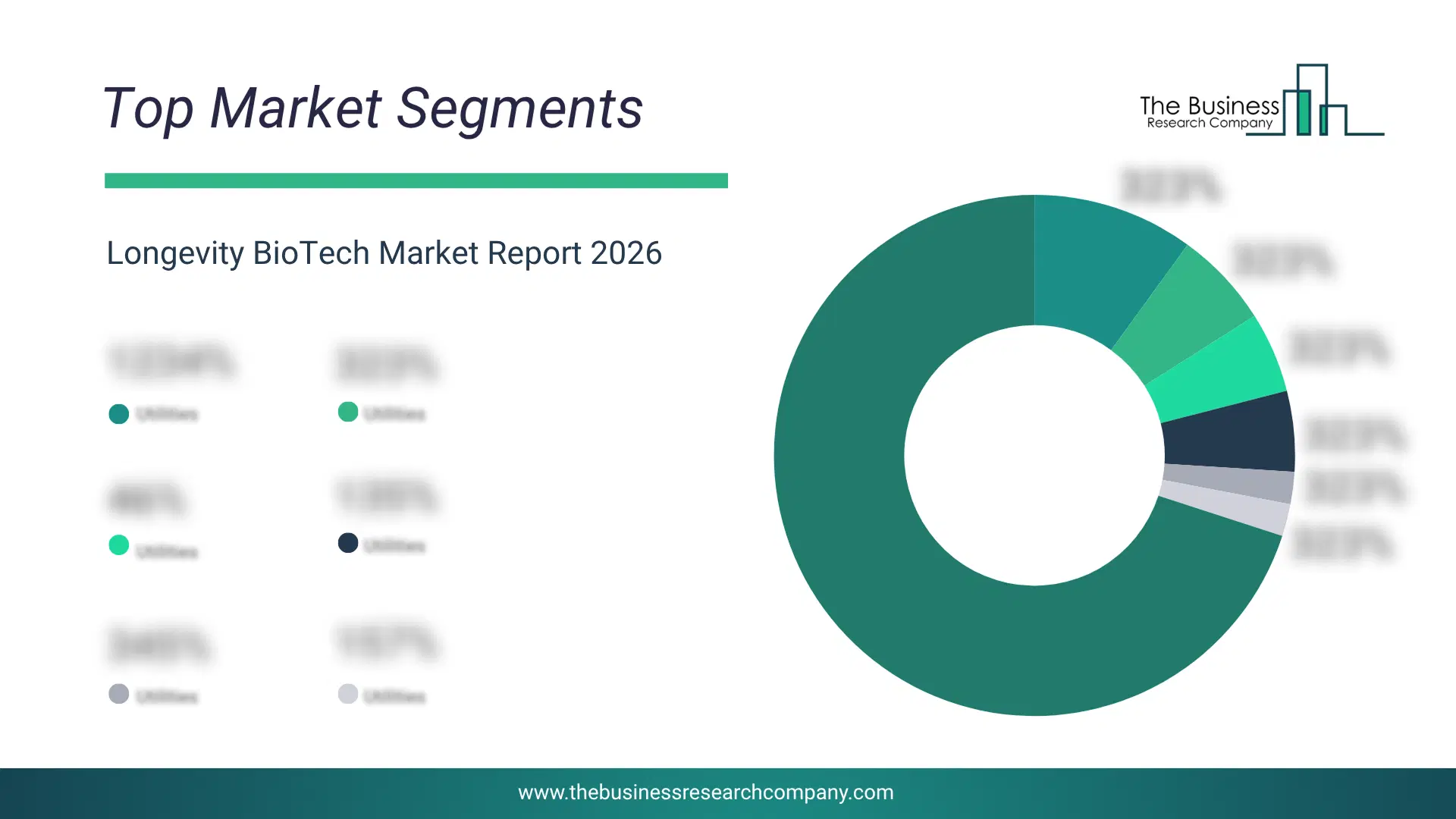
1) By Service: Longevity Consultation, Biological Age Testing, Preventive Health Programs 2) By Therapeutic Approach: Senolytics, Gene Therapies, Regenerative Medicine, Metabolic Modulators, Mitochondrial Therapies 3) By Technology: Gene Editing Technology, Artificial Intelligence And Machine Learning, Stem Cell And Regenerative Medicine, Multi-Omics Analysis Platforms, Advanced Drug Screening 4) By Application: Healthcare, Biotech, Pharmaceuticals, Wellness, Aging Population 5) By End User: Clinics, Hospitals, Research Institutes, Direct-To-Consumer Subsegments: 1) By Longevity Consultation: Initial Health Assessment, Personalized Longevity Planning, Lifestyle And Nutrition Counseling, Risk Assessment And Mitigation Planning, Follow-Up Longevity Monitoring, Genetic And Epigenetic Review 2) By Biological Age Testing: DNA Methylation Age Testing, Telomere Length Testing, Metabolic Age Assessment, Inflammatory Biomarker Testing, Hormonal Age Profiling, Organ-Specific Aging Analysis 3) By Preventive Health Programs: Chronic Disease Prevention Programs, Nutrition And Diet Optimization Plans, Fitness And Mobility Enhancement Programs, Stress And Sleep Management Programs, Immune Strengthening Protocols, Personalized Supplementation Programs The top segments in the longevity biotech market will be: • Preventive Health Programs will reach $12.74 Billion by 2030. • Biological Age Testing will reach $12.02 Billion by 2030. • Longevity Consultation will reach $6.6 Billion by 2030.What Is The Driver Of The Longevity BioTech Market?
The increasing focus on extending healthy lifespan and preventing age-related decline is expected to propel the growth of the longevity biotech market going forward. Healthy aging refers to the process of maintaining functional ability, delaying the onset of age-related diseases, and supporting physical and mental well-being across the lifespan. This growing emphasis on healthy aging is driven by demographic shifts, particularly rapidly aging populations, which have intensified the need for medical innovation and preventive health solutions. Longevity biotechnology supports this focus by developing therapies, diagnostics, and preventive interventions that target the biological mechanisms of aging, improve cellular resilience, and reduce the risk of age-related conditions. For instance, in November 2023, according to the World Health Organization, a Geneva-based global health authority, the global population aged 60 years and older is projected to increase from 1.1 billion in 2023 to 1.4 billion by 2030 and reach 2.1 billion by 2050, highlighting the accelerating scale of aging-related health challenges. Therefore, the increasing global focus on extending healthy lifespan and aging prevention is driving the growth of the longevity biotech industry.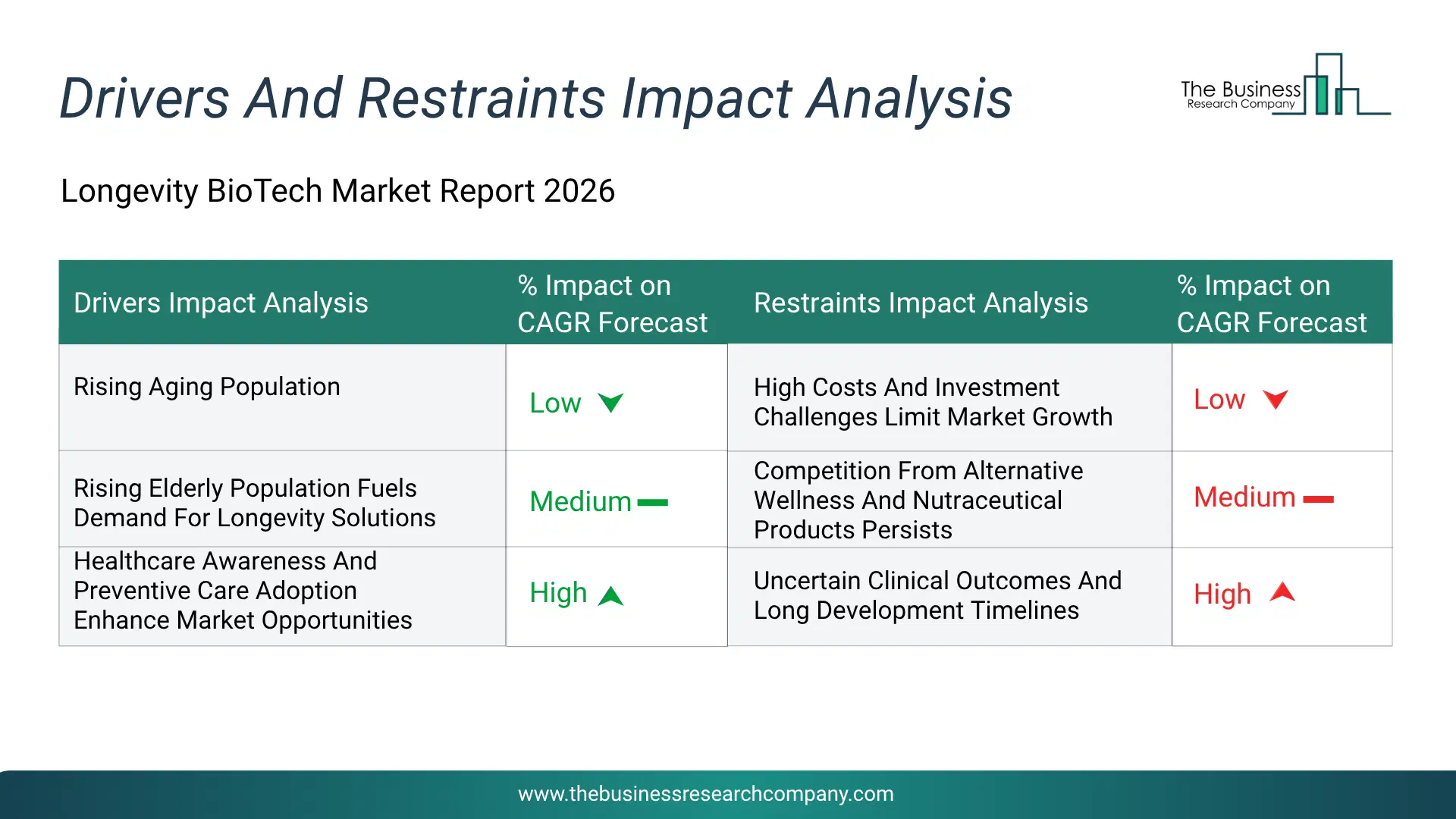
Infographic Chart Showing Key Market Drivers Analysis And Restraints For Longevity Biotech Market
The chart presents an impact analysis of key drivers and restraints, quantifying their relative influence on the market's growth rate and helping assess the balance between growth enablers and limiting factors. This chart offers a high-level perspective; the full report contains more detailed insights.
How Will The Drivers Impact Growth In The Global Longevity BioTech Market?
• Rising Aging Population (Low) – During the forecast period, the rising aging population is expected to become a key growth driver for the longevity biotech market by 2030. The rising aging population is a major driver of the longevity biotech market because people are living longer and are more likely to experience age-related health conditions. As the number of older adults increases, there is greater demand for solutions that help maintain physical and cognitive health while extending healthy lifespan. Longevity biotech companies develop therapies that target the biological processes of aging rather than only treating individual diseases. This includes innovations such as gene therapies, cellular regeneration, and biomarker-based diagnostics that aim to delay aging and improve quality of life. Governments and healthcare providers are also placing greater emphasis on healthy aging to reduce the burden of chronic diseases and healthcare costs. • Rising Elderly Population Fuels Demand For Longevity Solutions (Medium) – During the forecast period, the rising elderly population fuels demand for longevity solutions is expected to emerge as a major factor driving the expansion of the longevity biotech market by 2030. The growing elderly population is increasing demand for longevity-focused healthcare products and services that promote healthier and more independent living. Older individuals are seeking advanced therapies that can improve mobility, strengthen immune function, support cognitive health, and reduce the effects of age-related decline. Longevity biotech companies address these needs through regenerative medicine, precision diagnostics, cellular therapies, and personalized treatment approaches. Demand is also rising for wearable health monitoring devices, biomarker testing, and AI-powered health assessments that enable early detection of aging-related risks. • Healthcare Awareness And Preventive Care Adoption Enhance Market Opportunities (High) – During the forecast period, the healthcare awareness and preventive care adoption enhance market opportunities is expected to act as a key growth catalyst for the longevity biotech market by 2030. Growing awareness of preventive healthcare is encouraging individuals to take proactive steps to maintain health and delay the onset of age-related diseases. Instead of focusing only on treating illnesses after they develop, consumers are increasingly adopting regular health screenings, genetic testing, biomarker analysis, personalized wellness programs, and continuous health monitoring. Longevity biotech companies provide many of these advanced services and technologies, helping identify biological aging markers and disease risks at an early stage. Increased awareness of healthy lifestyles, supported by digital health platforms and telehealth services, is further driving demand for personalized longevity solutions.How Will The Restraints Impact Growth In The Global Longevity BioTech Market?
• High Costs And Investment Challenges Limit Market Growth (Low) – During the forecast period, the longevity biotech requires significant investment in research, clinical development, and regulatory approval, making it one of the most capital-intensive areas of biotechnology. Developing therapies such as gene editing, cellular reprogramming, regenerative medicine, and biomarker-based diagnostics involves advanced laboratory infrastructure, highly skilled researchers, and long development timelines. Many products must undergo extensive clinical trials to demonstrate both safety and long-term effectiveness, increasing development costs and financial risk. Smaller biotechnology companies often face difficulties in securing continuous funding to support product commercialization. High manufacturing costs for advanced biologics and personalized therapies also result in premium pricing, limiting affordability for many patients and healthcare providers. In addition, uncertain reimbursement policies and the experimental nature of many longevity interventions discourage broader adoption. These financial and investment challenges slow innovation, delay product launches, and restrict the overall expansion of the longevity biotech market. • Competition From Alternative Wellness And Nutraceutical Products Persists (Medium) – During the forecast period, the the longevity biotech market faces strong competition from conventional wellness products, dietary supplements, nutraceuticals, and preventive health solutions that are generally more affordable and widely available. Many consumers seeking healthy aging solutions choose vitamins, herbal supplements, functional foods, fitness programs, and lifestyle interventions instead of advanced biotechnology-based therapies. These alternatives often require lower upfront costs and are easier to access without specialized medical supervision. In addition, strong marketing by wellness brands influences consumer preferences toward non-prescription anti-aging products, even though their clinical effectiveness may be less established than biotech therapies. The widespread availability of these alternatives reduces demand for premium longevity biotech products, particularly in price-sensitive markets. As a result, biotechnology companies face greater challenges in differentiating their offerings, achieving widespread adoption, and expanding their customer base, which restrains overall market growth. • Uncertain Clinical Outcomes And Long Development Timelines (High) – During the forecast period, the uncertain clinical outcomes and long development timelines act as a significant restraint on the Longevity BioTech market because many longevity-focused therapies are still in experimental stages and require extensive research to prove long-term safety and effectiveness. Developing interventions involving gene therapies, cellular regeneration, and anti-aging mechanisms involves complex biological challenges and lengthy clinical validation processes. The uncertainty surrounding successful commercialization increases investment risks for biotechnology companies. Investors and healthcare providers may hesitate to support technologies without clear evidence of measurable benefits. These scientific uncertainties can delay product approvals and restrict market expansion.Key Players In The Global Longevity BioTech Market
Major companies operating in the longevity biotech market are Insilico Medicine Inc., Calico Life Sciences LLC, Retro Biosciences Inc., Altos Labs Inc., LyGenesis Inc., NewLimit Inc., Halia Therapeutics Inc., Life Biosciences Inc., BioAge Labs Inc., Rubedo Life Sciences Inc., Juvenescence Limited, Cambrian BioPharma Inc., Elevian Inc., Oisin Biotechnologies Inc., Rejuvenate Bio Inc., Unity Biotechnology Inc., Cleara Biotech B.V., Junevity Inc., Liv Longevity Labs, Genflow Biosciences plc, Centenara Labs AG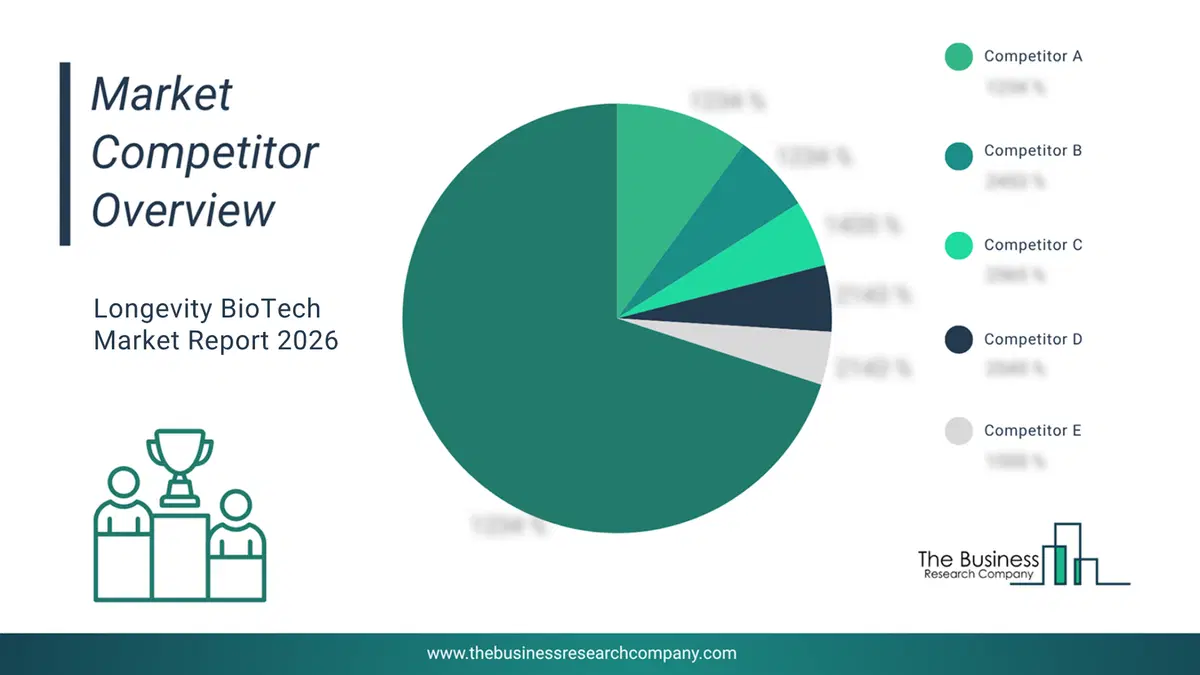
This chart is for illustrative purposes; the full report includes a detailed competitor analysis and comprehensive overview of the top 10 companies in the market.
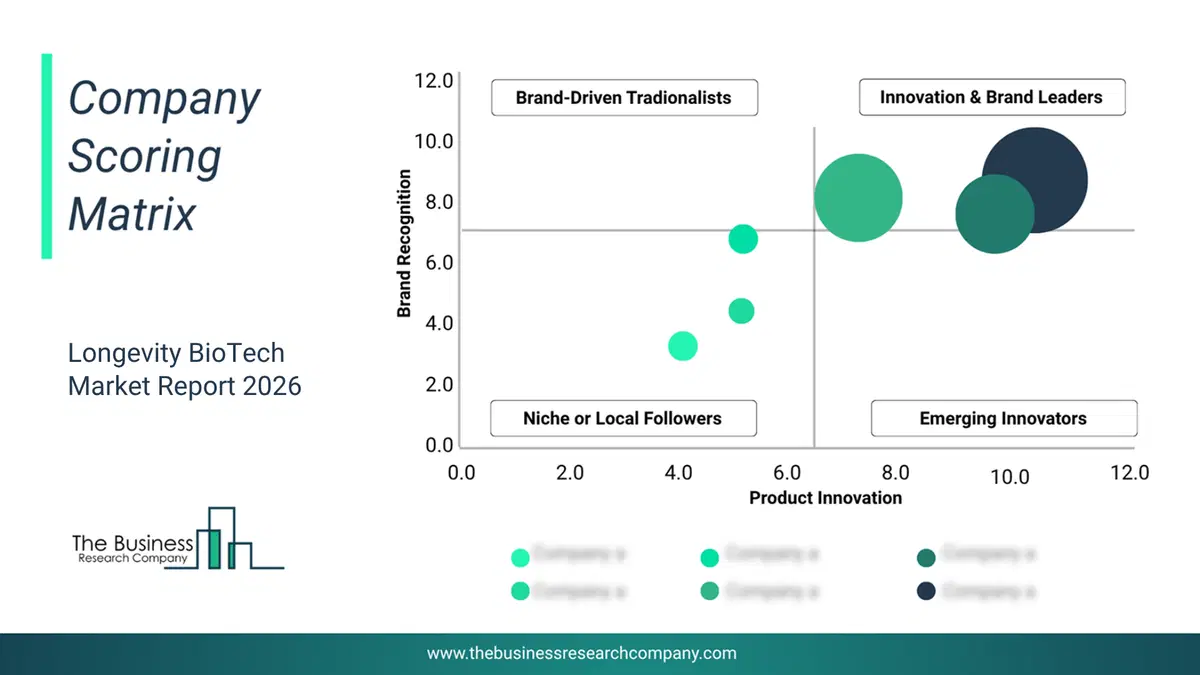
This chart maps companies by product innovation and brand strength, with bubble size indicating relative revenue, helping identify market leaders, challengers, and niche players. This is an illustrative chart; the full report provides a complete and accurate competitive analysis.
Global Longevity BioTech Market Trends and Insights
Major companies operating in the longevity biotech market are focusing on developing biological-age diagnostics, such as DNA methylation-based epigenetic Index tests that quantify biological age and system-specific aging rates. Epigenetic Index tests measure patterns of DNA methylation at CpG sites to generate a biological-age estimate that companies use as an outcome measure for product development and consumer feedback. For instance, in March 2023, Elysium Health, a U.S.-based life-science company, introduced the TIME-A longitudinal research study linked to its Index epigenetic test, the initiative enrolls Index users, combines survey and epigenetic data for longitudinal mapping, and provides participants access to system-level biological-age readouts.What Are Latest Mergers And Acquisitions In The Longevity BioTech Market?
In June 2025, Juvenescence Limited, an Isle of Man-based clinical-stage AI-enabled biotechnology company, acquired Ro5 Inc. for an undisclosed amount. Through this acquisition, Juvenescence aims to bolster its drug discovery capabilities by integrating Ro5’s advanced AI platform to accelerate the development of therapeutics targeting age-related diseases. Ro5 Inc. is a US-based company that provides AI-driven drug discovery technologies designed to analyze complex biological data and identify novel compounds.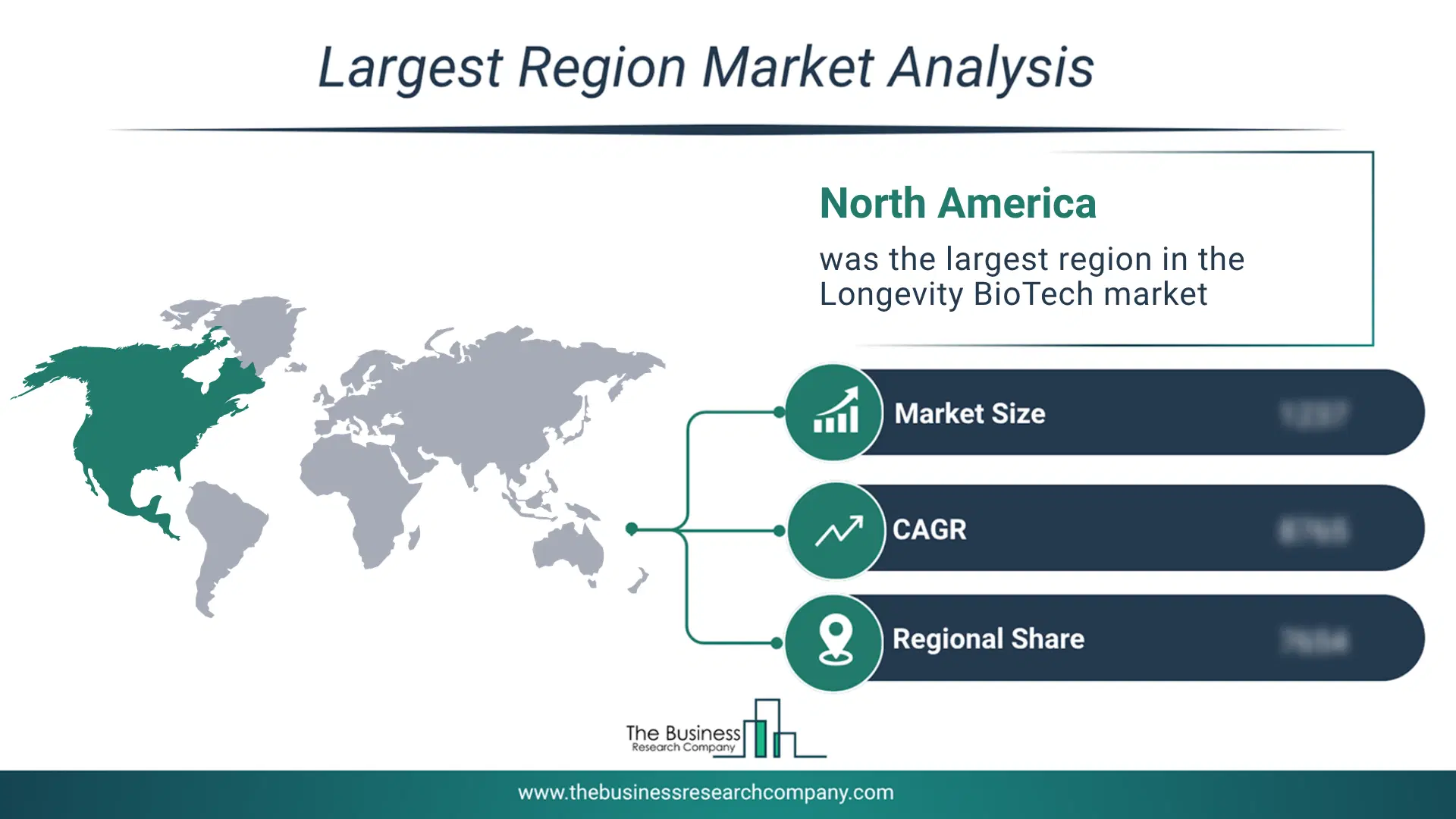
Regional Insights
North America was the largest region in the longevity biotech market in 2025. Asia-Pacific is expected to be the fastest-growing region in the forecast period. The regions covered in this market report are Asia-Pacific, South East Asia, Western Europe, Eastern Europe, North America, South America, Middle East, Africa. The countries covered in this market report are Australia, Brazil, China, France, Germany, India, Indonesia, Japan, Taiwan, Russia, South Korea, UK, USA, Canada, Italy, Spain.What Defines the Longevity BioTech Market?
The longevity biotech consists of revenues earned by entities by providing services such as biomarker testing, genetic testing, diagnostic screening, longevity coaching, personalized health assessment, clinical research services, data analytics services, telehealth monitoring, laboratory analysis, and preventive healthcare consultation. The market value includes the value of related goods sold by the service provider or included within the service offering. Longevity biotech also includes sales of therapeutic drugs, gene therapy kits, diagnostic devices, wearable health trackers, laboratory testing kits, nutraceutical formulations, and cellular therapy materials. Values in this market are ‘factory gate’ values, that is the value of goods sold by the manufacturers or creators of the goods, whether to other entities (including downstream manufacturers, wholesalers, distributors and retailers) or directly to end customers. The value of goods in this market includes related services sold by the creators of the goods.How is Market Value Defined and Measured?
The market value is defined as the revenues that enterprises gain from the sale of goods and/or services within the specified market and geography through sales, grants, or donations in terms of the currency (in USD unless otherwise specified). The revenues for a specified geography are consumption values that are revenues generated by organizations in the specified geography within the market, irrespective of where they are produced. It does not include revenues from resales along the supply chain, either further along the supply chain or as part of other products.
This chart presents market attractiveness based on a quantitative evaluation of growth, competition, strategic alignment, and risk, offering a clear view of opportunity areas for decision-making. This chart is for illustrative purposes; the full report contains the complete analysis.

This chart highlights the Total Addressable Market (TAM) by estimating the maximum revenue opportunity using an assumption-driven approach, supporting strategic planning and opportunity sizing across markets. The chart is illustrative; the full report provides a more comprehensive analysis.
What Key Data and Analysis Are Included in the Longevity BioTech Market Report 2026?
The longevity biotech market research report is one of a series of new reports from The Business Research Company that provides market statistics, including industry global market size, regional shares, competitors with the market share, detailed market segments, market trends and opportunities, and any further data you may need to thrive in the longevity biotech industry. The market research report delivers a complete perspective of everything you need, with an in-depth analysis of the current and future state of the industry.Longevity BioTech Market Report Forecast Analysis
| Report Attribute | Details |
|---|---|
| Market Size Value In 2026 | $23.20 billion |
| Revenue Forecast In 2030 | $34.82 billion |
| Growth Rate | CAGR of 11.0% from 2026 to 2030 |
| Base Year For Estimation | 2025 |
| Actual Estimates/Historical Data | 2020-2025 |
| Forecast Period | 2026 - 2030 |
| Market Representation | Revenue in USD Billion and CAGR from 2026 to 2030 |
| Segments Covered | Service, Therapeutic Approach, Technology, Application, End User |
| Regional Scope | Asia-Pacific, Western Europe, Eastern Europe, North America, South America, Middle East, Africa |
| Country Scope | The countries covered in the report are Australia, Brazil, China, France, Germany, India, ... |
| Key Companies Profiled | Insilico Medicine Inc., Calico Life Sciences LLC, Retro Biosciences Inc., Altos Labs Inc., LyGenesis Inc., NewLimit Inc., Halia Therapeutics Inc., Life Biosciences Inc., BioAge Labs Inc., Rubedo Life Sciences Inc., Juvenescence Limited, Cambrian BioPharma Inc., Elevian Inc., Oisin Biotechnologies Inc., Rejuvenate Bio Inc., Unity Biotechnology Inc., Cleara Biotech B.V., Junevity Inc., Liv Longevity Labs, Genflow Biosciences plc, Centenara Labs AG |
| Customization Scope | Request for Customization |
| Pricing And Purchase Options | Explore Purchase Options |