
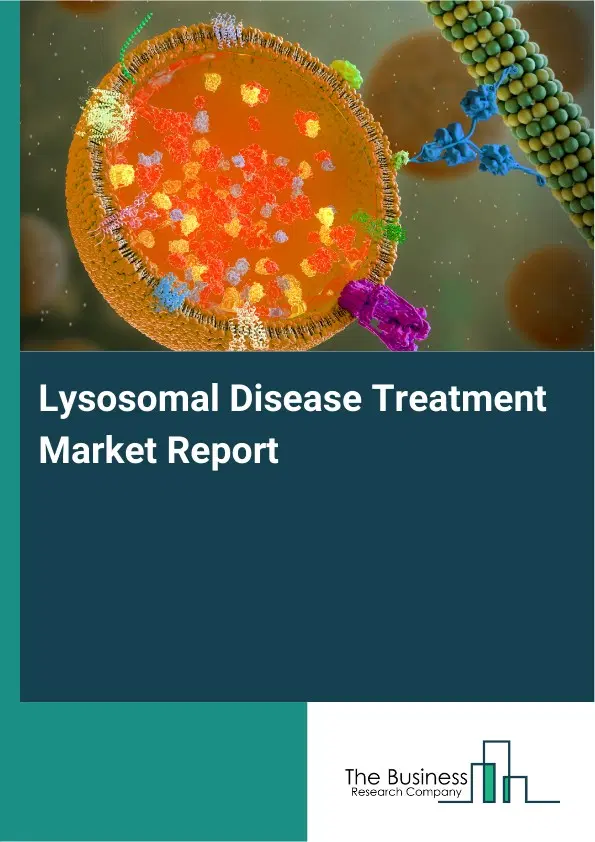
Lysosomal Disease Treatment Market Report 2026
Global Outlook – By Disease Type (Mucopolysaccharidosis, Pompe Syndrome, Fabry Diseases, Gaucher's Disease, Other Disease Types), By Therapy (Substrate Reduction Therapy, Stem Cell Therapy, Enzyme Replacement Therapy, Other Therapies), By Route Of Administration (Oral, Parenteral, Other Routes Of Administration), By End User (Hospitals, Specialty Clinics, Homecare, Other End Users) – Market Size, Trends, Strategies, and Forecast to 2030
Lysosomal Disease Treatment Market Overview
• Lysosomal Disease Treatment market size has reached to $9.79 billion in 2025 • Expected to grow to $14.73 billion in 2030 at a compound annual growth rate (CAGR) of 8.7% • Growth Driver: The Impact Of Growing Diagnostic Activities On Lysosomal Disease Treatment Market Expansion • Market Trend: Key Players In Lysosomal Disease Treatment Market Lead With Research And Technological Advancements • North America was the largest region in 2025 and Europe is the fastest growing region.What Is Covered Under Lysosomal Disease Treatment Market?
Lysosomal diseases (LSDs) refer to diseases in which substrates accumulate in excess in the cells of various organs due to defective lysosomal function. The accumulation of materials in the lysosomes leads to damage in various tissues and organs, resulting in a wide range of symptoms that can affect different parts of the body. The main types of lysosomal disease treatment include diseases such as mucopolysaccharidosis, Pompe syndrome, Fabry disease, Gaucher's disease, and others. Mucopolysaccharidosis type I (MPS I) is a lysosomal disease caused by an enzyme deficiency in alpha-L-iduronidase (IDUA) and treated by enzyme replacement therapy (ERT) and/or hematopoietic stem cell transplantation (HSCT). They are treated by therapies including substrate reduction therapy, stem cell therapy, enzyme replacement therapy, and other therapies by multiple routes of administration such as oral, parenteral, and other routes of administration in hospitals, specialty clinics, home care, and other end users.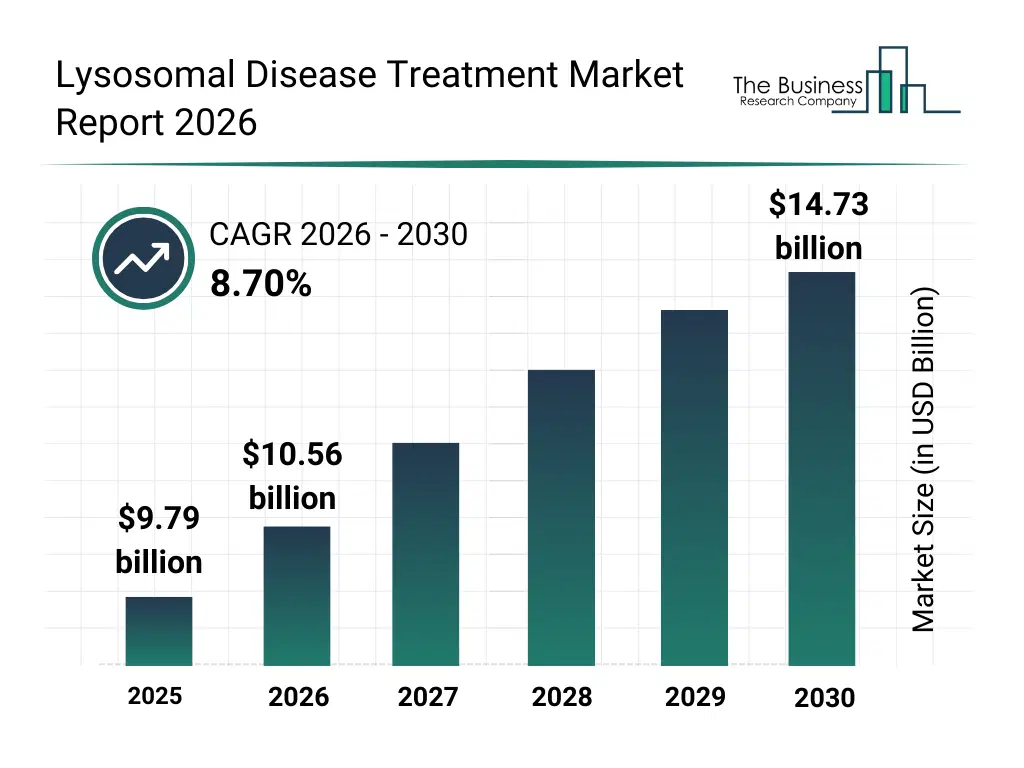
What Is The Lysosomal Disease Treatment Market Size and Share 2026?
The lysosomal disease treatment market size has grown strongly in recent years. It will grow from $9.79 billion in 2025 to $10.56 billion in 2026 at a compound annual growth rate (CAGR) of 7.9%. The growth in the historic period can be attributed to advancements in enzyme replacement therapies, increasing awareness of lysosomal storage disorders, growth of pediatric care infrastructure, government funding for rare disease research, emergence of diagnostic technologies.What Is The Lysosomal Disease Treatment Market Growth Forecast?
The lysosomal disease treatment market size is expected to see strong growth in the next few years. It will grow to $14.73 billion in 2030 at a compound annual growth rate (CAGR) of 8.7%. The growth in the forecast period can be attributed to expansion of personalized medicine, rising adoption of gene therapy, increased investments in biotechnology, growth in emerging markets healthcare infrastructure, partnerships for rare disease drug development. Major trends in the forecast period include development of targeted enzyme replacement therapies, expansion of rare disease diagnostic capabilities, growth of pediatric and adult treatment programs, increase in personalized and precision medicine approaches, rising collaborations between pharma and research institutes.
Global Lysosomal Disease Treatment Market Segmentation
1) By Disease Type: Mucopolysaccharidosis, Pompe Syndrome, Fabry Diseases, Gaucher's Disease, Other Disease Types 2) By Therapy: Substrate Reduction Therapy, Stem Cell Therapy, Enzyme Replacement Therapy, Other Therapies 3) By Route Of Administration: Oral, Parenteral, Other Routes Of Administration 4) By End User: Hospitals, Specialty Clinics, Homecare, Other End Users Subsegments: 1) By Mucopolysaccharidosis: MPS I (Hurler Syndrome), MPS II (Hunter Syndrome), MPS III (Sanfilippo Syndrome), MPS IV (Morquio Syndrome), MPS VI (Maroteaux-Lamy Syndrome), MPS VII (Sly Syndrome) 2) By Pompe Syndrome: Late-Onset Pompe Disease, Infantile-Onset Pompe Disease 3) By Fabry Disease: Classic Fabry Disease, Late-Onset Fabry Disease 4) By Gaucher's Disease: Type 1 Gaucher Disease, Type 2 Gaucher Disease, Type 3 Gaucher Disease 5) By Other Disease Types: Niemann-Pick Disease, Krabbe Disease, Tay-Sachs DiseaseWhat Is The Driver Of The Lysosomal Disease Treatment Market?
The growing diagnostic activities are expected to propel the growth of the lysosomal disease treatment market. Diagnostic activities refer to systematic processes and tests conducted to identify and analyze problems, conditions, or diseases in individuals or systems, often involving the collection and interpretation of data to inform decision-making and treatment strategies. Factors contributing to the growth of diagnostic activities include advancements in medical technology, increasing prevalence of chronic diseases, rising demand for preventive healthcare, growing awareness and education about health issues, and supportive government policies and funding for healthcare initiatives. As diagnostic activities become more sophisticated, they enable healthcare providers to identify lysosomal diseases more accurately, resulting in increased investment in targeted therapies and treatments. For instance, in May 2023, according to the National Health Service (NHS), a UK-based publicly funded healthcare system, a total of 2,302,400 diagnostic tests were conducted in March 2023, reflecting an increase of 223,100 tests compared to March 2022. At the end of March 2023, the number of patients waiting for a key diagnostic test reached 1,628,300, marking an increase of 59,400 compared to March 2022. Therefore, growing diagnostic activities is driving the growth of the lysosomal disease treatment industry.Key Players In The Global Lysosomal Disease Treatment Market
Major companies operating in the lysosomal disease treatment market are Eli Lilly and Company, Takeda Pharmaceutical Company Limited, Sanofi SA, Pfizer Inc., Novartis International AG, Johnson & Johnson Services Inc., Alexion Pharmaceuticals Inc., Amicus Therapeutics Inc., Actelion Pharmaceuticals Ltd., Sigilon Therapeutics Inc., BioMarin Pharmaceutical Inc., Merck & Co Inc., AstraZeneca PLC, Astellas Pharma Inc., Horizon Therapeutics plc, Leadient Biosciences Inc., Orphazyme A/S, Recordati Industria Chimica e Farmaceutica S.p.A., Valerion Therapeutics Llc, Viatris Inc., Chiese Farmaceutici SpA, Genzyme Corporation, Ultragenyx Pharmaceutical Inc., Sangamo Therapeutics Inc., Avrobio Inc., Axovant Gene Therapies Ltd., Regenxbio Inc., Krystal Biotech Inc., Homology Medicines Inc., Orchard Therapeutics plc, Sarepta Therapeutics Inc., Solid Biosciences Inc.
This chart is for illustrative purposes; the full report includes a detailed competitor analysis and comprehensive overview of the top 10 companies in the market.
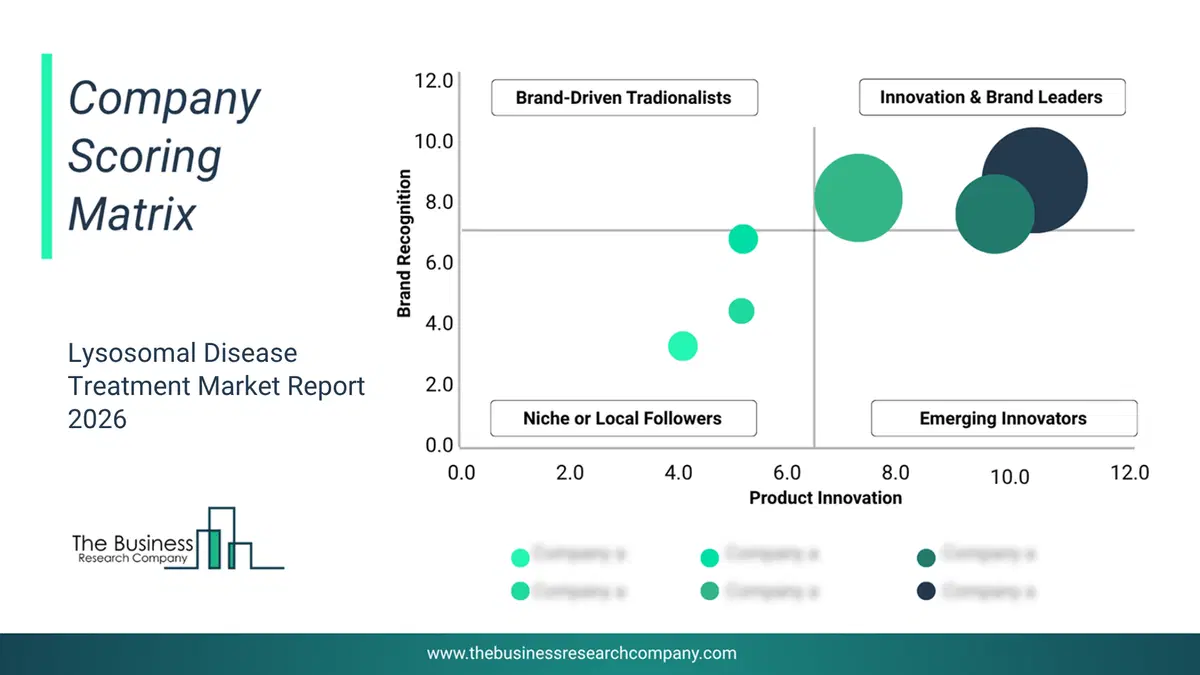
This chart maps companies by product innovation and brand strength, with bubble size indicating relative revenue, helping identify market leaders, challengers, and niche players. This is an illustrative chart; the full report provides a complete and accurate competitive analysis.
Global Lysosomal Disease Treatment Market Trends and Insights
Major companies operating in the lysosomal diseases treatment market are focusing on advancements in research and technology to strengthen their position in the market. Advancements in research and technology refer to progress and improvements made in scientific investigation and technological capabilities over time. For example, in September 2023, Amicus Therapeutics, a US-based biopharmaceutical company, has announced that the U.S. Food and Drug Administration (FDA) has approved Pombiliti (cipaglucosidase alfa-atga) + Opfolda (miglustat) 65mg capsules for the treatment of adult patients with late-onset Pompe disease (LOPD). Pombiliti + Opfolda is a 2-component therapy that consists of cipaglucosidase alfa-atga, a bis-M6P-enriched rhGAA that facilitates high-affinity uptake through the M6P receptor and the oral enzyme stabilizer, miglustat, that’s designed to reduce loss of enzyme activity in the blood.What Are Latest Mergers And Acquisitions In The Lysosomal Disease Treatment Market?
In March 2024, CENTOGENE, a Germany-based company specializing in rare disease diagnostics and multiomic data insights partnered with Takeda to accelerate the treatments for rare genetic diseases. Through this partnership extension, CENTOGENE aims to strengthen its collaboration with Takeda by leveraging its proprietary multiomic technology platform to accelerate the discovery and development of innovative treatments for rare genetic diseases. Takeda is a Japan-based biopharmaceutical company, focuses on the research and development of highly specialized therapies for rare diseases, as well as other therapeutic areas.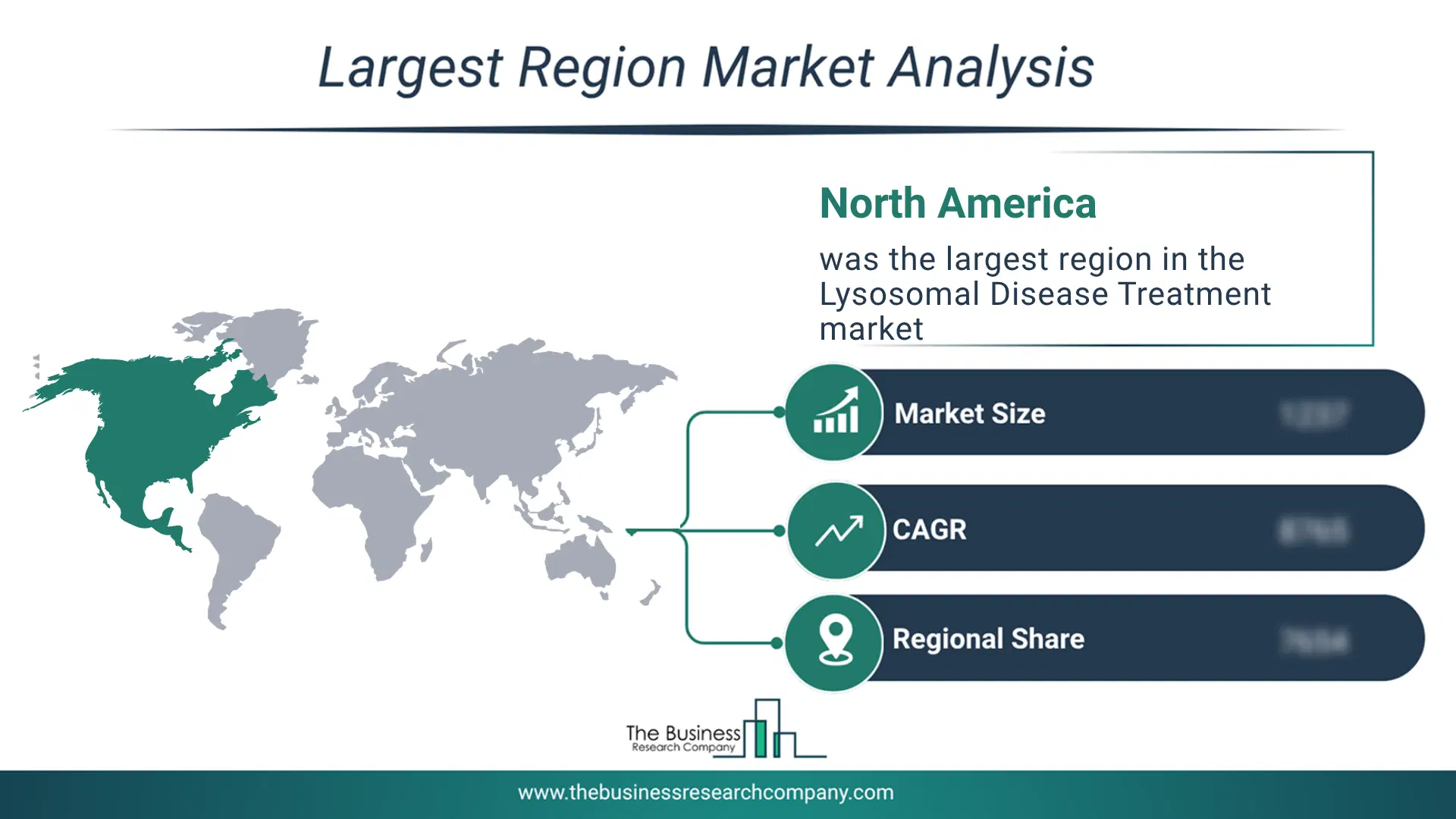
Regional Insights
North America was the largest region in the lysosomal disease treatment market in 2025. Europe is expected to be the fastest-growing region in the global lysosomal disease treatment market report during the forecast period. The regions covered in this market report are Asia-Pacific, South East Asia, Western Europe, Eastern Europe, North America, South America, Middle East, Africa. The countries covered in this market report are Australia, Brazil, China, France, Germany, India, Indonesia, Japan, Taiwan, Russia, South Korea, UK, USA, Canada, Italy, Spain.What Defines the Lysosomal Disease Treatment Market?
The lysosomal disease treatment market includes revenues earned by entities by offering lysosomal disease treatment services for inherited lysosomal disorders such as neuronal ceroid lipofuscinoses, Danon disease, and Wolman disease, and diagnosis of the disease through medication and therapies. The market value includes the value of related goods sold by the service provider or included within the service offering. Only goods and services traded between entities or sold to end consumers are included. The lysosomal disease treatment market consists of sales of medicines and services such as Bone marrow transplantation, the use of molecular chaperones, and Gene therapy. Values in this market are 'factory gate' values, that is, the value of goods sold by the manufacturers or creators of the goods, whether to other entities (including downstream manufacturers, wholesalers, distributors, and retailers) or directly to end customers. The value of goods in this market includes related services sold by the creators of the goods.How is Market Value Defined and Measured?
The market value is defined as the revenues that enterprises gain from the sale of goods and/or services within the specified market and geography through sales, grants, or donations in terms of the currency (in USD unless otherwise specified). The revenues for a specified geography are consumption values that are revenues generated by organizations in the specified geography within the market, irrespective of where they are produced. It does not include revenues from resales along the supply chain, either further along the supply chain or as part of other products.
This chart presents market attractiveness based on a quantitative evaluation of growth, competition, strategic alignment, and risk, offering a clear view of opportunity areas for decision-making. This chart is for illustrative purposes; the full report contains the complete analysis.

This chart highlights the Total Addressable Market (TAM) by estimating the maximum revenue opportunity using an assumption-driven approach, supporting strategic planning and opportunity sizing across markets. The chart is illustrative; the full report provides a more comprehensive analysis.
What Key Data and Analysis Are Included in the Lysosomal Disease Treatment Market Report 2026?
The lysosomal disease treatment market research report is one of a series of new reports from The Business Research Company that provides market statistics, including industry global market size, regional shares, competitors with the market share, detailed market segments, market trends and opportunities, and any further data you may need to thrive in the lysosomal disease treatment industry. The market research report delivers a complete perspective of everything you need, with an in-depth analysis of the current and future state of the industry.Lysosomal Disease Treatment Market Report Forecast Analysis
| Report Attribute | Details |
|---|---|
| Market Size Value In 2026 | $10.56 billion |
| Revenue Forecast In 2030 | $14.73 billion |
| Growth Rate | CAGR of 7.9% from 2026 to 2030 |
| Base Year For Estimation | 2025 |
| Actual Estimates/Historical Data | 2020-2025 |
| Forecast Period | 2026 - 2030 |
| Market Representation | Revenue in USD Billion and CAGR from 2026 to 2030 |
| Segments Covered | Disease Type, Therapy, Route Of Administration, End User |
| Regional Scope | Asia-Pacific, Western Europe, Eastern Europe, North America, South America, Middle East, Africa |
| Country Scope | The countries covered in the report are Australia, Brazil, China, France, Germany, India, Indonesia, Japan, Taiwan, Russia, South Korea, UK, USA, Canada, Italy, Spain. |
| Key Companies Profiled | Eli Lilly and Company, Takeda Pharmaceutical Company Limited, Sanofi SA, Pfizer Inc., Novartis International AG, Johnson & Johnson Services Inc., Alexion Pharmaceuticals Inc., Amicus Therapeutics Inc., Actelion Pharmaceuticals Ltd., Sigilon Therapeutics Inc., BioMarin Pharmaceutical Inc., Merck & Co Inc., AstraZeneca PLC, Astellas Pharma Inc., Horizon Therapeutics plc, Leadient Biosciences Inc., Orphazyme A/S, Recordati Industria Chimica e Farmaceutica S.p.A., Valerion Therapeutics Llc, Viatris Inc., Chiese Farmaceutici SpA, Genzyme Corporation, Ultragenyx Pharmaceutical Inc., Sangamo Therapeutics Inc., Avrobio Inc., Axovant Gene Therapies Ltd., Regenxbio Inc., Krystal Biotech Inc., Homology Medicines Inc., Orchard Therapeutics plc, Sarepta Therapeutics Inc., Solid Biosciences Inc. |
| Customization Scope | Request for Customization |
| Pricing And Purchase Options | Explore Purchase Options |