

Major Depressive Disorder Market Report 2026
Global Outlook – By Treatment (Psychotherapy, Medications, Electroconvulsive Therapy (ECT), Transcranial Magnetic Stimulation (TMS), Other Treatments), By Diagnosis (Psychiatric Evaluations, Diagnostic And Statistical Manual of Mental Disorders (DSM-5)), By End-User (Clinics, Hospitals, Other End-Users) - Market Size, Trends, Strategies, and Forecast to 2030
Major Depressive Disorder Market Overview
• Major Depressive Disorder market size has reached to $6.26 billion in 2025 • Expected to grow to $7.49 billion in 2030 at a compound annual growth rate (CAGR) of 3.9% • Growth Driver: Surge In Substance And Alcohol Abuse Cases Amplifies Growth In Major Depressive Disorder Market • Market Trend: Next-Generation Digital Therapeutics To Enhance Major Depressive Disorder Treatment Outcomes • North America was the largest region in 2025.What Is Covered Under Major Depressive Disorder Market?
Major depressive disorder refers to a mood disorder or depression that causes a persistent feeling of sadness and loss of interest, which can interfere with daily activities such as sleeping, eating, or working. It goes beyond normal fluctuations in mood and can significantly impact a person's thoughts, feelings, behavior and physical well-being. The treatment for major depressive disorder involves several medical interventions that support the emotional well-being of an individual. The main treatments for major depressive disorder are psychotherapy, medications, electroconvulsive therapy (ECT), transcranial magnetic stimulation (TMS) and others. Psychotherapy refers to a therapeutic approach that involves a trained mental health professional helping individuals or groups address emotional, psychological and behavioral issues. It can be diagnosed with physical examinations, laboratory tests, psychiatric evaluations, diagnostic and statistical manual of mental disorders (DSM-5) and others by several end-users including hospitals, clinics and others.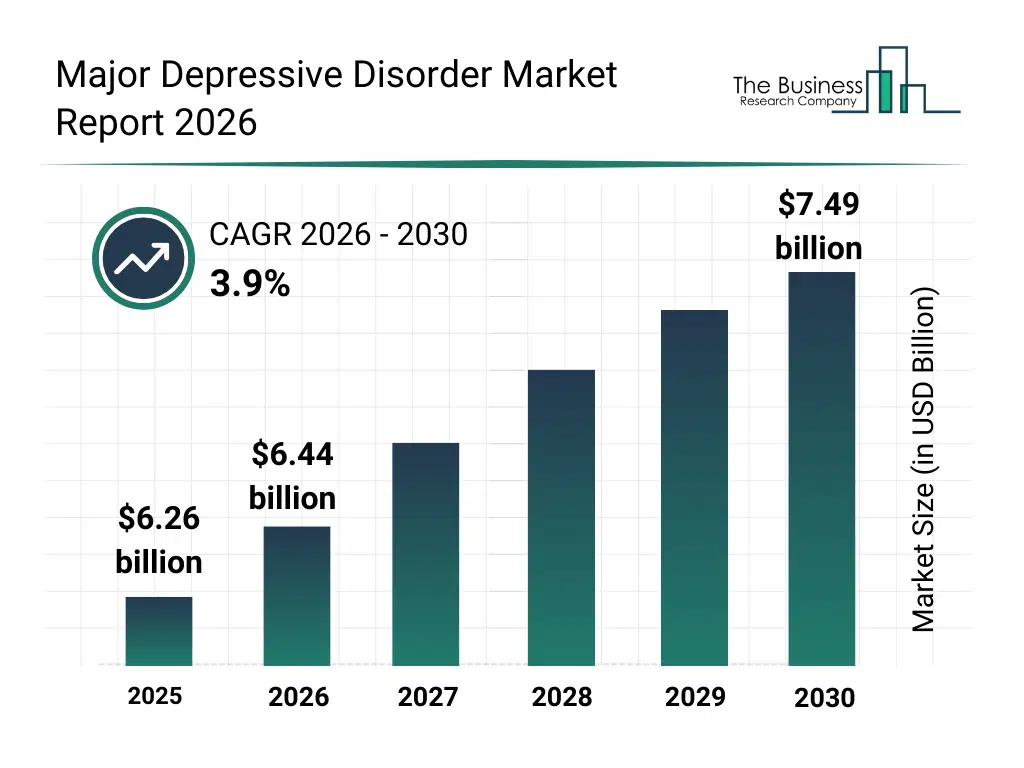
What Is The Major Depressive Disorder Market Size and Share 2026?
The major depressive disorder market size has grown steadily in recent years. It will grow from $6.26 billion in 2025 to $6.44 billion in 2026 at a compound annual growth rate (CAGR) of 2.9%. The growth in the historic period can be attributed to increasing prevalence of depressive disorders, growing societal awareness of mental health, wider availability of antidepressant medications, expansion of psychiatric care infrastructure, improved diagnostic guidelines for mood disorders.What Is The Major Depressive Disorder Market Growth Forecast?
The major depressive disorder market size is expected to see steady growth in the next few years. It will grow to $7.49 billion in 2030 at a compound annual growth rate (CAGR) of 3.9%. The growth in the forecast period can be attributed to rising mental health burden due to lifestyle stress, increasing adoption of digital mental health platforms, growing demand for personalized depression treatments, expansion of insurance coverage for mental health care, continued innovation in neuromodulation therapies. Major trends in the forecast period include rising adoption of combination therapy approaches, growing demand for non-invasive brain stimulation treatments, increasing awareness and diagnosis of depression, expansion of telepsychiatry and remote mental health care, rising acceptance of novel and rapid-acting antidepressants.
Global Major Depressive Disorder Market Segmentation
1) By Treatment: Psychotherapy, Medications, Electroconvulsive Therapy (ECT), Transcranial Magnetic Stimulation (TMS), Other Treatments 2) By Diagnosis: Psychiatric Evaluations, Diagnostic And Statistical Manual of Mental Disorders (DSM-5) 3) By End-User: Clinics, Hospitals, Other End-Users Subsegments: 1) By Psychotherapy: Cognitive Behavioral Therapy (CBT), Interpersonal Therapy (IPT), Dialectical Behavior Therapy (DBT), Psychodynamic Therapy 2) By Medications: Selective Serotonin Reuptake Inhibitors (SSRIs), Serotonin and Norepinephrine Reuptake Inhibitors (SNRIs), Tricyclic Antidepressants (TCAs), Monoamine Oxidase Inhibitors (MAOIs), Atypical Antidepressants 3) By Electroconvulsive Therapy (ECT): Unilateral ECT, Bilateral ECT, Modified ECT 4) By Transcranial Magnetic Stimulation (TMS): Repetitive Transcranial Magnetic Stimulation (rTMS), Deep Transcranial Magnetic Stimulation (dTMS), Theta Burst Stimulation (TBS), Navigated Brain Stimulation (nTMS) 5) By Other Treatments: Cognitive Behavioral Therapy (CBT), Psychodynamic Therapy, Interpersonal Therapy (IPT), Vagus Nerve Stimulation (VNS), Ketamine Therapy, Bright Light Therapy, Psychedelic-Assisted Therapy, Medication (Antidepressants)What Is The Driver Of The Major Depressive Disorder Market?
The rise in cases of substance abuse and alcohol abuse is expected to propel the growth of the major depressive disorder market. Substance and alcohol abuse are terms used to describe patterns of excessive and harmful use of substances, including alcohol, that can lead to negative physical, psychological and social consequences. It commonly co-occurs with major depressive disorder and both conditions tend to feed off each other and significantly increase the risk of physical and mental harm. For instance, in July 2024, according to a survey published by the Substance Abuse and Mental Health Services Administration, a US-based department of health and human services, 3.1% of people (8.9 million) misused opioids in 2023, while 21.8% of individuals aged 12 or older used marijuana, making it the most commonly used illicit drug. Additionally, 9.4% of people aged 12 or older vaped nicotine in the past month, showing an increase from 8.3% in 2022. Therefore, the rise in cases of substance abuse and alcohol abuse is driving the growth of the major depressive disorder industry.Key Players In The Global Major Depressive Disorder Market
Major companies operating in the major depressive disorder market are Pfizer Inc., Janssen Research and Development LLC, Merck and Co. Inc., Novartis AG, Sanofi-Aventis US LLC, Bristol Myers Squibb Co., AstraZeneca plc, GlaxoSmithKline plc, Takeda Pharmaceutical Company Limited, Eli Lilly and Company, Biogen Inc., Otsuka Pharmaceuticals Co. Ltd., Forest Laboratories Inc., H. Lundbeck A/S, Richter Gedeon plc, Allergan plc, Neurocrine Biosciences Inc., BlackThorn Therapeutics Inc., Intra-Cellular Therapies Inc., Axsome Therapeutics Inc., Luye Pharma Group, BrainsWay Ltd., Neumora Therapeutics Inc., Chase Therapeutics Corporation, SAGE Therapeutics Inc., Relmada Therapeutics Inc., Fabre-Kramer Pharmaceuticals Inc., Vistagen Therapeutics Inc.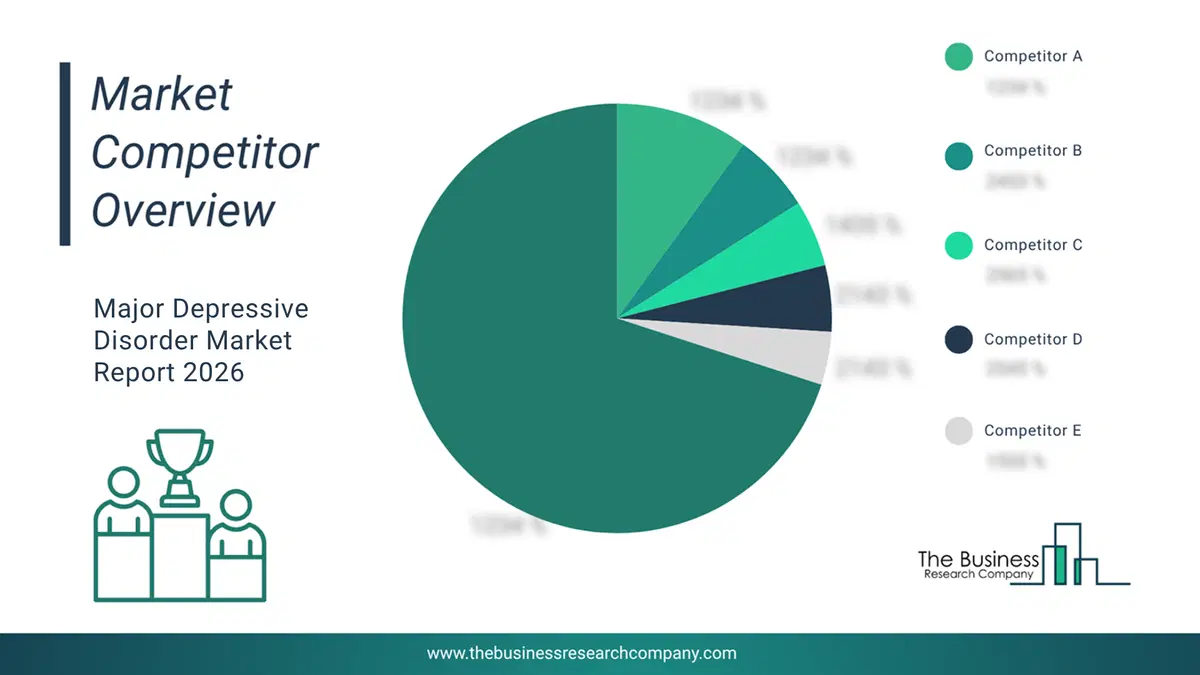
This chart is for illustrative purposes; the full report includes a detailed competitor analysis and comprehensive overview of the top 10 companies in the market.
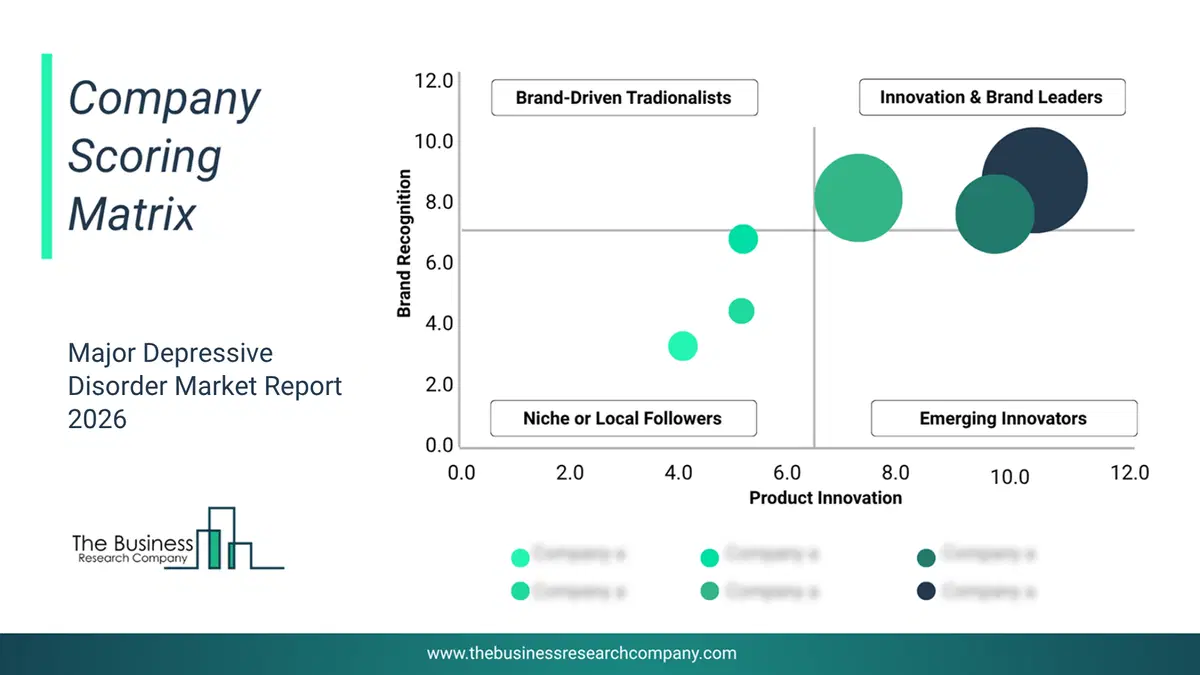
This chart maps companies by product innovation and brand strength, with bubble size indicating relative revenue, helping identify market leaders, challengers, and niche players. This is an illustrative chart; the full report provides a complete and accurate competitive analysis.
Global Major Depressive Disorder Market Trends and Insights
Major companies operating in the major depressive disorder (MDD) market are focusing on developing innovative solutions, such as prescription digital therapeutics (PDTs) to meet the rising demand for scalable access to evidence-based psychotherapy, adjunctive treatments for partial responders, and remote, measurement-driven care pathways. Prescription digital therapeutics (PDTs) are software-as-medical-device interventions delivered by prescription that combine clinically validated therapeutic content, remote engagement and adherence tools, and data capture for clinicians; unlike traditional antidepressant medications or in-person psychotherapy, PDTs provide repeatable, standardised, and remotely supervised behavioural interventions that can complement pharmacotherapy or fill gaps where provider access is limited. For instance, in April 2024, Otsuka Pharmaceutical Co., a Japan-based pharmaceutical company, together with Click Therapeutics, launched Rejoyn (developed as CT-152), a prescription digital therapeutic authorised by the U.S. FDA as an adjunctive treatment for adults with MDD who are on antidepressant medication. Rejoyn is a six-week, smartphone-delivered programme built around clinically validated cognitive-emotional brain-training exercises (the Emotional Faces Memory Task/EFMT) and brief therapeutic lessons designed to enhance cognitive control of emotion. The app functions via prescribed delivery, patients download and complete scheduled sessions on their smartphone while clinicians prescribe and monitor usage, and it was studied in the MIRAI randomised, sham-controlled trial showing symptom improvement versus control. Unique features include its neuromodulatory design intended to target neural networks implicated in emotion processing, remote, personalised reminders to boost adherence, and regulatory clearance as a medical device rather than a wellness app.What Are Latest Mergers And Acquisitions In The Major Depressive Disorder Market?
In October 2025, AbbVie Inc., a US-based healthcare and biopharmaceutical company, acquired bretisilocin from Gilgamesh Pharmaceuticals, Inc. for an undisclosed amount. With this acquisition, AbbVie Inc. aims to expand and strengthen its psychiatry and neuroscience pipeline by adding a next-generation, short-acting psychedelic-derived candidate to accelerate development in major depressive disorder. Gilgamesh Pharmaceuticals Inc. is a US-based clinical-stage biotechnology company that specializes in developing novel psychedelic-derived and psychoplastogen therapies, including bretisilocin, a Phase 2 investigational 5-HT₂A receptor agonist for moderate-to-severe major depressive disorder.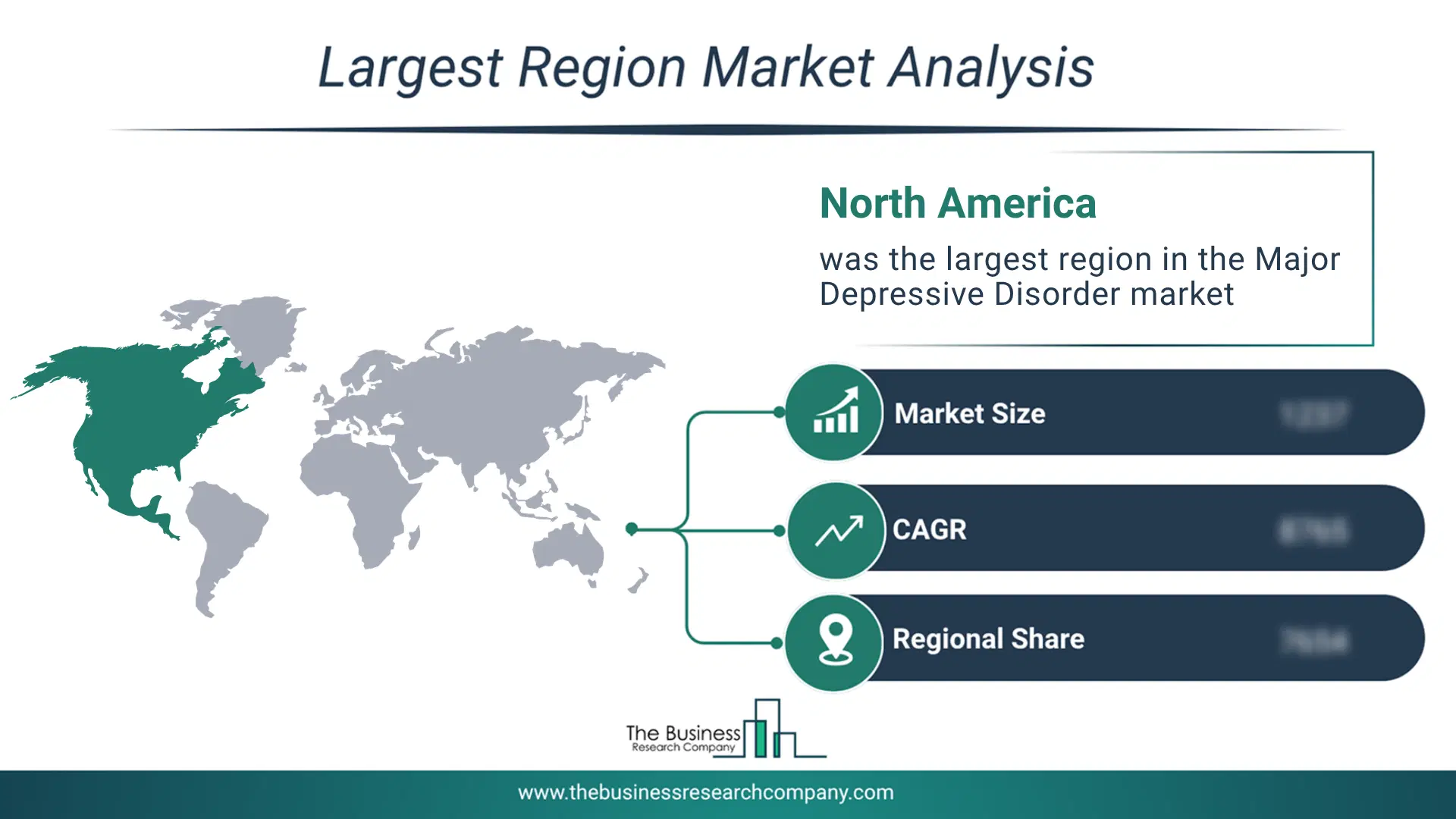
Regional Outlook
North America was the largest region in the major depressive disorder market in 2025. The regions covered in this market report are Asia-Pacific, South East Asia, Western Europe, Eastern Europe, North America, South America, Middle East, Africa. The countries covered in this market report are Australia, Brazil, China, France, Germany, India, Indonesia, Japan, Taiwan, Russia, South Korea, UK, USA, Canada, Italy, Spain.What Defines the Major Depressive Disorder Market?
The major depressive disorder market consists of revenues earned by entities by providing services such as teletherapy, integrated care, cognitive behavioral therapy, interpersonal therapy, mindfulness-based therapy and residential treatment. The market value includes the value of related goods sold by the service provider or included within the service offering. The major depressive disorder market also includes sales of monoamine oxidase inhibitors, tricyclic antidepressants and mirtazapine. Values in this market are ‘factory gate’ values, that is the value of goods sold by the manufacturers or creators of the goods, whether to other entities (including downstream manufacturers, wholesalers, distributors and retailers) or directly to end customers. The value of goods in this market includes related services sold by the creators of the goods.How is Market Value Defined and Measured?
The market value is defined as the revenues that enterprises gain from the sale of goods and/or services within the specified market and geography through sales, grants, or donations in terms of the currency (in USD unless otherwise specified). The revenues for a specified geography are consumption values that are revenues generated by organizations in the specified geography within the market, irrespective of where they are produced. It does not include revenues from resales along the supply chain, either further along the supply chain or as part of other products.
This chart presents market attractiveness based on a quantitative evaluation of growth, competition, strategic alignment, and risk, offering a clear view of opportunity areas for decision-making. This chart is for illustrative purposes; the full report contains the complete analysis.

This chart highlights the Total Addressable Market (TAM) by estimating the maximum revenue opportunity using an assumption-driven approach, supporting strategic planning and opportunity sizing across markets. The chart is illustrative; the full report provides a more comprehensive analysis.
What Key Data and Analysis Are Included in the Major Depressive Disorder Market Report 2026?
The major depressive disorder market research report is one of a series of new reports from The Business Research Company that provides market statistics, including industry global market size, regional shares, competitors with the market share, detailed market segments, market trends and opportunities, and any further data you may need to thrive in the major depressive disorder industry. The market research report delivers a complete perspective of everything you need, with an in-depth analysis of the current and future state of the industry.Major Depressive Disorder Market Report Forecast Analysis
| Report Attribute | Details |
|---|---|
| Market Size Value In 2026 | $6.44 billion |
| Revenue Forecast In 2030 | $7.49 billion |
| Growth Rate | CAGR of 3.9% from 2026 to 2030 |
| Base Year For Estimation | 2025 |
| Actual Estimates/Historical Data | 2020-2025 |
| Forecast Period | 2026 - 2030 |
| Market Representation | Revenue in USD Billion and CAGR from 2026 to 2030 |
| Segments Covered | Treatment, Diagnosis, End-User |
| Regional Scope | Asia-Pacific, Western Europe, Eastern Europe, North America, South America, Middle East, Africa |
| Country Scope | The countries covered in the report are Australia, Brazil, China, France, Germany, India, Indonesia, Japan, Taiwan, Russia, South Korea, UK, USA, Canada, Italy, Spain |
| Key Companies Profiled | Pfizer Inc., Janssen Research and Development LLC, Merck and Co. Inc., Novartis AG, Sanofi-Aventis US LLC, Bristol Myers Squibb Co., AstraZeneca plc, GlaxoSmithKline plc, Takeda Pharmaceutical Company Limited, Eli Lilly and Company, Biogen Inc., Otsuka Pharmaceuticals Co. Ltd., Forest Laboratories Inc., H. Lundbeck A/S, Richter Gedeon plc, Allergan plc, Neurocrine Biosciences Inc., BlackThorn Therapeutics Inc., Intra-Cellular Therapies Inc., Axsome Therapeutics Inc., Luye Pharma Group, BrainsWay Ltd., Neumora Therapeutics Inc., Chase Therapeutics Corporation, SAGE Therapeutics Inc., Relmada Therapeutics Inc., Fabre-Kramer Pharmaceuticals Inc., Vistagen Therapeutics Inc. |
| Customization Scope | Request for Customization |
| Pricing And Purchase Options | Explore Purchase Options |