
Mechanical Circulatory Support Devices Market Report 2026
Global Outlook – By Type (Intra-Aortic Balloon Pump, Ventricular Assist Device, Total Artificial Heart, Extracorporeal Membrane Oxygenation), By Technology (Pulsatile Flow Devices, Non-Pulsatile Flow Devices), By Application (Cardiac Surgery, Heart Failure Management, Myocardial Infraction, Cardiogenic Shock), By End User (Hospitals, Ambulatory Surgical Centers, Specialty Clinics, Other End Users) – Market Size, Trends, Strategies, and Forecast to 2030
Mechanical Circulatory Support Devices Market Overview
• Mechanical Circulatory Support Devices market size has reached to $3.47 billion in 2025 • Expected to grow to $5.59 billion in 2030 at a compound annual growth rate (CAGR) of 10% • Growth Driver: Rising Prevalence Of Heart Failure Is Fueling The Growth Of The Market Due To Increasing Cases Among Aging Populations • Market Trend: Innovations In Mechanical Circulatory Support Devices Enhance Patient Outcomes • North America was the largest region in 2025 and Asia-Pacific is the fastest growing region.What Is Covered Under Mechanical Circulatory Support Devices Market?
Mechanical circulatory support devices are advanced medical technologies designed to assist or replace the pumping function of the heart in patients with severe heart failure or other cardiac conditions. These devices help maintain adequate blood flow and oxygen delivery to vital organs when the heart cannot function effectively on its own. They are used as life-saving interventions to stabilize patients, improve quality of life, and in some cases, serve as a bridge to heart transplantation or recovery. The main types of mechanical circulatory support devices are intra-aortic balloon pump, ventricular assist device, total artificial heart, and extracorporeal membrane oxygenation. An intra-aortic balloon pump is a medical device that helps the heart pump blood by inflating and deflating a balloon in the aorta to improve blood flow and reduce the heart’s workload. The different technologies are pulsatile flow devices and non-pulsatile flow devices. The various applications involved are cardiac surgery, heart failure management, myocardial infarction, and cardiogenic shock, and they are used by various end users such as hospitals, ambulatory surgical centers, specialty clinics, and others.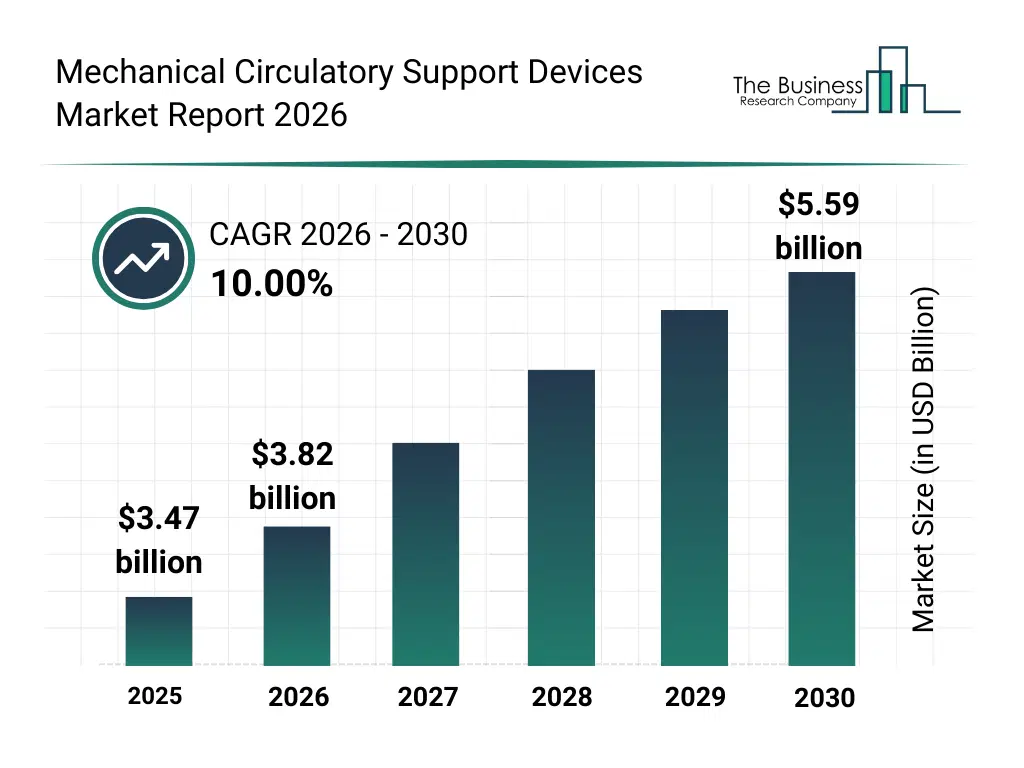
What Is The Mechanical Circulatory Support Devices Market Size and Share 2026?
The mechanical circulatory support devices market size has grown rapidly in recent years. It will grow from $3.47 billion in 2025 to $3.82 billion in 2026 at a compound annual growth rate (CAGR) of 10.1%. The growth in the historic period can be attributed to limited availability of advanced circulatory support devices, reliance on conventional intra-aortic balloon pumps, increasing prevalence of heart failure, rising cardiac surgery procedures, lack of standardized training for device implantation.What Is The Mechanical Circulatory Support Devices Market Growth Forecast?
The mechanical circulatory support devices market size is expected to see strong growth in the next few years. It will grow to $5.59 billion in 2030 at a compound annual growth rate (CAGR) of 10.0%. The growth in the forecast period can be attributed to technological advancements in pulsatile and non-pulsatile flow devices, growth in minimally invasive cardiac interventions, increasing adoption of left and biventricular assist devices, expansion of hospitals and specialty cardiac centers, rising investment in cardiac care research and development. Major trends in the forecast period include rising adoption of ventricular assist devices and total artificial hearts, growth in cardiac surgery and heart failure management procedures, increasing use of extracorporeal membrane oxygenation (ecmo) systems, focus on minimally invasive and percutaneous device implementation, enhanced regulatory compliance and safety standards for cardiac devices.
Global Mechanical Circulatory Support Devices Market Segmentation
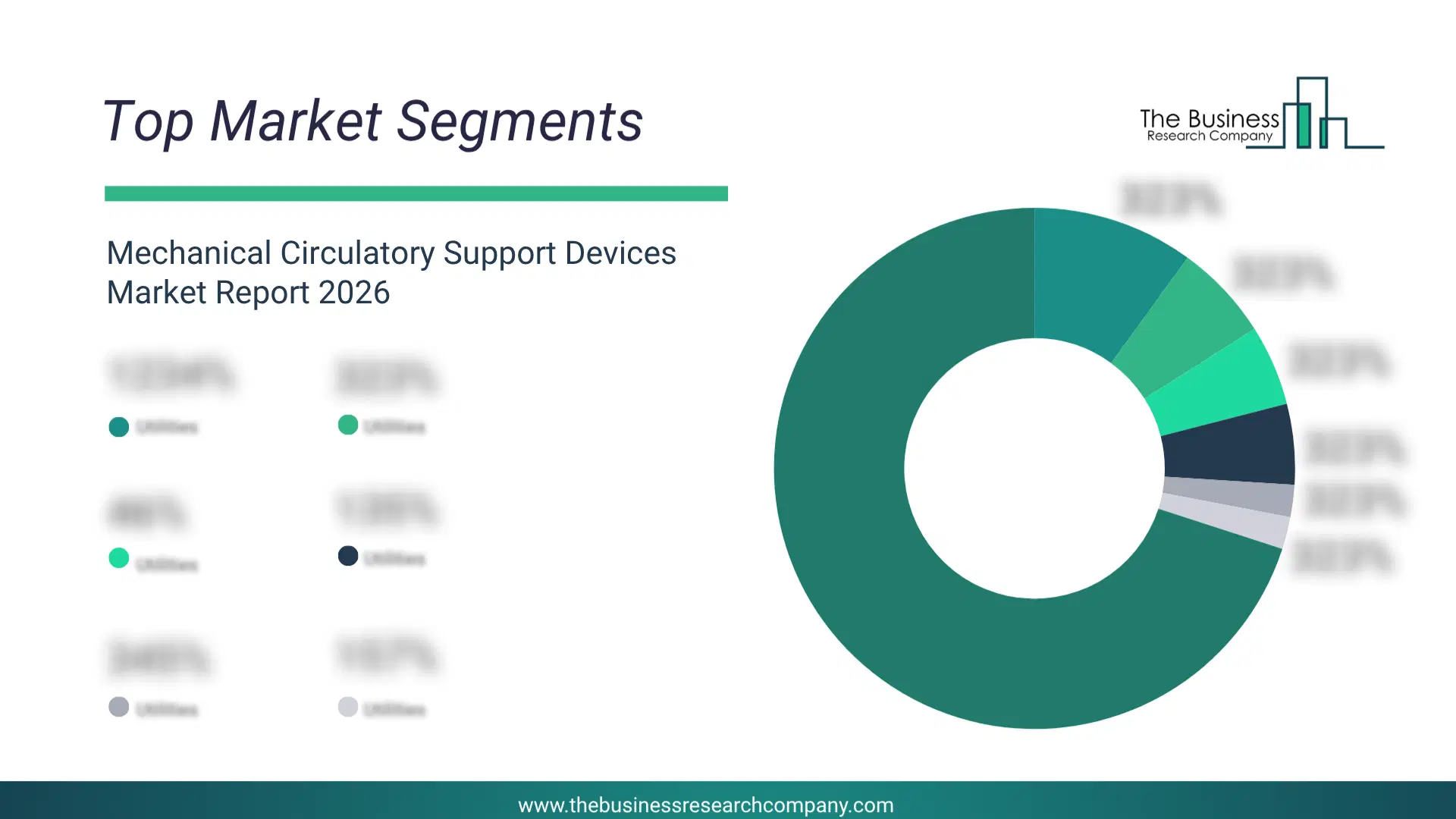
1) By Type: Intra-Aortic Balloon Pump, Ventricular Assist Device, Total Artificial Heart, Extracorporeal Membrane Oxygenation 2) By Technology: Pulsatile Flow Devices, Non-Pulsatile Flow Devices 3) By Application: Cardiac Surgery, Heart Failure Management, Myocardial Infraction, Cardiogenic Shock 4) By End User: Hospitals, Ambulatory Surgical Centers, Specialty Clinics, Other End Users Subsegments: 1) By Intra-Aortic Balloon Pump: Percutaneous Intra-Aortic Balloon Pump, Surgical Intra-Aortic Balloon Pump 2) By Ventricular Assist Device: Left Ventricular Assist Device, Right Ventricular Assist Device, Biventricular Assist Device 3) By Total Artificial Heart: Pneumatic Total Artificial Heart, Electric Total Artificial Heart 4) By Extracorporeal Membrane Oxygenation: Venoarterial Extracorporeal Membrane Oxygenation, Venovenous Extracorporeal Membrane OxygenationWhat Is The Driver Of The Mechanical Circulatory Support Devices Market?
The rising prevalence of heart failure is expected to propel the growth of the mechanical circulatory support devices market going forward. Heart failure is a chronic condition in which the heart cannot pump enough blood to meet the body’s needs. The rising prevalence of heart failure is due to the aging population, as older adults are more prone to cardiovascular diseases and related complications. Mechanical circulatory support devices help heart failure by assisting the heart’s pumping action, improving blood circulation, and easing the workload on the weakened heart. For instance, in September 2024, according to the Heart Failure Society of America (HFSA), a US-based non-profit organization, heart failure affects 6.7 million Americans over 20 now; by 2030, that number is expected to increase to 8.7 million, by 2040, to 10.3 million, and by 2050, to an astounding 11.4 million. Therefore, the rising prevalence of heart failure is driving the growth of the mechanical circulatory support devices industry.Key Players In The Global Mechanical Circulatory Support Devices Market
Major companies operating in the mechanical circulatory support devices market are Abbott Laboratories, Medtronic Plc, Getinge AB, LivaNova PLC, Magenta Medical Ltd., CorWave SA, Jarvik Heart Inc., Carmat SAS, Procyrion Inc., BiVACOR Inc., Evaheart Inc., ReliantHeart Inc., SynCardia Systems LLC, Berlin Heart GmbH, NovaPump GmbH, CardiacAssist Inc., Circulite Medical Inc., Windmill Cardiovascular Systems Inc., NuPulseCV Inc., FineHeart SAS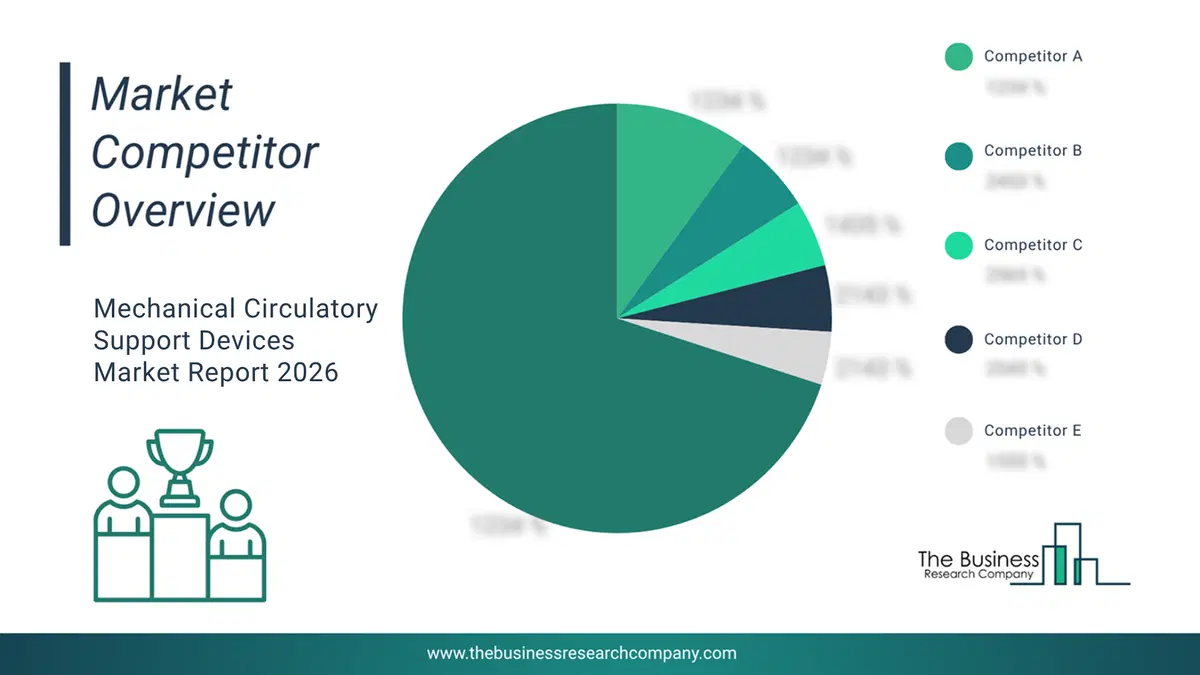
This chart is for illustrative purposes; the full report includes a detailed competitor analysis and comprehensive overview of the top 10 companies in the market.
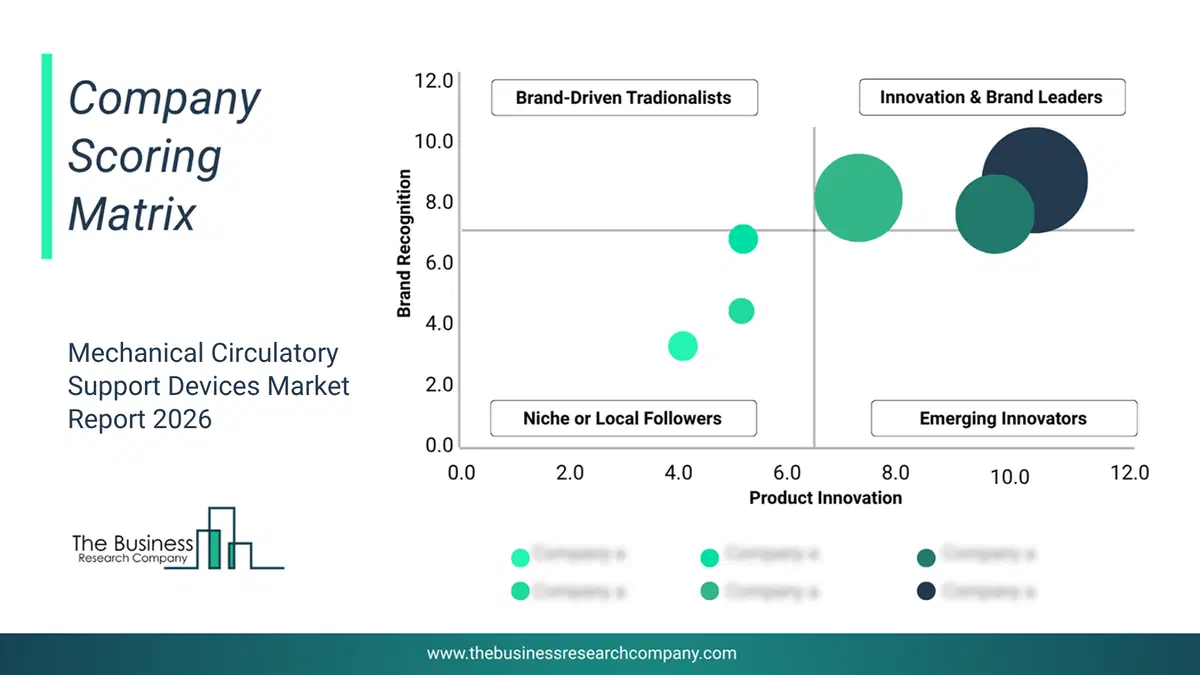
This chart maps companies by product innovation and brand strength, with bubble size indicating relative revenue, helping identify market leaders, challengers, and niche players. This is an illustrative chart; the full report provides a complete and accurate competitive analysis.
Global Mechanical Circulatory Support Devices Market Trends and Insights
Major companies operating in the mechanical circulatory support devices market are focusing on developing advanced technologies, such as magnetically levitated rotor (MAGLEV) technology, to provide patients with more reliable and efficient devices that enhance heart function and improve survival rates. Magnetically levitated rotor (MAGLEV) technology uses magnetic fields to suspend and spin a rotor without physical contact, reducing friction and wear for smoother, longer-lasting device performance. For instance, in July 2024, BiVACOR Inc., a US-based clinical-stage medical device company, launched the first-in-human implantation of its Total Artificial Heart (TAH). This innovative device is designed to completely replace both ventricles of a failing heart in patients with severe biventricular or univentricular heart failure who are not eligible for conventional left ventricular assist devices, providing a vital bridge-to-transplant solution that has the potential to improve survival and quality of life for thousands of patients facing limited treatment options due to the scarcity of donor hearts.What Are Latest Mergers And Acquisitions In The Mechanical Circulatory Support Devices Market?
In November 2024, magAssist Co., Ltd., a China-based medical device company, partnered with Zhongshan Hospital (Fudan University) to co-develop NyokAssist, a percutaneous ventricular assist device designed to provide temporary circulatory support for patients with acute heart failure. With this partnership, magAssist and Zhongshan Hospital aim to combine clinical expertise and advanced medical device technology to enable minimally invasive intervention and rapid hemodynamic stabilization for patients in critical condition. Zhongshan Hospital (Fudan University) is a China-based hospital and research institution specializing in cardiovascular medicine and clinical research.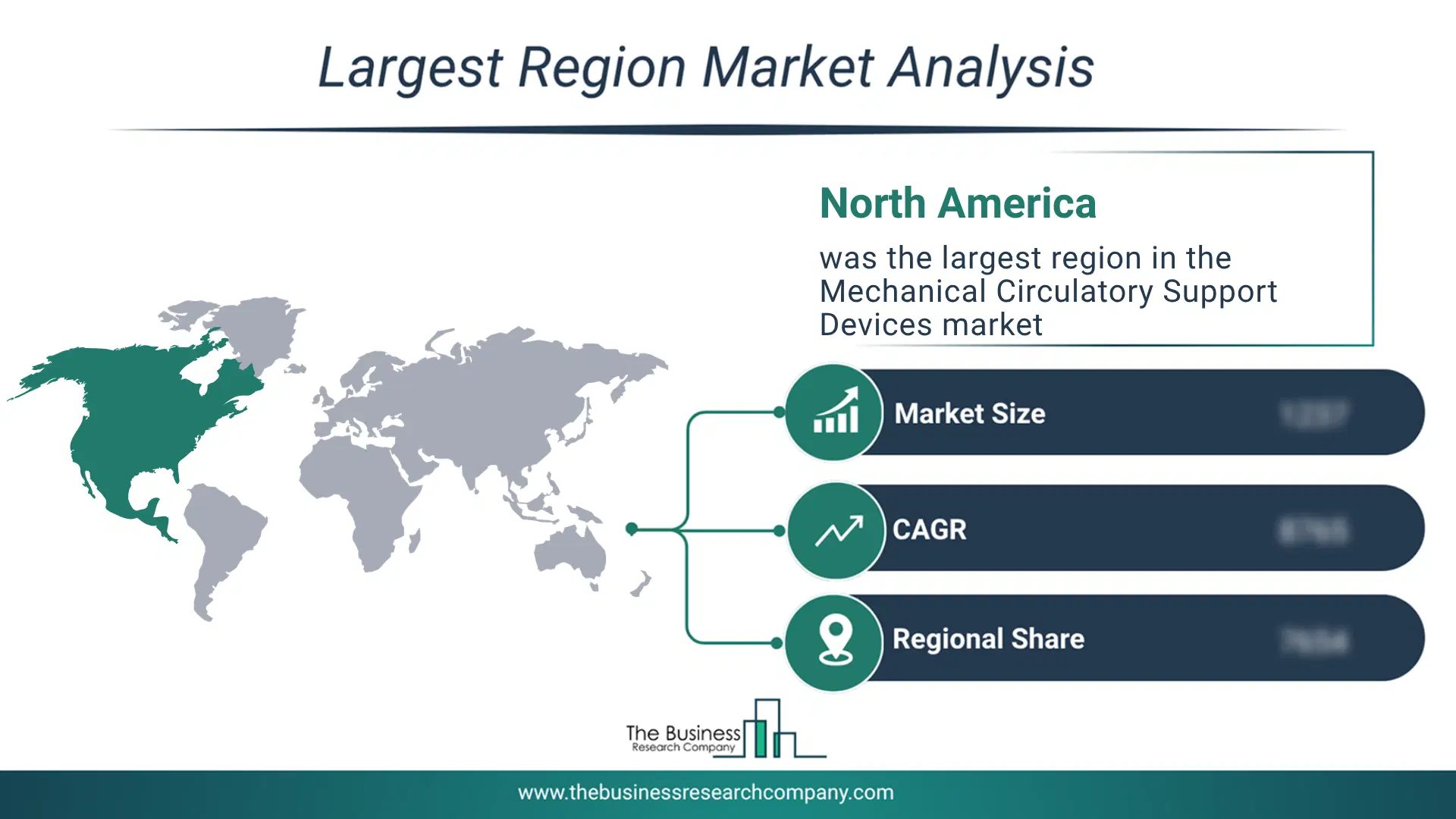
Regional Outlook
North America was the largest region in the mechanical circulatory support devices market in 2025. Asia-Pacific is expected to be the fastest-growing region in the forecast period. The regions covered in this market report are Asia-Pacific, South East Asia, Western Europe, Eastern Europe, North America, South America, Middle East, Africa. The countries covered in this market report are Australia, Brazil, China, France, Germany, India, Indonesia, Japan, Taiwan, Russia, South Korea, UK, USA, Canada, Italy, SpainWhat Defines the Mechanical Circulatory Support Devices Market?
The mechanical circulatory support devices market consists of revenues earned by entities by providing services such as technical support, patient monitoring, device calibration, repair, clinical consultation, performance testing, and emergency assistance. The market value includes the value of related goods sold by the service provider or included within the service offering. The mechanical circulatory support devices market also includes sales of intra-aortic balloon pump, ventricular assist device, total artificial heart, extracorporeal membrane oxygenation, pulsatile flow device, non-pulsatile flow device, and implantable device. Values in this market are ‘factory gate’ values, that is the value of goods sold by the manufacturers or creators of the goods, whether to other entities (including downstream manufacturers, wholesalers, distributors and retailers) or directly to end customers. The value of goods in this market includes related services sold by the creators of the goods.How is Market Value Defined and Measured?
The market value is defined as the revenues that enterprises gain from the sale of goods and/or services within the specified market and geography through sales, grants, or donations in terms of the currency (in USD unless otherwise specified). The revenues for a specified geography are consumption values that are revenues generated by organizations in the specified geography within the market, irrespective of where they are produced. It does not include revenues from resales along the supply chain, either further along the supply chain or as part of other products.
This chart presents market attractiveness based on a quantitative evaluation of growth, competition, strategic alignment, and risk, offering a clear view of opportunity areas for decision-making. This chart is for illustrative purposes; the full report contains the complete analysis.

This chart highlights the Total Addressable Market (TAM) by estimating the maximum revenue opportunity using an assumption-driven approach, supporting strategic planning and opportunity sizing across markets. The chart is illustrative; the full report provides a more comprehensive analysis.
What Key Data and Analysis Are Included in the Mechanical Circulatory Support Devices Market Report 2026?
The mechanical circulatory support devices market research report is one of a series of new reports from The Business Research Company that provides market statistics, including industry global market size, regional shares, competitors with the market share, detailed market segments, market trends and opportunities, and any further data you may need to thrive in the mechanical circulatory support devices industry. The market research report delivers a complete perspective of everything you need, with an in-depth analysis of the current and future state of the industry.Mechanical Circulatory Support Devices Market Report Forecast Analysis
| Report Attribute | Details |
|---|---|
| Market Size Value In 2026 | $3.82 billion |
| Revenue Forecast In 2030 | $5.59 billion |
| Growth Rate | CAGR of 10% from 2026 to 2030 |
| Base Year For Estimation | 2025 |
| Actual Estimates/Historical Data | 2020-2025 |
| Forecast Period | 2026 - 2030 |
| Market Representation | Revenue in USD Billion and CAGR from 2026 to 2030 |
| Segments Covered | Type, Technology, Application, End User |
| Regional Scope | Asia-Pacific, Western Europe, Eastern Europe, North America, South America, Middle East, Africa |
| Country Scope | The countries covered in the report are Australia, Brazil, China, France, Germany, India, Indonesia, Japan, Taiwan, Russia, South Korea, UK, USA, Canada, Italy, Spain. |
| Key Companies Profiled | Abbott Laboratories, Medtronic Plc, Getinge AB, LivaNova PLC, Magenta Medical Ltd., CorWave SA, Jarvik Heart Inc., Carmat SAS, Procyrion Inc., BiVACOR Inc., Evaheart Inc., ReliantHeart Inc., SynCardia Systems LLC, Berlin Heart GmbH, NovaPump GmbH, CardiacAssist Inc., Circulite Medical Inc., Windmill Cardiovascular Systems Inc., NuPulseCV Inc., FineHeart SAS |
| Customization Scope | Request for Customization |
| Pricing And Purchase Options | Explore Purchase Options |