
Medical Foods For Inborn Errors Of Metabolism Market Report 2026
Global Outlook – By Product (Amino Acid, Glytactin With GMP Amino Acid-Modified Infant Formula with Iron, Low-Calcium Or Vitamin D-Free Infant Formula With Iron, Low Protein Food, Other Products), By Diseases (Phenylketonuria (PKU), Maple Syrup Urine Disease (MSUD), Homocystinuria, Methylmalonic Acidemia, Organic Acidurias, Propionic Acidemia, Isovaleric Acidemia, Disorders Of Leucine Metabolism, Other Diseases ), By Age Group (Infants, Weaning, Adolescents, Adults), By Forms (Powder, Liquids, Gels, Other Forms), By Distribution Channel (Retail Pharmacies, Hospital Pharmacies, Drugs Stores, Online Pharmacies, Other Distribution Channels) – Market Size, Trends, Strategies, and Forecast to 2030
Medical Foods For Inborn Errors Of Metabolism Market Overview
• Medical Foods For Inborn Errors Of Metabolism market size has reached to $3.46 billion in 2025 • Expected to grow to $6.07 billion in 2030 at a compound annual growth rate (CAGR) of 11.9% • Growth Driver: Rise In Genetic Disorders Drives Growth Of Medical Foods For Inborn Errors In Metabolism Market • Market Trend: Breakthrough Innovation In Medical Food For Inborn Errors In Metabolism Market • North America was the largest region in 2025.Market Gains By 2030 – Top Opportunities By Segment
Market Gain identifies the most promising market opportunities by highlighting the segments or products expected to generate the highest incremental revenue growth over the next five years.
What Is Covered Under Medical Foods For Inborn Errors Of Metabolism Market?
A medical food for inborn errors of metabolism refers to dietary supplements provided to people with genetic conditions that influence their metabolic functions. The dietary requirements of people with these diseases are managed, and these items provide particular nutrients. The main types of medical foods for inborn errors of metabolism are amino acid, glytactin with GMP amino acid-modified infant formula with iron, low-calcium/vitamin D-free infant formula with iron, low protein food, and others. Amino acids refer to any of the several substances present in living cells that include carbon, oxygen, hydrogen, and nitrogen and combine to create proteins and it is used in medical Foods for inborn errors of metabolism to provide alternative sources of essential amino acids while avoiding those that the individual's body cannot metabolize properly. The various diseases include phenylketonuria (PKU), maple syrup urine disease (MSUD), homocystinuria, methylmalonic acidemia, organic acidurias, propionic acidemia, isovaleric acidemia, disorders of leucine metabolism, glutaric acidemia type I renal disease, and others used by different age group infants, weaning, adolescent, and adult. It comes in different forms such as powder, liquids, gels, and others that are distributed via various distribution channels such as retail pharmacies, hospital pharmacies, drug stores, online pharmacies, and others.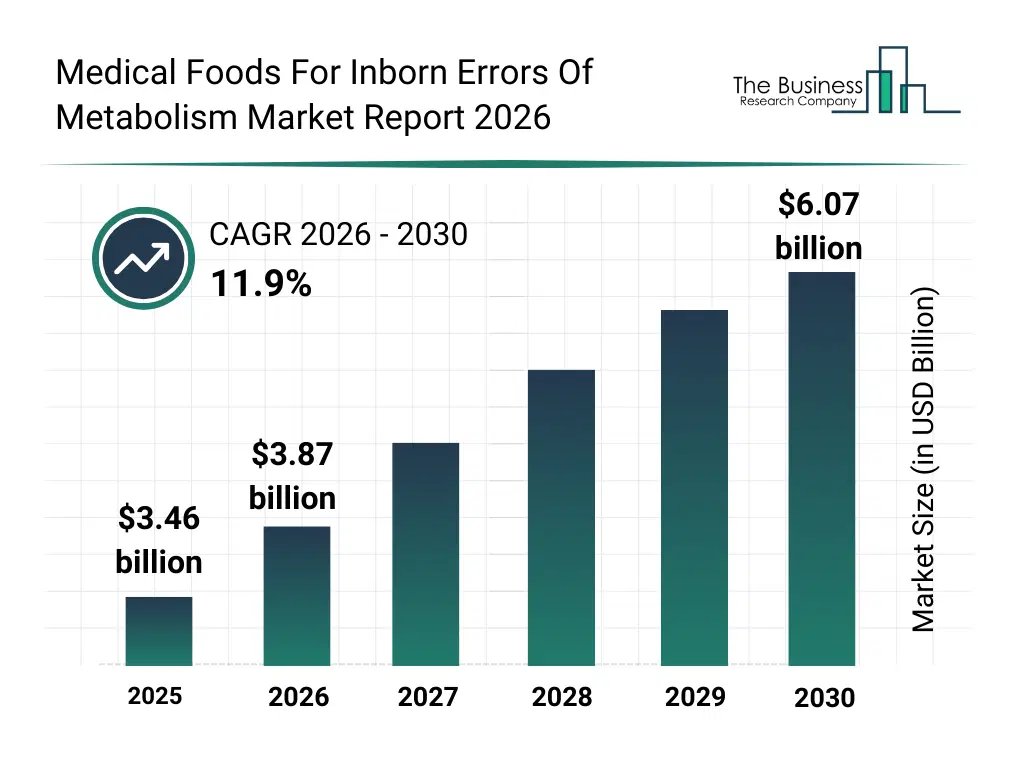
What Is The Medical Foods For Inborn Errors Of Metabolism Market Size and Share 2026?
The medical foods for inborn errors of metabolism market size has grown rapidly in recent years. It will grow from $3.46 billion in 2025 to $3.87 billion in 2026 at a compound annual growth rate (CAGR) of 12.0%. The growth in the historic period can be attributed to rising diagnosis of metabolic disorders, expansion of newborn screening programs, increasing clinical adoption of medical foods, availability of specialized dietary formulations, growth of hospital-based nutrition therapy.What Is The Medical Foods For Inborn Errors Of Metabolism Market Growth Forecast?
The medical foods for inborn errors of metabolism market size is expected to see rapid growth in the next few years. It will grow to $6.07 billion in 2030 at a compound annual growth rate (CAGR) of 11.9%. The growth in the forecast period can be attributed to increasing focus on personalized medicine, rising investments in rare disease nutrition, expansion of home-based medical nutrition, growing demand for patient-friendly formulations, increasing regulatory support for medical foods. Major trends in the forecast period include increasing development of disease-specific nutritional formulas, rising adoption of gmp-based medical foods, growing demand for ready-to-use therapeutic nutrition, expansion of personalized nutrition solutions, enhanced focus on clinical efficacy and safety.
Global Medical Foods For Inborn Errors Of Metabolism Market Segmentation
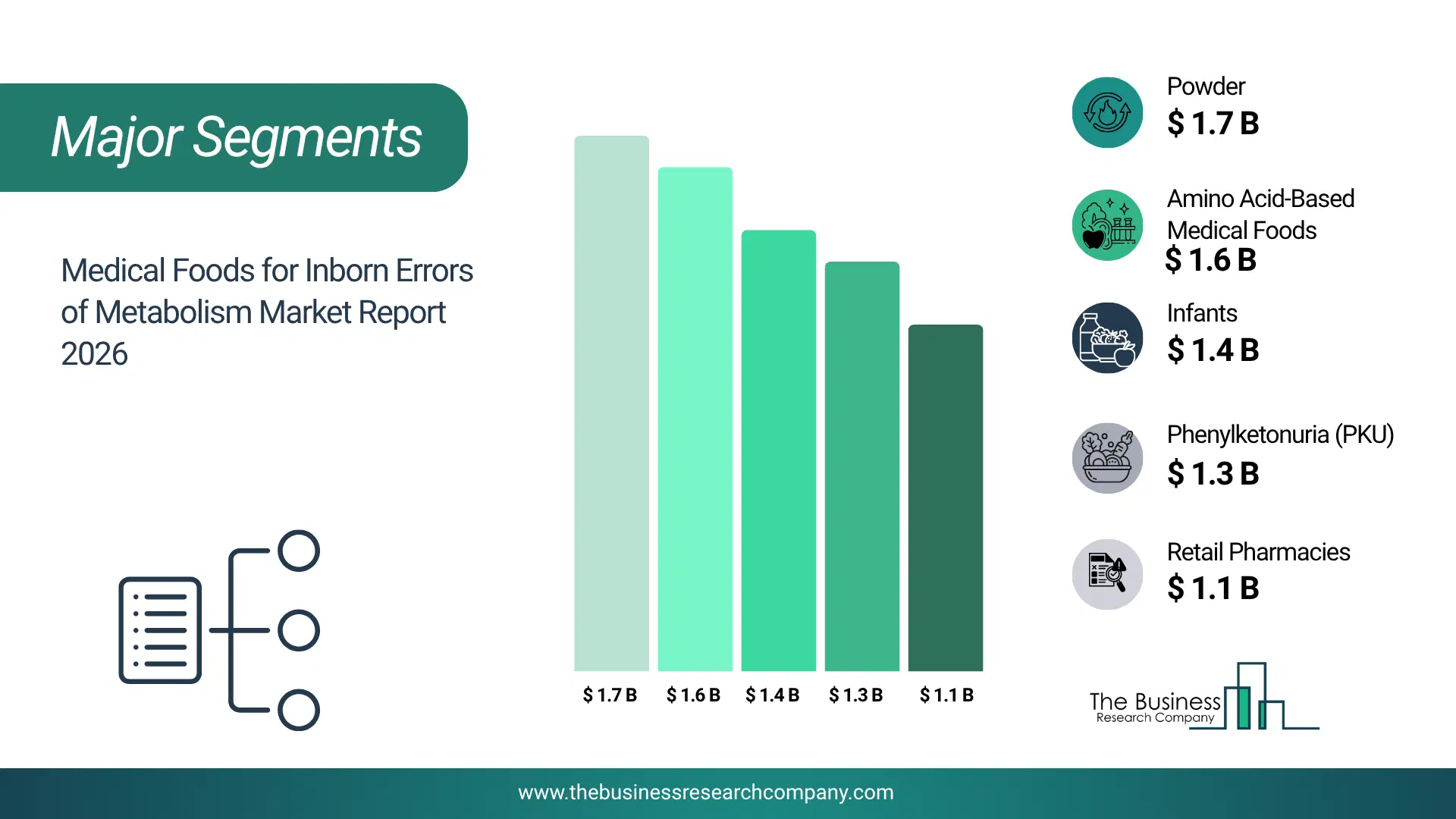
1) By Product: Amino Acid, Glytactin With GMP Amino Acid-Modified Infant Formula with Iron, Low-Calcium Or Vitamin D-Free Infant Formula With Iron, Low Protein Food, Other Products 2) By Diseases: Phenylketonuria (PKU), Maple Syrup Urine Disease (MSUD), Homocystinuria, Methylmalonic Acidemia, Organic Acidurias, Propionic Acidemia, Isovaleric Acidemia, Disorders Of Leucine Metabolism, Other Diseases 3) By Age Group: Infants, Weaning, Adolescents, Adults 4) By Forms: Powder, Liquids, Gels, Other Forms 5) By Distribution Channel: Retail Pharmacies, Hospital Pharmacies, Drugs Stores, Online Pharmacies, Other Distribution Channels Subsegments: 1) By Amino Acid: Powdered Amino Acid Formulas, Liquid Amino Acid Formulas 2) By Glytactin With GMP Amino Acid-Modified Infant Formula With Iron: Glytactin Powder, Glytactin Ready-To-Use Formulations, GMP Formulas For Specific Conditions, Standard GMP Amino Acid-Modified Formulas 3) By Low-Calcium Or Vitamin D-Free Infant Formula With Iron: Liquid Low-Calcium Or Vitamin D-Free Formulas, Powdered Low-Calcium Or Vitamin D-Free Formulas 4) By Low Protein Food: Low Protein Pasta And Noodles, Low Protein Snacks, Low Protein Bakery Products 5) By Other Products: Specialized Supplements, Nutritional Bars, Ready-To-Use Therapeutic Foods The top segments in the medical foods for inborn errors of metabolism market will be: • Powder will reach $1774.12 Million by 2025. • Amino Acid-Based Medical Foods will reach $1637.24 Million by 2025. • Infants will reach $1463.8 Million by 2025. • Phenylketonuria (PKU) will reach $1314.7 Million by 2025. • Retail Pharmacies will reach $1197.23 Million by 2025.What Is The Driver Of The Medical Foods For Inborn Errors Of Metabolism Market?
The rise in genetic (inherited) disorders is expected to propel the growth of medical foods for inborn errors in the metabolism market going forward. Genetic (inherited) disorders refer to a disease that is entirely or partially brought on by a deviation from the typical DNA sequence. Medical foods are essential for infants with metabolic abnormalities to deliver specialized nutrition created to address the unique metabolic requirements of people with these illnesses, thereby assisting in the prevention of nutritional deficits and metabolic needs for promoting their growth and well-being. For instance, in May 2024, according to the Centers for Disease Control and Prevention (CDC), a US-based public health agency, sickle cell disease (SCD) affects about 100,000 people in the United States. More than 90% of those affected are non-Hispanic Black or African American, while an estimated 3%–9% are Hispanic or Latino. Therefore, the rise in genetic (inherited) disorders is driving the growth of medical foods for inborn errors of metabolism industry.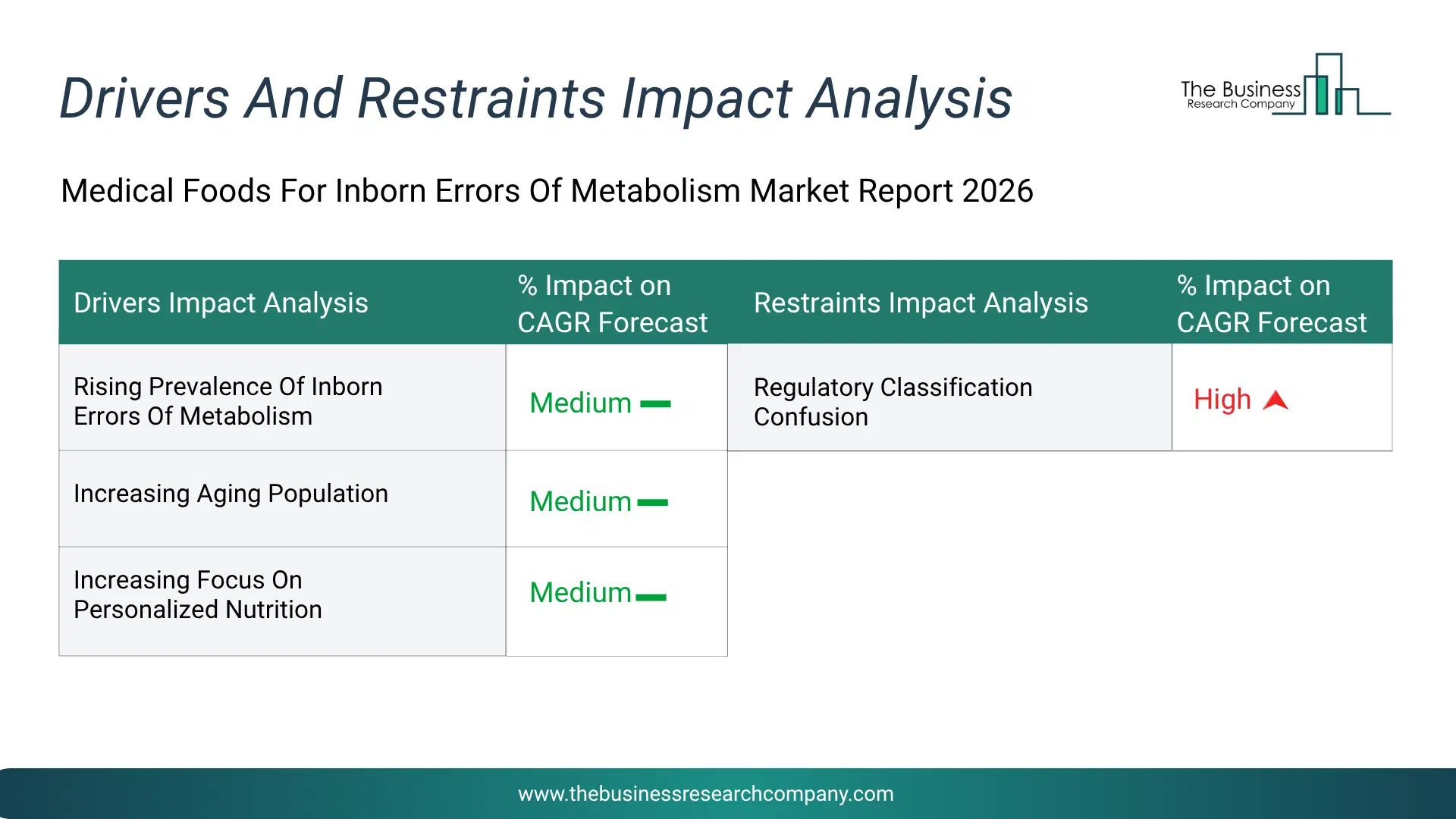
Infographic Chart Showing Key Market Drivers Analysis And Restraints For Medical Foods For Inborn Errors Of Metabolism Market
The chart presents an impact analysis of key drivers and restraints, quantifying their relative influence on the market's growth rate and helping assess the balance between growth enablers and limiting factors. This chart offers a high-level perspective; the full report contains more detailed insights.
How Will The Drivers Impact Growth In The Global Medical Foods For Inborn Errors Of Metabolism Market?
• Rising Prevalence Of Inborn Errors Of Metabolism (Medium) – The growing focus on inborn errors of metabolism will emerge as a major factor driving the expansion of the medical foods for inborn errors of metabolism market by 2030. Improved diagnostic techniques and increased awareness will lead to more individuals being diagnosed and seeking specialized nutritional support to manage their metabolic disorders. As a result, the market for medical foods designed specifically for IEMs will continue to grow, offering solutions that help optimize health outcomes for affected individuals • Increasing Aging Population (Medium) – The increasing emphasis on aging population will become a key driver of growth in the medical foods for inborn errors of metabolism market by 2030. To manage inborn errors of metabolism (IEMs), as older adults are more likely to experience metabolic disorders. As this demographic continues to grow, there will be a greater need for specialized nutritional solutions tailored to address the unique metabolic challenges faced by the elderly. This trend will support the expansion of the medical foods market, with more focus on products that help manage and mitigate the effects of IEMs in aging populations. • Increasing Focus On Personalized Nutrition (Medium) – The expanding integration of personalized nutrition processes will serve as a key growth catalyst for the medical foods for inborn errors of metabolism market by 2030. Personalized nutrition customizes diet plans according to an individual's genetic profile, lifestyle and health conditions. As genetic and metabolic disorders vary greatly between individuals, personalized nutrition allows for tailored dietary interventions that address specific needs based on genetic profiles and metabolic conditions. This approach ensures more effective management of IEMs, leading to better health outcomes and higher demand for customized medical food products. As awareness of personalized nutrition grows, it will continue to drive innovation and expand the market for medical foods designed to support individuals with inborn errors of metabolism. • Growing Awareness About Metabolic Disorders (Low) – The increasing emphasis on detection of metabolic disorders will become a significant driver contributing to the growth of the medical foods for inborn errors of metabolism market by 2030. More individuals are diagnosed with these conditions. With earlier and more accurate diagnoses, there will be an increasing need for specialized medical foods to manage and treat IEMs effectively. This heightened awareness will drive demand for customized nutritional solutions, leading to innovation and expansion within the market. • Supportive Government Healthcare Initiatives (Low) – The supportive government healthcare initiatives will become a significant driver contributing to the growth of the medical foods for inborn errors of metabolism market by 2030. Governments frequently offer financial support for essential medical foods, particularly those targeting rare conditions like inborn errors of metabolism. Reimbursement programs alleviate cost burdens for patients, driving greater adoption of these specialized products.How Will The Restraints Impact Growth In The Global Medical Foods For Inborn Errors Of Metabolism Market?
• Regulatory Classification Confusion (Medium) – Regulatory Classification Confusion will restrict the growth of the Medical Foods For Inborn Errors Of Metabolism market during the forecast period. The classification of medical foods varies across different regulatory jurisdictions, creating confusion for manufacturers and healthcare providers. Uncertainty about whether products should be regulated as foods, dietary supplements, or drugs affects market entry strategies and compliance requirements. This regulatory ambiguity increases costs and delays product launches, limiting market growth and patient access to essential nutritional therapies.Key Players In The Global Medical Foods For Inborn Errors Of Metabolism Market
Major companies operating in the medical foods for inborn errors of metabolism market are Nestlé Health Science, Abbott Laboratories, Danone SA, Cambrooke Therapeutics, Ajinomoto Co Ltd, Meiji Holdings Co Ltd, PKU Perspectives, Solace Nutrition, Aegle Nutrition, Homestat Farm, Formulaid, Medtrition, Immedica Pharma AB, Phesgo Medical Foods, Helius Medical Nutrition, Vitafriends GmbH, MetaX Institut für Diätetik, Dr Schär AG, Nutricia Milupa GmbH, SHS International Ltd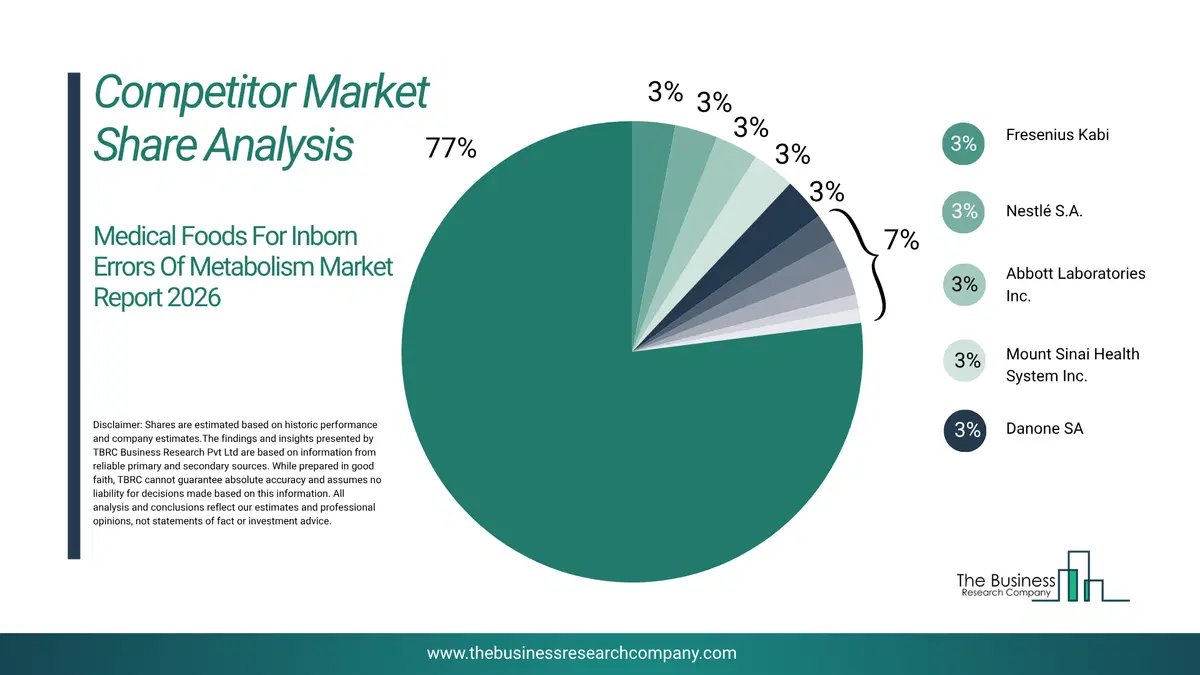
This chart is for illustrative purposes; the full report includes a detailed competitor analysis and comprehensive overview of the top 10 companies in the market.
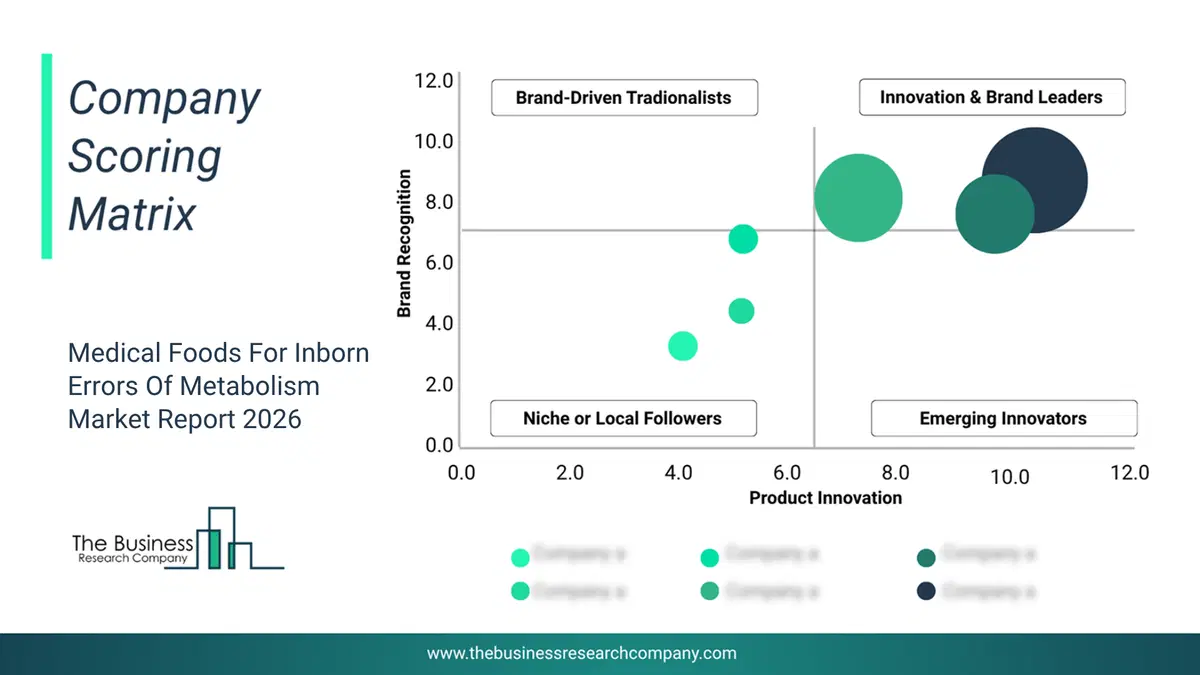
This chart maps companies by product innovation and brand strength, with bubble size indicating relative revenue, helping identify market leaders, challengers, and niche players. This is an illustrative chart; the full report provides a complete and accurate competitive analysis.
Global Medical Foods For Inborn Errors Of Metabolism Market Trends and Insights
Major companies operating in the medical food for inborn errors of metabolism market are focusing on developing innovative nutritional products such as easy-to-administer medical foods to improve dietary management and patient adherence. Easy-to-administer medical foods are specially formulated nutritional products designed to help individuals with metabolic disorders manage restricted nutrients while ensuring accurate dosing, convenience, and improved quality of life. For Instance, in October 2023, Galen Limited, a UK-based pharmaceutical company, launched PKU Easy Microtabs Plus as part of their Medical Nutrition range. PKU Easy Microtabs Plus is designed to assist in the dietary management of Phenylketonuria (PKU), a metabolic disorder. The product offers patients a more convenient and accurate method of controlling their phenylalanine levels through small, easy-to-swallow microtabs. This innovative formulation is aimed at improving the quality of life for individuals with PKU by allowing for better dose customization and ease of use.What Are Latest Mergers And Acquisitions In The Medical Foods For Inborn Errors Of Metabolism Market?
In July 2023, Pentec Health, a US-based provider of specialty infusion services and medical foods, acquired ZOIA Pharma for an undisclosed amount. Thought this acquisition, Pentec Health aims to enhance product portfolio by incorporating the PKU GOLIKE family of medical food products, which are designed for the dietary management of phenylketonuria (PKU). The PKU GOLIKE range provides patients with innovative options to manage their protein intake effectively. ZOIA Pharma is a US-based organization focused on developing medical food specifically for inborn errors of metabolism.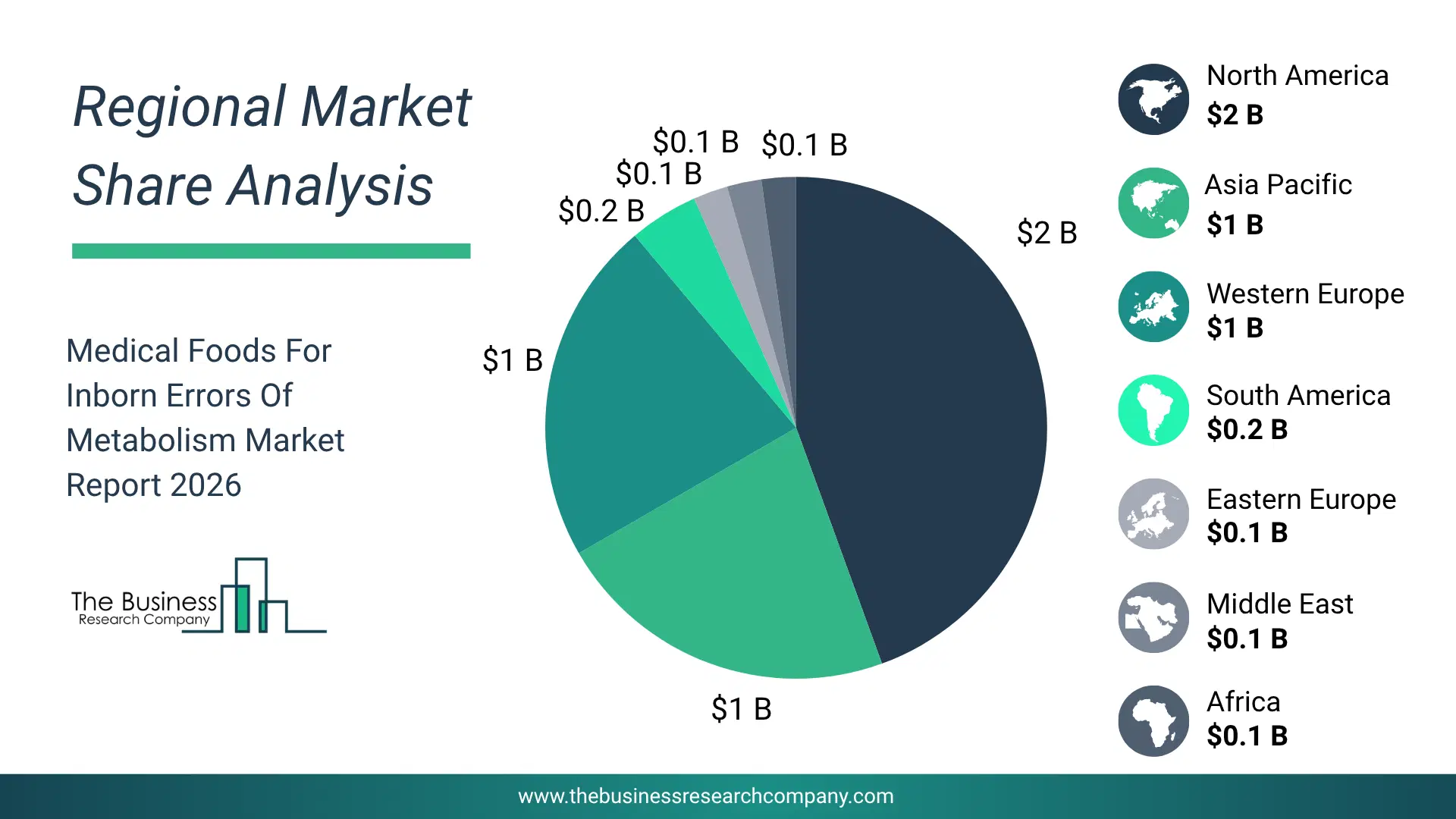
Regional Outlook
North America was the dominant region in the medical foods for inborn errors of metabolism market in 2025. The regions covered in this market report are Asia-Pacific, South East Asia, Western Europe, Eastern Europe, North America, South America, Middle East and Africa. The countries covered in this market report are Australia, Brazil, China, France, Germany, India, Indonesia, Japan, Taiwan, Russia, South Korea, UK, USA, Italy, Spain, CanadaWhat Defines the Medical Foods For Inborn Errors Of Metabolism Market?
The medical food for inborn errors of the metabolism market consists of sales of galactose-free formulas, modified starches and carbohydrate supplements, and Vitamin pyridoxine (B6) supplements. Values in this market are ‘factory gate’ values, that is the value of goods sold by the manufacturers or creators of the goods, whether to other entities (including downstream manufacturers, wholesalers, distributors, and retailers) or directly to end customers. The value of goods in this market includes related services sold by the creators of the goods.How is Market Value Defined and Measured?
The market value is defined as the revenues that enterprises gain from the sale of goods and/or services within the specified market and geography through sales, grants, or donations in terms of the currency (in USD unless otherwise specified). The revenues for a specified geography are consumption values that are revenues generated by organizations in the specified geography within the market, irrespective of where they are produced. It does not include revenues from resales along the supply chain, either further along the supply chain or as part of other products.
This chart presents market attractiveness based on a quantitative evaluation of growth, competition, strategic alignment, and risk, offering a clear view of opportunity areas for decision-making. This chart is for illustrative purposes; the full report contains the complete analysis.

This chart highlights the Total Addressable Market (TAM) by estimating the maximum revenue opportunity using an assumption-driven approach, supporting strategic planning and opportunity sizing across markets. The chart is illustrative; the full report provides a more comprehensive analysis.
What Key Data and Analysis Are Included in the Medical Foods For Inborn Errors Of Metabolism Market Report 2026?
The medical foods for inborn errors of metabolism market research report is one of a series of new reports from The Business Research Company that provides market statistics, including industry global market size, regional shares, competitors with the market share, detailed market segments, market trends and opportunities, and any further data you may need to thrive in the medical foods for inborn errors of metabolism industry. The market research report delivers a complete perspective of everything you need, with an in-depth analysis of the current and future state of the industry.Medical Foods For Inborn Errors Of Metabolism Market Report Forecast Analysis
| Report Attribute | Details |
|---|---|
| Market Size Value In 2026 | $3.87 billion |
| Revenue Forecast In 2030 | $6.07 billion |
| Growth Rate | CAGR of 12.0% from 2026 to 2030 |
| Base Year For Estimation | 2025 |
| Actual Estimates/Historical Data | 2020-2025 |
| Forecast Period | 2026 - 2030 |
| Market Representation | Revenue in USD Billion and CAGR from 2026 to 2030 |
| Segments Covered | Product, Diseases, Age Group, Forms, Distribution Channel |
| Regional Scope | Asia-Pacific, Western Europe, Eastern Europe, North America, South America, Middle East, Africa |
| Country Scope | The countries covered in the report are Australia, Brazil, China, France, Germany, India, Indonesia, Japan, Taiwan, Russia, South Korea, UK, USA, Canada, Italy, Spain. |
| Key Companies Profiled | Nestlé Health Science, Abbott Laboratories, Danone SA, Cambrooke Therapeutics, Ajinomoto Co Ltd, Meiji Holdings Co Ltd, PKU Perspectives, Solace Nutrition, Aegle Nutrition, Homestat Farm, Formulaid, Medtrition, Immedica Pharma AB, Phesgo Medical Foods, Helius Medical Nutrition, Vitafriends GmbH, MetaX Institut für Diätetik, Dr Schär AG, Nutricia Milupa GmbH, SHS International Ltd |
| Customization Scope | Request for Customization |
| Pricing And Purchase Options | Explore Purchase Options |