

Meganuclease Genome Editing Market Report 2026
Global Outlook – By Technology (Clustered Regularly Interspaced Short Palindromic Repeats (CRISPR) Or Cas9, Transcription Activator-Like Effector Nucleases (TALENs) Or Meganuclase-Transcription Activator-Like Effector Nucleases (MegaTALs), Zinc Finger Nucleases (ZFN), Meganuclease, Other Technologies), By Mode (Contract, In-house), By Delivery Method (Ex-Vivo, In-Vivo), By Application (Genetic Engineering, Cell Line Engineering, Plant Genetic Engineering, Animal Genetic Engineering, Clinical Applications, Diagnostics Development, Therapy Development, Other Applications), By End-User (Biotechnology And Pharmaceutical Companies, Academic And Government Research Institutes, Contract Research Organizations) – Market Size, Trends, Strategies, and Forecast to 2030
Meganuclease Genome Editing Market Overview
• Meganuclease Genome Editing market size has reached to $1.23 billion in 2025 • Expected to grow to $2.69 billion in 2030 at a compound annual growth rate (CAGR) of 16.9% • Growth Driver: Rising Genetic Disease Prevalence Drives Growth In The Market Due To Increasing Consanguineous Marriages And Advances In Gene Editing • Market Trend: Advancements In In Vivo Gene Insertion Programs Driving Precision Therapies For Genetic Disorders • North America was the largest region in 2025.What Is Covered Under Meganuclease Genome Editing Market?
Meganuclease genome editing is a method that employs meganucleases, a naturally occurring endonucleases with long DNA recognition sites, to introduce precise double-strand breaks at defined genomic regions. These enzymes use the cell’s own DNA repair system to make very precise genetic changes. The meganuclease genome editing allows accurate gene insertion, deletion, or correction with reduced off-target activity, supporting the development of improved traits and potential treatments for genetic disorders. The main types of technologies of meganuclease genome editing are clustered regularly interspaced short palindromic repeats (CRISPR) or Cas9, transcription activator-like effector nucleases (TALENs) or meganuclease-transcription activator-like effector nucleases (MegaTALs), zinc finger nucleases (ZFN), meganuclease, and others. Clustered Regularly Interspaced Short Palindromic Repeats (CRISPR) and its associated protein Cas9 is a gene-editing system that uses a guide RNA to direct the Cas9 enzyme to cut specific DNA sequences, enabling precise genetic modifications. It includes different modes of operation, such as contract and in-house, with various delivery methods categorized, such as ex vivo and in vivo approaches. It is applied in several applications, including genetic engineering, cell line development, plant and animal genetic modification, clinical applications, diagnostics, and therapy development, and serves end users including biotech and pharmaceutical companies, academic and government research institutions, and contract research organizations.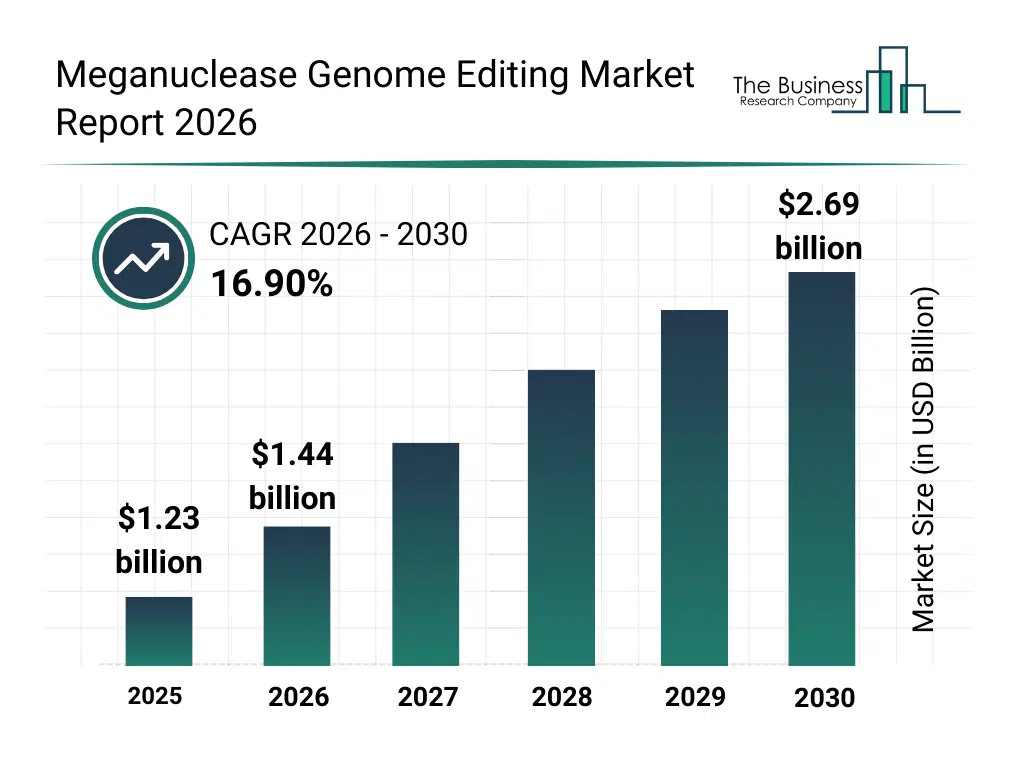
What Is The Meganuclease Genome Editing Market Size and Share 2026?
The meganuclease genome editing market size has grown rapidly in recent years. It will grow from $1.23 billion in 2025 to $1.44 billion in 2026 at a compound annual growth rate (CAGR) of 17.2%. The growth in the historic period can be attributed to emergence of meganuclease genome editing technology, reliance on zinc finger nucleases and talens, growing research in genetic engineering, limited precision of early genome editing tools, increasing academic research initiatives.What Is The Meganuclease Genome Editing Market Growth Forecast?
The meganuclease genome editing market size is expected to see rapid growth in the next few years. It will grow to $2.69 billion in 2030 at a compound annual growth rate (CAGR) of 16.9%. The growth in the forecast period can be attributed to development of megaTALs and advanced meganuclease variants, expansion of clinical applications and therapy development, adoption of ex-vivo and in-vivo genome editing methods, rising government and private funding for gene editing, integration with diagnostics and precision medicine approaches. Major trends in the forecast period include expansion of therapeutic applications using meganucleases, growth in agricultural and plant genome engineering, increased adoption of ex-vivo and in-vivo delivery methods, rising collaboration between academic institutions and biopharma companies, development of homing endonuclease-based precision therapies.
Global Meganuclease Genome Editing Market Segmentation
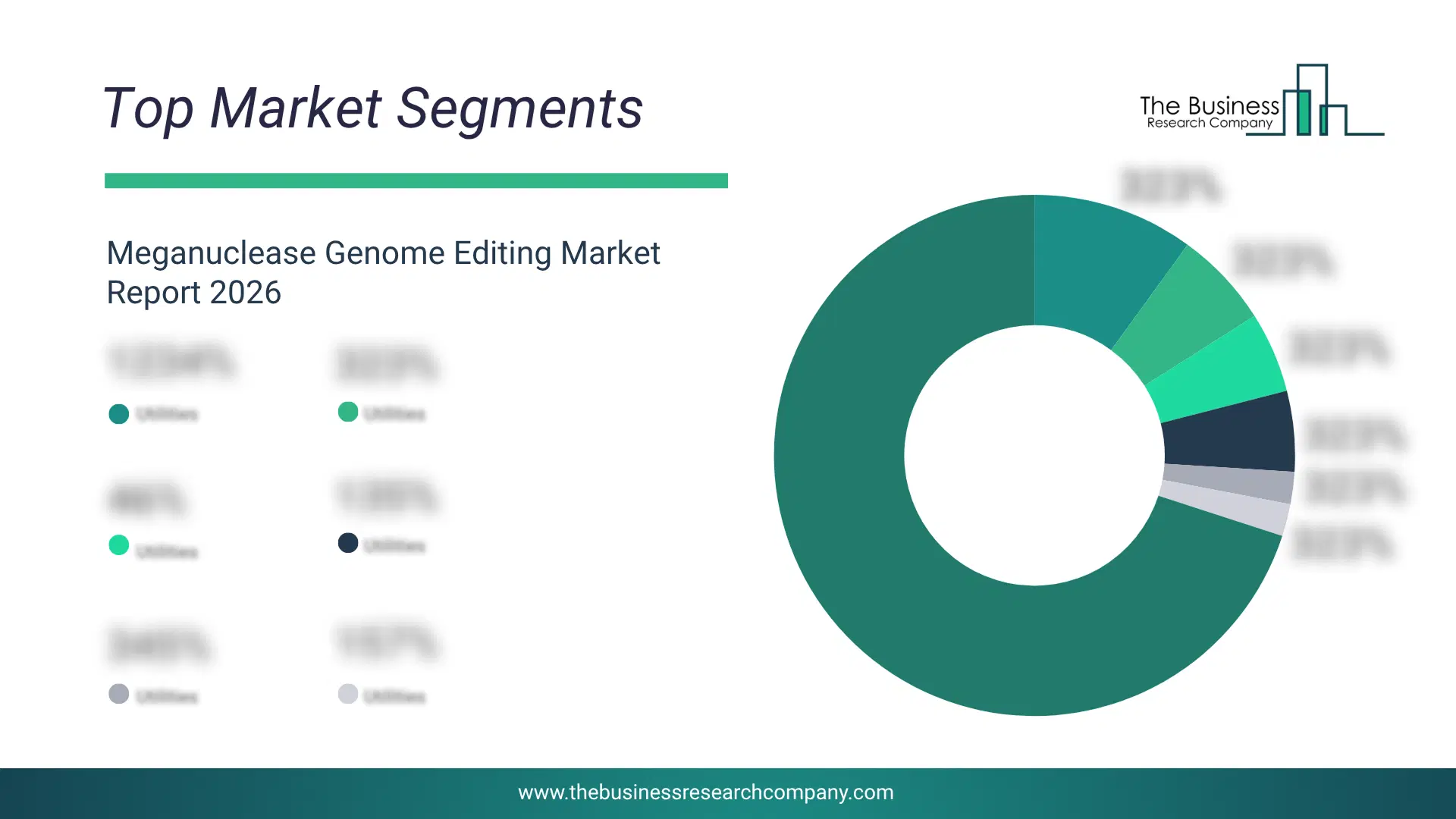
1) By Technology: Clustered Regularly Interspaced Short Palindromic Repeats (CRISPR) Or Cas9, Transcription Activator-Like Effector Nucleases (TALENs) Or Meganuclase-Transcription Activator-Like Effector Nucleases (MegaTALs), Zinc Finger Nucleases (ZFN), Meganuclease, Other Technologies 2) By Mode: Contract, In-house 3) By Delivery Method: Ex-Vivo, In-Vivo 4) By Application: Genetic Engineering, Cell Line Engineering, Plant Genetic Engineering, Animal Genetic Engineering, Clinical Applications, Diagnostics Development, Therapy Development, Other Applications 5) By End-User: Biotechnology And Pharmaceutical Companies, Academic And Government Research Institutes, Contract Research Organizations Subsegments: 1) By Clustered Regularly Interspaced Short Palindromic Repeats (CRISPR) Or Cas9: Clustered Regularly Interspaced Short Palindromic Repeats (CRISPR)-Cas9 Gene Editing, Clustered Regularly Interspaced Short Palindromic Repeats (CRISPR)-Cas12, Clustered Regularly Interspaced Short Palindromic Repeats (CRISPR)-Cas13 2) By Transcription Activator-Like Effector Nucleases (TALENs) Or Meganuclase-Transcription Activator-Like Effector Nucleases (MegaTALs): Genome Editing Applications, Therapeutic Applications, Agricultural Biotechnology 3) By Zinc Finger Nucleases (ZFN): Zinc Finger Nucleases Gene Editing, Transcription Activator-Like Effector Nucleases 4) By Meganuclease: Homing Endonucleases, Self Splicing Introns 5) By Other Technologies: Base Editing, Prime EditingWhat Is The Driver Of The Meganuclease Genome Editing Market?
The increasing prevalence of genetic diseases is expected to propel the growth of the meganuclease genome editing market going forward. Genetic diseases are disorders caused by changes or mutations in an individual's DNA that affect normal body functions. The increasing genetic diseases are due to the rising rate of consanguineous marriages, increasing the likelihood of inheriting genetic disorders. Meganuclease genome editing makes precise cuts in DNA to correct, delete, or replace defective genes, enabling targeted gene therapies with fewer off-target effects and potential cures for inherited disorders. For instance, in May 2024, according to the National Health Service, a UK-based government department, in England, approximately 17,000 people live with sickle cell disease, an inherited blood disorder, with around 250 new cases diagnosed each year. Therefore, the increasing prevalence of genetic diseases is driving the growth of the meganuclease genome editing industry.Key Players In The Global Meganuclease Genome Editing Market
Major companies operating in the meganuclease genome editing market are Thermo Fisher Scientific Inc., Danaher Corp., Merck KGaA, Lonza Group Ltd., Charles River Laboratories International Inc., Genscript, Takara Bio Inc., Applied StemCell Inc., Cellectis SA., New England Biolabs, Precision Biosciences Inc.
This chart is for illustrative purposes; the full report includes a detailed competitor analysis and comprehensive overview of the top 10 companies in the market.
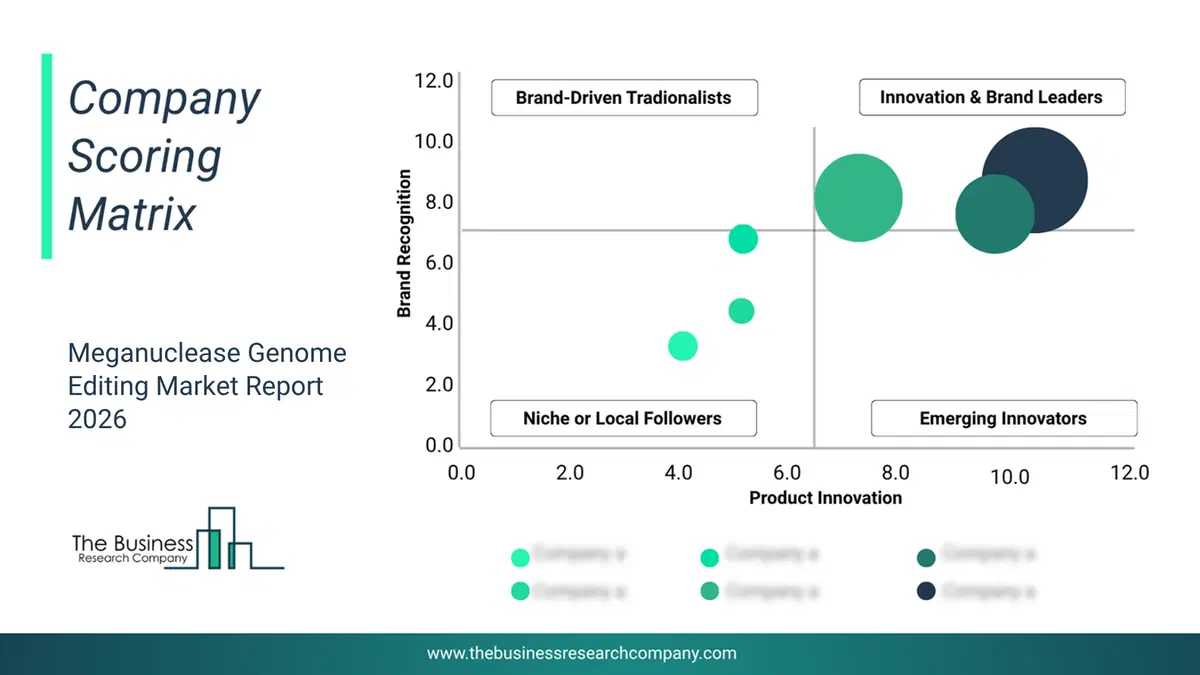
This chart maps companies by product innovation and brand strength, with bubble size indicating relative revenue, helping identify market leaders, challengers, and niche players. This is an illustrative chart; the full report provides a complete and accurate competitive analysis.
Global Meganuclease Genome Editing Market Trends and Insights
Major companies operating in the meganuclease genome editing market are focusing on developing advanced solutions, such as in vivo gene insertion programs, to enhance therapeutic applications and expand the scope of genetic disease correction. In vivo gene insertion programs deliver genetic material directly into living organisms to insert or correct specific genes within their natural cells, enabling precise therapeutic interventions for treating genetic disorders inside the body. For instance, in May 2024, iECURE Inc., a US-based gene editing company, launched ECUR-506, an in vivo gene insertion program to treat neonatal onset ornithine transcarbamylase (OTC) deficiency, which received a fast track designation from the U.S. Food and Drug Administration (FDA). It is a gene editing therapy intended to treat neonatal onset ornithine transcarbamylase (OTC) deficiency. This therapy is designed for newborn males with severe neonatal-onset OTC deficiency and aims to restore functional OTC enzyme activity via a single intravenous infusion. It has shown a complete clinical response in the first infant treated, enabling the discontinuation of ammonia scavenger medications and a return to normal protein intake, with manageable side effects reported.What Are Latest Mergers And Acquisitions In The Meganuclease Genome Editing Market?
In November 2023, AstraZeneca Plc, a UK-based pharmaceutical industry company, partnered with Cellectis S.A. to advance the development of next-generation gene-editing therapies. This partnership aims to accelerate the development of up to 10 novel cell and gene therapy products targeting high unmet medical needs in oncology, immunology, and rare diseases by leveraging Cellectis’ gene editing technologies alongside AstraZeneca’s expertise. Cellectis S.A. is a France-based company involved in the development and application of meganuclease-based genome editing technologies.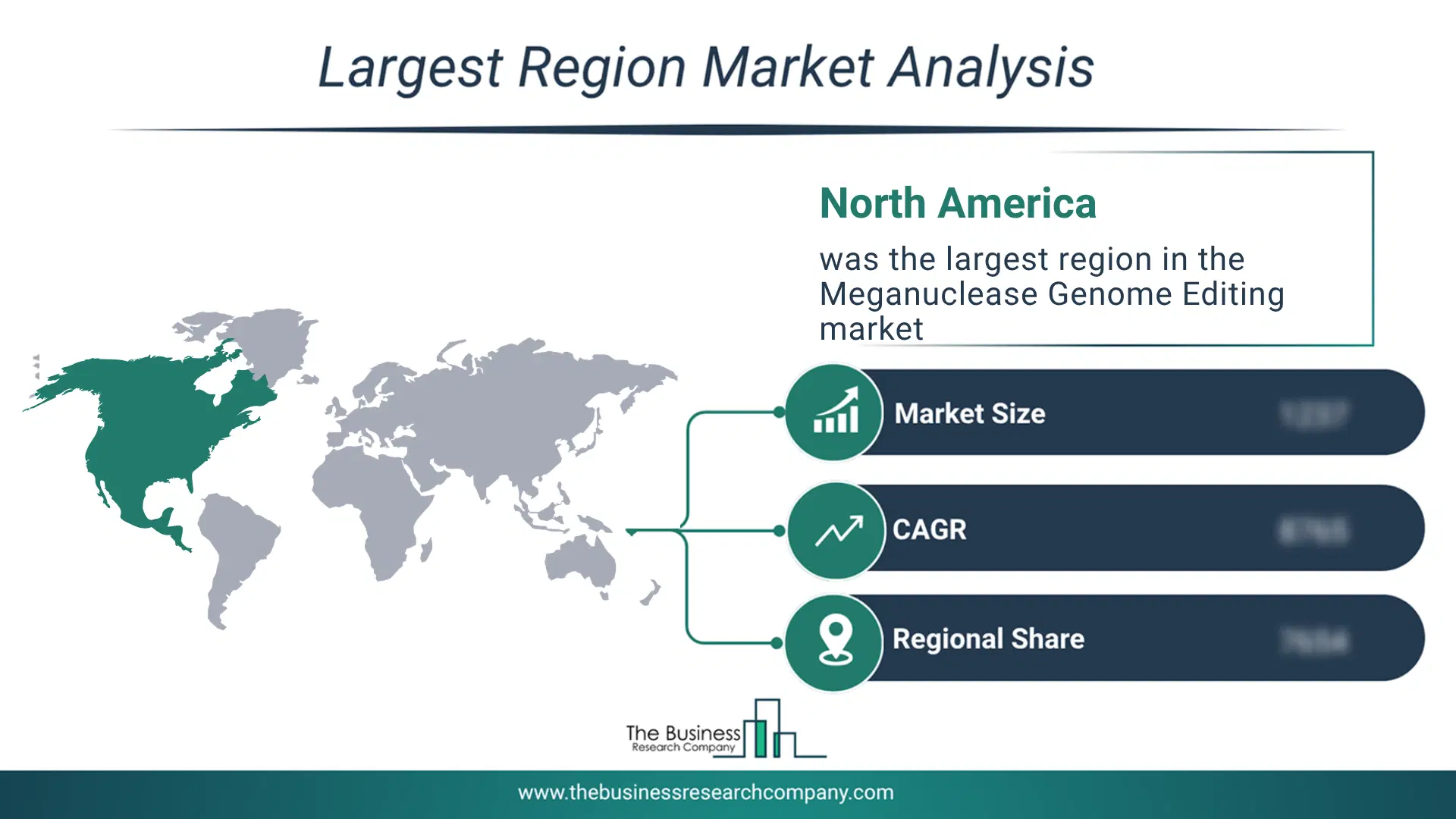
Regional Insights
North America was the largest region in the meganuclease genome editing market in 2025. The regions covered in this market report are Asia-Pacific, South East Asia, Western Europe, Eastern Europe, North America, South America, Middle East, Africa. The countries covered in this market report are Australia, Brazil, China, France, Germany, India, Indonesia, Japan, Taiwan, Russia, South Korea, UK, USA, Canada, Italy, Spain.What Defines the Meganuclease Genome Editing Market?
The meganuclease genome editing market consists of revenues earned by entities by providing services such as custom genome editing, gene therapy development, and functional genomics. The market value includes the value of related goods sold by the service provider or included within the service offering. The meganuclease genome editing market also includes sales of engineered meganuclease enzymes, gene editing kits and tools, and therapeutic gene editing solutions. Values in this market are ‘factory gate’ values; that is, the value of goods sold by the manufacturers or creators of the goods, whether to other entities (including downstream manufacturers, wholesalers, distributors, and retailers) or directly to end customers. The value of goods in this market includes related services sold by the creators of the goods.How is Market Value Defined and Measured?
The market value is defined as the revenues that enterprises gain from the sale of goods and/or services within the specified market and geography through sales, grants, or donations in terms of the currency (in USD unless otherwise specified). The revenues for a specified geography are consumption values that are revenues generated by organizations in the specified geography within the market, irrespective of where they are produced. It does not include revenues from resales along the supply chain, either further along the supply chain or as part of other products.
This chart presents market attractiveness based on a quantitative evaluation of growth, competition, strategic alignment, and risk, offering a clear view of opportunity areas for decision-making. This chart is for illustrative purposes; the full report contains the complete analysis.

This chart highlights the Total Addressable Market (TAM) by estimating the maximum revenue opportunity using an assumption-driven approach, supporting strategic planning and opportunity sizing across markets. The chart is illustrative; the full report provides a more comprehensive analysis.
What Key Data and Analysis Are Included in the Meganuclease Genome Editing Market Report 2026?
The meganuclease genome editing market research report is one of a series of new reports from The Business Research Company that provides market statistics, including industry global market size, regional shares, competitors with the market share, detailed market segments, market trends and opportunities, and any further data you may need to thrive in the meganuclease genome editing industry. The market research report delivers a complete perspective of everything you need, with an in-depth analysis of the current and future state of the industry.Meganuclease Genome Editing Market Report Forecast Analysis
| Report Attribute | Details |
|---|---|
| Market Size Value In 2026 | $1.44 billion |
| Revenue Forecast In 2030 | $2.69 billion |
| Growth Rate | CAGR of 17.2% from 2026 to 2030 |
| Base Year For Estimation | 2025 |
| Actual Estimates/Historical Data | 2020-2025 |
| Forecast Period | 2026 - 2030 |
| Market Representation | Revenue in USD Billion and CAGR from 2026 to 2030 |
| Segments Covered | Technology, Mode, Delivery Method, Application, End-User |
| Regional Scope | Asia-Pacific, Western Europe, Eastern Europe, North America, South America, Middle East, Africa |
| Country Scope | The countries covered in the report are Australia, Brazil, China, France, Germany, India, Indonesia, Japan, Taiwan, Russia, South Korea, UK, USA, Canada, Italy, Spain. |
| Key Companies Profiled | Thermo Fisher Scientific Inc., Danaher Corp., Merck KGaA, Lonza Group Ltd., Charles River Laboratories International Inc., Genscript, Takara Bio Inc., Applied StemCell Inc., Cellectis SA., New England Biolabs, Precision Biosciences Inc. |
| Customization Scope | Request for Customization |
| Pricing And Purchase Options | Explore Purchase Options |