

Microfluidic Devices Market Report 2026
Global Outlook – By Device Type (Chips, Sensors, Other Device Types), By Material (Glass, Silicon, Polymer, Other Materials), By End-User (Pharmaceutical And Biotechnology Companies, Research Institutes, Diagnostic Centers, Healthcare Facilities, Other End-Users) – Market Size, Trends, Strategies, and Forecast to 2030
Microfluidic Devices Market Overview
• Microfluidic Devices market size has reached to $10.14 billion in 2025 • Expected to grow to $20.65 billion in 2030 at a compound annual growth rate (CAGR) of 15.2% • Growth Driver: Rising Prevalence Of Infectious Diseases Fuels Growth In The Microfluidic Devices Market • Market Trend: Fully-Integrated Microfluidic Chip-Based Platforms Lead The Innovation In The Market • North America was the largest region in 2025 and Asia-Pacific is the fastest growing region.What Is Covered Under Microfluidic Devices Market?
Microfluidic devices are specialized tools used to control and manipulate small volumes of fluids, often at the microliter to picoliter scale. These devices typically integrate complex fluid handling systems on a single microchip or small substrate. Microfluidics involves precisely controlling fluid flows in microchannels, enabling a wide range of applications. The main devices types of microfluidic devices are chips, sensors, and others. Microfluidic chips are small devices that contain networks of channels, chambers, and wells that guide the flow of liquids. The various materials include glass, silicon, polymer, and others, These are used by various end-users such as pharmaceutical and biotechnology companies, research institutes, diagnostic centers, healthcare facilities, and others.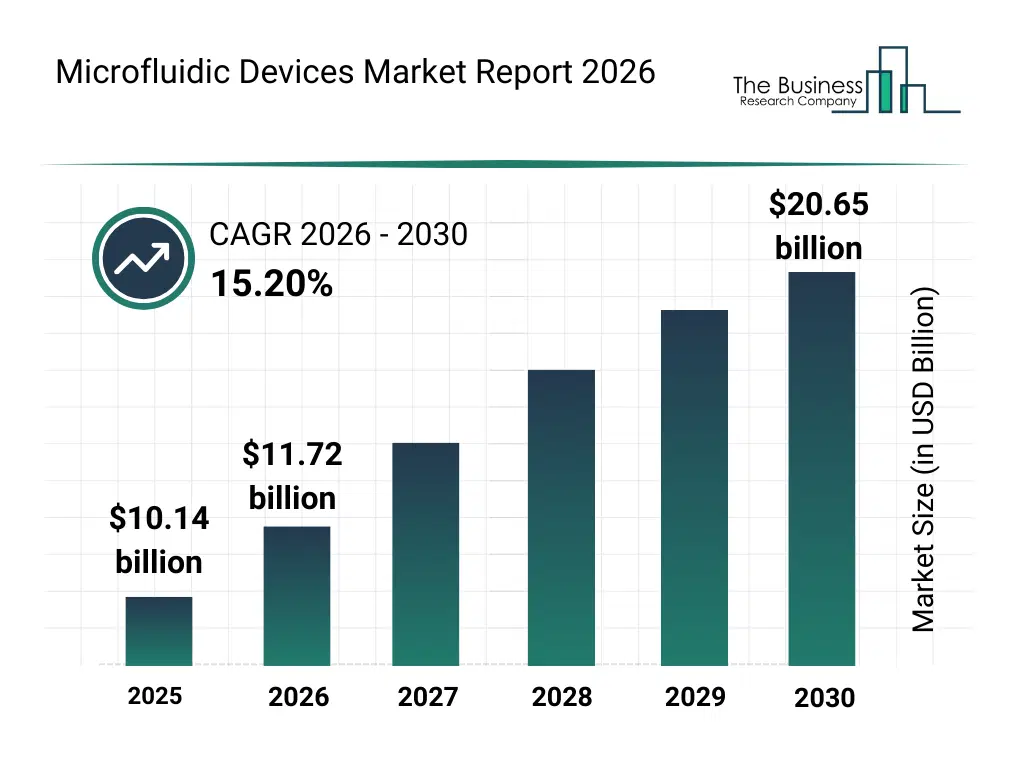
What Is The Microfluidic Devices Market Size and Share 2026?
The microfluidic devices market size has grown rapidly in recent years. It will grow from $10.14 billion in 2025 to $11.72 billion in 2026 at a compound annual growth rate (CAGR) of 15.5%. The growth in the historic period can be attributed to limited microfabrication techniques, high cost of early microfluidic devices, reliance on traditional fluid handling methods, growing pharmaceutical and biotech research, adoption of basic lab-on-a-chip applications.What Is The Microfluidic Devices Market Growth Forecast?
The microfluidic devices market size is expected to see rapid growth in the next few years. It will grow to $20.65 billion in 2030 at a compound annual growth rate (CAGR) of 15.2%. The growth in the forecast period can be attributed to advancements in microfabrication and 3D printing, rising demand for point-of-care diagnostics, integration of sensors and actuators with microfluidic platforms, increasing investment in precision medicine research, expansion of high-throughput screening applications. Major trends in the forecast period include rising adoption of lab-on-a-chip and digital microfluidic devices, integration of advanced microfluidic sensors for diagnostics, increased use of microfluidic platforms in pharmaceutical research, growth in polymer and silicon-based microfluidic materials, enhanced focus on miniaturization and high-throughput fluid handling.
Global Microfluidic Devices Market Segmentation
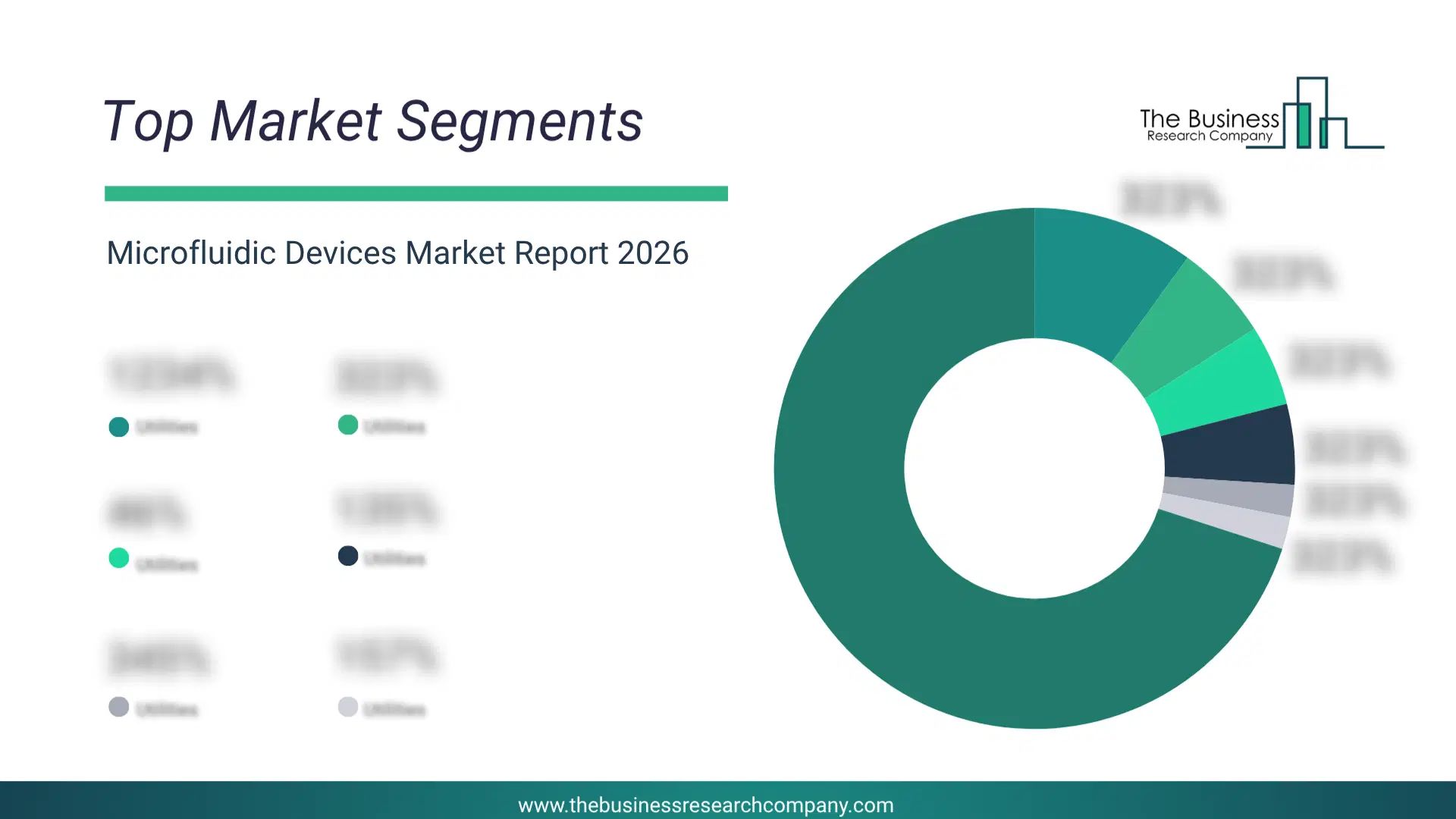
1) By Device Type: Chips, Sensors, Other Device Types 2) By Material: Glass, Silicon, Polymer, Other Materials 3) By End-User: Pharmaceutical And Biotechnology Companies, Research Institutes, Diagnostic Centers, Healthcare Facilities, Other End-Users Subsegments: 1) By Chips: Lab-On-A-Chip (LoC) Devices, Digital Microfluidic Chips, Microfluidic Flow Control Chips, Integrated Microfluidic Platforms, Diagnostic Microfluidic Chips 2) By Sensors: Pressure Sensors, Flow Sensors, Temperature Sensors, Chemical Sensors, Optical Sensors 3) By Other Device Types: Microfluidic Pumps, Valves And Actuators, Microarray Devices, Microfluidic Analytical Devices, Microfluidic BioreactorsWhat Is The Driver Of The Microfluidic Devices Market?
The rising prevalence of infectious diseases is expected to propel the growth of the microfluidic devices market going forward. Infectious diseases are disorders caused by pathogenic microorganisms, such as bacteria, viruses, fungi, or parasites. The prevalence of infectious diseases is due to pathogen characteristics, environmental factors, human behavior, and availability of medical services. Microfluidic devices are a powerful tool in the fight against infectious diseases due to their ability to handle and analyze small volumes of biological samples with high precision and efficiency. It enhances the ability to detect, diagnose, and manage infectious diseases efficiently and accurately, contributing to better health outcomes and disease control. For instance, in November 2025, according to the European Centre for Disease Prevention and Control (ECDC), a Sweden-based government agency, in 2025, 266,165 CHIKVD cases and 118 deaths were reported, a 35.2% decline from 2024, with Brazil in South America most affected. Therefore, the rising prevalence of infectious diseases drives the growth of the microfluidic devices industry.Key Players In The Global Microfluidic Devices Market
Major companies operating in the microfluidic devices market are Thermo Fisher Scientific Inc., Danaher Corporation, Agilent Technologies Inc., Teledyne Technologies Incorporated, Illumina Inc., PerkinElmer Inc., Bio-Rad Laboratories Inc., Zeon Corporation, Standard BioTools Inc., Biosurfit SA, Blacktrace Holdings Ltd., LioniX International B.V., CMC Microsystems Inc., Micronit Microfluidics B.V., Sphere Fluidics Limited, Microfluidic ChipShop GmbH, BlackHole Lab Inc., Bartels-Mikrotechnik GmbH, Hesperos Inc., Fluigent SA
This chart is for illustrative purposes; the full report includes a detailed competitor analysis and comprehensive overview of the top 10 companies in the market.
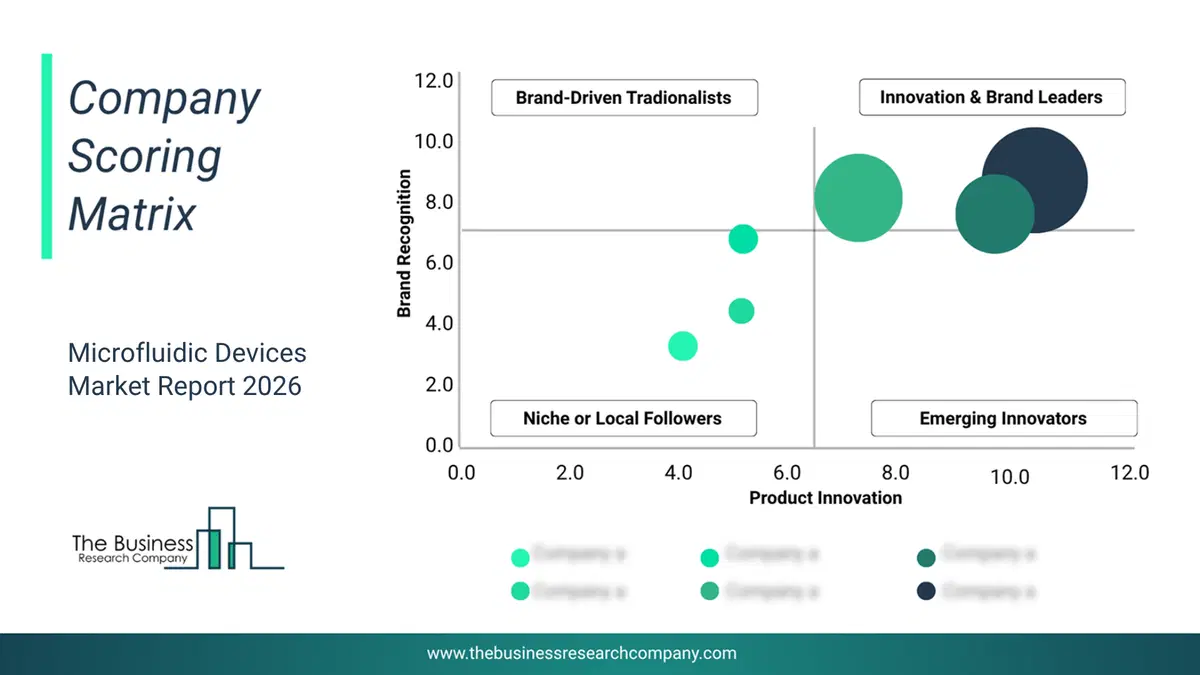
This chart maps companies by product innovation and brand strength, with bubble size indicating relative revenue, helping identify market leaders, challengers, and niche players. This is an illustrative chart; the full report provides a complete and accurate competitive analysis.
Global Microfluidic Devices Market Trends and Insights
Major companies operating in the microfluidic devices market are focused on developing innovative platforms, such as microfluidic chip-based platforms, to streamline and automate complex laboratory processes, enhance the precision and efficiency of experiments, and enable a wide range of applications. A microfluidic chip-based platform is a miniaturized device combining multiple laboratory functions onto a single chip to control and analyze small volumes of fluids precisely. For instance, in January 2023, SCIEX, a US-based manufacturer of mass spectrometry instrumentation, launched the Intabio ZT system, the first fully integrated microfluidic chip-based platform. It is the first fully-integrated microfluidic chip-based platform that combines imaged capillary isoelectric focusing (icIEF) separation and UV detection. The system utilizes the Biologics Explorer software, which enhances data processing capabilities, allowing for a deeper understanding of the biopharmaceuticals being analyzed.What Are Latest Mergers And Acquisitions In The Microfluidic Devices Market?
In January 2025, bioMérieux, a France-based biotechnology company, acquired SpinChip Diagnostics for an undisclosed amount. With this acquisition, bioMérieux’s aim is to enhance and accelerate its growth in the Point of Care (POC) diagnostics segment, particularly in immunoassays for acute care. SpinChip Diagnostics is a Europe-based company that provides microfluidic devices.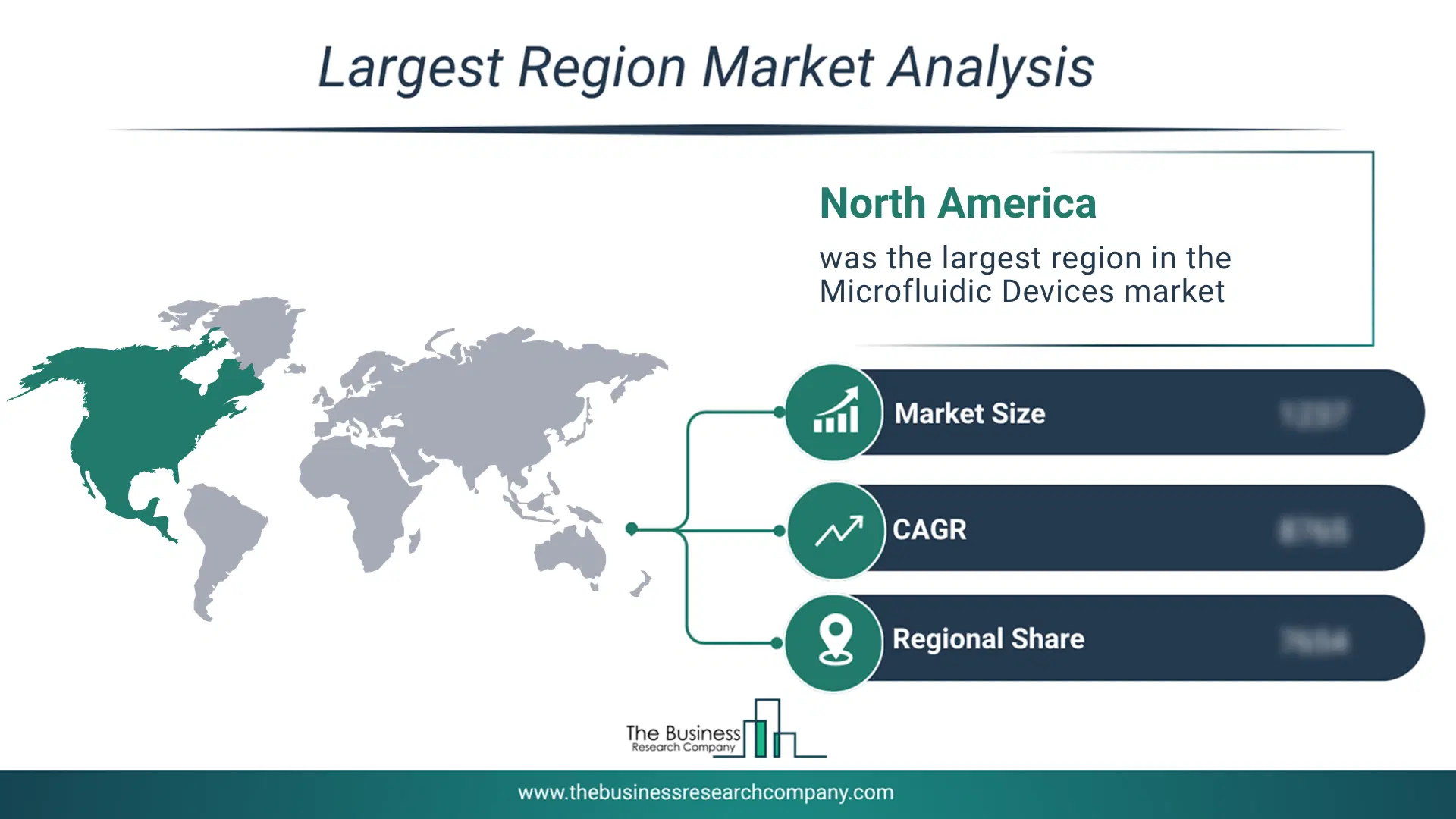
Regional Outlook
North America was the largest region in the microfluidic devicess market in 2025. Asia-Pacific is expected to be the fastest-growing region in the market going forward. The regions covered in this market report are Asia-Pacific, South East Asia, Western Europe, Eastern Europe, North America, South America, Middle East, Africa. The countries covered in this market report are Australia, Brazil, China, France, Germany, India, Indonesia, Japan, Taiwan, Russia, South Korea, UK, USA, Canada, Italy, SpainWhat Defines the Microfluidic Devices Market?
The microfluidic devices market consists of sales of microchannels, microvalves, and microelectrodes. Values in this market are ‘factory gate’ values, that is the value of goods sold by the manufacturers or creators of the goods, whether to other entities (including downstream manufacturers, wholesalers, distributors, and retailers) or directly to end customers. The value of goods in this market includes related services sold by the creators of the goods.How is Market Value Defined and Measured?
The market value is defined as the revenues that enterprises gain from the sale of goods and/or services within the specified market and geography through sales, grants, or donations in terms of the currency (in USD unless otherwise specified). The revenues for a specified geography are consumption values that are revenues generated by organizations in the specified geography within the market, irrespective of where they are produced. It does not include revenues from resales along the supply chain, either further along the supply chain or as part of other products.
This chart presents market attractiveness based on a quantitative evaluation of growth, competition, strategic alignment, and risk, offering a clear view of opportunity areas for decision-making. This chart is for illustrative purposes; the full report contains the complete analysis.

This chart highlights the Total Addressable Market (TAM) by estimating the maximum revenue opportunity using an assumption-driven approach, supporting strategic planning and opportunity sizing across markets. The chart is illustrative; the full report provides a more comprehensive analysis.
What Key Data and Analysis Are Included in the Microfluidic Devices Market Report 2026?
The microfluidic devices market research report is one of a series of new reports from The Business Research Company that provides market statistics, including industry global market size, regional shares, competitors with the market share, detailed market segments, market trends and opportunities, and any further data you may need to thrive in the microfluidic devices industry. The market research report delivers a complete perspective of everything you need, with an in-depth analysis of the current and future state of the industry.Microfluidic Devices Market Report Forecast Analysis
| Report Attribute | Details |
|---|---|
| Market Size Value In 2026 | $11.72 billion |
| Revenue Forecast In 2030 | $20.65 billion |
| Growth Rate | CAGR of 15.2% from 2026 to 2030 |
| Base Year For Estimation | 2025 |
| Actual Estimates/Historical Data | 2020-2025 |
| Forecast Period | 2026 - 2030 |
| Market Representation | Revenue in USD Billion and CAGR from 2026 to 2030 |
| Segments Covered | Device Type, Material, End-User |
| Regional Scope | Asia-Pacific, Western Europe, Eastern Europe, North America, South America, Middle East, Africa |
| Country Scope | The countries covered in the report are Australia, Brazil, China, France, Germany, India, Indonesia, Japan, Taiwan, Russia, South Korea, UK, USA, Canada, Italy, Spain. |
| Key Companies Profiled | Thermo Fisher Scientific Inc., Danaher Corporation, Agilent Technologies Inc., Teledyne Technologies Incorporated, Illumina Inc., PerkinElmer Inc., Bio-Rad Laboratories Inc., Zeon Corporation, Standard BioTools Inc., Biosurfit SA, Blacktrace Holdings Ltd., LioniX International B.V., CMC Microsystems Inc., Micronit Microfluidics B.V., Sphere Fluidics Limited, Microfluidic ChipShop GmbH, BlackHole Lab Inc., Bartels-Mikrotechnik GmbH, Hesperos Inc., Fluigent SA |
| Customization Scope | Request for Customization |
| Pricing And Purchase Options | Explore Purchase Options |