
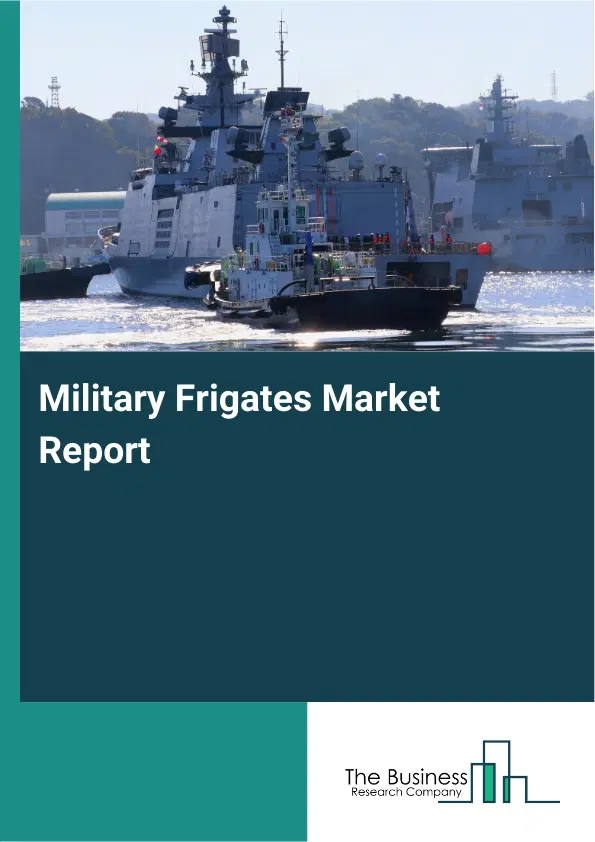
Military Frigates Market Report 2026
Global Outlook – By Type (Multi-role Frigates, Anti-Submarine Warfare (ASW) Frigates, Air Defense Frigates, Gunnery Frigates, Ballistic Surface Vessels (BSV)), By Technology (Combat Management Systems, Sensors And Surveillance, Propulsion Systems, Weapon Systems, Communication Systems), By Platform (Manned Frigates, Unmanned Frigates), By Application (Naval Warfare, Patrol Missions, Humanitarian Assistance And Disaster Relief (HADR), Coastal Surveillance, Training And Exercises), By End User (Naval Defense Forces, Coast Guards, Private Security Companies, International Organizations, Research Institutions) – Market Size, Trends, Strategies, and Forecast to 2030
Military Frigates Market Overview
• Military Frigates market size has reached to $29.27 billion in 2025 • Expected to grow to $38.91 billion in 2030 at a compound annual growth rate (CAGR) of 5.9% • Growth Driver: Surge In Rising Maritime Territorial Disputes Driving The Growth Of The Market Due To Strengthened Naval Presence And Protection Of Sovereignty • Market Trend: Advancements In Stealth And Automation Enhance Frigate Survivability And Operational Efficiency • North America was the largest region in 2025 and Asia-Pacific is the fastest growing region.Market Gains By 2030 – Top Opportunities By Segment
Market Gain identifies the most promising market opportunities by highlighting the segments or products expected to generate the highest incremental revenue growth over the next five years.
What Is Covered Under Military Frigates Market?
A military frigate is a warship designed for protecting other vessels and conducting anti-submarine, anti-air, and surface warfare operations. It is typically smaller and faster than a destroyer, equipped with advanced radar, missiles, and torpedoes. Frigates are versatile ships used for escort duties, patrolling, and maintaining naval presence in strategic areas, often serving as key assets in maritime security, surveillance missions, and rapid response to emerging threats. The main types of military frigates are multi-role frigates, anti-submarine warfare (ASW) frigates, air defense frigates, gunnery frigates, and ballistic surface vessels (BSV). A multi-role frigate is a versatile ocean-going warship designed to perform multiple missions such as escort, defense, and maritime security using integrated sensors, weapons, and command systems. These ships incorporate technologies such as combat management systems, sensors and surveillance, propulsion systems, weapon systems, and communication systems, and are deployed on platforms including manned and unmanned frigates. They are used for applications such as naval warfare, patrol missions, humanitarian assistance and disaster relief (HADR), coastal surveillance, and training exercises, and are utilized by end-users including naval defense forces, coast guards, private security companies, international organizations, and research institutions.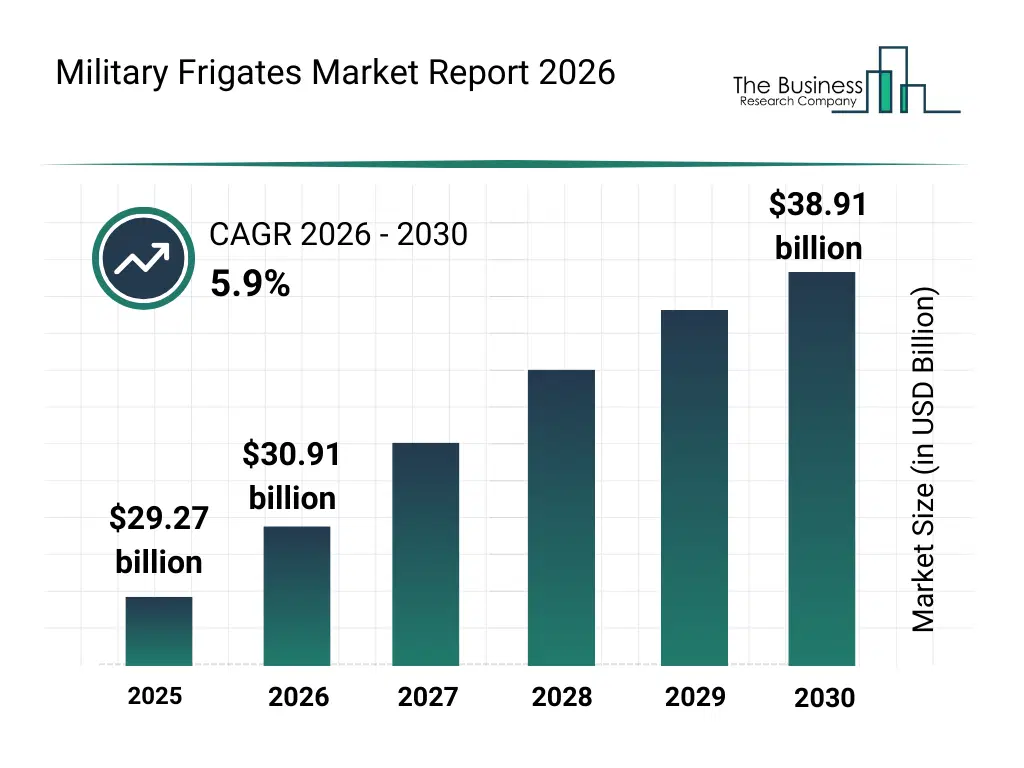
What Is The Military Frigates Market Size and Share 2026?
The military frigates market size has grown strongly in recent years. It will grow from $29.27 billion in 2025 to $30.91 billion in 2026 at a compound annual growth rate (CAGR) of 5.6%. The growth in the historic period can be attributed to increased naval fleet expansions, adoption of missile and anti-submarine technologies, integration of electronic warfare systems, growth in global maritime security operations, development of stealth and modular frigate designs.What Is The Military Frigates Market Growth Forecast?
The military frigates market size is expected to see strong growth in the next few years. It will grow to $38.91 billion in 2030 at a compound annual growth rate (CAGR) of 5.9%. The growth in the forecast period can be attributed to deployment of next-generation stealth frigates, integration with unmanned naval systems, adoption of advanced command and control technologies, expansion of export and collaborative naval programs, use of hybrid propulsion and energy-efficient systems. Major trends in the forecast period include increasing demand for multi-mission frigate platforms, growing integration of advanced stealth hull designs, expansion of long-range maritime surveillance capabilities, rising adoption of modular weapon and sensor upgrades, strengthening focus on blue-water naval force projection.
Global Military Frigates Market Segmentation
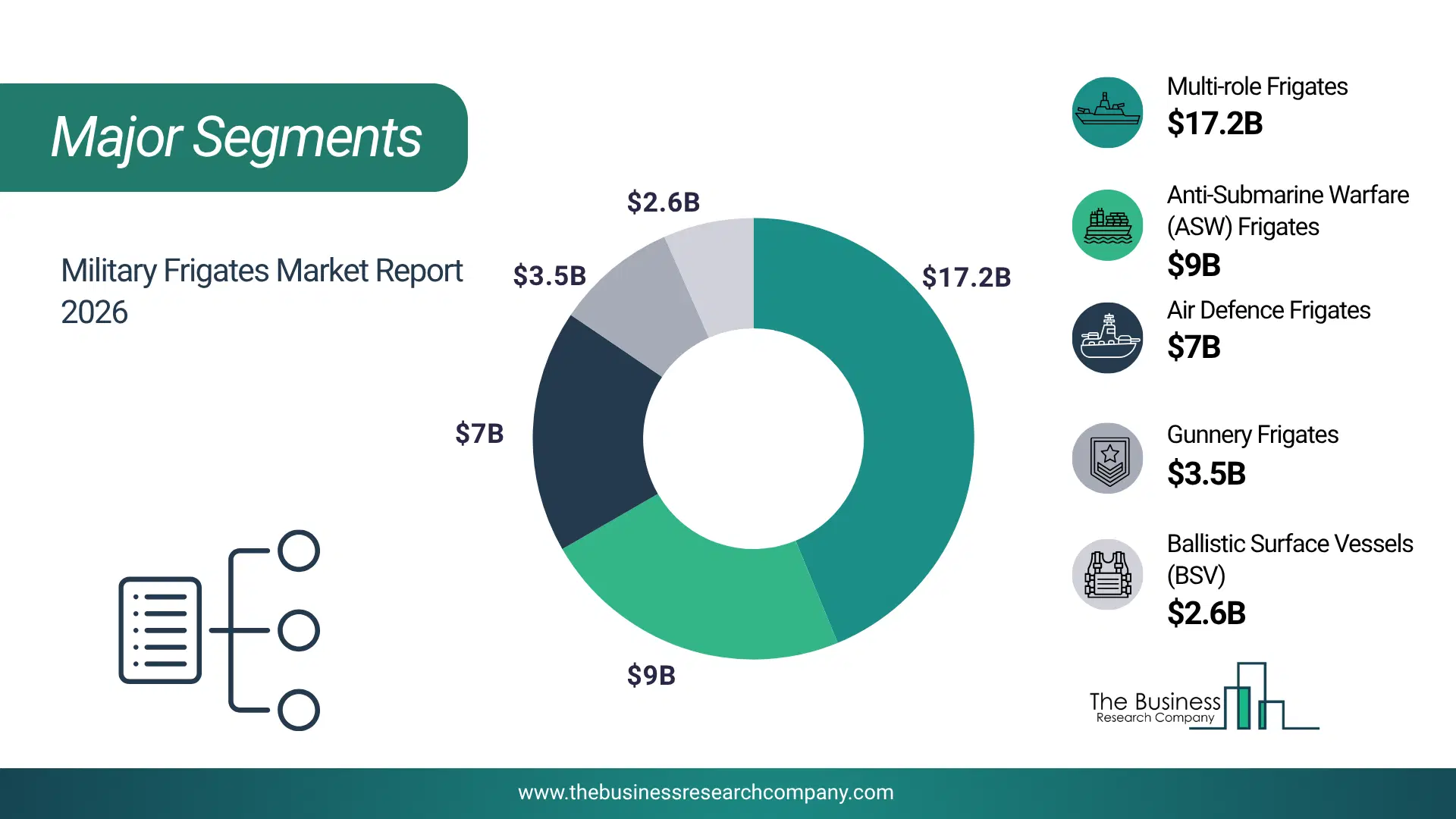
1) By Type: Multi-role Frigates, Anti-Submarine Warfare (ASW) Frigates, Air Defense Frigates, Gunnery Frigates, Ballistic Surface Vessels (BSV) 2) By Technology: Combat Management Systems, Sensors And Surveillance, Propulsion Systems, Weapon Systems, Communication Systems 3) By Platform: Manned Frigates, Unmanned Frigates 4) By Application: Naval Warfare, Patrol Missions, Humanitarian Assistance And Disaster Relief (HADR), Coastal Surveillance, Training And Exercises 5) By End User: Naval Defense Forces, Coast Guards, Private Security Companies, International Organizations, Research Institutions Subsegments: 1) By Multi-Role Frigates: General Purpose Frigates, Escort Frigates, Patrol Frigates, Command Frigates 2) By Anti-Submarine Warfare Frigates: Hunter-Killer Frigates, Escort Submarine Frigates, Surveillance And Reconnaissance Frigates, Integrated Anti-Submarine Warfare Frigates 3) By Air Defense Frigates: Surface To Air Missile Frigates, Long Range Air Defense Frigates, Short Range Air Defense Frigates, Multi-Layer Air Defense Frigates 4) By Gunnery Frigates: Artillery Focused Frigates, Close In Weapon System Frigates, Naval Gunfire Support Frigates, Rapid Fire Gun Frigates 5) By Ballistic Surface Vessels (BSV): Missile Equipped Ballistic Surface Vessels, Strategic Strike Ballistic Surface Vessels, Tactical Support Ballistic Surface Vessels, Coastal Defense Ballistic Surface Vessels The top segments in the military frigates market will be: • Multi-role Frigates will reach $17.11 billion by 2030. • Anti-Submarine Warfare (ASW) Frigates will reach $8.9 billion by 2030. • Air Defence Frigates will reach $6.92 billion by 2030. • Gunnery Frigates will reach $3.45 billion by 2030. • Ballistic Surface Vessels (BSV) will reach $2.53 billion by 2030.What Is Driver Of The Military Frigates Market?
The rising maritime territorial disputes are expected to propel the growth of the military frigates market going forward. Maritime territorial disputes refer to conflicts or disagreements between countries over the ownership, control, or use of areas of the sea, including territorial waters, exclusive economic zones (EEZs), and maritime boundaries. Rising maritime territorial disputes occur because countries often have overlapping claims over sea boundaries, leading to conflicts over control of resources, strategic waters, and exclusive economic zones. Military frigates help address maritime territorial disputes by asserting a nation’s naval presence, safeguarding claimed waters, and deterring unauthorized incursions. For instance, in May 2025, according to the Office of the United Nations High Commissioner for Refugees, a Switzerland-based United Nations agency, around 427 Rohingya refugees died at sea in two separate boat tragedies off the coast of Myanmar. Therefore, the rising maritime territorial disputes are driving the growth of the military frigate industry.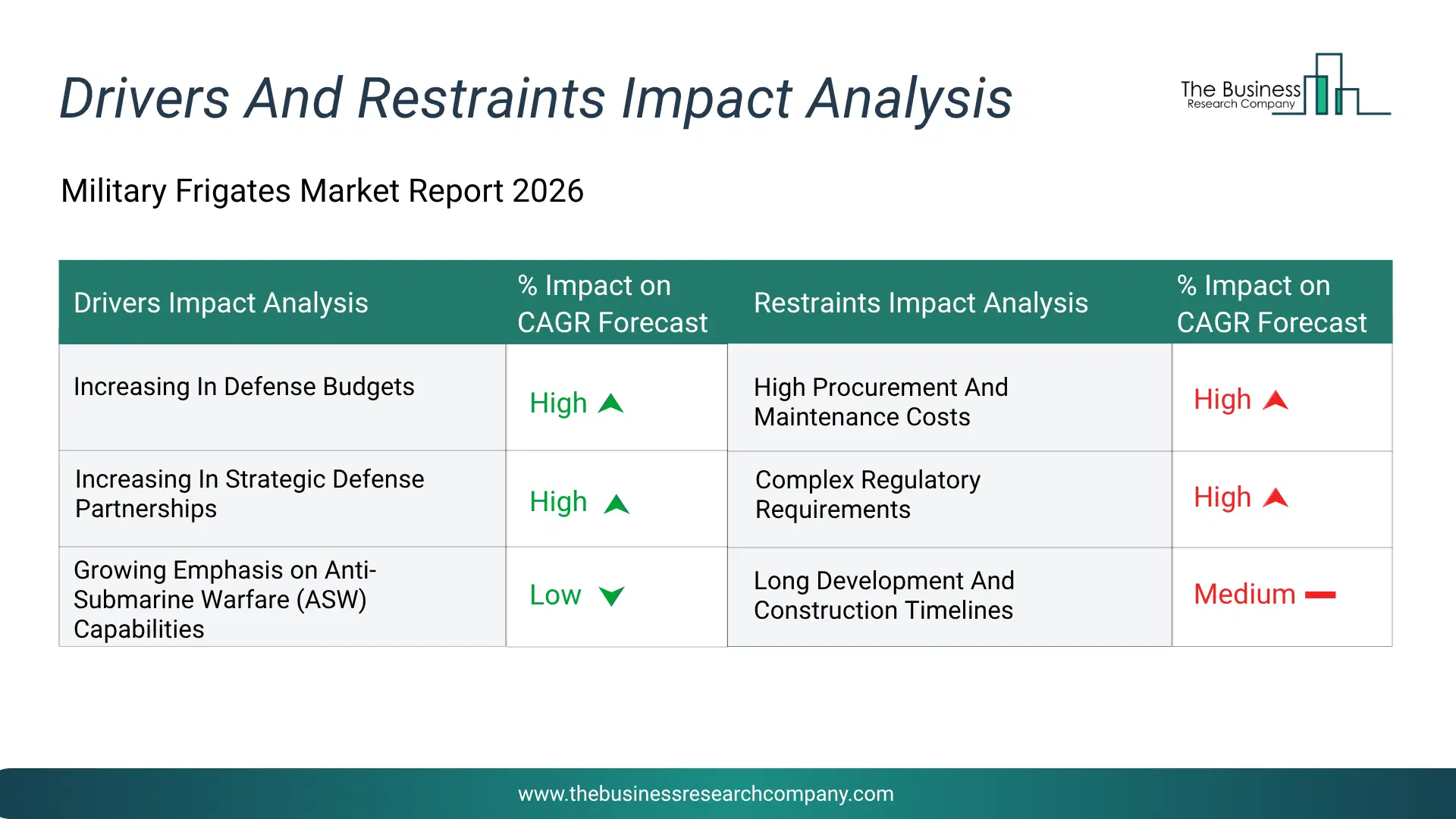
Infographic Chart Showing Key Market Drivers Analysis And Restraints For Military Frigates Market
The chart presents an impact analysis of key drivers and restraints, quantifying their relative influence on the market's growth rate and helping assess the balance between growth enablers and limiting factors. This chart offers a high-level perspective; the full report contains more detailed insights.
How Will The Drivers Impact Growth In The Global Military Frigates Market?
• Increasing In Defense Budgets (High) – During the forecast period, the increase in defense budgets is expected to become a key growth driver for the military frigates market by 2030. Rising government defense allocations are boosting demand for advanced naval vessels to support fleet modernization and maritime security. As countries strengthen their naval capabilities to address evolving geopolitical tensions and protect strategic sea routes, they increasingly require modern frigates equipped with multi-role combat capabilities. This expansion encourages the adoption of technologically advanced frigates featuring stealth systems, modular weapon platforms, and integrated combat management systems. Additionally, the growing need for enhanced naval readiness highlights the importance of reliable and high-performance warships capable of executing diverse missions. Collectively, these factors support steady market growth by directly linking defense spending expansion with increased frigate procurement. • Increasing In Strategic Defense Partnerships (High) – During the forecast period, the increase in strategic defense partnerships is expected to emerge as a major factor driving the expansion of the military frigates market by 2030. Rising collaboration between allied nations strongly supports market growth by enabling joint development, co-production, and technology sharing in naval shipbuilding programs. With stronger defense alliances, countries can access advanced shipbuilding expertise, modern combat systems, and innovative frigate designs that enhance fleet capabilities. Such partnerships are often supported by multinational defense agreements aimed at strengthening collective maritime security, which further increases demand for modern frigates. Increased cooperation also allows defense forces to improve interoperability and operational efficiency across allied naval fleets. As a result, the market directly benefits from increased procurement of advanced frigates backed by sustained strategic collaboration. • Growing Emphasis on Anti-Submarine Warfare (ASW) Capabilities (Low) – During the forecast period, the growing emphasis on anti-submarine warfare capabilities is expected to act as a key growth catalyst for the military frigates market by 2030. The rising threat from advanced and stealth-enabled submarines is accelerating demand for frigates equipped with sophisticated sonar systems, torpedoes, and underwater surveillance technologies. The development of modern naval defense strategies increasingly relies on asw-capable frigates to protect aircraft carriers, secure maritime trade routes, and defend critical naval infrastructure. This increasing focus on underwater threat detection drives naval forces to expand and upgrade their frigate fleets. Furthermore, rising geopolitical tensions and expanding submarine activity highlight the importance of highly capable frigates for effective maritime defense operations. Consequently, the growth in asw-focused naval modernization directly supports the adoption of advanced frigates worldwide.How Will The Restraints Impact Growth In The Global Military Frigates Market?
• High Procurement And Maintenance Costs (High) – During the forecast period, the high procurement and maintenance costs act as a restraint for the military frigates market because these warships require massive capital investment that not all nations can afford. Building a single modern frigate involves advanced technology, weapon systems, and specialized shipbuilding infrastructure, pushing costs into billions of dollars. Beyond acquisition, long-term maintenance, crew training, and periodic upgrades further strain defense budgets. For smaller or developing nations, these expenses often limit fleet expansion or force reliance on older vessels. As a result, high costs slow down procurement cycles and restrict the overall growth potential of the global frigates market. • Complex Regulatory Requirements (High) – During the forecast period, the complex regulatory requirements act as a restraint for the military frigates market because defense shipbuilding is subject to strict national security laws, export controls, and international compliance standards. These regulations often delay procurement processes, as contracts must pass through multiple layers of approval and oversight. Restrictions on technology transfer between countries can further limit collaboration in joint frigate development programs. Compliance with environmental and safety standards also adds to design and construction challenges, increasing costs and timelines. As a result, the regulatory burden can slow market growth by making procurement and delivery of frigates more time-consuming and complicated. • Long Development And Construction Timelines (Medium) – During the forecast period, the long development and construction timelines act as a restraint for the military frigates market because designing and building advanced naval vessels involves highly complex engineering, integration of sophisticated combat systems, and extensive testing phases. Shipyards often require several years to complete a single frigate from design approval to final commissioning. Any design modifications, technology upgrades, or supply chain delays further extend delivery schedules. This slow production cycle limits the ability of defense forces to quickly modernize fleets or respond to emerging threats. As a result, extended timelines reduce procurement efficiency and restrain overall market growth.Key Players In The Global Military Frigates Market
Major companies operating in the military frigates market are BAE Systems Plc, Fincantieri S.p.A, Naval Group, Mitsubishi Heavy Industries, Damen Shipyards Group, Hanwha Ocean, Thyssenkrupp Marine Systems (TKMS), China State Shipbuilding Corporation (CSSC), General Dynamics Corp., Huntington Ingalls Industries, Rosoboronexport, Mazagon Dock Shipbuilders Limited, Fr. Lürssen Werft GmbH And Co KG, Garden Reach Shipbuilders, Turkish Naval Shipyards, Navantia S.A, Goa Shipyard Limited, Babcock International, STM (Savunma Teknolojileri Mühendislik), HD Hyundai Heavy Industries (HD HHI) (Formerly Hyundai Heavy Industries), Israel Shipyards Ltd, K Shipbuilding Co Ltd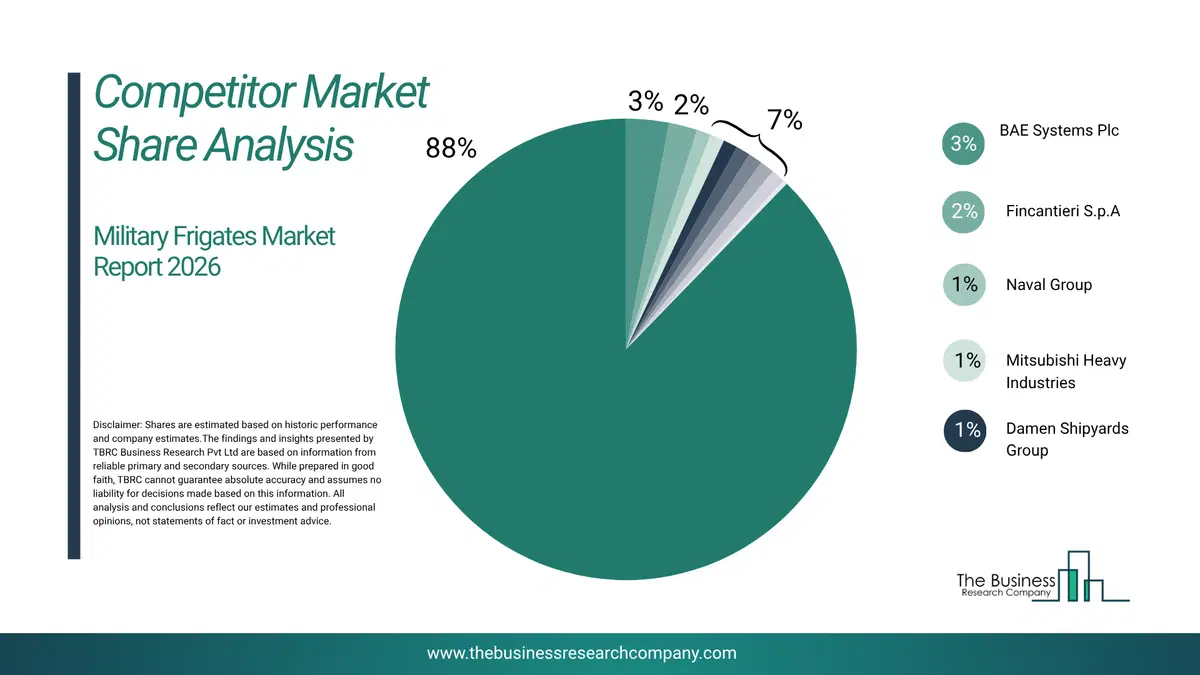
This chart is for illustrative purposes; the full report includes a detailed competitor analysis and comprehensive overview of the top 10 companies in the market.
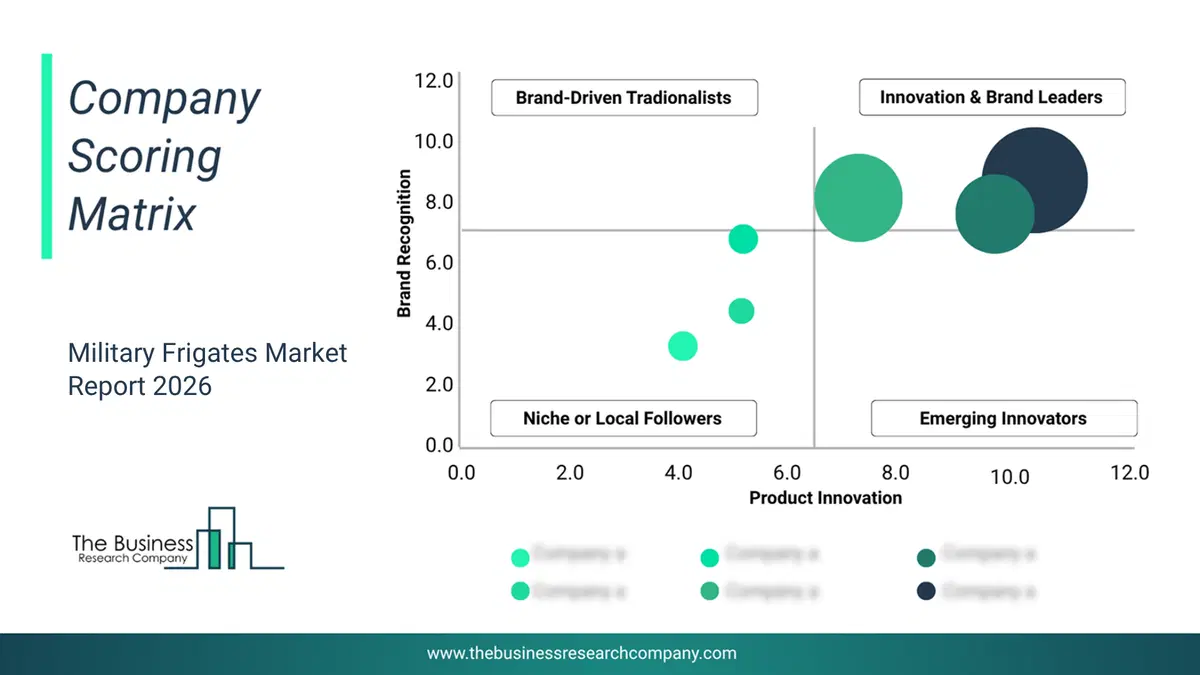
This chart maps companies by product innovation and brand strength, with bubble size indicating relative revenue, helping identify market leaders, challengers, and niche players. This is an illustrative chart; the full report provides a complete and accurate competitive analysis.
Global Military Frigates Market Trends and Insights
Major companies operating in the military frigates market are focusing on leveraging innovative technologies such as stealth technology to enhance survivability and reduce detectability in hostile environments. Stealth technology is the use of design and materials to make a ship, aircraft, or vehicle less detectable by radar, sonar, or other sensors, helping it avoid detection, reduce the risk of attack, and improve operational effectiveness. For instance, in July 2025, Mitsubishi Heavy Industries, Ltd., a Japan-based manufacturing company, launched the 11th Mogami-class multirole frigate, Tatsuta, for the Japan Maritime Self-Defense Force. The vessel features advanced stealth design elements, a compact hull, and modern missile systems, enabling enhanced survivability and operational flexibility in contested maritime environments. The 11th Mogami-class multirole frigate, Tatsuta, is equipped with a combined diesel and gas (CODAG) propulsion system, allowing it to reach speeds of over 30 knots, while its compact design and advanced automation enable it to operate efficiently with a relatively small crew of about 90 personnel, making it highly suitable for sustained deployments and rapid response missions in Japan’s surrounding waters.What Are Latest Mergers And Acquisitions In The Military Frigates Market? Naval Group SA And Westcon Yards AS Partner To Strengthen Norway’s Frigate Support Ecosystem
In June 2025, Naval Group SA, a France-based naval defense company that specializes in providing military frigates, partnered with Westcon Yards AS to foster a strategic cooperation supporting Norway’s future frigate program. With this partnership, Naval Group SA and Westcon Yards AS aim to develop a Norwegian maritime and defense support ecosystem that ensures high operational availability and through-life support for Norway’s future FDI frigates, while strengthening long-term industrial collaboration, enhancing Norway’s naval capabilities, and building a resilient, sovereign, and future-ready maritime defense cluster. Westcon Yards AS is a Norway-based shipyard specializing in naval maintenance, repair, and industrial support services.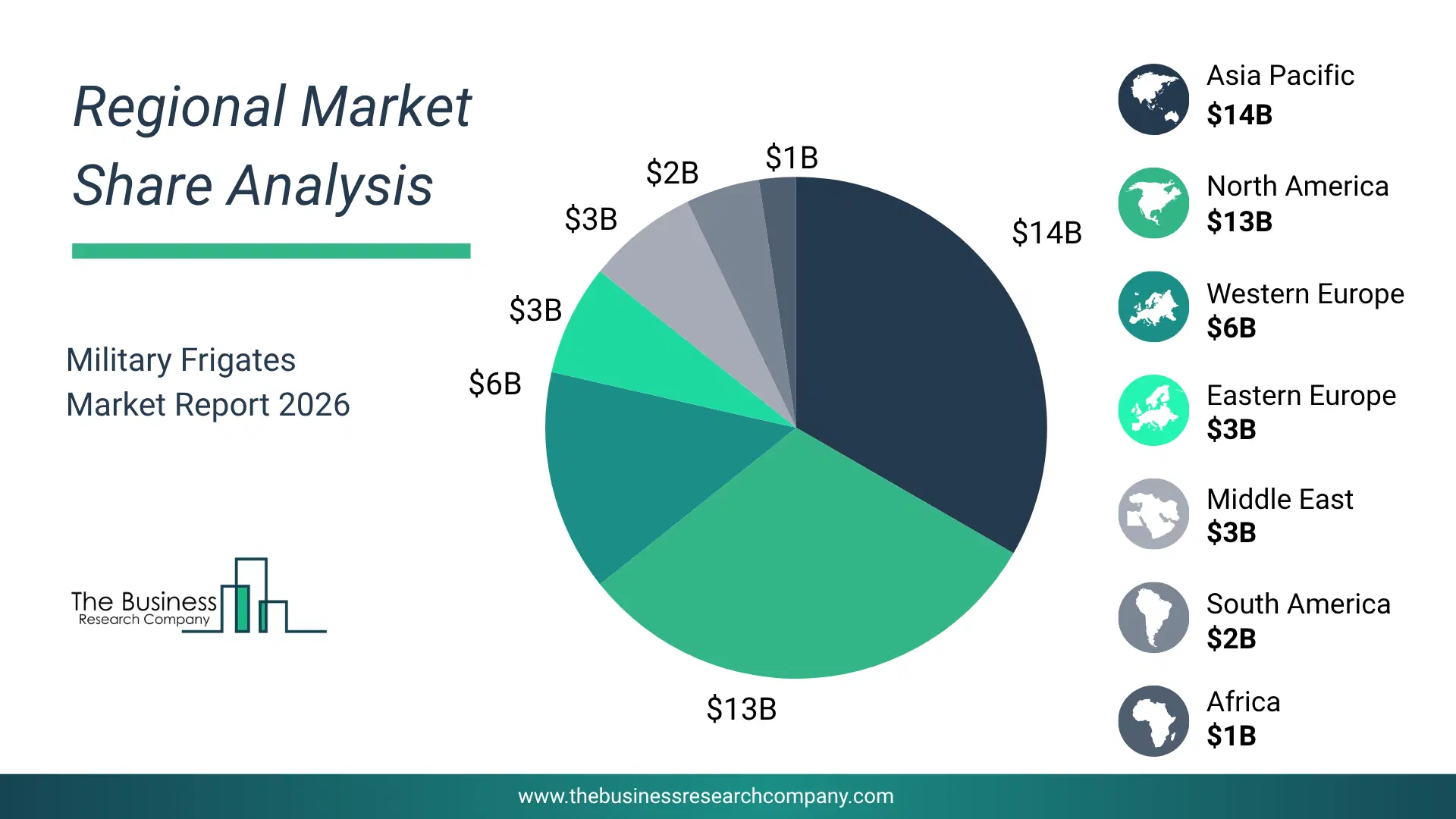
Regional Insights
North America was the largest region in the military frigates market in 2025. Asia-Pacific is expected to be the fastest-growing region in the forecast period. The regions covered in this market report are Asia-Pacific, South East Asia, Western Europe, Eastern Europe, North America, South America, Middle East, Africa. The countries covered in this market report are Australia, Brazil, China, France, Germany, India, Indonesia, Japan, Taiwan, Russia, South Korea, UK, USA, Canada, Italy, SpainWhat Defines the Military Frigates Market?
The military frigates market consists of sales of stealth frigates, patrol frigates, missile frigates, electronic warfare frigates, command and control frigates, hydrographic or survey frigates, logistics or support frigates, and experimental or technology test frigates. Values in this market are ‘factory gate’ values, that is the value of goods sold by the manufacturers or creators of the goods, whether to other entities (including downstream manufacturers, wholesalers, distributors and retailers) or directly to end customers. The value of goods in this market includes related services sold by the creators of the goods.How is Market Value Defined and Measured?
The market value is defined as the revenues that enterprises gain from the sale of goods and/or services within the specified market and geography through sales, grants, or donations in terms of the currency (in USD unless otherwise specified). The revenues for a specified geography are consumption values that are revenues generated by organizations in the specified geography within the market, irrespective of where they are produced. It does not include revenues from resales along the supply chain, either further along the supply chain or as part of other products.
This chart presents market attractiveness based on a quantitative evaluation of growth, competition, strategic alignment, and risk, offering a clear view of opportunity areas for decision-making. This chart is for illustrative purposes; the full report contains the complete analysis.

This chart highlights the Total Addressable Market (TAM) by estimating the maximum revenue opportunity using an assumption-driven approach, supporting strategic planning and opportunity sizing across markets. The chart is illustrative; the full report provides a more comprehensive analysis.
What Key Data and Analysis Are Included in the Military Frigates Market Report 2026?
The military frigates market research report is one of a series of new reports from The Business Research Company that provides market statistics, including industry global market size, regional shares, competitors with the market share, detailed market segments, market trends and opportunities, and any further data you may need to thrive in the military frigates industry. The market research report delivers a complete perspective of everything you need, with an in-depth analysis of the current and future state of the industry.Military Frigates Market Report Forecast Analysis
| Report Attribute | Details |
|---|---|
| Market Size Value In 2026 | $30.91 billion |
| Revenue Forecast In 2030 | $38.91 billion |
| Growth Rate | CAGR of 5.9% from 2026 to 2030 |
| Base Year For Estimation | 2025 |
| Actual Estimates/Historical Data | 2020-2025 |
| Forecast Period | 2026 - 2030 |
| Market Representation | Revenue in USD Billion and CAGR from 2026 to 2030 |
| Segments Covered | Type, Technology, Platform, Application, End User |
| Regional Scope | Asia-Pacific, Western Europe, Eastern Europe, North America, South America, Middle East, Africa |
| Country Scope | The countries covered in the report are Australia, Brazil, China, France, Germany, India, ... |
| Key Companies Profiled | BAE Systems Plc, Fincantieri S.p.A, Naval Group, Mitsubishi Heavy Industries, Damen Shipyards Group, Hanwha Ocean, Thyssenkrupp Marine Systems (TKMS), China State Shipbuilding Corporation (CSSC), General Dynamics Corp., Huntington Ingalls Industries, Rosoboronexport, Mazagon Dock Shipbuilders Limited, Fr. Lürssen Werft GmbH And Co KG, Garden Reach Shipbuilders, Turkish Naval Shipyards, Navantia S.A, Goa Shipyard Limited, Babcock International, STM (Savunma Teknolojileri Mühendislik), HD Hyundai Heavy Industries (HD HHI) (Formerly Hyundai Heavy Industries), Israel Shipyards Ltd, K Shipbuilding Co Ltd |
| Customization Scope | Request for Customization |
| Pricing And Purchase Options | Explore Purchase Options |