
Multifamily Modular and Prefabricated Housing Construction Market Report 2026
Global Outlook – By Type (Permanent, Relocatable ), By Material (Steel, Precast Concrete, Wood, Plastic, Other Materials), By Construction Method (Modular Construction, Panelized Construction, Volumetric Prefabrication) – Market Size, Trends, Strategies, and Forecast to 2030
Multifamily Modular and Prefabricated Housing Construction Market Overview
• Multifamily Modular and Prefabricated Housing Construction market size has reached to $55.5 billion in 2025 • Expected to grow to $78.75 billion in 2030 at a compound annual growth rate (CAGR) of 7.3% • Growth Driver: The Rising Impact Of Modular Construction In Multifamily And Prefabricated Housing • Market Trend: Product Branding Innovation Modular And Prefabricated Multifamily Housing Market Transformation • Asia-Pacific was the largest region and fastest growing region.Market Gains By 2030 – Top Opportunities By Segment
Market Gain identifies the most promising market opportunities by highlighting the segments or products expected to generate the highest incremental revenue growth over the next five years.
What Is Covered Under Multifamily Modular and Prefabricated Housing Construction Market?
The multifamily modular and prefabricated housing construction market consists of sales revenue earned by companies that are engaged in the construction of multifamily modular and prefabricated homes. Modular construction is a process wherein units are built and inspected offsite in a manufacturing facility while the podium, foundation, and infrastructure are built onsite. This method is used to increase housing production by accelerating construction time and reducing construction costs. The main types of multifamily modular and prefabricated housing construction are permanent and relocatable houses. A partially or fully assembled building that is created at a building manufacturing facility employing a modular construction technique and meets applicable codes or state standards is referred to as relocatable home construction. Relocatable buildings are intended to be reused or repurposed several times before being transferred to new construction locations. The different materials include steel, precast concrete, wood, plastic, and others.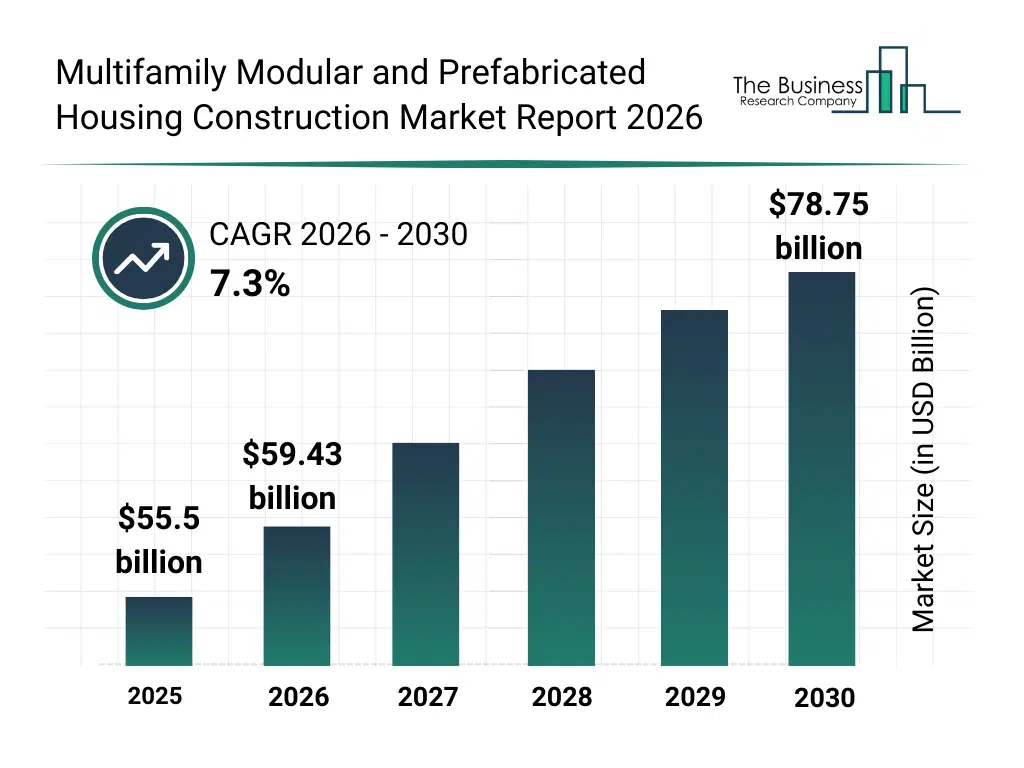
What Is The Multifamily Modular and Prefabricated Housing Construction Market Size and Share 2026?
The multifamily modular and prefabricated housing construction market size has grown strongly in recent years. It will grow from $55.5 billion in 2025 to $59.43 billion in 2026 at a compound annual growth rate (CAGR) of 7.1%. The growth in the historic period can be attributed to growth in demand for faster housing delivery, rising use of modular methods in multifamily projects, reliance on traditional modular materials, expansion of urban housing developments, increasing need for cost-efficient residential solutions.What Is The Multifamily Modular and Prefabricated Housing Construction Market Growth Forecast?
The multifamily modular and prefabricated housing construction market size is expected to see strong growth in the next few years. It will grow to $78.75 billion in 2030 at a compound annual growth rate (CAGR) of 7.3%. The growth in the forecast period can be attributed to growing adoption of advanced prefabrication technologies, rising investment in permanent modular housing, expansion of relocatable modular housing applications, increasing emphasis on sustainable modular materials, development of high-density modular urban projects. Major trends in the forecast period include rising adoption of multi-story modular apartment developments, increasing demand for faster, cost-efficient housing delivery, growth in use of steel, wood, and precast materials for modular units, expansion of permanent modular housing in urban infill projects, higher utilization of relocatable units for temporary and workforce housing.
Global Multifamily Modular and Prefabricated Housing Construction Market Segmentation
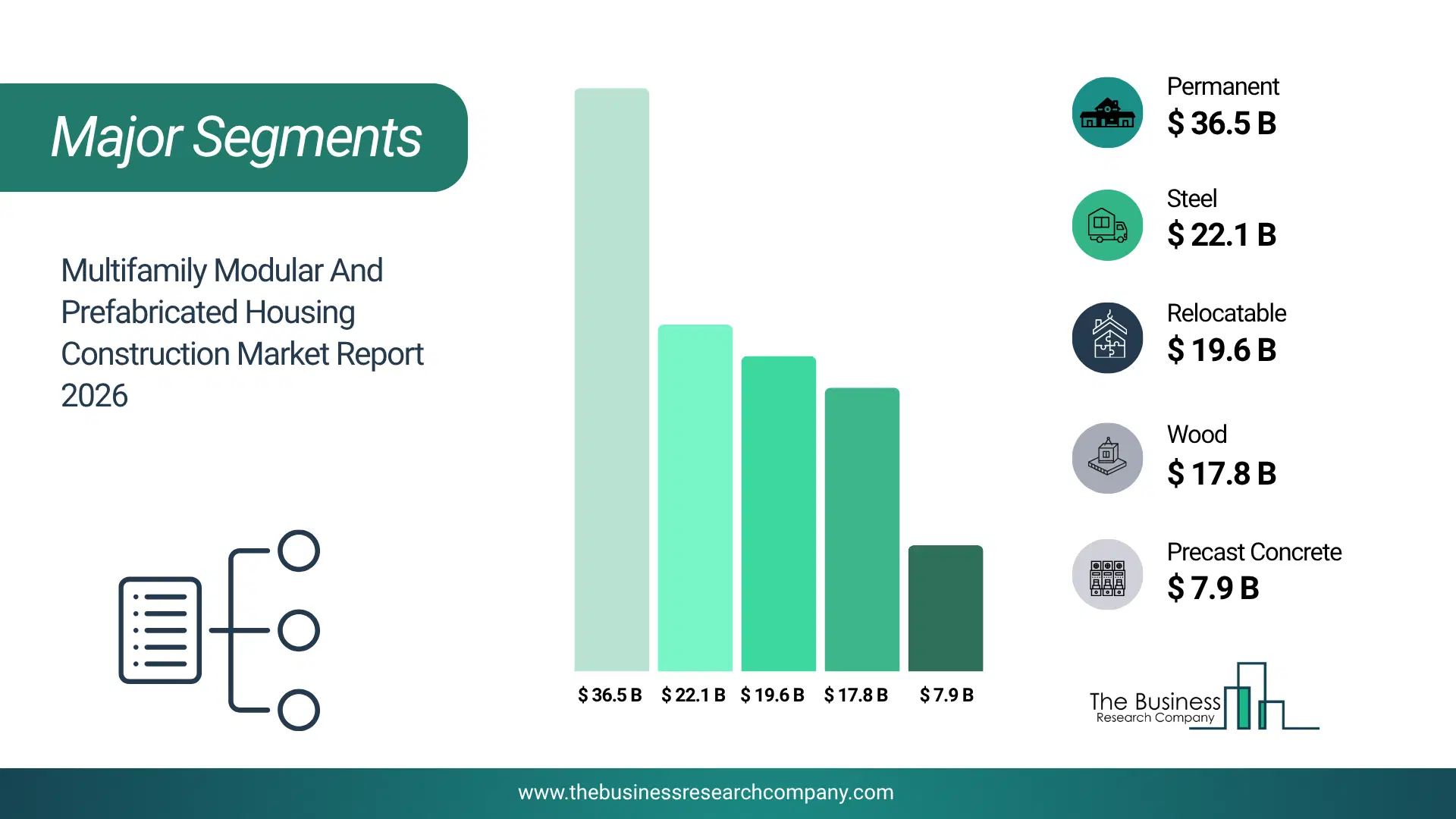
1) By Type: Permanent, Relocatable 2) By Material: Steel, Precast Concrete, Wood, Plastic, Other Materials 3) By Construction Method: Modular Construction, Panelized Construction, Volumetric Prefabrication Subsegments: 1) By Permanent: Multi-Story Modular Apartments, Permanent Prefabricated Units, Infill Housing Units 2) By Relocatable: Temporary Housing Units, Relocatable Modular Homes, Site Offices and Temporary Accommodation Units The top segments in the multifamily modular and prefabricated housing construction market will be: • Permanent will reach $36510.49 Million by 2025. • Steel will reach $22125.98 Million by 2025. • Relocatable will reach $19613.91 Million by 2025. • Wood will reach $17822.31 Million by 2025. • Precast Concrete will reach $7995.6 Million by 2025.What Is The Driver Of The Multifamily Modular and Prefabricated Housing Construction Market?
The benefits associated with modular construction are projected to contribute to the growth of the multifamily modular and prefabricated housing construction market. There are multiple advantages offered by modular and factory-built housing, such as cost and time saving, reducing material wastage, assembly-line quality control, reducing strain on the site neighborhood, and construction safety. For instance, in 2023, according to Modular building institute, a US-based non-profit trade association serving non-residential modular construction, in 2023, the modular industry captured an estimated 6.64% of new construction starts, with a total project value of approximately $14.6 billion. The revenue data collected from 49 North American manufacturers showed an average revenue of $23,474,970 per manufacturer. This revenue represented 43% of the total value of projects utilizing modular construction. Therefore, advantages associated with modular and prefabricated construction are anticipated to increase the focus of multinational construction companies on modular housing construction, generating higher revenue for growth of the multifamily modular and prefabricated housing construction industry during the forecast period.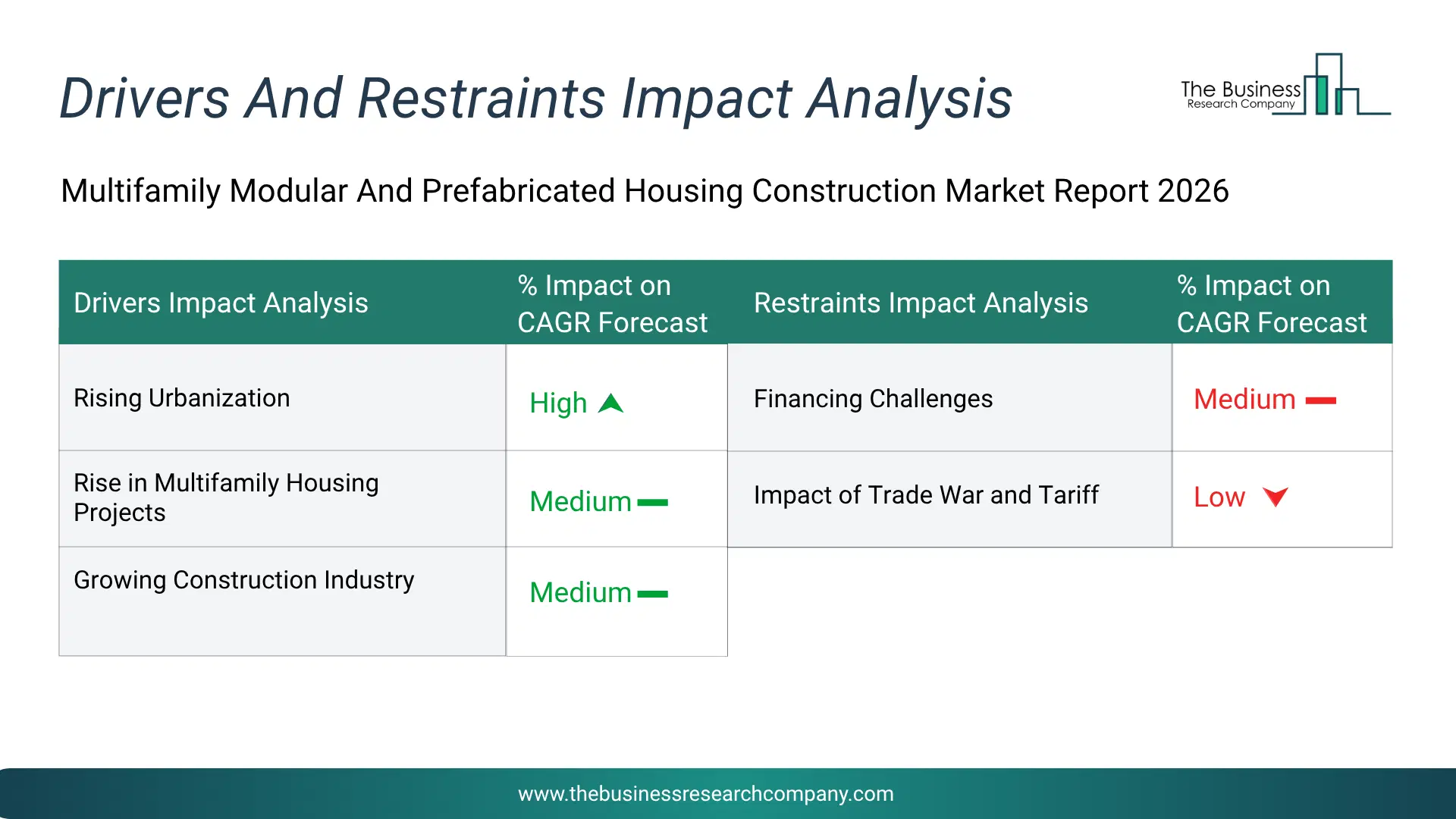
Infographic Chart Showing Key Market Drivers Analysis And Restraints For Multifamily Modular And Prefabricated Housing Construction Market
The chart presents an impact analysis of key drivers and restraints, quantifying their relative influence on the market's growth rate and helping assess the balance between growth enablers and limiting factors. This chart offers a high-level perspective; the full report contains more detailed insights.
How Will The Drivers Impact Growth In The Global Multifamily Modular And Prefabricated Housing Construction Market?
• Rising Urbanization (High) – The rising urbanization will become a key driver of growth in the multifamily modular and prefabricated housing construction market by 2030. Multifamily modular and prefabricated housing construction supports urbanization by enabling faster, more efficient development of high-density residential units in growing cities. These methods reduce construction time, minimize disruption in congested urban areas and offer scalable, cost-effective solutions to address housing shortages. As a result, the rising urbanization is anticipated to contributing to a 2.0% annual growth in the market. • Rise in Multifamily Housing Projects (Medium) – The rise in multifamily housing projects will emerge as a major factor driving the expansion of the market by 2030. Multifamily modular and prefabricated housing construction plays a vital role in meeting the growing demand for urban housing by enabling faster, more cost-effective and scalable development of apartment buildings and town homes. These methods significantly reduce construction timelines and labor costs, making them ideal for addressing housing shortages and accelerating the delivery of multifamily projects. Consequently, the rise in multifamily housing projects is projected to contributing to a 1.5% annual growth in the market. • Growing Construction Industry (Medium) – The growing construction industry will serve as a key growth catalyst for the market by 2030. Multifamily modular and prefabricated housing construction offers a faster, more cost-effective and sustainable solution to meet the rising demand for urban housing in the growing construction industry. By enabling off-site manufacturing and streamlined on-site assembly, it reduces construction timelines, labor costs and material waste, making it an attractive option for developers addressing housing shortages and affordability challenges. Therefore, this growing construction industry is projected to supporting to a 1.0% annual growth in the market. • Increased Demand for Sustainable Construction (Low) – The increased demand for sustainable construction will become a significant driver contributing to the growth of the market by 2030. Multifamily modular and prefabricated housing construction supports sustainable construction by minimizing material waste, reducing energy consumption during the building process and enabling tighter quality control in factory settings. These methods also shorten construction timelines and reduce on-site disruptions, lowering emissions and improving overall environmental efficiency. Consequently, the increased demand for sustainable construction is projected to contributing to a 0.5% annual growth in the market.How Will The Restraints Impact Growth In The Global Multifamily Modular And Prefabricated Housing Construction Market?
• Rising Raw Material Costs (Medium) – Rising Raw Material Costs will restrict the growth of the Multifamily Modular And Prefabricated Housing Construction market during the forecast period. Modular and prefabricated housing construction relies on steel, wood, and other materials subject to cost inflation. Rising material costs affect project economics and housing affordability. Cost increases can limit the competitiveness of modular construction compared to traditional building methods. • Financing Challenges (Medium) – Financing Challenges will restrict the growth of the Multifamily Modular And Prefabricated Housing Construction market during the forecast period. Modular construction projects face challenges in securing traditional construction financing due to lender unfamiliarity. The perception of higher risk for modular projects can affect loan availability and terms. Financing constraints can limit project development and affect market growth for prefabricated housing solutions. • Impact of Trade War and Tariff (Low) – Impact of Trade War and Tariff will restrict the growth of the Multifamily Modular And Prefabricated Housing Construction market during the forecast period. Trade tariffs on building materials including steel and lumber can increase construction costs. Trade barriers may affect the availability and cost of imported components and prefabricated modules. Trade tensions can impact housing construction activity and modular building adoption.Key Players In The Global Multifamily Modular and Prefabricated Housing Construction Market
Major companies operating in the multifamily modular and prefabricated housing construction market are Laing O'Rourke, ATCO Ltd., Algeco UK Limited, Ritz-Craft Corporation, Red Sea International Company, Pleasant Valley Homes Inc., Connect Homes LLC, Kiss House, Marlette Homes Inc., Guerdon LLC, Northstar Systembuilt Inc., Cube Haus, Blu Homes Inc., Plant Prefab Inc., Simplex Homes Inc., Revolution Precrafted Properties Limited, Pine Grove Homes Inc., KLEUSBERG GmbH & Co. KG, Blokable Inc., New Era Building Systems Inc., nHouse Limited, PopUp House, Mod-U-Kraf Homes Inc., Stratford Homes LLC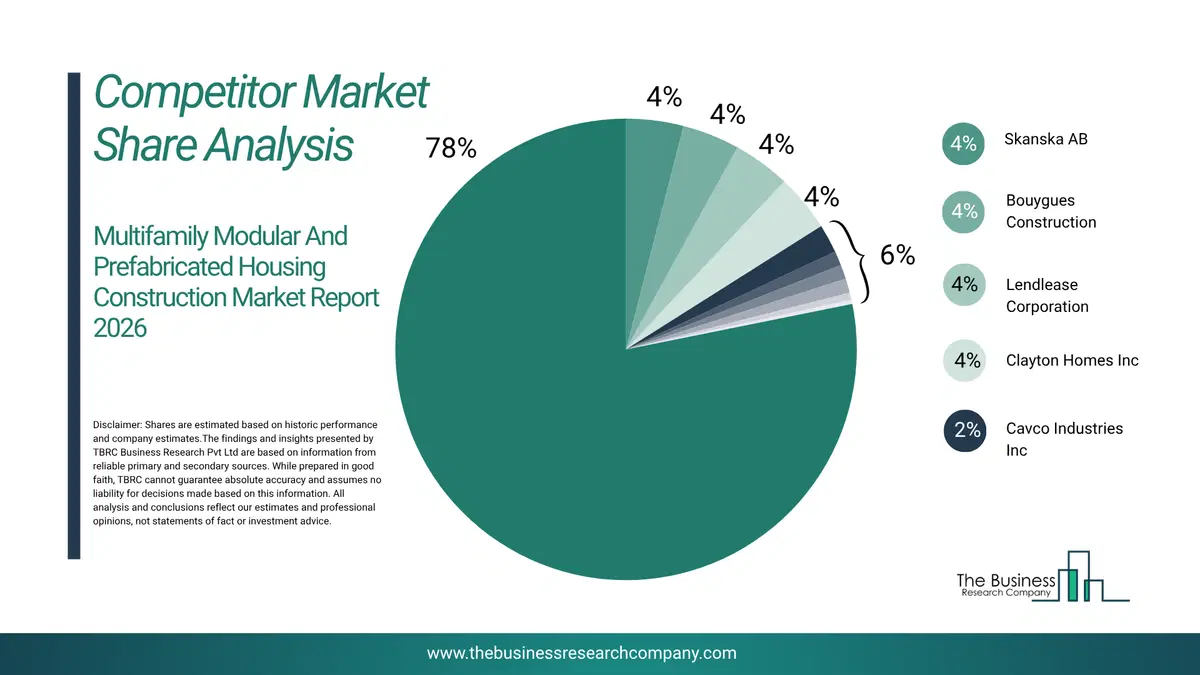
This chart is for illustrative purposes; the full report includes a detailed competitor analysis and comprehensive overview of the top 10 companies in the market.
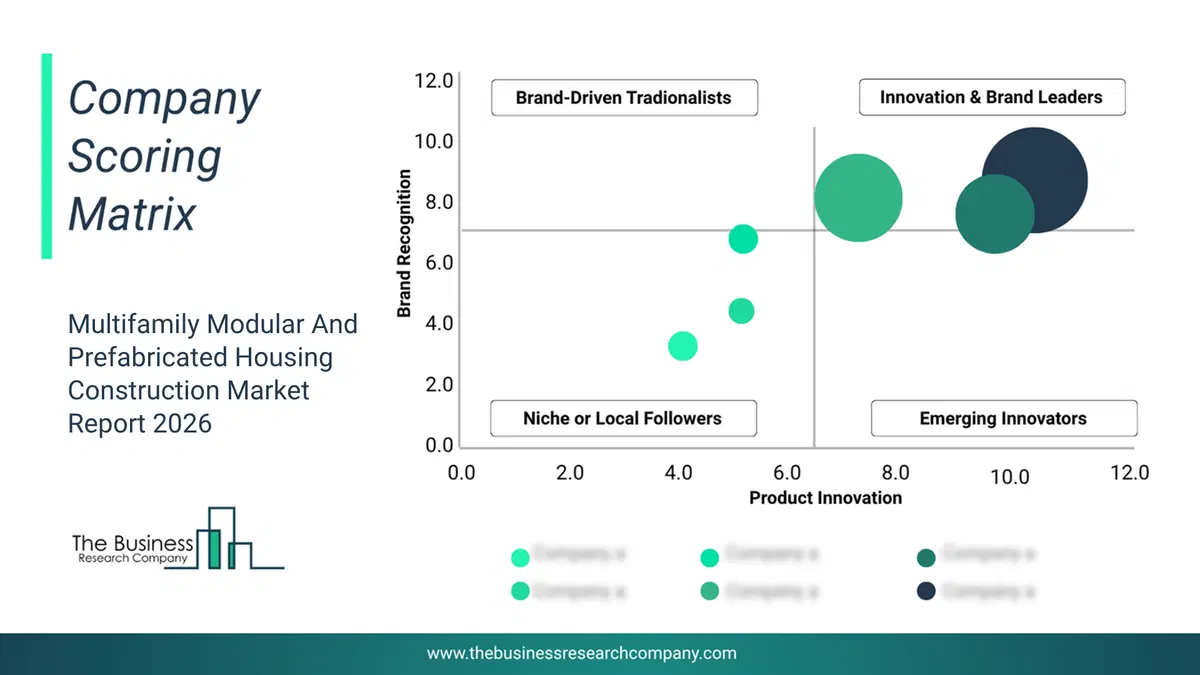
This chart maps companies by product innovation and brand strength, with bubble size indicating relative revenue, helping identify market leaders, challengers, and niche players. This is an illustrative chart; the full report provides a complete and accurate competitive analysis.
Global Multifamily Modular and Prefabricated Housing Construction Market Trends and Insights
Major companies operating in the multifamily modular and prefabricated housing construction market are innovating new product brands such as Modular Attainable Housing Brand to increase their profitability in the market. For instance, in June 2023, Greystar Real Estate Partners, a US-based real estate company launched attainable. The brand is solely focused on Greystar's impact housing offering, which provides more affordable housing possibilities for important groups that are negatively impacted by the scarcity of renting options in the US. With the brand launch, Greystar has demonstrated its dedication to tackling the issue of affordable housing. Greystar is employing modular construction to provide tenants sustainable, high-quality goods with cheap alternatives.What Are Latest Mergers And Acquisitions In The Multifamily Modular and Prefabricated Housing Construction Market?
In September 2024, ATCO structures and Logistics Ltd, a US-based modular construction company, acquired NRB Modular Solutions for $40 million. Through the acquisition, ATCO structures and Logistics Ltd aims to allow it to provide a comprehensive range of modular products, including commercial, industrial, educational, and residential solutions. NRB Limited is a Canada-based company that manufactures modular buildings, focusing on multifamily modular and prefabricated housing construction.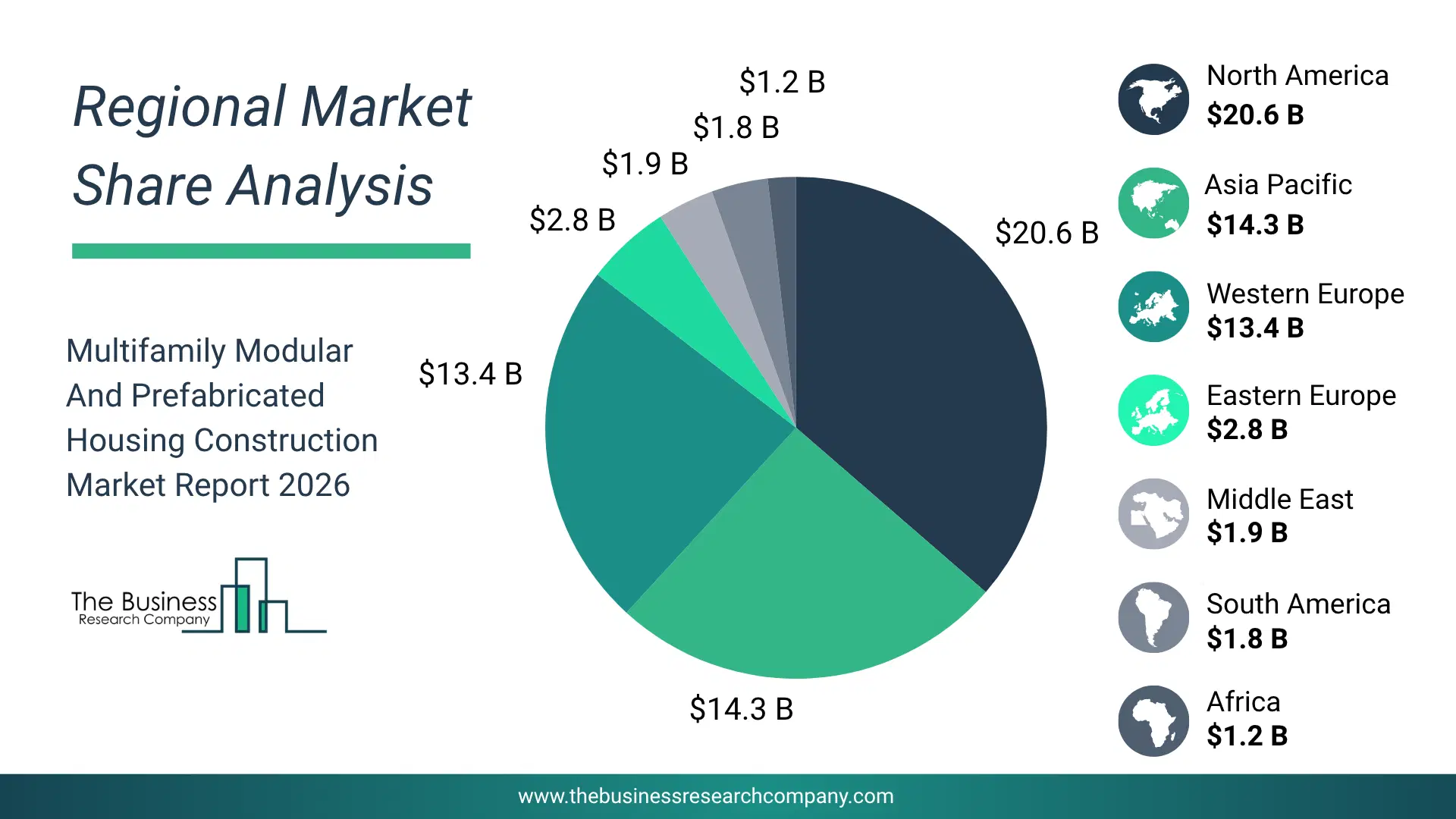
Regional Insights
Asia-Pacific was the largest region in the multifamily modular and prefabricated housing construction market in 2025. Africa is expected to be the fastest-growing region in the global multifamily modular and prefabricated housing construction market share during the forecast period. The regions covered in this market report are Asia-Pacific, South East Asia, Western Europe, Eastern Europe, North America, South America, Middle East, Africa. The countries covered in this market report are Australia, Brazil, China, France, Germany, India, Indonesia, Japan, Taiwan, Russia, South Korea, UK, USA, Canada, Italy, Spain.What Defines the Multifamily Modular and Prefabricated Housing Construction Market?
The multifamily modular and prefabricated housing construction market includes revenues earned by fees, interest payments, commissions or transaction charges. The market value includes the value of related goods sold by the service provider or included within the service offering. Only goods and services traded between entities or sold to end consumers are included.How is Market Value Defined and Measured?
The market value is defined as the revenues that enterprises gain from the sale of goods and/or services within the specified market and geography through sales, grants, or donations in terms of the currency (in USD unless otherwise specified). The revenues for a specified geography are consumption values that are revenues generated by organizations in the specified geography within the market, irrespective of where they are produced. It does not include revenues from resales along the supply chain, either further along the supply chain or as part of other products.
This chart presents market attractiveness based on a quantitative evaluation of growth, competition, strategic alignment, and risk, offering a clear view of opportunity areas for decision-making. This chart is for illustrative purposes; the full report contains the complete analysis.

This chart highlights the Total Addressable Market (TAM) by estimating the maximum revenue opportunity using an assumption-driven approach, supporting strategic planning and opportunity sizing across markets. The chart is illustrative; the full report provides a more comprehensive analysis.
What Key Data and Analysis Are Included in theMultifamily Modular and Prefabricated Housing Construction Market Report 2026?
The multifamily modular and prefabricated housing construction market research report is one of a series of new reports from The Business Research Company that provides market statistics, including industry global market size, regional shares, competitors with the market share, detailed market segments, market trends and opportunities, and any further data you may need to thrive in the multifamily modular and prefabricated housing construction industry. The market research report delivers a complete perspective of everything you need, with an in-depth analysis of the current and future state of the industry.Multifamily Modular and Prefabricated Housing Construction Market Report Forecast Analysis
| Report Attribute | Details |
|---|---|
| Market Size Value In 2026 | $59.43 billion |
| Revenue Forecast In 2030 | $78.75 billion |
| Growth Rate | CAGR of 7.1% from 2026 to 2030 |
| Base Year For Estimation | 2025 |
| Actual Estimates/Historical Data | 2020-2025 |
| Forecast Period | 2026 - 2030 |
| Market Representation | Revenue in USD Billion and CAGR from 2026 to 2030 |
| Segments Covered | Type, Material, Construction Method |
| Regional Scope | Asia-Pacific, Western Europe, Eastern Europe, North America, South America, Middle East, Africa |
| Country Scope | The countries covered in the report are Australia, Brazil, China, France, Germany, India, Indonesia, Japan, Taiwan, Russia, South Korea, UK, USA, Canada, Italy, Spain. |
| Key Companies Profiled | Laing O'Rourke, ATCO Ltd., Algeco UK Limited, Ritz-Craft Corporation, Red Sea International Company, Pleasant Valley Homes Inc., Connect Homes LLC, Kiss House, Marlette Homes Inc., Guerdon LLC, Northstar Systembuilt Inc., Cube Haus, Blu Homes Inc., Plant Prefab Inc., Simplex Homes Inc., Revolution Precrafted Properties Limited, Pine Grove Homes Inc., KLEUSBERG GmbH & Co. KG, Blokable Inc., New Era Building Systems Inc., nHouse Limited, PopUp House, Mod-U-Kraf Homes Inc., Stratford Homes LLC |
| Customization Scope | Request for Customization |
| Pricing And Purchase Options | Explore Purchase Options |