

Neuroplasticity Market Report 2026
Global Outlook – By Product Type (Software-Based Solutions, Hardware-Based Solutions), By Technology Type (Artificial Intelligence, Virtual Reality, Neurostimulation, Wearable Technology), By Application (Stroke Rehabilitation, Traumatic Brain Injury (TBI) Rehabilitation, Neurodegenerative Disorders, Learning And Memory Enhancement, Mental Health Disorders), By End User (Hospitals And Clinics, Research Institutes And Academic Centers, Pharmaceutical And Biotechnology Companies, Other End Users) - Market Size, Trends, Strategies, and Forecast to 2030
Neuroplasticity Market Overview
• Neuroplasticity market size has reached to $6.57 billion in 2025 • Expected to grow to $18.48 billion in 2030 at a compound annual growth rate (CAGR) of 22.9% • Growth Driver: Rising Burden Of Neurological Disorders Fueling The Growth Of The Market Due To Increasing Demand For Advanced Brain Therapies • Market Trend: Emergence Of Brain-Computer Interfaces And Neural Implants • North America was the largest region in 2025 and Asia-Pacific is the fastest growing region.What Is Covered Under Neuroplasticity Market?
Neuroplasticity is the brain's ability to reorganize and adapt by forming new neural connections throughout life. It enables the brain to adjust to new experiences, learning, and injury by strengthening or weakening synapses. Its primary goal is to support cognitive flexibility, learning, memory formation, and recovery from brain damage. It also enhances skill development, improves mental resilience, supports rehabilitation, and promotes long-term brain health and adaptability. The main product types of neuroplasticity include software-based solutions and hardware-based solutions. Software-based solutions in neuroplasticity refer to digital applications and programs designed to help improve brain function by stimulating neural pathways. These solutions include cognitive training apps, virtual reality programs, and brainwave modulation software that support learning, memory, and recovery after brain injuries. Various technologies include artificial intelligence, virtual reality, neurostimulation, and wearable technology. This finds application in stroke rehabilitation, traumatic brain injury (TBI) rehabilitation, neurodegenerative disorders, learning and memory enhancement, and mental health disorders and is used by hospitals and clinics, research institutes and academic centers, pharmaceutical and biotechnology companies, and others.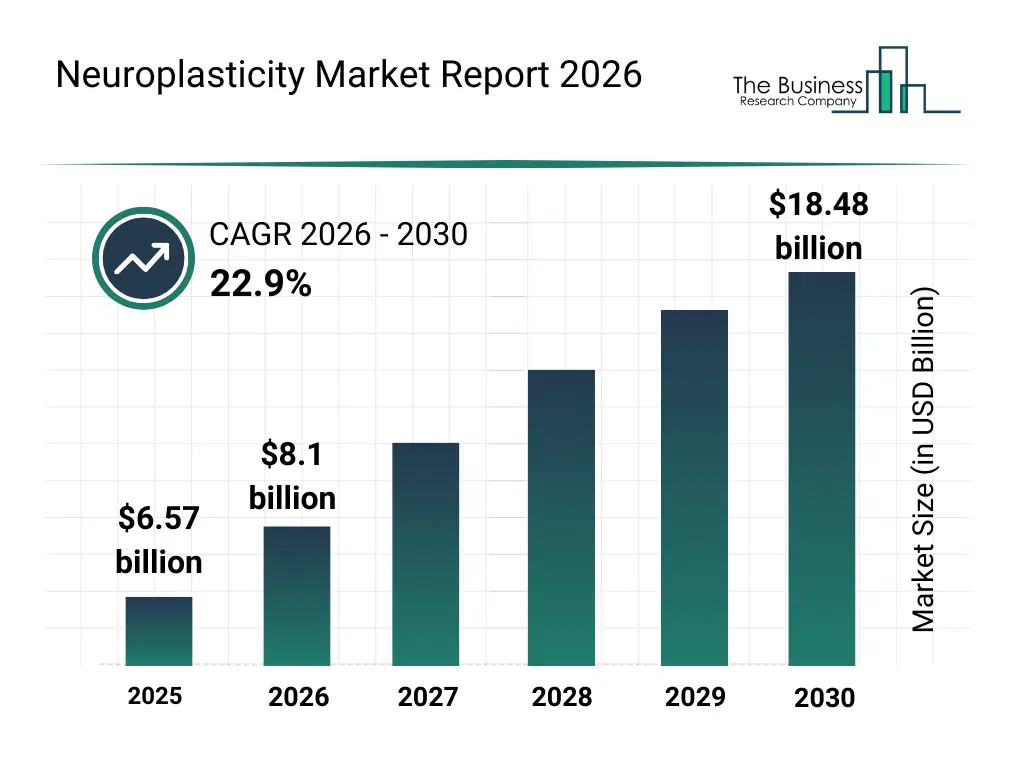
What Is The Neuroplasticity Market Size and Share 2026?
The neuroplasticity market size has grown exponentially in recent years. It will grow from $6.57 billion in 2025 to $8.1 billion in 2026 at a compound annual growth rate (CAGR) of 23.2%. The growth in the historic period can be attributed to early development of neurofeedback tools, rising awareness of brain rehabilitation, increased research in neurodegenerative disorders, adoption of cognitive training platforms, initial use of wearable neurostimulation devices.What Is The Neuroplasticity Market Growth Forecast?
The neuroplasticity market size is expected to see exponential growth in the next few years. It will grow to $18.48 billion in 2030 at a compound annual growth rate (CAGR) of 22.9%. The growth in the forecast period can be attributed to growing demand for ai-driven neurotherapy, rising adoption of vr rehabilitation tools, expansion of neuroplasticity-based mental health treatments, increasing investment in brain recovery research, development of advanced brain-computer interfaces. Major trends in the forecast period include growing demand for stroke rehabilitation solutions, increasing adoption of cognitive training programs, rising use of neurostimulation for mental health treatment, expansion of tbi rehabilitation technologies, development of learning and memory enhancement platforms.
Global Neuroplasticity Market Segmentation
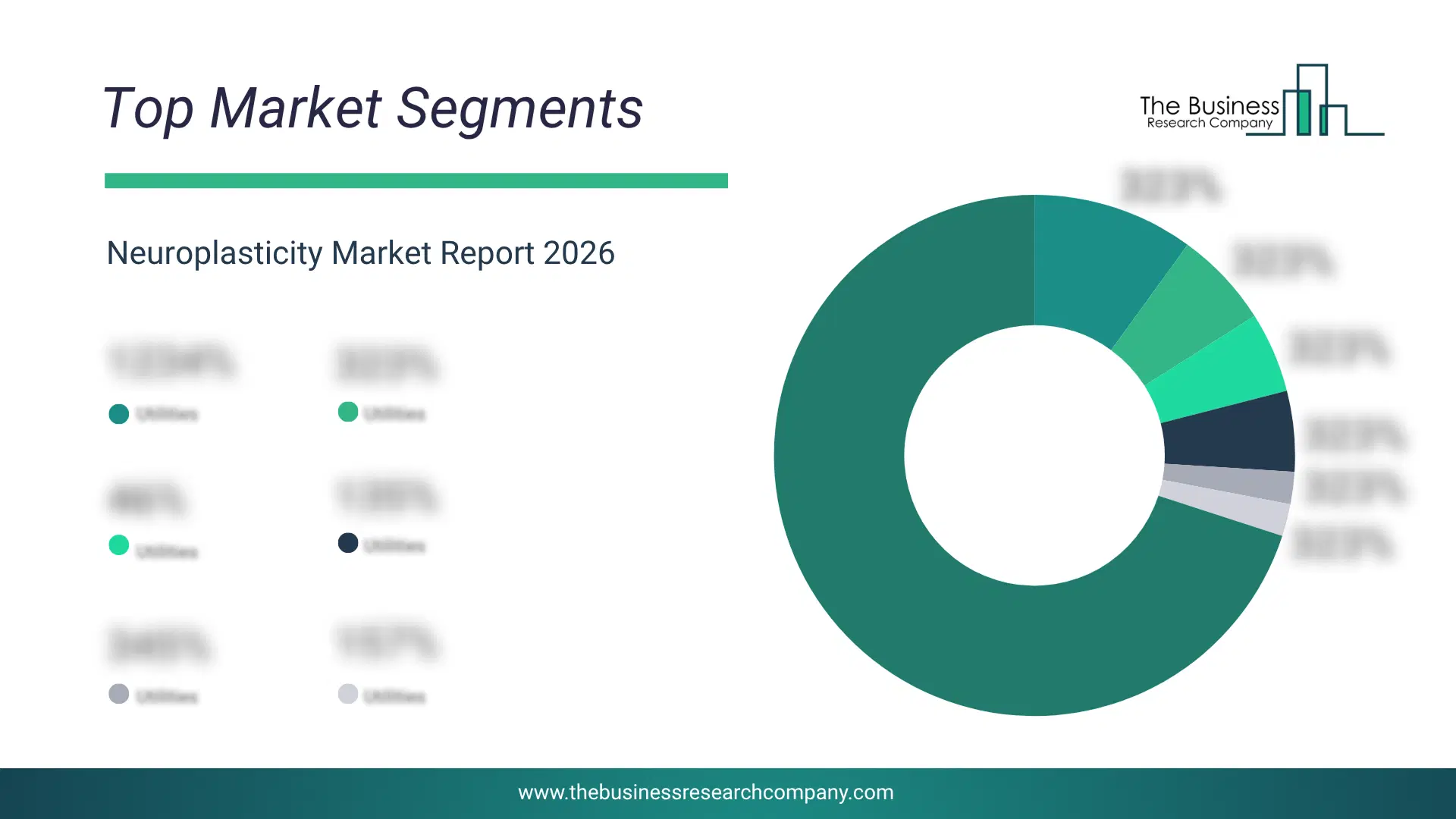
1) By Product Type: Software-Based Solutions, Hardware-Based Solutions 2) By Technology Type: Artificial Intelligence, Virtual Reality, Neurostimulation, Wearable Technology 3) By Application: Stroke Rehabilitation, Traumatic Brain Injury (TBI) Rehabilitation, Neurodegenerative Disorders, Learning And Memory Enhancement, Mental Health Disorders 4) By End User: Hospitals And Clinics, Research Institutes And Academic Centers, Pharmaceutical And Biotechnology Companies, Other End Users Subsegments: 1) By Software-Based Solutions: Cognitive Training Programs, Neurofeedback Software, Brain Simulation Platforms, Mobile Neurotherapy Apps, Virtual Reality Rehabilitation Software, AI-Based Cognitive Assessment Tools 2) By Hardware-Based Solutions: EEG Headsets, Transcranial Magnetic Stimulation (TMS) Devices, Transcranial Direct Current Stimulation (tDCS) Devices, Brain-Computer Interface (BCI) Systems, Wearable Neurostimulation Devices, Neuroimaging And Monitoring EquipmentWhat Is The Driver Of The Neuroplasticity Market?
The increasing prevalence of neurological disorders is expected to propel the growth of the neuroplasticity market going forward. Neurological disorders are medical conditions affecting the brain, spinal cord, and nerves, leading to a range of physical, cognitive, and behavioral impairments, and include diseases such as alzheimer's, parkinson's, epilepsy, and multiple sclerosis, which are becoming increasingly prevalent due to aging populations and lifestyle factors. The prevalence of neurological disorders is increasing primarily due to the aging global population, as longer life expectancy raises the risk of developing age-related neurological conditions, driving higher incidence rates worldwide. Neuroplasticity is propelled by the increasing prevalence of neurological disorders, driving the demand for advanced therapies and rehabilitation technologies that enhance brain function, improve patient outcomes, and support the development of innovative treatments for a wide range of neurological conditions. For instance, in October 2023, according to the World Federation of Neurology, a UK-based association of national neurological societies, more than 40% of the global population currently experiences some form of neurological condition, and this burden is expected to nearly double by 2050. Therefore, the increasing prevalence of neurological disorders is driving the growth of the neuroplasticity industry.Key Players In The Global Neuroplasticity Market
Major companies operating in the neuroplasticity market are Medtronic PLC, Boston Scientific Corporation, NeuroPace Inc, BrainsWay Ltd, Magstim, MindMaze, Emotiv Inc, BrainCo, ElectroCore, NeuroMetrix, Soterix Medical, Neurable, NeuroSigma Inc, Cognixion, NeuroTracker, Neuralink, Synchron Inc, Paradromics Inc, Precision Neuroscience, g.tec medical engineering GmbH, Neuroelectrics, OpenBCI, Kernel, Blackrock Neurotech, NeuroSky Inc, BrainScope Company Inc, i‑BrainTech LTD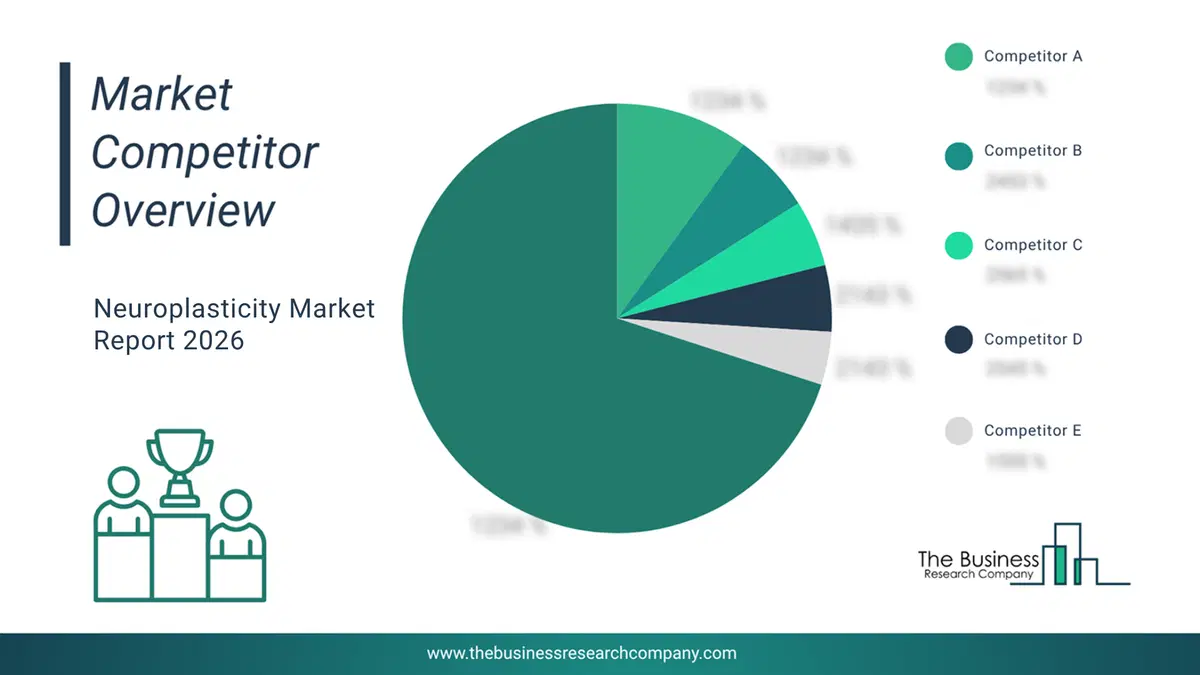
This chart is for illustrative purposes; the full report includes a detailed competitor analysis and comprehensive overview of the top 10 companies in the market.
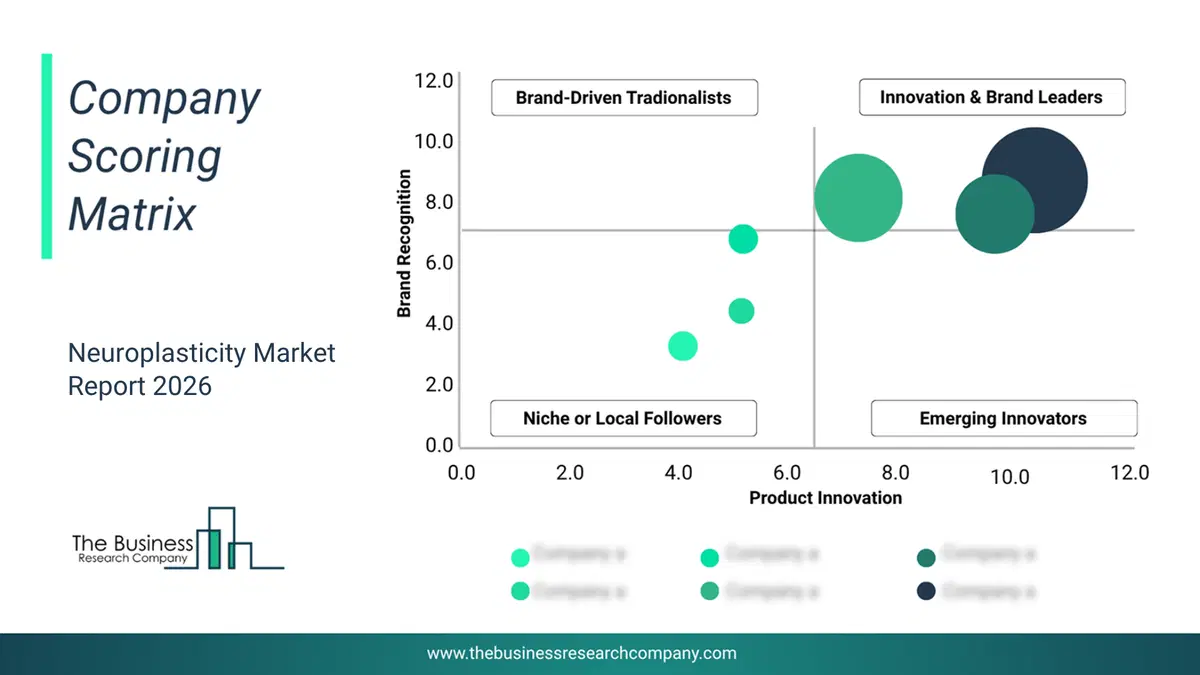
This chart maps companies by product innovation and brand strength, with bubble size indicating relative revenue, helping identify market leaders, challengers, and niche players. This is an illustrative chart; the full report provides a complete and accurate competitive analysis.
Global Neuroplasticity Market Trends and Insights
Major companies operating in the neuroplasticity market are focused on developing advanced technologies, such as brain-computer interfaces and neural implants, to sustain their position in the market. Brain-computer interfaces (BCIs) and neural implants are advanced neurotechnologies that establish direct communication pathways between the brain and external devices, with BCIs typically enabling control of computers or prosthetics through brain signals, while neural implants are devices placed in the brain or nervous system to monitor, stimulate, or modulate neural activity for therapeutic or functional enhancement. For instance, in June 2024, Paradromics, a US-based neurotechnology company, announced its acceptance into the FDA Regulatory Accelerator Program and launched a new patient registry. This regulatory milestone advances the company's development of high-performance brain-computer interfaces, marking significant progress in neurotechnology innovation with the potential to transform treatment for patients with severe neurological conditions through cutting-edge neural data solutions.What Are Latest Mergers And Acquisitions In The Neuroplasticity Market?
In February 2025, Gate Neurosciences, a US-based provider of synapse-targeted central nervous system therapeutics and precision neuroscience research, acquired Boost Neuroscience for an undisclosed amount. With this acquisition, Gate Neurosciences aims to strengthen its technological capabilities in synaptic biology by integrating Boost’s proprietary human synapse network platform to accelerate the development of next-generation neuroplasticity-enhancing therapies. Boost Neuroscience is a US-based developer of synaptogenic drug discovery technologies leveraging human induced pluripotent stem cell platforms to advance treatments for neuropsychiatric and neurodegenerative disorders.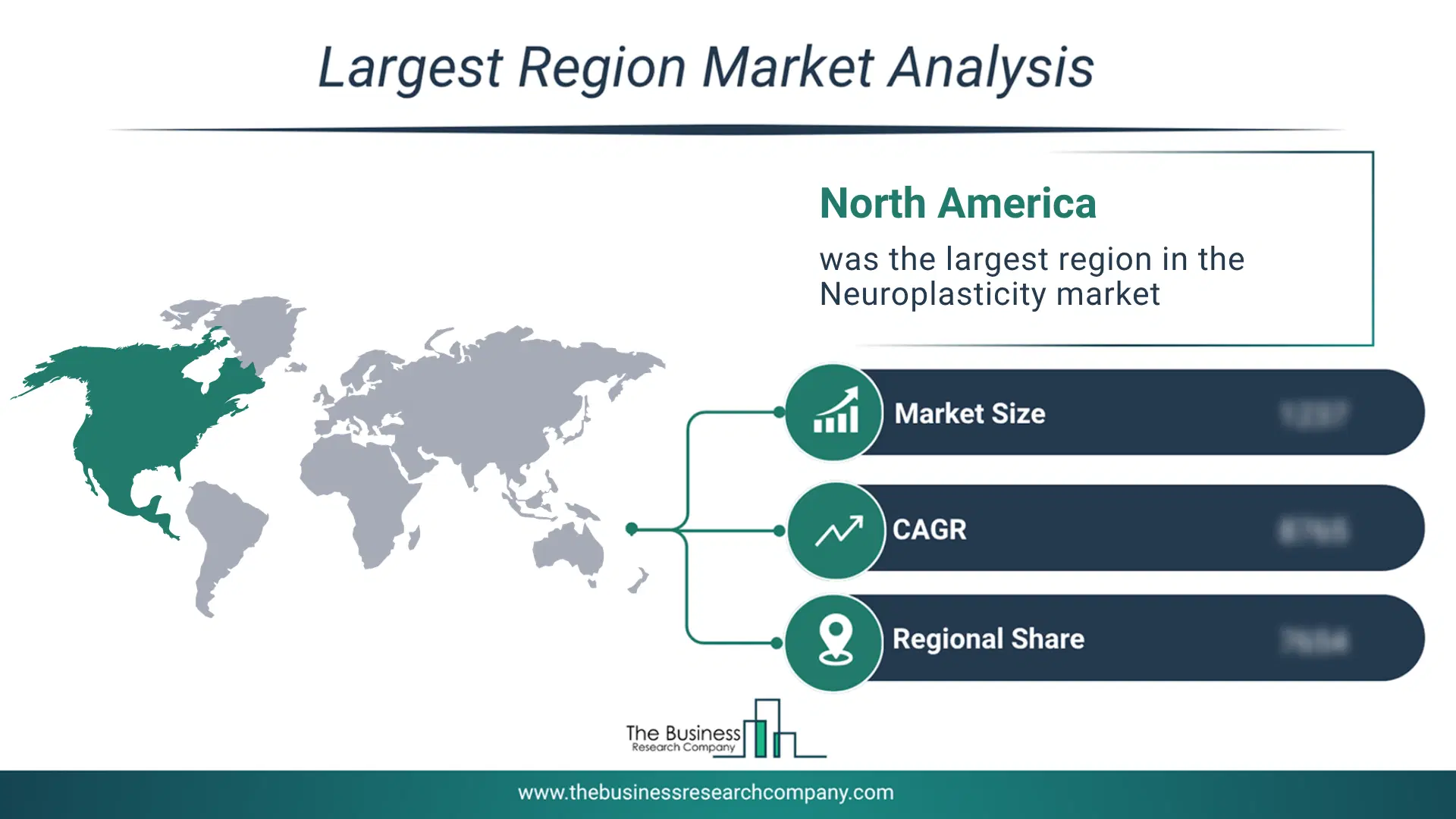
Regional Outlook
North America was the largest region in the Neuroplasticity market in 2025. Asia-Pacific is expected to be the fastest-growing region in the forecast period. The regions covered in this market report are Asia-Pacific, South East Asia, Western Europe, Eastern Europe, North America, South America, Middle East, Africa. The countries covered in this market report are Australia, Brazil, China, France, Germany, India, Indonesia, Japan, Taiwan, Russia, South Korea, UK, USA, Canada, Italy, Spain.What Defines the Neuroplasticity Market?
The neuroplasticity market consists of revenues earned by entities by providing services such as cognitive rehabilitation, brain training solutions, neurostimulation therapies, and neurological recovery programs that enhance or restore the brain’s adaptive capacity across various neurological and psychiatric conditions. The market value includes the value of related goods sold by the service provider or included within the service offering. The neuroplasticity market also includes sales of electroencephalogram (EEG), transcranial direct current stimulation (tDCS) devices, and meditation biofeedback sensors. Values in this market are ‘factory gate’ values, that is, the value of goods sold by the manufacturers or creators of the goods, whether to other entities (including downstream manufacturers, wholesalers, distributors, and retailers) or directly to end customers. The value of goods in this market includes related services sold by the creators of the goods.How is Market Value Defined and Measured?
The market value is defined as the revenues that enterprises gain from the sale of goods and/or services within the specified market and geography through sales, grants, or donations in terms of the currency (in USD unless otherwise specified). The revenues for a specified geography are consumption values that are revenues generated by organizations in the specified geography within the market, irrespective of where they are produced. It does not include revenues from resales along the supply chain, either further along the supply chain or as part of other products.
This chart presents market attractiveness based on a quantitative evaluation of growth, competition, strategic alignment, and risk, offering a clear view of opportunity areas for decision-making. This chart is for illustrative purposes; the full report contains the complete analysis.

This chart highlights the Total Addressable Market (TAM) by estimating the maximum revenue opportunity using an assumption-driven approach, supporting strategic planning and opportunity sizing across markets. The chart is illustrative; the full report provides a more comprehensive analysis.
What Key Data and Analysis Are Included in the Neuroplasticity Market Report 2026?
The neuroplasticity market research report is one of a series of new reports from The Business Research Company that provides market statistics, including industry global market size, regional shares, competitors with the market share, detailed market segments, market trends and opportunities, and any further data you may need to thrive in the neuroplasticity industry. The market research report delivers a complete perspective of everything you need, with an in-depth analysis of the current and future state of the industry.Neuroplasticity Market Report Forecast Analysis
| Report Attribute | Details |
|---|---|
| Market Size Value In 2026 | $8.1 billion |
| Revenue Forecast In 2030 | $18.48 billion |
| Growth Rate | CAGR of 22.9% from 2026 to 2030 |
| Base Year For Estimation | 2025 |
| Actual Estimates/Historical Data | 2020-2025 |
| Forecast Period | 2026 - 2030 |
| Market Representation | Revenue in USD Billion and CAGR from 2026 to 2030 |
| Segments Covered | Product Type, Technology Type, Application, End User |
| Regional Scope | Asia-Pacific, Western Europe, Eastern Europe, North America, South America, Middle East, Africa |
| Country Scope | The countries covered in the report are Australia, Brazil, China, France, Germany, India, Indonesia, Japan, Taiwan, Russia, South Korea, UK, USA, Canada, Italy, Spain |
| Key Companies Profiled | Medtronic PLC, Boston Scientific Corporation, NeuroPace Inc, BrainsWay Ltd, Magstim, MindMaze, Emotiv Inc, BrainCo, ElectroCore, NeuroMetrix, Soterix Medical, Neurable, NeuroSigma Inc, Cognixion, NeuroTracker, Neuralink, Synchron Inc, Paradromics Inc, Precision Neuroscience, g.tec medical engineering GmbH, Neuroelectrics, OpenBCI, Kernel, Blackrock Neurotech, NeuroSky Inc, BrainScope Company Inc, i‑BrainTech LTD |
| Customization Scope | Request for Customization |
| Pricing And Purchase Options | Explore Purchase Options |