
Nucleic Acid Therapeutics Market Report 2026
Global Outlook – By Therapy Type (Antisense Oligonucleotides (ASOs), Small Interfering RNA (siRNA), Gene Therapies, Aptamers, Other Therapy Types), By Therapeutic Area (Neuromuscular Disorder, Metabolic Disorders, Cardiovascular Disorders, Ophthalmological Disorders, Oncological Disorders, Other Therapeutic Areas), By Route Of Administration (Intravenous, Subcutaneous, Other Route Of Administrations), By Delivery Method (Viral Vector-Based Delivery Systems, Non-Viral Delivery Systems), By End-Use (Pharmaceutical Companies, Government And Academic Research Institutes, Biotech Companies) – Market Size, Trends, Strategies, and Forecast to 2030
Nucleic Acid Therapeutics Market Overview
• Nucleic Acid Therapeutics market size has reached to $6.94 billion in 2025 • Expected to grow to $14.07 billion in 2030 at a compound annual growth rate (CAGR) of 15.1% • Growth Driver: Rise In Genetic And Chronic Diseases Fueling The Growth Of The Market Due To Advancements In Genetic Testing And Personalized Treatment Needs • Market Trend: Transforming Rare Disease Treatment Through Gene Expression Modulation • North America was the largest region in 2025 and Asia-Pacific is the fastest growing region.What Is Covered Under Nucleic Acid Therapeutics Market?
Nucleic acid therapeutics refers to a class of treatments that use nucleic acids such as deoxyribonucleic acid (DNA), ribonucleic acid (RNA), or their synthetic analogues to modulate gene expression or correct genetic mutations in order to treat diseases at the molecular level. Nucleic acid therapeutics utilize synthetic strands of deoxyribonucleic acid (DNA) or ribonucleic acid (RNA) to target and regulate specific genetic sequences within the body, enabling the treatment of diseases at the molecular and genetic level. The main therapy types of nucleic acid therapeutics are antisense oligonucleotides (ASOs), small interfering RNA (siRNA), gene therapies, aptamers, and others. Antisense oligonucleotides (ASOs) are short, synthetic strands of nucleic acids designed to bind to specific messenger RNA (mRNA) molecules to block or modify the expression of target genes. These therapies are used across various therapeutic areas such as neuromuscular disorders, metabolic disorders, cardiovascular disorders, ophthalmological disorders, and oncological disorders, and others are administered through different routes including intravenous, subcutaneous, and others, using various delivery methods such as viral vector-based and non-viral delivery systems, with key end use in pharmaceutical companies, government and academic research institutes, and biotech companies.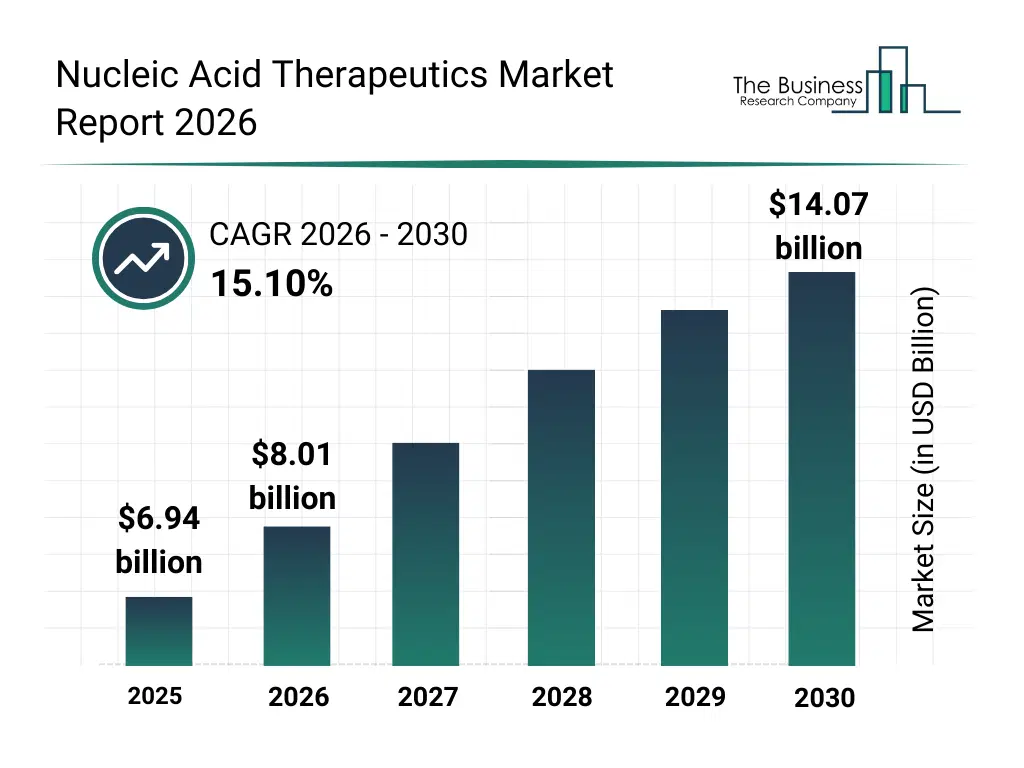
What Is The Nucleic Acid Therapeutics Market Size and Share 2026?
The nucleic acid therapeutics market size has grown rapidly in recent years. It will grow from $6.94 billion in 2025 to $8.01 billion in 2026 at a compound annual growth rate (CAGR) of 15.4%. The growth in the historic period can be attributed to limited availability of nucleic acid therapeutics, reliance on traditional small molecule therapies, growing demand for precision medicine, regulatory approvals for early gene therapies, increasing academic research on gene modulation.What Is The Nucleic Acid Therapeutics Market Growth Forecast?
The nucleic acid therapeutics market size is expected to see rapid growth in the next few years. It will grow to $14.07 billion in 2030 at a compound annual growth rate (CAGR) of 15.1%. The growth in the forecast period can be attributed to development of crispr and other gene editing technologies, expansion of lipid nanoparticle (lnp) delivery systems, rising adoption of personalized nucleic acid therapies, increasing collaborations between pharma and biotech, growing investment in rna-based therapeutics. Major trends in the forecast period include rising adoption of antisense oligonucleotides (asos) and sirna therapies, expansion of crispr-based and gene editing therapeutics, growth in targeted therapies for neuromuscular, metabolic, and oncological disorders, increasing investment in non-viral and viral delivery systems, emergence of long non-coding rna (lncrna) and microrna (mirna) therapeutics.
Global Nucleic Acid Therapeutics Market Segmentation
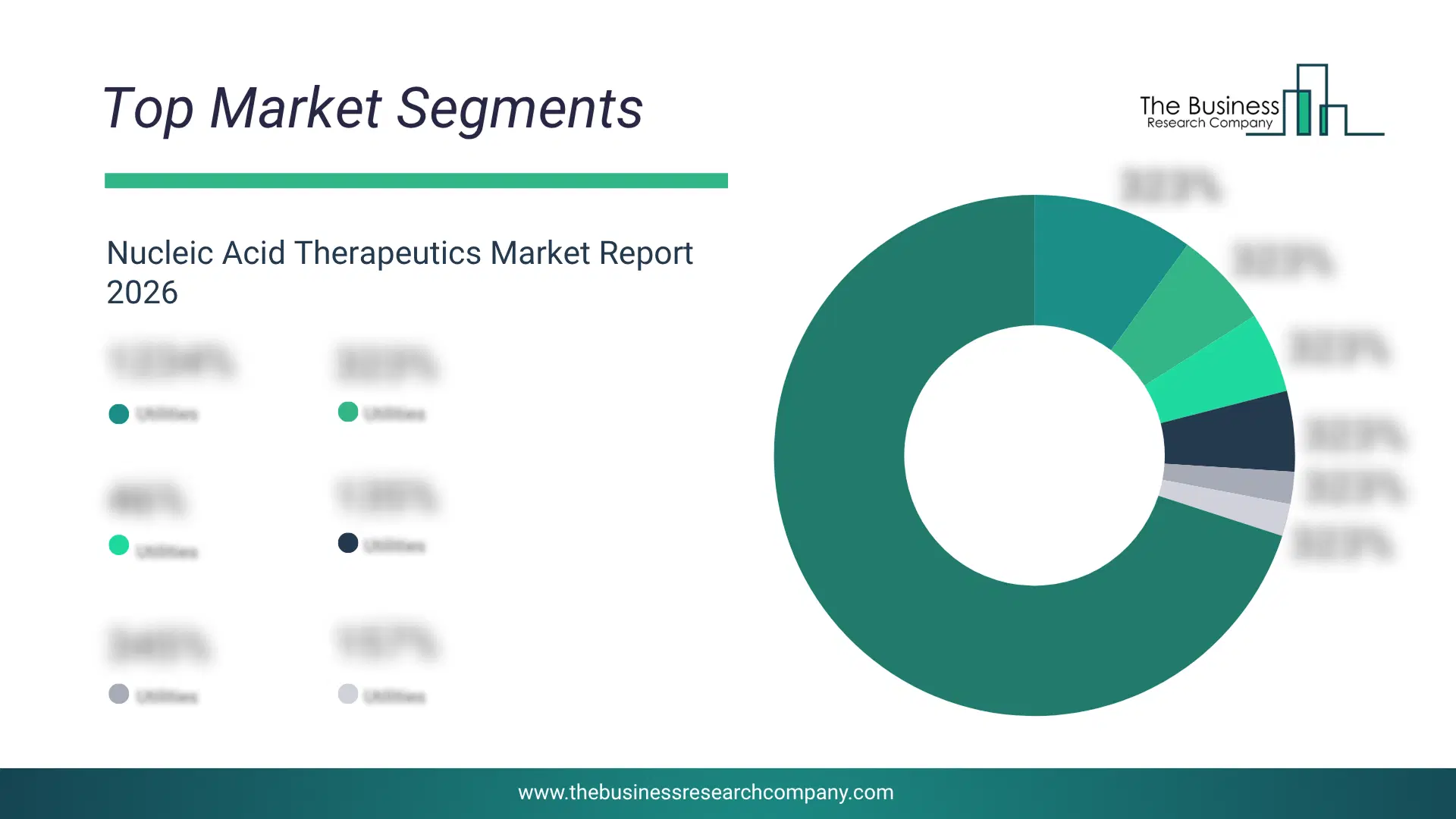
1) By Therapy Type: Antisense Oligonucleotides (ASOs), Small Interfering RNA (siRNA), Gene Therapies, Aptamers, Other Therapy Types 2) By Therapeutic Area: Neuromuscular Disorder, Metabolic Disorders, Cardiovascular Disorders, Ophthalmological Disorders, Oncological Disorders, Other Therapeutic Areas 3) By Route Of Administration: Intravenous, Subcutaneous, Other Route Of Administrations 4) By Delivery Method: Viral Vector-Based Delivery Systems, Non-Viral Delivery Systems 5) By End-Use: Pharmaceutical Companies, Government And Academic Research Institutes, Biotech Companies Subsegments: 1) By Antisense Oligonucleotides (ASOs): Phosphorothioate ASOs, 2’-O-Methyl ASOs, Locked Nucleic Acid (LNA) ASOs, Gapmer ASOs, Morpholino ASOs 2) By Small Interfering RNA (siRNA): Lipid Nanoparticle (LNP) Formulated siRNA, GalNAc-Conjugated siRNA, Chemically Modified siRNA, Naked siRNA 3) By Gene Therapies: Viral Vector-Based Gene Therapy, Non-Viral Vector-Based Gene Therapy, CRISPR-Based Gene Therapy, Zinc Finger Nucleases (ZFNs), TALENs 4) By Aptamers: Ribonucleic Acid (RNA) Aptamers, Deoxyribonucleic Acid (DNA) Aptamers, Spiegelmers, Pegylated Aptamers 5) By Others Therapy Types: MicroRNA (miRNA) Therapeutics, Long Non-Coding RNA (lncRNA) Therapeutics, Ribonucleic Acid (RNA) Editing Therapies, RibozymesWhat Is The Driver Of The Nucleic Acid Therapeutics Market?
The increasing number of genetic and chronic diseases is expected to propel the growth of the nucleic acid therapeutics market going forward. Genetics and chronic diseases refer to the relationship between inherited genetic factors and the development, progression, or risk of long-term health conditions such as diabetes, cardiovascular diseases, cancer, and autoimmune disorders. The rise in genetics-related and chronic diseases is largely due to improved diagnostic technologies that identify these conditions more accurately and earlier. Nucleic acid therapeutics are useful for genetics and chronic diseases because they can target and modify the underlying genetic causes of these conditions by regulating, repairing, or silencing specific genes, offering precise and personalized treatment options. For instance, October 2024, according to the Cystic Fibrosis Trust is a UK-based charity dedicated to supporting people with cystic fibrosis, in 2022, 11,148 cystic fibrosis patients were registered, and this number grew to 11,318 in 2023, reflecting a 1.5% increase in patient registrations year-over-year. Therefore, the increasing number of genetic and chronic diseases is driving the growth of the nucleic acid therapeutics industry.Key Players In The Global Nucleic Acid Therapeutics Market
Major companies operating in the nucleic acid therapeutics market are Pfizer Inc., Novartis AG, Moderna Inc., BioNTech SE, Alnylam Pharmaceuticals Inc., Sarepta Therapeutics Inc., Arrowhead Pharmaceuticals Inc., Arcturus Therapeutics Holdings Inc., CureVac SE, Sangamo Therapeutics Inc., Beam Therapeutics Inc., Arbutus Biopharma Corporation, Silence Therapeutics plc, Copernicus Therapeutics Inc.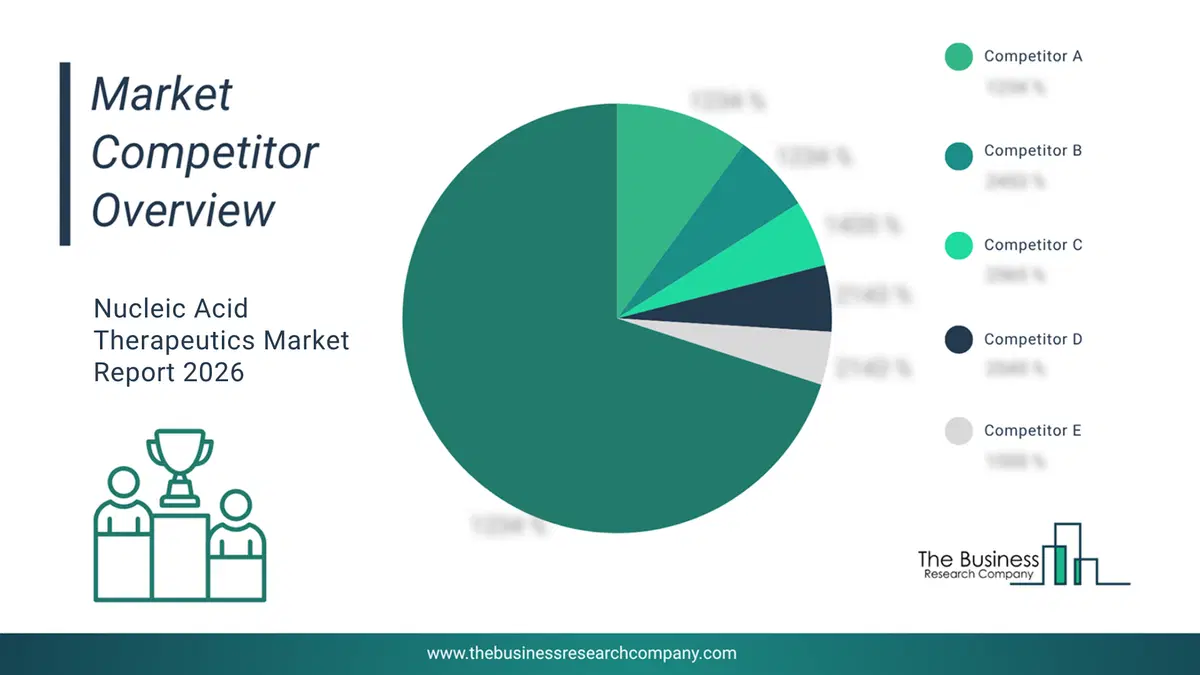
This chart is for illustrative purposes; the full report includes a detailed competitor analysis and comprehensive overview of the top 10 companies in the market.
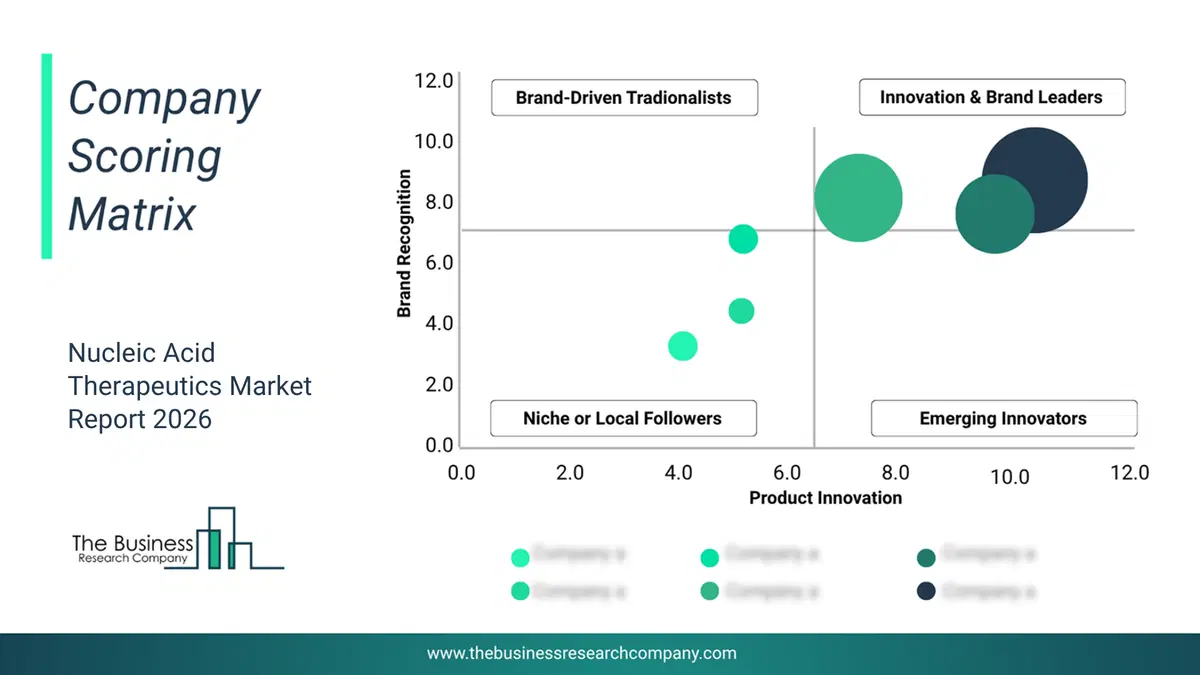
This chart maps companies by product innovation and brand strength, with bubble size indicating relative revenue, helping identify market leaders, challengers, and niche players. This is an illustrative chart; the full report provides a complete and accurate competitive analysis.
Global Nucleic Acid Therapeutics Market Trends and Insights
Major companies operating in the nucleic acid therapeutics market are focusing on developing innovative products such as antisense oligonucleotide therapy to target and silence specific disease-causing genes, offering precision treatment options for genetic disorders and rare diseases. Antisense oligonucleotide therapy is a precision treatment that uses short, synthetic strands of deoxyribonucleic acid (DNA) or ribonucleic acid (RNA) to block or modify the expression of specific genes involved in disease. For instance, in December 2024, Ionis Pharmaceuticals Inc., a US-based biotechnology company, received U.S. Food and Drug Administration (FDA) approval for TRYNGOLZ (olezarsen) as an adjunct therapy to diet for lowering triglyceride levels in adults diagnosed with familial chylomicronemia syndrome (FCS), a rare genetic disorder characterized by severe hypertriglyceridemia (sHTG) and a high risk of acute pancreatitis (AP). It represents the first FDA-approved treatment to deliver significant and sustained triglyceride reduction in this patient population, alongside a clinically meaningful decrease in AP incidence when combined with a low-fat diet. The therapy is designed for convenient self-administration via a once-monthly auto-injector.What Are Latest Mergers And Acquisitions In The Nucleic Acid Therapeutics Market?
In June 2025, Novartis AG, a Switzerland-based company that develops and manufactures innovative drugs, acquired Regulus Therapeutics Inc. for an undisclosed amount. Through this acquisition, it aims to enhance its capabilities in RNA-targeted drug development, strengthen its pipeline in rare and chronic diseases, and accelerate the advancement of next-generation therapies using Regulus's expertise in microRNA-based therapeutics. Regulus Therapeutics Inc. is a US-based biotechnology company focused on the development of microRNA therapies.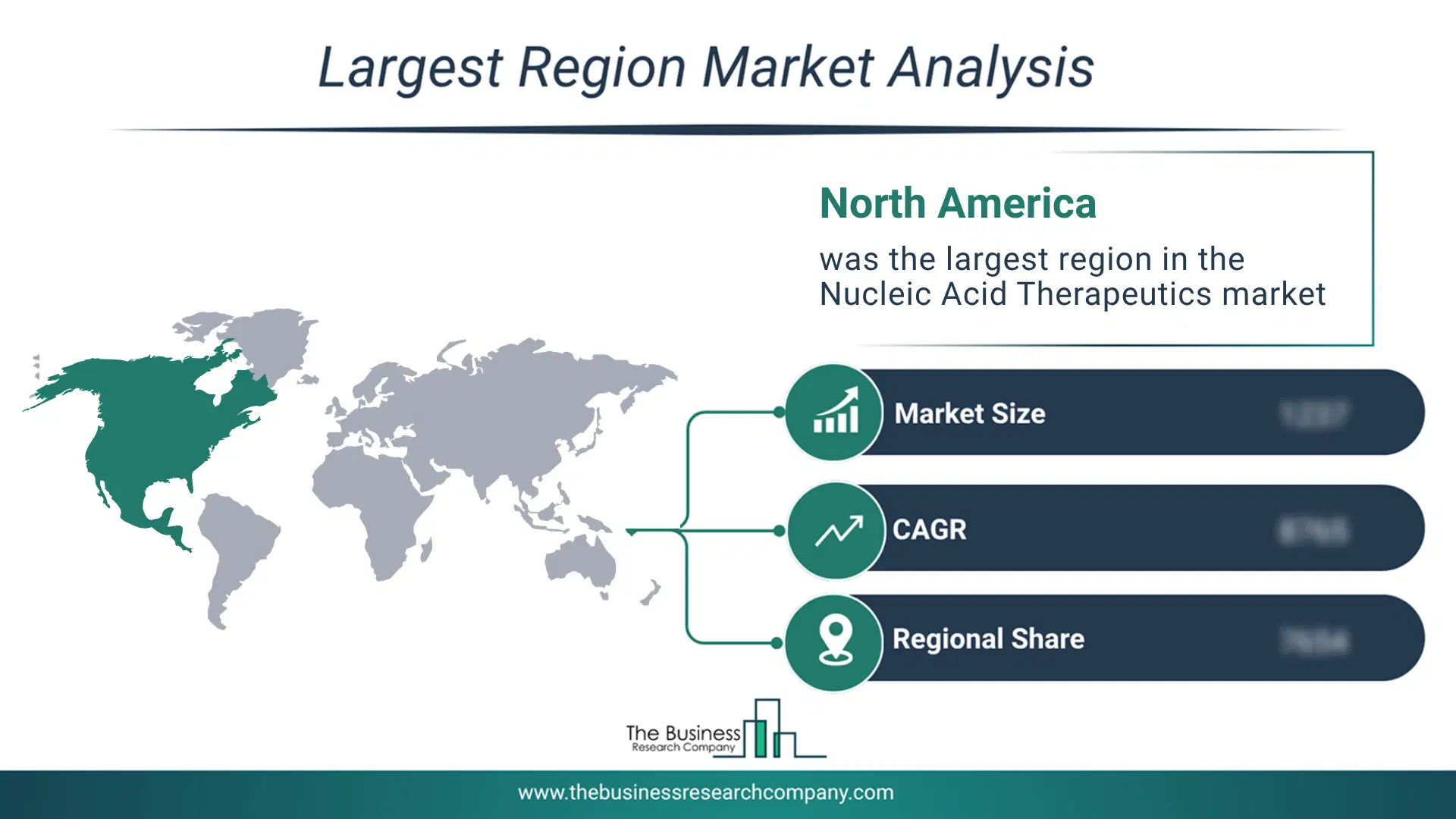
Regional Insights
North America was the largest region in the nucleic acid therapeutics market in 2025. Asia-Pacific is expected to be the fastest-growing region in the forecast period. The regions covered in this market report are Asia-Pacific, South East Asia, Western Europe, Eastern Europe, North America, South America, Middle East, Africa. The countries covered in this market report are Australia, Brazil, China, France, Germany, India, Indonesia, Japan, Taiwan, Russia, South Korea, UK, USA, Canada, Italy, Spain.What Defines the Nucleic Acid Therapeutics Market?
The nucleic acid therapeutics market consists of revenues earned by entities by providing services such as custom oligonucleotide synthesis, gene silencing and editing services, drug discovery and development support, messenger RNA (mRNA) and small interfering RNA (siRNA) design and optimization, and delivery system development. The market value includes the value of related goods sold by the service provider or included within the service offering. The nucleic acid therapeutics market also includes sales of messenger RNA (mRNA) therapeutics, clustered regularly interspaced short palindromic repeats (CRISPR)-based gene editing tools (therapeutic use), aptamers, and Amondys 45 (casimersen). Values in this market are ‘factory gate’ values, that is, the value of goods sold by the manufacturers or creators of the goods, whether to other entities (including downstream manufacturers, wholesalers, distributors, and retailers) or directly to end customers. The value of goods in this market includes related services sold by the creators of the goods.How is Market Value Defined and Measured?
The market value is defined as the revenues that enterprises gain from the sale of goods and/or services within the specified market and geography through sales, grants, or donations in terms of the currency (in USD unless otherwise specified). The revenues for a specified geography are consumption values that are revenues generated by organizations in the specified geography within the market, irrespective of where they are produced. It does not include revenues from resales along the supply chain, either further along the supply chain or as part of other products.
This chart presents market attractiveness based on a quantitative evaluation of growth, competition, strategic alignment, and risk, offering a clear view of opportunity areas for decision-making. This chart is for illustrative purposes; the full report contains the complete analysis.

This chart highlights the Total Addressable Market (TAM) by estimating the maximum revenue opportunity using an assumption-driven approach, supporting strategic planning and opportunity sizing across markets. The chart is illustrative; the full report provides a more comprehensive analysis.
What Key Data and Analysis Are Included in the Nucleic Acid Therapeutics Market Report 2026?
The nucleic acid therapeutics market research report is one of a series of new reports from The Business Research Company that provides market statistics, including industry global market size, regional shares, competitors with the market share, detailed market segments, market trends and opportunities, and any further data you may need to thrive in the nucleic acid therapeutics industry. The market research report delivers a complete perspective of everything you need, with an in-depth analysis of the current and future state of the industry.Nucleic Acid Therapeutics Market Report Forecast Analysis
| Report Attribute | Details |
|---|---|
| Market Size Value In 2026 | $8.01 billion |
| Revenue Forecast In 2030 | $14.07 billion |
| Growth Rate | CAGR of 15.4% from 2026 to 2030 |
| Base Year For Estimation | 2025 |
| Actual Estimates/Historical Data | 2020-2025 |
| Forecast Period | 2026 - 2030 |
| Market Representation | Revenue in USD Billion and CAGR from 2026 to 2030 |
| Segments Covered | Therapy Type, Therapeutic Area, Route Of Administration, Delivery Method, End-Use |
| Regional Scope | Asia-Pacific, Western Europe, Eastern Europe, North America, South America, Middle East, Africa |
| Country Scope | The countries covered in the report are Australia, Brazil, China, France, Germany, India, Indonesia, Japan, Taiwan, Russia, South Korea, UK, USA, Canada, Italy, Spain. |
| Key Companies Profiled | Pfizer Inc., Novartis AG, Moderna Inc., BioNTech SE, Alnylam Pharmaceuticals Inc., Sarepta Therapeutics Inc., Arrowhead Pharmaceuticals Inc., Arcturus Therapeutics Holdings Inc., CureVac SE, Sangamo Therapeutics Inc., Beam Therapeutics Inc., Arbutus Biopharma Corporation, Silence Therapeutics plc, Copernicus Therapeutics Inc. |
| Customization Scope | Request for Customization |
| Pricing And Purchase Options | Explore Purchase Options |