
Orthopedic Prosthetics Market Report 2026
Global Outlook – By Product Type (Upper Extremity Prosthetics, Lower Extremity Prosthetics, Sockets, Other Products), By Technology (Conventional orthopedic prosthetics, Electric-powered orthopedic prosthetics, Hybrid orthopedic prosthetics), By End Users (Hospitals, Prosthetic Clinics, Rehabilitation Center, Other End Users) – Market Size, Trends, Strategies, and Forecast to 2030
Orthopedic Prosthetics Market Overview
• Orthopedic Prosthetics market size has reached to $2.06 billion in 2025 • Expected to grow to $2.72 billion in 2030 at a compound annual growth rate (CAGR) of 5.8% • Growth Driver: Growing Prevalence Of Orthopedic Diseases • Market Trend: Össur Launches Pro Flex?Terra To Advance Sports Prosthetic Technology • North America was the largest region in 2025 and Western Europe is the fastest growing region.Market Gains By 2030 – Top Opportunities By Segment
Market Gain identifies the most promising market opportunities by highlighting the segments or products expected to generate the highest incremental revenue growth over the next five years.
What Is Covered Under Orthopedic Prosthetics Market?
Orthopedic prosthetics are artificial devices that replace a missing body part that may be lost through trauma, disease, surgical removal of body appendage, disabling illness, or congenital conditions. The purpose of orthopedic prosthetics is to regain function, boost mobility, and improve the overall quality of life for people with limb loss or disabilities. The main product types of orthopedic prosthetics are upper extremity prosthetics, lower extremity prosthetics, sockets, and other products. Orthopedic prosthetics are artificial devices used to replace a missing body part lost due to disease, trauma, and surgical removal of body appendage, disabling illness, or congenital conditions. The technologies involved are conventional orthopedic prosthetics, electric-powered orthopedic prosthetics, and hybrid orthopedic prosthetics. The end-users are hospitals, prosthetic clinics, rehabilitation centres, and others.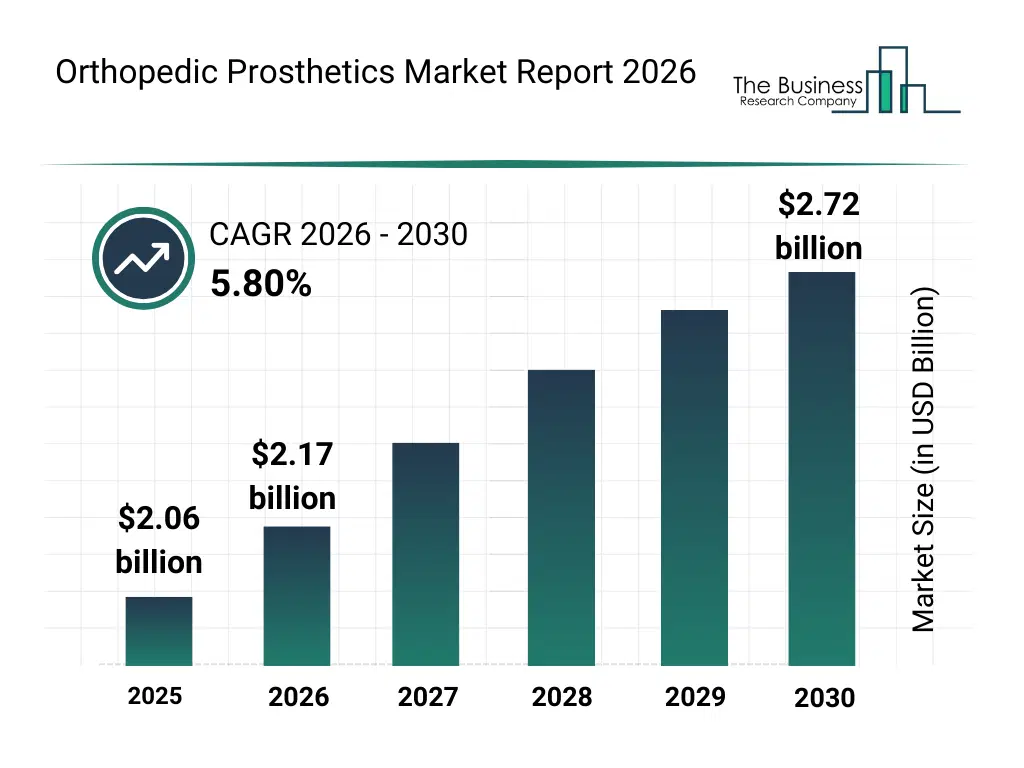
What Is The Orthopedic Prosthetics Market Size and Share 2026?
The orthopedic prosthetics market size has grown strongly in recent years. It will grow from $2.06 billion in 2025 to $2.17 billion in 2026 at a compound annual growth rate (CAGR) of 5.6%. The growth in the historic period can be attributed to increasing incidence of limb loss due to trauma and disease, expansion of rehabilitation services, improvements in prosthetic manufacturing techniques, growing availability of prosthetic clinics, rising awareness of mobility solutions.What Is The Orthopedic Prosthetics Market Growth Forecast?
The orthopedic prosthetics market size is expected to see strong growth in the next few years. It will grow to $2.72 billion in 2030 at a compound annual growth rate (CAGR) of 5.8%. The growth in the forecast period can be attributed to increasing demand for smart and connected prosthetics, rising investments in bionic limb technologies, expansion of personalized prosthetic fitting, growing focus on quality of life improvement, increasing adoption of AI-enabled prosthetic control systems. Major trends in the forecast period include increasing adoption of advanced prosthetic materials, growing use of electric-powered prosthetics, expansion of customized prosthetic solutions, rising integration of sensor-based prosthetic systems, enhanced focus on functional mobility.
Global Orthopedic Prosthetics Market Segmentation
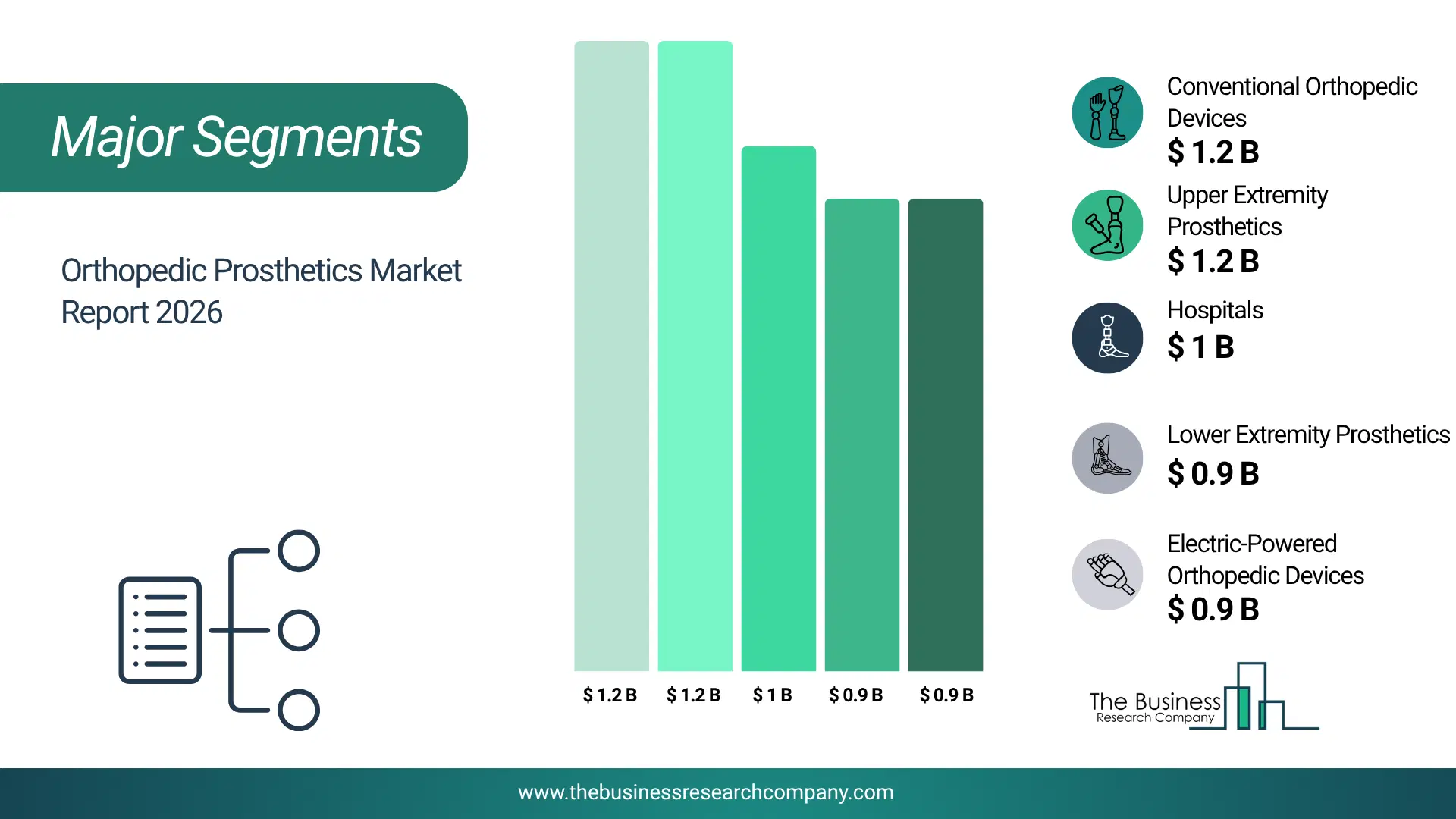
1) By Product Type: Upper Extremity Prosthetics, Lower Extremity Prosthetics, Sockets, Other Products 2) By Technology: Conventional orthopedic prosthetics, Electric-powered orthopedic prosthetics, Hybrid orthopedic prosthetics 3) By End Users: Hospitals, Prosthetic Clinics, Rehabilitation Center, Other End Users Subsegments: 1) By Upper Extremity Prosthetics: Prosthetic Arms, Prosthetic Hands, Prosthetic Shoulders 2) By Lower Extremity Prosthetics: Prosthetic Legs, Prosthetic Knees, Prosthetic Feet 3) By Sockets: Transfemoral Sockets, Transtibial Sockets, Below Knee Sockets, Above Knee Sockets 4) By Other Products: Prosthetic Accessories, Prosthetic Linings The top segments in the orthopedic prosthetics market will be: • Conventional Orthopedic Devices will reach $1228.51 Million by 2030. • Hospitals will reach $1072.4 Million by 2030. • Upper Extremity Prosthetics will reach $1283.7 Million by 2030. • Lower Extremity Prosthetics will reach $956.21 Million by 2030. • Electric-Powered Orthopedic Devices will reach $931.81 Million by 2030.What Is The Driver Of The Orthopedic Prosthetics Market?
The growing prevalence of orthopedic diseases is expected to propel the growth of the robotic prosthetics market going forward. Orthopedic diseases refer to conditions and disorders that affect the musculoskeletal system, which includes the muscles, bones, nerves, and joints. Prosthetics have a range of essential applications in orthopedics, focusing on treating and correcting musculoskeletal disorders and injuries by limb replacement, gait rehabilitation, and enhanced precision in orthopedic surgical processes. For instance, in May 2023, according to an article published by the National Center For Biotechnology Information, a US-based government agency, low back pain (LBP) is projected to rise to 843 million by 2050. Therefore, the growing prevalence of orthopedic diseases is driving the growth of the robotic prosthetics market.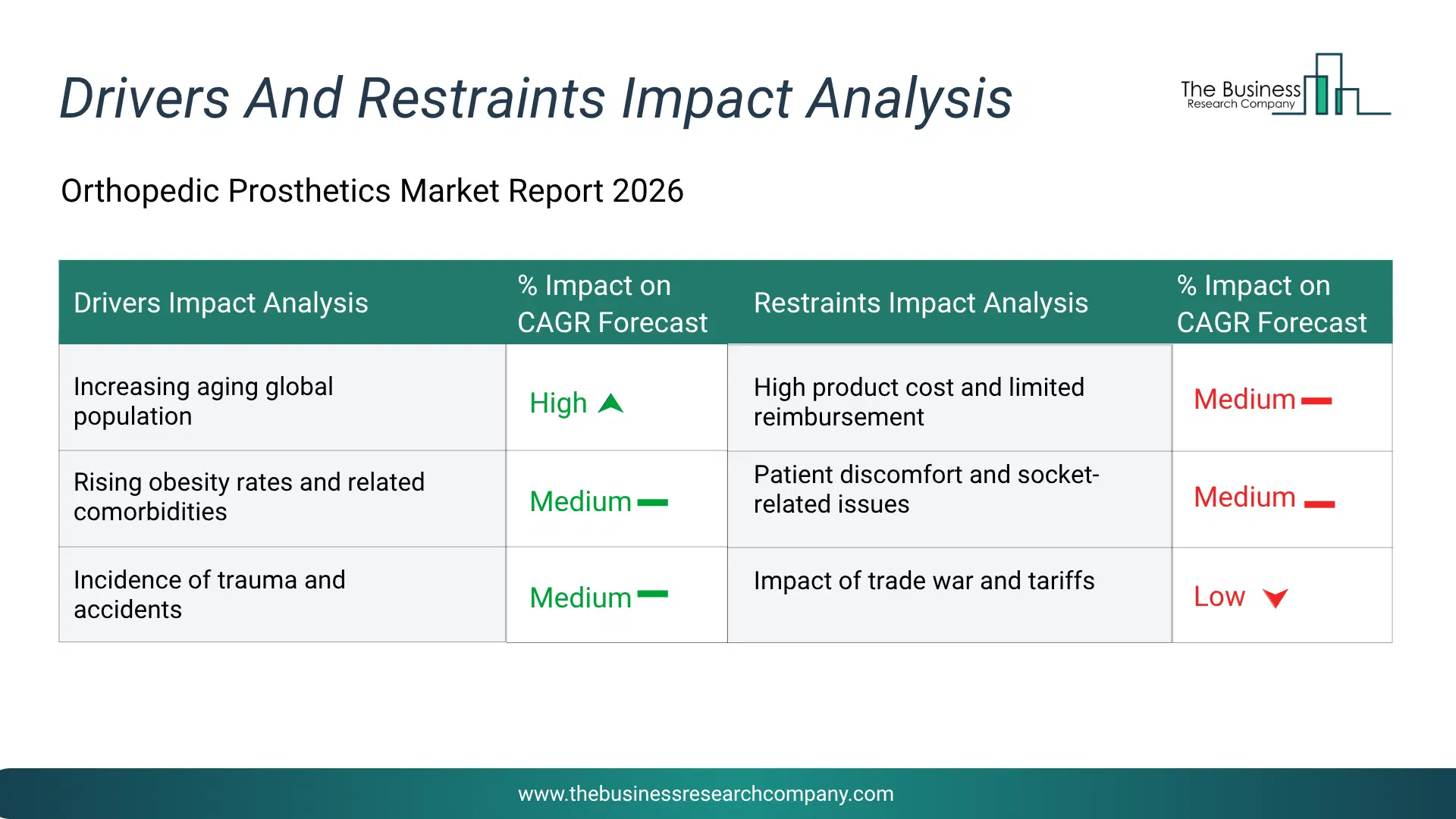
Infographic Chart Showing Key Market Drivers Analysis And Restraints For Orthopedic Prosthetics Market
The chart presents an impact analysis of key drivers and restraints, quantifying their relative influence on the market's growth rate and helping assess the balance between growth enablers and limiting factors. This chart offers a high-level perspective; the full report contains more detailed insights.
How Will The Drivers Impact Growth In The Global Orthopedic Prosthetics Market?
• Increasing aging global population (High) – During the forecast period, the increasing aging global population will become a key driver of growth in the orthopedic prosthetics market by 2030. as life expectancy rises and demographic shifts lead to a larger proportion of older adults worldwide, there is a growing need for mobility solutions that address age-related musculoskeletal degeneration, joint dysfunction and limb loss due to chronic diseases or falls. as the aging population expands, demand for orthopedic interventions, including advanced prosthetic devices that restore mobility, improve quality of life and support independent living, is expected to increase significantly. this demographic trend drives sustained investment in research, development and clinical deployment of prosthetic technologies tailored to the specific needs of older adults, thereby significantly driving demand for orthopedic prosthetics solutions across healthcare systems during the forecast period. as a result, the increasing aging global population is anticipated to contributing to a 2.0%.annual growth in the market. • Rising obesity rates and related comorbidities (Medium) – During the forecast period, the rising obesity rates and related comorbidities will emerge as a major factor driving the expansion of the orthopedic prosthetics market by 2030. as the prevalence of overweight and obesity increases globally, individuals are at greater risk of developing musculoskeletal disorders, joint degeneration and weight-related limb injuries that necessitate orthopedic interventions and prosthetic solutions to restore mobility and function. as obesity and associated conditions, such as osteoarthritis, diabetes-related complications and joint trauma, become more common, demand for advanced orthopedic prosthetic devices that can accommodate higher body weight, enhance mobility and improve quality of life is expected to increase significantly. this rising clinical need drives sustained investment in the development and adoption of prosthetic technologies tailored to patients with complex weight-related orthopedic challenges, thereby significantly driving demand for orthopedic prosthetics solutions during the forecast period consequently, the rising obesity rates and related comorbidities is projected to contributing to a 1.5%.annual growth in the market. • Incidence of trauma and accidents (Medium) – During the forecast period, the incidence of trauma and accidents will serve as a key growth catalyst for the orthopedic prosthetics market by 2030. as global populations engage in higher levels of mobility, travel and industrial activity, there has been a sustained rise in traumatic injuries resulting from traffic collisions, falls and workplace accidents, which often lead to fractures, limb loss and permanent musculoskeletal damage requiring prosthetic intervention. as more individuals experience severe traumatic events that compromise limb integrity and functional mobility, demand for advanced orthopedic prosthetic devices designed to restore movement, independence and quality of life is expected to increase significantly. this sustained rise in trauma incidence is likely to drive growing adoption of prosthetic solutions across healthcare systems during the forecast period. therefore, this incidence of trauma and accidents is projected to supporting to a 1.0 % annual growth in the market. • Growth in sports-related injuries (Low) – During the forecast period, the growth in sports-related injuries will propel the growth of the orthopedic prosthetics market. As participation in youth, amateur and professional sports continue to increase, there has been a corresponding rise in musculoskeletal injuries involving bones, joints and limbs, which drives the need for orthopedic interventions and long-term mobility solutions. The growing intensity of sports training, early specialization among young athletes and higher physical demands have contributed to a higher incidence of traumatic and overuse injuries, many of which result in permanent functional impairment requiring prosthetic support. Reports indicate that sports-related injuries among youth and active populations have increased significantly in recent years, with overuse injuries accounting for a substantial share of total cases, reflecting a broader trend toward higher injury exposure in competitive sports environments. As more individuals experience severe sports-related trauma that compromises limb function, the demand for advanced orthopedic prosthetic devices to restore mobility, performance and quality of life is expected to rise, thereby significantly driving demand for orthopedic prosthetics solutions during the forecast period. The growth in sports-related injuries growth contribution during the forecast period in 2025 is 0.8%.How Will The Restraints Impact Growth In The Global Orthopedic Prosthetics Market?
• High product cost and limited reimbursement (High) – During the forecast period, high product cost and limited reimbursement are restricting the growth of the orthopedic prosthetics market during the forecast period. many advanced prosthetic devices, including bionic and microprocessor-controlled limb systems, involve substantial upfront expenses due to the integration of sophisticated sensors, actuators and control algorithms, all of which contribute to elevated manufacturing and retail prices that can exceed the financial reach of many patients and healthcare systems. from a financial standpoint, these high product costs are compounded by limited or inconsistent reimbursement policies from public and private insurers, making it difficult for users to secure adequate coverage for cutting-edge prosthetic solutions. as a result, many potential users may defer prosthetic upgrades, opt for less advanced alternatives, or face significant out-of-pocket expenses, thereby restricting the growth of the orthopedic prosthetics market during the forecast period. growth affected by the high product cost and limited reimbursement during the forecast period in 2025 is -2.0%. • Patient discomfort and socket-related issues (Medium) – During the forecast period, patient discomfort and socket-related issues are restricting the growth of the orthopedic prosthetics market during the forecast period. a significant number of prosthetic users experience pain, irritation, or pressure sores due to poorly fitting sockets and the biomechanical challenges associated with limb-socket interfaces, which can reduce overall patient satisfaction and long-term device usage. from a clinical and usability standpoint, these discomfort issues often necessitate multiple adjustments, custom fitting sessions and ongoing maintenance, all of which increase care complexity and can discourage patients from seeking or continuing advanced prosthetic solutions. as a result, patients may delay or forgo prosthetic fittings, opt for less advanced alternatives, or require additional medical interventions to address discomfort, thereby restricting the growth of the orthopedic prosthetics market during the forecast period. growth affected by the patient discomfort and socket-related issues during the forecast period in 2025 is -1.5%. • Impact of trade war and tariffs (Medium) – During the forecast period, impact of trade war and tariff is restricting the growth of the orthopedic prosthetics market during the forecast period. ongoing trade tensions and the introduction of broad-based tariffs on imported goods have increased the cost of key raw materials, components and subassemblies used in the production of orthopedic prosthetic devices, including metals, advanced polymers and precision-engineered parts. these higher import duties can strain procurement budgets and complicate supply chain planning for manufacturers that depend on globally sourced inputs to maintain product quality and performance standards. from a cost and pricing standpoint, elevated tariff-related expenses can make it difficult for manufacturers, particularly small and mid-sized players, to absorb rising input costs without increasing product prices, especially in price-sensitive healthcare markets. as a result, companies may delay investments in capacity expansion, limit product development efforts, or pass higher costs on to healthcare providers and patients, thereby restricting the growth of the orthopedic prosthetics market during the forecast period. growth affected by trade war and tariffs across regions during the forecast period in 2025 is -0.2%.Key Players In The Global Orthopedic Prosthetics Market
Major companies operating in the orthopedic prosthetics market are Otto Bock HealthCare GmbH, Blatchford Ltd., Zimmer Biomet Inc., DePuy Synthes, Stryker Corporation, WillowWood, Smith and Nephew plc, Biomet Inc., Touch Bionics Inc., Fillauer Companies Inc., Advanced Arm Dynamics, Bock Healthcare Gmbh, Medtronic Spine LLC, DJO Global, Integra Lifesciences, NuVasive Inc., Globus Medical, Wright Medical Group Inc., Arthrex Inc., Johnson & Johnson, OrthoPediatrics Corp., WishBone Medical Inc., Hanger Inc., Howard Orthopaedics Inc., Exactech Inc., Ossur hf., B. Braun Melsungen AG, Mobius Bionics LLC, Esper Bionics, ToughWare Prosthetics, Enovis, Argomedical AG, Astrek Innovations Pvt Ltd., Boston Orthotics & Prosthetics, LeTourneau Lifelike Orthotics and Prosthetics Inc., TASKA Prosthetics, Naked Prosthetics, Steeper Inc., medi GmbH & Co. KG, Orthotic & Prosthetic Lab Inc., Trulife Group Limited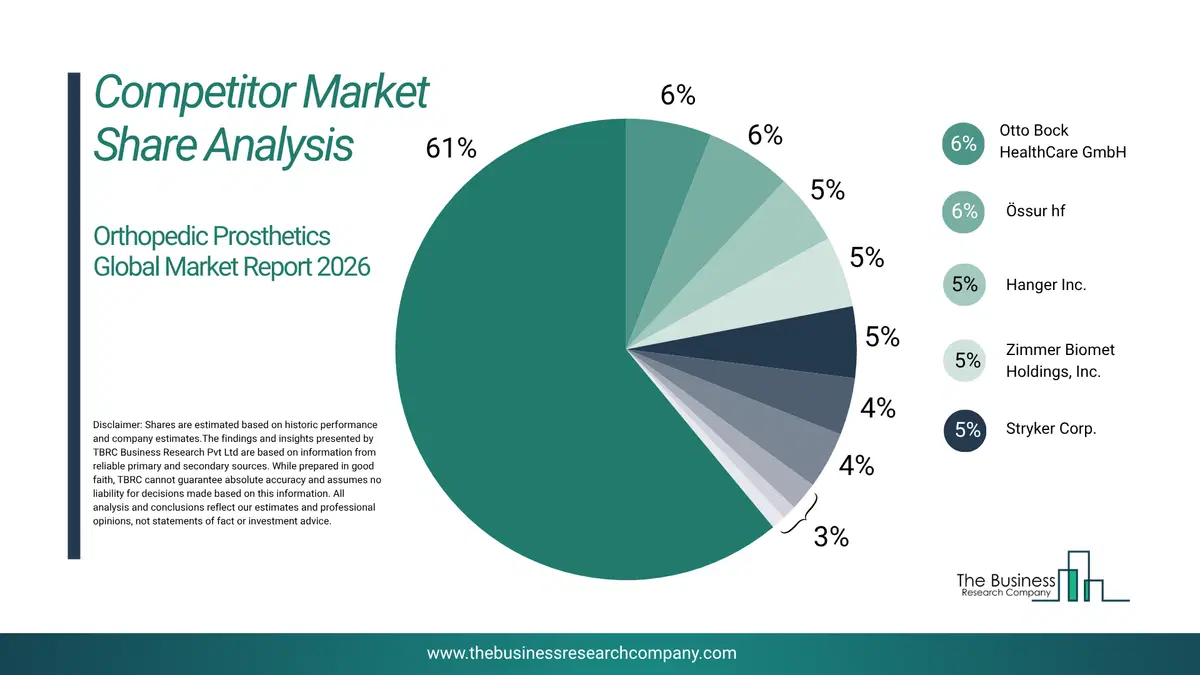
This chart is for illustrative purposes; the full report includes a detailed competitor analysis and comprehensive overview of the top 10 companies in the market.
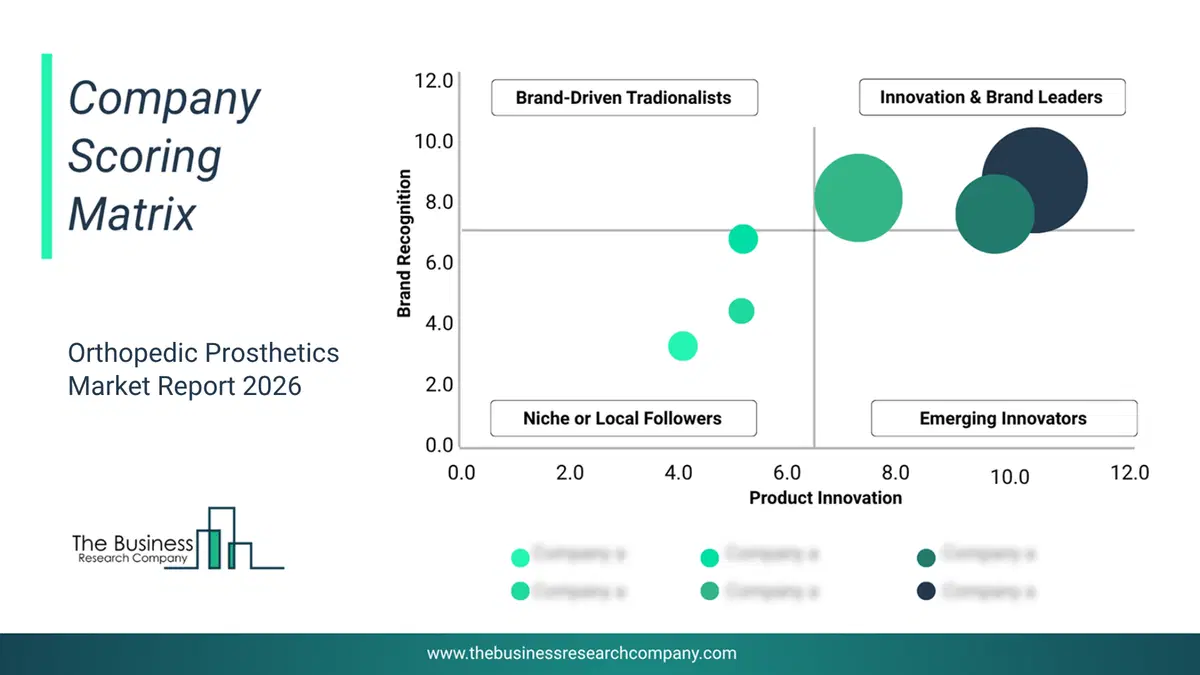
This chart maps companies by product innovation and brand strength, with bubble size indicating relative revenue, helping identify market leaders, challengers, and niche players. This is an illustrative chart; the full report provides a complete and accurate competitive analysis.
Global Orthopedic Prosthetics Market Trends and Insights
Major companies operating in the orthopedic prosthetics market are focusing on advanced product launches, such as sports prosthetics, to provide athletes with prosthetic feet specifically designed for their athletic applications. A sports prosthetic is a specialized prosthetic foot engineered to meet the unique performance demands of sports and high-impact activities, offering enhanced energy return, durability, and stability. For instance, in February 2025, Össur, an Iceland based orthopedic technology company, introduced the Pro Flex Terra, a next-generation, multi-blade carbon-fiber foot that combines the softness and flexibility of low active prosthetics with the powerful energy return of high active feet. It features a patented pre-compressed top blade and a three step foam design using BASF’s Cellasto to adapt to various walking and running conditions.What Are Latest Mergers And Acquisitions In The Orthopedic Prosthetics Market?
In February 2024, Hanger, Inc., a US-based provider of orthotic and prosthetic (O&P) patient care services and products, acquired Fillauer for an undisclosed amount,. With this acquisition, Hanger strengthens its manufacturing and R&D capability in prosthetic and orthotic devices by integrating Fillauer’s U.S. and European operations. Fillauer is a US-based company that offers orthopedic prosthetics -.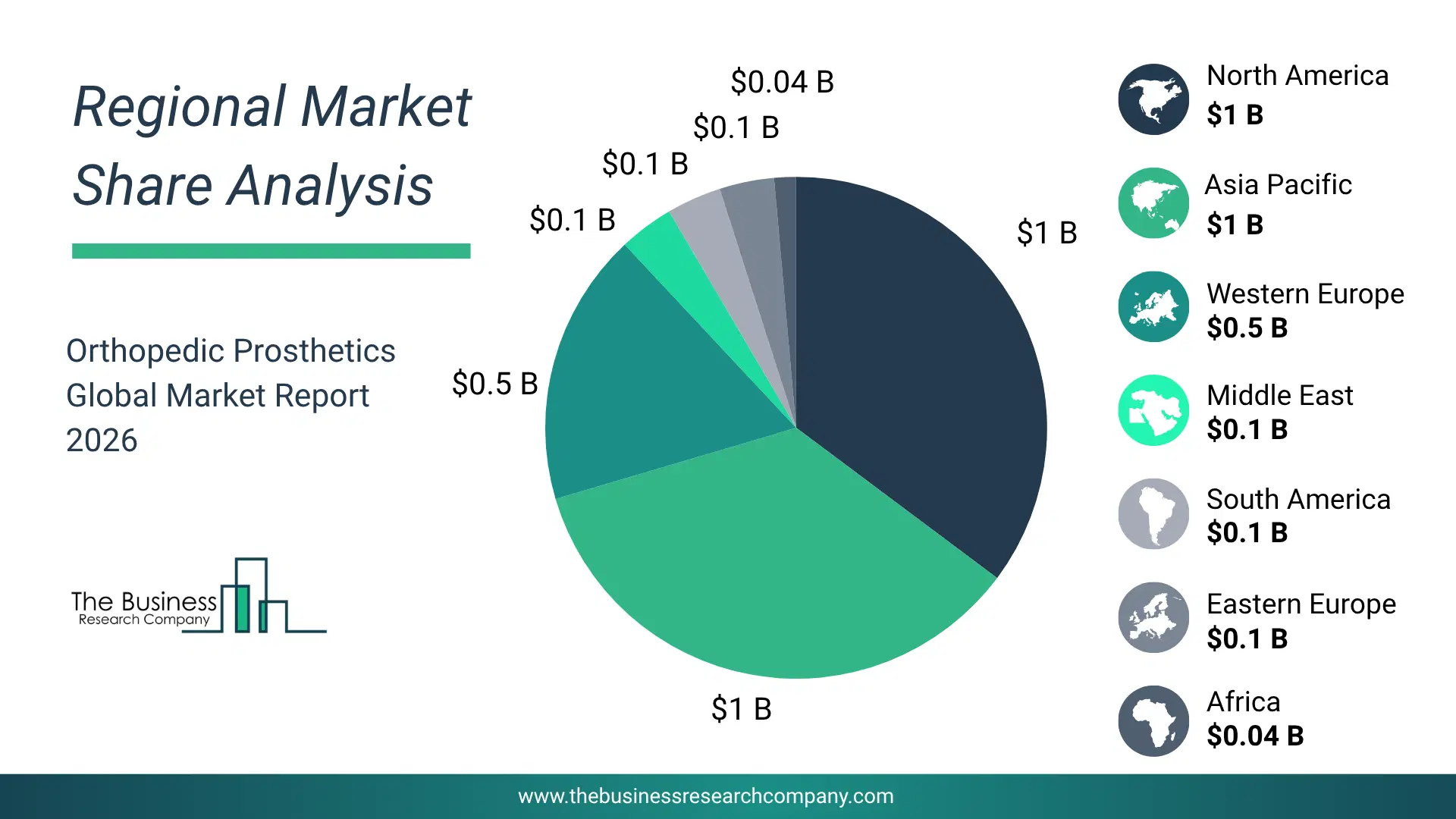
Regional Outlook
North America was the largest region in the global orthopedic prosthetics market in 2025. Western Europe was the second-largest region in the orthopedic prosthetics market. The regions covered in this market report are Asia-Pacific, South East Asia, Western Europe, Eastern Europe, North America, South America, Middle East, Africa. The countries covered in this market report are China, India, Japan, Australia, Indonesia, South Korea, Bangladesh, Thailand, Vietnam, Malaysia, Singapore, Philippines, Hong Kong, Taiwan, New Zealand, UK, Germany, France, Italy, Spain, Austria, Belgium, Denmark, Finland, Ireland, Netherlands, Norway, Portugal, Sweden, Switzerland, Russia, Czech Republic, Poland, Romania, Ukraine, USA, Canada, Mexico, Brazil, Chile, Argentina, Colombia, Peru, Saudi Arabia, Israel, Iran, Turkey, UAE, Egypt, Nigeria, South Africa.What Defines the Orthopedic Prosthetics Market?
The orthopedic prosthetics market consists of sales of upper extremity prosthetics, lower extremity prosthetics, sockets, and others. Values in this market are factory gate values, that is the value of goods sold by the manufacturers or creators of the goods, whether to other entities (including downstream manufacturers, wholesalers, distributors and retailers) or directly to end customers. The value of goods in this market includes related services sold by the creators of the goods.How is Market Value Defined and Measured?
The market value is defined as the revenues that enterprises gain from the sale of goods and/or services within the specified market and geography through sales, grants, or donations in terms of the currency (in USD unless otherwise specified). The revenues for a specified geography are consumption values that are revenues generated by organizations in the specified geography within the market, irrespective of where they are produced. It does not include revenues from resales along the supply chain, either further along the supply chain or as part of other products.
This chart presents market attractiveness based on a quantitative evaluation of growth, competition, strategic alignment, and risk, offering a clear view of opportunity areas for decision-making. This chart is for illustrative purposes; the full report contains the complete analysis.

This chart highlights the Total Addressable Market (TAM) by estimating the maximum revenue opportunity using an assumption-driven approach, supporting strategic planning and opportunity sizing across markets. The chart is illustrative; the full report provides a more comprehensive analysis.
What Key Data and Analysis Are Included in the Orthopedic Prosthetics Market Report 2026?
The orthopedic prosthetics market research report is one of a series of new reports from The Business Research Company that provides market statistics, including industry global market size, regional shares, competitors with the market share, detailed market segments, market trends and opportunities, and any further data you may need to thrive in the orthopedic prosthetics industry. The market research report delivers a complete perspective of everything you need, with an in-depth analysis of the current and future state of the industry.Orthopedic Prosthetics Market Report Forecast Analysis
| Report Attribute | Details |
|---|---|
| Market Size Value In 2026 | $2.17 billion |
| Revenue Forecast In 2030 | $2.72 billion |
| Growth Rate | CAGR of 5.6% from 2026 to 2030 |
| Base Year For Estimation | 2025 |
| Actual Estimates/Historical Data | 2020-2025 |
| Forecast Period | 2026 - 2030 - 2035 |
| Market Representation | Revenue in USD Billion and CAGR from 2026 to 2030 |
| Segments Covered | Product Type, Technology, End Users |
| Regional Scope | Asia-Pacific, Western Europe, Eastern Europe, North America, South America, Middle East, Africa |
| Country Scope | The countries covered in the report are Australia, Brazil, China, France, Germany, India, Indonesia, Japan, Taiwan, Russia, South Korea, UK, USA, Canada, Italy, Spain. |
| Key Companies Profiled | Otto Bock HealthCare GmbH, Blatchford Ltd., Zimmer Biomet Inc., DePuy Synthes, Stryker Corporation, WillowWood, Smith and Nephew plc, Biomet Inc., Touch Bionics Inc., Fillauer Companies Inc., Advanced Arm Dynamics, Bock Healthcare Gmbh, Medtronic Spine LLC, DJO Global, Integra Lifesciences, NuVasive Inc., Globus Medical, Wright Medical Group Inc., Arthrex Inc., Johnson & Johnson, OrthoPediatrics Corp., WishBone Medical Inc., Hanger Inc., Howard Orthopaedics Inc., Exactech Inc., Ossur hf., B. Braun Melsungen AG, Mobius Bionics LLC, Esper Bionics, ToughWare Prosthetics, Enovis, Argomedical AG, Astrek Innovations Pvt Ltd., Boston Orthotics & Prosthetics, LeTourneau Lifelike Orthotics and Prosthetics Inc., TASKA Prosthetics, Naked Prosthetics, Steeper Inc., medi GmbH & Co. KG, Orthotic & Prosthetic Lab Inc., Trulife Group Limited |
| Customization Scope | Request for Customization |
| Pricing And Purchase Options | Explore Purchase Options |