
Pet Cloning Market Report 2026
Global Outlook – By Product Or Type (Deceased Pet Cloning, Alive Pet Cloning), By Technique (Somatic Cell Nuclear Transfer, Gene Editing, Other Techniques), By Application (Dogs, Cats, Horses, Other Applications), By End-User (Pet Owners, Research Institutes, Breeding Centers, Zoos, Conservation Programs) – Market Size, Trends, Strategies, and Forecast to 2030
Pet Cloning Market Overview
• Pet Cloning market size has reached to $4.32 billion in 2025 • Expected to grow to $8.28 billion in 2030 at a compound annual growth rate (CAGR) of 13.5% • Growth Driver: Rising Pet Ownership Rates Drive Growth In The Pet Cloning Market • North America was the largest region in 2025.What Is Covered Under Pet Cloning Market?
Pet cloning is a biotechnological process that involves creating a genetically identical copy of a pet animal. This is typically achieved through somatic cell nuclear transfer (SCNT), where the nucleus of a donor cell is transferred into an egg cell that has had its nucleus removed. The resulting embryo is then implanted into a surrogate mother to develop into a cloned pet with identical genetic makeup to the original animal. The main types of pet cloning are deceased pet cloning and alive pet cloning. Deceased pet cloning refers to the process of creating a genetic duplicate of a deceased pet using preserved cells or tissues to replicate its characteristics and traits. The technology includes somatic cell nuclear transfer, gene editing, and others, catering to a wide array of applications including dogs, cats, horses, birds, reptiles, and others. Diverse end users encompass pet owners, research institutes, breeding centers, zoos, and conservation programs.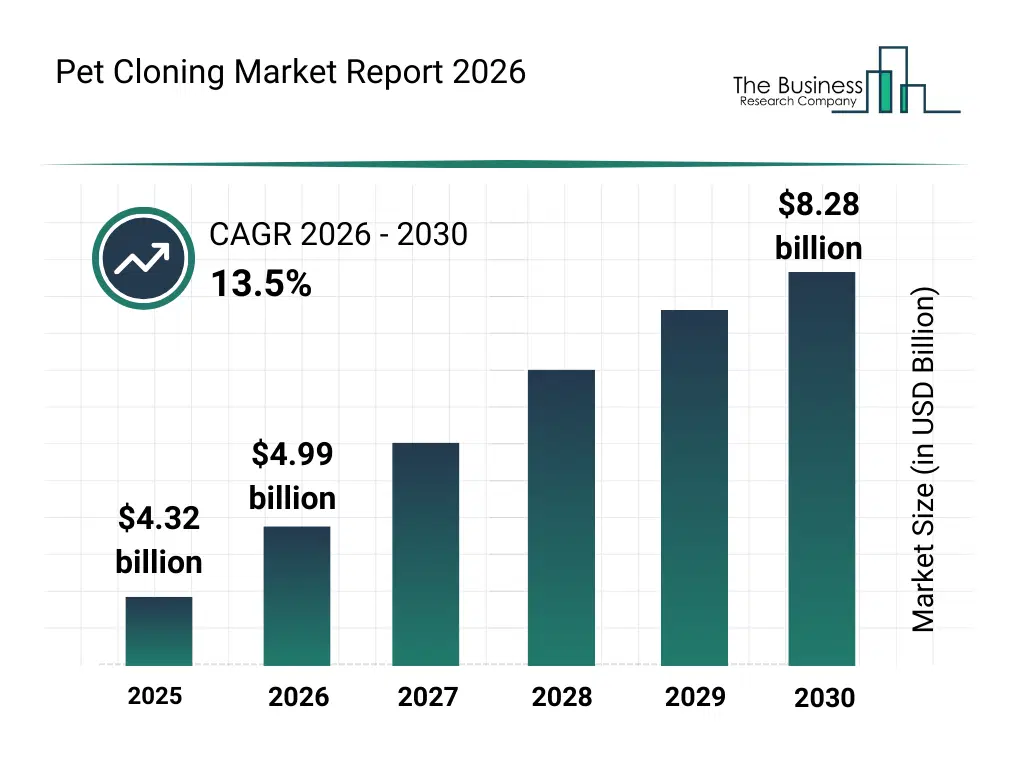
What Is The Pet Cloning Market Size and Share 2026?
The pet cloning market size has grown rapidly in recent years. It will grow from $4.32 billion in 2025 to $4.99 billion in 2026 at a compound annual growth rate (CAGR) of 15.4%. The growth in the historic period can be attributed to development of somatic cell nuclear transfer techniques, growing interest in pet biotechnology, early research in gene editing for pets, rising pet ownership in affluent regions, advancements in veterinary biotechnology.What Is The Pet Cloning Market Growth Forecast?
The pet cloning market size is expected to see rapid growth in the next few years. It will grow to $8.28 billion in 2030 at a compound annual growth rate (CAGR) of 13.5%. The growth in the forecast period can be attributed to expansion of genetic preservation programs, increasing awareness and acceptance of pet cloning, technological innovations in cloning methods, growth in luxury pet services, rising investment in research institutes and breeding centers. Major trends in the forecast period include rising demand for personalized pet cloning services, increasing research in genetic preservation of pets, growth in ethical and legal discussions around pet cloning, adoption of advanced cloning techniques in companion animals, expansion of cloning services in luxury pet markets.
Global Pet Cloning Market Segmentation
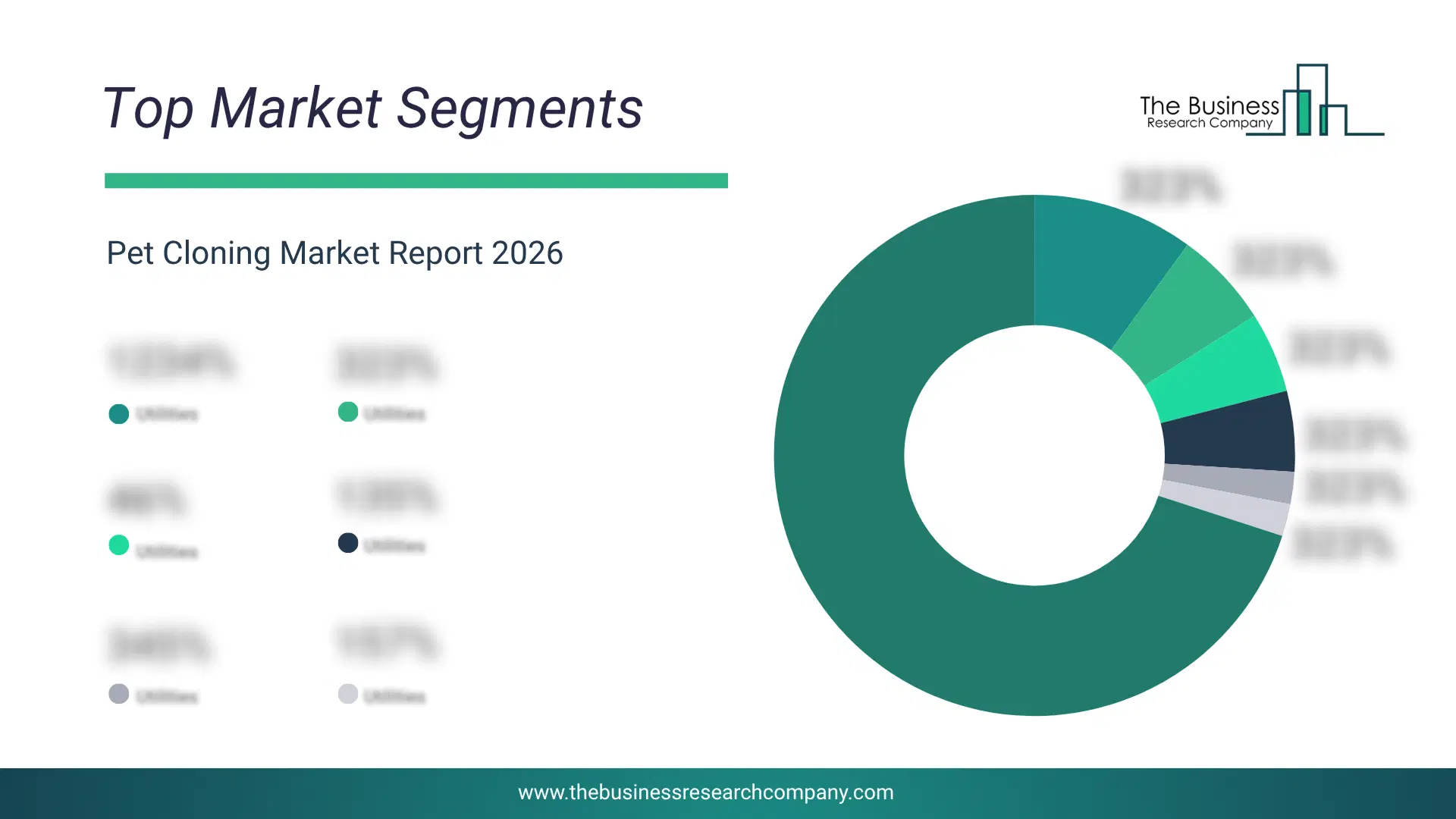
1) By Product Or Type: Deceased Pet Cloning, Alive Pet Cloning 2) By Technique: Somatic Cell Nuclear Transfer, Gene Editing, Other Techniques 3) By Application: Dogs, Cats, Horses, Other Applications 4) By End-User: Pet Owners, Research Institutes, Breeding Centers, Zoos, Conservation Programs Subsegments: 1) By Deceased Pet Cloning: Full Pet Cloning, Partial Pet Cloning 2) By Alive Pet Cloning: Standard Cloning, Genetic Preservation And CloningWhat Are The Drivers Of The Pet Cloning Market?
The rising pet ownership rates are expected to propel the growth of the pet cloning market going forward. Pet ownership refers to the responsibility and care taken by individuals or households in providing for the needs, well-being, and companionship of domesticated animals kept primarily for pleasure rather than utility. The rising pet ownership rates are due to factors such as lifestyle changes, the humanization of pets, and higher disposable incomes. Pet cloning offers pet owners the opportunity to preserve the genetic identity of beloved animals, potentially providing comfort and continuity in the companionship experience. For instance, in April 2025, according to the Canadian Animal Health Institute, a Canada-based trade association, in 2024, Canada was home to an estimated 7.2 million dogs and 8.2 million cats, making pets an integral part of more than half of Canadian households. Therefore, the rising pet ownership rates are driving the growth of the pet cloning industry. The increasing disposable income and pet spending is expected to propel the growth of the pet cloning market going forward. Pet spending refers to the financial expenditures made by individuals, households, or entities on goods, services, and care related to owning and maintaining a companion animal. The increasing disposable income and pet spending is rising due to higher economic growth and more people treating pets as family members, willing to invest in their care and well-being. Disposable income supports pet cloning by enabling owners to afford the high costs associated with advanced reproductive technologies, reflecting a willingness to invest in preserving cherished pets and extending emotional bonds. For instance, in February 2025, according to the report published by pet business professor, a US- based agency, U.S. pet owners spent approximately $13.42 billion on pet services up 8.5 % from 2022’s $12.36 billion reflecting sustained growth in grooming, boarding, and care utilization. Therefore, the increasing disposable income and pet spending is the growth of the pet cloning industry.Key Players In The Global Pet Cloning Market
Major companies operating in the pet cloning market are Trans Ova Genetics, Genetix Biotech Asia Pvt. Ltd., PPL Therapeutics, VectorBuilder Inc., Sinogene Pet Cloning, ViaGen LC, BioArts International, Boyalife Group, Cuddle clones, Gemini Genetics, PERPETUATE INC, Sooam Biotech, Oak Villlage Animal Hospital, Bella Vista Animal Hospital, BioVenic, Cyagra LLC, Embryll Life Sciences, My friend Again, Petslify, RNL Bio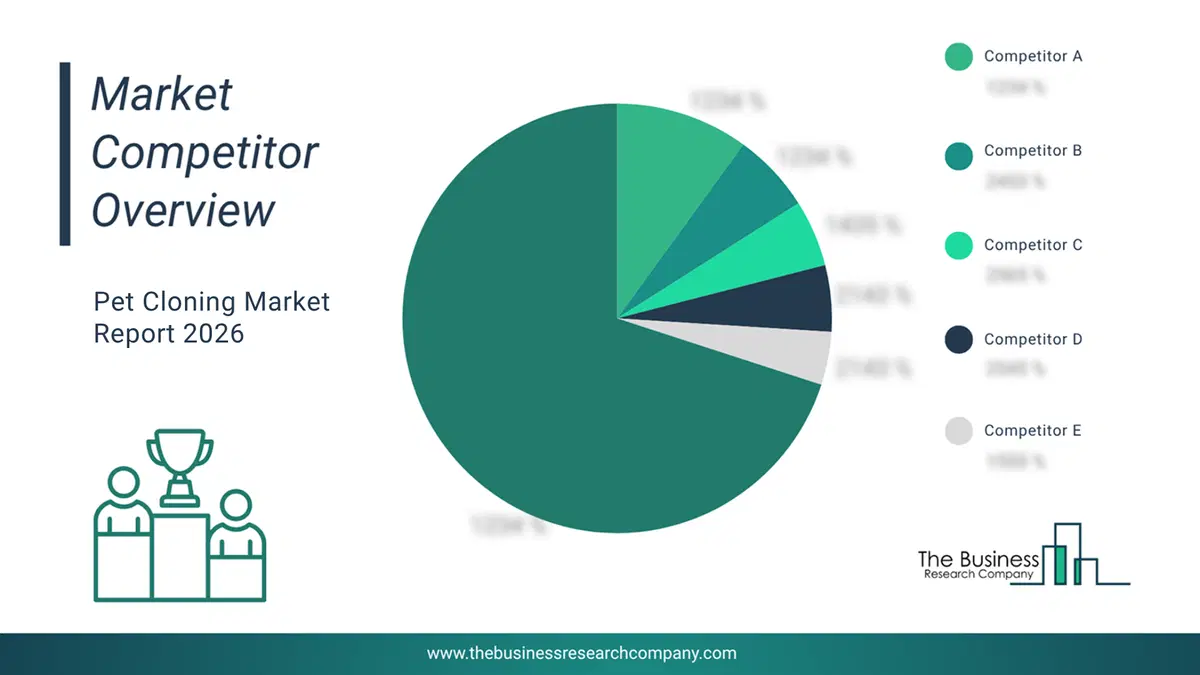
This chart is for illustrative purposes; the full report includes a detailed competitor analysis and comprehensive overview of the top 10 companies in the market.
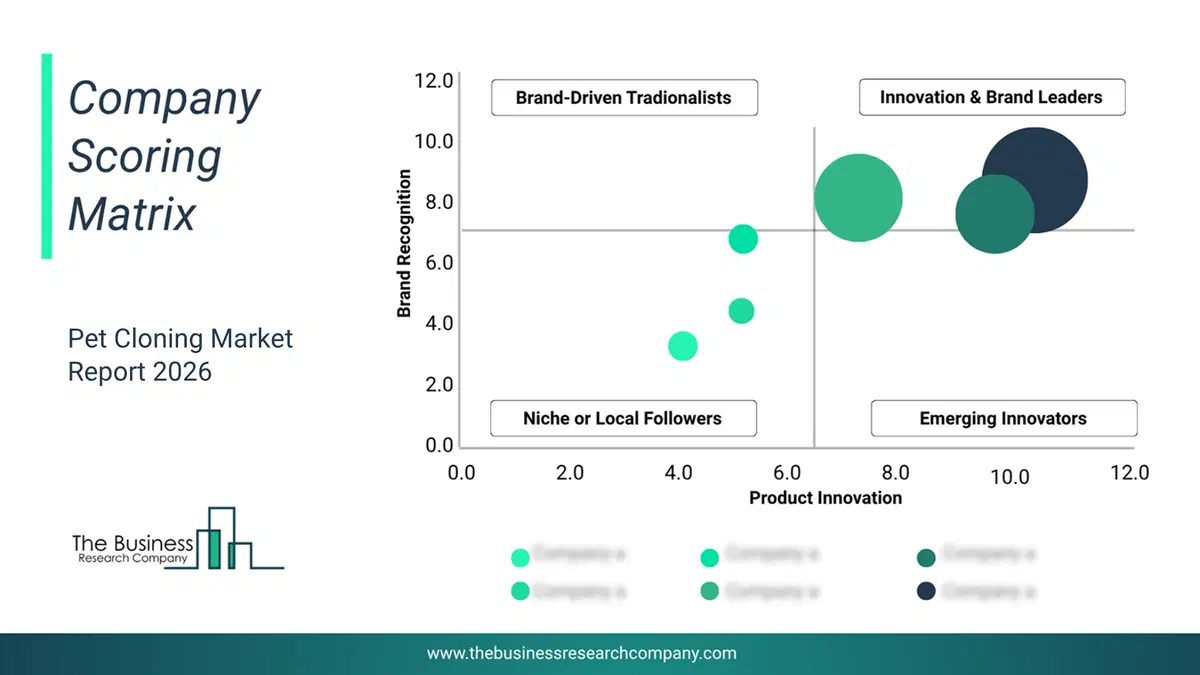
This chart maps companies by product innovation and brand strength, with bubble size indicating relative revenue, helping identify market leaders, challengers, and niche players. This is an illustrative chart; the full report provides a complete and accurate competitive analysis.
What Are Latest Mergers And Acquisitions In The Pet Cloning Market?
In November 2025, Colossal Biosciences Inc., a US based biotechnology company specializing in de extinction, genetic engineering, and conservation biology solutions, acquired Viagen Pets and Equine for an undisclosed amount. With this acquisition, Colossal aimed to accelerate and scale its animal cloning and genetic preservation capabilities, enhancing its technological platform and expanding its market reach into commercial pet cloning services and advanced reproductive technologies for companion animals and endangered species alike. Viagen Pets and Equine is a US based provider of advanced animal cloning, genetic preservation, and cryopreservation services for pets, equine, livestock, and endangered species.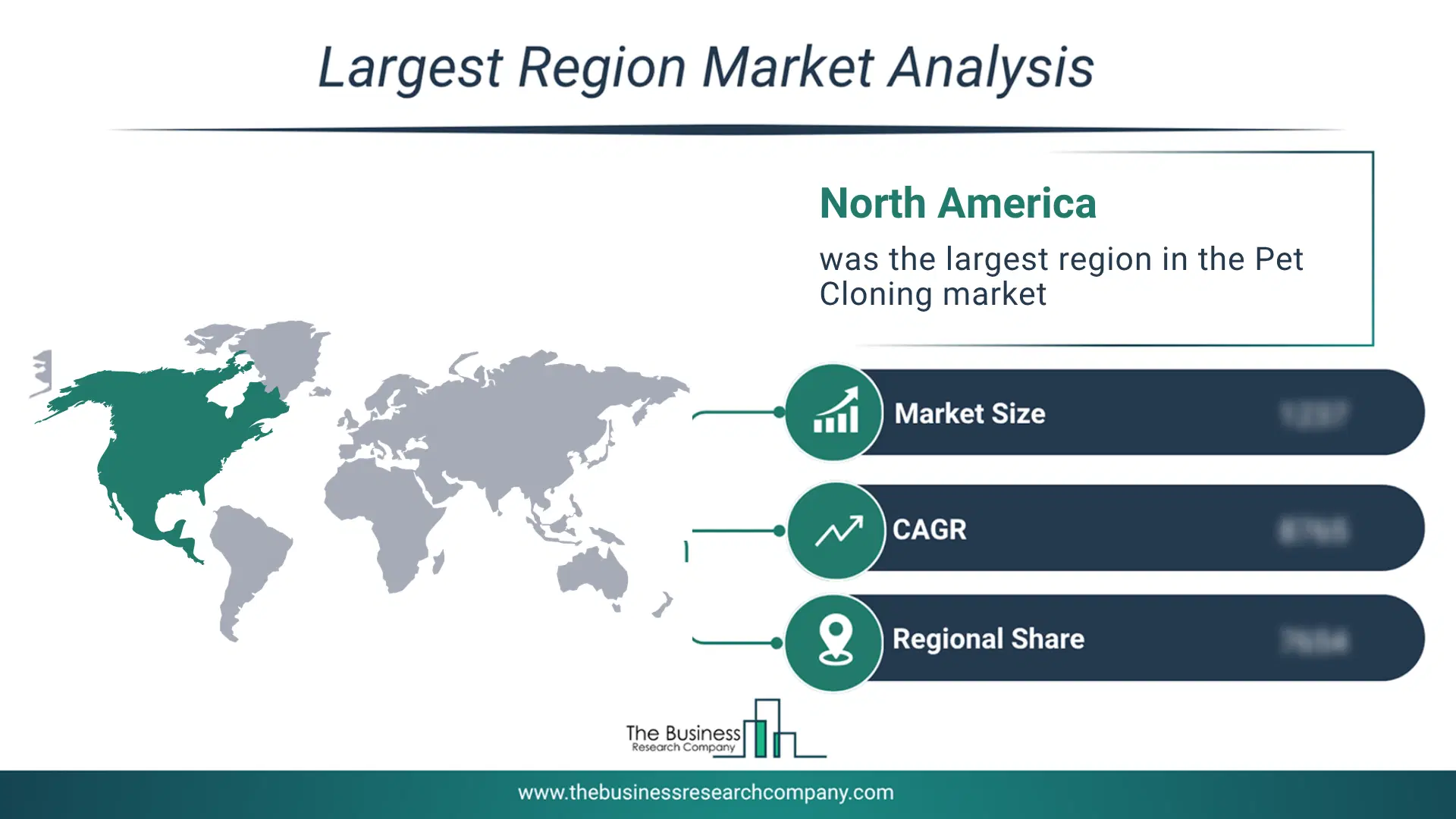
Regional Outlook
North America was the largest region in the pet cloning market in 2025. The regions covered in this market report are Asia-Pacific, South East Asia, Western Europe, Eastern Europe, North America, South America, Middle East, Africa. The countries covered in this market report are Australia, Brazil, China, France, Germany, India, Indonesia, Japan, Taiwan, Russia, South Korea, UK, USA, Canada, Italy, SpainWhat Defines the Pet Cloning Market?
The pet cloning market consists of revenues earned by entities by providing services such as genetic counseling services, veterinary support for cloning procedures, DNA banking services, and post-cloning care and rehabilitation programs. The market value includes the value of related goods sold by the service provider or included within the service offering. The pet cloning market also includes sales of cloning kits, genetic preservation solutions, pet cloning equipment sales, and customized cloning protocols. Values in this market are ‘factory gate’ values, that is the value of goods sold by the manufacturers or creators of the goods, whether to other entities (including downstream manufacturers, wholesalers, distributors and retailers) or directly to end customers. The value of goods in this market includes related services sold by the creators of the goods.How is Market Value Defined and Measured?
The market value is defined as the revenues that enterprises gain from the sale of goods and/or services within the specified market and geography through sales, grants, or donations in terms of the currency (in USD unless otherwise specified). The revenues for a specified geography are consumption values that are revenues generated by organizations in the specified geography within the market, irrespective of where they are produced. It does not include revenues from resales along the supply chain, either further along the supply chain or as part of other products.
This chart presents market attractiveness based on a quantitative evaluation of growth, competition, strategic alignment, and risk, offering a clear view of opportunity areas for decision-making. This chart is for illustrative purposes; the full report contains the complete analysis.

This chart highlights the Total Addressable Market (TAM) by estimating the maximum revenue opportunity using an assumption-driven approach, supporting strategic planning and opportunity sizing across markets. The chart is illustrative; the full report provides a more comprehensive analysis.
What Key Data and Analysis Are Included in the Pet Cloning Market Report 2026?
The pet cloning market research report is one of a series of new reports from The Business Research Company that provides market statistics, including industry global market size, regional shares, competitors with the market share, detailed market segments, market trends and opportunities, and any further data you may need to thrive in the pet cloning industry. The market research report delivers a complete perspective of everything you need, with an in-depth analysis of the current and future state of the industry.Pet Cloning Market Report Forecast Analysis
| Report Attribute | Details |
|---|---|
| Market Size Value In 2026 | $4.99 billion |
| Revenue Forecast In 2030 | $8.28 billion |
| Growth Rate | CAGR of 15.4% from 2026 to 2030 |
| Base Year For Estimation | 2025 |
| Actual Estimates/Historical Data | 2020-2025 |
| Forecast Period | 2026 - 2030 - 2030 |
| Market Representation | Revenue in USD Billion and CAGR from 2026 to 2030 |
| Segments Covered | Product Or Type, Technique, Application, End-User |
| Regional Scope | Asia-Pacific, Western Europe, Eastern Europe, North America, South America, Middle East, Africa |
| Country Scope | The countries covered in the report are Australia, Brazil, China, France, Germany, India, Indonesia, Japan, Taiwan, Russia, South Korea, UK, USA, Canada, Italy, Spain. |
| Key Companies Profiled | Trans Ova Genetics, Genetix Biotech Asia Pvt. Ltd., PPL Therapeutics, VectorBuilder Inc., Sinogene Pet Cloning, ViaGen LC, BioArts International, Boyalife Group, Cuddle clones, Gemini Genetics, PERPETUATE INC, Sooam Biotech, Oak Villlage Animal Hospital, Bella Vista Animal Hospital, BioVenic, Cyagra LLC, Embryll Life Sciences, My friend Again, Petslify, RNL Bio |
| Customization Scope | Request for Customization |
| Pricing And Purchase Options | Explore Purchase Options |