
PLM in Discrete Manufacturing Market Report 2026
Global Outlook – By Component (Software, Services), By Enterprise Size (Large Enterprises, Small And Medium Enterprises), By Deployment Model (On-Premise, Cloud), By Industry Vertical (Automotive And Transportation, Industrial Machinery And Heavy Equipment, High-Tech And Consumer Electronics, Aerospace And Defense, Other Industry Verticals) – Market Size, Trends, Strategies, and Forecast to 2030
PLM in Discrete Manufacturing Market Overview
• PLM in Discrete Manufacturing market size has reached to $24.46 billion in 2025 • Expected to grow to $38.03 billion in 2030 at a compound annual growth rate (CAGR) of 9.2% • Growth Driver: PLM In Discrete Manufacturing Market On The Rise With Growing Adoption Of Smart Factories And Manufacturing • North America was the largest region in 2025 and Asia-Pacific is the fastest growing region.What Is Covered Under PLM in Discrete Manufacturing Market?
The product lifecycle management (PLM) in discrete manufacturing refer to solutions used by a variety of industries to manage a product's entire lifecycle, beginning with the engineering, design, manufacture, and disposal of manufactured goods. Discrete manufacturing is a type of manufacturing technique that produces products differentiated by individual units and places parts together according to a predetermined process to create a unique item, such as smartphones. Product lifecycle management (PLM) enhances the quality and dependability of products. Additionally, PLM gives manufacturers an accurate bill of materials (BOM), which enables them to find errors more quickly and shorten delivery times. Further, the majority of manufacturing involves a multi-step assembly process, and PLM helps businesses monitor production processes and give operators decision support, which accelerates the market's growth. The main components of PLM in discrete manufacturing are software and services. Software refers to the entire set of programs and routines associated with the operation of a computer system. On-premise and cloud deployment models are available. The various sizes of enterprises include large enterprises and small and medium-sized enterprises. These are used in automotive and transportation, industrial machinery and heavy equipment, high-tech and consumer electronics, aerospace and defense, and other industry verticals.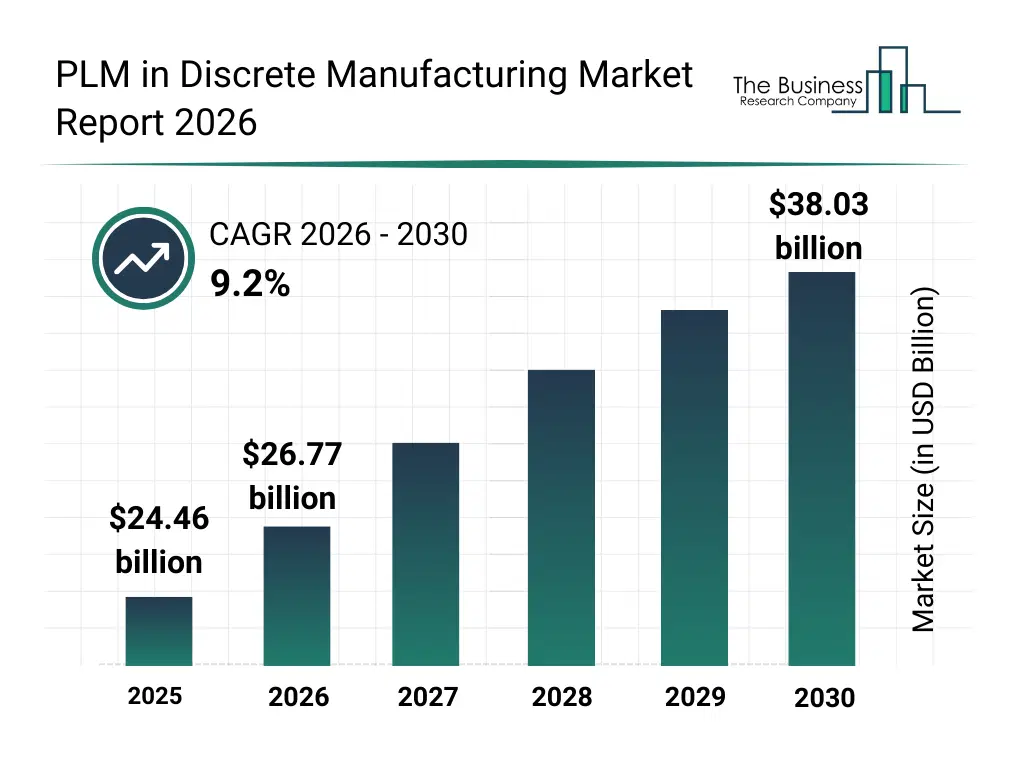
What Is The PLM in Discrete Manufacturing Market Size and Share 2026?
The plm in discrete manufacturing market size has grown strongly in recent years. It will grow from $24.46 billion in 2025 to $26.77 billion in 2026 at a compound annual growth rate (CAGR) of 9.5%. The growth in the historic period can be attributed to increasing complexity of discrete manufacturing processes, adoption of multi-step assembly workflows, rising need for product quality control, expansion of global manufacturing operations, increased use of cad and cam tools.What Is The PLM in Discrete Manufacturing Market Growth Forecast?
The plm in discrete manufacturing market size is expected to see strong growth in the next few years. It will grow to $38.03 billion in 2030 at a compound annual growth rate (CAGR) of 9.2%. The growth in the forecast period can be attributed to increasing demand for digital manufacturing ecosystems, rising investments in smart factory initiatives, growing integration of plm with erp and mes systems, expansion of cloud-native manufacturing software, increasing focus on sustainable product design. Major trends in the forecast period include increasing adoption of cloud-based plm solutions, rising integration of digital twins in manufacturing, growing use of real-time bom management, expansion of collaborative product design platforms, enhanced focus on lifecycle traceability.
Global PLM in Discrete Manufacturing Market Segmentation
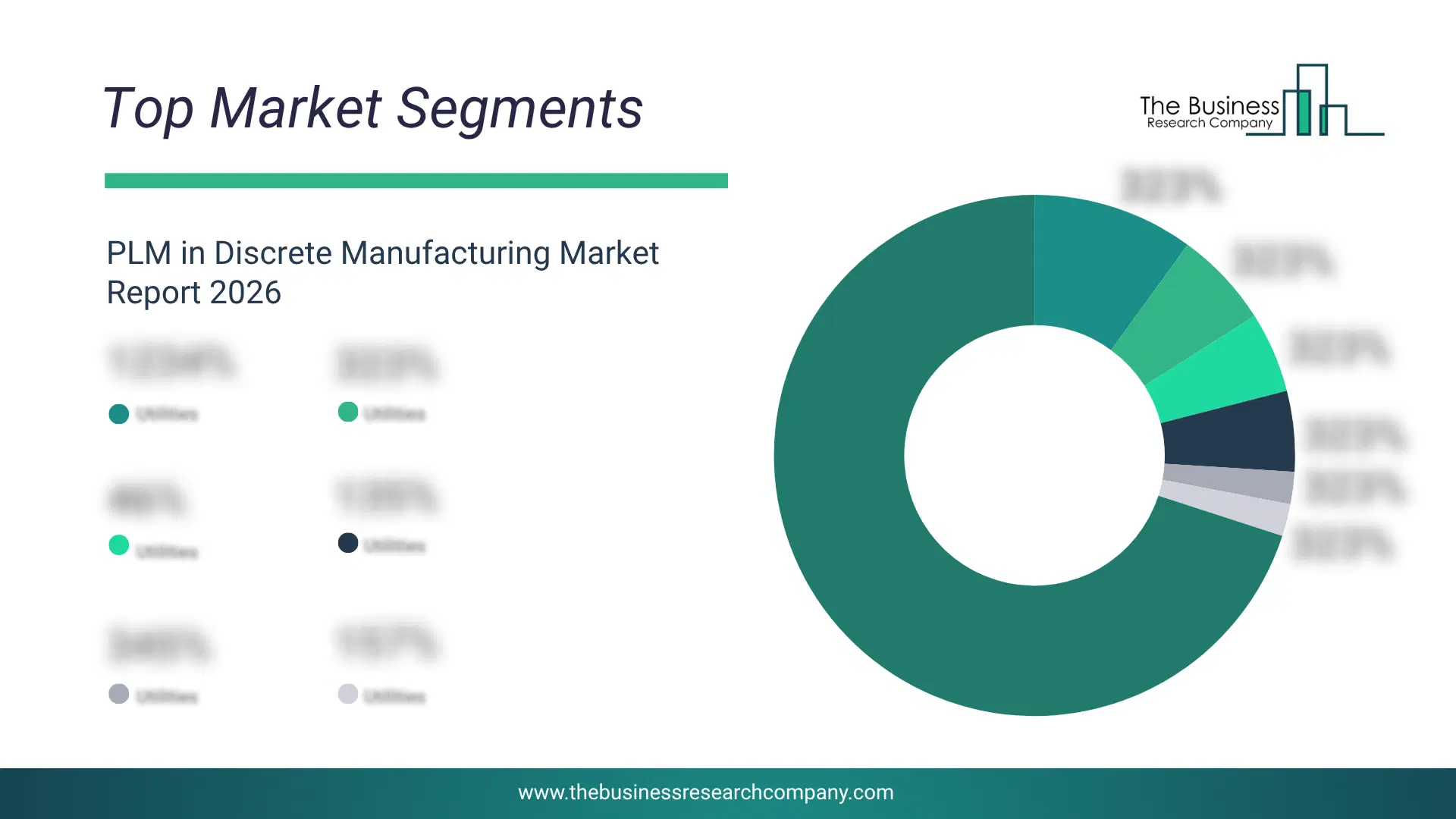
1) By Component: Software, Services 2) By Enterprise Size: Large Enterprises, Small And Medium Enterprises 3) By Deployment Model: On-Premise, Cloud 4) By Industry Vertical: Automotive And Transportation, Industrial Machinery And Heavy Equipment, High-Tech And Consumer Electronics, Aerospace And Defense, Other Industry Verticals Subsegments: 1) By Software: Product Design Software, Collaboration Software, Configuration Management Software, Document Management Software, Analytics And Reporting Tools 2) By Services: Consulting Services, Implementation Services, Training And Support Services, Maintenance And UpgradesWhat Are The Drivers Of The PLM in Discrete Manufacturing Market?
The surge in the adoption of smart factories and smart manufacturing is expected to propel the growth of PLM in the discrete manufacturing market going forward. A smart factory refers to a digitized manufacturing facility, whereas smart manufacturing is a technology-driven approach that utilizes internet-connected machinery to monitor the production process. PLM Discrete helps smart factories and smart manufacturing by taking decisions that are made using this information to enhance procedures and deal with any potential problems.For instance, in April 2024, according to Rockwell Automation, Inc., a US-based automation company, in 2024, 95% of manufacturers are either using or evaluating smart manufacturing technology, up from 84% in 2023. Therefore, the surge in the adoption of smart factories and smart manufacturing is driving the PLM in the discrete manufacturing market growth. The increasing number of IoT-linked devices is expected to boost the growth of the PLM in the discrete manufacturing market going forward. IoT-linked devices refer to nonstandard computing devices that connect wirelessly to a network and have the ability to transmit data. The growing adoption of IoT-connected devices in discrete manufacturing empowers PLM through real-time data, enabling informed decisions, enhanced product quality, and increased manufacturing efficiency. For instance, according to a report published by Ericsson, a Sweden-based telecommunication company, broadband IoT (4G/5G), which connects the majority of cellular IoT devices, reached 1.3 billion connections in 2022. Nearly 60% of cellular IoT connections are anticipated to be broadband IoT connections by the end of 2028, with 4G connecting the bulk. Therefore, the increasing number of IoT-linked devices is driving the growth of the PLM in the discrete manufacturing market. The increasing adoption of cloud computing is expected to propel the growth of the PLM in the discrete manufacturing market going forward. Cloud computing refers to the delivery of computing services such as storage, processing power, and software over the internet, enabling flexible, on-demand access without the need for local infrastructure. The rise of cloud-based systems is due to scalability and flexibility, as they allow businesses to easily adjust resources on demand without heavy upfront infrastructure costs. PLM in discrete manufacturing enhances cloud computing adoption by enabling seamless data accessibility, real-time collaboration, and scalable storage across globally distributed teams. It supports faster product development by centralizing product information in the cloud, improving operational efficiency and reducing infrastructure costs for manufacturers. For instance, in December 2023, according to Eurostat, a Luxembourg-based government agency, the proportion of enterprises utilizing cloud computing services rose by 4.2 percentage points in 2023, with the most purchased services being e-mail (82.7%), followed by file storage (68.0%) and office software (66.3%). Therefore, the increasing adoption of cloud computing is driving the growth of the PLM in the discrete manufacturing market.Key Players In The Global PLM in Discrete Manufacturing Market
Major companies operating in the plm in discrete manufacturing market are Siemens AG; Dassault Systèmes SE; PTC Inc.; Autodesk Inc.; Aras Corporation; SAP SE; Oracle Corporation; Infor; ANSYS Inc.; Hexagon AB; Arena Solutions Inc.; Centric Software Inc.; OpenBOM; KloudPLM; Propel Software; Plex Systems Inc.; TopSolid; ESI Group; Granta Design Limited; Aptean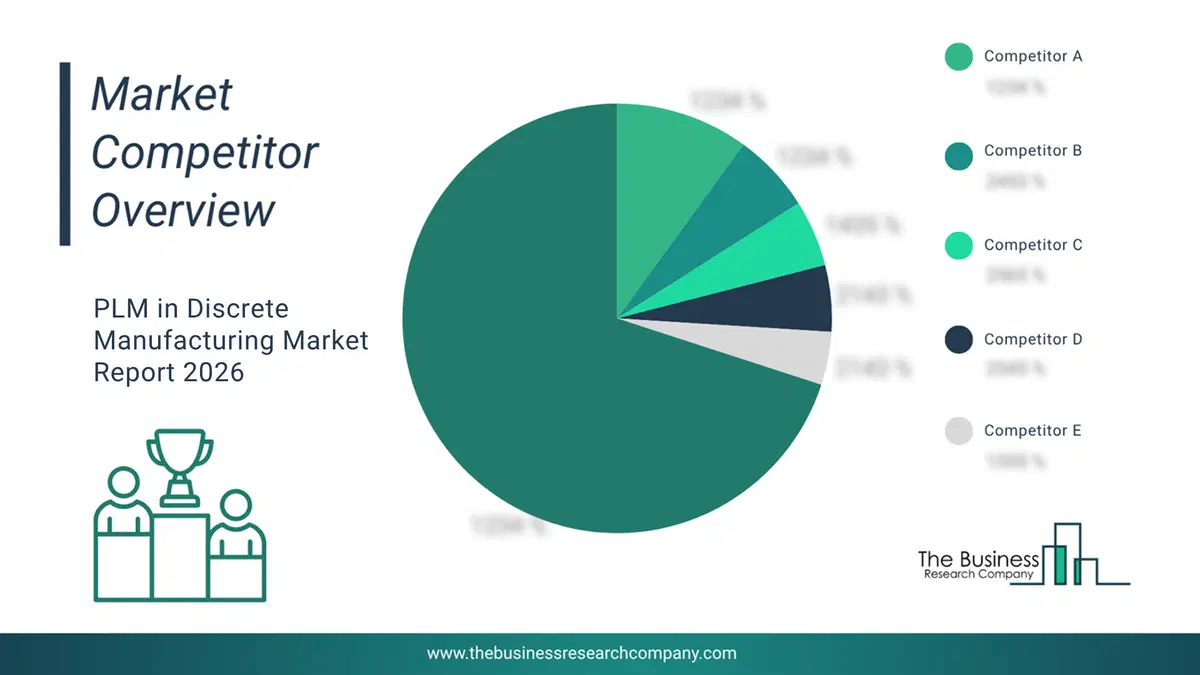
This chart is for illustrative purposes; the full report includes a detailed competitor analysis and comprehensive overview of the top 10 companies in the market.
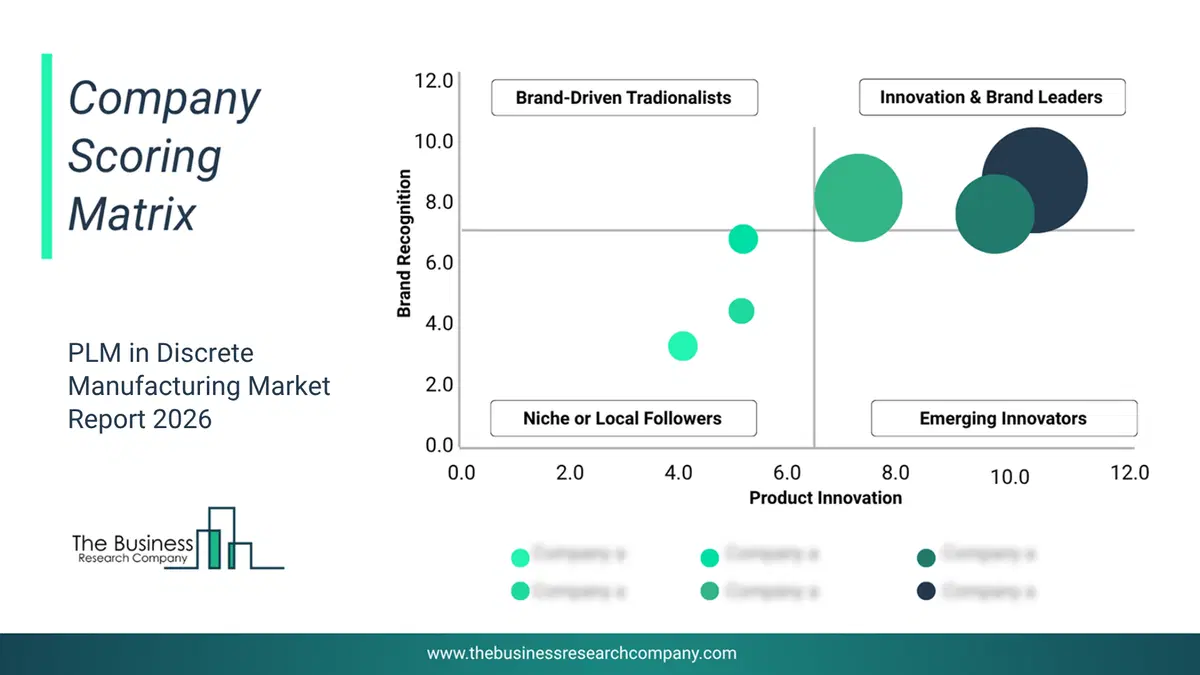
This chart maps companies by product innovation and brand strength, with bubble size indicating relative revenue, helping identify market leaders, challengers, and niche players. This is an illustrative chart; the full report provides a complete and accurate competitive analysis.
Regional Insights
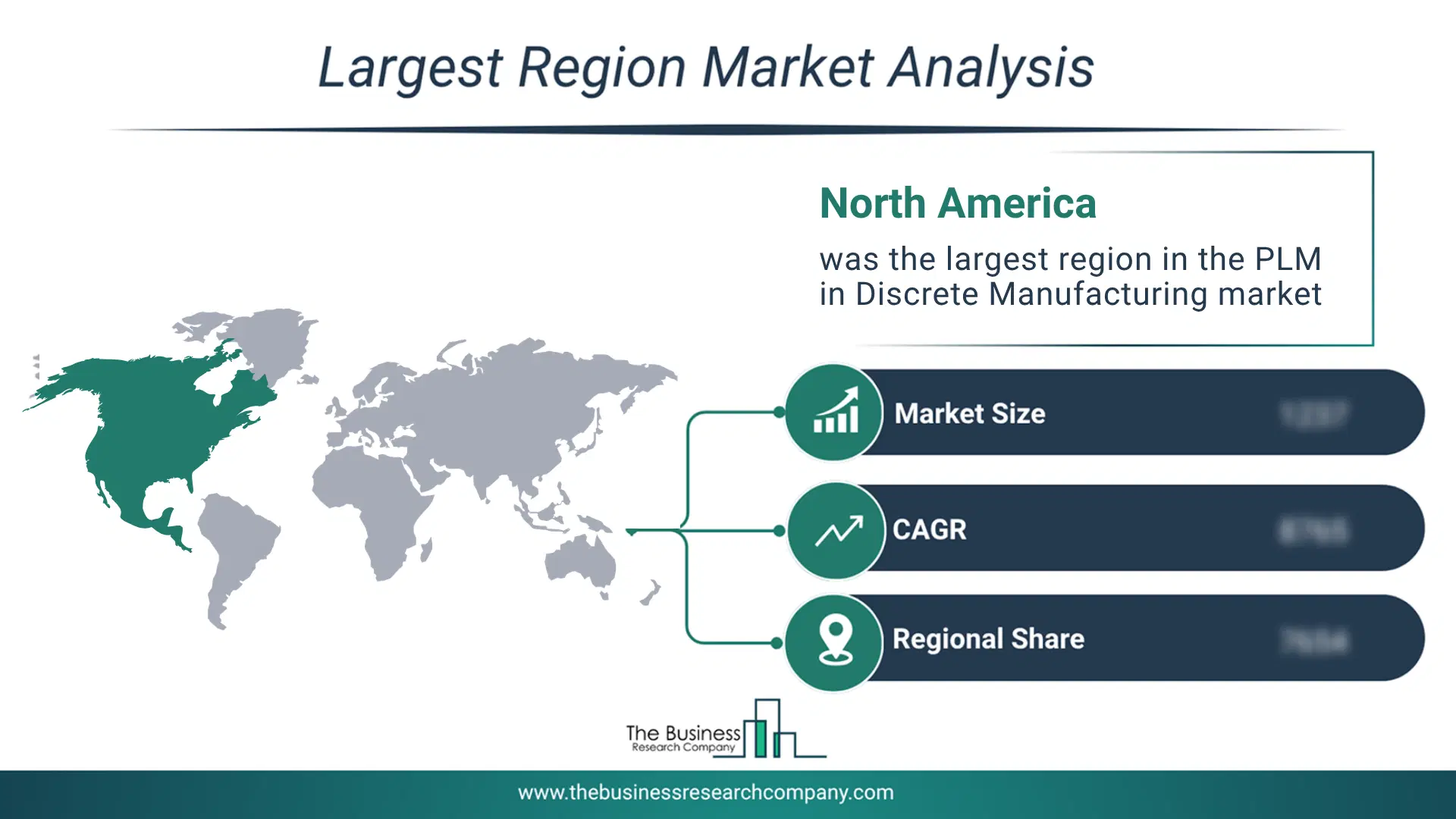
North America was the largest region in the PLM in discrete manufacturing market in 2025. Asia-Pacific is expected to be the fastest-growing region in the forecast period. The regions covered in this market report are Asia-Pacific, South East Asia, Western Europe, Eastern Europe, North America, South America, Middle East, Africa. The countries covered in this market report are Australia, Brazil, China, France, Germany, India, Indonesia, Japan, Taiwan, Russia, South Korea, UK, USA, Canada, Italy, SpainWhat Defines the PLM in Discrete Manufacturing Market?
The PLM in discrete manufacturing market consists of revenues earned by entities by providing PLM in discrete manufacturing that are used to lower costs, improve quality, and shorten time to market. Values in this market are ‘factory gate’ values, that is the value of goods sold by the manufacturers or creators of the goods, whether to other entities (including downstream manufacturers, wholesalers, distributors, and retailers) or directly to end customers. The value of goods in this market includes related services sold by the creators of the goods.How is Market Value Defined and Measured?
The market value is defined as the revenues that enterprises gain from the sale of goods and/or services within the specified market and geography through sales, grants, or donations in terms of the currency (in USD unless otherwise specified). The revenues for a specified geography are consumption values that are revenues generated by organizations in the specified geography within the market, irrespective of where they are produced. It does not include revenues from resales along the supply chain, either further along the supply chain or as part of other products.
This chart presents market attractiveness based on a quantitative evaluation of growth, competition, strategic alignment, and risk, offering a clear view of opportunity areas for decision-making. This chart is for illustrative purposes; the full report contains the complete analysis.

This chart highlights the Total Addressable Market (TAM) by estimating the maximum revenue opportunity using an assumption-driven approach, supporting strategic planning and opportunity sizing across markets. The chart is illustrative; the full report provides a more comprehensive analysis.
What Key Data and Analysis Are Included in the PLM in Discrete Manufacturing Market Report 2026?
The plm in discrete manufacturing market research report is one of a series of new reports from The Business Research Company that provides market statistics, including industry global market size, regional shares, competitors with the market share, detailed market segments, market trends and opportunities, and any further data you may need to thrive in the plm in discrete manufacturing industry. The market research report delivers a complete perspective of everything you need, with an in-depth analysis of the current and future state of the industry.PLM in Discrete Manufacturing Market Report Forecast Analysis
| Report Attribute | Details |
|---|---|
| Market Size Value In 2026 | $26.77 billion |
| Revenue Forecast In 2030 | $38.03 billion |
| Growth Rate | CAGR of 9.2% from 2026 to 2030 |
| Base Year For Estimation | 2025 |
| Actual Estimates/Historical Data | 2020-2025 |
| Forecast Period | 2026 - 2030 |
| Market Representation | Revenue in USD Billion and CAGR from 2026 to 2030 |
| Segments Covered | Component, Enterprise Size, Deployment Model, Industry Vertical |
| Regional Scope | Asia-Pacific, Western Europe, Eastern Europe, North America, South America, Middle East, Africa |
| Country Scope | The Countries Covered In This Market Report Are Australia, Brazil, China, France, Germany, India, Indonesia, Japan, Taiwan, Russia, South Korea, Uk, Usa, Canada, Italy, Spain. |
| Key Companies Profiled | Siemens AG, Dassault Systèmes SE, PTC Inc., Autodesk Inc., Aras Corporation, SAP SE, Oracle Corporation, Infor, ANSYS Inc., Hexagon AB, Arena Solutions Inc., Centric Software Inc., OpenBOM, KloudPLM, Propel Software, Plex Systems Inc., TopSolid, ESI Group, Granta Design Limited, Aptean |
| Customization Scope | Request for Customization |
| Pricing And Purchase Options | Explore Purchase Options |