
Polyol Sweeteners Market Report 2026
Global Outlook – By Product (Sorbitol, Xylitol, Mannitol, Maltitol, Isomalt, Other Products), By Form (Powder, Liquid), By Function (Flavoring And Sweetening Agents, Bulking Agents, Excipients, Humectants, Other Functions), By Application (Food And Beverages, Personal Care And Cosmetics, Pharmaceuticals, Other Applications ) – Market Size, Trends, Strategies, and Forecast to 2030
Polyol Sweeteners Market Overview
• Polyol Sweeteners market size has reached to $4.56 billion in 2025 • Expected to grow to $6.26 billion in 2030 at a compound annual growth rate (CAGR) of 6.5% • Growth Driver: Polyol Sweeteners Transforming Diets In The Battle Against Obesity • Market Trend: Innovative Low Glycemic Sweetener Introduced By Carobway • Europe was the largest region in 2025 and Asia-Pacific is the fastest growing region.What Is Covered Under Polyol Sweeteners Market?
Polyol sweeteners refer to the special group of sugar alcohols that are formed as a result of the catalytic hydrogenation of carbohydrates, which are naturally found in fruits and vegetables. Polyols sweeteners are used as sugar-free sweeteners in foods and beverages. The main product types of polyol sweeteners are sorbitol, xylitol, mannitol, maltitol, isomalt, and others. Sorbitol refers to polyol’s sweeteners formed by the reduction of glucose and commonly extracted from fruits such as pears, apples, plums, or corn syrups. Sorbitol is used in soft drinks, beverages, chewing gums, and others. The polyol sweeteners are available in powder and liquid forms. These are further divided by their functions such as flavoring and sweetening agents, bulking agents, excipients, humectants, and others used in applications such as food and beverages, personal care and cosmetics, pharmaceuticals, and others.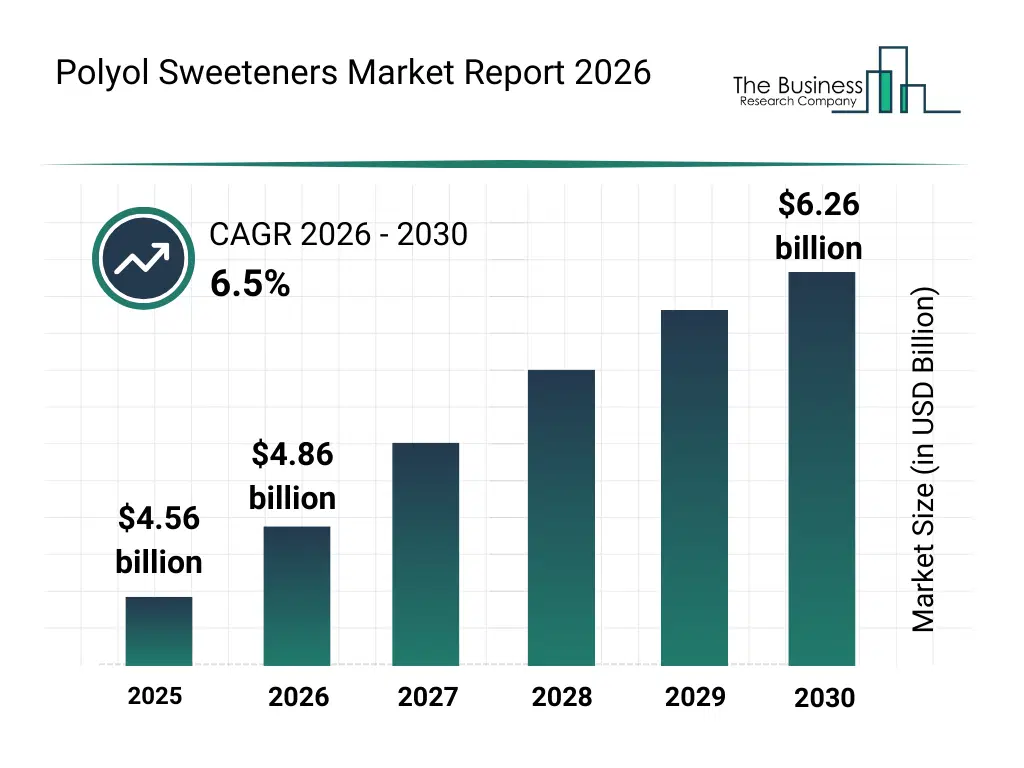
What Is The Polyol Sweeteners Market Size and Share 2026?
The polyol sweeteners market size has grown strongly in recent years. It will grow from $4.56 billion in 2025 to $4.86 billion in 2026 at a compound annual growth rate (CAGR) of 6.4%. The growth in the historic period can be attributed to rising health awareness related to sugar consumption, growth in diabetic-friendly food products, expansion of confectionery manufacturing, adoption of polyols in pharmaceuticals, availability of carbohydrate feedstocks.What Is The Polyol Sweeteners Market Growth Forecast?
The polyol sweeteners market size is expected to see strong growth in the next few years. It will grow to $6.26 billion in 2030 at a compound annual growth rate (CAGR) of 6.5%. The growth in the forecast period can be attributed to increasing demand for low-glycemic sweeteners, rising use in clean-label food formulations, expansion of functional confectionery products, growing personal care applications, increasing innovation in sugar alcohol processing. Major trends in the forecast period include increasing use of sugar-free and reduced-calorie sweeteners, rising demand for dental-friendly ingredients, growing adoption of polyols in functional foods, expansion of pharmaceutical and personal care applications, enhanced focus on digestive tolerance formulations.
Global Polyol Sweeteners Market Segmentation
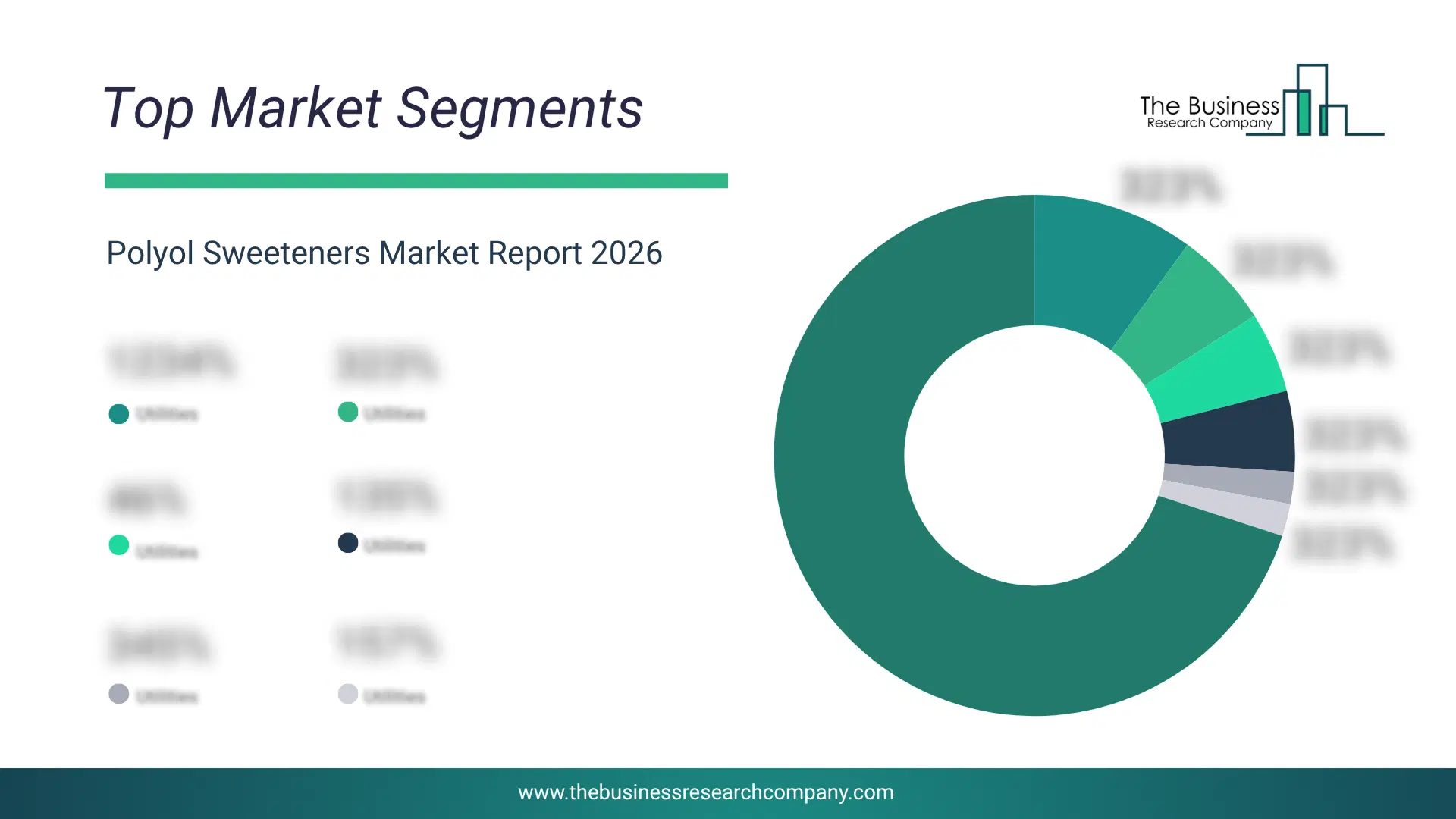
1) By Product: Sorbitol, Xylitol, Mannitol, Maltitol, Isomalt, Other Products 2) By Form: Powder, Liquid 3) By Function: Flavoring And Sweetening Agents, Bulking Agents, Excipients, Humectants, Other Functions 4) By Application: Food And Beverages, Personal Care And Cosmetics, Pharmaceuticals, Other Applications Subsegments: 1) By Sorbitol: Crystalline Sorbitol, Liquid Sorbitol 2) By Xylitol: Crystalline Xylitol, Liquid Xylitol 3) By Mannitol: Crystalline Mannitol, Spray-Dried Mannitol 4) By Maltitol: Maltitol Syrup, Crystalline Maltitol 5) By Isomalt: Isomalt Granules, Isomalt Syrup 6) By Other Products: Erythritol, Hydrogenated Starch Hydrolysates (HSH)What Is The Driver Of The Polyol Sweeteners Market?
The increasing prevalence of obesity is expected to propel the growth of the polyol sweeteners market going forward. Obesity is a medical condition characterized by an excess of body fat to the extent that it can have negative effects on a person's health. Polylol sweeteners are used by obesity patients as sugar substitutes that provide sweetness with fewer calories than traditional sugars and allows individuals to enjoy sweetened products with reduced caloric content. For instance, in August 2023, according to the National Center for Health Statistics, a US-based government agency, the prevalence of adult obesity reached 40.3% in the United States, with adults ages 40–59 showing the highest levels at 46.4%.Therefore, increasing prevalence of obesity are driving the growth of the polyol sweeteners markets.Key Players In The Global Polyol Sweeteners Market
Major companies operating in the polyol sweeteners market are Cargill Incorporated, Gulshan Polyols Limited, Ingredion Incorporated, Roquette Frères S A, Archer Daniels Midland Company, Tereos Starch & Sweeteners SAS, Südzucker AG, Jungbunzlauer Suisse AG, SPI Pharma Inc, Mitsubishi Corporation Life Sciences Limited, Zibo Shuohui Chemical Company Limited, Zhejiang Huakang Pharmaceutical Company Limited, Shandong Futaste Company, Grain Processing Corporation, Tate & Lyle PLC, Sukhjit Starch & Chemicals Limited, Dancheng Caixin Sugar Industry Co Ltd, Shijiazhuang Huaxu Pharmaceutical Co Ltd, Hylen Co Ltd, Fraken Biochem Company Limited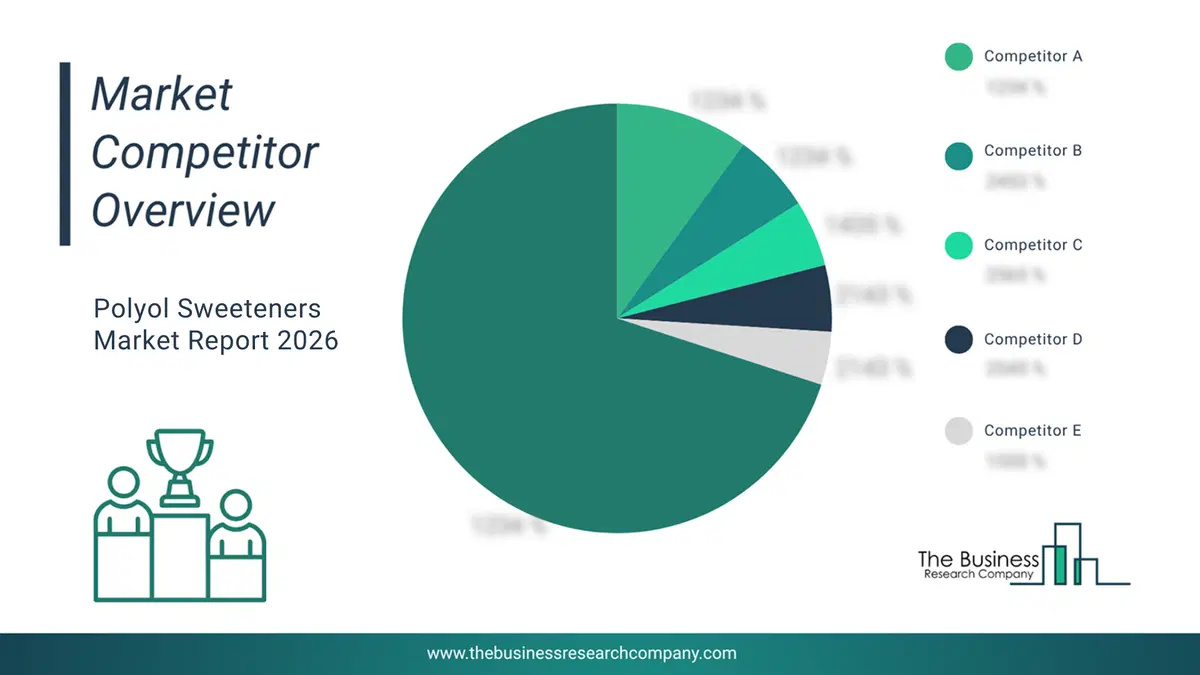
This chart is for illustrative purposes; the full report includes a detailed competitor analysis and comprehensive overview of the top 10 companies in the market.
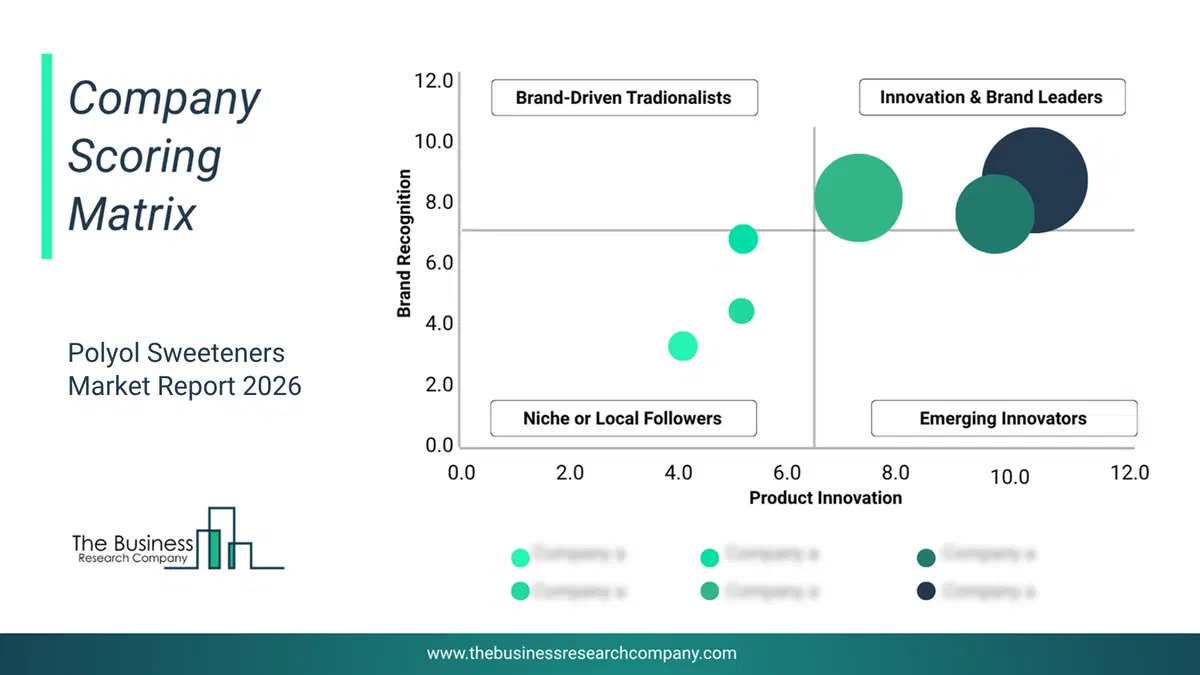
This chart maps companies by product innovation and brand strength, with bubble size indicating relative revenue, helping identify market leaders, challengers, and niche players. This is an illustrative chart; the full report provides a complete and accurate competitive analysis.
Global Polyol Sweeteners Market Trends and Insights
Major companies operating in the polyol sweeteners market are focusing on developing innovative solutions, such as low-glycemic sweeteners, to meet the rising demand for clean-label, vegan, low-sugar, and metabolically friendly sweetening options. Low-glycemic sweeteners are natural, non-GMO sugar replacers formulated to deliver sweetness with minimal impact on blood glucose levels, offering a healthier alternative to traditional sugars and synthetic sweeteners. For instance, in June 2023, CarobWay Ltd., an Israel-based food and agri-tech company, launched a low-glycemic sweetener, an innovative sugar alternative made from whole carob fruit. The sweetener delivers a mild, caramel-like flavor profile that enhances taste without added sugar. It is a one-to-one sugar replacer suitable for bakery, confectionery, beverages, and functional food applications. As a clean-label, vegan, gluten-free, and non-GMO ingredient, it supports formulators seeking natural, health-forward sweetening solutions while maintaining flavor and functionality in finished products.What Are Latest Mergers And Acquisitions In The Polyol Sweeteners Market?
In June 2024, Tate & Lyle, a UK-based supplier of food and beverage products, merged with J.M. Huber Corporation to create a robust global specialty food and beverage solutions business. The merger is expected to enhance both companies' capabilities across various product categories by combining CP Kelco's stabilization and texture solutions with Tate & Lyle's expertise in sweetening and fortification. J.M. Huber Corporation is a US-based provider of polyol sweeteners.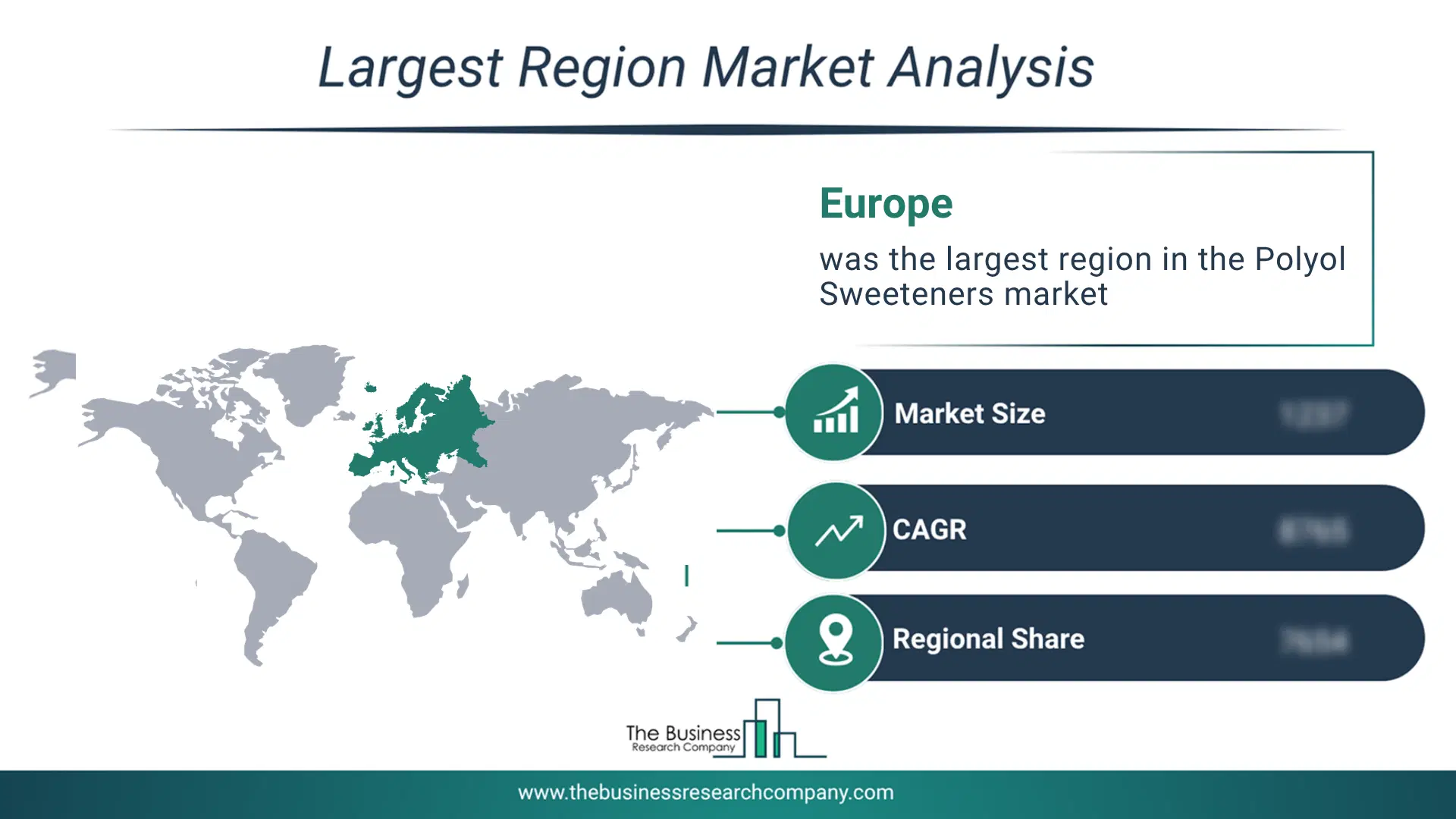
Regional Outlook
Europe was the largest region in the polyol sweeteners market in 2025. Asia-Pacific is expected to be the fastest-growing region in the forecast period. The regions covered in this market report are Asia-Pacific, South East Asia, Western Europe, Eastern Europe, North America, South America, Middle East and Africa. The countries covered in this market report are Australia, Brazil, China, France, Germany, India, Indonesia, Japan, Taiwan, Russia, South Korea, UK, USA, Italy, Spain, CanadaWhat Defines the Polyol Sweeteners Market?
The polyol sweeteners market consists of sales of allulose, lycasin, polysorb, and erythritol. Values in this market are ‘factory gate’ values, that is the value of goods sold by the manufacturers or creators of the goods, whether to other entities (including downstream manufacturers, wholesalers, distributors, and retailers) or directly to end customers. The value of goods in this market includes related services sold by the creators of the goods.How is Market Value Defined and Measured?
The market value is defined as the revenues that enterprises gain from the sale of goods and/or services within the specified market and geography through sales, grants, or donations in terms of the currency (in USD unless otherwise specified). The revenues for a specified geography are consumption values that are revenues generated by organizations in the specified geography within the market, irrespective of where they are produced. It does not include revenues from resales along the supply chain, either further along the supply chain or as part of other products.
This chart presents market attractiveness based on a quantitative evaluation of growth, competition, strategic alignment, and risk, offering a clear view of opportunity areas for decision-making. This chart is for illustrative purposes; the full report contains the complete analysis.

This chart highlights the Total Addressable Market (TAM) by estimating the maximum revenue opportunity using an assumption-driven approach, supporting strategic planning and opportunity sizing across markets. The chart is illustrative; the full report provides a more comprehensive analysis.
What Key Data and Analysis Are Included in the Polyol Sweeteners Market Report 2026?
The polyol sweeteners market research report is one of a series of new reports from The Business Research Company that provides market statistics, including industry global market size, regional shares, competitors with the market share, detailed market segments, market trends and opportunities, and any further data you may need to thrive in the polyol sweeteners industry. The market research report delivers a complete perspective of everything you need, with an in-depth analysis of the current and future state of the industry.Polyol Sweeteners Market Report Forecast Analysis
| Report Attribute | Details |
|---|---|
| Market Size Value In 2026 | $4.86 billion |
| Revenue Forecast In 2030 | $6.26 billion |
| Growth Rate | CAGR of 6.4% from 2026 to 2030 |
| Base Year For Estimation | 2025 |
| Actual Estimates/Historical Data | 2020-2025 |
| Forecast Period | 2026 - 2030 |
| Market Representation | Revenue in USD Billion and CAGR from 2026 to 2030 |
| Segments Covered | Product, Form, Function, Application |
| Regional Scope | Asia-Pacific, Western Europe, Eastern Europe, North America, South America, Middle East, Africa |
| Country Scope | The countries covered in the report are Australia, Brazil, China, France, Germany, India, Indonesia, Japan, Taiwan, Russia, South Korea, UK, USA, Canada, Italy, Spain. |
| Key Companies Profiled | Cargill Incorporated, Gulshan Polyols Limited, Ingredion Incorporated, Roquette Frères S A, Archer Daniels Midland Company, Tereos Starch & Sweeteners SAS, Südzucker AG, Jungbunzlauer Suisse AG, SPI Pharma Inc, Mitsubishi Corporation Life Sciences Limited, Zibo Shuohui Chemical Company Limited, Zhejiang Huakang Pharmaceutical Company Limited, Shandong Futaste Company, Grain Processing Corporation, Tate & Lyle PLC, Sukhjit Starch & Chemicals Limited, Dancheng Caixin Sugar Industry Co Ltd, Shijiazhuang Huaxu Pharmaceutical Co Ltd, Hylen Co Ltd, Fraken Biochem Company Limited |
| Customization Scope | Request for Customization |
| Pricing And Purchase Options | Explore Purchase Options |