
Port Digital-Twin Visualization Market Report 2026
Global Outlook – By Component (Software; Hardware; Services), By Deployment Mode (On-Premises; Cloud), By Application (Port Operations Optimization; Asset Management; Predictive Maintenance; Safety And Security; Other Applications), By End-User (Container Terminals; Bulk Terminals; Oil And Gas Terminals; Other End Users) – Market Size, Trends, Strategies, and Forecast to 2030
Port Digital-Twin Visualization Market Overview
• Port Digital-Twin Visualization market size has reached to $1.22 billion in 2025 • Expected to grow to $3.1 billion in 2030 at a compound annual growth rate (CAGR) of 20.4% • Growth Driver: Rising Digital Transformation Driving Growth In The Market Due To Enhanced Operational Efficiency And Data-Driven Port Management • Market Trend: Enhancing Port Efficiency Through Digital-Twin Technology • North America was the largest region in 2025 and Asia-Pacific is the fastest growing region.What Is Covered Under Port Digital-Twin Visualization Market?
Port digital-twin visualization refers to the creation of a real-time virtual model of a port’s physical assets, operations, and environment. It integrates data from sensors, IoT devices, and operational systems to provide an accurate digital representation. This visualization allows monitoring, simulation, and predictive analysis to enhance efficiency and performance. The main component types of port digital-twin visualization are software, hardware, and services. Software encompasses digital-twin applications, platforms, and tools designed to simulate, monitor, and analyze port operations, and can be deployed through on-premises and cloud. Its applications span port operations optimization, asset management, predictive maintenance, safety and security, and others, serving end-users such as container terminals, bulk terminals, oil and gas terminals, and others.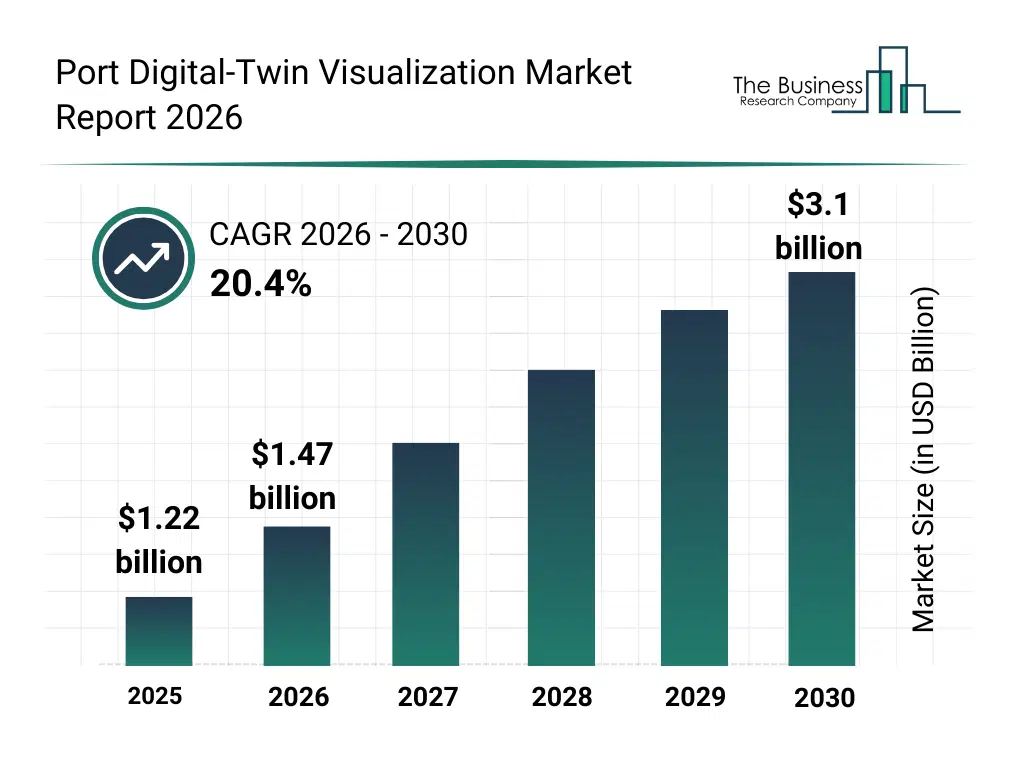
What Is The Port Digital-Twin Visualization Market Size and Share 2026?
The port digital-twin visualization market size has grown exponentially in recent years. It will grow from $1.22 billion in 2025 to $1.47 billion in 2026 at a compound annual growth rate (CAGR) of 20.7%. The growth in the historic period can be attributed to expansion of global port infrastructure projects, increasing deployment of port automation systems, rising use of iot devices in ports, demand for improved operational visibility, growth in maritime trade volumes.What Is The Port Digital-Twin Visualization Market Growth Forecast?
The port digital-twin visualization market size is expected to see exponential growth in the next few years. It will grow to $3.1 billion in 2030 at a compound annual growth rate (CAGR) of 20.4%. The growth in the forecast period can be attributed to increasing investments in smart port initiatives, rising demand for predictive and prescriptive analytics, expansion of cloud-native port platforms, growing focus on operational resilience, integration of ai-driven optimization models. Major trends in the forecast period include increasing adoption of real-time port simulation platforms, growing integration of sensor-driven visualization systems, rising use of predictive analytics for port operations, expansion of cloud-based digital twin deployments, enhanced focus on 3d and immersive port visualization.
Global Port Digital-Twin Visualization Market Segmentation
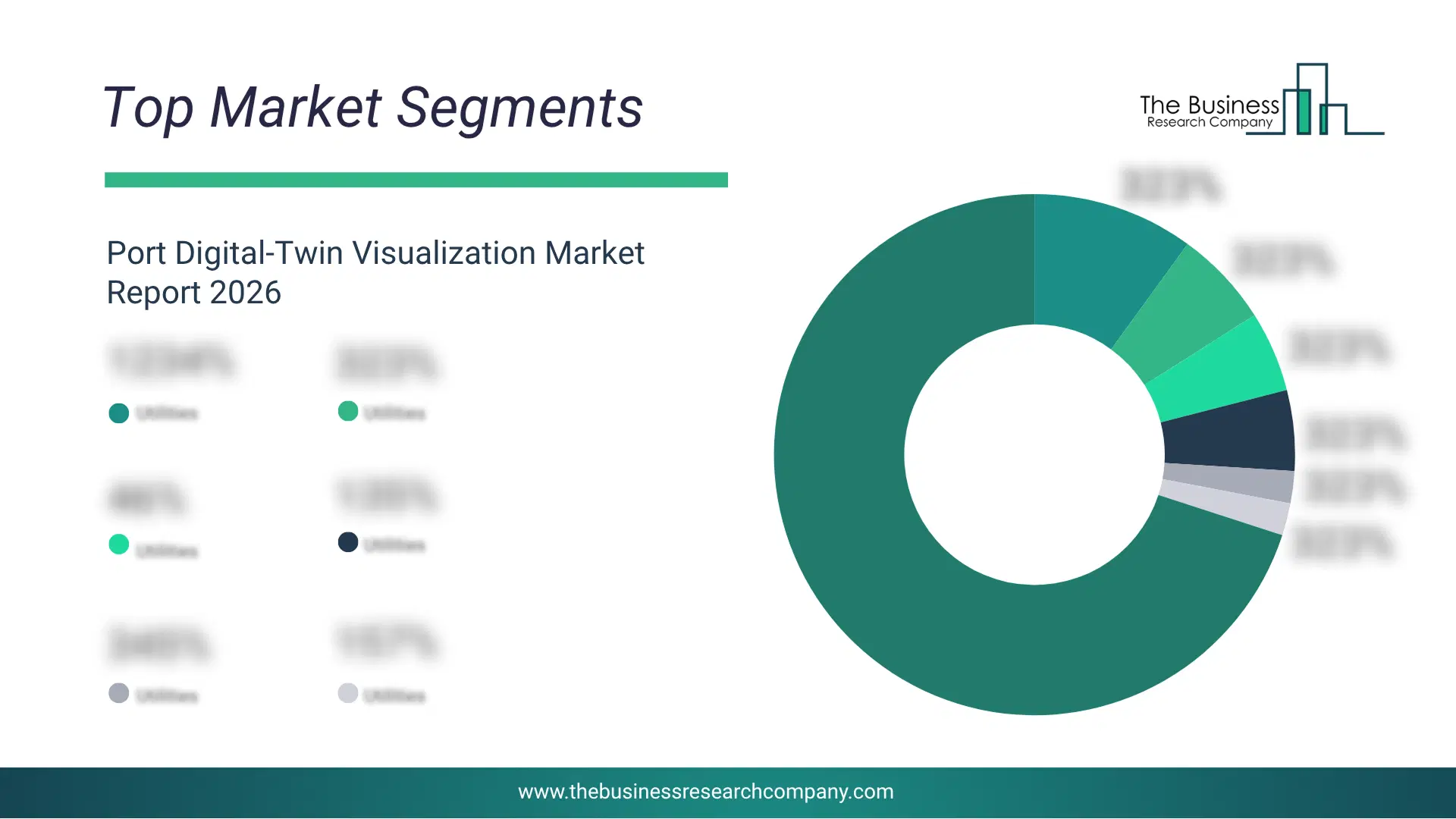
1) By Component: Software, Hardware, Services 2) By Deployment Mode: On-Premises, Cloud 3) By Application: Port Operations Optimization, Asset Management, Predictive Maintenance, Safety And Security, Other Applications 4) By End-User: Container Terminals, Bulk Terminals, Oil And Gas Terminals, Other End Users Subsegments: 1) By Software: Simulation Platforms, Data Analytics Tools, Visualization Interfaces 2) By Hardware: Sensors, Cameras, Networking Devices 3) By Services: Consulting Services, Implementation Services, Maintenance And Support ServicesWhat Is The Driver Of The Port Digital-Twin Visualization Market?
The rising digital transformation is expected to propel the growth of the port digital-twin visualization market going forward. Digital transformation refers to using digital technologies to fundamentally change how an organization operates and delivers value. Digital transformation is accelerating as it enhances operational efficiency through process automation, error reduction, and optimized resource utilization. Port digital-twin visualization supports this transformation by creating a real-time virtual replica of port operations, enabling data-driven decision-making, streamlining workflows, and improving efficiency, safety, and resource management. For instance, in November 2023, according to the Central Digital and Data Office, a UK-based governmental entity focused on driving digital innovation, data strategy, and transformation initiatives across various sectors, in 2022, analysis revealed that the digital transformation of government could yield over $1.17 billion in savings, eliminating paper-based costs. By 2025, a competitive digital remuneration framework could save $122.12 million annually, curbing attrition rates and reducing reliance on costly labor. Therefore, the rising digital transformation is driving the growth of the port digital-twin visualization industry.Key Players In The Global Port Digital-Twin Visualization Market
Major companies operating in the port digital-twin visualization market are Siemens AG, ABB Ltd, Jacobs Solutions Inc., Wärtsilä Corporation, Hexagon AB, Autodesk Inc., DNV Group, Environmental Systems Research Institute Inc., Bentley Systems Incorporated, Kongsberg Digital AS, Cognite AS, Tideworks Technology Inc., NavVis GmbH, Hamburg Port Consulting GmbH, DBiz.ai, Desapex, Teqplay GmbH, MaxWhere B.V., Twinzo GmbH, Unity Technologies SF Inc.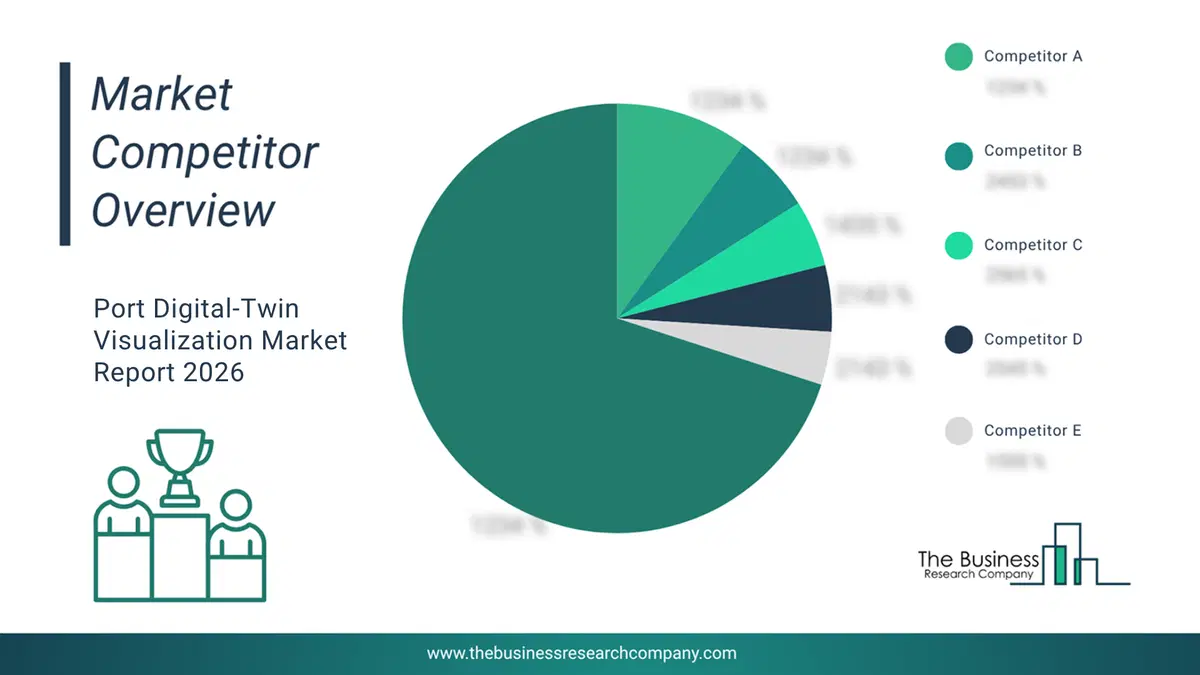
This chart is for illustrative purposes; the full report includes a detailed competitor analysis and comprehensive overview of the top 10 companies in the market.
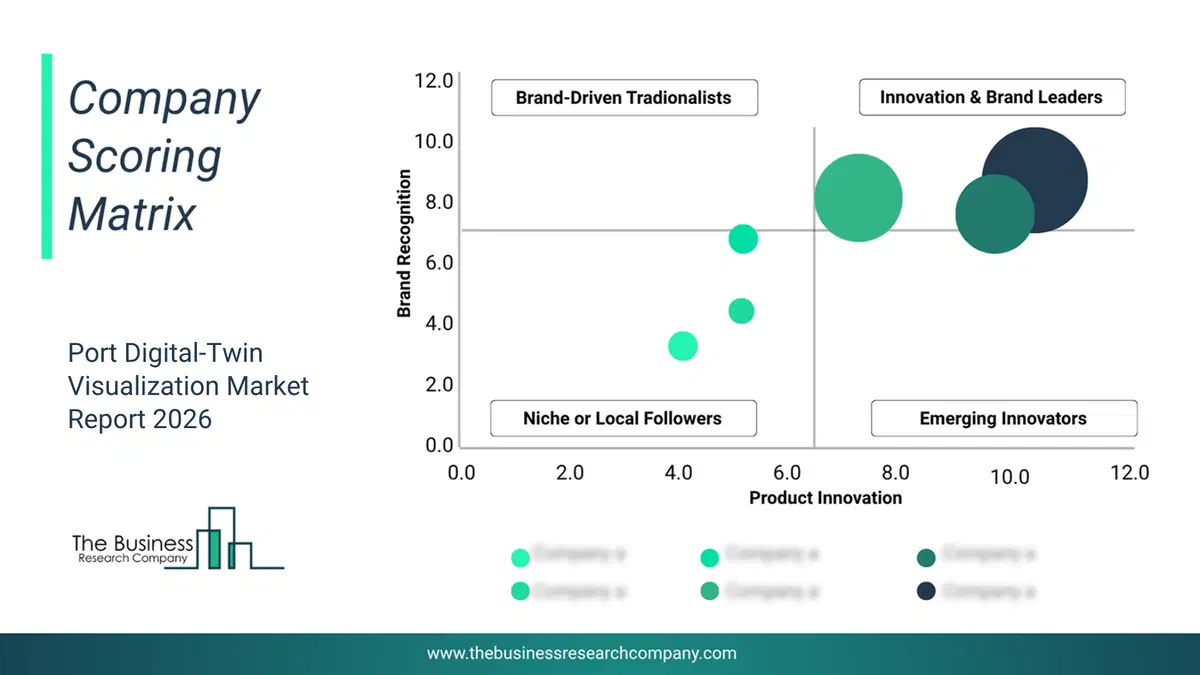
This chart maps companies by product innovation and brand strength, with bubble size indicating relative revenue, helping identify market leaders, challengers, and niche players. This is an illustrative chart; the full report provides a complete and accurate competitive analysis.
Global Port Digital-Twin Visualization Market Trends and Insights
Major companies operating in the port digital-twin visualization market are focusing on developing innovative solutions such as predictive analytics to optimize port operations, enhance efficiency, and reduce operational costs. Predictive analytics refers to the use of historical data, statistical algorithms, and machine learning techniques to forecast future outcomes and trends. For instance, in March 2025, the Maritime and Port Authority of Singapore, a Singapore-based government agency, launched its first maritime digital twin to create a real-time, virtual replica of its port and maritime operations for improved monitoring, efficiency, and decision-making. It creates a real-time virtual replica of its port, enhancing operational efficiency, safety, and sustainability. It enables real-time monitoring, predictive maintenance, and scenario simulations to optimize port logistics and reduce emissions. The purpose is to support smarter decision-making, innovate maritime operations, and maintain Singapore’s leadership as a global maritime hub.What Are Latest Mergers And Acquisitions In The Port Digital-Twin Visualization Market?
In July 2025, Mitchell Capital Management, a US-based investment management company, acquired Optelos Inc. for an undisclosed amount. With this acquisition, Mitchell Capital aims to accelerate product innovation, expand Optelos' market presence, and provide growth capital to scale resources and invest in next-generation platform capabilities for optimizing asset management and operational safety through advanced digital twin technology. Optelos Inc. is a US-based software company that offers port digital-twin visualization.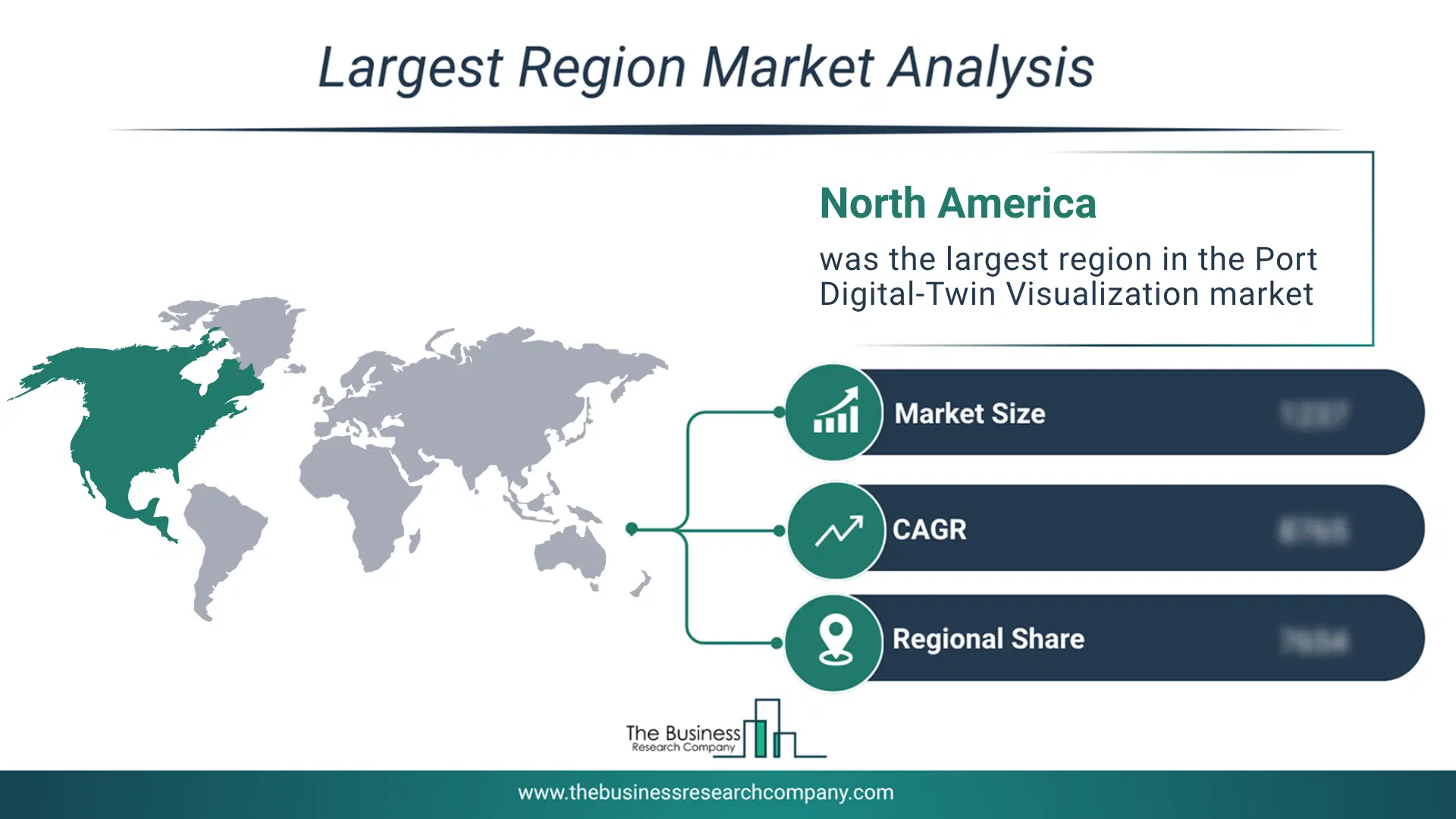
Regional Outlook
North America was the largest region in the port digital-twin visualization market in 2025. Asia-Pacific is expected to be the fastest-growing region in the forecast period. The regions covered in this market report are Asia-Pacific, South East Asia, Western Europe, Eastern Europe, North America, South America, Middle East, Africa. The countries covered in this market report are Australia; Brazil; China; France; Germany; India; Indonesia; Japan; Taiwan; Russia; South Korea; UK; USA; Canada; Italy; Spain.What Defines the Port Digital-Twin Visualization Market?
The port digital-twin visualization market consists of revenues earned by entities by providing services such as real-time vessel traffic monitoring, digital twin-based safety drills, predictive asset health reporting, green operations optimization, and cloud-based collaborative port planning. The market value includes the value of related goods sold by the service provider or included within the service offering. The port digital-twin visualization market also includes sales of AI-powered port operations dashboards, ArcGIS for Smart Ports, IoT-integrated asset monitoring systems, and predictive maintenance analytics tools. Values in this market are ‘factory gate’ values; that is, the value of goods sold by the manufacturers or creators of the goods, whether to other entities (including downstream manufacturers, wholesalers, distributors, and retailers) or directly to end customers. The value of goods in this market includes related services sold by the creators of the goods.How is Market Value Defined and Measured?
The market value is defined as the revenues that enterprises gain from the sale of goods and/or services within the specified market and geography through sales, grants, or donations in terms of the currency (in USD unless otherwise specified). The revenues for a specified geography are consumption values that are revenues generated by organizations in the specified geography within the market, irrespective of where they are produced. It does not include revenues from resales along the supply chain, either further along the supply chain or as part of other products.
This chart presents market attractiveness based on a quantitative evaluation of growth, competition, strategic alignment, and risk, offering a clear view of opportunity areas for decision-making. This chart is for illustrative purposes; the full report contains the complete analysis.

This chart highlights the Total Addressable Market (TAM) by estimating the maximum revenue opportunity using an assumption-driven approach, supporting strategic planning and opportunity sizing across markets. The chart is illustrative; the full report provides a more comprehensive analysis.
What Key Data and Analysis Are Included in the Port Digital-Twin Visualization Market Report 2026?
The port digital-twin visualization market research report is one of a series of new reports from The Business Research Company that provides market statistics, including Market Report 2026?global market size, regional shares, competitors with the market share, detailed market segments, market trends and opportunities, and any further data you may need to thrive in the port digital-twin visualization Market Report 2026? The market research report delivers a complete perspective of everything you need, with an in-depth analysis of the current and future state of the Market Report 2026?Port Digital-Twin Visualization Market Report Forecast Analysis
| Report Attribute | Details |
|---|---|
| Market Size Value In 2026 | $1.47 billion |
| Revenue Forecast In 2030 | $3.1 billion |
| Growth Rate | CAGR of 20.7% from 2026 to 2030 |
| Base Year For Estimation | 2025 |
| Actual Estimates/Historical Data | 2020-2025 |
| Forecast Period | 2026 - 2030 - 2030 |
| Market Representation | Revenue in USD Billion and CAGR from 2026 to 2030 |
| Segments Covered | Component, Deployment Mode, Application, End-User |
| Regional Scope | Asia-Pacific, Western Europe, Eastern Europe, North America, South America, Middle East, Africa |
| Country Scope | The countries covered in the report are Australia, Brazil, China, France, Germany, India, Indonesia, Japan, Taiwan, Russia, South Korea, UK, USA, Canada, Italy, Spain. |
| Key Companies Profiled | Siemens AG, ABB Ltd, Jacobs Solutions Inc., Wärtsilä Corporation, Hexagon AB, Autodesk Inc., DNV Group, Environmental Systems Research Institute Inc., Bentley Systems Incorporated, Kongsberg Digital AS, Cognite AS, Tideworks Technology Inc., NavVis GmbH, Hamburg Port Consulting GmbH, DBiz.ai, Desapex, Teqplay GmbH, MaxWhere B.V., Twinzo GmbH, Unity Technologies SF Inc. |
| Customization Scope | Request for Customization |
| Pricing And Purchase Options | Explore Purchase Options |