
Postpartum Depression Treatment Market Report 2026
Global Outlook – By Type (Postpartum Anxiety, Postpartum Blues, Postpartum Post-Traumatic Stress Disorder (PTSD), Postpartum Obsessive-Compulsive Disorder (OCD), Postpartum Panic Disorder, Postpartum Psychosis), By Treatment Type (Antidepressants, Hormone Therapy, Psychotherapy, Other Treatment Types), By Patient Demographics (Adolescents, Adults), By Distribution Channel (Hospital Pharmacies, Retail Pharmacies, Online Pharmacies) - Market Size, Trends, Strategies, and Forecast to 2030
Postpartum Depression Treatment Market Overview
• Postpartum Depression Treatment market size has reached to $1.28 billion in 2025 • Expected to grow to $1.81 billion in 2030 at a compound annual growth rate (CAGR) of 7.2% • Growth Driver: Increasing Awareness Of Mental Health Issues During Pregnancy Fueling The Growth Of The Market Due To Rising Emotional Vulnerability And Unmet Treatment Needs • Market Trend: Advancements In Diagnosis And Treatment Through Integration Of Multiple Therapeutic Modalities • North America was the largest region in 2025 and Asia-Pacific is the fastest growing region.What Is Covered Under Postpartum Depression Treatment Market?
Postpartum depression (PPD) treatment refers to the medical and psychological care provided to individuals experiencing depression after childbirth. It typically involves a combination of therapy, medication, and support strategies aimed at alleviating symptoms such as persistent sadness, anxiety, fatigue, and difficulty bonding with the baby through medications, psychotherapy, hormonal therapy, and lifestyle interventions to improve maternal mental health and well-being. The main types of postpartum depression treatment are postpartum anxiety, postpartum blues, postpartum post-traumatic stress disorder (PTSD), postpartum obsessive-compulsive disorder (OCD), postpartum panic disorder, and postpartum psychosis. Postpartum anxiety is a condition where new mothers experience excessive worry, fear, or nervousness after childbirth. Treatment options such as antidepressants, hormone therapy, psychotherapy, and others are available for different demographics, including adolescents and adults. These treatments are distributed through various sales channels, including hospital pharmacies, retail pharmacies, and online pharmacies.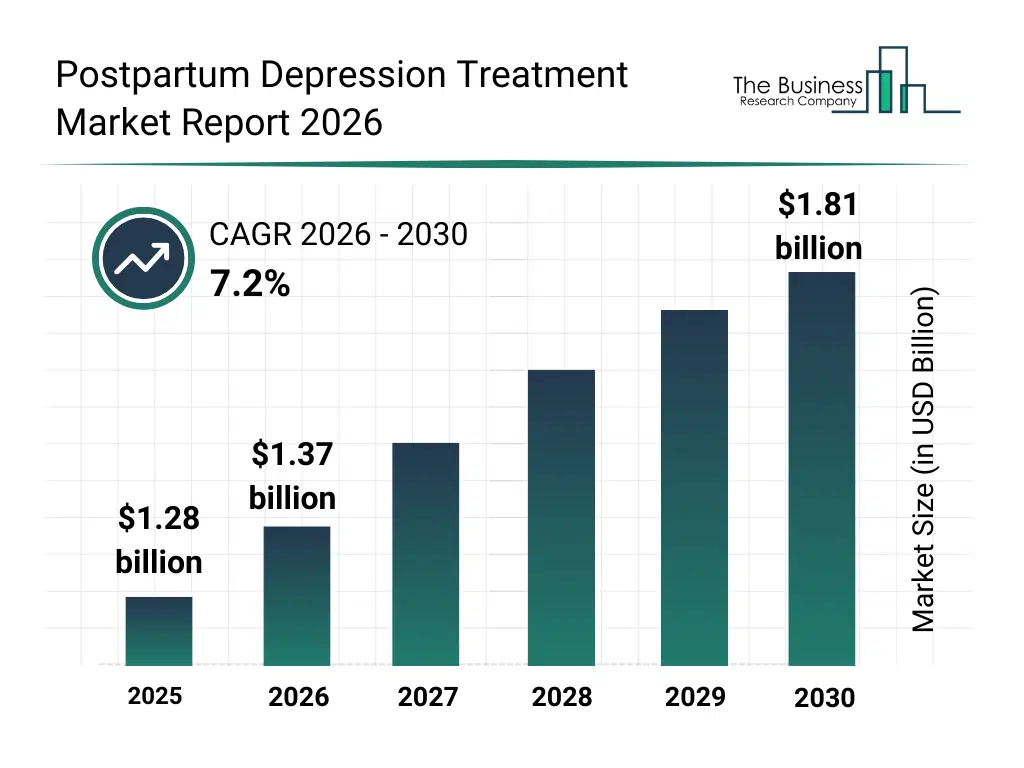
What Is The Postpartum Depression Treatment Market Size and Share 2026?
The postpartum depression treatment market size has grown strongly in recent years. It will grow from $1.28 billion in 2025 to $1.37 billion in 2026 at a compound annual growth rate (CAGR) of 7.5%. The growth in the historic period can be attributed to increasing clinical recognition of postpartum depression, limited availability of specialized treatment options, reliance on conventional antidepressants, expansion of hospital-based mental health services, growing psychotherapy utilization.What Is The Postpartum Depression Treatment Market Growth Forecast?
The postpartum depression treatment market size is expected to see strong growth in the next few years. It will grow to $1.81 billion in 2030 at a compound annual growth rate (CAGR) of 7.2%. The growth in the forecast period can be attributed to increasing approval of novel postpartum therapeutics, rising investments in maternal mental health research, expansion of outpatient and home-based treatment models, growing demand for personalized medicine, increasing integration of digital therapeutics. Major trends in the forecast period include increasing adoption of combination therapy approaches, growing use of telepsychiatry for postpartum care, rising demand for rapid-acting antidepressants, expansion of hormone-based treatment options, enhanced focus on personalized treatment pathways.
Global Postpartum Depression Treatment Market Segmentation
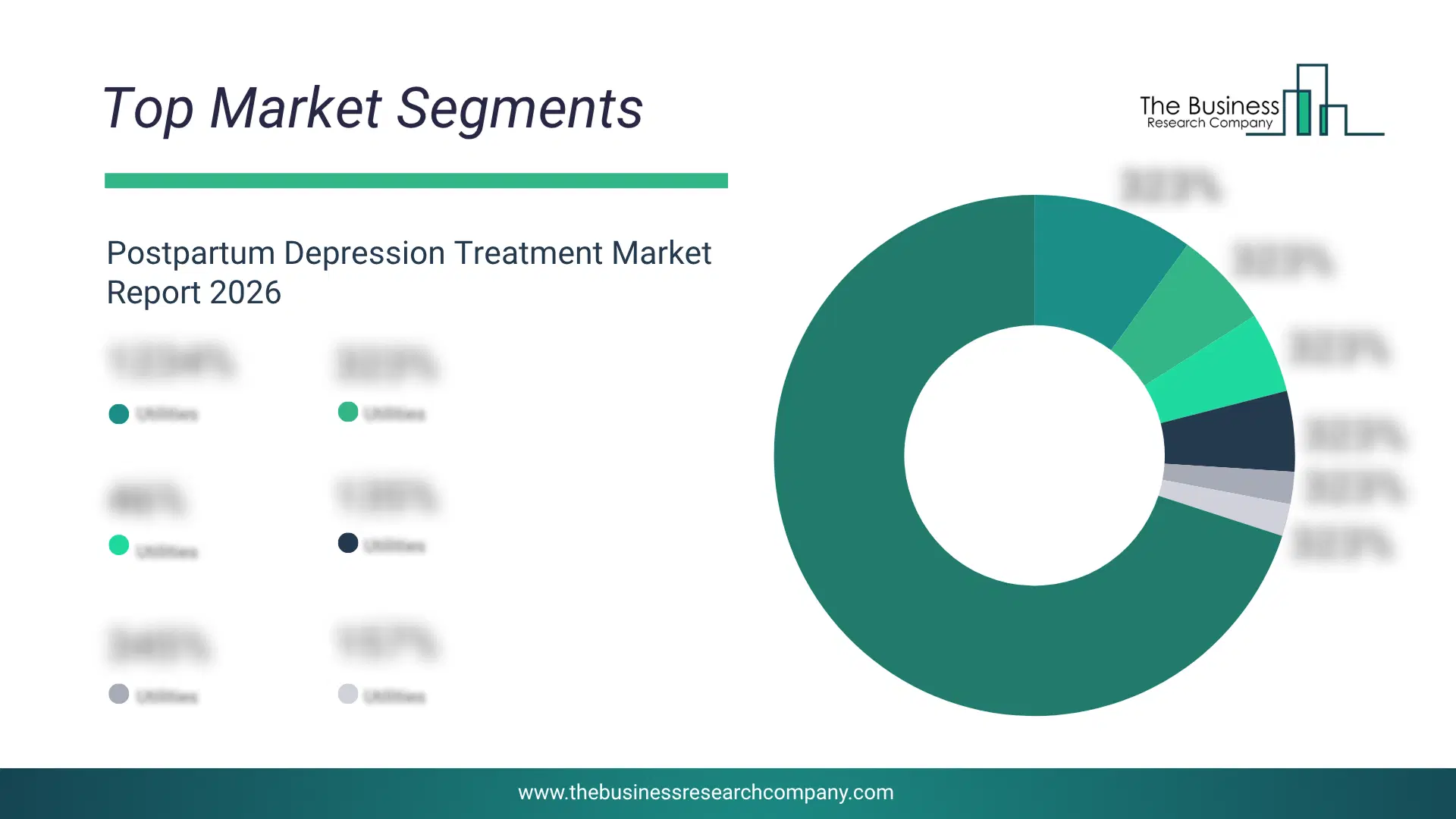
1) By Type: Postpartum Anxiety, Postpartum Blues, Postpartum Post-Traumatic Stress Disorder (PTSD), Postpartum Obsessive-Compulsive Disorder (OCD), Postpartum Panic Disorder, Postpartum Psychosis 2) By Treatment Type: Antidepressants, Hormone Therapy, Psychotherapy, Other Treatment Types 3) By Patient Demographics: Adolescents, Adults 4) By Distribution Channel: Hospital Pharmacies, Retail Pharmacies, Online Pharmacies Subsegments: 1) By Postpartum Anxiety: Cognitive Behavioral Therapy (CBT), Antidepressant Medications, Hormonal Therapy, Support Groups And Counseling 2) By Postpartum Blues: Psychotherapy, Supportive Care, Short-Term Medication 3) By Postpartum Post-Traumatic Stress Disorder (PTSD): Trauma-Focused Cognitive Behavioral Therapy (TF-CBT), Eye Movement Desensitization And Reprocessing (EMDR), Medication, Peer Support Groups 4) By Postpartum Obsessive-Compulsive Disorder (OCD): Exposure And Response Prevention (ERP), Antidepressant Medications (SSRIs), Cognitive Behavioral Therapy (CBT), Supportive Therapy 5) By Postpartum Panic Disorder: Cognitive Behavioral Therapy (CBT), Antidepressants And Anti-Anxiety Medications, Relaxation Techniques, Psychotherapy 6) By Postpartum Psychosis: Antipsychotic Medications, Mood Stabilizers, Electroconvulsive Therapy (ECT)What Is The Driver Of The Postpartum Depression Treatment Market?
The increasing awareness of mental health issues during pregnancy is expected to propel the growth of the postpartum depression treatment market going forward. Mental health issues during pregnancy refer to a range of emotional, psychological, and psychiatric conditions that can affect a woman while she is pregnant. The increasing mental health issues during pregnancy are due to heightened stress and hormonal changes, which can amplify emotional vulnerability and make it harder for women to cope with physical, social, and psychological demands. Postpartum depression treatment improves mental health by alleviating symptoms like sadness, anxiety, and fatigue, enhancing emotional resilience, and promoting healthier mother-child bonding. For instance, in October 2024, according to the Maternal Mental Health Leadership Alliance (MMHLA), a US-based nonprofit organization dedicated to improving maternal mental health, maternal mental health conditions are the most common pregnancy complication, affecting 800,000 U.S. families annually, with 75% going untreated, posing long-term risks to mothers, babies, and families. Therefore, the increasing awareness of mental health issues during pregnancy is driving the growth of the postpartum depression treatment industry.Key Players In The Global Postpartum Depression Treatment Market
Major companies operating in the postpartum depression treatment market are LifeStance Health Inc., Max Healthcare Institute Limited, American Well Corporation, Sakra Premium Hospital Private Limited, Talkspace Inc., Mental Health America, Seven Cups Inc., Marinus Pharmaceuticals Inc., Beyond Blue Ltd, Blooming Wellness Center, Sage Therapeutics Inc., Nurx Inc., Curio Digital Therapeutics Inc., Genesis Lifestyle Medicine, Postpartum Society Of Florida, TalktoAngel, The Motherhood Center, Otsuka Pharmaceutical Co Ltd, Lundbeck A S, Eli Lilly And Company, Pfizer Inc., Johnson And Johnson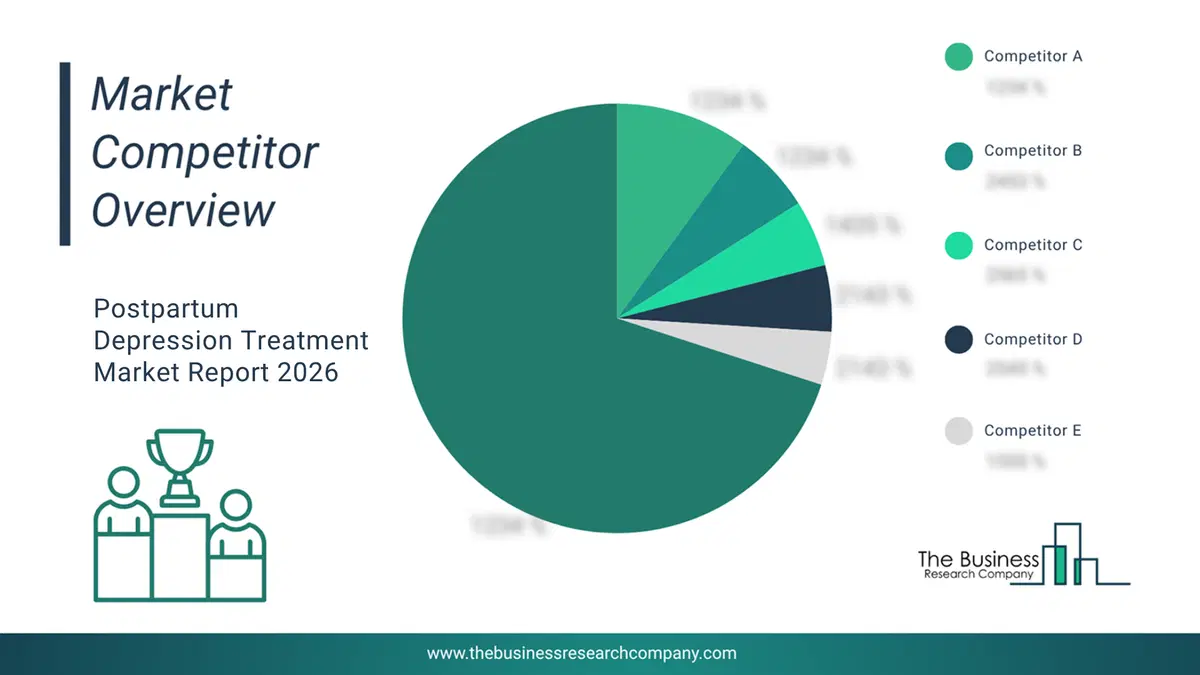
This chart is for illustrative purposes; the full report includes a detailed competitor analysis and comprehensive overview of the top 10 companies in the market.
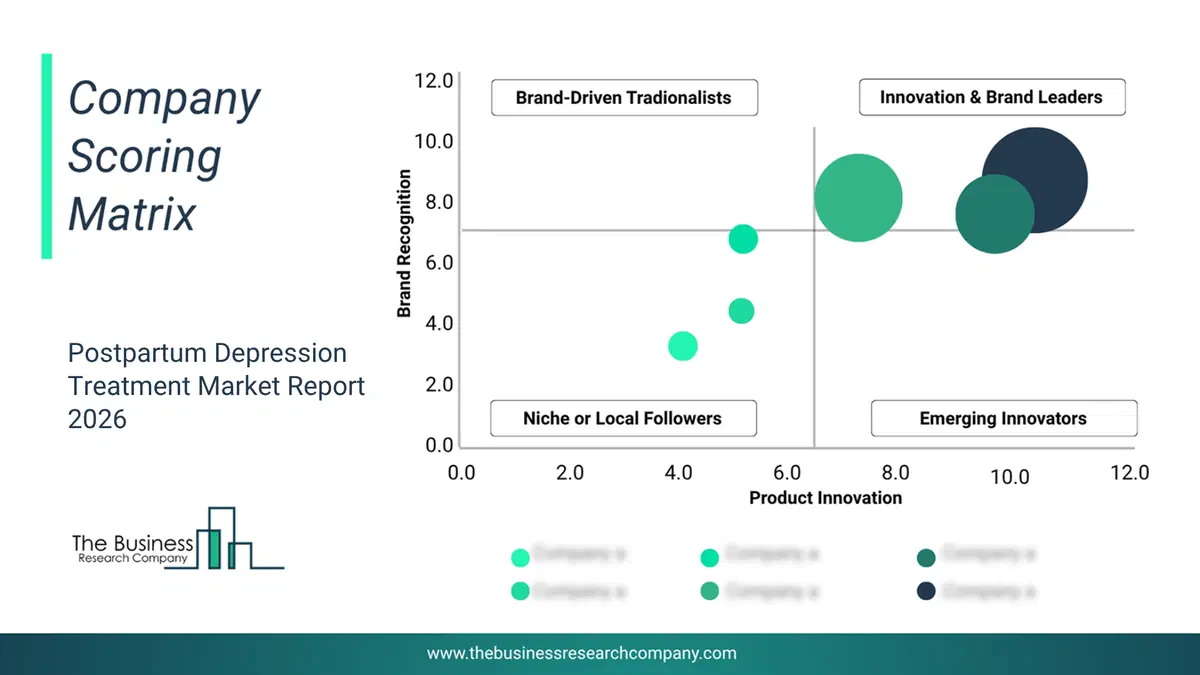
This chart maps companies by product innovation and brand strength, with bubble size indicating relative revenue, helping identify market leaders, challengers, and niche players. This is an illustrative chart; the full report provides a complete and accurate competitive analysis.
Global Postpartum Depression Treatment Market Trends and Insights
Major companies operating in the postpartum depression treatment market are focusing on advancements in diagnosis and treatment, such as prescription digital postpartum depression treatment, to enhance patient outcomes and improve accessibility. Prescription digital postpartum depression treatment refers to clinically validated digital therapeutics (DTx) that healthcare providers prescribe to manage and treat postpartum depression (PPD). For instance, in April 2024, Curio Digital Therapeutics Inc., a US-based digital health company, announced the Food and Drug Administration (FDA) clearance for MamaLift Plus, the first prescription digital therapeutic for postpartum depression (PPD). This eight-week program delivers digital CBT, BAT, IPT, and DBT on a mobile device under healthcare provider supervision. A pivotal study showed a significantly higher rate of clinically meaningful improvement in EPDS scores for MamaLift Plus users compared to a control group. This clearance offers women a non-pharmaceutical alternative for treating mild to moderate PPD.What Are Latest Mergers And Acquisitions In The Postpartum Depression Treatment Market?
In July 2025, Supernus Pharmaceuticals, Inc., a US-based biopharmaceutical company specializing in developing treatments for neuropsychiatric conditions, completed the acquisition of Sage Therapeutics, Inc. for an undisclosed amount. This deal enables Supernus to expand its portfolio with ZURZUVAE (zuranolone), an FDA-approved oral therapy for postpartum depression (PPD), and leverage Sage’s novel CNS discovery platform to accelerate mid- to long-term revenue growth. Sage Therapeutics, Inc. is a US-based developer of medicines for neurological and neuropsychiatric conditions, including depression, PPD, and other mental disorders.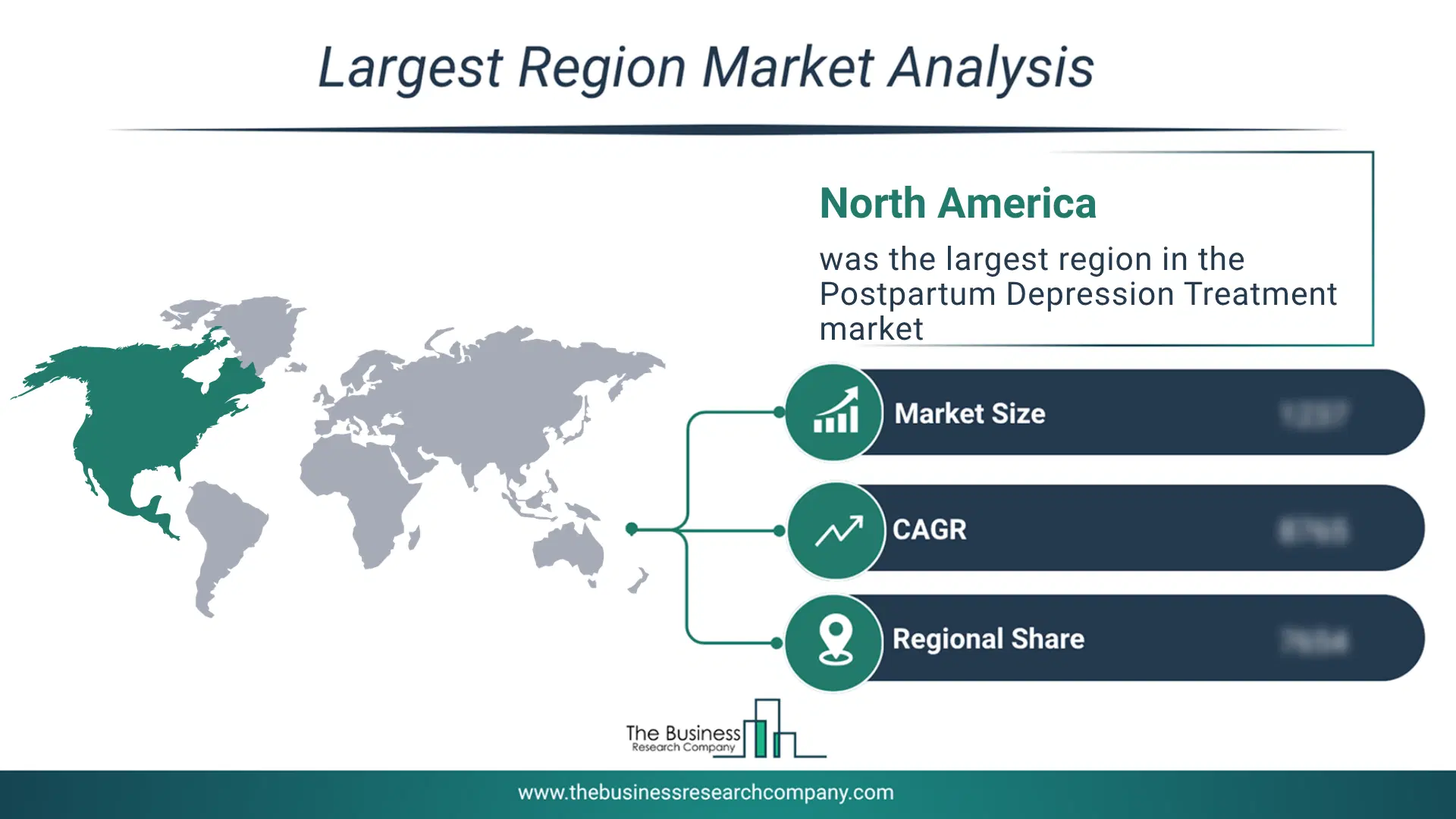
Regional Outlook
North America was the largest region in the postpartum depression treatment market in 2025. Asia-Pacific is expected to be the fastest-growing region in the forecast period. The regions covered in this market report are Asia-Pacific, South East Asia, Western Europe, Eastern Europe, North America, South America, Middle East, Africa. The countries covered in this market report are Australia, Brazil, China, France, Germany, India, Indonesia, Japan, Taiwan, Russia, South Korea, UK, USA, Canada, Italy, Spain.What Defines the Postpartum Depression Treatment Market?
The postpartum depression treatment market consists of revenues earned by entities by providing services such as psychotherapy, medication management, counseling, digital mental health solutions, and alternative therapies. The market value includes the value of related goods sold by the service provider or included within the service offering. The postpartum depression treatment market also includes sales of antidepressant medications, hormone-based therapies, digital health platforms, telehealth services, wearable devices, and mobile applications that support mental health management. Values in this market are ‘factory gate’ values, that is the value of goods sold by the manufacturers or creators of the goods, whether to other entities (including downstream manufacturers, wholesalers, distributors and retailers) or directly to end customers. The value of goods in this market includes related services sold by the creators of the goods.How is Market Value Defined and Measured?
The market value is defined as the revenues that enterprises gain from the sale of goods and/or services within the specified market and geography through sales, grants, or donations in terms of the currency (in USD unless otherwise specified). The revenues for a specified geography are consumption values that are revenues generated by organizations in the specified geography within the market, irrespective of where they are produced. It does not include revenues from resales along the supply chain, either further along the supply chain or as part of other products.
This chart presents market attractiveness based on a quantitative evaluation of growth, competition, strategic alignment, and risk, offering a clear view of opportunity areas for decision-making. This chart is for illustrative purposes; the full report contains the complete analysis.

This chart highlights the Total Addressable Market (TAM) by estimating the maximum revenue opportunity using an assumption-driven approach, supporting strategic planning and opportunity sizing across markets. The chart is illustrative; the full report provides a more comprehensive analysis.
What Key Data and Analysis Are Included in the Postpartum Depression Treatment Market Report 2026?
The postpartum depression treatment market research report is one of a series of new reports from The Business Research Company that provides market statistics, including industry global market size, regional shares, competitors with the market share, detailed market segments, market trends and opportunities, and any further data you may need to thrive in the postpartum depression treatment industry. The market research report delivers a complete perspective of everything you need, with an in-depth analysis of the current and future state of the industry.Postpartum Depression Treatment Market Report Forecast Analysis
| Report Attribute | Details |
|---|---|
| Market Size Value In 2026 | $1.37 billion |
| Revenue Forecast In 2030 | $1.81 billion |
| Growth Rate | CAGR of 7.2% from 2026 to 2030 |
| Base Year For Estimation | 2025 |
| Actual Estimates/Historical Data | 2020-2025 |
| Forecast Period | 2026 - 2030 |
| Market Representation | Revenue in USD Billion and CAGR from 2026 to 2030 |
| Segments Covered | Type, Treatment Type, Patient Demographics, Distribution Channel |
| Regional Scope | Asia-Pacific, Western Europe, Eastern Europe, North America, South America, Middle East, Africa |
| Country Scope | The countries covered in the report are Australia, Brazil, China, France, Germany, India, Indonesia, Japan, Taiwan, Russia, South Korea, UK, USA, Canada, Italy, Spain |
| Key Companies Profiled | LifeStance Health Inc., Max Healthcare Institute Limited, American Well Corporation, Sakra Premium Hospital Private Limited, Talkspace Inc., Mental Health America, Seven Cups Inc., Marinus Pharmaceuticals Inc., Beyond Blue Ltd, Blooming Wellness Center, Sage Therapeutics Inc., Nurx Inc., Curio Digital Therapeutics Inc., Genesis Lifestyle Medicine, Postpartum Society Of Florida, TalktoAngel, The Motherhood Center, Otsuka Pharmaceutical Co Ltd, Lundbeck A S, Eli Lilly And Company, Pfizer Inc., Johnson And Johnson |
| Customization Scope | Request for Customization |
| Pricing And Purchase Options | Explore Purchase Options |