
Predictive Vehicle Technology Market Report 2026
Global Outlook – By Component (Hardware, ADAS, OBD, Telematics), By Vehicle Type (Passenger Vehicle, Commercial Vehicle), By Deployment (On-Premise, Cloud), By Application (Proactive Alerts, Safety And Security, Maintenance Analysis, Predictive Smart Parking) – Market Size, Trends, Strategies, and Forecast to 2030
Predictive Vehicle Technology Market Overview
• Predictive Vehicle Technology market size has reached to $47.13 billion in 2025 • Expected to grow to $110.75 billion in 2030 at a compound annual growth rate (CAGR) of 18.5% • Growth Driver: Surging Car Sales Drive The Predictive Vehicle Technology Market • Market Trend: Technological Advancements Drive Progress In The Predictive Vehicle Technology Market • Asia-Pacific was the largest region in 2025.Market Gains By 2030 – Top Opportunities By Segment
Market Gain identifies the most promising market opportunities by highlighting the segments or products expected to generate the highest incremental revenue growth over the next five years.
What Is Covered Under Predictive Vehicle Technology Market?
The predictive vehicle technology refer to a set of vehicle technologies that incorporate prophetic analytics with the use of both real-time and historical data to predict vehicle behavior, and faults that might hamper vehicles if not corrected in real-time. Predictive vehicle technology uses artificial intelligence (AI) and machine learning (ML) to understand the trends and operating patterns of the vehicle owner which enhances the safety of the vehicle. The main types of components in predictive vehicle technology market are hardware, ADAS, OBD and telematics. The hardware is a mechanical device used in predictive vehicle technology for vehicles that includes interconnected electronic devices used to control a car’s operation, input, and output. The vehicles using predictive vehicle technology are passenger vehicles and commercial vehicles deployed through on-premises and cloud. It is mainly used for proactive alerts, safety and security, maintenance analysis, and predictive smart parking.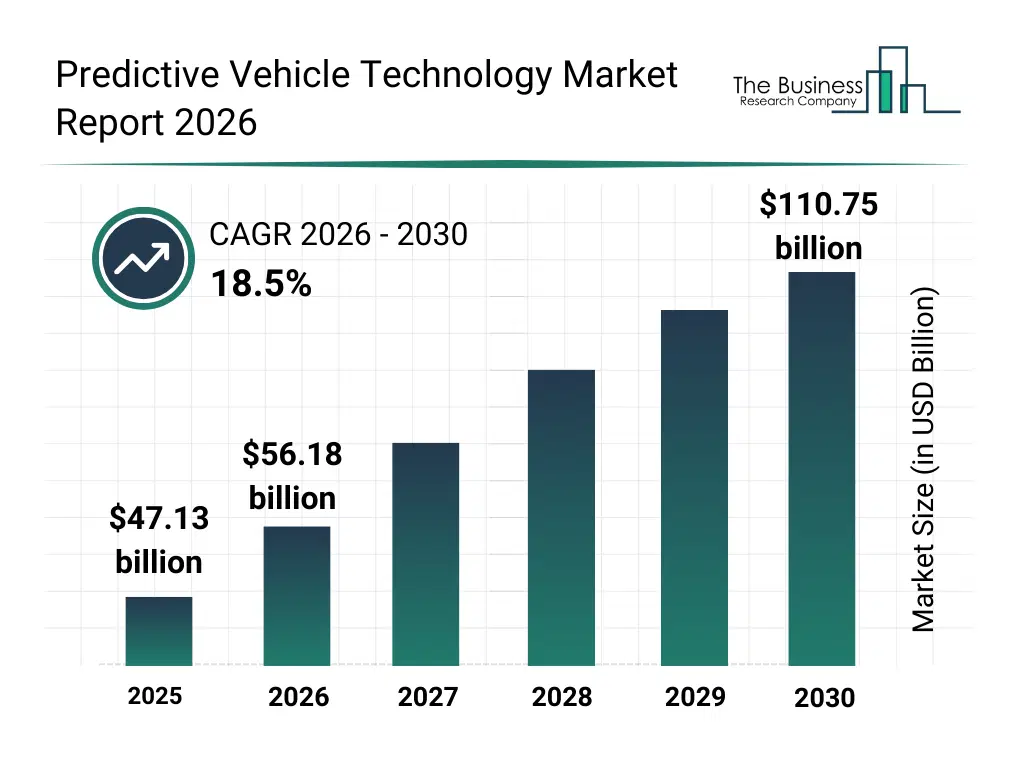
What Is The Predictive Vehicle Technology Market Size and Share 2026?
The predictive vehicle technology market size has grown rapidly in recent years. It will grow from $47.13 billion in 2025 to $56.18 billion in 2026 at a compound annual growth rate (CAGR) of 19.2%. The growth in the historic period can be attributed to increasing adoption of connected vehicle technologies, expansion of onboard diagnostics usage, rising demand for vehicle safety enhancements, growth of fleet management solutions, increasing availability of vehicle sensor data.What Is The Predictive Vehicle Technology Market Growth Forecast?
The predictive vehicle technology market size is expected to see rapid growth in the next few years. It will grow to $110.75 billion in 2030 at a compound annual growth rate (CAGR) of 18.5%. The growth in the forecast period can be attributed to increasing adoption of autonomous and semi-autonomous vehicles, rising demand for real-time predictive insights, expansion of cloud-based vehicle analytics platforms, growing focus on preventive vehicle maintenance, increasing integration of AI and ml in automotive systems. Major trends in the forecast period include increasing adoption of ai-based predictive maintenance systems, growing integration of real-time vehicle data analytics, rising deployment of advanced telematics platforms, expansion of proactive safety and alert systems, enhanced focus on predictive smart parking solutions.
Global Predictive Vehicle Technology Market Segmentation
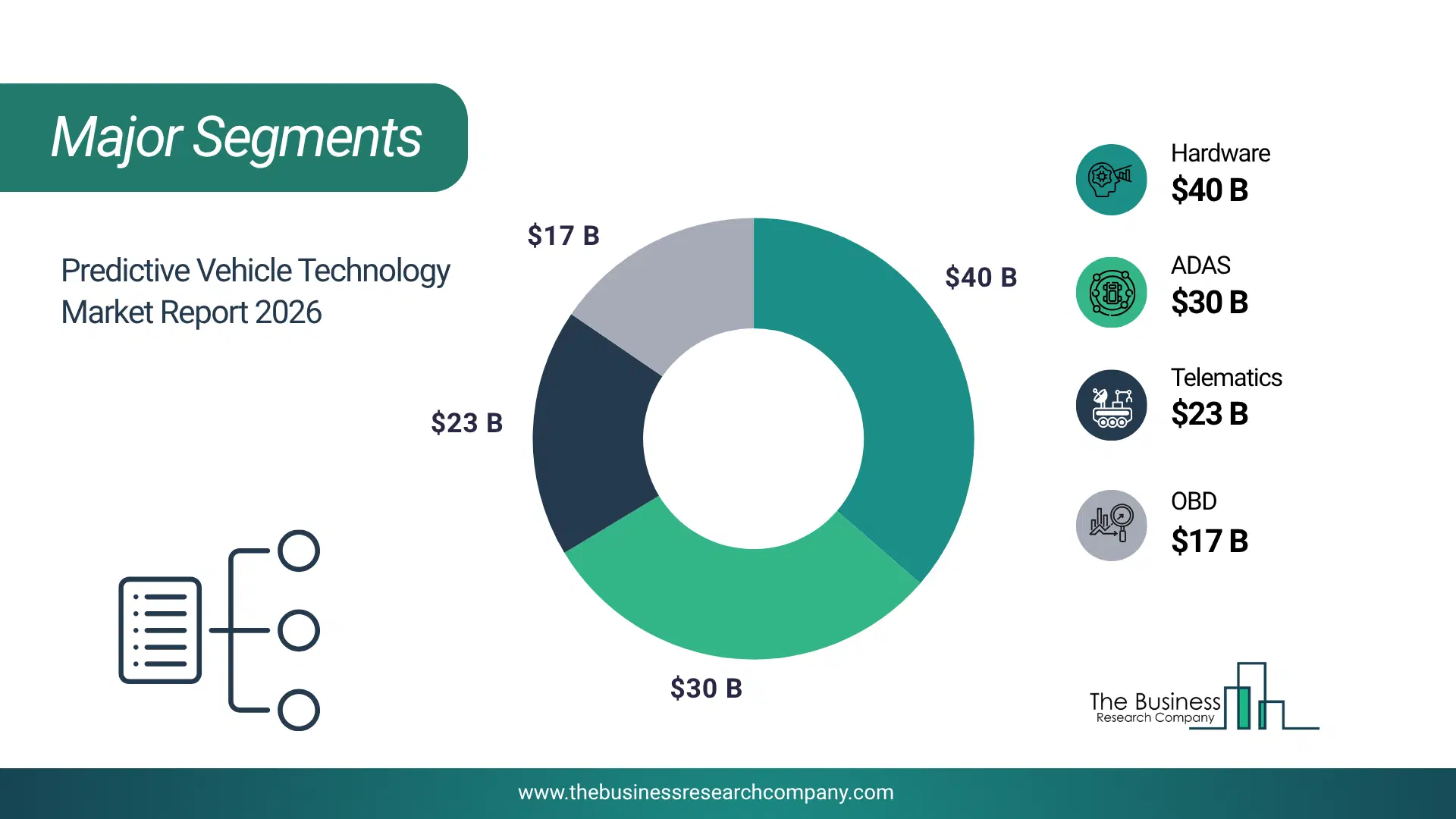
1) By Component: Hardware, ADAS, OBD, Telematics 2) By Vehicle Type: Passenger Vehicle, Commercial Vehicle 3) By Deployment: On-Premise, Cloud 4) By Application: Proactive Alerts, Safety And Security, Maintenance Analysis, Predictive Smart Parking Subsegments: 1) By Hardware: Sensors, Control Units, Communication Devices 2) By ADAS (Advanced Driver Assistance Systems): Adaptive Cruise Control, Lane Departure Warning, Automatic Emergency Braking, Parking Assistance Systems 3) By OBD (On-Board Diagnostics): Diagnostic Scanners, Vehicle Monitoring Systems 4) By Telematics: GPS Tracking Systems, Fleet Management Solutions, Vehicle Health Monitoring Systems The top segments in the predictive vehicle technology market will be: • Hardware will reach $39.64 Billion by 2030. • ADAS will reach $30.26 Billion by 2030. • Telematics will reach $23.48 Billion by 2030. • OBD will reach $16.98 Billion by 2030.What Is The Driver Of The Predictive Vehicle Technology Market?
The increasing car sales is expected to drive the predictive vehicle technology market. A car typically refers to a motor vehicle with four wheels designed for the transportation of passengers or goods on roads. Cars use predictive vehicle technology for better collision avoidance, predictive maintenance, enhanced traffic prediction, and better route optimization. For instance, in July 2023 according to FinMasters, a Europe-based financial information provider, in the United States, approximately 13.74 million cars and light trucks were sold in 2022 and auto sales in the US amounted to 14.8 million in 2023. Therefore, the increasing car sales are expected to propel the growth of predictive vehicle technology industry going forward.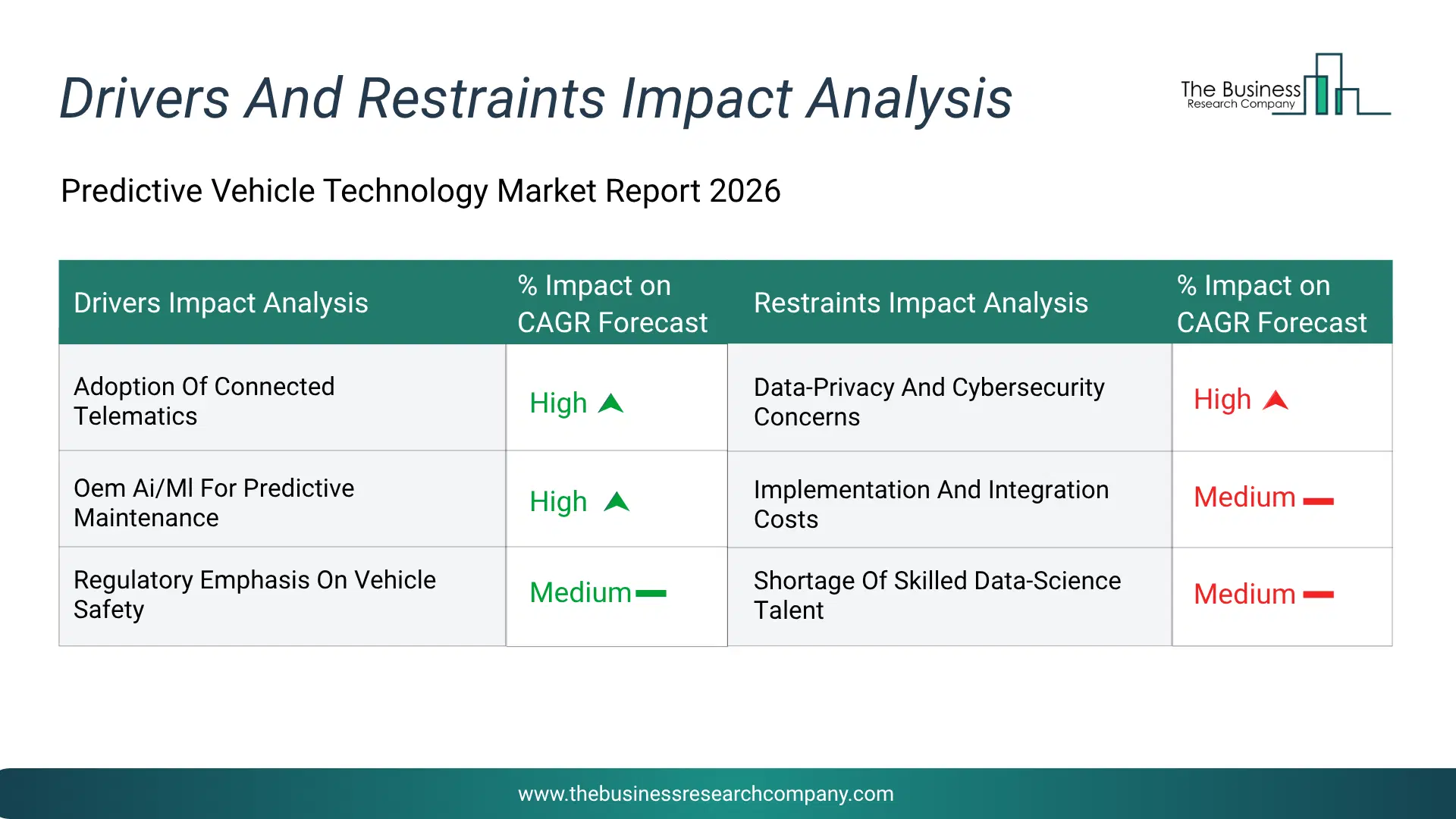
Infographic Chart Showing Key Market Drivers Analysis And Restraints For Predictive Vehicle Technology Market
The chart presents an impact analysis of key drivers and restraints, quantifying their relative influence on the market's growth rate and helping assess the balance between growth enablers and limiting factors. This chart offers a high-level perspective; the full report contains more detailed insights.
How Will The Drivers Impact Growth In The Global Predictive Vehicle Technology Market?
• Adoption Of Connected Telematics (High) – During the forecast period, the adoption of connected telematics is expected to become a key growth driver for the predictive vehicle technology market by 2030. Automotive manufacturers and fleet operators are increasingly leveraging telematics platforms to capture real-time vehicle data, monitor operational performance, and improve decision-making. The growing availability of high-speed connectivity and cloud-enabled communication networks is enabling continuous transmission of vehicle information for advanced analytics. These capabilities support enhanced operational visibility and more efficient transportation management across passenger and commercial vehicle segments. • Oem Ai/Ml For Predictive Maintenance (High) – During the forecast period, the increasing deployment of artificial intelligence and machine learning solutions by OEMs for predictive maintenance is expected to emerge as a major factor driving the expansion of the predictive vehicle technology market by 2030. Vehicle manufacturers are utilizing advanced algorithms to identify performance anomalies, forecast component failures, and optimize service schedules before breakdowns occur. These technologies enable proactive maintenance planning while improving vehicle uptime and lifecycle management. Growing investments in intelligent software platforms and digital vehicle ecosystems are further accelerating the implementation of AI-driven predictive capabilities. • Regulatory Emphasis On Vehicle Safety (Medium) – During the forecast period, the regulatory emphasis on vehicle safety is expected to act as a key growth catalyst for the predictive vehicle technology market by 2030. Governments and transportation authorities are increasingly promoting technologies that enhance accident prevention, vehicle monitoring, and driver awareness. Predictive systems capable of analyzing vehicle behavior and identifying potential safety risks are gaining importance as compliance requirements become more stringent. The integration of advanced monitoring and risk assessment capabilities is encouraging broader deployment of predictive technologies across modern vehicle platforms.How Will The Restraints Impact Growth In The Global Predictive Vehicle Technology Market?
• Data-Privacy And Cybersecurity Concerns (High) – During the forecast period, the data-privacy and cybersecurity concerns act as a significant restraint for the market as connected vehicle systems rely heavily on data collection, storage, and transmission. The increasing risk of data breaches, hacking, and unauthorized access creates hesitation among users and organizations. Sensitive information such as location data and personal driving behavior can be exposed, leading to privacy violations. Regulatory frameworks around data protection further complicate implementation and compliance for companies. These concerns increase the need for robust cybersecurity infrastructure, which adds complexity and cost. Trust issues among consumers can slow down the adoption of connected technologies. Additionally, any major security incident can negatively impact brand reputation and market confidence. As a result, these concerns hinder the overall growth of the market. • Implementation And Integration Costs (High) – During the forecast period, the implementation and integration costs serve as a major restraint for the market due to the high initial investment required for deploying advanced telematics and AI-based systems. Companies need to invest in hardware, software, infrastructure, and skilled personnel to ensure proper system functionality. Integration with existing legacy systems can be complex and time-consuming, leading to additional expenses. Small and medium enterprises may find it difficult to afford such investments, limiting widespread adoption. Maintenance and upgrades further add to the total cost of ownership. Budget constraints can delay or prevent the deployment of advanced solutions. These financial barriers reduce the pace of technological adoption in the market. Consequently, high costs act as a significant obstacle to market growth. • Shortage Of Skilled Data-Science Talent (Medium) – During the forecast period, the shortage of skilled data-science talent is a critical restraint affecting the market as advanced systems rely heavily on data analytics, AI, and machine learning expertise. There is a growing demand for professionals who can develop, manage, and interpret complex data systems. However, the supply of qualified talent is limited, creating a skills gap in the industry. This shortage leads to delays in project implementation and reduces operational efficiency. Companies may also face increased labor costs due to high demand for skilled professionals. Lack of expertise can result in underutilization of advanced technologies. It also limits innovation and the ability to fully leverage data-driven solutions. As a result, the talent gap significantly restricts market growth and scalability.Key Players In The Global Predictive Vehicle Technology Market
Major companies operating in the predictive vehicle technology market are Tesla Inc.; Waymo LLC; Mobileye Inc.; NVIDIA Corporation; Qualcomm Incorporated; Aptiv PLC; ZF Friedrichshafen AG; General Motors Company; Ford Motor Company; Mercedes-Benz Group AG; Bayerische Motoren Werke AG; Toyota Motor Corporation; Honda Motor Co., Ltd.; HyundAI Motor Company; Kia Corporation; Volvo Group; Aurora Innovation Inc.; Argo AI LLC; Nuro Inc.; Baidu Inc.; SAIC Motor Corporation Limited; Stellantis N.V.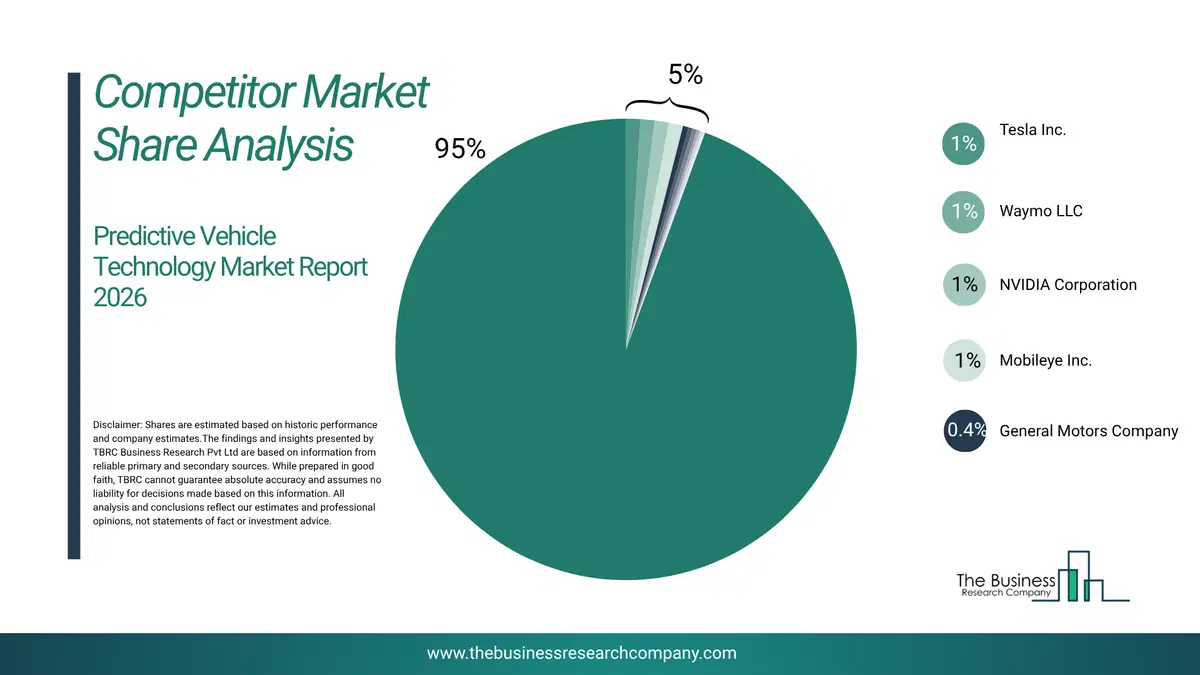
This chart is for illustrative purposes; the full report includes a detailed competitor analysis and comprehensive overview of the top 10 companies in the market.
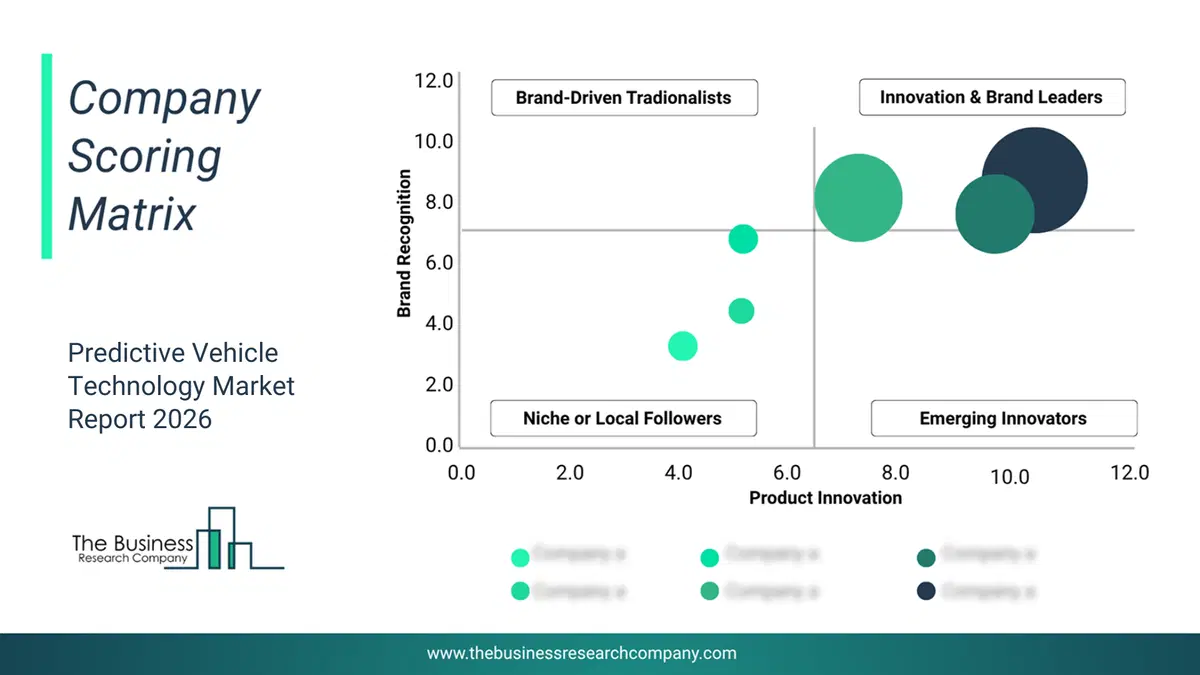
This chart maps companies by product innovation and brand strength, with bubble size indicating relative revenue, helping identify market leaders, challengers, and niche players. This is an illustrative chart; the full report provides a complete and accurate competitive analysis.
Global Predictive Vehicle Technology Market Trends and Insights
Major companies operating in the predictive vehicle technology market are focused on providing new technological solutions/upgrades in predictive vehicle technology to strengthen their position in the market. Predictive vehicle technology also uses hardware components such as ADAS (advanced driver assistance) components, telematics, and onboard diagnostics (OBD) port to predict vehicle behavior and assist the driver. These latest technologies help in ensuring the safety of vehicles. For instance, in January 2024, Infineon, a Germany based semiconductor company and Aurora labs, an Israel based automotive technology company launched AI-Powered Automotive Safety System. By incorporating AI-driven solutions, automotive manufacturers can proactively address potential faults in critical automotive components, ensuring a more reliable and secure driving experience for consumers. The focus on real-time monitoring, safety standards compliance, and transformative solutions positions Infineon and Aurora Labs as trailblazers in shaping the future of automotive technology.What Are Latest Mergers And Acquisitions In The Predictive Vehicle Technology Market?
In March 2023, Powerfleet Inc., a U.S.-based provider of Internet of Things (IoT) software-as-a-service (SaaS) solutions, acquired Movingdots GmbH from Swiss Re Ltd. for an undisclosed amount. With this acquisition, Powerfleet, Inc. aims to strengthen its fleet intelligence platform by integrating industry-leading insurance telematics and sustainability solutions, enhance its global reach in the EMEA markets, and leverage Movingdots’ data-driven mobility solutions to deliver safer, more sustainable, and scalable offerings to insurers, car manufacturers, and mobility platform providers. Movingdots GmbH is a Germany-based company specializing in insurance telematics, sustainable mobility solutions, and data-driven fleet and automotive risk analytics.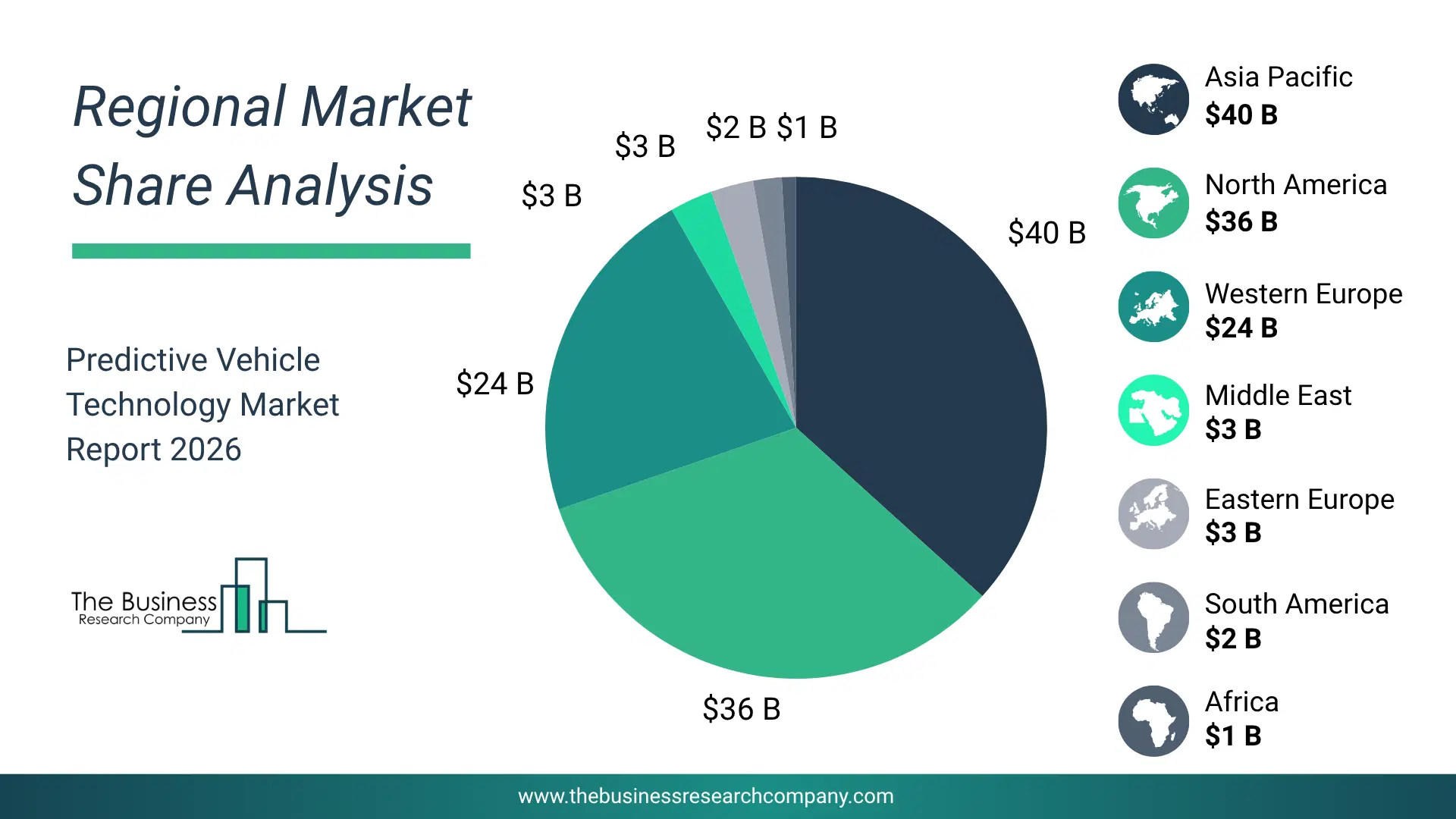
Regional Insights
Asia-Pacific was the largest region in the predictive vehicle technology market in 2025. The regions covered in this market report are Asia-Pacific, South East Asia, Western Europe, Eastern Europe, North America, South America, Middle East, Africa. The countries covered in this market report are Australia, Brazil, China, France, Germany, India, Indonesia, Japan, Taiwan, Russia, South Korea, UK, USA, Canada, Italy, SpainWhat Defines the Predictive Vehicle Technology Market?
The predictive vehicle technology market includes revenues earned by entities by providing services by using predictive maintenance software and predictive maintenance sensors that includes services such as vibration analysis, oil analysis, thermal imaging. The market value includes the value of related goods sold by the service provider or included within the service offering. Only goods and services traded between entities or sold to end consumers are included.How is Market Value Defined and Measured?
The market value is defined as the revenues that enterprises gain from the sale of goods and/or services within the specified market and geography through sales, grants, or donations in terms of the currency (in USD unless otherwise specified). The revenues for a specified geography are consumption values that are revenues generated by organizations in the specified geography within the market, irrespective of where they are produced. It does not include revenues from resales along the supply chain, either further along the supply chain or as part of other products.
This chart presents market attractiveness based on a quantitative evaluation of growth, competition, strategic alignment, and risk, offering a clear view of opportunity areas for decision-making. This chart is for illustrative purposes; the full report contains the complete analysis.

This chart highlights the Total Addressable Market (TAM) by estimating the maximum revenue opportunity using an assumption-driven approach, supporting strategic planning and opportunity sizing across markets. The chart is illustrative; the full report provides a more comprehensive analysis.
What Key Data and Analysis Are Included in the Predictive Vehicle Technology Market Report 2026?
The predictive vehicle technology market research report is one of a series of new reports from The Business Research Company that provides market statistics, including industry global market size, regional shares, competitors with the market share, detailed market segments, market trends and opportunities, and any further data you may need to thrive in the predictive vehicle technology industry. The market research report delivers a complete perspective of everything you need, with an in-depth analysis of the current and future state of the industry.Predictive Vehicle Technology Market Report Forecast Analysis
| Report Attribute | Details |
|---|---|
| Market Size Value In 2026 | $56.18 billion |
| Revenue Forecast In 2030 | $110.75 billion |
| Growth Rate | CAGR of 19.2% from 2026 to 2030 |
| Base Year For Estimation | 2025 |
| Actual Estimates/Historical Data | 2020-2025 |
| Forecast Period | 2026 - 2030 |
| Market Representation | Revenue in USD Billion and CAGR from 2026 to 2030 |
| Segments Covered | Component, Vehicle Type, Deployment, Application |
| Regional Scope | Asia-Pacific, Western Europe, Eastern Europe, North America, South America, Middle East, Africa |
| Country Scope | The countries covered in the report are Australia, Brazil, China, France, Germany, India, Indonesia, Japan, Taiwan, Russia, South Korea, UK, USA, Canada, Italy, Spain. |
| Key Companies Profiled | Tesla Inc.; Waymo LLC; Mobileye Inc.; NVIDIA Corporation; Qualcomm Incorporated; Aptiv PLC; ZF Friedrichshafen AG; General Motors Company; Ford Motor Company; Mercedes-Benz Group AG; Bayerische Motoren Werke AG; Toyota Motor Corporation; Honda Motor Co., Ltd.; HyundAI Motor Company; Kia Corporation; Volvo Group; Aurora Innovation Inc.; Argo AI LLC; Nuro Inc.; Baidu Inc.; SAIC Motor Corporation Limited; Stellantis N.V. |
| Customization Scope | Request for Customization |
| Pricing And Purchase Options | Explore Purchase Options |