
Prefabricated Buildings Market Report 2026
Global Outlook – By Product (Skeleton System, Panel System, Cellular System, Combined System), By Material (Concrete, Glass, Metal, Timber, Other Materials), By Module Type (Bathroom Pods, Kitchenette, Other Module Types), By Application (Industrial, Commercial, Residential) – Market Size, Trends, Strategies, and Forecast to 2030
Prefabricated Buildings Market Overview
• Prefabricated Buildings market size has reached to $177.65 billion in 2025 • Expected to grow to $251.9 billion in 2030 at a compound annual growth rate (CAGR) of 7.2% • Growth Driver: Rising Demand for Residential Homes Fuels Growth in the Prefabricated Buildings Market • Market Trend: EPACK Prefab Invests in New Manufacturing Facility to Capture Southern Indian Market • North America was the largest region and fastest growing region.Market Gains By 2030 – Top Opportunities By Segment
Market Gain identifies the most promising market opportunities by highlighting the segments or products expected to generate the highest incremental revenue growth over the next five years.
What Is Covered Under Prefabricated Buildings Market?
Prefabricated buildings refer to structures that are manufactured off-site in a factory or production facility, where individual components or entire sections are pre-built and then transported to the construction site for assembly. These buildings are designed for quick and efficient construction, often reducing the time and cost compared to traditional on-site building methods. The main products in the prefabricated buildings market are skeleton system, panel system, cellular system, and combined system. The skeleton system refers to a prefabricated building method where the framework of the structure is pre-built in sections and assembled on-site. The various materials include concrete, glass, metal, timber, and others, and several module types including bathroom pods, kitchenette, and others. The different applications encompass industrial, commercial, and residential.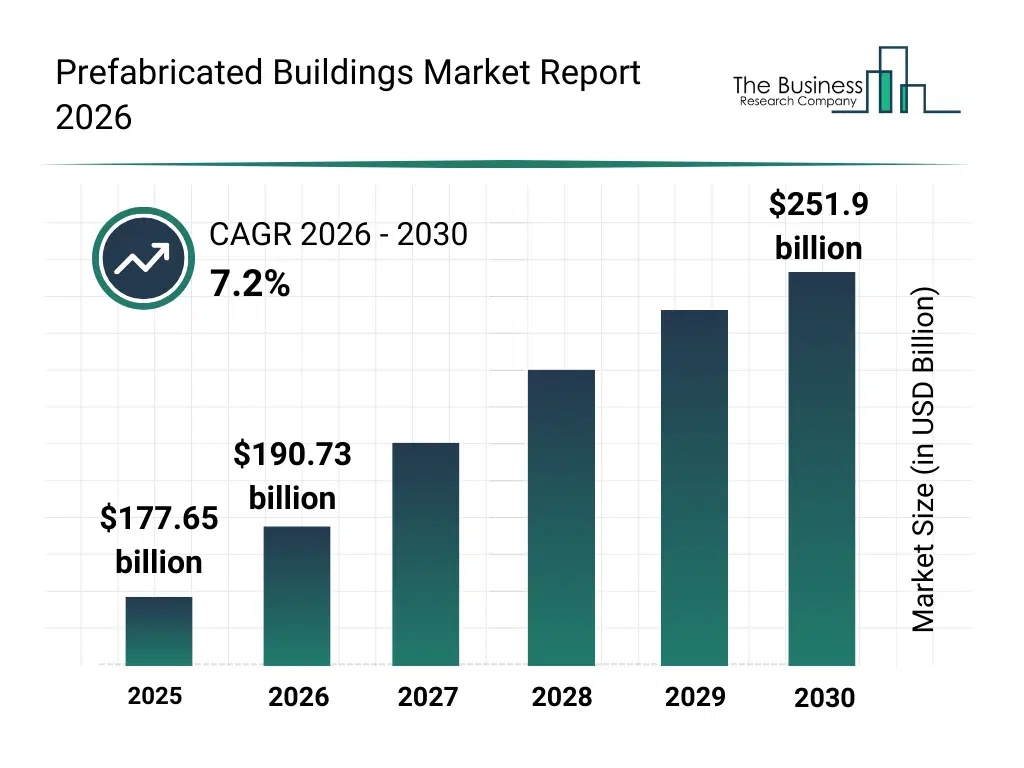
What Is The Prefabricated Buildings Market Size and Share 2026?
The prefabricated buildings market size has grown strongly in recent years. It will grow from $177.65 billion in 2025 to $190.73 billion in 2026 at a compound annual growth rate (CAGR) of 7.4%. The growth in the historic period can be attributed to increasing adoption of standardized prefab systems, early expansion of industrial and commercial modular projects, rising demand for cost-efficient building delivery, growing acceptance of panelized construction, steady growth of modular retrofitting solutions.What Is The Prefabricated Buildings Market Growth Forecast?
The prefabricated buildings market size is expected to see strong growth in the next few years. It will grow to $251.9 billion in 2030 at a compound annual growth rate (CAGR) of 7.2%. The growth in the forecast period can be attributed to increasing use of robotics in prefab factories, rising deployment of sustainable prefab materials, expanding adoption of digital twin technology in prefab design, growing integration of smart monitoring systems in modular structures, development of high-performance composite prefab components. Major trends in the forecast period include increasing standardization in panel assembly, rise in multi-module manufacturing, growth in high-end prefab structural systems, increasing efficiency in large-scale prefab projects, expansion of composite prefab solutions.
Global Prefabricated Buildings Market Segmentation
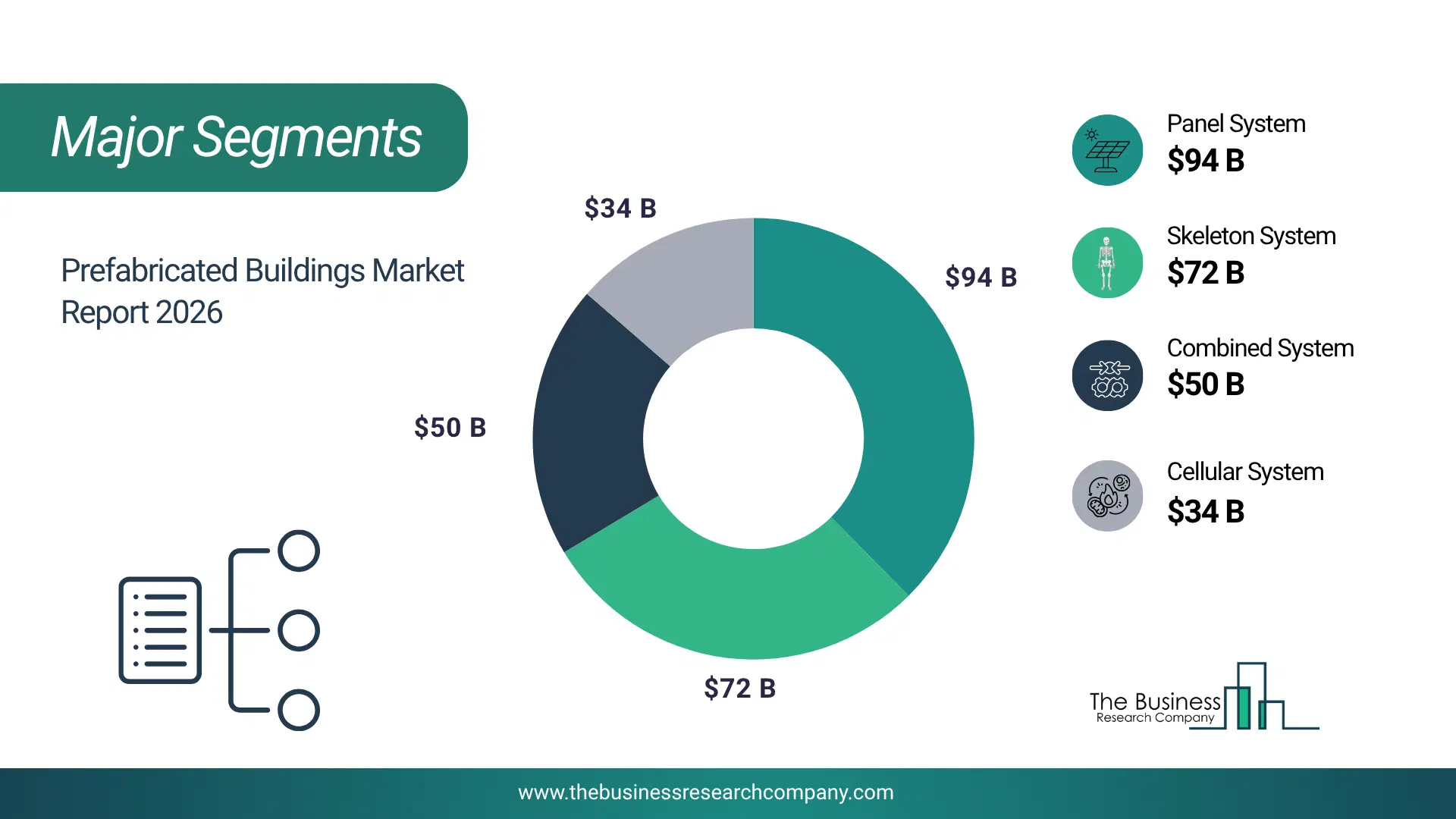
1) By Product: Skeleton System, Panel System, Cellular System, Combined System 2) By Material: Concrete, Glass, Metal, Timber, Other Materials 3) By Module Type: Bathroom Pods, Kitchenette, Other Module Types 4) By Application: Industrial, Commercial, Residential Subsegments: 1) By Skeleton System: Steel Frame Systems, Concrete Frame Systems, Timber Frame Systems, Hybrid Frame Systems, Modular Skeleton Systems 2) By Panel System: Concrete Panel Systems, Steel Panel Systems, Timber Panel Systems, Sandwich Panel Systems, Glass Panel Systems, Prefabricated Wall Panel Systems 3) By Cellular System: Concrete Cellular Systems, Steel Cellular Systems, Modular Cellular Systems, Insulated Cellular Systems, Prefabricated Room Modules 4) By Combined System: Hybrid Structural Systems, Modular Prefabricated Units with Integrated Structural Elements, Mixed-Use Combined Systems, Combined Prefabricated Walls And Floors Systems The top segments in the corporate e-learning market will be: • Online E-learning will reach $114 Billion by 2030. • Learning Management System (LMS) will reach $112.43 Billion by 2030. • Mobile E-learning will reach $65.54 Billion by 2030. • Virtual Classroom will reach $50.02 Billion by 2030. • Rapid E-learning will reach $40.82 Billion by 2030. The top segments in the prefabricated buildings market will be: • Panel System will reach $94.43 Billion by 2030. • Skeleton System will reach $71.9 Billion by 2030. • Combined System will reach $49.95 Billion by 2030. • Cellular System will reach $34.43 Billion by 2030.What Is The Driver Of The Prefabricated Buildings Market?
The demand for residential homes is expected to propel the growth of the prefabricated buildings market going forward. The demand for residential homes is rising due to factors such as population growth, increased urbanization, and a heightened desire for home ownership and personalized living spaces. Prefabricated buildings benefit residential homes by enabling faster, more cost-effective construction with consistent quality, as components are pre-made in a controlled environment and quickly assembled on-site. For instance, in July 2023, according to the Australian Bureau of Statistics, an Australia-based government agency that collects and analyses statistics, the number of dwellings under construction rose by 1.3% to 240,813 in the March quarter of 2023, compared to previous year. Therefore, the demand for residential homes is driving the growth of the prefabricated buildings industry.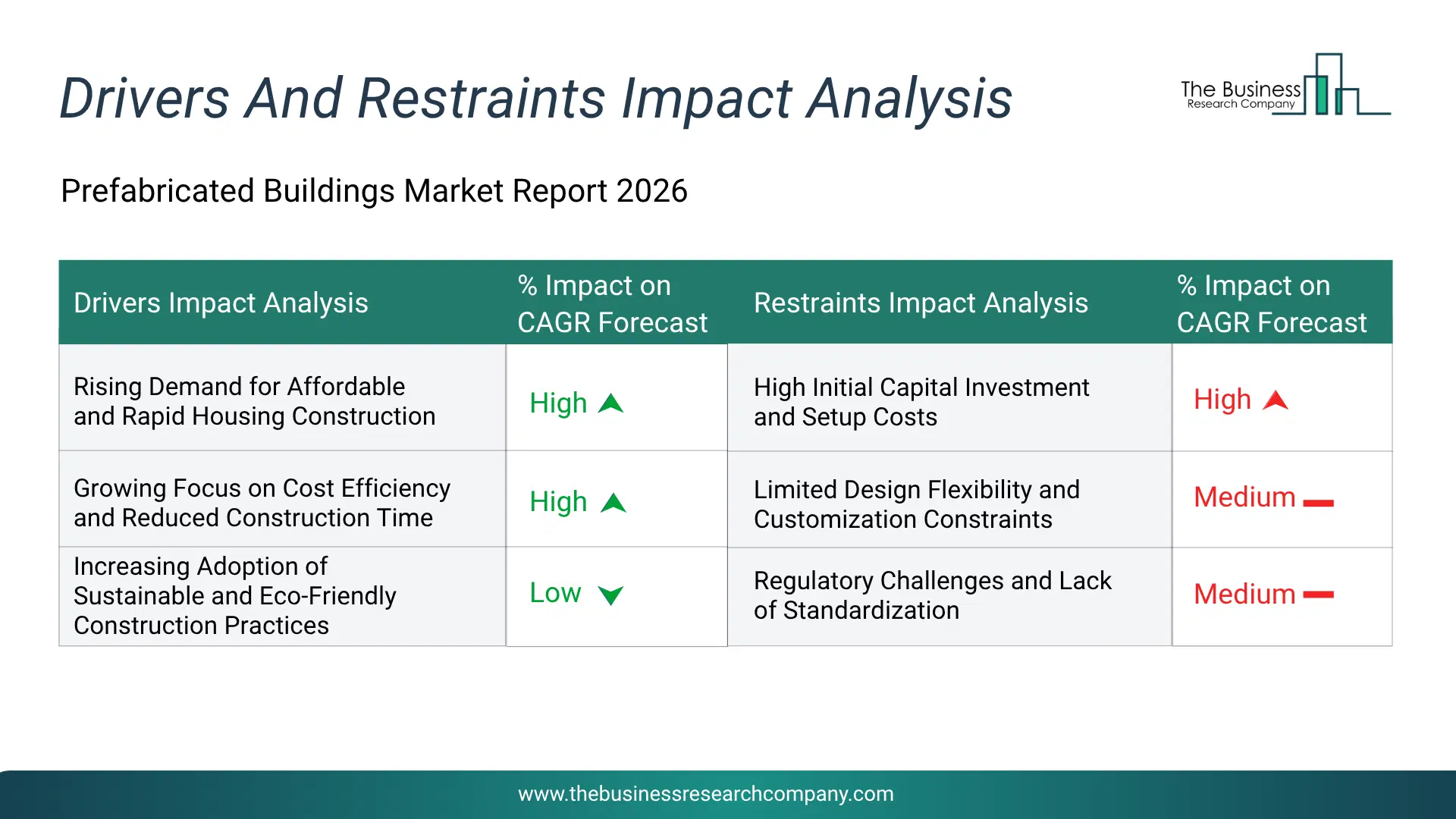
Infographic Chart Showing Key Market Drivers Analysis And Restraints For Prefabricated Buildings Market
The chart presents an impact analysis of key drivers and restraints, quantifying their relative influence on the market's growth rate and helping assess the balance between growth enablers and limiting factors. This chart offers a high-level perspective; the full report contains more detailed insights.
How Will The Drivers Impact Growth In The Global Prefabricated Buildings Market?
• Rising Demand for Affordable and Rapid Housing Construction (High) – During the forecast period, the rising demand for affordable and rapid housing construction is expected to become a key growth driver for the prefabricated buildings market by 2030. Increasing urban populations and housing shortages are accelerating the need for fast and cost-effective construction solutions. Prefabricated buildings enable developers to reduce construction timelines while maintaining consistent quality standards, making them highly suitable for large-scale residential and affordable housing projects. As governments and private developers focus on addressing housing deficits, demand for modular and off-site construction systems continues to increase. Additionally, the ability of prefabricated structures to minimize labor dependency and material waste further supports their adoption across urban development projects. • Growing Focus on Cost Efficiency and Reduced Construction Time (High) – During the forecast period, the growing focus on cost efficiency and reduced construction time is expected to emerge as a major factor driving the expansion of the prefabricated buildings market by 2030. Increasing pressure on developers and contractors to complete projects within shorter timelines and controlled budgets is strengthening the adoption of prefabricated construction methods. Factory-based manufacturing processes improve production efficiency, reduce material wastage, and lower overall labor expenses compared to conventional construction techniques. Such advantages are encouraging commercial, industrial, and institutional developers to invest in modular construction solutions that enhance operational productivity. Higher emphasis on streamlined project execution also supports the use of advanced digital design and automated manufacturing systems in prefabrication facilities. Consequently, the market directly benefits from rising demand for efficient and economically viable building solutions. • Increasing Adoption of Sustainable and Eco-Friendly Construction Practices (Low) – During the forecast period, the increasing adoption of sustainable and eco-friendly construction practices is expected to act as a key growth catalyst for the prefabricated buildings market by 2030. The growing emphasis on environmentally responsible construction is accelerating demand for prefabricated building solutions that reduce material consumption, construction waste, and on-site environmental impact. Modern prefabrication technologies support improved energy efficiency and optimized resource utilization, making them increasingly attractive for green building projects. This shift toward sustainable development encourages construction companies and infrastructure developers to integrate modular systems into residential, commercial, and industrial applications. Furthermore, rising awareness regarding carbon reduction targets and energy-efficient building standards underscores the importance of advanced prefabricated construction methods.How Will The Restraints Impact Growth In The Global Prefabricated Buildings Market?
• High Initial Capital Investment and Setup Costs (High) – During the forecast period, the high initial capital investment acts as a major restraint in the prefabricated buildings market due to the significant costs associated with establishing manufacturing facilities, advanced machinery, and transportation logistics. Companies must invest heavily in production plants, automation technologies, and skilled labor before realizing returns. This becomes particularly challenging for small and medium-sized enterprises, limiting market entry and expansion. Additionally, the cost of transporting large prefabricated components further adds to the financial burden. As a result, adoption may slow down despite long-term cost benefits. • Limited Design Flexibility and Customization Constraints (High) – During the forecast period, the limited flexibility in design and customization is another key restraint affecting the growth of prefabricated buildings. Unlike traditional construction, prefabrication relies on standardized modules and components, which can restrict architectural creativity and unique design requirements. Customers seeking highly customized or complex structures may find prefabricated options less suitable. This limitation is particularly evident in high-end residential and commercial projects where aesthetic differentiation is important. Consequently, some developers prefer conventional construction methods despite higher timelines and costs. • Regulatory Challenges and Lack of Standardization (Low) – During the forecast period, the regulatory barriers and lack of uniform building codes pose significant challenges to the prefabricated buildings market. Different regions have varying construction standards, approval processes, and compliance requirements, making it difficult for manufacturers to scale operations globally. Delays in approvals and complex certification procedures can hinder project timelines and increase costs. Additionally, inconsistent quality standards across regions create uncertainty among buyers and developers. These regulatory complexities slow down adoption and limit market penetration in emerging and developed economies alike.Key Players In The Global Prefabricated Buildings Market
Major companies operating in the prefabricated buildings market are Daiwa House Industry Co. Ltd., Sekisui House Real Estate Holdings Ltd., Skanska AB, Clayton Homes Inc., Bellway plc, Willscot Holdings Corp., Cavco Industries Inc., McGrath RentCorp Inc., Fleetwood Homes Inc., Astron Buildings S.A., Everest Industries Ltd, Veev, Alfa PEB Limited, Palomar Modular Buildings, Plant Prefab Inc., Lindal Cedar Homes Inc., Epack Polymers Pvt. Ltd., Lloyd Insulations Limited, Ramtech Building Systems Inc., Champion Prefabs, Blu Homes Inc., BOXX Modular Inc., Mighty Buildings Inc., Modular Building Systems LLC, TopHat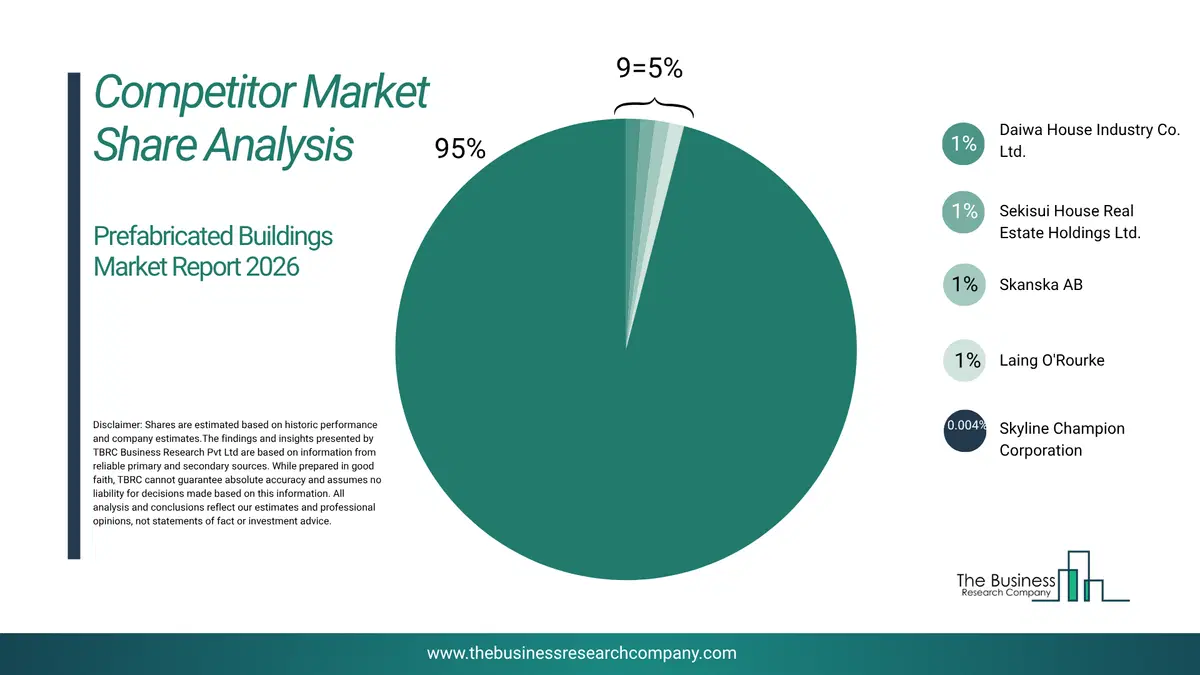
This chart is for illustrative purposes; the full report includes a detailed competitor analysis and comprehensive overview of the top 10 companies in the market.
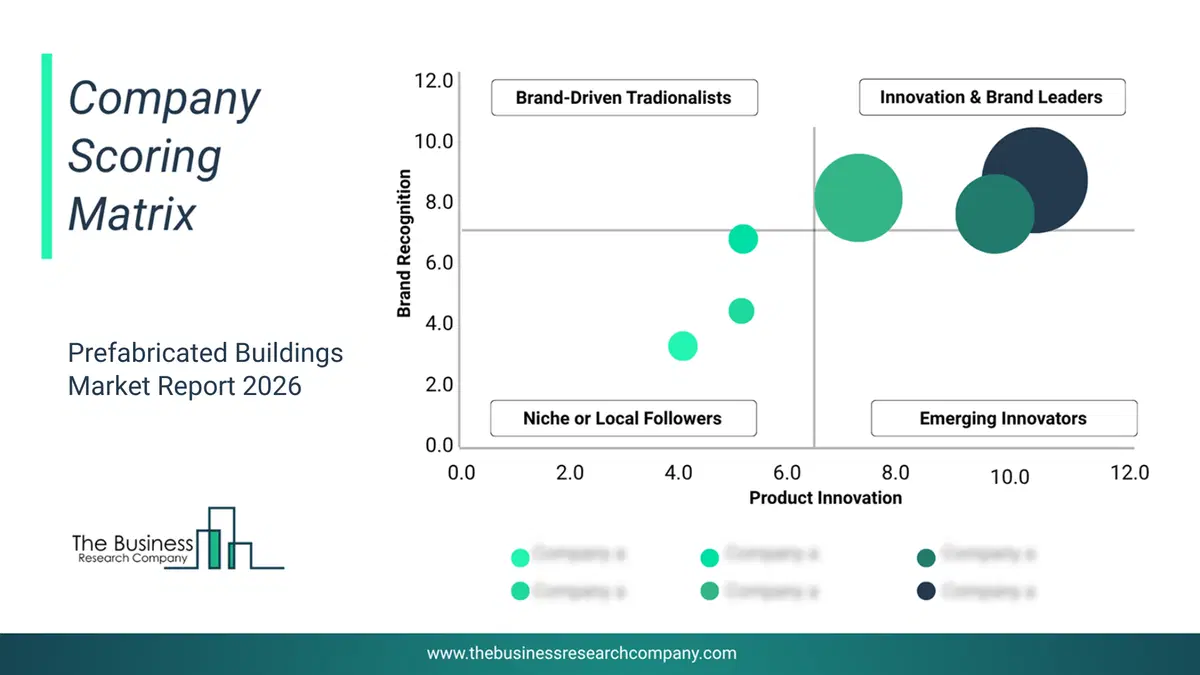
This chart maps companies by product innovation and brand strength, with bubble size indicating relative revenue, helping identify market leaders, challengers, and niche players. This is an illustrative chart; the full report provides a complete and accurate competitive analysis.
Global Prefabricated Buildings Market Trends and Insights
Major companies operating in the prefabricated buildings market are focusing on strategic investments to enhance technological capabilities, expand their product offerings, and increase operational efficiency. Strategic investments enhance prefabricated buildings by advancing manufacturing technology, improving efficiency, and expanding product offerings, leading to faster construction, reduced costs, and more innovative and sustainable solutions. For instance, in February 2023, EPACK Prefab, an India-based manufacturer of pre-engineered building solutions, invested $23.62 million (₹198 crore) to establish a new manufacturing facility in Andhra Pradesh. This facility will be located in the Mambattu Industrial area of Sullurpeta constituency, covering approximately 25 acres. The investment aims to capture a larger market share in the southern region of India, which is experiencing increased demand for prefabricated building solutions. The proximity to the southern market will also help reduce transportation costs, which currently inflate prices by approximately 20%.What Are Latest Mergers And Acquisitions In The Prefabricated Buildings Market?
In July 2024, Wells, a US-based company, providing prefabricated building solutions, acquired GATE Precast for an undisclosed amount. The integration of GATE's product offerings with Wells' existing solutions allows for a more comprehensive suite of services, catering to various construction needs and enhancing overall project capabilities. GATE Precast is a US-based company, providing prefabricated concrete systems for buildings.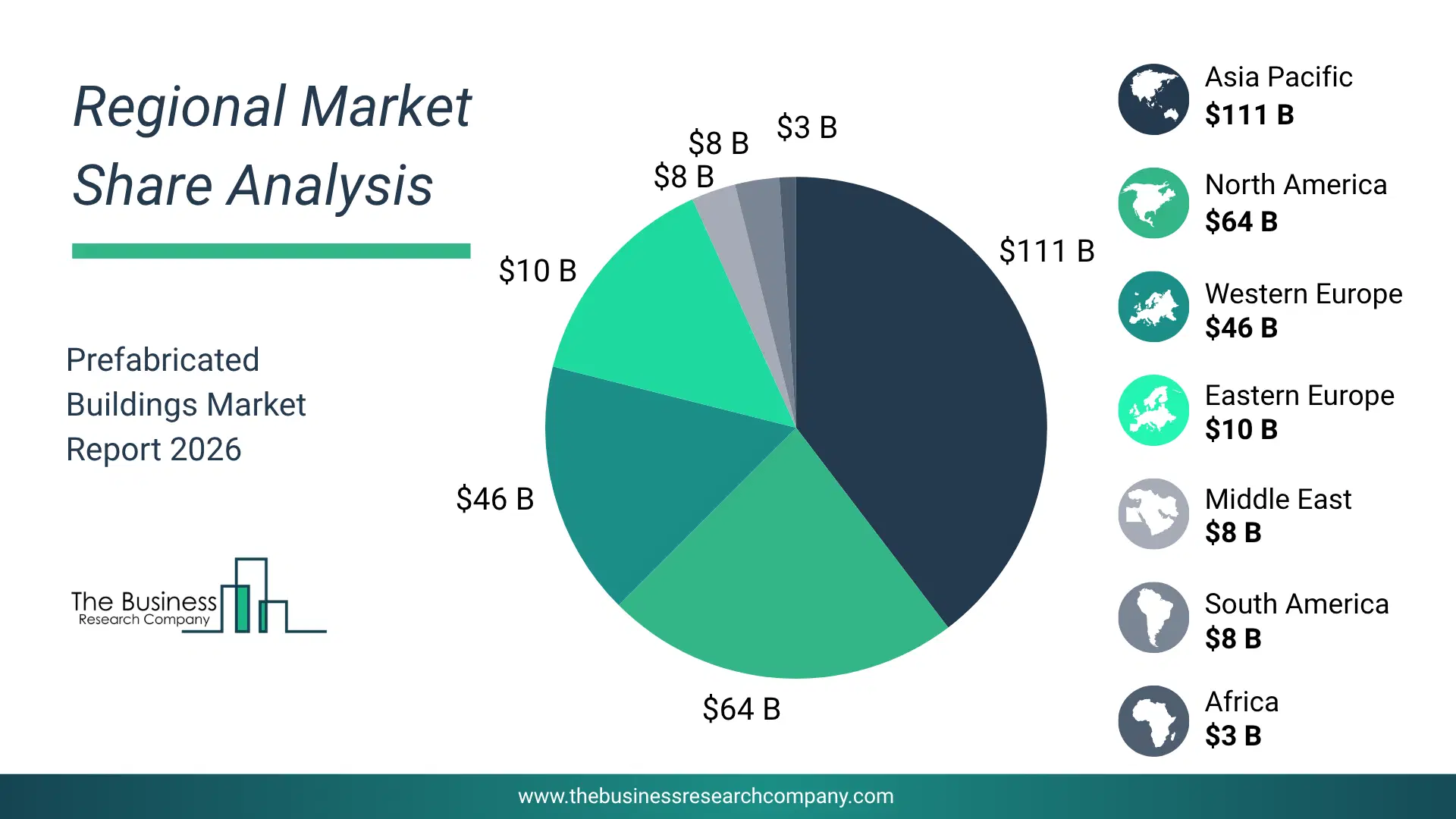
Regional Insights
North America was the largest region in the prefabricated buildings market in 2025. Asia-Pacific is expected to be the fastest-growing region in the forecast period. The regions covered in this market report are Asia-Pacific, South East Asia, Western Europe, Eastern Europe, North America, South America, Middle East, Africa. The countries covered in this market report are Australia, Brazil, China, France, Germany, India, Indonesia, Japan, Taiwan, Russia, South Korea, UK, USA, Canada, Italy, Spain.What Defines the Prefabricated Buildings Market?
The prefabricated buildings market consists of sales of panel systems, modular joints and connectors, beams, columns, and trusses. Values in this market are ‘factory gate’ values, that is the value of goods sold by the manufacturers or creators of the goods, whether to other entities (including downstream manufacturers, wholesalers, distributors and retailers) or directly to end customers. The value of goods in this market includes related services sold by the creators of the goods.How is Market Value Defined and Measured?
The market value is defined as the revenues that enterprises gain from the sale of goods and/or services within the specified market and geography through sales, grants, or donations in terms of the currency (in USD unless otherwise specified). The revenues for a specified geography are consumption values that are revenues generated by organizations in the specified geography within the market, irrespective of where they are produced. It does not include revenues from resales along the supply chain, either further along the supply chain or as part of other products.
This chart presents market attractiveness based on a quantitative evaluation of growth, competition, strategic alignment, and risk, offering a clear view of opportunity areas for decision-making. This chart is for illustrative purposes; the full report contains the complete analysis.

This chart highlights the Total Addressable Market (TAM) by estimating the maximum revenue opportunity using an assumption-driven approach, supporting strategic planning and opportunity sizing across markets. The chart is illustrative; the full report provides a more comprehensive analysis.
What Key Data and Analysis Are Included in thePrefabricated Buildings Market Report 2026?
The prefabricated buildings market research report is one of a series of new reports from The Business Research Company that provides market statistics, including industry global market size, regional shares, competitors with the market share, detailed market segments, market trends and opportunities, and any further data you may need to thrive in the prefabricated buildings industry. The market research report delivers a complete perspective of everything you need, with an in-depth analysis of the current and future state of the industry.Prefabricated Buildings Market Report Forecast Analysis
| Report Attribute | Details |
|---|---|
| Market Size Value In 2026 | $190.73 billion |
| Revenue Forecast In 2030 | $251.9 billion |
| Growth Rate | CAGR of 7.4% from 2026 to 2030 |
| Base Year For Estimation | 2025 |
| Actual Estimates/Historical Data | 2020-2025 |
| Forecast Period | 2026 - 2030 |
| Market Representation | Revenue in USD Billion and CAGR from 2026 to 2030 |
| Segments Covered | Product, Material, Module Type, Application |
| Regional Scope | Asia-Pacific, Western Europe, Eastern Europe, North America, South America, Middle East, Africa |
| Country Scope | The countries covered in the report are Australia, Brazil, China, France, Germany, India, Indonesia, Japan, Taiwan, Russia, South Korea, UK, USA, Canada, Italy, Spain. |
| Key Companies Profiled | Daiwa House Industry Co. Ltd., Sekisui House Real Estate Holdings Ltd., Skanska AB, Clayton Homes Inc., Bellway plc, Willscot Holdings Corp., Cavco Industries Inc., McGrath RentCorp Inc., Fleetwood Homes Inc., Astron Buildings S.A., Everest Industries Ltd, Veev, Alfa PEB Limited, Palomar Modular Buildings, Plant Prefab Inc., Lindal Cedar Homes Inc., Epack Polymers Pvt. Ltd., Lloyd Insulations Limited, Ramtech Building Systems Inc., Champion Prefabs, Blu Homes Inc., BOXX Modular Inc., Mighty Buildings Inc., Modular Building Systems LLC, TopHat |
| Customization Scope | Request for Customization |
| Pricing And Purchase Options | Explore Purchase Options |