
Prescription Lens Market Report 2026
Global Outlook – By Type (Single Vision, Bifocal, Trifocal, Progressive, Active, Other Types), By Coating (Anti-Reflective, Scratch Resistant Coating, Anti-Fog Coating, Ultraviolet Treatment), By Application (Myopia, Hyperopia Or Hypermetropia, Astigmatism, Presbyopia) – Market Size, Trends, Strategies, and Forecast to 2030
Prescription Lens Market Overview
• Prescription Lens market size has reached to $48.69 billion in 2025 • Expected to grow to $63.98 billion in 2030 at a compound annual growth rate (CAGR) of 5.5% • Growth Driver: Rising Ophthalmic Disorders Propel The Prescription Lens Market Growth • Market Trend: Innovative Solutions Revolutionize The Prescription Lens Market • North America was the largest region in 2025 and Asia-Pacific is the fastest growing region.What Is Covered Under Prescription Lens Market?
A prescription lens refers to a customized optical lens designed to correct specific vision problems based on an individual's eye prescription. These lenses are used to correct vision problems associated with certain medical conditions or eye injuries. The main types of prescription lenses are single-vision, bifocal, trifocal, progressive, active, and others. Single vision is a basic prescription lens provided by government healthcare programs for individuals requiring correction for a single vision issue, such as nearsightedness or farsightedness. It includes various coatings, such as anti-reflective, scratch-resistant coating, anti-fog coating, and ultraviolet treatments, which are used for a variety of applications, such as myopia, hyperopia or hypermetropia, astigmatism, and presbyopia.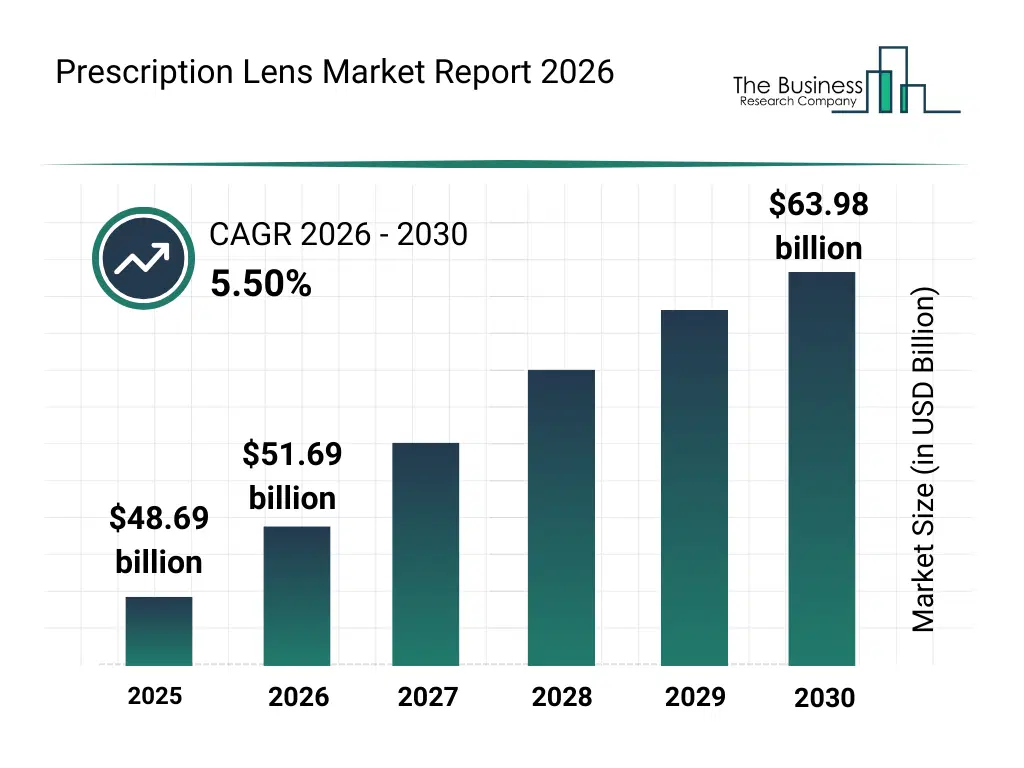
What Is The Prescription Lens Market Size and Share 2026?
The prescription lens market size has grown strongly in recent years. It will grow from $48.69 billion in 2025 to $51.69 billion in 2026 at a compound annual growth rate (CAGR) of 6.2%. The growth in the historic period can be attributed to increasing prevalence of refractive errors, rising use of corrective eyewear, expansion of optometry services, growing aging population, improvements in lens manufacturing technologies.What Is The Prescription Lens Market Growth Forecast?
The prescription lens market size is expected to see strong growth in the next few years. It will grow to $63.98 billion in 2030 at a compound annual growth rate (CAGR) of 5.5%. The growth in the forecast period can be attributed to increasing screen time related vision issues, rising demand for premium eyewear solutions, expansion of digital eye examination services, growing adoption of smart and adaptive lenses, continued innovation in optical materials and coatings. Major trends in the forecast period include increasing demand for progressive and digital lenses, rising adoption of blue light blocking lenses, growing preference for lightweight and high-index materials, expansion of customization and personalization in lens design, enhanced focus on visual comfort and eye health.
Global Prescription Lens Market Segmentation
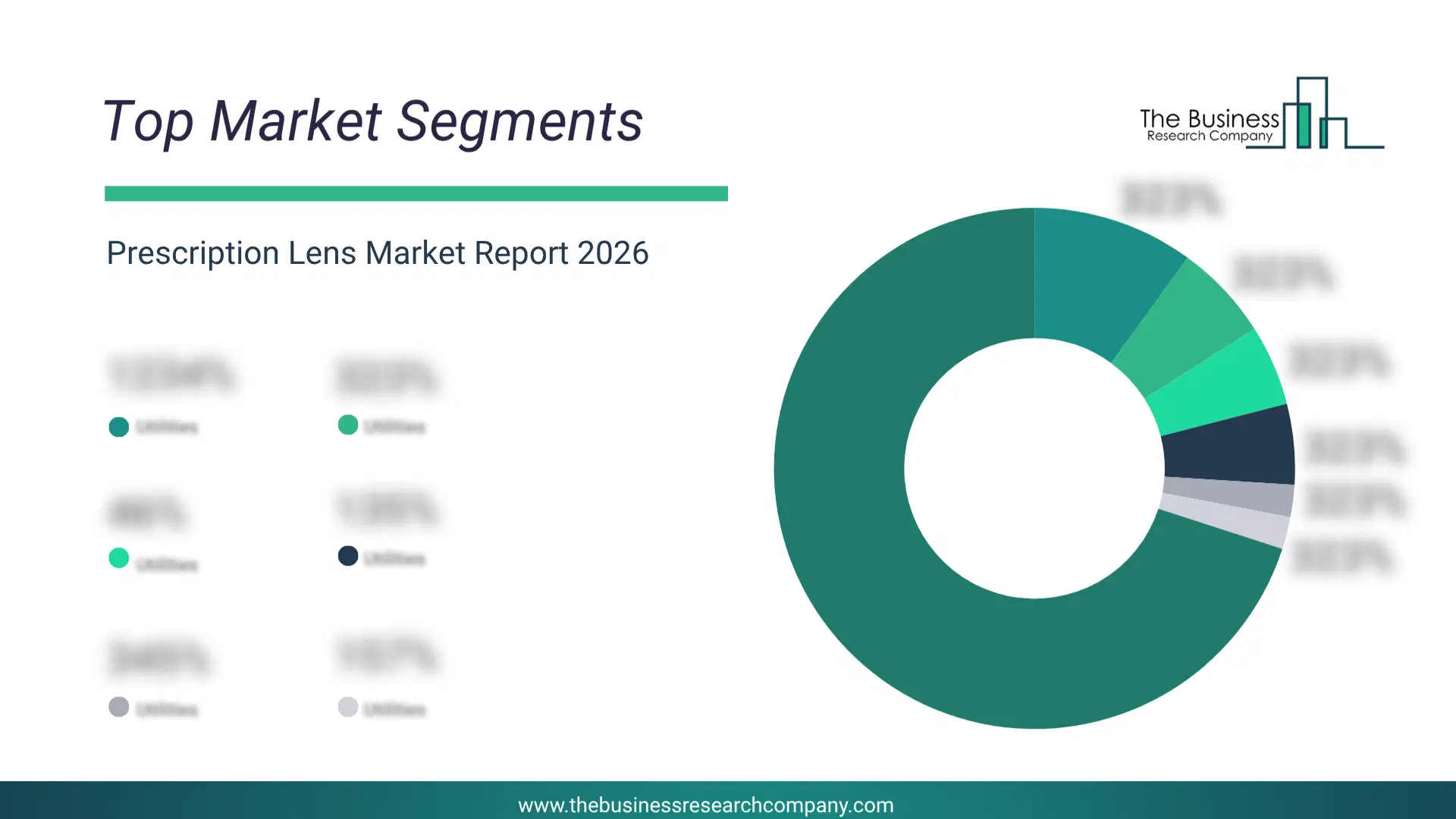
1) By Type: Single Vision, Bifocal, Trifocal, Progressive, Active, Other Types 2) By Coating: Anti-Reflective, Scratch Resistant Coating, Anti-Fog Coating, Ultraviolet Treatment 3) By Application: Myopia, Hyperopia Or Hypermetropia, Astigmatism, Presbyopia Subsegments: 1) By Single Vision: Near Vision Lenses, Distance Vision Lenses 2) By Bifocal: Fixed Bifocal Lenses, Adjustable Bifocal Lenses 3) By Trifocal: Fixed Trifocal Lenses, Adjustable Trifocal Lenses 4) By Progressive: Varifocal Lenses, Digital Progressive Lenses 5) By Active: Sports Prescription Lenses, Outdoor Activity Lenses 6) By Other Types: Photochromic Lenses, Blue Light Blocking LensesWhat Is The Driver Of The Prescription Lens Market?
The increasing incidence of vision impairment is expected to propel the growth of the prescription lens market going forward. Vision impairment refers to conditions affecting the eyes, ranging from common issues such as partial vision loss and blindness to more serious ailments such as macular degeneration. Vision impairment is on the rise due to increased screen time, digital device usage, and aging populations, contributing to conditions such as digital eye strain, myopia, and age-related macular degeneration. Prescription lenses aid in correcting vision impairments such as myopia, hyperopia, astigmatism, and presbyopia by refracting light to focus properly on the retina, improving vision clarity, and reducing strain. For instance, in September 2025, according to the Welsh Government, a UK-based national government of Wales, in 2024–2025, primary care optometrists performed nearly 8,800 low vision assessments, marking a 4.8% increase from 2023–2024 and remaining broadly similar to the numbers recorded in the two years before the pandemic. Therefore, the increase in digital-device-driven vision impairment is driving the growth of the prescription lens industry.Key Players In The Global Prescription Lens Market
Major companies operating in the prescription lens market are EssilorLuxottica S.A., Carl Zeiss AG, Seiko Optical Products Co. Ltd., Hoya Corporation, Nikon Corporation, Bausch And Lomb Incorporated, Safilo Group S.p.A., Marchon Eyewear Inc., Rodenstock GmbH, Menicon Co. Ltd., Warby Parker Inc., Norville Group Ltd, De Rigo Vision S.p.A., ABB Optical Group, Walman Optical, Oakley Inc., Younger Optics, Maui Jim Inc., Charmant Group Inc., Thom Browne Eyewear LLC, Vision Ease Corporation, Zenni Optical LLC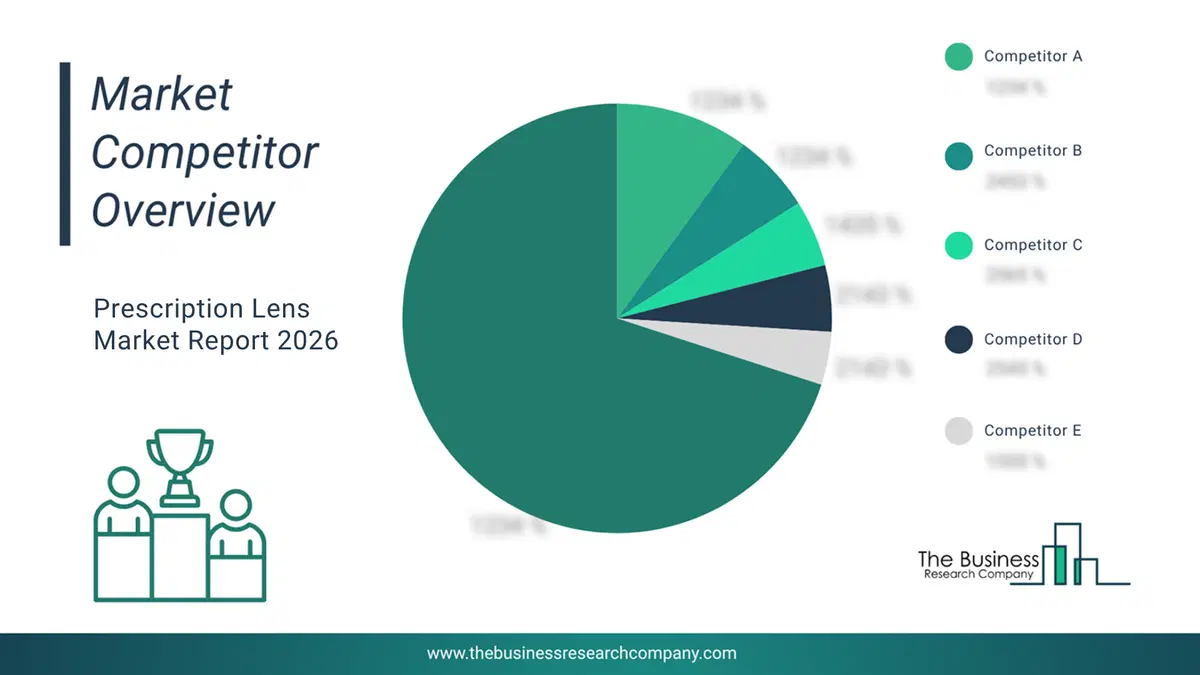
This chart is for illustrative purposes; the full report includes a detailed competitor analysis and comprehensive overview of the top 10 companies in the market.
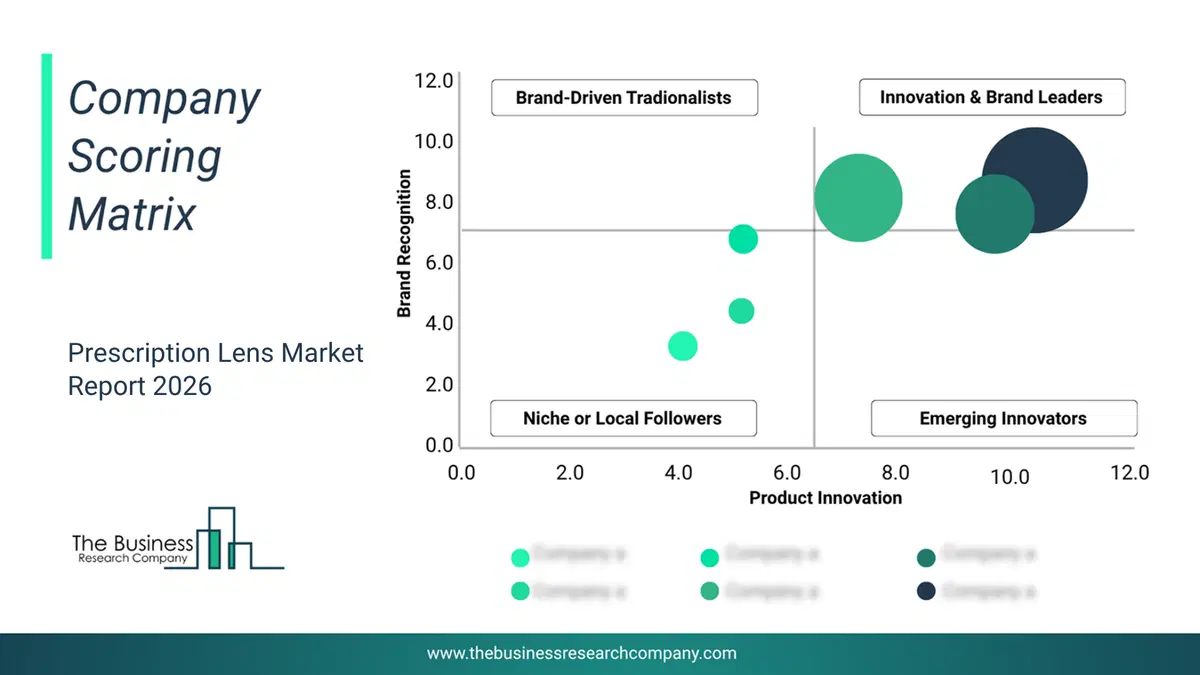
This chart maps companies by product innovation and brand strength, with bubble size indicating relative revenue, helping identify market leaders, challengers, and niche players. This is an illustrative chart; the full report provides a complete and accurate competitive analysis.
Global Prescription Lens Market Trends and Insights
Major companies operating in the prescription lens market are developing myopia management spectacle lenses to address the growing need for effective myopia control in children. Myopia management spectacle lenses are specialized glasses designed to slow the progression of myopia (nearsightedness) in children and young adults. For instance, in November 2023, Shamir Optical Industry, an Israel-based manufacturer of optical lenses for eyeglasses launched Shamir Optimee, a new myopia management spectacle lens designed to address the growing need for effective myopia management, especially in children. This innovative lens integrates Shamir Focusflow's next-generation defocus technology, providing a clear central vertical zone with the child's prescription, allowing for flexible eye movement during near-vision activities.What Are Latest Mergers And Acquisitions In The Prescription Lens Market?
In January 2023, Meta Platforms Inc a US-based technology company, acquired Luxexcel, a for an undisclosed amount. With this acquisition, Meta aimed to deepen its technological capability in prescription AR hardware to accelerate its augmented‑reality ambitions. Luxexcel Group B.V. is a Netherlands-based company that specializes in 3D‑printing prescription lenses that integrate components like holographic film and projectors for smart glasses.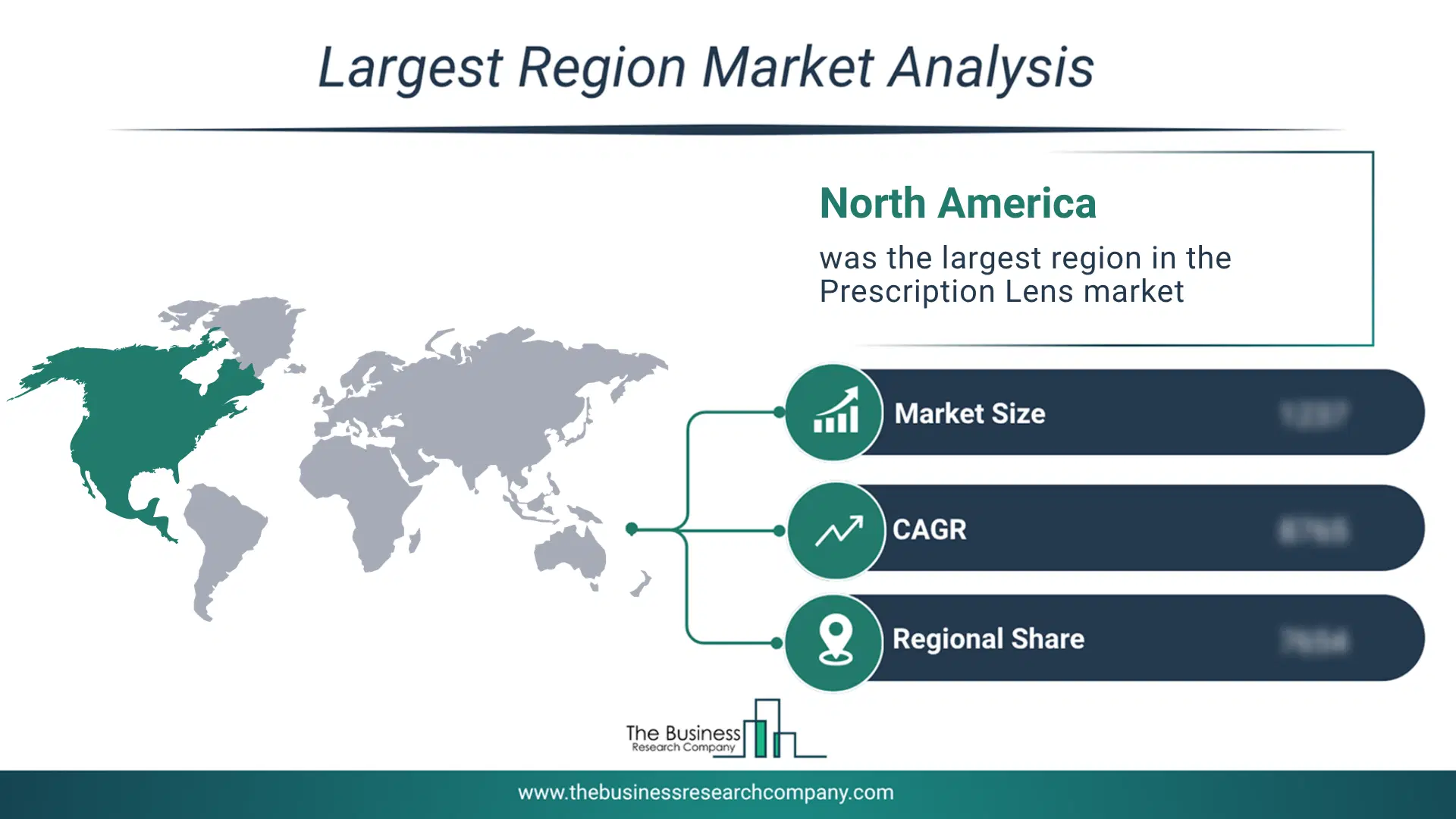
Regional Outlook
North America was the largest region in the prescription lens market in 2025. Asia-Pacific is expected to be the fastest-growing region in the forecast period. The regions covered in this market report are Asia-Pacific, South East Asia, Western Europe, Eastern Europe, North America, South America, Middle East, Africa. The countries covered in this market report are Australia, Brazil, China, France, Germany, India, Indonesia, Japan, Taiwan, Russia, South Korea, UK, USA, Canada, Italy, SpainWhat Defines the Prescription Lens Market?
The prescription lens market consists of sales of products such as UV (ultraviolet) protection lenses, aspheric lenses, trivex lenses, polycarbonate lenses, and blue light-blocking lenses. Values in this market are ‘factory gate’ values, that is, the value of goods sold by the manufacturers or creators of the goods, whether to other entities (including downstream manufacturers, wholesalers, distributors, and retailers) or directly to end customers. The value of goods in this market includes related services sold by the creators of the goods.How is Market Value Defined and Measured?
The market value is defined as the revenues that enterprises gain from the sale of goods and/or services within the specified market and geography through sales, grants, or donations in terms of the currency (in USD unless otherwise specified). The revenues for a specified geography are consumption values that are revenues generated by organizations in the specified geography within the market, irrespective of where they are produced. It does not include revenues from resales along the supply chain, either further along the supply chain or as part of other products.
This chart presents market attractiveness based on a quantitative evaluation of growth, competition, strategic alignment, and risk, offering a clear view of opportunity areas for decision-making. This chart is for illustrative purposes; the full report contains the complete analysis.

This chart highlights the Total Addressable Market (TAM) by estimating the maximum revenue opportunity using an assumption-driven approach, supporting strategic planning and opportunity sizing across markets. The chart is illustrative; the full report provides a more comprehensive analysis.
What Key Data and Analysis Are Included in the Prescription Lens Market Report 2026?
The prescription lens market research report is one of a series of new reports from The Business Research Company that provides market statistics, including industry global market size, regional shares, competitors with the market share, detailed market segments, market trends and opportunities, and any further data you may need to thrive in the prescription lens industry. The market research report delivers a complete perspective of everything you need, with an in-depth analysis of the current and future state of the industry.Prescription Lens Market Report Forecast Analysis
| Report Attribute | Details |
|---|---|
| Market Size Value In 2026 | $51.69 billion |
| Revenue Forecast In 2030 | $63.98 billion |
| Growth Rate | CAGR of 5.5% from 2026 to 2030 |
| Base Year For Estimation | 2025 |
| Actual Estimates/Historical Data | 2020-2025 |
| Forecast Period | 2026 - 2030 |
| Market Representation | Revenue in USD Billion and CAGR from 2026 to 2030 |
| Segments Covered | Type, Coating, Application |
| Regional Scope | Asia-Pacific, Western Europe, Eastern Europe, North America, South America, Middle East, Africa |
| Country Scope | The countries covered in the report are Australia, Brazil, China, France, Germany, India, Indonesia, Japan, Taiwan, Russia, South Korea, UK, USA, Canada, Italy, Spain. |
| Key Companies Profiled | EssilorLuxottica S.A., Carl Zeiss AG, Seiko Optical Products Co. Ltd., Hoya Corporation, Nikon Corporation, Bausch And Lomb Incorporated, Safilo Group S.p.A., Marchon Eyewear Inc., Rodenstock GmbH, Menicon Co. Ltd., Warby Parker Inc., Norville Group Ltd, De Rigo Vision S.p.A., ABB Optical Group, Walman Optical, Oakley Inc., Younger Optics, Maui Jim Inc., Charmant Group Inc., Thom Browne Eyewear LLC, Vision Ease Corporation, Zenni Optical LLC |
| Customization Scope | Request for Customization |
| Pricing And Purchase Options | Explore Purchase Options |