
Process Analytical Technology Market Report 2026
Global Outlook – By Product (Analyzers, Sensors And Probes, Samplers, Software And Services), By Technique (Spectroscopy, Chromatography, Particle Size Analysis, Electrophoresis, Other Techniques), By Application (Small Molecules, Large Molecules, Manufacturing Applications, Other Applications), By End-User (Pharmaceutical Companies, Biotechnology Companies, Other End-Users) – Market Size, Trends, Strategies, and Forecast to 2030
Process Analytical Technology Market Overview
• Process Analytical Technology market size has reached to $3.33 billion in 2025 • Expected to grow to $5.4 billion in 2030 at a compound annual growth rate (CAGR) of 9.8% • Growth Driver: The Rising Demand For Personalized Medicine Fueling The Growth Of The Market Due To Increasing Adoption Of Genomic And Biomarker-Driven Therapies • Market Trend: Single-Cell Analysis Devices Transforming The Process Analytical Technology Market • North America was the largest region in 2025 and Asia-Pacific is the fastest growing region.What Is Covered Under Process Analytical Technology Market?
Process analytical technology refers to a framework for designing, analyzing, and controlling manufacturing processes by measuring critical process parameters (CPPs) and quality attributes in real time. It plays a crucial role in modern manufacturing by enabling real-time monitoring, analysis, and control of manufacturing processes to ensure consistent product quality, improve efficiency, and reduce production costs. The main products of process analytical technology are analyzers, sensors and probes, samplers, and software and services. Analyzers refer to instruments that are used to examine and measure various properties of substances or materials, providing valuable insights into their composition, quality, and characteristics. Various techniques were used, including spectroscopy, chromatography, particle size analysis, electrophoresis, and others. These are used in many applications, majorly small molecules, large molecules, manufacturing applications, and others, and are used in various end-user pharmaceutical companies, biotechnology companies, and others.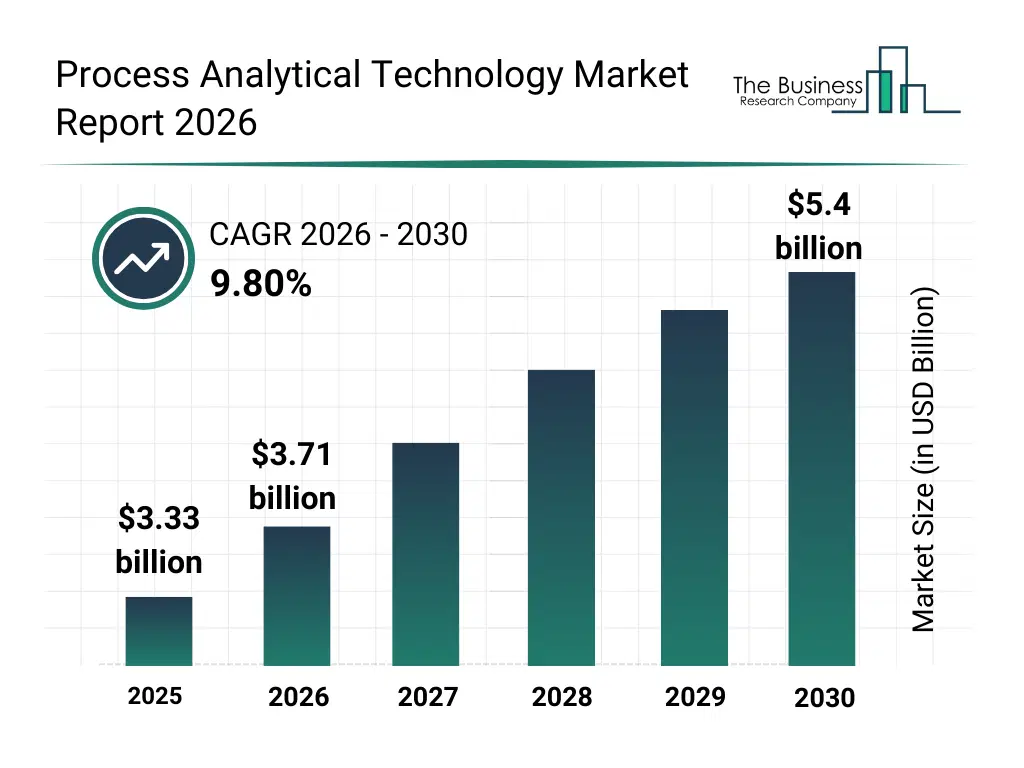
What Is The Process Analytical Technology Market Size and Share 2026?
The process analytical technology market size has grown rapidly in recent years. It will grow from $3.33 billion in 2025 to $3.71 billion in 2026 at a compound annual growth rate (CAGR) of 11.6%. The growth in the historic period can be attributed to adoption of quality-by-design principles, increasing pharmaceutical manufacturing complexity, rising demand for consistent product quality, integration of analytical instruments in batch processes, growth of large molecule therapeutics.What Is The Process Analytical Technology Market Growth Forecast?
The process analytical technology market size is expected to see strong growth in the next few years. It will grow to $5.4 billion in 2030 at a compound annual growth rate (CAGR) of 9.8%. The growth in the forecast period can be attributed to expansion of continuous manufacturing, implementation of real-time release testing, advancements in sensor and probe technologies, increasing adoption of AI-driven process control, regulatory encouragement for process analytical technology implementation. Major trends in the forecast period include real-time process monitoring, predictive quality control, advanced process optimization, integration of analytical tools with manufacturing execution systems, regulatory compliance and process standardization.
Global Process Analytical Technology Market Segmentation
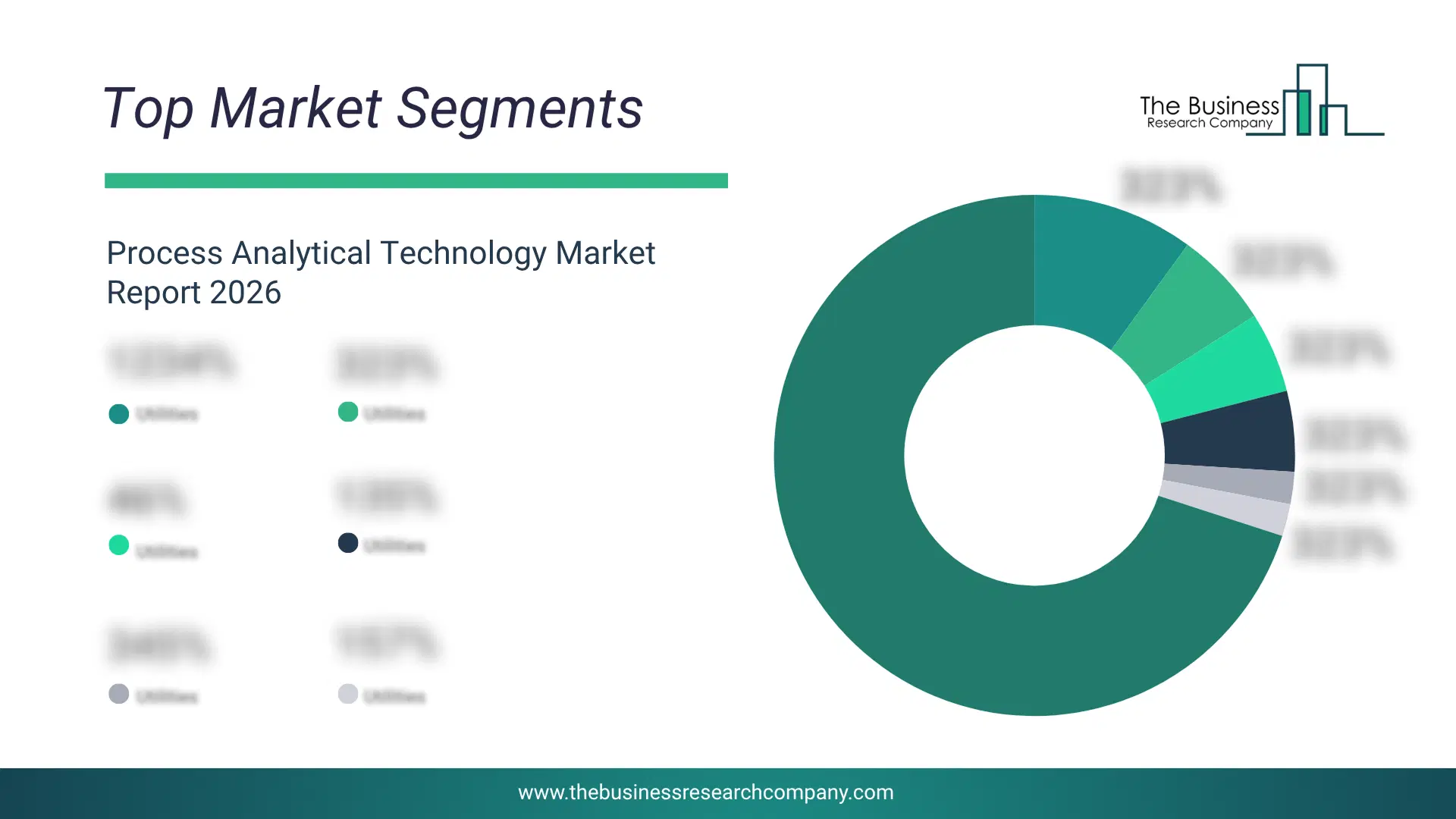
1) By Product: Analyzers, Sensors And Probes, Samplers, Software And Services 2) By Technique: Spectroscopy, Chromatography, Particle Size Analysis, Electrophoresis, Other Techniques 3) By Application: Small Molecules, Large Molecules, Manufacturing Applications, Other Applications 4) By End-User: Pharmaceutical Companies, Biotechnology Companies, Other End-Users Subsegments: 1) By Analyzers: Gas Analyzers, Liquid Analyzers, Particle Size Analyzers, Spectrometers, Chromatographs, Others (Moisture Analyzers, PH Meters) 2) By Sensors And Probes: Temperature Sensors, Pressure Sensors, pH Sensors, Conductivity Sensors, Optical Sensors, Others (Flow Sensors, Humidity Sensors) 3) By Samplers: Manual Samplers, Automated Samplers, Online Samplers, Batch Samplers 4) By Software And Services: Software (Data Analytics, Process Control Software), Cloud-based Solutions, Support And Maintenance Services, Consulting Services, Installation And Integration ServicesWhat Is The Driver Of The Process Analytical Technology Market?
The rising demand for personalized medicine is expected to propel the growth of the process analytical technology (PAT) market going forward. Personalized medicine is an approach that tailors healthcare and treatment strategies to an individual’s genetic profile, environmental factors, and lifestyle behaviors, enabling more targeted and effective therapeutic outcomes. Advancements in genomics and biomarker-driven technologies are accelerating the adoption of personalized medicine by enabling the development of highly customized treatments. PAT facilitates this transition by offering real-time monitoring, analysis, and control of critical manufacturing parameters for precision therapies, such as gene therapies and individualized biologics, ensuring product quality, accuracy, and batch consistency. For instance, in February 2024, according to the Personalized Medicine Coalition, a US-based non-profit organization, in 2023, the FDA approved 16 new personalized therapies for patients with rare diseases, marking a substantial rise from the 6 approvals recorded in 2022. Therefore, the rising demand for personalized medicine is driving the growth of the process analytical technology industry.Key Players In The Global Process Analytical Technology Market
Major companies operating in the process analytical technology market are Siemens AG, Thermo Fisher Scientific Inc, Danaher Corporation, ABB Ltd, GE Healthcare, Emerson Electric Co, Agilent Technologies Inc, Teledyne Technologies Incorporated, Sartorius AG, Mettler-Toledo, PerkinElmer Inc, Shimadzu Corporation, Waters Corporation, Bruker Corporation, HORIBA Ltd, Carl Zeiss AG, Nova Biomedical, TECAN Group Ltd, Repligen Corporation, Hamilton Company, Oxford Instruments plc, Malvern Panalytical, Hitachi High-Tech Analytical Science, JEOL Ltd, Yokogawa Electric Corporation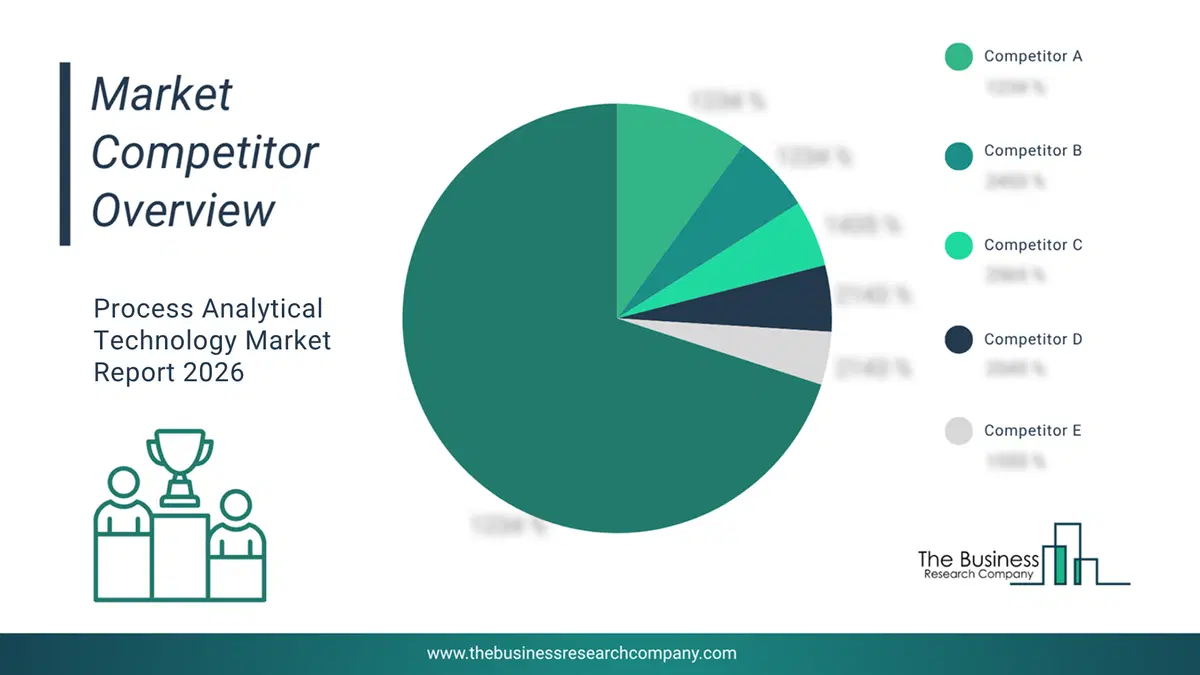
This chart is for illustrative purposes; the full report includes a detailed competitor analysis and comprehensive overview of the top 10 companies in the market.
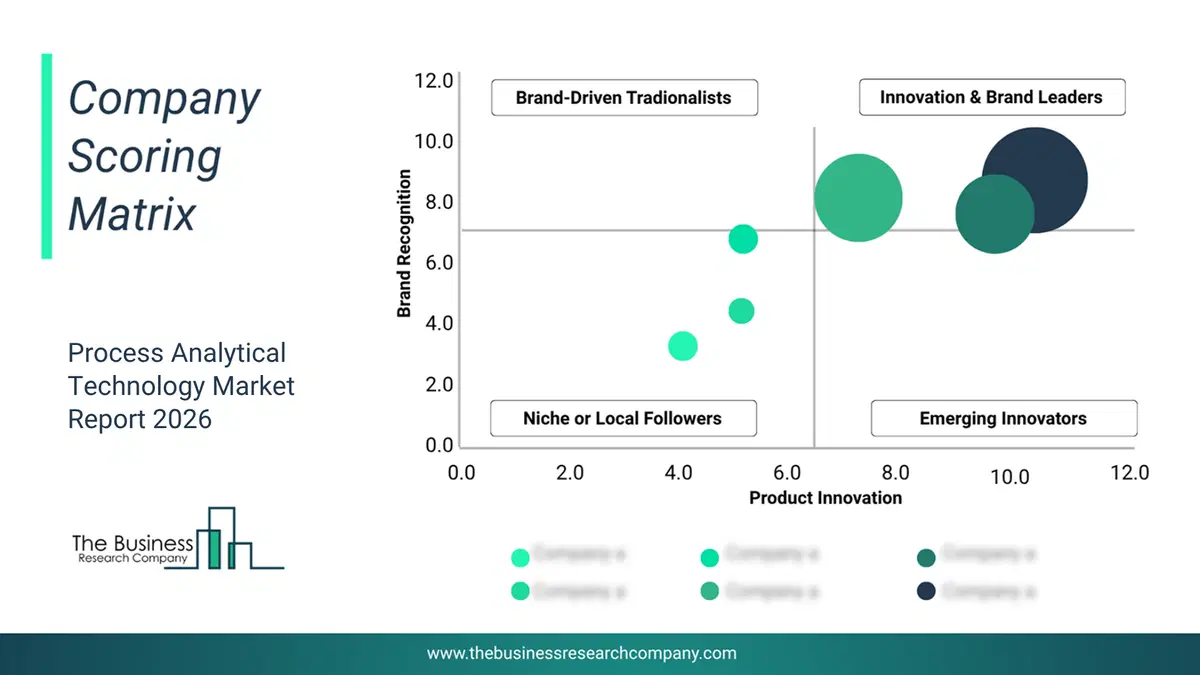
This chart maps companies by product innovation and brand strength, with bubble size indicating relative revenue, helping identify market leaders, challengers, and niche players. This is an illustrative chart; the full report provides a complete and accurate competitive analysis.
Global Process Analytical Technology Market Trends and Insights
Major companies operating in the process analytical technology market are developing innovative products, such as new compact radiance instruments, to gain a competitive edge in the market. The new compact radiance instrument analyzes individual cells in a population, allowing for high-resolution characterization of cellular heterogeneity, responses, and behavior in real time during manufacturing. For instance, in October 2023, LumaCyte Inc., a US-based biotechnology company, launched a new compact radiance instrument specifically designed for advanced therapy biomanufacturing and quality control environments. The radiance instrument is a high-content, label-free microfluidic cell analyzer and sorter that can perform single-cell analysis and sorting. This innovative instrument is noteworthy for its small size, taking up only 16 inches of bench space while maintaining advanced technological capabilities. This technology is significant for applications in biomanufacturing and quality control environments, as it offers efficient and precise analytical capabilities.What Are Latest Mergers And Acquisitions In The Process Analytical Technology Market?
In January 2024, Bruker Corporation, a Germany-based healthcare technology company, acquired Tornado Spectral Systems for an undisclosed amount. With this acquisition, Bruker aims to enhance its biopharma process analytical technology (PAT) product portfolio by integrating advanced spectral analysis capabilities to support more precise and efficient bioprocess monitoring. Tornado Spectral Systems Inc. is a Canada-based technology company that specializes in providing Process Analytical Technology (PAT) through its Raman spectroscopy systems.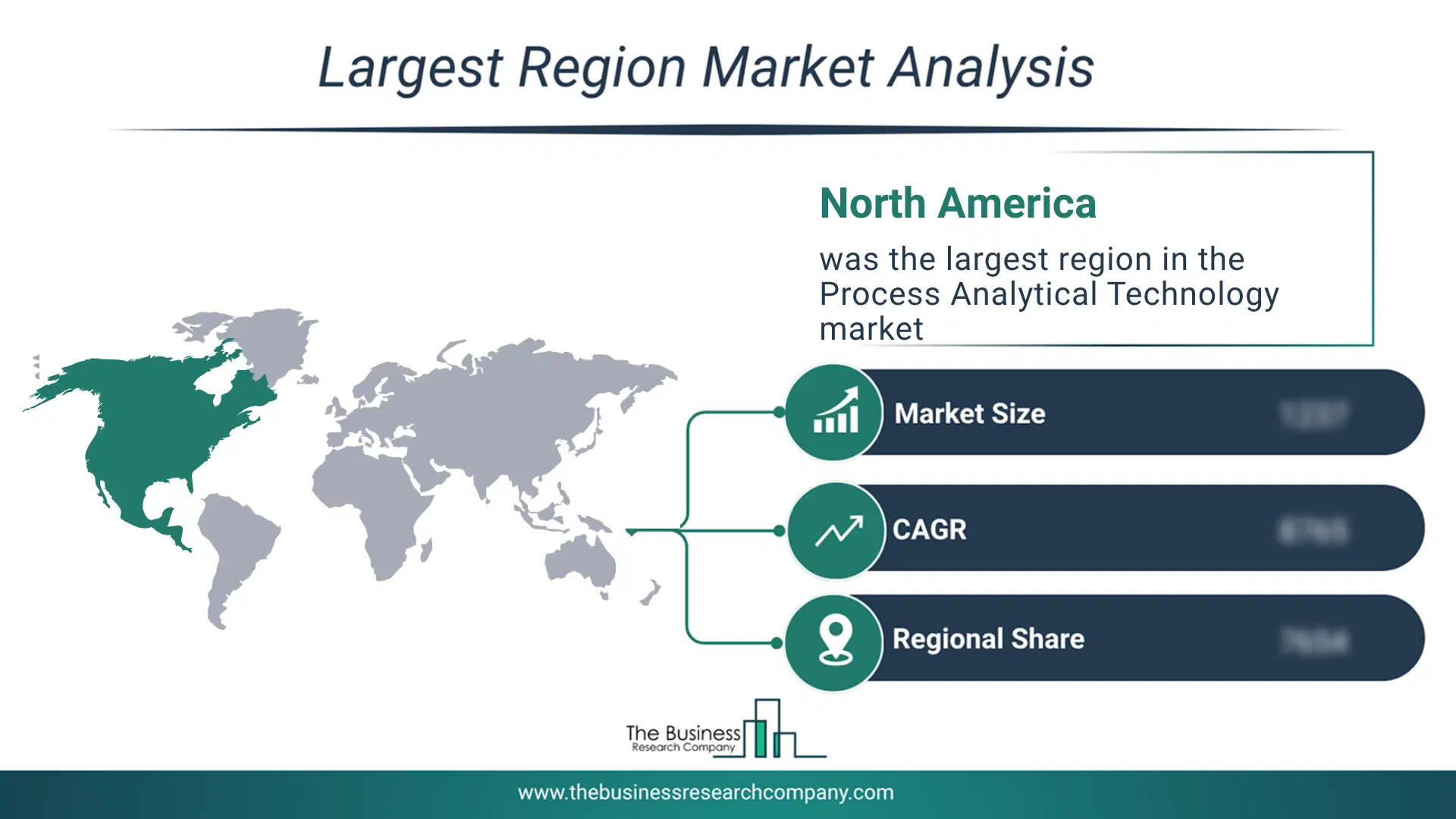
Regional Insights
North America was the largest region in the process analytical technology market in 2025. Asia-Pacific is expected to be the fastest-growing region in the forecast period. The regions covered in this market report are Asia-Pacific, South East Asia, Western Europe, Eastern Europe, North America, South America, Middle East, Africa. The countries covered in this market report are Australia, Brazil, China, France, Germany, India, Indonesia, Japan, Taiwan, Russia, South Korea, UK, USA, Canada, Italy, Spain.What Defines the Process Analytical Technology Market?
The process analytical technology market consists of revenues earned by entities by providing services such as consulting services, custom development services, training and education, and customization and integration services. The market value includes the value of related goods sold by the service provider or included within the service offering. The process analytical technology market also includes sales of spectrometers, chromatography systems, process control software, and data management and integration platforms. Values in this market are ‘factory gate’ values, that is the value of goods sold by the manufacturers or creators of the goods, whether to other entities (including downstream manufacturers, wholesalers, distributors and retailers) or directly to end customers. The value of goods in this market includes related services sold by the creators of the goods.How is Market Value Defined and Measured?
The market value is defined as the revenues that enterprises gain from the sale of goods and/or services within the specified market and geography through sales, grants, or donations in terms of the currency (in USD unless otherwise specified). The revenues for a specified geography are consumption values that are revenues generated by organizations in the specified geography within the market, irrespective of where they are produced. It does not include revenues from resales along the supply chain, either further along the supply chain or as part of other products.
This chart presents market attractiveness based on a quantitative evaluation of growth, competition, strategic alignment, and risk, offering a clear view of opportunity areas for decision-making. This chart is for illustrative purposes; the full report contains the complete analysis.

This chart highlights the Total Addressable Market (TAM) by estimating the maximum revenue opportunity using an assumption-driven approach, supporting strategic planning and opportunity sizing across markets. The chart is illustrative; the full report provides a more comprehensive analysis.
What Key Data and Analysis Are Included in the Process Analytical Technology Market Report 2026?
The process analytical technology market research report is one of a series of new reports from The Business Research Company that provides market statistics, including industry global market size, regional shares, competitors with the market share, detailed market segments, market trends and opportunities, and any further data you may need to thrive in the process analytical technology industry. The market research report delivers a complete perspective of everything you need, with an in-depth analysis of the current and future state of the industry.Process Analytical Technology Market Report Forecast Analysis
| Report Attribute | Details |
|---|---|
| Market Size Value In 2026 | $3.71 billion |
| Revenue Forecast In 2030 | $5.4 billion |
| Growth Rate | CAGR of 11.6% from 2026 to 2030 |
| Base Year For Estimation | 2025 |
| Actual Estimates/Historical Data | 2020-2025 |
| Forecast Period | 2026 - 2030 |
| Market Representation | Revenue in USD Billion and CAGR from 2026 to 2030 |
| Segments Covered | Product, Technique, Application, End-User |
| Regional Scope | Asia-Pacific, Western Europe, Eastern Europe, North America, South America, Middle East, Africa |
| Country Scope | The countries covered in the report are Australia, Brazil, China, France, Germany, India, Indonesia, Japan, Taiwan, Russia, South Korea, UK, USA, Canada, Italy, Spain. |
| Key Companies Profiled | Siemens AG, Thermo Fisher Scientific Inc, Danaher Corporation, ABB Ltd, GE Healthcare, Emerson Electric Co, Agilent Technologies Inc, Teledyne Technologies Incorporated, Sartorius AG, Mettler-Toledo, PerkinElmer Inc, Shimadzu Corporation, Waters Corporation, Bruker Corporation, HORIBA Ltd, Carl Zeiss AG, Nova Biomedical, TECAN Group Ltd, Repligen Corporation, Hamilton Company, Oxford Instruments plc, Malvern Panalytical, Hitachi High-Tech Analytical Science, JEOL Ltd, Yokogawa Electric Corporation |
| Customization Scope | Request for Customization |
| Pricing And Purchase Options | Explore Purchase Options |