
Professional Skincare Market Report 2026
Global Outlook – By Type (Anti-Aging, Anti-Dehydration, Sun Protection, Anti-Pigmentation), By Composition (Organic Or Natural, Conventional), By Price Range (Mid-Range, Premium), By Distribution Channel (Offline Retail Stores, Online Retail Stores), By Application (Spas, Salons, Retail Stores, Medical Institutions, Other Applications) – Market Size, Trends, Strategies, and Forecast to 2030
Professional Skincare Market Overview
• Professional Skincare market size has reached to $45.57 billion in 2025 • Expected to grow to $60.41 billion in 2030 at a compound annual growth rate (CAGR) of 5.7% • Growth Driver: Growing E-Commerce Penetration Fuels Growth In The Professional Skincare Market • Market Trend: Innovative Age-Defying Moisturizers Leading The Professional Skincare Market • Asia-Pacific was the largest region in 2025.Market Gains By 2030 – Top Opportunities By Segment
Market Gain identifies the most promising market opportunities by highlighting the segments or products expected to generate the highest incremental revenue growth over the next five years.
What Is Covered Under Professional Skincare Market?
Professional skincare refers to the specialized care and treatment of the skin provided by trained and licensed professionals such as dermatologists, estheticians, and skincare therapists. This skincare goes beyond basic at-home routines and uses advanced techniques, high-quality products, and personalized treatments to address various skin concerns and conditions. Professional skincare aims to improve the overall health and appearance of the skin through targeted interventions. The main types of professional skincare are anti-aging, anti-dehydration, sun protection, and anti-pigmentation. Anti-aging skincare products are designed to reduce the visible signs of aging, such as wrinkles, fine lines, and sagging skin. The compositions involved are organic or natural, and conventional for the price range of economy, mid-range, and premium. Its distribution channels include offline retail stores, and online retail stores, for application in spas, salons, retail stores, medical institutions, and others.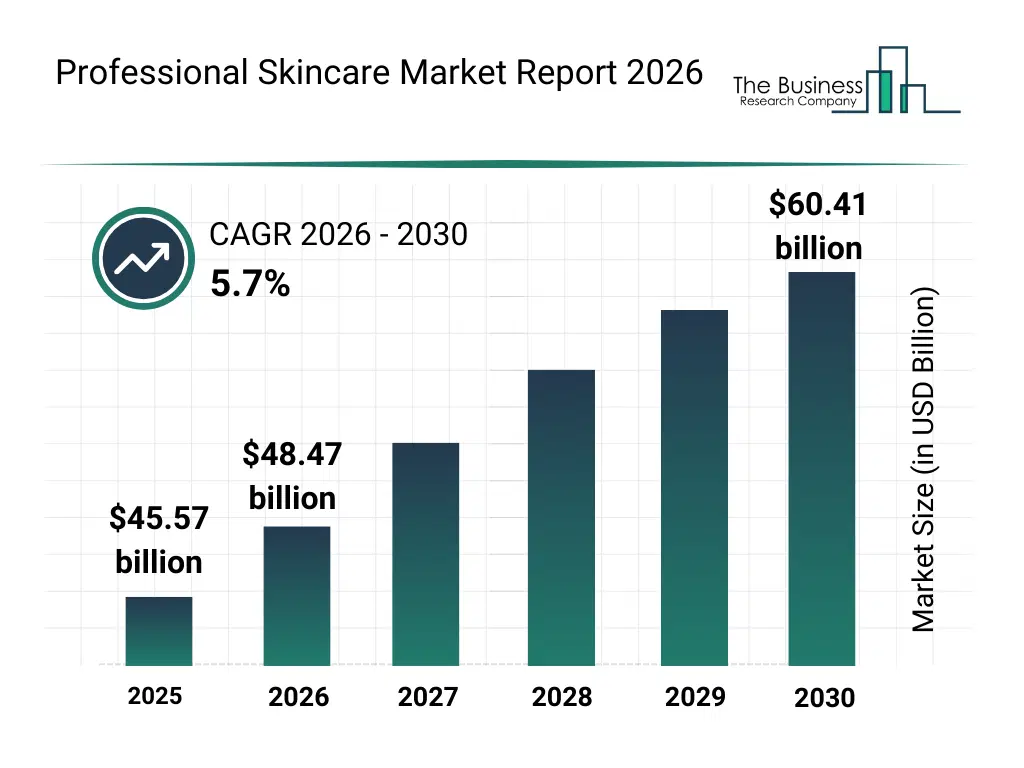
What Is The Professional Skincare Market Size and Share 2026?
The professional skincare market size has grown strongly in recent years. It will grow from $45.57 billion in 2025 to $48.47 billion in 2026 at a compound annual growth rate (CAGR) of 6.3%. The growth in the historic period can be attributed to growing awareness of dermatological health, rising adoption of professional skincare services, increasing influence of beauty standards, early development of aesthetic treatment centers, expansion of skincare professional networks.What Is The Professional Skincare Market Growth Forecast?
The professional skincare market size is expected to see strong growth in the next few years. It will grow to $60.41 billion in 2030 at a compound annual growth rate (CAGR) of 5.7%. The growth in the forecast period can be attributed to rising demand for personalized clinical skincare, increasing expenditure on premium facial treatments, growing focus on skin health and anti aging, expansion of medical skincare institutions, rising inclination toward specialized skincare procedures. Major trends in the forecast period include increasing demand for personalized professional skincare treatments, rising adoption of advanced clinical grade skincare solutions, growing popularity of anti aging and dermatology based procedures, expansion of professional grade cosmetic and therapeutic skincare, rising consumer preference for high performance skincare services.
Global Professional Skincare Market Segmentation
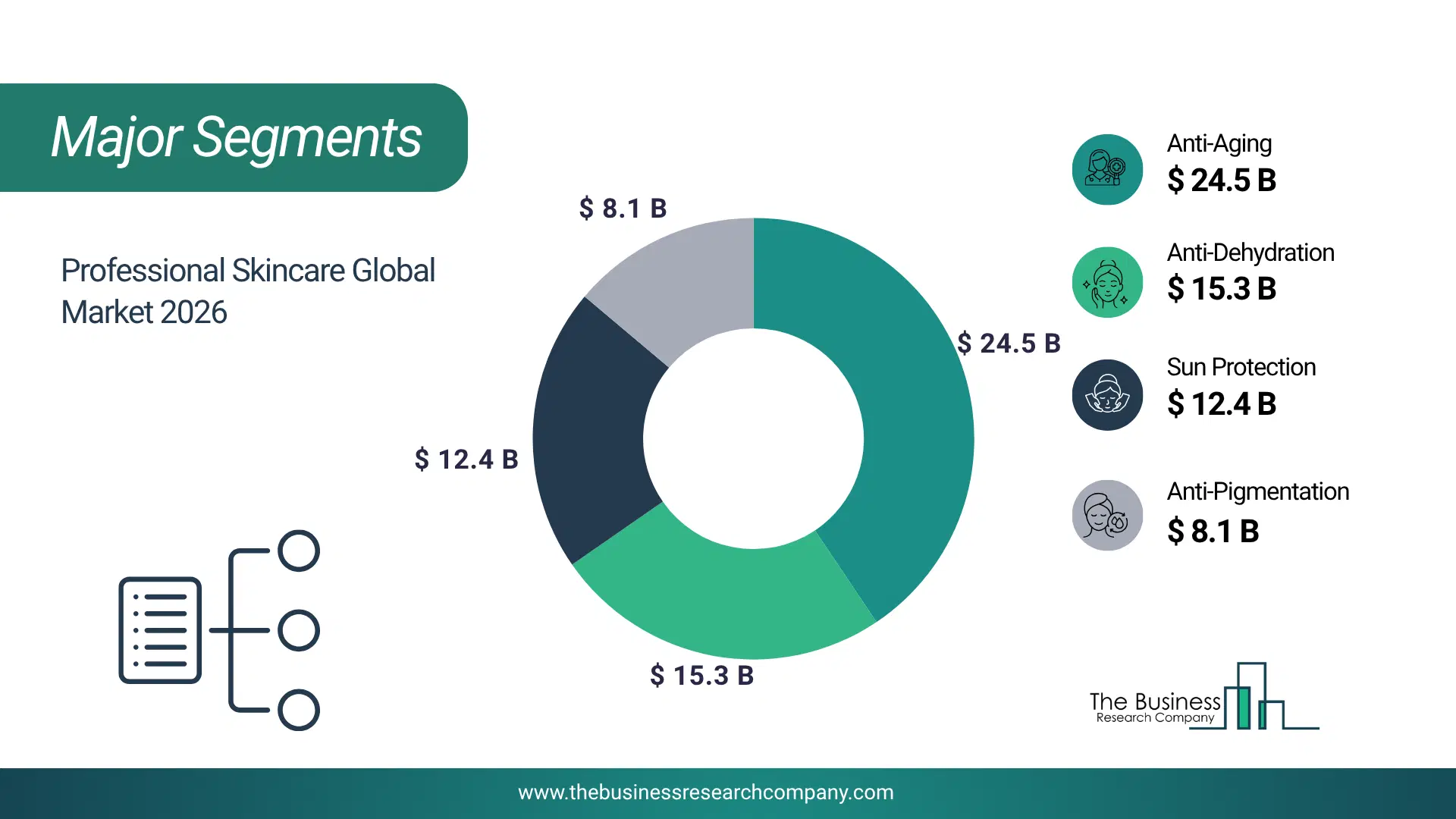
1) By Type: Anti-Aging, Anti-Dehydration, Sun Protection, Anti-Pigmentation 2) By Composition: Organic Or Natural, Conventional 3) By Price Range: Mid-Range, Premium 4) By Distribution Channel: Offline Retail Stores, Online Retail Stores 5) By Application: Spas, Salons, Retail Stores, Medical Institutions, Other Applications Subsegments: 1) By Anti-Aging: Wrinkle Reduction, Firming And Lifting, Collagen Boosting, Fine Lines Treatment, Skin Texture Improvement 2) By Anti-Dehydration: Hydrating Serums, Moisturizing Creams And Lotions, Hydrating Masks, Emollients, Humectants 3) By Sun Protection: Sunscreen Lotions And Creams, Spf Serums, Tinted Sunscreens, Sunblocks (Physical And Chemical Filters), After-Sun Products 4) By Anti-Pigmentation: Brightening Serums, Hyperpigmentation Treatments, Vitamin C-Based Products, Exfoliating Acids, Retinoids And Derivatives The top segments in the professional skincare market will be: • Anti-Aging will reach $24.54 billion by 2030. • Anti-Dehydration will reach $15.35 billion by 2030. • Sun Protection will reach $12.37 billion by 2030. • Anti-Pigmentation will reach $8.15 billion by 2030.What Is The Driver Of The Professional Skincare Market?
The expansion of e-commerce is expected to propel the growth of the professional skincare market going forward. E-commerce refers to the online business model facilitating the exchange of goods and services through the Internet. The expansion of e-commerce is driven by convenience, expanding internet access, and shifting consumer preferences toward online shopping. E-commerce provides access to high-quality, specialized skin care products and personalized advice, enhancing consumer convenience. For instance, in May 2024, according to the United States Census Bureau, a US-based government agency, U.S. retail e-commerce sales reached $289.2 billion for the first quarter of 2024, marking a 2.1% (±0.7%) increase compared to the fourth quarter of 2023. Therefore, the expansion of e-commerce is driving the growth of the professional skincare industry.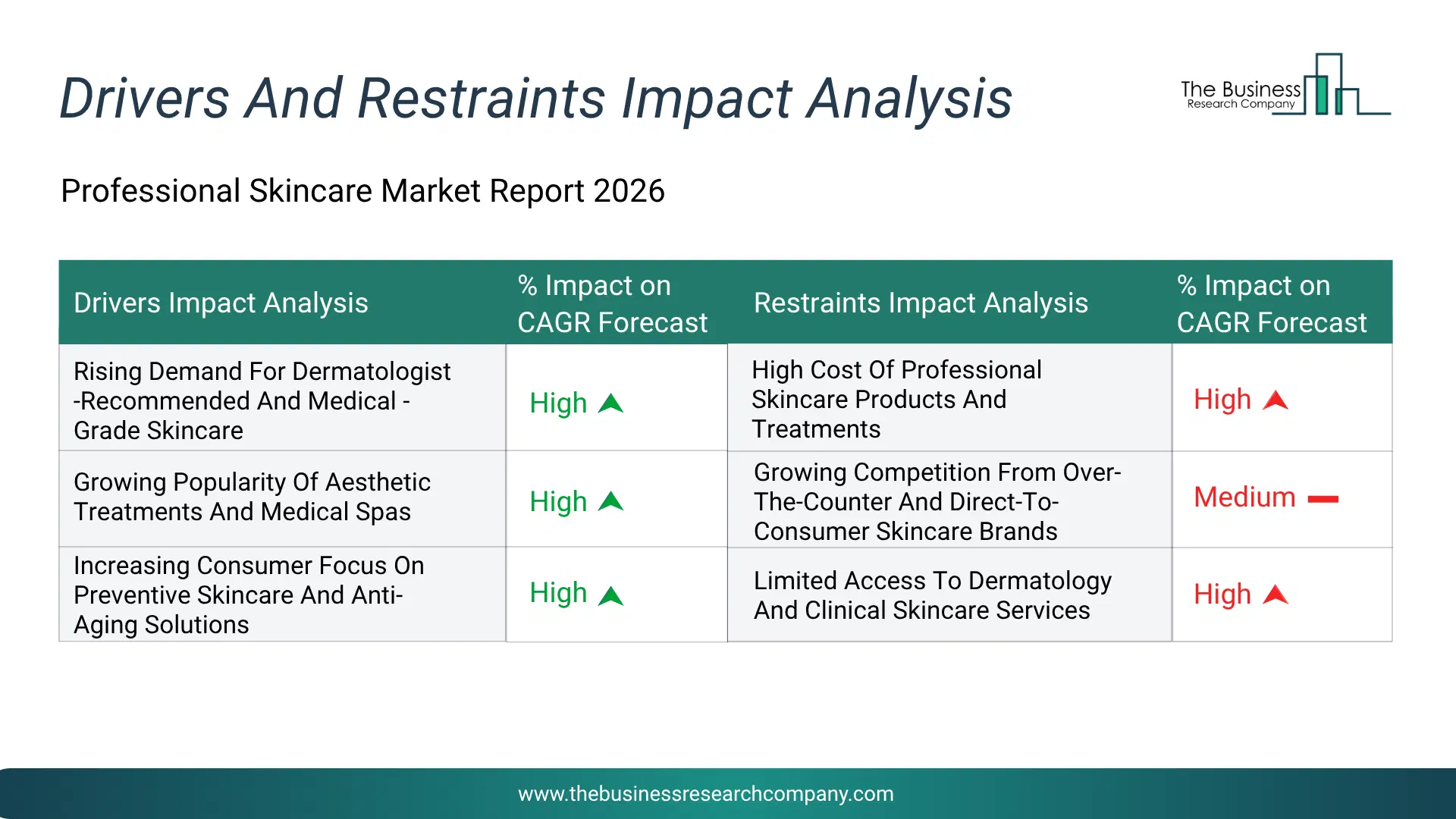
Infographic Chart Showing Key Market Drivers Analysis And Restraints For Professional Skincare Market
The chart presents an impact analysis of key drivers and restraints, quantifying their relative influence on the market's growth rate and helping assess the balance between growth enablers and limiting factors. This chart offers a high-level perspective; the full report contains more detailed insights.
How Will The Drivers Impact Growth In The Global Professional Skincare Market?
• Rising Demand For Dermatologist -Recommended And Medical -Grade Skincare (High) – During the forecast period, the rising demand for dermatologist -recommended and medical -grade skincare is expected to become a key growth driver for the professional skincare market by 2030. Consumers are increasingly prioritizing clinically validated skincare products that offer targeted treatment for concerns such as acne, pigmentation, aging, and sensitive skin. Medical -grade formulations typically contain higher concentrations of active ingredients and undergo rigorous dermatological testing, which improves product credibility and treatment outcomes. Dermatologists and aesthetic professionals frequently recommend these products as part of treatment protocols, further strengthening their adoption. As consumer awareness of skin health continues to rise, demand for clinically proven skincare solutions is expanding steadily. • Growing Popularity Of Aesthetic Treatments And Medical Spas (High) – During the forecast period, the growing popularity of aesthetic treatments and medical spas is expected to emerge as a major factor driving the expansion of the professional skincare market by 2030. Consumers are increasingly seeking non -invasive cosmetic procedures such as chemical peels, laser treatments, microneedling, and skin rejuvenation therapies to improve skin appearance and address dermatological concerns. Professional skincare products play a critical role as pre -treatment and post -treatment solutions to enhance treatment results and support skin recovery. The rapid expansion of medical spas, dermatology clinics, and aesthetic centers worldwide is therefore creating consistent demand for specialized skincare formulations. • Increasing Consumer Focus On Preventive Skincare And Anti-Aging Solutions (High) – During the forecast period, the increasing consumer focus on preventive skincare and anti-aging solutions is expected to act as a key growth catalyst for the professional skincare market by 2030. Consumers, particularly younger demographics, are adopting proactive skincare routines to delay the onset of aging signs such as wrinkles, fine lines, and skin dullness. Professional skincare brands are responding with advanced formulations containing peptides, antioxidants, retinoids, and collagen-boosting ingredients designed to support long-term skin health. The growing emphasis on early intervention and long-term skin maintenance is significantly expanding the consumer base for professional skincare products.How Will The Restraints Impact Growth In The Global Professional Skincare Market?
• High Cost Of Professional Skincare Products And Treatments (High) – During the forecast period, the professional skincare products typically involve higher prices due to the use of premium ingredients, clinical testing, and distribution through dermatologists or aesthetic clinics. Many consumers perceive these products as luxury or specialized treatments rather than everyday skincare. This price barrier can limit adoption in price-sensitive markets and among middle-income consumers. As a result, high product and treatment costs remain a constraint to widespread market penetration. • Growing Competition From Over-The-Counter And Direct-To-Consumer Skincare Brands (Medium) – During the forecast period, the increasing availability of high-quality over-the-counter skincare products is intensifying competition for professional skincare brands. Many consumer brands now offer products containing advanced active ingredients such as retinol, vitamin c, and peptides at lower prices. Online beauty platforms and social media marketing have also increased accessibility and consumer awareness of alternative skincare solutions. This growing competition can reduce the reliance on professional treatment channels and slow market growth. • Limited Access To Dermatology And Clinical Skincare Services (High) – During the forecast period, the limited access to dermatology and clinical skincare services acts as a restraint for the professional skincare market by reducing consumer ability to obtain specialized treatments and expert guidance. In many regions, there is a shortage of qualified dermatologists and aesthetic professionals, especially in rural and semi-urban areas. This limits awareness and availability of advanced skincare procedures. Additionally, long waiting times and high consultation fees further discourage consumers from seeking professional care. As a result, restricted access slows overall market adoption and growth.Key Players In The Global Professional Skincare Market
Major companies operating in the professional skincare market report are L'Oréal S.A., Unilever PLC, ZO Skin Health Inc., BABOR Cosmetics America Corp., Revision Skincare LLC, Obagi Medical Products Inc., Osmosis Skincare, GloProfessional Inc., PCA Skin LLC, Murad LLC, Elemis Limited, Sente Inc., Image Skincare LLC, Neocutis Inc., EltaMD Inc., Jan Marini Skin Research Inc., Natura Bissé International S.A., Biologique Recherche, Pevonia International LLC, Alastin Skincare Inc., HydroPeptide LLC, iS Clinical, Environ Skin Care Pty Ltd, Lancer Skincare LLC, Vivant Skin Care LLC, Cosmedix LLC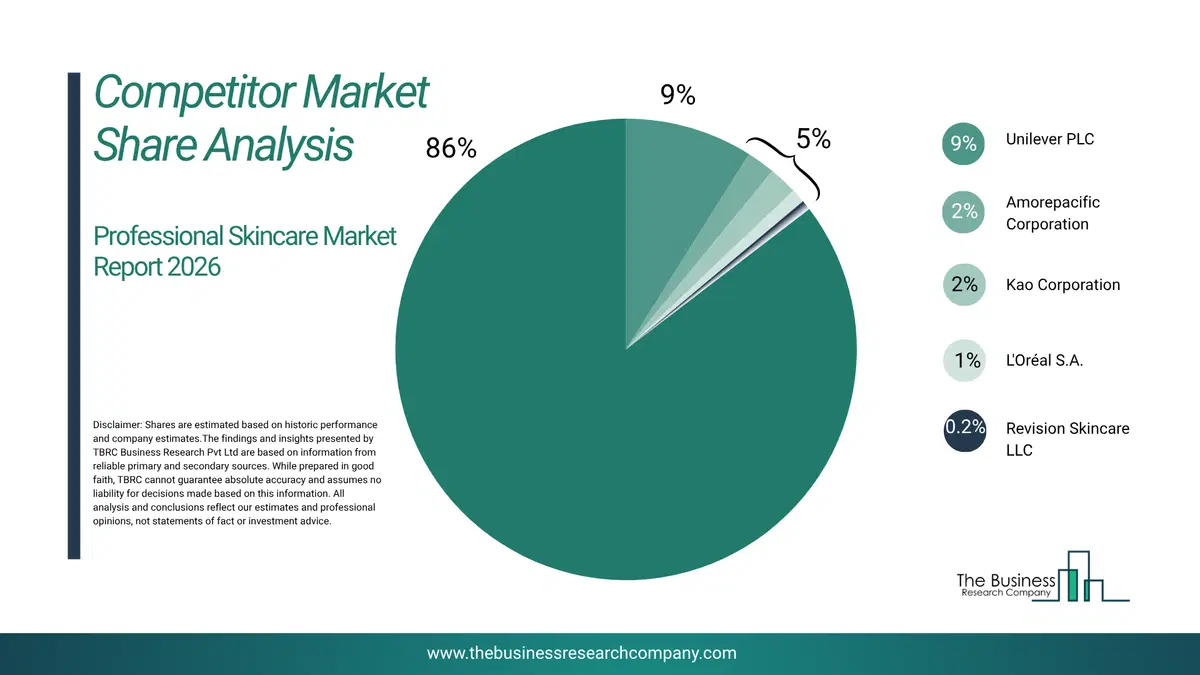
This chart is for illustrative purposes; the full report includes a detailed competitor analysis and comprehensive overview of the top 10 companies in the market.
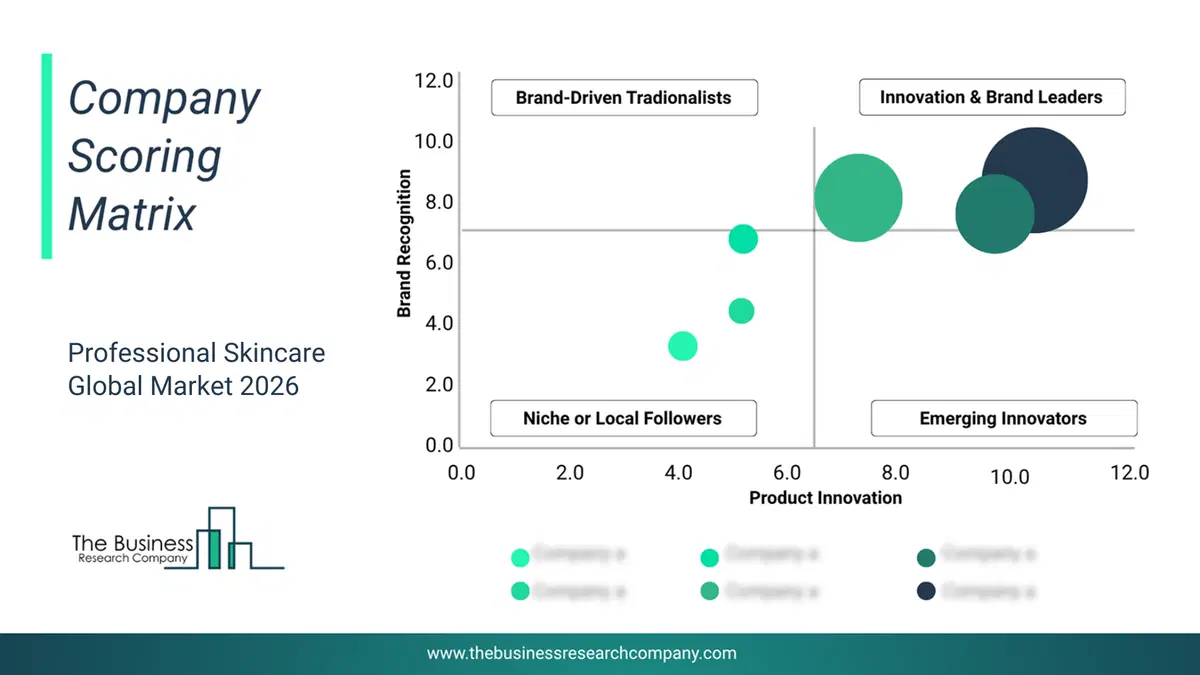
This chart maps companies by product innovation and brand strength, with bubble size indicating relative revenue, helping identify market leaders, challengers, and niche players. This is an illustrative chart; the full report provides a complete and accurate competitive analysis.
Global Professional Skincare Market Trends and Insights
Major companies operating in the professional skincare market are increasing their focus on developing innovative products, such as age-defying moisturizers, to sustain their position in the market. An age-defying moisturizer is a skincare product designed to reduce the visible signs of aging on the skin, such as fine lines, wrinkles, and loss of elasticity. For instance, in March 2024, Revision Skincare, a US-based cosmetic company, launched a new sunscreen product called Intellishade TruPhysical Clear. This product is a 4-in-1 daily age-defying moisturizer with broad-spectrum SPF 50. It has a sheer, oil-free formula with 100% all-mineral UV filters designed to enhance the natural radiance of all skin tones without leaving a white cast or shine. The skincare-first formulation provides long-term hydration, reduces the appearance of fine lines and wrinkles, brightens and evens skin tone, and decreases the overall appearance of photoaging and free radical stressors.What Are Latest Mergers And Acquisitions In The Professional Skincare Market?
In March 2024, WiQo, an Italy-based cosmetic company, acquired Love Beauty Pro & Medical for an undisclosed amount. The acquisition allows WiQo to strengthen its presence in the United States market through Love Beauty Pro & Medical's established network for selling, marketing, and distributing WiQo products. Love Beauty Pro & Medical is a US-based company that provides professional skincare products and equipment for skincare professionals.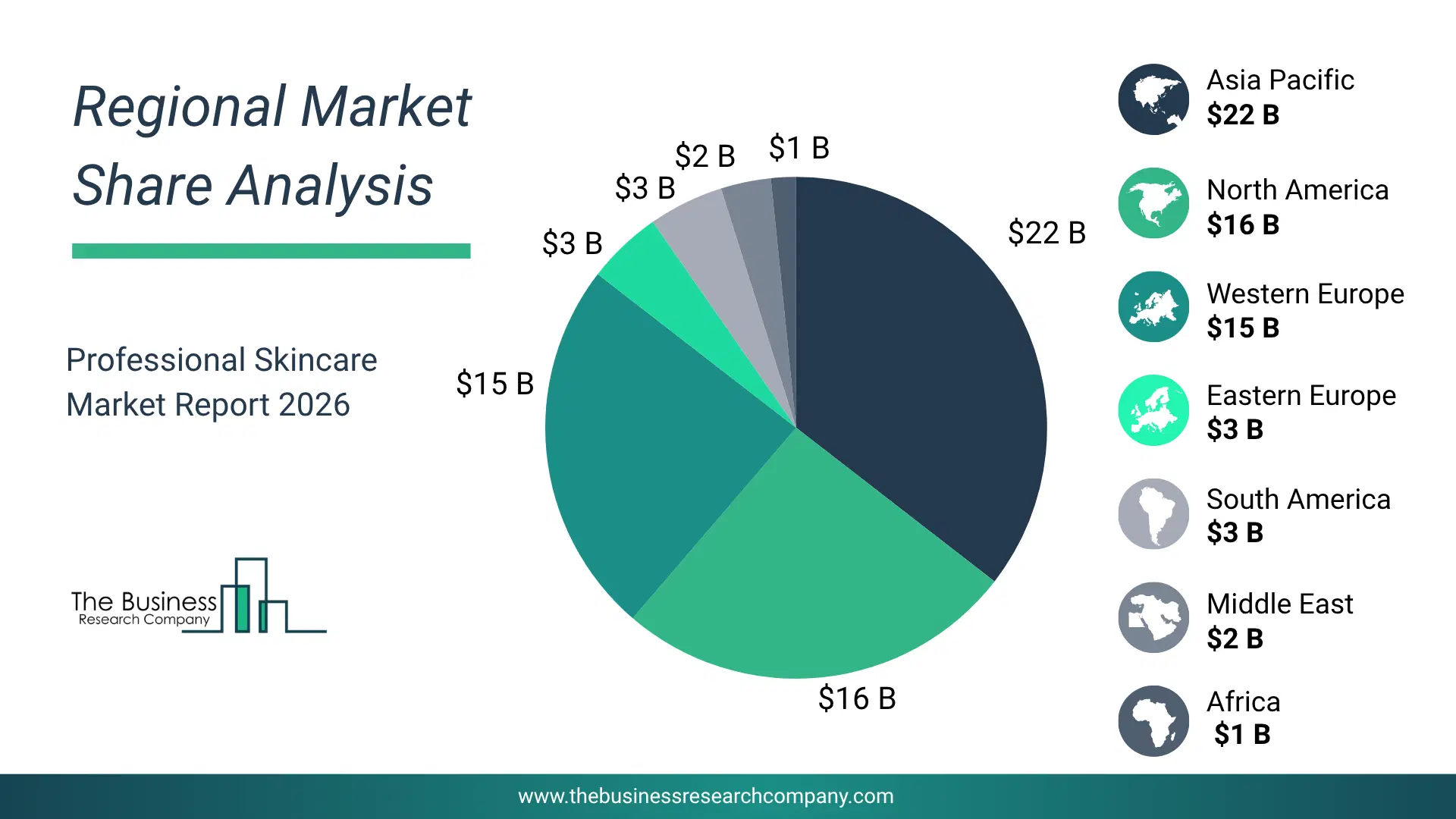
Regional Outlook
Asia-Pacific was the largest region in the professional skincare market in 2025. The regions covered in this market report are Asia-Pacific, South East Asia, Western Europe, Eastern Europe, North America, South America, Middle East, Africa. The countries covered in this market report are Australia, Brazil, China, France, Germany, India, Indonesia, Japan, Taiwan, Russia, South Korea, UK, USA, Canada, Italy, SpainWhat Defines the Professional Skincare Market?
The professional skincare market consists of sales of cleaners, toners, eye creams, and moisturizers. Values in this market are ‘factory gate’ values, that is the value of goods sold by the manufacturers or creators of the goods, whether to other entities (including downstream manufacturers, wholesalers, distributors and retailers) or directly to end customers. The value of goods in this market includes related services sold by the creators of the goods.How is Market Value Defined and Measured?
The market value is defined as the revenues that enterprises gain from the sale of goods and/or services within the specified market and geography through sales, grants, or donations in terms of the currency (in USD unless otherwise specified). The revenues for a specified geography are consumption values that are revenues generated by organizations in the specified geography within the market, irrespective of where they are produced. It does not include revenues from resales along the supply chain, either further along the supply chain or as part of other products.
This chart presents market attractiveness based on a quantitative evaluation of growth, competition, strategic alignment, and risk, offering a clear view of opportunity areas for decision-making. This chart is for illustrative purposes; the full report contains the complete analysis.

This chart highlights the Total Addressable Market (TAM) by estimating the maximum revenue opportunity using an assumption-driven approach, supporting strategic planning and opportunity sizing across markets. The chart is illustrative; the full report provides a more comprehensive analysis.
What Key Data and Analysis Are Included in the Professional Skincare Market Report 2026?
The professional skincare market research report is one of a series of new reports from The Business Research Company that provides market statistics, including industry global market size, regional shares, competitors with the market share, detailed market segments, market trends and opportunities, and any further data you may need to thrive in the professional skincare industry. The market research report delivers a complete perspective of everything you need, with an in-depth analysis of the current and future state of the industry.Professional Skincare Market Report Forecast Analysis
| Report Attribute | Details |
|---|---|
| Market Size Value In 2026 | $48.47 billion |
| Revenue Forecast In 2030 | $60.41 billion |
| Growth Rate | CAGR of 6.3% from 2026 to 2030 |
| Base Year For Estimation | 2025 |
| Actual Estimates/Historical Data | 2020-2025 |
| Forecast Period | 2026 - 2030 |
| Market Representation | Revenue in USD Billion and CAGR from 2026 to 2030 |
| Segments Covered | Type, Composition, Price Range, Distribution Channel, Application |
| Regional Scope | Asia-Pacific, Western Europe, Eastern Europe, North America, South America, Middle East, Africa |
| Country Scope | The countries covered in the report are Australia, Brazil, China, France, Germany, India, Indonesia, Japan, Taiwan, Russia, South Korea, UK, USA, Canada, Italy, Spain. |
| Key Companies Profiled | L'Oréal S.A., Unilever PLC, ZO Skin Health Inc., BABOR Cosmetics America Corp., Revision Skincare LLC, Obagi Medical Products Inc., Osmosis Skincare, GloProfessional Inc., PCA Skin LLC, Murad LLC, Elemis Limited, Sente Inc., Image Skincare LLC, Neocutis Inc., EltaMD Inc., Jan Marini Skin Research Inc., Natura Bissé International S.A., Biologique Recherche, Pevonia International LLC, Alastin Skincare Inc., HydroPeptide LLC, iS Clinical, Environ Skin Care Pty Ltd, Lancer Skincare LLC, Vivant Skin Care LLC, Cosmedix LLC |
| Customization Scope | Request for Customization |
| Pricing And Purchase Options | Explore Purchase Options |