
Skin Care Products Market Report 2026
Global Outlook – By Product Type (Anti-Aging Products, Skin Whitening Products, Sensitive Skincare Products, Anti-Acne Products, Dry Skin Care Products, Infant Skin Care Products, Other Product Types), By Distribution Channel (Hypermarket, Supermarket, Cosmetics stores, Online Stores, Other Distribution Channels), By End User (Male, Female, Kids) – Market Size, Trends, Strategies, and Forecast to 2030
Skin Care Products Market Overview
• Skin Care Products market size has reached to $170.02 billion in 2025 • Expected to grow to $255.04 billion in 2030 at a compound annual growth rate (CAGR) of 8.4% • Growth Driver: Elevated Prevalence Of Skin Diseases Fueling The Skin Care Products Market Growth • Market Trend: Innovation-Driven Medicated Skincare Solutions Addressing Widespread Dry Skin Concerns • Asia-Pacific was the largest region and fastest growing region.Market Gains By 2030 – Top Opportunities By Segment
Market Gain identifies the most promising market opportunities by highlighting the segments or products expected to generate the highest incremental revenue growth over the next five years.
What Is Covered Under Skin Care Products Market?
Skin care refers to products that help support skin integrity and enhance its appearance. These products are sold in various types, such as creams, serums, and lotions. Skin care products are used to improve the appearance and texture of the skin and to moisturize and cleanse the face, hands, and body as well. The main product types of skin care products are anti-aging products, skin whitening products, sensitive skin care products, anti-acne products, dry skin care products, infant skin care products, and others. Anti-aging products are primarily moisturizer-based and marketed with the promise of making the consumer look younger by reducing, masking, or preventing signs of skin aging. The different distribution channels include hypermarkets, supermarkets, cosmetics stores, online stores, and others. It is used by several end users such as males, females, and kids.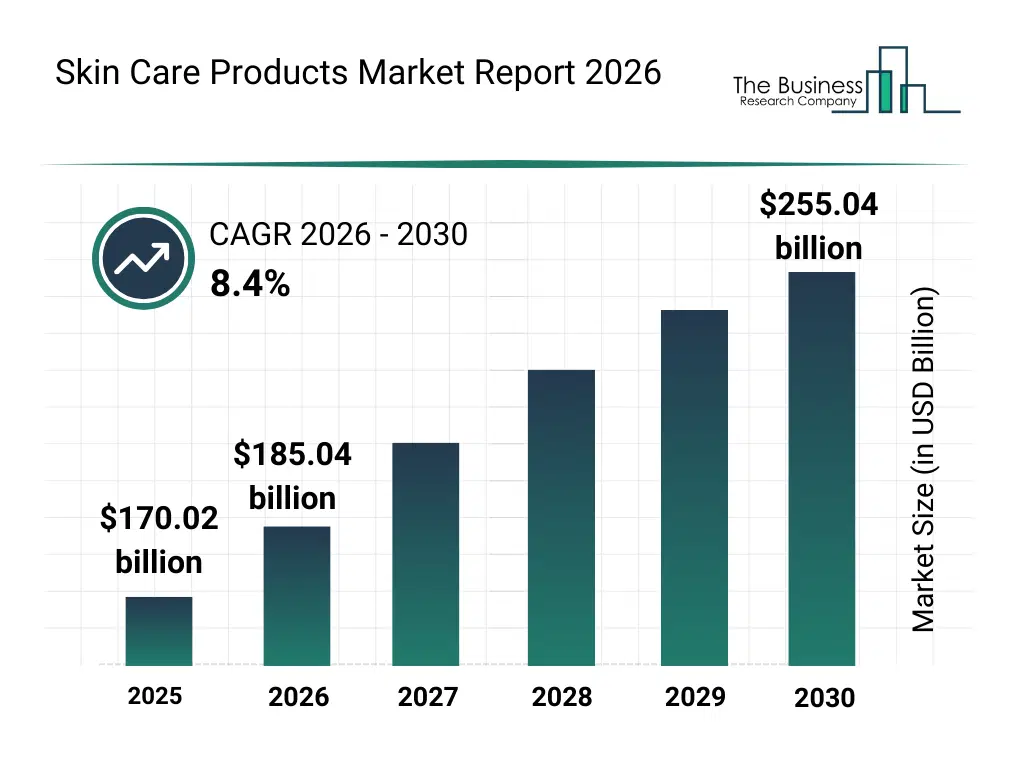
What Is The Skin Care Products Market Size and Share 2026?
The skin care products market size has grown strongly in recent years. It will grow from $170.02 billion in 2025 to $185.04 billion in 2026 at a compound annual growth rate (CAGR) of 8.8%. The growth in the historic period can be attributed to growth of personal grooming awareness, increasing disposable income levels, expansion of retail and e-commerce channels, rising influence of beauty and wellness trends, availability of diversified skincare formulations.What Is The Skin Care Products Market Growth Forecast?
The skin care products market size is expected to see strong growth in the next few years. It will grow to $255.04 billion in 2030 at a compound annual growth rate (CAGR) of 8.4%. The growth in the forecast period can be attributed to increasing demand for premium skincare products, rising adoption of digital skin analysis tools, expansion of sustainable packaging usage, growing focus on preventive skincare routines, increasing influence of social media driven beauty trends. Major trends in the forecast period include rising demand for clean-label skincare products, increasing adoption of personalized skincare solutions, growing use of natural and organic ingredients, expansion of dermatology-backed product lines, enhanced focus on skin barrier repair.
Global Skin Care Products Market Segmentation
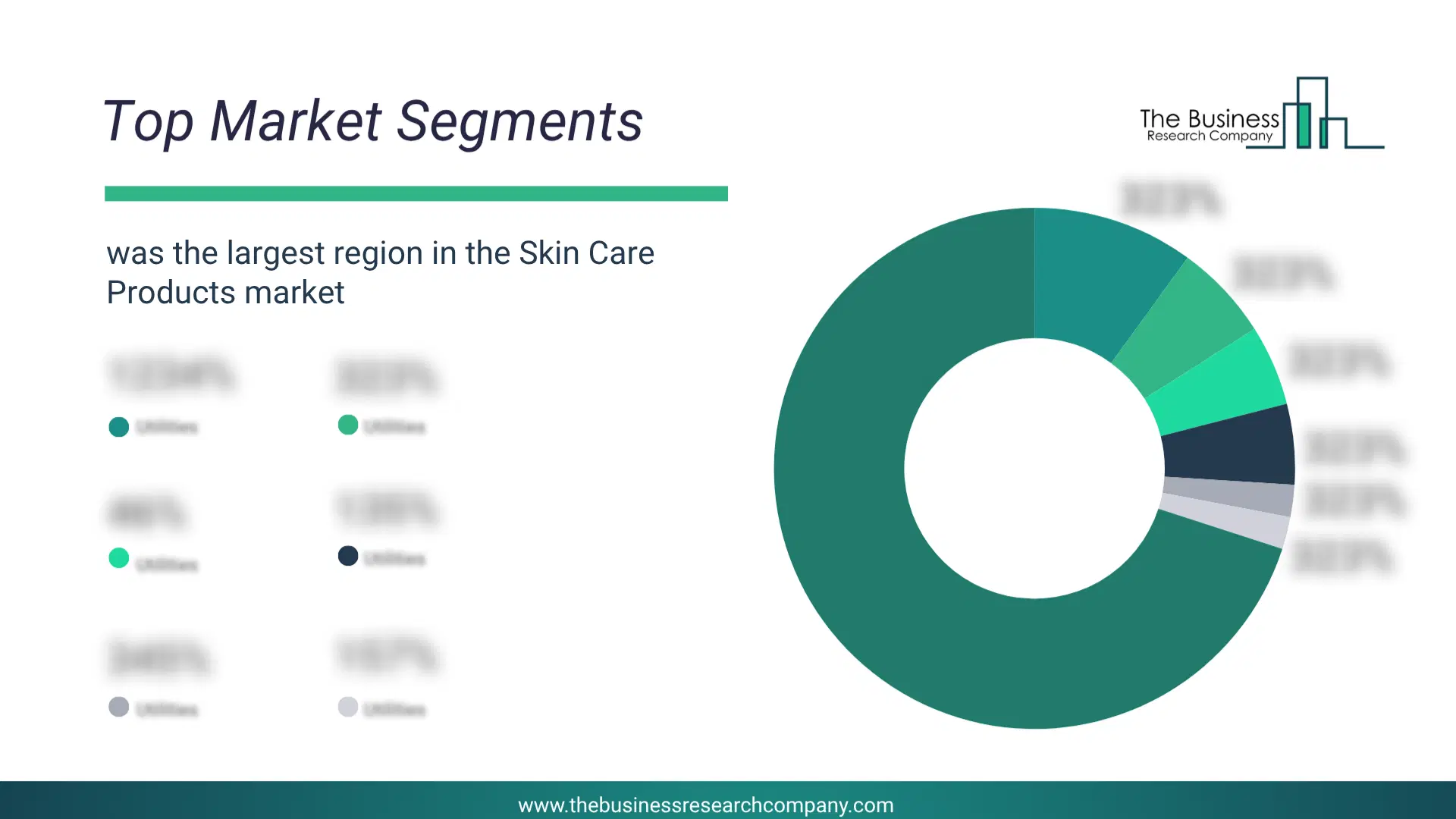
1) By Product Type: Anti-Aging Products, Skin Whitening Products, Sensitive Skincare Products, Anti-Acne Products, Dry Skin Care Products, Infant Skin Care Products, Other Product Types 2) By Distribution Channel: Hypermarket, Supermarket, Cosmetics stores, Online Stores, Other Distribution Channels 3) By End User: Male, Female, Kids Subsegments: 1) By Anti-Aging Products: Serums, Creams and Moisturizers, Eye Treatments 2) By Skin Whitening Products: Whitening Creams, Serums, Spot Treatments 3) By Sensitive Skincare Products: Hypoallergenic Moisturizers, Calming Creams, Cleansers 4) By Anti-Acne Products: Spot Treatments, Cleansers, Moisturizers 5) By Dry Skin Care Products: Hydrating Creams, Oils and Serums, Body Butters 6) By Infant Skin Care Products: Baby Moisturizers, Baby Oils, Diaper Rash Creams 7) By Other Product Types: Exfoliants, Masks, Sunscreens The top segments in the skin care products market will be: • Anti-Aging Products will reach $62.85 Billion by 2030. • Skin Whitening Products will reach $45.76 Billion by 2030. • Anti-Acne Products will reach $37.07 Billion by 2030. • Other Product Types will reach $31.63 Billion by 2030. • Sensitive Skincare Products will reach $31.49 Billion by 2030.What Is The Driver Of The Skin Care Products Market?
The rise in the prevalence of skin diseases is driving the growth of the skin care products market going forward. Skin diseases refer to a wide range of skin problems, including those attributed to bacterial infections, viral infections, fungal infections, allergy symptoms, skin malignancies, and parasites. Skin care products are used to address specific skin concerns associated with these conditions, such as moisturization, barrier repair, anti-inflammatory effects, sun protection, and cleansing. For instance, in January 2024, according to the American Cancer Society, a US-based non-profit organization dedicated to eliminating cancer, there will be 108,270 reported cases of skin cancer, reflecting a 3.2% increase from the 104,930 cases reported in 2023. Therefore, the rise in the prevalence of skin diseases propels the growth of the skin care products industry.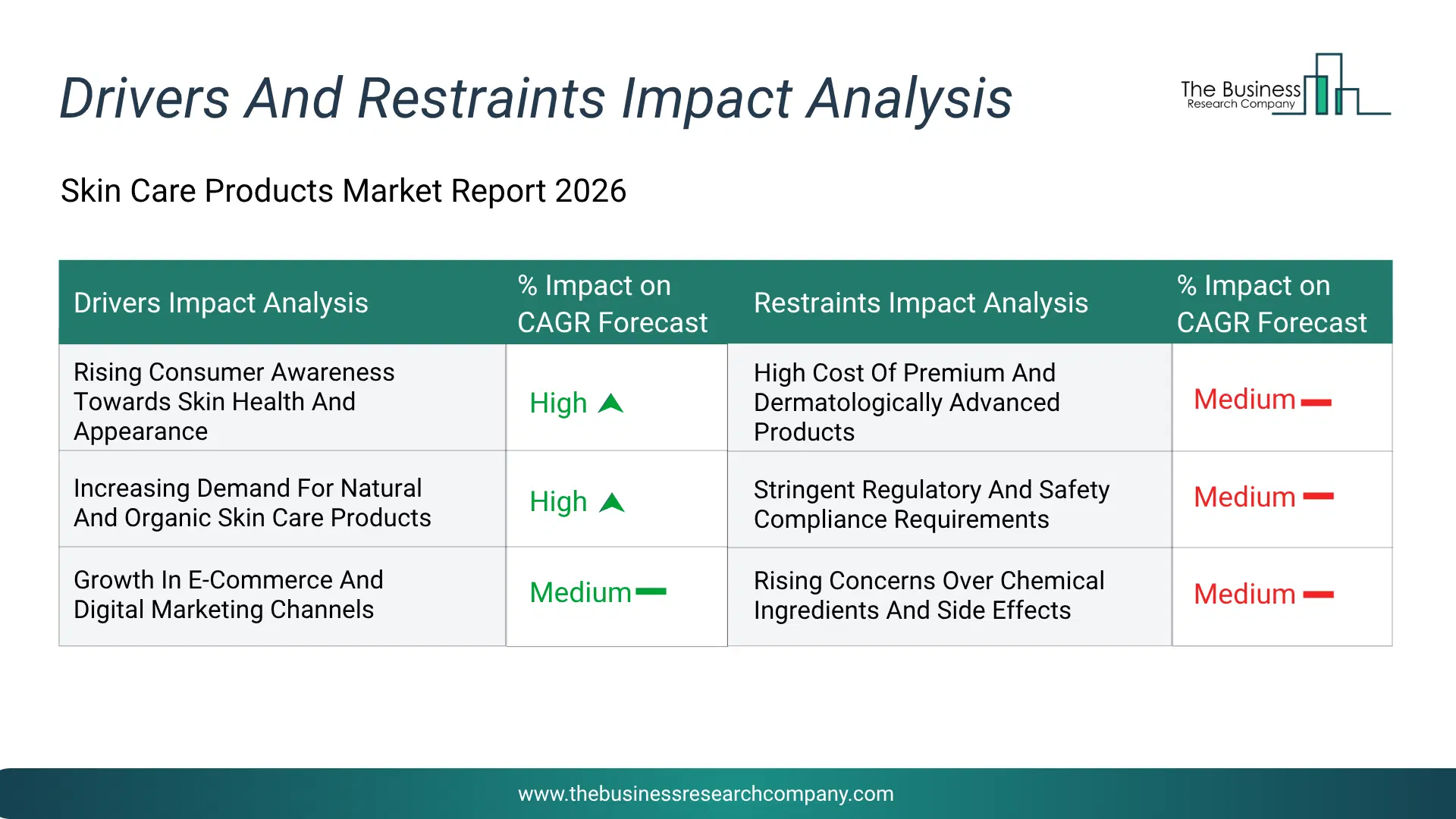
Infographic Chart Showing Key Market Drivers Analysis And Restraints For Skin Care Products Market
The chart presents an impact analysis of key drivers and restraints, quantifying their relative influence on the market's growth rate and helping assess the balance between growth enablers and limiting factors. This chart offers a high-level perspective; the full report contains more detailed insights.
How Will The Drivers Impact Growth In The Global Skin Care Products Market?
• Rising Consumer Awareness Towards Skin Health And Appearance (High) – During the forecast period, the rising consumer awareness towards skin health and appearance is expected to become a major growth driver for the skin care products market by 2030. Consumers are increasingly adopting proactive skincare regimens to maintain healthy, youthful, and well-protected skin. Growing access to dermatological information, beauty education content, and personalized skincare guidance is encouraging individuals to invest in daily skincare solutions across all age groups. This shift toward preventive skin management is creating sustained demand for a wide range of skincare products tailored to different skin concerns and lifestyles. • Increasing Demand For Natural And Organic Skin Care Products (High) – During the forecast period, the increasing demand for natural and organic skin care products is expected to emerge as a significant factor driving the expansion of the skin care products market by 2030. Consumers are actively seeking products formulated with plant-based extracts, naturally derived ingredients, and environmentally responsible manufacturing practices. Preference for clean-label products with greater ingredient transparency is encouraging manufacturers to develop innovative formulations that align with evolving consumer expectations. Growing concerns regarding synthetic additives and product safety are further supporting the adoption of natural skincare solutions. • Growth In E-Commerce And Digital Marketing Channels (Medium) – During the forecast period, the growth in e-commerce and digital marketing channels is expected to act as a key growth catalyst for the skin care products market by 2030. Online retail platforms are expanding product accessibility and enabling consumers to compare, research, and purchase skincare products more conveniently than ever before. Brands are increasingly leveraging social commerce, influencer collaborations, virtual consultations, and targeted digital campaigns to strengthen customer engagement and improve product visibility. The growing effectiveness of digital marketing strategies is accelerating product discovery and purchase frequency across both developed and emerging markets.How Will The Restraints Impact Growth In The Global Skin Care Products Market?
• High Cost Of Premium And Dermatologically Advanced Products (High) – During the forecast period, the high cost of premium and dermatologically advanced products acts as a key restraint for the skin care products market by limiting affordability among price-sensitive consumers, especially in developing regions. Many clinically tested or ingredient-rich formulations are priced significantly higher, restricting mass adoption. This pricing gap creates a divide between premium and mass segments, slowing volume growth. Additionally, frequent product usage requirements further increase overall consumer spending. As a result, high costs reduce penetration rates and limit market expansion potential. • Stringent Regulatory And Safety Compliance Requirements (High) – During the forecast period, the stringent regulatory and safety compliance requirements act as a restraint by increasing the complexity and cost of product development and commercialization. Manufacturers must adhere to strict ingredient approvals, labeling norms, and safety testing standards across different regions. These regulations often delay product launches and limit the use of certain active ingredients. Smaller companies may struggle with compliance costs, reducing competitive intensity in the market. Consequently, regulatory barriers slow innovation cycles and restrict market growth. • Rising Concerns Over Chemical Ingredients And Side Effects (Medium) – During the forecast period, the rising concerns over chemical ingredients and side effects act as a restraint by shifting consumer preference toward natural or minimal-ingredient products. Awareness about potential skin irritation, allergies, and long-term health impacts discourages the use of conventional formulations. Negative perceptions about synthetic chemicals can reduce trust in established brands. This forces companies to reformulate products, increasing R&D costs and time-to-market. As a result, demand uncertainty and changing consumer behavior hinder consistent market growth.Key Players In The Global Skin Care Products Market
Major companies operating in the skin care products market are LOreal S.A., Beiersdorf AG, Shiseido Co. Ltd., Procter & Gamble, Unilever, Johnson & Johnson Inc., Avon Products Inc., Coty Inc., Colgate-Palmolive Company, Revlon, The Estée Lauder Companies Inc., Himalaya Wellness Company, Lotus Herbals pvt Ltd., Neutrogena Corporation, Olay, Barbara Sturm Molecular Cosmetics GmBH, Renée Rouleau, Kao Corporation, CeraVe, La Roche-Posay, Aveeno, Vichy, Cetaphil, Eucerin, Nivea, Garnier, LVMH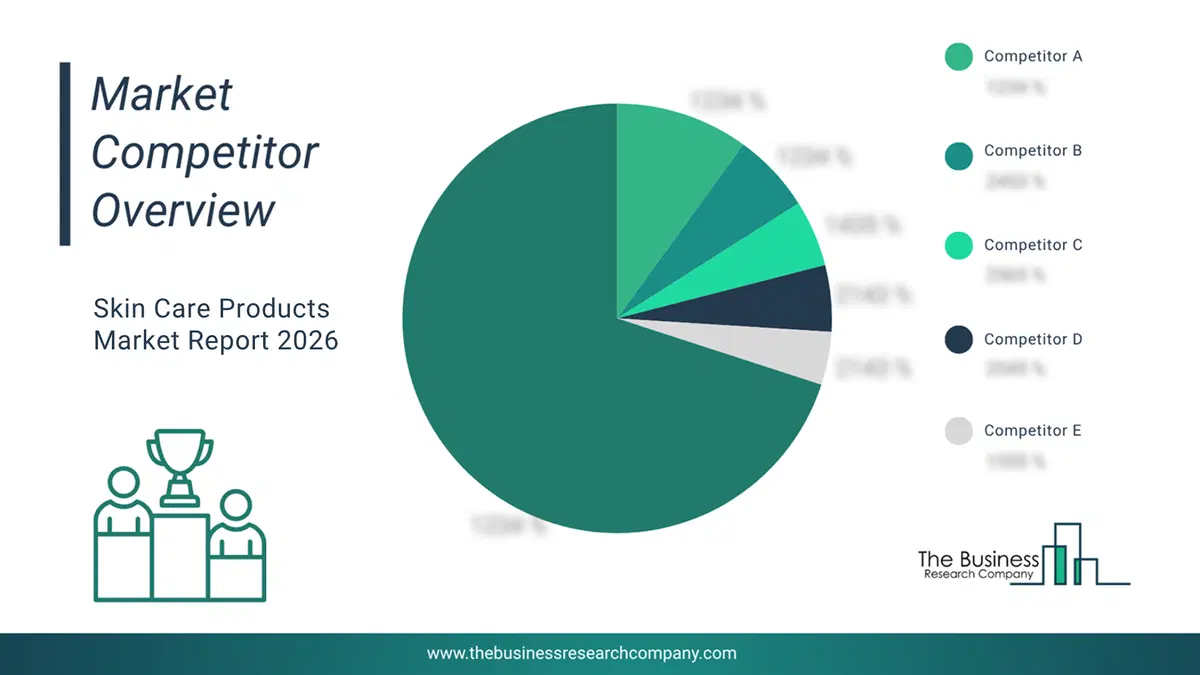
This chart is for illustrative purposes; the full report includes a detailed competitor analysis and comprehensive overview of the top 10 companies in the market.
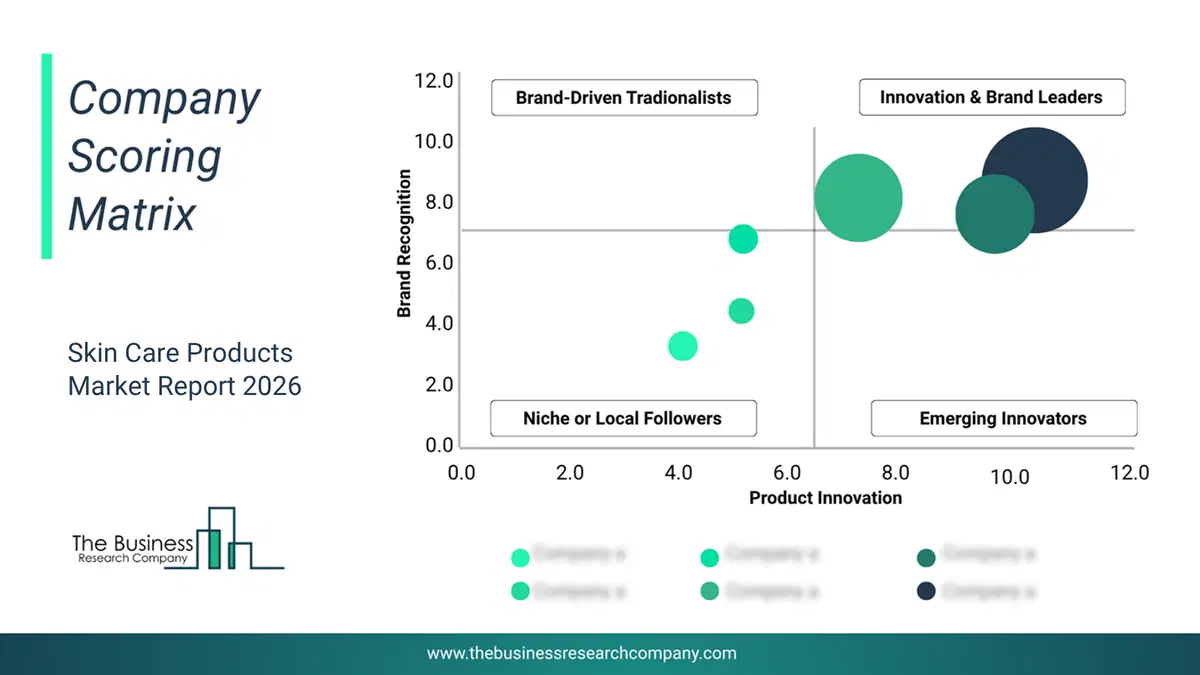
This chart maps companies by product innovation and brand strength, with bubble size indicating relative revenue, helping identify market leaders, challengers, and niche players. This is an illustrative chart; the full report provides a complete and accurate competitive analysis.
Global Skin Care Products Market Trends and Insights
Major companies operating in the skin care products market are focusing on developing innovative products such as medicated moisturizers to provide targeted relief for chronic skin conditions and improve overall skin health. A medicated moisturizer is a therapeutic skincare formulation designed to manage dryness, irritation, and sensitivity while supporting the skin’s natural barrier repair processes. For instance, in October 2024, Bayer Consumer Health, a Germany-based provider of over-the-counter healthcare and dermatological products, launched Bepanthen in India. The range features clean, fragrance-free, paraben-free formulations enriched with Pro-Vitamin B5 and prebiotics, offering immediate relief for dry, irritated, and sensitive skin. Backed by extensive dermatologist survey insights, the range delivers clinically proven efficacy and aims to close the knowledge gap around recurrent dry skin conditions in India.What Are Latest Mergers And Acquisitions In The Skin Care Products Market?
In January 2023, AS Beauty, a US-based skincare company, acquired Bliss World for an undisclosed amount. The acquisition aims to expand its portfolio and leverage Bliss World's established brand presence in the skincare industry. The acquisition aims to enhance AS Beauty's market reach, diversify its product offerings, and capitalize on Bliss World's innovative skincare solutions and customer base. Bliss World is a US-based skincare and beauty brand.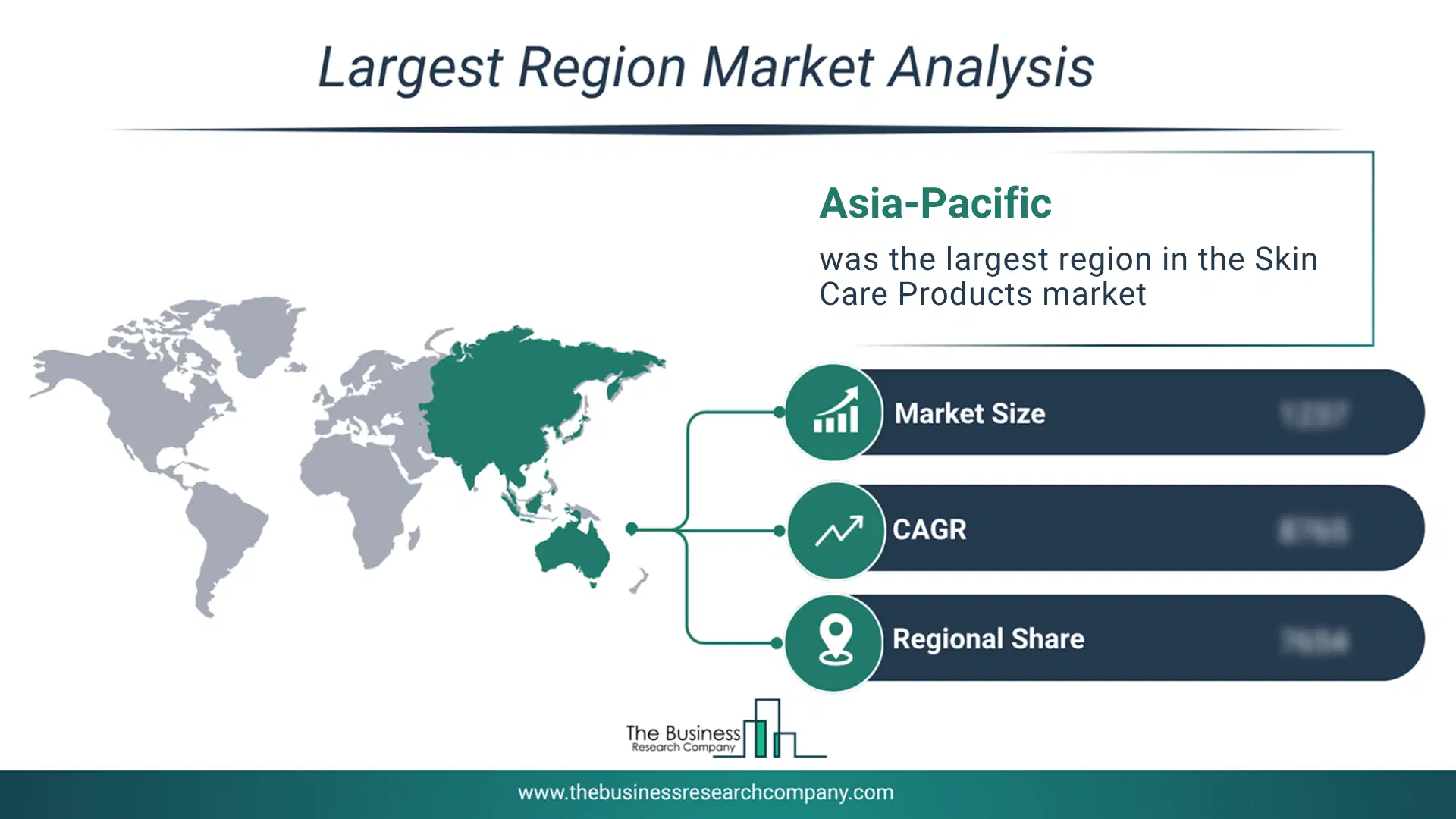
Regional Insights
Asia-Pacific was the largest region in the skin care products market in 2025. Asia-Pacific is expected to be the fastest-growing region in the forecast period. The regions covered in this market report are Asia-Pacific, South East Asia, Western Europe, Eastern Europe, North America, South America, Middle East, Africa The countries covered in this market report are Australia, Brazil, China, France, Germany, India, Indonesia, Japan, Taiwan, Russia, South Korea, UK, USA, Canada, Italy, SpainWhat Defines the Skin Care Products Market?
The skin care products market consists of sales of skin care products such as moisturizers, serums and eye creams. Values in this market are ‘factory gate’ values, that is the value of goods sold by the manufacturers or creators of the goods, whether to other entities (including downstream manufacturers, wholesalers, distributors, and retailers) or directly to end customers. The value of goods in this market includes related services sold by the creators of the goods.How is Market Value Defined and Measured?
The market value is defined as the revenues that enterprises gain from the sale of goods and/or services within the specified market and geography through sales, grants, or donations in terms of the currency (in USD unless otherwise specified). The revenues for a specified geography are consumption values that are revenues generated by organizations in the specified geography within the market, irrespective of where they are produced. It does not include revenues from resales along the supply chain, either further along the supply chain or as part of other products.
This chart presents market attractiveness based on a quantitative evaluation of growth, competition, strategic alignment, and risk, offering a clear view of opportunity areas for decision-making. This chart is for illustrative purposes; the full report contains the complete analysis.

This chart highlights the Total Addressable Market (TAM) by estimating the maximum revenue opportunity using an assumption-driven approach, supporting strategic planning and opportunity sizing across markets. The chart is illustrative; the full report provides a more comprehensive analysis.
What Key Data and Analysis Are Included in the Skin Care Products Market Report 2026?
The skin care products market research report is one of a series of new reports from The Business Research Company that provides market statistics, including industry global market size, regional shares, competitors with the market share, detailed market segments, market trends and opportunities, and any further data you may need to thrive in the skin care products industry. The market research report delivers a complete perspective of everything you need, with an in-depth analysis of the current and future state of the industry.Skin Care Products Market Report Forecast Analysis
| Report Attribute | Details |
|---|---|
| Market Size Value In 2026 | $185.04 billion |
| Revenue Forecast In 2030 | $255.04 billion |
| Growth Rate | CAGR of 8.8% from 2026 to 2030 |
| Base Year For Estimation | 2025 |
| Actual Estimates/Historical Data | 2020-2025 |
| Forecast Period | 2026 - 2030 |
| Market Representation | Revenue in USD Billion and CAGR from 2026 to 2030 |
| Segments Covered | Product Type, Distribution Channel, End User |
| Regional Scope | Asia-Pacific, Western Europe, Eastern Europe, North America, South America, Middle East, Africa |
| Country Scope | The countries covered in the report are Australia, Brazil, China, France, Germany, India, Indonesia, Japan, Taiwan, Russia, South Korea, UK, USA, Canada, Italy, Spain. |
| Key Companies Profiled | LOreal S.A., Beiersdorf AG, Shiseido Co. Ltd., Procter & Gamble, Unilever, Johnson & Johnson Inc., Avon Products Inc., Coty Inc., Colgate-Palmolive Company, Revlon, The Estée Lauder Companies Inc., Himalaya Wellness Company, Lotus Herbals pvt Ltd., Neutrogena Corporation, Olay, Barbara Sturm Molecular Cosmetics GmBH, Renée Rouleau, Kao Corporation, CeraVe, La Roche-Posay, Aveeno, Vichy, Cetaphil, Eucerin, Nivea, Garnier, LVMH |
| Customization Scope | Request for Customization |
| Pricing And Purchase Options | Explore Purchase Options |