
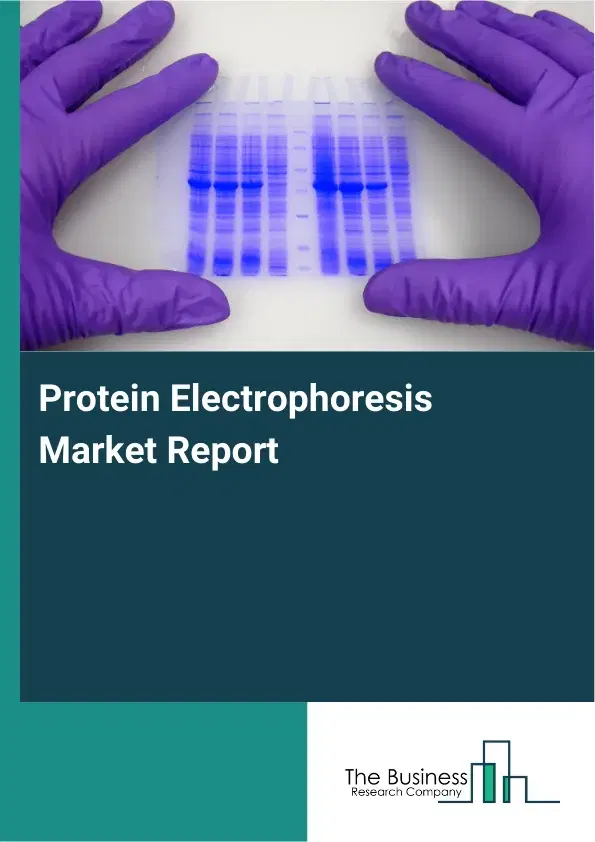
Protein Electrophoresis Market Report 2026
Global Outlook – By Type (Serum Protein Electrophoresis, Immunostationary Electrophoresis, Isoenzyme Electrophoresis, Lipoprotein Electrophoresis, Hemoglobin Electrophoresis, Glycosylated Hemoglobin Electrophoresis, Non-Concentrated Urine Protein Electrophoresis, Cerebrospinal Fluid Electrophoresis), By Technique (Sodium Dodecyl Sulfate Polyacrylamide Gel Electrophoresis (SDS-Page), Native Page, 1-D Page, 2-D Page), By Gel (Agarose Gel Electrophoresis, Polyacrylamide Gel Electrophoresis), By Application (Protein Analysis, Molecular Biology, Clinical Diagnostics), By End-User (Hospitals And Diagnostics, Academic And Research Institutes, Pharmaceutical And Biotechnology Companies, Other End Users) - Market Size, Trends, Strategies, and Forecast to 2030
Protein Electrophoresis Market Overview
• Protein Electrophoresis market size has reached to $3.14 billion in 2025 • Expected to grow to $4.27 billion in 2030 at a compound annual growth rate (CAGR) of 6.3% • Growth Driver: ising Cancer Rates Fuel Growth In Protein Electrophoresis Market • Market Trend: Advancements In Protein Electrophoresis Involving New Technologies And Applications • North America was the largest region in 2025.What Is Covered Under Protein Electrophoresis Market?
Protein electrophoresis refers to a laboratory technique used to separate proteins based on their size, charge, and other properties by applying an electric field to a gel or other medium. It helps in analyzing protein mixtures, identifying protein bands, and assessing protein purity. This technique is crucial in research, diagnostics, and therapeutic monitoring. The main types of protein electrophoresis are serum protein electrophoresis, immunostationary electrophoresis, isoenzyme electrophoresis, lipoprotein electrophoresis, hemoglobin electrophoresis, glycosylated hemoglobin electrophoresis, non-concentrated urine protein electrophoresis, and cerebrospinal fluid electrophoresis. Serum protein electrophoresis is a laboratory technique used to separate and analyze proteins in the blood based on their size and charge. Various techniques include sodium dodecyl sulfate-polyacrylamide gel electrophoresis (SDS-PAGE), native PAGE, 1-D PAGE, and 2-D PAGE, with gel types such as agarose gel electrophoresis and polyacrylamide gel electrophoresis. It has various applications in protein analysis, molecular biology, and clinical diagnostics. They are utilized by end users such as hospitals and diagnostic labs, academic and research institutes, pharmaceutical and biotechnology companies, and others.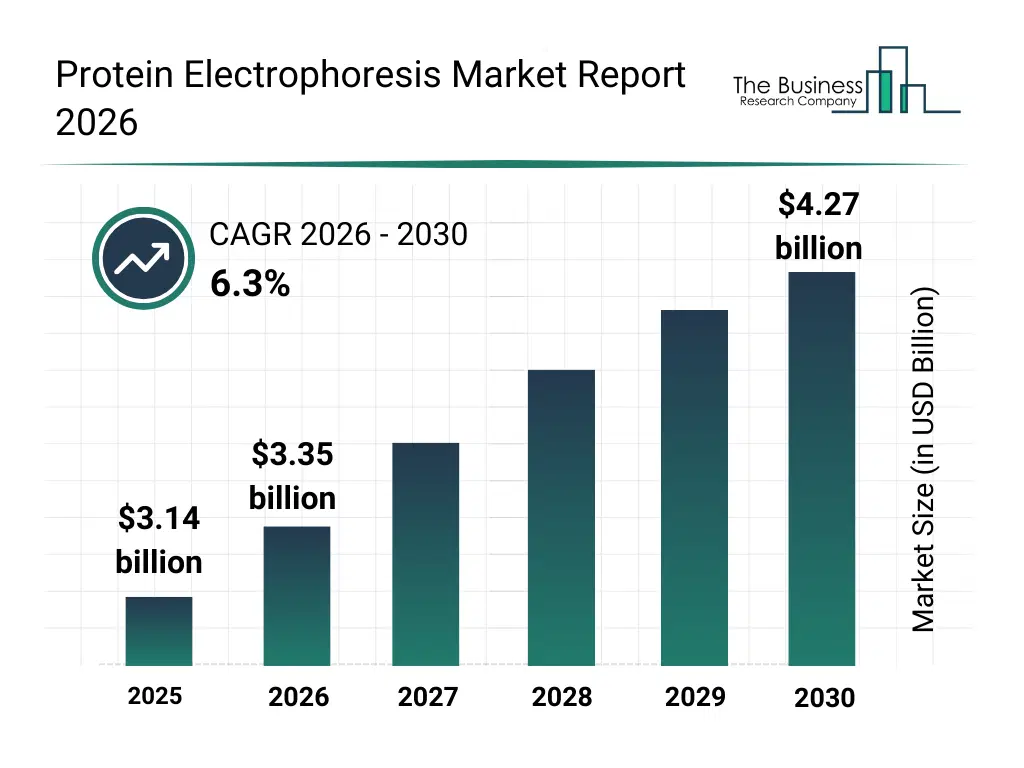
What Is The Protein Electrophoresis Market Size and Share 2026?
The protein electrophoresis market size has grown strongly in recent years. It will grow from $3.14 billion in 2025 to $3.35 billion in 2026 at a compound annual growth rate (CAGR) of 6.6%. The growth in the historic period can be attributed to expansion of clinical diagnostic laboratories, increasing prevalence of protein-related disorders, growth in academic proteomics research, wider use of electrophoresis in molecular biology, availability of standardized electrophoresis reagents.What Is The Protein Electrophoresis Market Growth Forecast?
The protein electrophoresis market size is expected to see strong growth in the next few years. It will grow to $4.27 billion in 2030 at a compound annual growth rate (CAGR) of 6.3%. The growth in the forecast period can be attributed to increasing demand for personalized medicine diagnostics, rising integration of electrophoresis with digital imaging systems, expansion of hospital-based diagnostic testing, growing use in therapeutic monitoring, increasing investments in proteomics research. Major trends in the forecast period include increasing adoption of automated electrophoresis systems, rising use of high-resolution gel technologies, growing demand for clinical protein diagnostics, expansion of multiplex protein analysis applications, enhanced focus on reproducibility and accuracy.
Global Protein Electrophoresis Market Segmentation
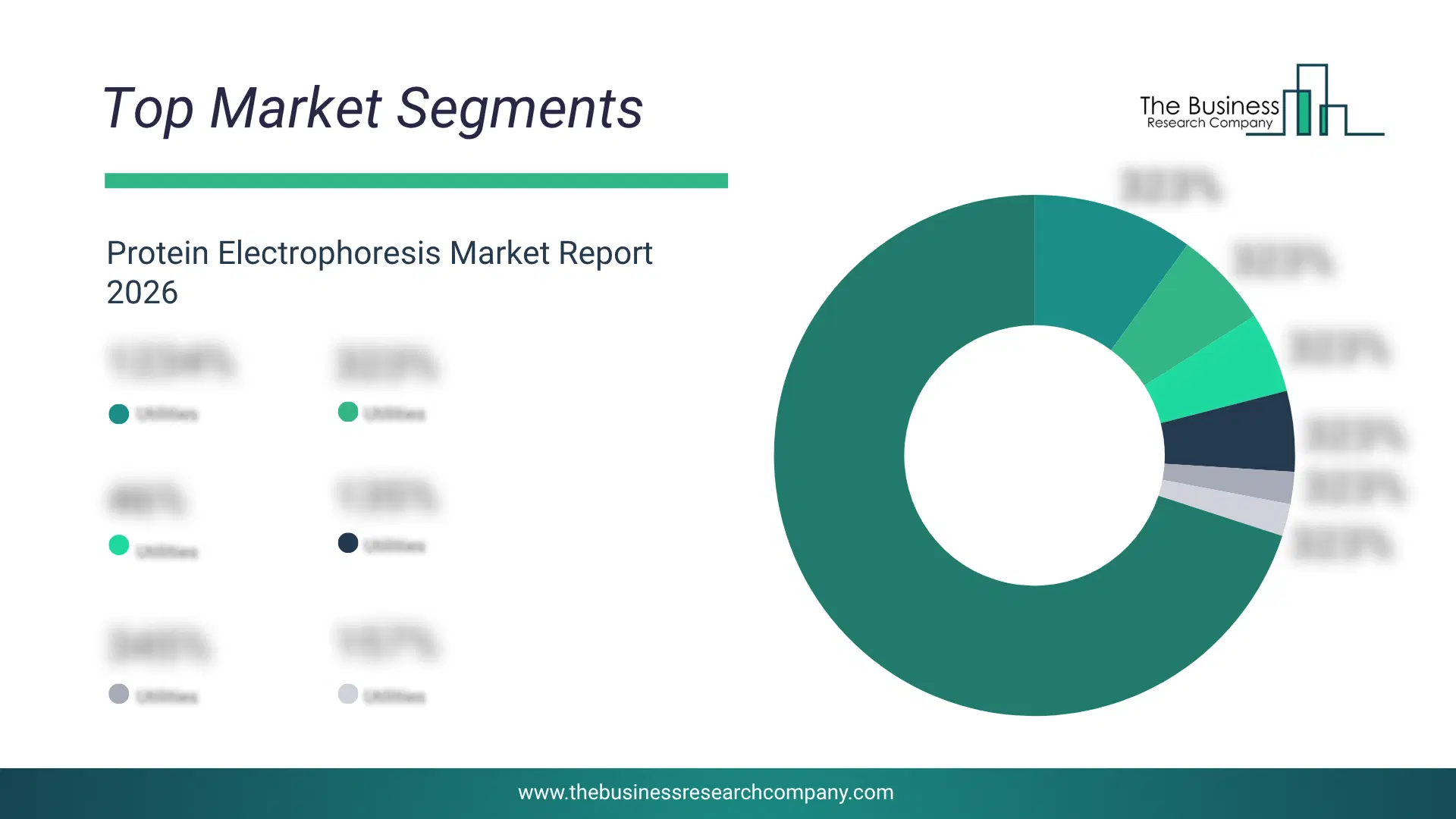
1) By Type: Serum Protein Electrophoresis, Immunostationary Electrophoresis, Isoenzyme Electrophoresis, Lipoprotein Electrophoresis, Hemoglobin Electrophoresis, Glycosylated Hemoglobin Electrophoresis, Non-Concentrated Urine Protein Electrophoresis, Cerebrospinal Fluid Electrophoresis 2) By Technique: Sodium Dodecyl Sulfate Polyacrylamide Gel Electrophoresis (SDS-Page), Native Page, 1-D Page, 2-D Page 3) By Gel: Agarose Gel Electrophoresis, Polyacrylamide Gel Electrophoresis 4) By Application: Protein Analysis, Molecular Biology, Clinical Diagnostics 5) By End-User: Hospitals And Diagnostics, Academic And Research Institutes, Pharmaceutical And Biotechnology Companies, Other End Users Subsegments: 1) By Serum Protein Electrophoresis (SPEP): Albumin Electrophoresis, Globulin Electrophoresis (Alpha-1, Alpha-2, Beta, And Gamma), Monoclonal Gammopathy Identification, Serum-Free Light Chain Assay (sFLC), Paraprotein Detection, Protein Fractions Analysis 2) By Immunostationary Electrophoresis (Immunoelectrophoresis): Immunofixation Electrophoresis (IFE), Rocket Immunoelectrophoresis, Counter Immunoelectrophoresis, Two-Dimensional Immunoelectrophoresis, Immunoblotting Techniques, Western Blotting 3) By Isoenzyme Electrophoresis: Lactate Dehydrogenase (LDH) Isoenzyme Electrophoresis, Creatine Kinase (CK) Isoenzyme Electrophoresis, Alkaline Phosphatase Isoenzyme Electrophoresis, Amylase Isoenzyme Electrophoresis, Glutamate Dehydrogenase (GDH) Isoenzyme Electrophoresis, Malate Dehydrogenase (MDH) Isoenzyme Electrophoresis 4) By Lipoprotein Electrophoresis: High-Density Lipoproteins (HDL), Low-Density Lipoproteins (LDL), Very Low-Density Lipoproteins (VLDL), Chylomicrons, Intermediate-Density Lipoproteins (IDL) 5) By Hemoglobin Electrophoresis: Normal Hemoglobin (HbA, HbA2), Sickle Cell Hemoglobin (HbS), Hemoglobin C (HbC), Hemoglobin D (HbD), Thalassemia (HbF, HbH, Hb Bart’s), Hemoglobin E (HbE) 6) By Glycosylated Hemoglobin Electrophoresis (HbA1c Electrophoresis): Glycated Hemoglobin A1c (HbA1c), Hemoglobin A1a And A1b, Non-Glycated Hemoglobin, Assessment Of Glycemic Control (For Diabetes) 7) By Non-Concentrated Urine Protein Electrophoresis: Albumin Detection, Bence Jones Proteins Detection, Tubular Proteinuria, Glomerular Proteinuria, Tamm-Horsfall Protein, Urinary Monoclonal Free Light Chains (κ And λ) 8) By Cerebrospinal Fluid (CSF) Electrophoresis: Oligoclonal Bands Detection (For Multiple Sclerosis Diagnosis), CSF IgG Index, CSF Albumin, CSF/Serum Albumin Ratio, CSF Total Protein Fractionation, CSF Free Light Chain Assay (FLC)What Is The Driver Of The Protein Electrophoresis Market?
The rising prevalence of cancer is expected to propel the growth of the protein electrophoresis market going forward. The rise in cancer prevalence is driven by factors such as aging populations, lifestyle changes, environmental exposures, and improved diagnostic methods. Protein electrophoresis helps cancer patients by detecting abnormal proteins in the blood, aiding in the diagnosis, monitoring, and treatment of certain cancers. For instance, in April 2024, according to the International Agency for Research on Cancer (IARC), a France-based intergovernmental agency, and the American Cancer Society (ACS), a US-based non-profit organization for cancer prevention and awareness, approximately 20 million new cancer cases were reported globally in 2022. The report also projected a 77% increase, with cases expected to reach 35 million annually by 2050. Lung cancer was the most common diagnosis, representing 12.4% of cases, followed by breast cancer at 11.6% and colorectal cancer at 9.6%. Lung cancer also caused the most deaths, accounting for 1.8 million fatalities (18.7%), followed by colorectal cancer at 9.3% and liver cancer at 7.8%. Therefore, the rising prevalence of cancer will drive the growth of the protein electrophoresis industry.Key Players In The Global Protein Electrophoresis Market
Major companies operating in the protein electrophoresis market are Bio-Rad Laboratories Inc., Thermo Fisher Scientific Inc., Agilent Technologies Inc., Merck KGaA, Danaher Corporation, Beckman Coulter Inc., Sebia Group, Helena Laboratories Corporation, Shimadzu Corporation, PerkinElmer Inc., Cleaver Scientific Ltd., C.B.S. Scientific Company, Analytik Jena, Serva Electrophoresis GmbH, Takara Bio Inc., Lonza Group Ltd, Promega Corporation, Abcam plc, GE Healthcare, Hoefer Inc.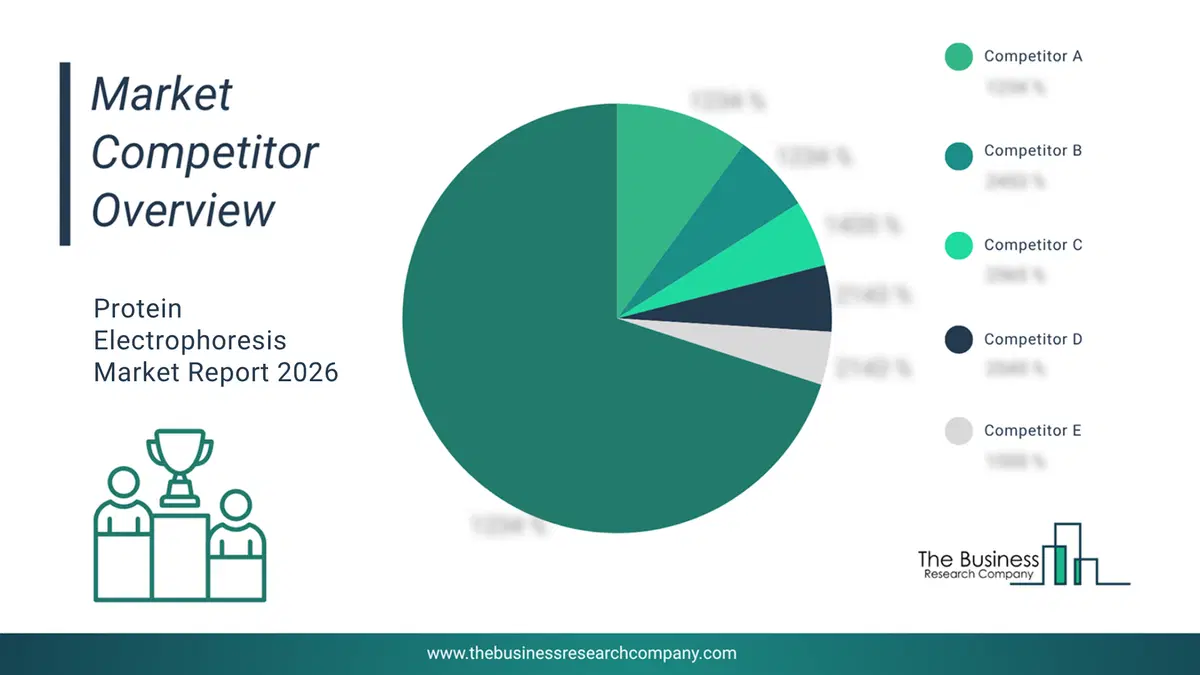
This chart is for illustrative purposes; the full report includes a detailed competitor analysis and comprehensive overview of the top 10 companies in the market.
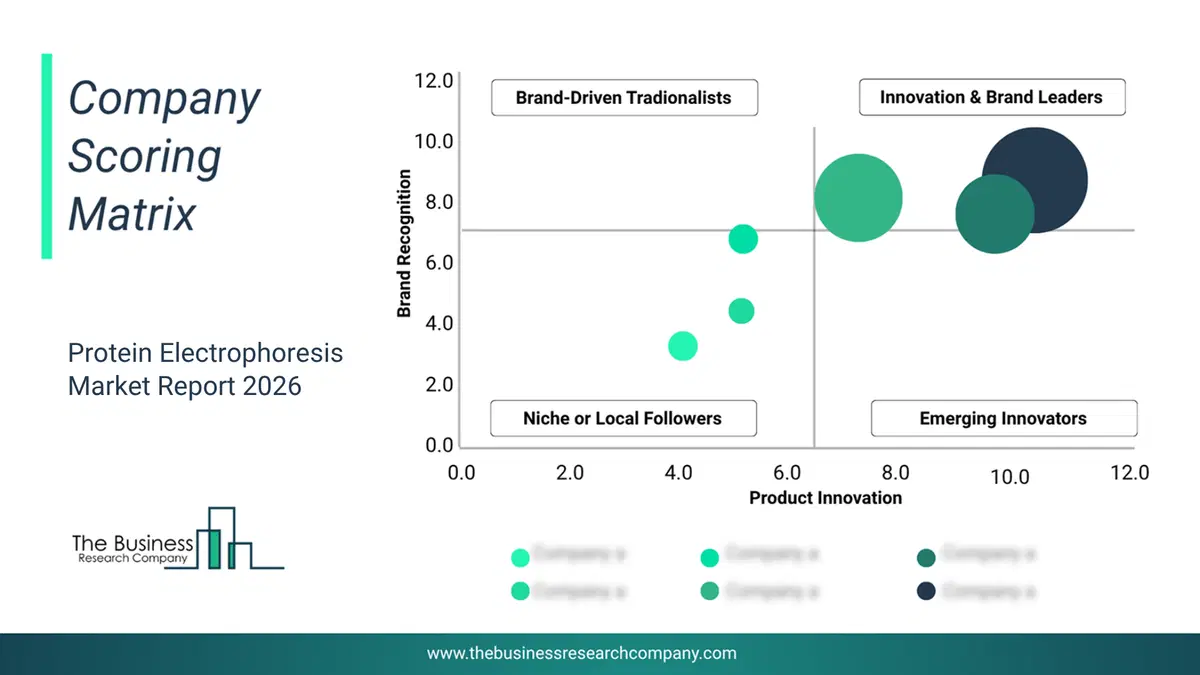
This chart maps companies by product innovation and brand strength, with bubble size indicating relative revenue, helping identify market leaders, challengers, and niche players. This is an illustrative chart; the full report provides a complete and accurate competitive analysis.
Global Protein Electrophoresis Market Trends and Insights
Major companies operating in the protein electrophoresis market focus on developing advanced products, such as vertical electrophoresis systems, to gain a competitive edge in the market. A vertical electrophoresis system is laboratory equipment used for separating biomolecules, such as proteins or nucleic acids, based on their size, charge, or other properties through gel electrophoresis. For instance, in November 2023, TransGen Biotech Co. Ltd., a France-based manufacturer of molecular and cellular biology reagents, launched the TSE-P Mini Vertical Electrophoresis System. This system is designed to facilitate efficient protein separation and transfer, enabling researchers to study protein composition, diversity, and interactions within samples. The vertical electrophoresis unit allows for the separation of proteins or nucleic acids based on their size and charge. The system is compatible with precast or hand-cast gels and can accommodate various gel thicknesses and well sizes. The transfer system enables the efficient transfer of separated proteins or nucleic acids from the gel to a membrane, such as nitrocellulose, for further analysis or detection.What Are Latest Mergers And Acquisitions In The Protein Electrophoresis Market?
In July 2025, LICORbio, a US-based provider of life-science imaging and analytical solutions, acquired SERVA Electrophoresis for an undisclosed amount. Through this acquisition, LICORbio aims to broaden its electrophoresis offerings and provide end-to-end workflows for protein, DNA, and RNA analysis by integrating SERVA’s reagents, consumables, and electrophoresis instrumentation. SERVA Electrophoresis is a Germany-based company that provides electrophoresis reagents, gels, buffers, and workflow equipment for protein and nucleic acid analysis.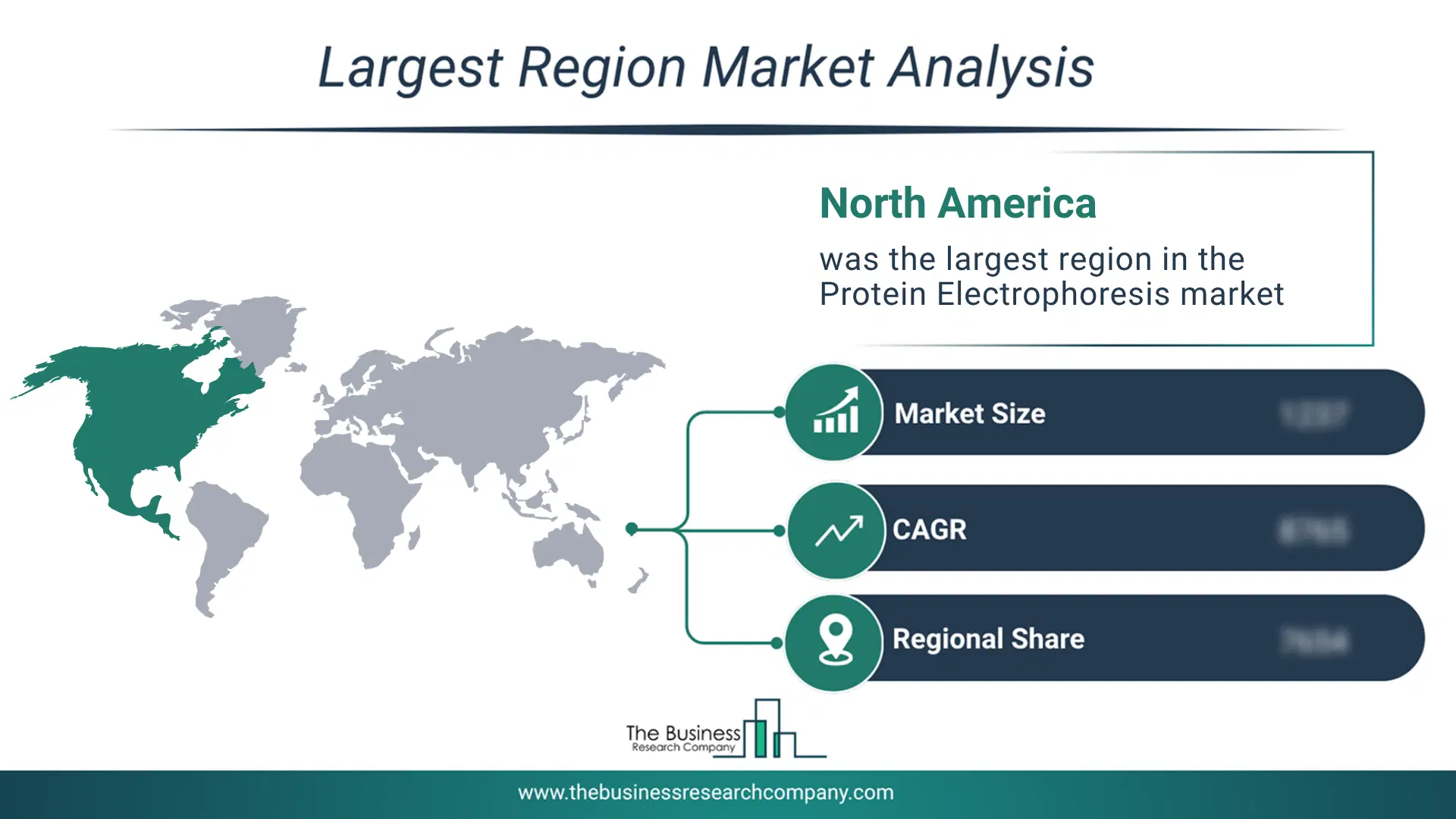
Regional Outlook
North America was the largest region in the protein electrophoresis market in 2025. The regions covered in this market report are Asia-Pacific, South East Asia, Western Europe, Eastern Europe, North America, South America, Middle East, Africa. The countries covered in this market report are Australia, Brazil, China, France, Germany, India, Indonesia, Japan, Taiwan, Russia, South Korea, UK, USA, Canada, Italy, Spain.What Defines the Protein Electrophoresis Market?
The protein electrophoresis market consists of sales of electrophoresis systems, gels, reagents, staining kits, software, transfer equipment, electrophoresis chambers, tanks, blotting membranes, protein quantification kits, protein markers, and ladders. Values in this market are ‘factory gate’ values, that is the value of goods sold by the manufacturers or creators of the goods, whether to other entities (including downstream manufacturers, wholesalers, distributors, and retailers) or directly to end customers. The value of goods in this market includes related services sold by the creators of the goods.How is Market Value Defined and Measured?
The market value is defined as the revenues that enterprises gain from the sale of goods and/or services within the specified market and geography through sales, grants, or donations in terms of the currency (in USD unless otherwise specified). The revenues for a specified geography are consumption values that are revenues generated by organizations in the specified geography within the market, irrespective of where they are produced. It does not include revenues from resales along the supply chain, either further along the supply chain or as part of other products.
This chart presents market attractiveness based on a quantitative evaluation of growth, competition, strategic alignment, and risk, offering a clear view of opportunity areas for decision-making. This chart is for illustrative purposes; the full report contains the complete analysis.

This chart highlights the Total Addressable Market (TAM) by estimating the maximum revenue opportunity using an assumption-driven approach, supporting strategic planning and opportunity sizing across markets. The chart is illustrative; the full report provides a more comprehensive analysis.
What Key Data and Analysis Are Included in the Protein Electrophoresis Market Report 2026?
The protein electrophoresis market research report is one of a series of new reports from The Business Research Company that provides market statistics, including industry global market size, regional shares, competitors with the market share, detailed market segments, market trends and opportunities, and any further data you may need to thrive in the protein electrophoresis industry. The market research report delivers a complete perspective of everything you need, with an in-depth analysis of the current and future state of the industry.Protein Electrophoresis Market Report Forecast Analysis
| Report Attribute | Details |
|---|---|
| Market Size Value In 2026 | $3.35 billion |
| Revenue Forecast In 2030 | $4.27 billion |
| Growth Rate | CAGR of 6.3% from 2026 to 2030 |
| Base Year For Estimation | 2025 |
| Actual Estimates/Historical Data | 2020-2025 |
| Forecast Period | 2026 - 2030 |
| Market Representation | Revenue in USD Billion and CAGR from 2026 to 2030 |
| Segments Covered | Type, Technique, Gel, Application, End-User |
| Regional Scope | Asia-Pacific, Western Europe, Eastern Europe, North America, South America, Middle East, Africa |
| Country Scope | The countries covered in the report are Australia, Brazil, China, France, Germany, India, Indonesia, Japan, Taiwan, Russia, South Korea, UK, USA, Canada, Italy, Spain |
| Key Companies Profiled | Bio-Rad Laboratories Inc., Thermo Fisher Scientific Inc., Agilent Technologies Inc., Merck KGaA, Danaher Corporation, Beckman Coulter Inc., Sebia Group, Helena Laboratories Corporation, Shimadzu Corporation, PerkinElmer Inc., Cleaver Scientific Ltd., C.B.S. Scientific Company, Analytik Jena, Serva Electrophoresis GmbH, Takara Bio Inc., Lonza Group Ltd, Promega Corporation, Abcam plc, GE Healthcare, Hoefer Inc. |
| Customization Scope | Request for Customization |
| Pricing And Purchase Options | Explore Purchase Options |