
Purpose-Driven Banking Market Report 2026
Global Outlook – By Service Type (Retail Banking, Corporate Banking, Investment Banking, Wealth Management, Other Service Types), By Channel (Online Banking, Mobile Banking, Branch Banking, Other Channel Types), By Deployment Mode (On-Premises, Cloud-Based), By End-User (Individuals, Small And Medium Enterprises, Large Corporates, Non-Profit Organizations, Other End-User Types) – Market Size, Trends, Strategies, and Forecast to 2030
Purpose-Driven Banking Market Overview
• Purpose-Driven Banking market size has reached to $64.5 billion in 2025 • Expected to grow to $127.89 billion in 2030 at a compound annual growth rate (CAGR) of 14.6% • Growth Driver: Surge In Increasing Consumer Demand For Ethical Banking Practices Fueling The Growth Of The Market Due To Rising Societal Expectations For Corporate Integrity • Market Trend: Innovative Sustainable Banking Card Uses Recycled Ocean Plastics To Promote Environmental Responsibility • Europe was the largest region in 2025 and Asia-Pacific is the fastest growing region.Market Gains By 2030 – Top Opportunities By Segment
Market Gain identifies the most promising market opportunities by highlighting the segments or products expected to generate the highest incremental revenue growth over the next five years.
What Is Covered Under Purpose-Driven Banking Market?
Purpose-driven banking, refers to a financial approach where banking institutions align their strategies and operations with social, environmental, and ethical objectives. It emphasizes creating positive societal impact alongside achieving financial goals. This approach integrates sustainability, corporate responsibility, and stakeholder engagement into core banking practices. The adoption of this approach is rapidly increasing globally as institutions recognize the demand for ethical and responsible financial practices. The main service types of purpose-driven banking include retail banking, corporate banking, investment banking, wealth management, and other service types. Retail banking refers to financial services provided to individual customers, including deposits, loans, and payment services, while corporate and investment banking focus on the financial needs of businesses and institutional clients. Purpose-driven banking services are accessible through channels such as online banking, mobile banking, branch banking, and others, and can be deployed on-premises or via cloud-based models. These services cater to end-users including individuals, small and medium enterprises (SMEs), large corporates, non-profit organizations, and others.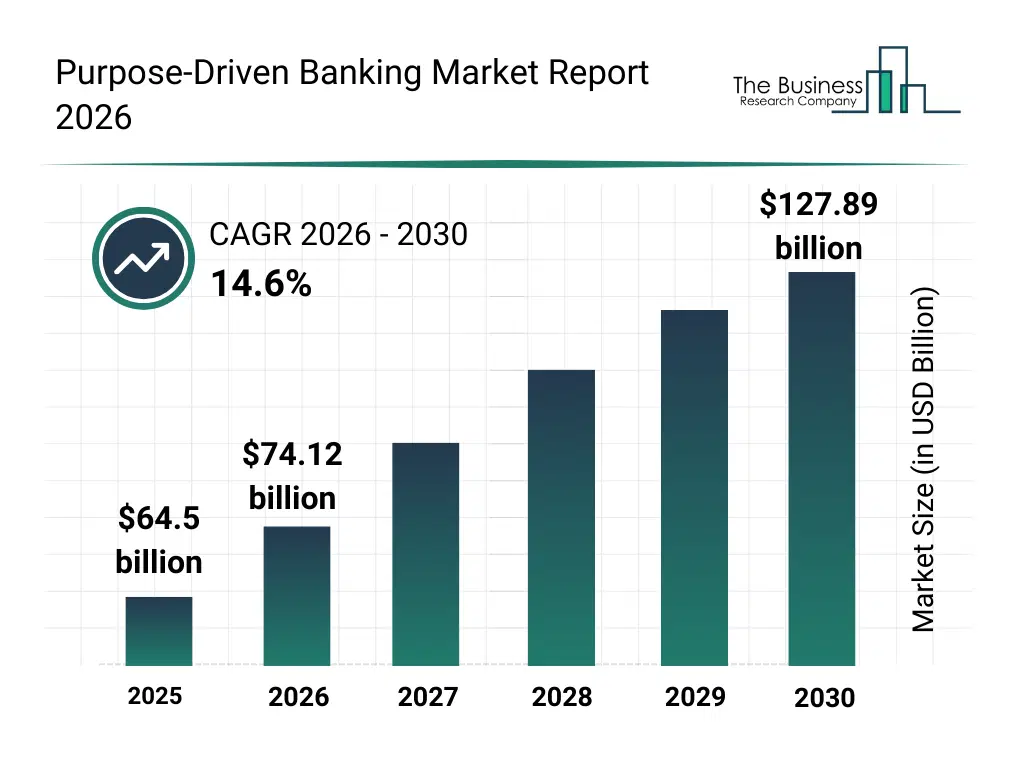
What Is The Purpose-Driven Banking Market Size and Share 2026?
The purpose-driven banking market size has grown rapidly in recent years. It will grow from $64.5 billion in 2025 to $74.12 billion in 2026 at a compound annual growth rate (CAGR) of 14.9%. The growth in the historic period can be attributed to increasing awareness of social responsibility in finance, growth of sustainable finance frameworks, rising customer demand for ethical banking, expansion of corporate responsibility initiatives, regulatory encouragement for responsible lending.What Is The Purpose-Driven Banking Market Growth Forecast?
The purpose-driven banking market size is expected to see rapid growth in the next few years. It will grow to $127.89 billion in 2030 at a compound annual growth rate (CAGR) of 14.6%. The growth in the forecast period can be attributed to increasing adoption of sustainability-linked financial products, rising digital transformation in banking services, expansion of climate-focused financing, growing alignment of banking strategies with sdgs, increasing investor scrutiny on social impact outcomes. Major trends in the forecast period include increasing integration of esg metrics in banking products, rising adoption of impact-oriented financial services, growing use of digital platforms for ethical banking, expansion of green and social financing solutions, enhanced stakeholder-centric banking models.
Global Purpose-Driven Banking Market Segmentation
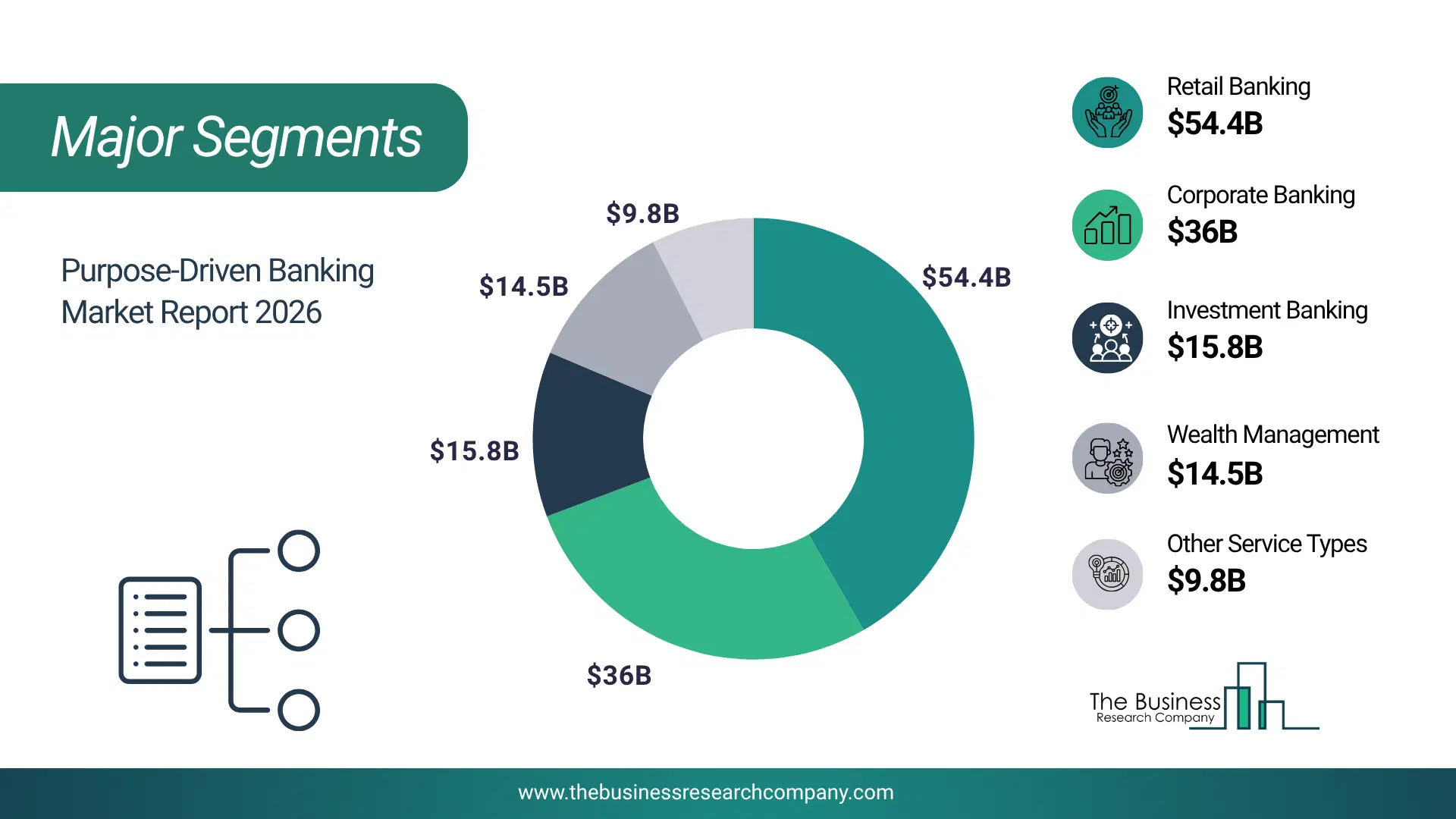
1) By Service Type: Retail Banking, Corporate Banking, Investment Banking, Wealth Management, Other Service Types 2) By Channel: Online Banking, Mobile Banking, Branch Banking, Other Channel Types 3) By Deployment Mode: On-Premises, Cloud-Based 4) By End-User: Individuals, Small And Medium Enterprises, Large Corporates, Non-Profit Organizations, Other End-User Types Subsegments: 1) By Retail Banking: Savings Accounts, Current Accounts, Personal Loans, Mortgages, Credit Cards, Digital Banking Services, Microfinance Services 2) By Corporate Banking: Business Loans, Working Capital Financing, Cash Management Services, Trade Finance, Corporate Social Responsibility Financing, Sustainable Supply Chain Financing 3) By Investment Banking: Mergers And Acquisitions Advisory, Equity And Debt Underwriting, Sustainable Investment Advisory, Green Bond Issuance, Corporate Restructuring 4) By Wealth Management: Sustainable Investment Portfolios, Financial Planning, ESG-Focused Funds, Impact Investing, Retirement Planning, Philanthropic Advisory 5) By Other Service Types: Community Development Financing, Financial Inclusion Programs, Climate Financing, Educational Savings Programs, Social Impact Banking Initiatives The top segments in the purpose-driven banking market will be: • Retail Banking will reach $54.4 billion by 2030. • Corporate Banking will reach $35.98 billion by 2030. • Investment Banking will reach $15.72 billion by 2030. • Wealth Management will reach $14.44 billion by 2030. • Other Service Types will reach $9.79 billion by 2030.What Is The Driver Of The Purpose-Driven Banking Market?
The increasing consumer demand for ethical banking practices is expected to propel the growth of the purpose-driven banking market going forward. Ethical banking practices refer to consumers choosing financial institutions that demonstrate transparency, social responsibility, and adherence to moral standards in operations. The rise in consumer demand for ethical banking practices is driven by growing societal expectations for corporate integrity, particularly in financial services. Purpose-driven banking supports this demand by implementing clear ethical policies, sustainable investment strategies, and transparent reporting that align with consumer values. For instance, in 2023, according to the Governance Institute of Australia, a UK-based professional association, 76% of adults rated ethical behavior in banking, finance, and insurance as important or very important, up 2 points from the previous year. Therefore, the increasing consumer demand for ethical banking practices is expected to drive the growth of the purpose-driven banking industry.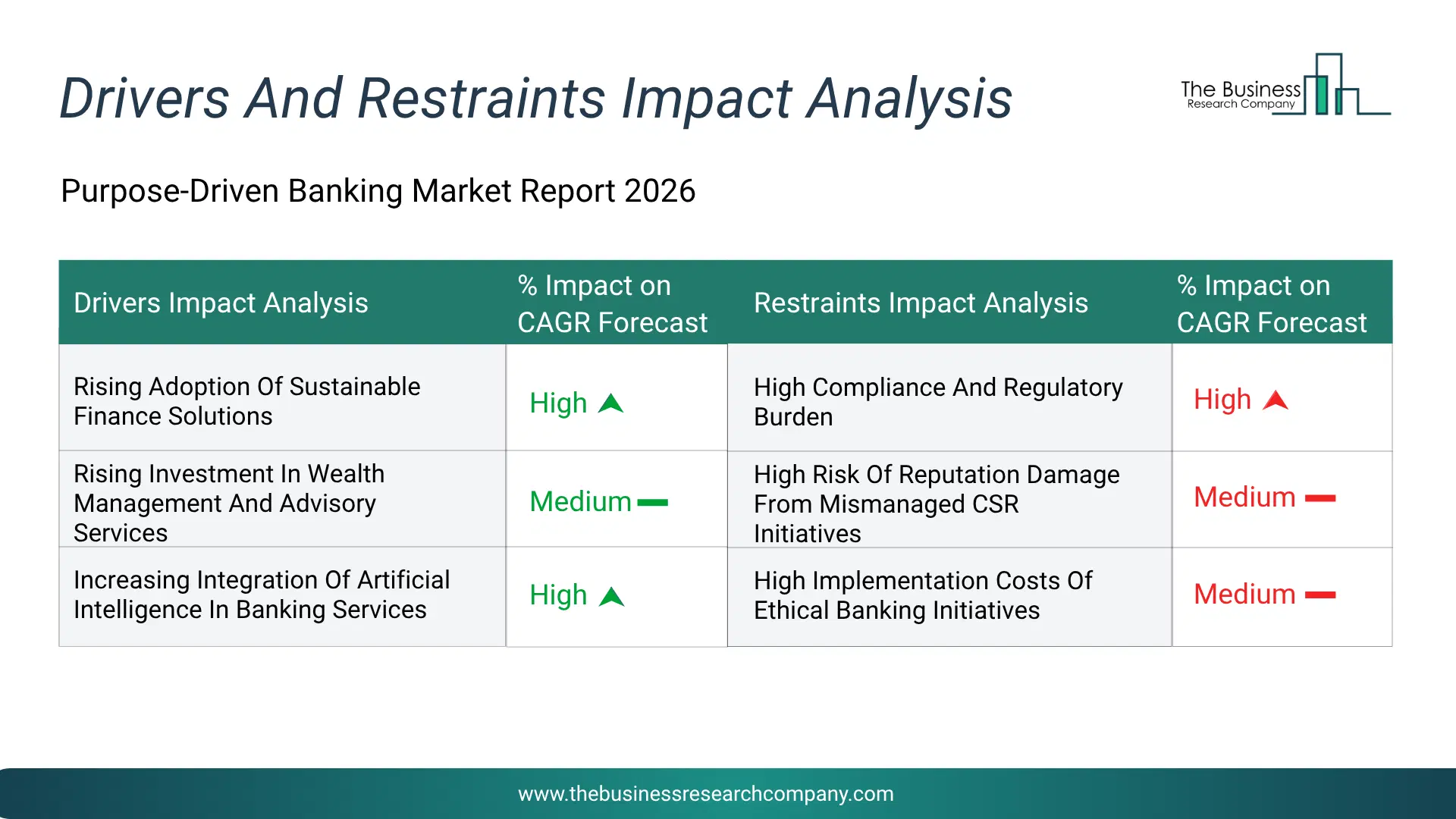
Infographic Chart Showing Key Market Drivers Analysis And Restraints For Purpose-Driven Banking Market
The chart presents an impact analysis of key drivers and restraints, quantifying their relative influence on the market's growth rate and helping assess the balance between growth enablers and limiting factors. This chart offers a high-level perspective; the full report contains more detailed insights.
How Will The Drivers Impact Growth In The Global Purpose-Driven Banking Market?
• Rising Adoption Of Sustainable Finance Solutions (High) – During the forecast period, the rising adoption of sustainable finance solutions is expected to become a major growth driver for the purpose -driven banking market by 2030. Financial institutions are increasingly aligning their strategies with environmental, social, and governance (esg) principles to deliver both financial returns and measurable social impact. This shift is strengthening brand credibility, enhancing customer trust, and attracting long -term investors. It is also driving innovation in green bonds, impact lending, and renewable energy financing. As sustainability becomes a core component of financial decision -making, purpose -driven banking is gaining significant traction. • Rising Investment In Wealth Management And Advisory Services (Medium) – During the forecast period, the rising investment in wealth management and advisory services is expected to drive the expansion of the purpose-driven banking market by 2030. Financial institutions are increasingly incorporating esg-focused investment strategies into client portfolios to meet growing demand for value-aligned financial products. This trend enhances transparency, supports long-term value creation, and strengthens client engagement. Personalized advisory services focused on sustainability are also improving customer retention and competitive positioning. By aligning profitability with social impact, wealth management services are playing a key role in advancing purpose-driven banking. • Increasing Integration Of Artificial Intelligence In Banking Services (High) – During the forecast period, the increasing integration of artificial intelligence in banking services is expected to act as a key growth catalyst for the purpose-driven banking market by 2030. Ai enables financial institutions to analyze large datasets, assess the social and environmental impact of investments, and deliver personalized financial solutions. It also improves operational efficiency by automating routine processes, allowing banks to focus more on strategic and sustainability-driven initiatives. Additionally, ai enhances transparency, risk assessment, and customer engagement across digital banking platforms. As banks continue to adopt intelligent technologies, ai is strengthening the alignment between financial performance and social responsibility.How Will The Restraints Impact Growth In The Global Purpose-Driven Banking Market?
• High Compliance And Regulatory Burden (High) – During the forecast period, the high compliance and regulatory burden acts as a restraint for purpose-driven banking because financial institutions must adhere to complex and evolving sustainability, esg, and ethical finance regulations. Meeting these standards requires extensive reporting, audits, and documentation, which increase operational costs and administrative workload. The lack of uniform global standards further complicates compliance, especially for multinational banks. Smaller institutions often struggle with the resources and expertise needed to maintain regulatory alignment. As a result, the heavy compliance load can slow innovation and limit the scalability of purpose-driven banking initiatives. • High Risk Of Reputation Damage From Mismanaged CSR Initiatives (Medium) – During the forecast period, the high risk of reputation damage from mismanaged csr initiatives acts as a major restraint for purpose-driven banking because the entire model relies on public trust, transparency, and authenticity. When banks fail to deliver on their ethical or sustainability promises, it can lead to accusations of greenwashing and erode customer confidence. Such incidents not only harm brand image but also reduce investor and stakeholder trust. The resulting loss of credibility can directly impact customer retention and business performance. Therefore, maintaining consistent, transparent, and verifiable csr practices is essential to sustain growth in purpose-driven banking. • High Implementation Costs Of Ethical Banking Initiatives (Medium) – During the forecast period, the high implementation costs of ethical banking initiatives act as a major restraint for purpose-driven banking because adopting sustainable and socially responsible practices often requires significant financial investment. Banks must upgrade systems, train staff, and integrate esg compliance frameworks, which increase operational expenses. Smaller and mid-sized institutions may struggle to allocate funds for these initiatives, slowing adoption. Additionally, the need for continuous monitoring and reporting adds to long-term costs. As a result, high initial and ongoing expenses can limit the scalability and profitability of purpose-driven banking models.Key Players In The Global Purpose-Driven Banking Market
Major companies operating in the purpose-driven banking market are Crédit Agricole S.A., DBS Bank Ltd., Svenska Handelsbanken AB (publ), Vancouver City Savings Credit Union, BancoSol S.A., Triodos Bank, Amalgamated Bank, Self-Help Credit Union, GLS Bank eG, Bank Australia Ltd., Sunrise Banks N.A., Oikocredit International, Beneficial State Bank, Ecology Building Society, RSF Social Finance, BlueOrchard Finance Ltd., Unity Trust Bank PLC, Charity Bank, Southern Bancorp Inc., EthikBank eG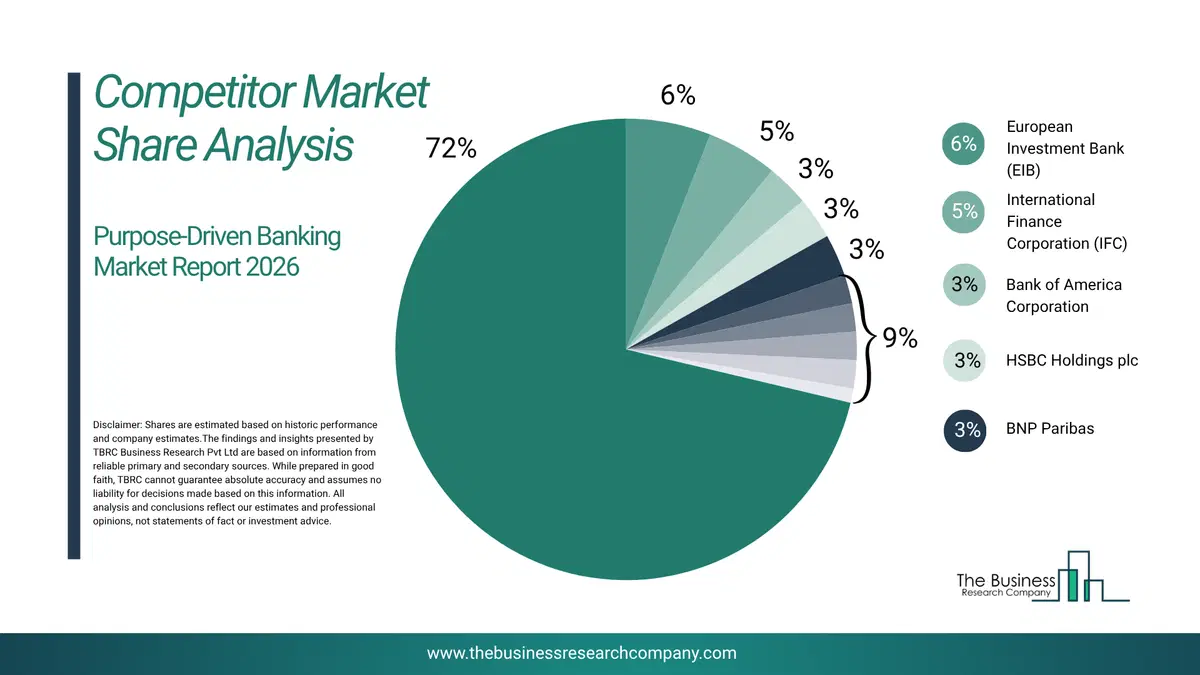
This chart is for illustrative purposes; the full report includes a detailed competitor analysis and comprehensive overview of the top 10 companies in the market.
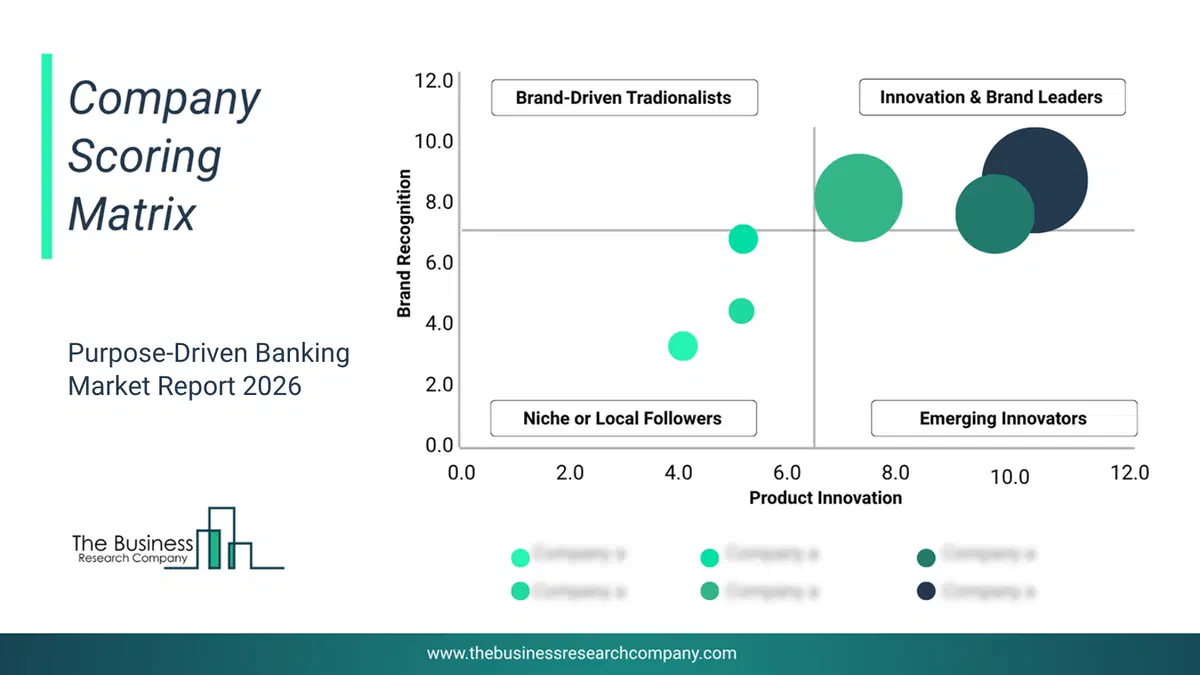
This chart maps companies by product innovation and brand strength, with bubble size indicating relative revenue, helping identify market leaders, challengers, and niche players. This is an illustrative chart; the full report provides a complete and accurate competitive analysis.
Global Purpose-Driven Banking Market Trends and Insights
Major companies operating in the purpose-driven banking market are focusing on advanced innovation, such as sustainable banking cards, to offer environmentally responsible financial solutions, enhance customer engagement, and expand their presence in the growing ethical finance segment. Sustainable banking cards refer to debit cards, credit cards, or rewards cards made from recycled materials designed to reduce plastic waste while maintaining full functionality. For instance, in September 2025, Bank Australia, an Australia-based customer-owned bank, introduced a new Visa debit card made from 100% recycled plastic, with 64% collected from coastal communities by Parley for the Oceans, a global environmental organization. The card incorporates multiple layers of recycled polyethylene terephthalate (PET) and recycled polyethylene terephthalate glycol (rPETG), includes tactile Braille dots for accessibility, and ensures traceable sourcing of all materials. Beyond reducing plastic waste, the card supports the bank’s sustainability commitments, including Benefit Corporation (B Corp) certification and net-zero operations.What Are Latest Mergers And Acquisitions In The Purpose-Driven Banking Market?
In February 2023, Southern Bancorp, Inc., a US-based mission-driven Community Development Financial Institution (CDFI), acquired Premier Bank of Arkansas for an undisclosed amount. Through this acquisition, Southern Bancorp, Inc. aims to broaden access to mission-focused banking and economic development services in Northeast Arkansas by integrating Premier Bank of Arkansas branches in Jonesboro, Marion, and West Memphis, allowing more residents to benefit from expanded financial products, development programs, and community support initiatives. Premier Bank of Arkansas is a US-based community-focused bank providing financial services to individuals, businesses, and nonprofit organizations.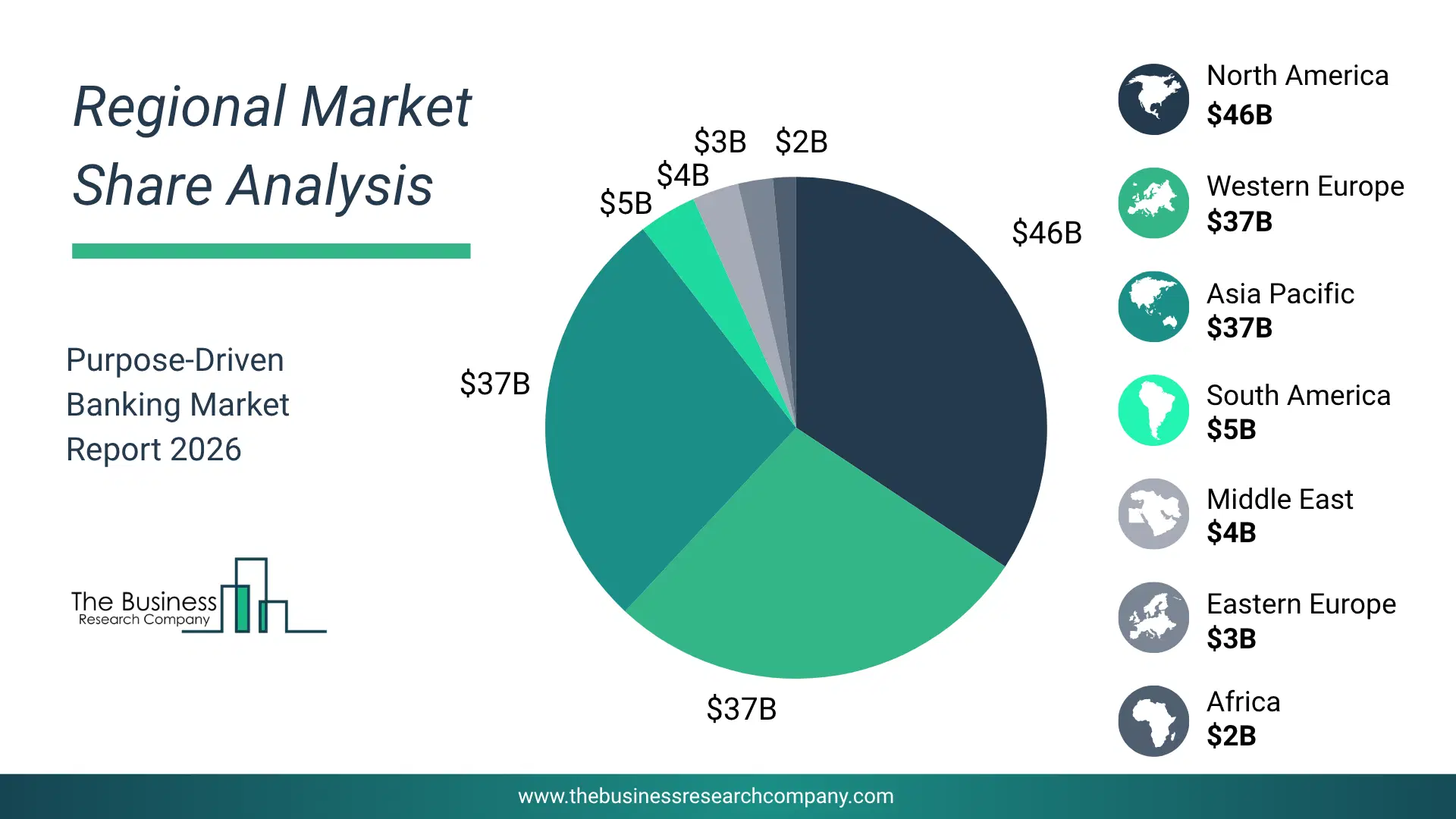
Regional Outlook
Europe was the largest region in the purpose-driven banking market in 2025. Asia-Pacific is expected to be the fastest-growing region in the forecast period. The regions covered in this market report are Asia-Pacific, South East Asia, Western Europe, Eastern Europe, North America, South America, Middle East, Africa. The countries covered in this market report are Australia, Brazil, China, France, Germany, India, Indonesia, Japan, Taiwan, Russia, South Korea, UK, USA, Canada, Italy, Spain.What Defines the Purpose-Driven Banking Market?
The purpose-driven banking market includes revenues earned by entities by providing services such as sustainable investment advisory, ethical lending, impact assessment consulting. The market value includes the value of related goods sold by the service provider or included within the service offering. Only goods and services traded between entities or sold to end consumers are included.How is Market Value Defined and Measured?
The market value is defined as the revenues that enterprises gain from the sale of goods and/or services within the specified market and geography through sales, grants, or donations in terms of the currency (in USD unless otherwise specified). The revenues for a specified geography are consumption values that are revenues generated by organizations in the specified geography within the market, irrespective of where they are produced. It does not include revenues from resales along the supply chain, either further along the supply chain or as part of other products.
This chart presents market attractiveness based on a quantitative evaluation of growth, competition, strategic alignment, and risk, offering a clear view of opportunity areas for decision-making. This chart is for illustrative purposes; the full report contains the complete analysis.

This chart highlights the Total Addressable Market (TAM) by estimating the maximum revenue opportunity using an assumption-driven approach, supporting strategic planning and opportunity sizing across markets. The chart is illustrative; the full report provides a more comprehensive analysis.
What Key Data and Analysis Are Included in the Purpose-Driven Banking Market Report 2026?
The purpose-driven banking market research report is one of a series of new reports from The Business Research Company that provides market statistics, including Market Report 2026?global market size, regional shares, competitors with the market share, detailed market segments, market trends and opportunities, and any further data you may need to thrive in the purpose-driven banking Market Report 2026? The market research report delivers a complete perspective of everything you need, with an in-depth analysis of the current and future state of the Market Report 2026?Purpose-Driven Banking Market Report Forecast Analysis
| Report Attribute | Details |
|---|---|
| Market Size Value In 2026 | $74.12 billion |
| Revenue Forecast In 2030 | $127.89 billion |
| Growth Rate | CAGR of 14.6% from 2026 to 2030 |
| Base Year For Estimation | 2025 |
| Actual Estimates/Historical Data | 2020-2025 |
| Forecast Period | 2026 - 2030 |
| Market Representation | Revenue in USD Billion and CAGR from 2026 to 2030 |
| Segments Covered | Service Type, Channel, Deployment Mode, End-User |
| Regional Scope | Asia-Pacific, Western Europe, Eastern Europe, North America, South America, Middle East, Africa |
| Country Scope | The countries covered in the report are Australia, Brazil, China, France, Germany, India, ... |
| Key Companies Profiled | Crédit Agricole S.A., DBS Bank Ltd., Svenska Handelsbanken AB (publ), Vancouver City Savings Credit Union, BancoSol S.A., Triodos Bank, Amalgamated Bank, Self-Help Credit Union, GLS Bank eG, Bank Australia Ltd., Sunrise Banks N.A., Oikocredit International, Beneficial State Bank, Ecology Building Society, RSF Social Finance, BlueOrchard Finance Ltd., Unity Trust Bank PLC, Charity Bank, Southern Bancorp Inc., EthikBank eG |
| Customization Scope | Request for Customization |
| Pricing And Purchase Options | Explore Purchase Options |