
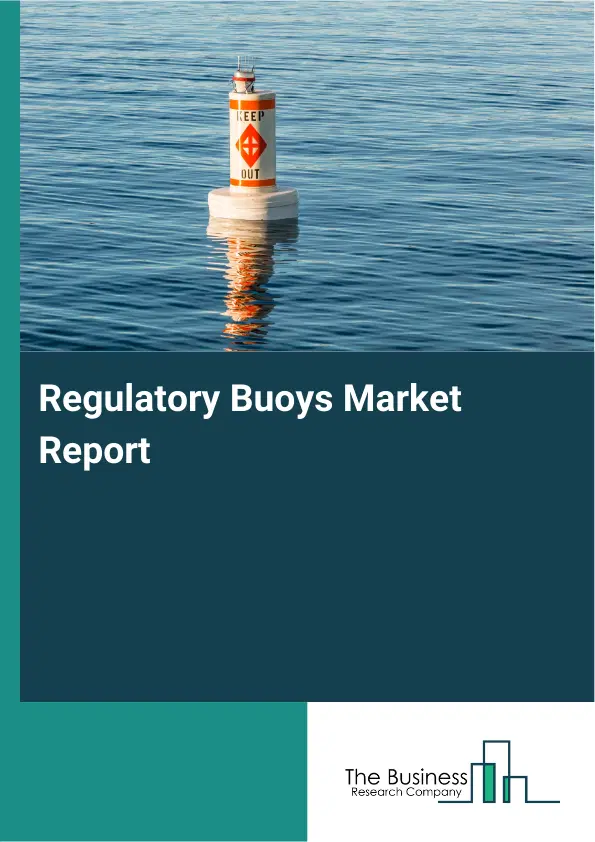
Regulatory Buoys Market Report 2026
Global Outlook – By Buoy Type (Lateral Marks, Cardinal Marks, Isolated Danger Marks, Special Marks, Other Buoy Types), By Type Of Regulation (Environmental Regulations, Safety Regulations, Health Regulations, Operational Regulations), By Distribution Channel (Online Retail, Direct Sales, Distributors Or Wholesalers, Specialized Stores), By Application Area (Lighted buoys, Warning buoys, Channel markers, Navigational buoys, Mooring buoys), By End-User Industry (Aquaculture, Maritime And Shipping, Construction And Infrastructure, Environmental Monitoring And Control) – Market Size, Trends, Strategies, and Forecast to 2030
Regulatory Buoys Market Overview
• Regulatory Buoys market size has reached to $1.14 billion in 2025 • Expected to grow to $1.52 billion in 2030 at a compound annual growth rate (CAGR) of 5.9% • Growth Driver: The Increase In Maritime Accidents Is Fueling The Growth Of The Market Due To Rising Vessel Traffic And The Need For Enhanced Navigational Safety • Market Trend: Advancements In Environmental Regulatory Buoys For Real-Time Monitoring And Ecosystem Protection • North America was the largest region in 2025 and Asia-Pacific is the fastest growing region.What Is Covered Under Regulatory Buoys Market?
Regulatory buoys are floating devices positioned in waterways to communicate specific rules or restrictions for boaters. They mark zones such as no-wake areas, speed limits, swimming regions, and restricted zones. These buoys play a vital role in promoting safety, protecting the environment, and managing marine traffic. They help maintain organized and lawful navigation for both recreational and commercial vessels. The main types of regulatory buoys are lateral marks, cardinal marks, isolated danger marks, special marks, and others. Lateral marks are color-coded buoys that mark the safe edges of water channels, guiding vessels by indicating port and starboard sides. The types of regulation include environmental regulations, safety regulations, health regulations, and operational regulations, and are distributed through various distribution channels such as online retail, direct sales, distributors or wholesalers, and specialized stores. It is applicable in several application areas, including lighted buoys, warning buoys, channel markers, navigational buoys, and mooring buoys, and is used by various end-user industries, including aquaculture, maritime and shipping, construction and infrastructure, and environmental monitoring and control.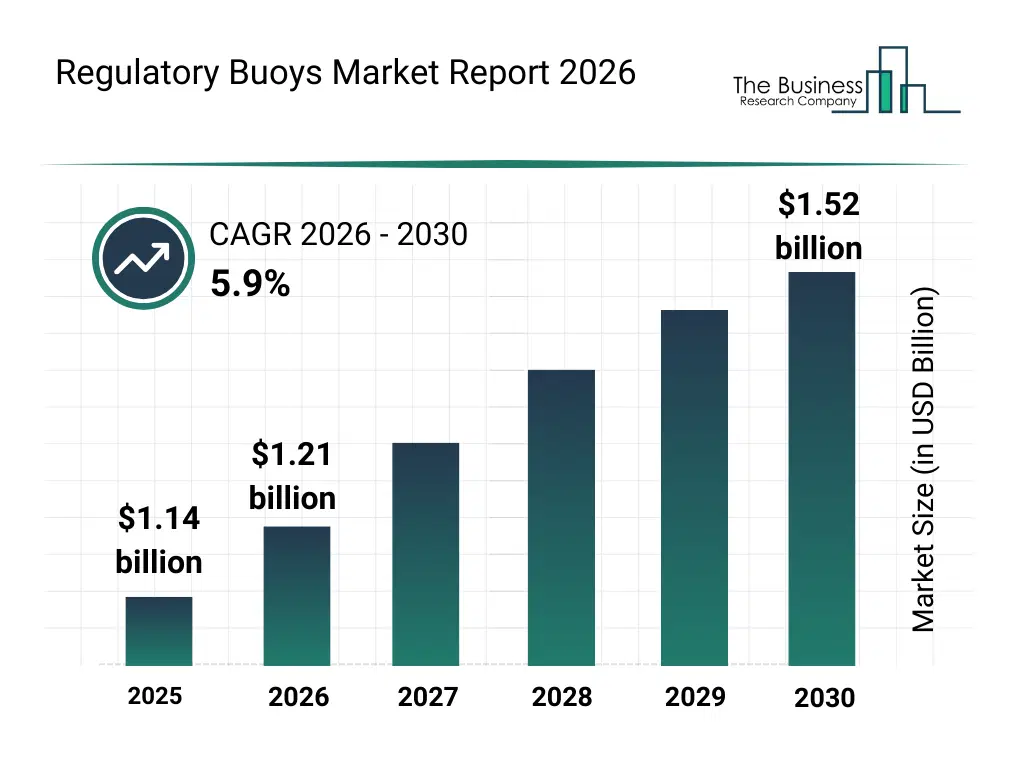
What Is The Regulatory Buoys Market Size and Share 2026?
The regulatory buoys market size has grown strongly in recent years. It will grow from $1.14 billion in 2025 to $1.21 billion in 2026 at a compound annual growth rate (CAGR) of 6.1%. The growth in the historic period can be attributed to growing use of regulatory buoys to enforce navigation rules in expanding recreational boating areas, increasing deployment of safe water marks to guide vessels in busy coastal zones, rising need for emergency wreck marking buoys following maritime incidents, early adoption of mooring buoys to manage anchorage and protect seabeds, expansion of cautionary buoys to signal hazards and environmentally sensitive areas.What Is The Regulatory Buoys Market Growth Forecast?
The regulatory buoys market size is expected to see strong growth in the next few years. It will grow to $1.52 billion in 2030 at a compound annual growth rate (CAGR) of 5.9%. The growth in the forecast period can be attributed to increasing demand for durable, low-maintenance regulatory buoys using advanced materials, rising adoption of solar-powered and sensor-equipped buoys for real-time monitoring, growing emphasis on marine environmental protection driving deployment of specialized cautionary buoys, expansion of maritime traffic management systems requiring more precise regulatory marking, technological advancements enabling gps-integrated buoys for improved navigational accuracy. Major trends in the forecast period include increased adoption of solar-powered and self-contained regulatory buoys, growing use of smart sensor integration for environmental monitoring, expansion of modular and quick-deploy buoy systems for temporary restrictions, rising demand for corrosion-resistant materials and long-life floatation systems, standardization of visual and electronic markings for international navigational compliance.
Global Regulatory Buoys Market Segmentation
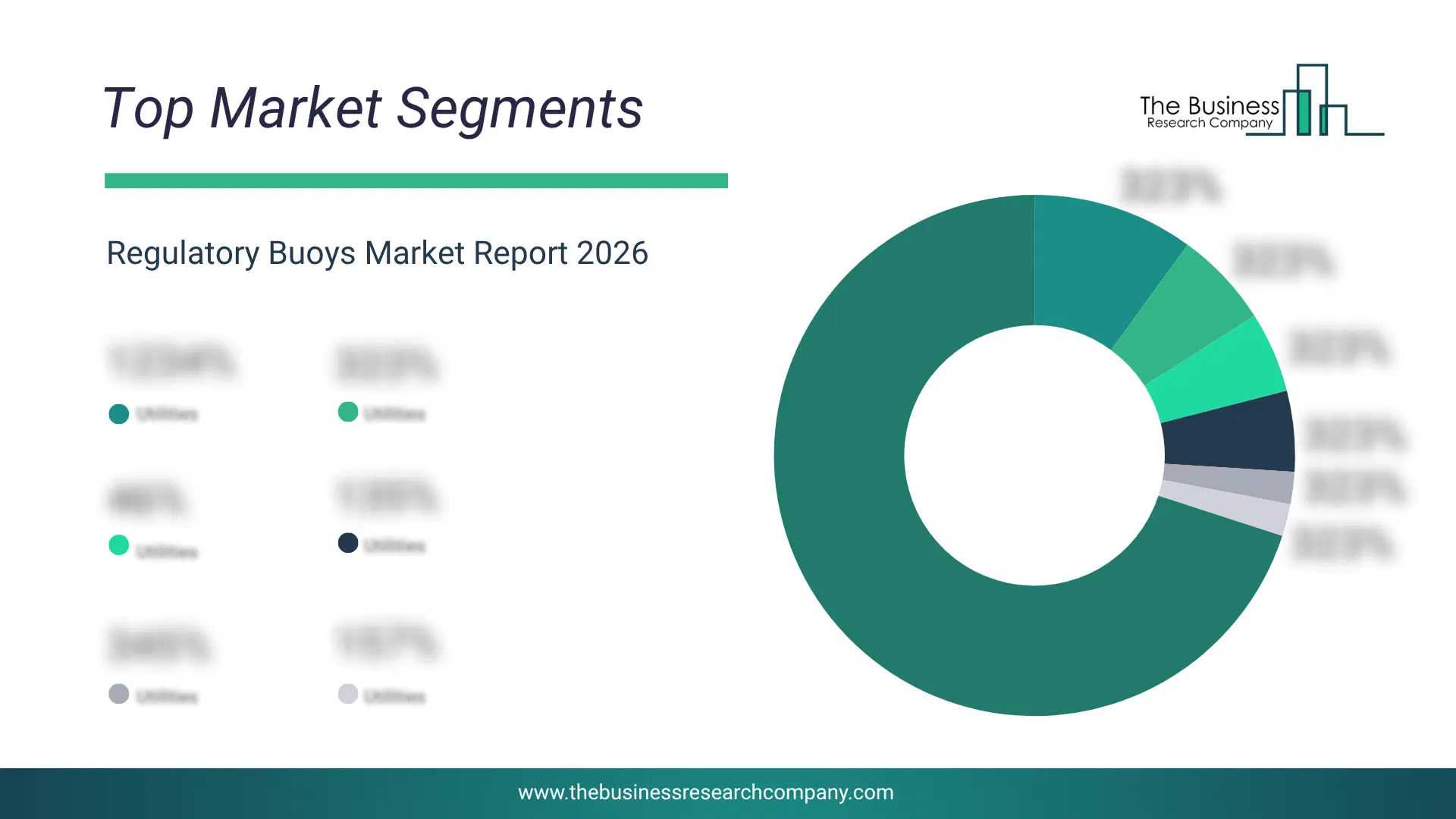
1) By Buoy Type: Lateral Marks, Cardinal Marks, Isolated Danger Marks, Special Marks, Other Buoy Types 2) By Type Of Regulation: Environmental Regulations, Safety Regulations, Health Regulations, Operational Regulations 3) By Distribution Channel: Online Retail, Direct Sales, Distributors Or Wholesalers, Specialized Stores 4) By Application Area: Lighted buoys, Warning buoys, Channel markers, Navigational buoys, Mooring buoys 5) By End-User Industry: Aquaculture, Maritime And Shipping, Construction And Infrastructure, Environmental Monitoring And Control Subsegments: 1) By Lateral Marks: Port Hand Buoys, Starboard Hand Buoys, Preferred Channel To Port, Preferred Channel To Starboard 2) By Cardinal Marks: North Cardinal Buoy, South Cardinal Buoy, East Cardinal Buoy, West Cardinal Buoy 3) By Isolated Danger Marks: Single Danger Buoy, Double Danger Buoy 4) By Special Marks: Anchorage Area Buoys, Pipeline Or Cable Area Buoys, Spoil Ground Buoys, Recreation Zone Buoys 5) By Other Buoy Types: Safe Water Marks, Emergency Wreck Marking Buoys, Temporary Wreck Buoys, Ice BuoysWhat Is Driver Of The Regulatory Buoys Market?
The increase in maritime accidents is expected to propel the growth of the regulatory buoys market going forward. A marine accident refers to any incident that results in damage to a vessel or other structures involved in maritime operations. Maritime accidents are rising due to growing vessel traffic from global trade, increasing the risk of collisions and navigation errors in busy sea routes. Regulatory buoys enhance maritime safety by marking safe routes, hazards, and restricted zones. They help vessels avoid collisions, groundings, and dangerous areas during navigation. For instance, in December 2024, according to the International Institute of Marine Surveying (IIMS), a UK-based marine surveyors institute, in 2023, a total of 2,676 marine casualties and incidents were recorded, marking an increase of 49 compared to 2022. Therefore, the increase in maritime accidents is driving the growth of the regulatory buoys industry.Key Players In The Global Regulatory Buoys Market
Major companies operating in the regulatory buoys market are Fugro, Bellingham Marine, Taylor Made, Resinex, Carmanah Technologies Corporation, MetOcean Telematics, Tideland Signal, Sealite, AXYS Technologies, Mavi Deniz, FLOATEX SRL, Mobilis, Rolyan Buoys, Walsh Merine Products, Almarin SRL, GISMAN SAS, Trionic Corp, JFC Marine, Ocean Scientific Instruments Limited, JF Fendercare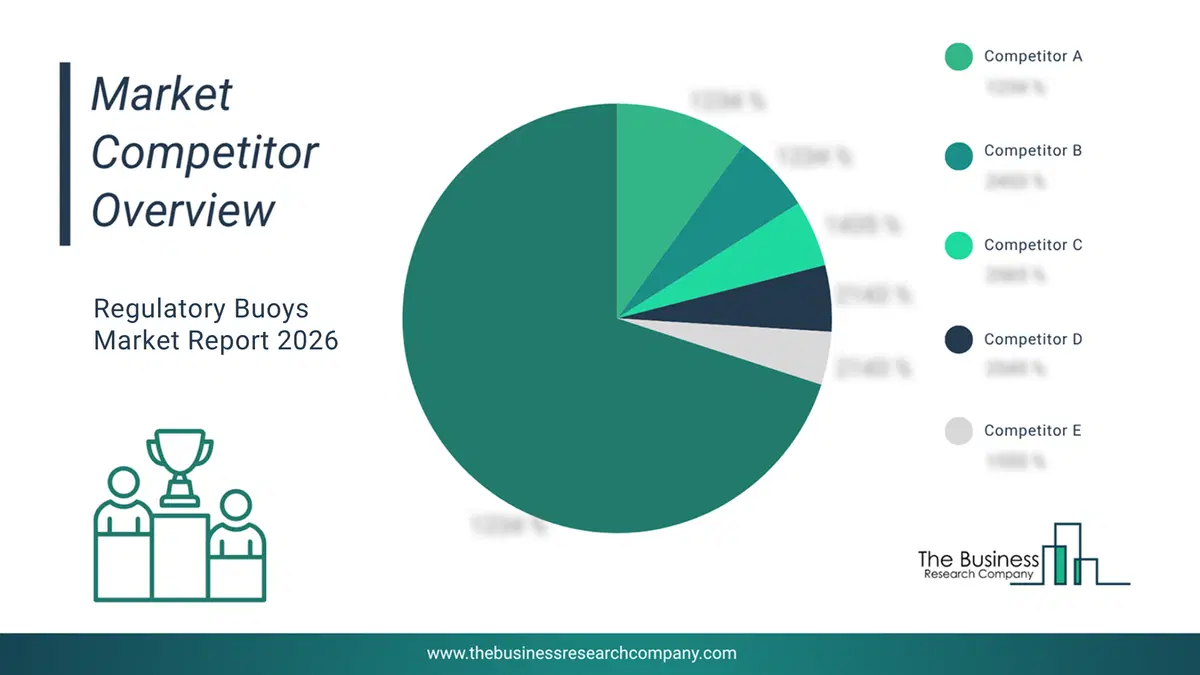
This chart is for illustrative purposes; the full report includes a detailed competitor analysis and comprehensive overview of the top 10 companies in the market.
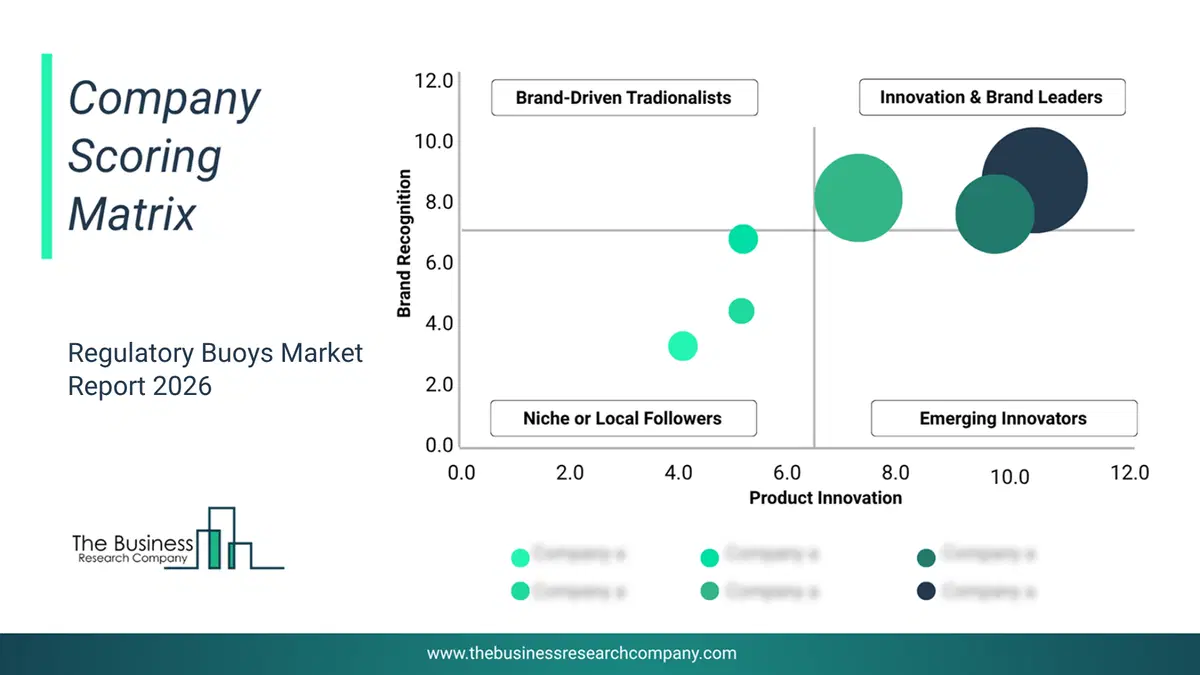
This chart maps companies by product innovation and brand strength, with bubble size indicating relative revenue, helping identify market leaders, challengers, and niche players. This is an illustrative chart; the full report provides a complete and accurate competitive analysis.
Global Regulatory Buoys Market Trends and Insights
Major companies operating in the regulatory buoys market are focusing on developing advanced products such as environmental regulatory buoys to enhance safety through real-time data collection and communication systems. Environmental regulatory buoys mark protected marine areas to control vessel activity and safeguard ecosystems. They support environmental laws by guiding boats away from ecologically sensitive zones. For instance, in March 2025, Ocean Scientific Instruments Limited, a UK-based company that designs and manufactures scientific sampling equipment, launched Beach Buoys for environmental water quality monitoring. These buoys provide real-time, automated monitoring of critical water parameters such as coliforms, blue-green algae, dissolved oxygen, and hydrocarbons at open water sites, supporting public health, regulatory compliance, and environmental protection. The Beach Buoys offer early warnings for pollution events and contamination, allowing for rapid response and reducing the need for manual sampling. Two sizes are available for different deployment durations, making them suitable for municipalities, research institutions, and industries like aquaculture and wastewater management.What Are Latest Mergers And Acquisitions In The Regulatory Buoys Market? Satlink Acquired Xeos Technologies To Bolster Ocean Monitoring And Telemetry Capabilities
In January 2024, Satlink, a Spain-based technology company specializing in marine monitoring and satellite communication solutions, acquired Xeos Technologies for an undisclosed amount. With this acquisition, Satlink aims to strengthen its portfolio in oceanographic and environmental monitoring systems, expanding its capabilities in asset tracking and remote data collection. Xeos Technologies is a Canada-based company that designs and manufactures regulatory buoys.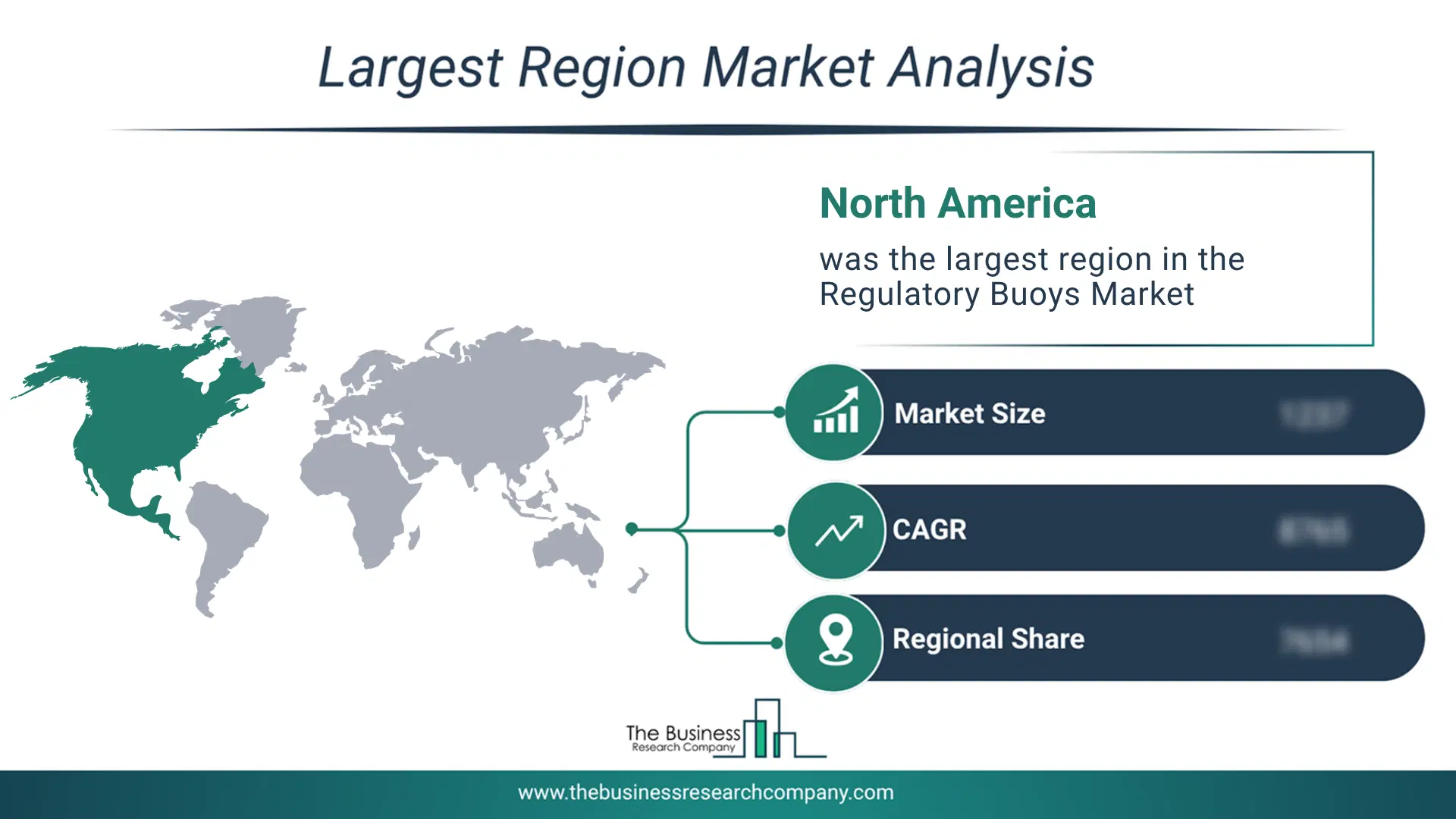
Regional Insights
North America was the largest region in the regulatory buoys market in 2025. Asia-Pacific is expected to be the fastest-growing region in the forecast period. The regions covered in this market report are Asia-Pacific, South East Asia, Western Europe, Eastern Europe, North America, South America, Middle East, Africa. The countries covered in this market report are Australia, Brazil, China, France, Germany, India, Indonesia, Japan, Taiwan, Russia, South Korea, UK, USA, Canada, Italy, SpainWhat Defines the Regulatory Buoys Market?
The regulatory buoys market consists of sales of safe water marks, emergency wreck marking buoys, mooring buoys, and cautionary buoys. Values in this market are ‘factory gate’ values, that is, the value of goods sold by the manufacturers or creators of the goods, whether to other entities (including downstream manufacturers, wholesalers, distributors, and retailers) or directly to end customers. The value of goods in this market includes related services sold by the creators of the goods.How is Market Value Defined and Measured?
The market value is defined as the revenues that enterprises gain from the sale of goods and/or services within the specified market and geography through sales, grants, or donations in terms of the currency (in USD unless otherwise specified). The revenues for a specified geography are consumption values that are revenues generated by organizations in the specified geography within the market, irrespective of where they are produced. It does not include revenues from resales along the supply chain, either further along the supply chain or as part of other products.
This chart presents market attractiveness based on a quantitative evaluation of growth, competition, strategic alignment, and risk, offering a clear view of opportunity areas for decision-making. This chart is for illustrative purposes; the full report contains the complete analysis.

This chart highlights the Total Addressable Market (TAM) by estimating the maximum revenue opportunity using an assumption-driven approach, supporting strategic planning and opportunity sizing across markets. The chart is illustrative; the full report provides a more comprehensive analysis.
What Key Data and Analysis Are Included in the Regulatory Buoys Market Report 2026?
The regulatory buoys market research report is one of a series of new reports from The Business Research Company that provides market statistics, including industry global market size, regional shares, competitors with the market share, detailed market segments, market trends and opportunities, and any further data you may need to thrive in the regulatory buoys industry. The market research report delivers a complete perspective of everything you need, with an in-depth analysis of the current and future state of the industry.Regulatory Buoys Market Report Forecast Analysis
| Report Attribute | Details |
|---|---|
| Market Size Value In 2026 | $1.21 billion |
| Revenue Forecast In 2030 | $1.52 billion |
| Growth Rate | CAGR of 5.9% from 2026 to 2030 |
| Base Year For Estimation | 2025 |
| Actual Estimates/Historical Data | 2020-2025 |
| Forecast Period | 2026 - 2030 |
| Market Representation | Revenue in USD Billion and CAGR from 2026 to 2030 |
| Segments Covered | Buoy Type, Type Of Regulation, Distribution Channel, Application Area, End-User Industry |
| Regional Scope | Asia-Pacific, Western Europe, Eastern Europe, North America, South America, Middle East, Africa |
| Country Scope | The countries covered in the regulatory buoys market report are Australia, Brazil, China, France, Germany, India, Indonesia, Japan, Taiwan, Russia, South Korea, UK, USA, Canada, Italy, Spain |
| Key Companies Profiled | Fugro, Bellingham Marine, Taylor Made, Resinex, Carmanah Technologies Corporation, MetOcean Telematics, Tideland Signal, Sealite, AXYS Technologies, Mavi Deniz, FLOATEX SRL, Mobilis, Rolyan Buoys, Walsh Merine Products, Almarin SRL, GISMAN SAS, Trionic Corp, JFC Marine, Ocean Scientific Instruments Limited, JF Fendercare |
| Customization Scope | Request for Customization |
| Pricing And Purchase Options | Explore Purchase Options |