
Robotic Process Automation (RPA) Market Report 2026
Global Outlook – By Component (Software, Services), By Deployment (Cloud, On-Premise), By Organization (Large Enterprise, Small And Medium Enterprise), By Application (Banking, Financial Services, And Insurance (BFSI), Manufacturing, Healthcare And Pharmaceuticals, Information Technology (IT) And Telecommunications, Retail And Consumer Goods, Government And Defense, Energy And Utilities, Transportation And Logistics) – Market Size, Trends, Strategies, and Forecast to 2030
Robotic Process Automation (RPA) Market Overview
• Robotic Process Automation (RPA) market size has reached to $9.91 billion in 2025 • Expected to grow to $29.86 billion in 2030 at a compound annual growth rate (CAGR) of 24.7% • Growth Driver: Increasing Demand For Automation Of Business Processes Fuels Robotic Process Automation (RPA) Market • Market Trend: Integration Of Advanced Technologies Enhanced Robotic Process Automation (RPA) Market Presence • North America was the largest region in 2025 and Asia-Pacific is the fastest growing region.Market Gains By 2030 – Top Opportunities By Segment
Market Gain identifies the most promising market opportunities by highlighting the segments or products expected to generate the highest incremental revenue growth over the next five years.
What Is Covered Under Robotic Process Automation (RPA) Market?
Robotic process automation (RPA) refers to the utilization of software robots to automate routine and rule-driven tasks in business processes, streamlining operations by mimicking human actions on digital platforms for activities like data entry and transaction processing. The main component types of robotic process automation (RPA) are software and services. Software refers to the tools and platforms used to design, deploy, and manage automation bots and RPA software enables users to create workflows, integrate with existing systems, and monitor bot performance. The operation category includes rule-based and knowledge-based deployments on the cloud and on-premise modes by organization types such as large enterprise, small and medium enterprise in several applications that include banking, financial services, and insurance (BFSI), manufacturing, healthcare and pharmaceuticals, information technology (IT) and telecommunications, retail and consumer goods, government and defense, energy and utilities, transportation and logistics.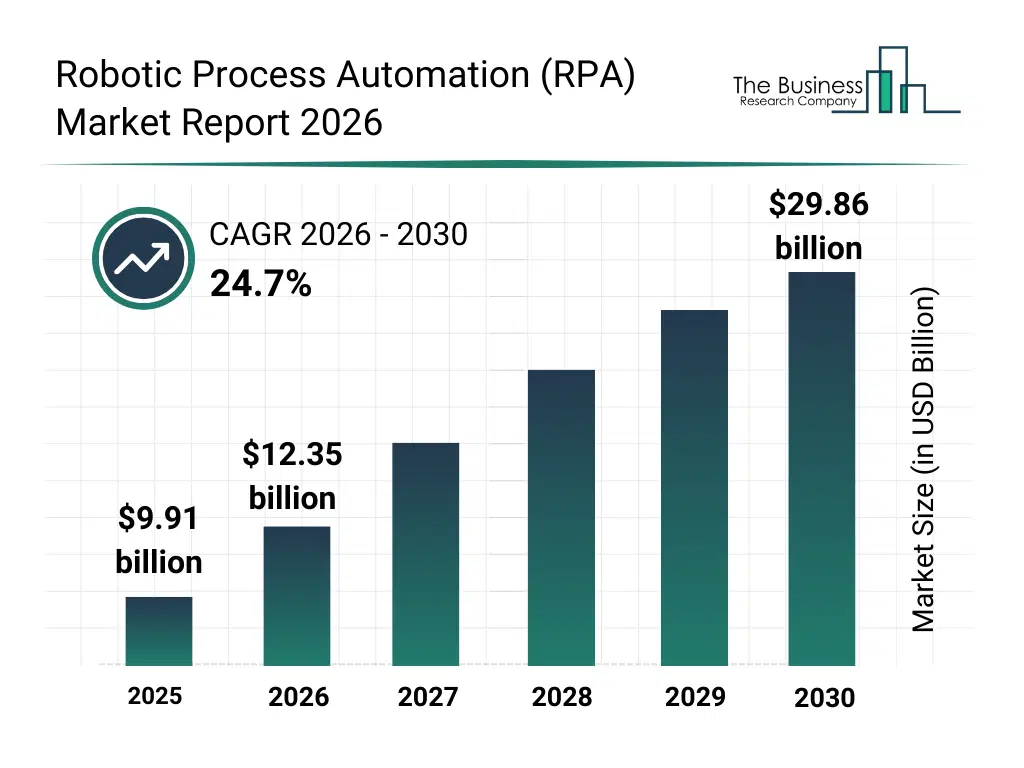
What Is The Robotic Process Automation (RPA) Market Size and Share 2026?
The robotic process automation (rpa) market size has grown exponentially in recent years. It will grow from $9.91 billion in 2025 to $12.35 billion in 2026 at a compound annual growth rate (CAGR) of 24.7%. The growth in the historic period can be attributed to increasing digitization of business processes, rising operational cost pressures, growing adoption of shared service models, expansion of rule-based workflow automation, increased focus on efficiency improvement.What Is The Robotic Process Automation (RPA) Market Growth Forecast?
The robotic process automation (rpa) market size is expected to see exponential growth in the next few years. It will grow to $29.86 billion in 2030 at a compound annual growth rate (CAGR) of 24.7%. The growth in the forecast period can be attributed to increasing demand for cognitive automation, rising adoption of hyperautomation strategies, expansion of rpa across non-it functions, growing focus on scalable automation platforms, increasing integration of rpa with enterprise software ecosystems. Major trends in the forecast period include increasing adoption of enterprise-wide rpa platforms, rising use of intelligent automation solutions, growing integration of rpa with analytics and ai, expansion of cloud-based rpa deployments, enhanced focus on process standardization.
Global Robotic Process Automation (RPA) Market Segmentation
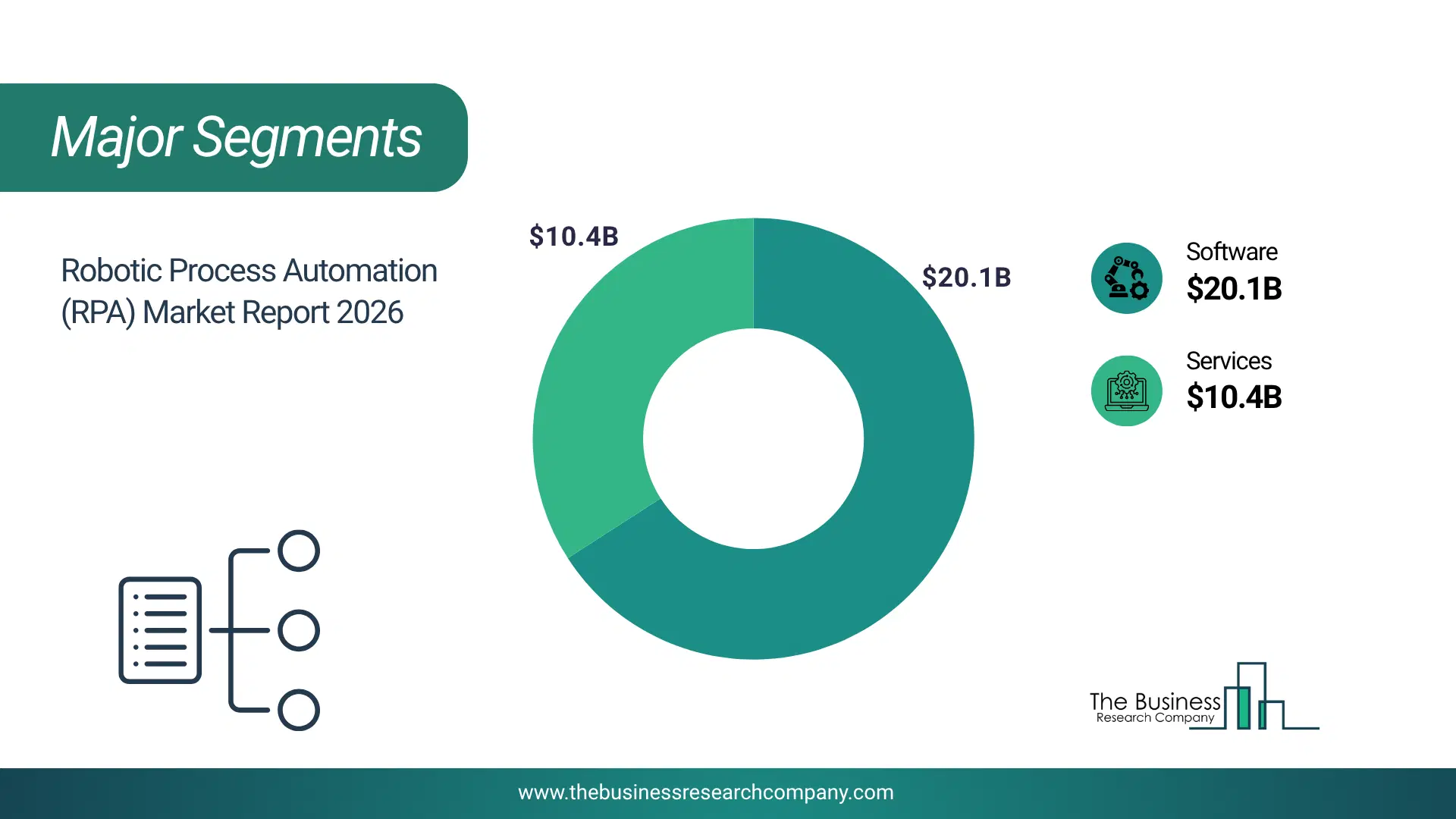
1) By Component: Software, Services 2) By Deployment: Cloud, On-Premise 3) By Organization: Large Enterprise, Small And Medium Enterprise 4) By Application: Banking, Financial Services, And Insurance (BFSI), Manufacturing, Healthcare And Pharmaceuticals, Information Technology (IT) And Telecommunications, Retail And Consumer Goods, Government And Defense, Energy And Utilities, Transportation And Logistics Subsegments: 1) By Software: RPA Development Tools, RPA Deployment Tools, RPA Analytics Tools, RPA Integration Tools 2) By Services: Consulting Services, Implementation Services, Support And Maintenance Services, Training And Education Services The top segments in the robotic process automation (rpa) market will be: • Software will reach $20.08 billion by 2030. • Services will reach $10.38 billion by 2030.What Is The Driver Of The Robotic Process Automation (RPA) Market?
The increasing demand for automation of business processes is expected to propel the growth of the robotic process automation (RPA) market going forward. Business process automation (BPA) refers to the use of technology to streamline and automate routine and manual tasks within organizational processes. Increasing demand for automation of business processes is driven by the pursuit of efficiency, cost savings, and enhanced productivity in today's competitive and rapidly evolving business landscape. Robotic process automation (RPA) addresses the increasing demand for automation of business processes by offering advanced technological solutions that streamline operations and enhance efficiency, allowing organizations to automate repetitive and rule-based tasks, such as data entry, invoice processing, and report generation, which were traditionally performed manually. For instance, in July 2024, according to World Bank Group, a US-based international financial institution, the total project cost across 156 investments is approximately $6.172 billion, including borrower co-financing. Of this amount, the World Bank has contributed $5.283 billion, covering projects that extend beyond financial management information systems (FMIS) alone. Specifically, the FMIS components within these activities represent about $1.226 billion in investments. Therefore, the increasing demand for automation of business processes is driving the growth of the robotic process automation (RPA) industry.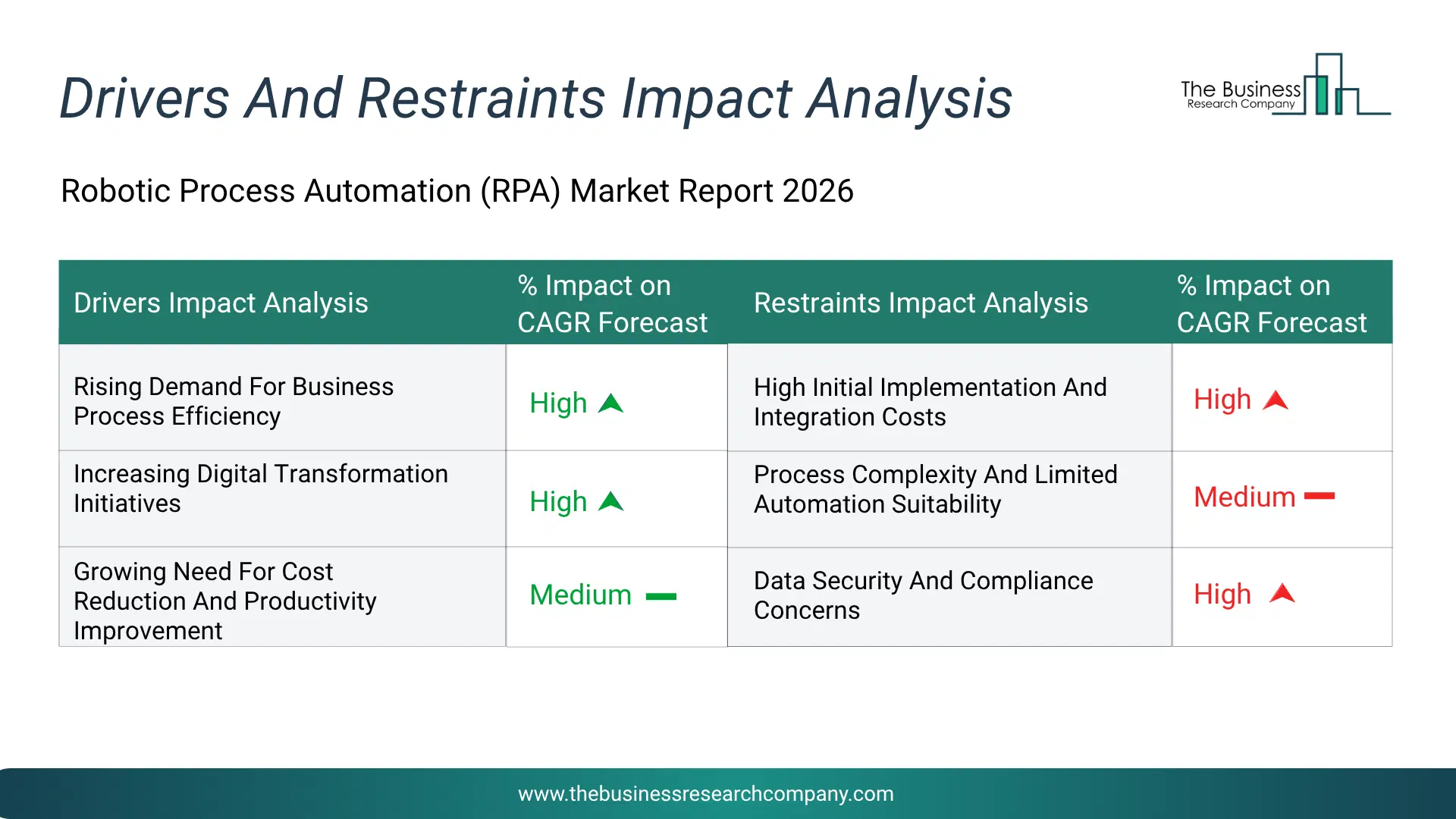
Infographic Chart Showing Key Market Drivers Analysis And Restraints For Robotic Process Automation (Rpa) Market
The chart presents an impact analysis of key drivers and restraints, quantifying their relative influence on the market's growth rate and helping assess the balance between growth enablers and limiting factors. This chart offers a high-level perspective; the full report contains more detailed insights.
How Will The Drivers Impact Growth In The Global Robotic Process Automation (RPA) Market?
• Rising Demand For Business Process Efficiency (High) – During the forecast period, the rising demand for business process efficiency is expected to become a key growth driver for the robotic process automation (rpa) market by 2030. Organizations are increasingly focusing on automating repetitive and rule -based tasks to improve accuracy, reduce processing time, and enhance service delivery. Rpa solutions enable seamless execution of high -volume tasks across departments such as finance, hr, and customer service, reducing human errors and operational bottlenecks. As businesses continue to prioritize efficiency and agility, the adoption of rpa technologies is expected to accelerate significantly. • Increasing Digital Transformation Initiatives (High) – During the forecast period, the increasing digital transformation initiatives are expected to emerge as a major factor driving the expansion of the robotic process automation (rpa) market by 2030. Enterprises across industries are investing heavily in digital technologies to modernize legacy systems, improve customer engagement, and enhance data-driven decision-making. Rpa plays a critical role in these initiatives by enabling automation of complex workflows and integration of disparate systems. The growing adoption of cloud-based platforms and ai-powered automation tools is further strengthening the role of rpa in digital transformation strategies. • Growing Need For Cost Reduction And Productivity Improvement (Medium) – During the forecast period, the growing need for cost reduction and productivity improvement is expected to act as a key growth catalyst for the robotic process automation (rpa) market by 2030. Organizations are leveraging rpa to minimize labor costs, optimize resource utilization, and improve operational scalability. Automation reduces dependency on manual intervention, enabling employees to focus on higher-value tasks and strategic activities. Additionally, rpa solutions offer faster return on investment and improved process consistency, making them attractive for enterprises across sectors.How Will The Restraints Impact Growth In The Global Robotic Process Automation (RPA) Market?
• High Initial Implementation And Integration Costs (High) – During the forecast period, the although robotic process automation provides long-term efficiency benefits, its initial implementation can involve substantial costs. Organizations often need to invest in software licenses, infrastructure upgrades, consulting services, and employee training before deploying automation solutions. Additionally, integrating rpa platforms with existing enterprise applications and databases may require technical customization and process redesign. These implementation requirements increase the upfront cost of adopting automation technologies, particularly for small and medium-sized enterprises with limited budgets. Businesses may also need to conduct process standardization and workflow optimization before deploying bots effectively. These financial and technical barriers can delay or discourage adoption in some organizations. As a result, high implementation and integration costs act as a restraint for the robotic process automation (rpa) market. • Process Complexity And Limited Automation Suitability (Medium) – During the forecast period, the robotic process automation performs best in environments where tasks are structured, repetitive, and rule-based. However, many enterprise processes involve unstructured data, complex decision-making, and human judgment that cannot be easily automated. In such situations, organizations may require additional technologies such as artificial intelligence or advanced analytics to support automation. This increases implementation complexity and may reduce the effectiveness of rpa solutions for certain workflows. Additionally, inconsistent data formats or poorly defined processes can hinder automation efforts. When organizations face challenges in identifying suitable automation processes, they may delay investments in rpa platforms. Consequently, process complexity and limited automation suitability act as restraints for the robotic process automation (rpa) market. • Data Security And Compliance Concerns (High) – During the forecast period, the robotic process automation platforms often access sensitive organizational and customer data while executing automated workflows. This raises concerns related to data security, privacy protection, and regulatory compliance. Enterprises must ensure that automation systems adhere to strict security standards and regulatory requirements, particularly in sectors such as finance, healthcare, and telecommunications. Any vulnerability within automated workflows could potentially expose confidential information or create compliance risks. Organizations may therefore need to implement additional monitoring systems and governance frameworks to ensure secure operations. These additional requirements can increase operational complexity and slow adoption. As a result, data security and compliance concerns act as a restraint for the robotic process automation (rpa) market.Key Players In The Global Robotic Process Automation (RPA) Market
Major companies operating in the robotic process automation (rpa) market are UiPath Inc., Automation Anywhere Inc., Blue Prism Group PLC, WorkFusion Inc., Pegasystems Inc., Kofax Inc., NICE Systems Ltd., EdgeVerve Systems Limited, AutomationEdge Technologies Inc., Kryon Systems Ltd., Redwood Software Corporation, Jacada Ltd., HelpSystems LLC, OpenBots Inc., Softomotive Corporation, AntWorks Inc., Laiye Technology Co Ltd, ElectroNeek Robotics Inc., PixieBrix Inc., Nintex Global Limited, Appian Corporation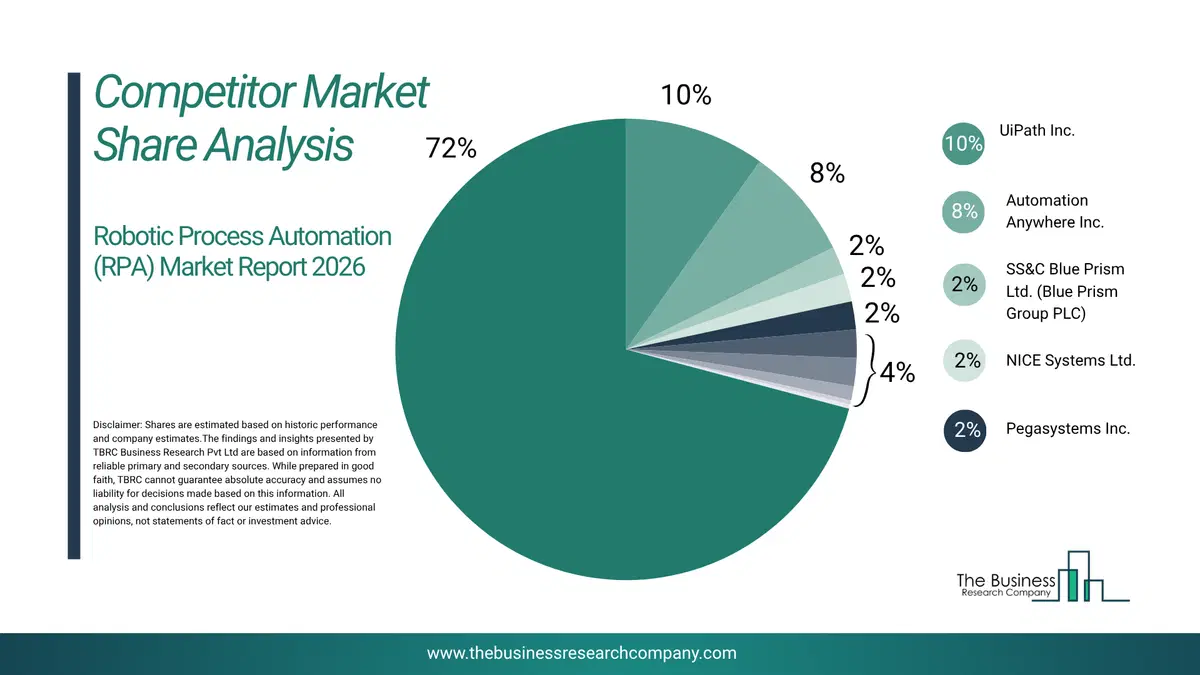
This chart is for illustrative purposes; the full report includes a detailed competitor analysis and comprehensive overview of the top 10 companies in the market.
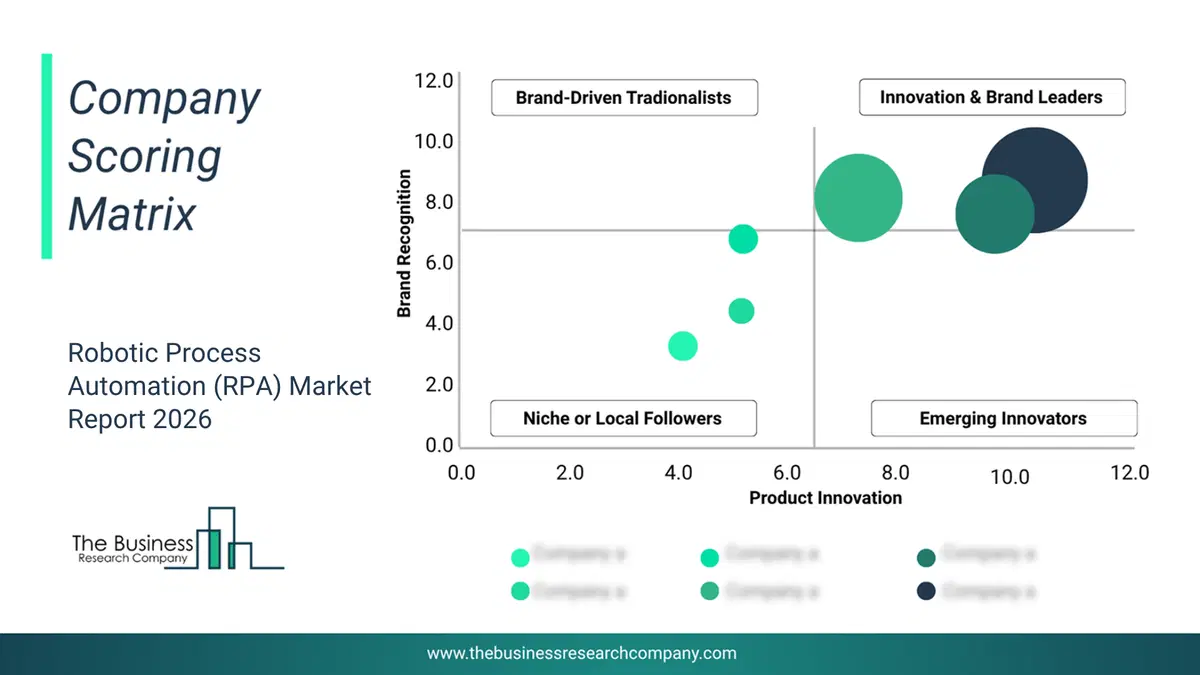
This chart maps companies by product innovation and brand strength, with bubble size indicating relative revenue, helping identify market leaders, challengers, and niche players. This is an illustrative chart; the full report provides a complete and accurate competitive analysis.
Global Robotic Process Automation (RPA) Market Trends and Insights
Major companies operating in the robotic process automation (RPA) market are focusing on developing advanced solutions to accelerate and streamline purchase processes for repeat customers. RPA technology automates repetitive, rule-based digital tasks, enabling organizations to enhance operational efficiency, reduce human error, and increase overall productivity in transactional workflows. For instance, in November 2023, Nature Portfolio, a UK-based academic publisher, released a study titled The Impact of Automation and Optimization on Customer Experience: A Consumer Perspective.” The study found that companies implementing automation including RPA within their purchasing systems achieved greater efficiency and agility in customer interactions. Designed to optimize repeat-customer purchase workflows such as subscription renewals and one-click reorders, RPA solutions reduce manual steps, minimize processing errors, and deliver faster, more accurate, and seamless transaction experiences for both customers and businesses.What Are Latest Mergers And Acquisitions In The Robotic Process Automation (RPA) Market?
In October 2024, Baker Tilly US, LLP, a US-based advisory, tax, and assurance firm, acquired Alirrium for an undisclosed amount. Through this acquisition, Baker Tilly aims to strengthen its intelligent automation, artificial intelligence, and machine-learning offerings, enabling the delivery of advanced automation solutions across industry and government clients. Alirrium is a US-based company specializing in robotic process automation (RPA) advisory and implementation services.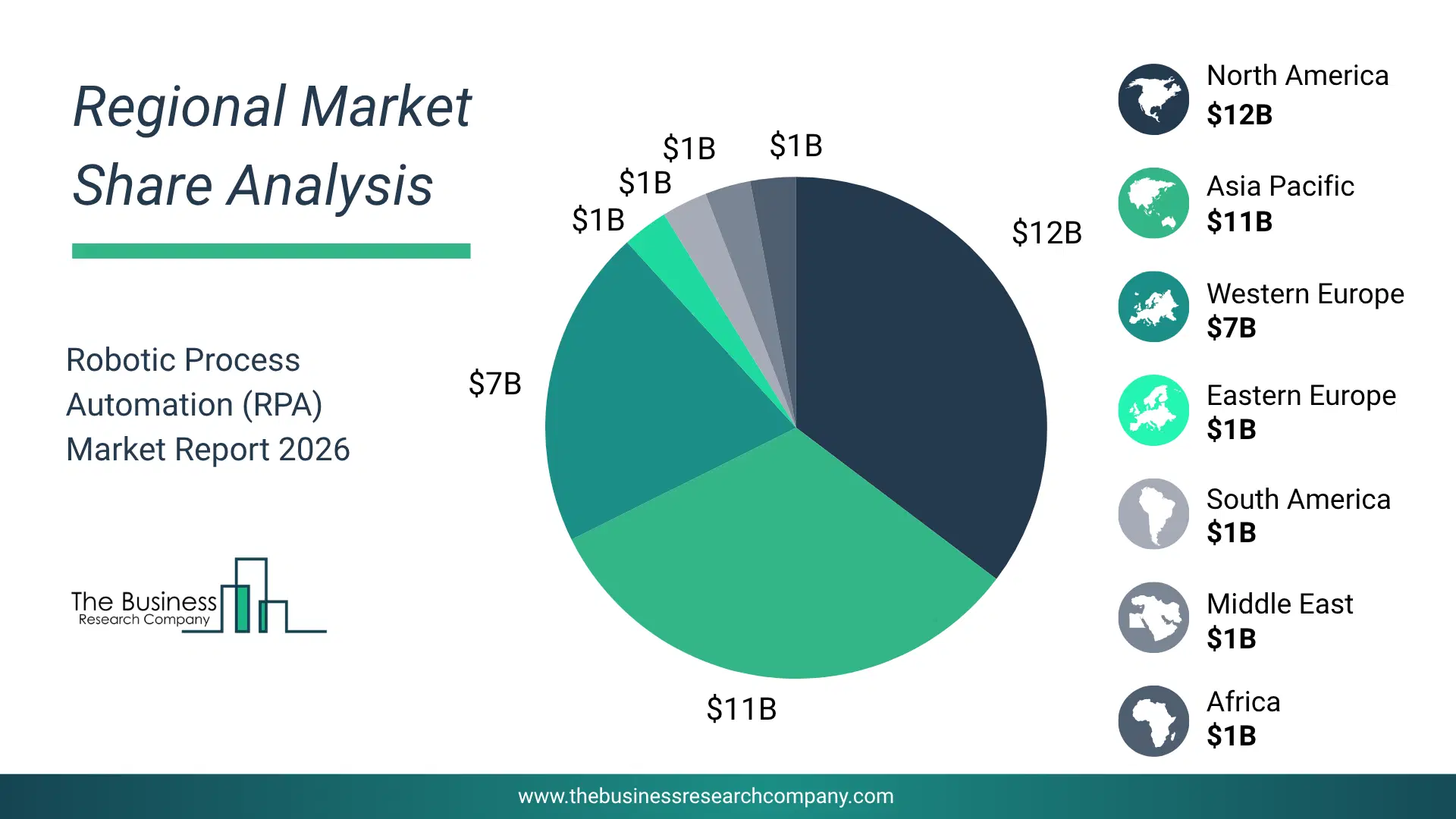
Regional Insights
North America was the largest region in the robotic process automation (RPA) market in 2025. Asia-Pacific is expected to be the fastest-growing region in the forecast period. The regions covered in this market report are Asia-Pacific, South East Asia, Western Europe, Eastern Europe, North America, South America, Middle East, Africa. The countries covered in this market report are Australia, Brazil, China, France, Germany, India, Indonesia, Japan, Taiwan, Russia, South Korea, UK, USA, Canada, Italy, Spain.What Defines the Robotic Process Automation (RPA) Market?
The robotic process automation (RPA) market consists of revenues earned by entities by providing services such as automation solutions, RPA as a Service (RPAaaS), customer service tasks, and invoice processing. The market value includes the value of related goods sold by the service provider or included within the service offering. The robotic process automation (RPA) market also includes sales of UiPath platform, redwood robotics process automation (RPA), and SAP Intelligent RPA. Values in this market are ‘factory gate’ values, that is the value of goods sold by the manufacturers or creators of the goods, whether to other entities (including downstream manufacturers, wholesalers, distributors and retailers) or directly to end customers. The value of goods in this market includes related services sold by the creators of the goods.How is Market Value Defined and Measured?
The market value is defined as the revenues that enterprises gain from the sale of goods and/or services within the specified market and geography through sales, grants, or donations in terms of the currency (in USD unless otherwise specified). The revenues for a specified geography are consumption values that are revenues generated by organizations in the specified geography within the market, irrespective of where they are produced. It does not include revenues from resales along the supply chain, either further along the supply chain or as part of other products.
This chart presents market attractiveness based on a quantitative evaluation of growth, competition, strategic alignment, and risk, offering a clear view of opportunity areas for decision-making. This chart is for illustrative purposes; the full report contains the complete analysis.

This chart highlights the Total Addressable Market (TAM) by estimating the maximum revenue opportunity using an assumption-driven approach, supporting strategic planning and opportunity sizing across markets. The chart is illustrative; the full report provides a more comprehensive analysis.
What Key Data and Analysis Are Included in the Robotic Process Automation (RPA) Market Report 2026?
The robotic process automation (rpa) market research report is one of a series of new reports from The Business Research Company that provides market statistics, including industry global market size, regional shares, competitors with the market share, detailed market segments, market trends and opportunities, and any further data you may need to thrive in the robotic process automation (rpa) industry. The market research report delivers a complete perspective of everything you need, with an in-depth analysis of the current and future state of the industry.Robotic Process Automation (RPA) Market Report Forecast Analysis
| Report Attribute | Details |
|---|---|
| Market Size Value In 2026 | $12.35 billion |
| Revenue Forecast In 2030 | $29.86 billion |
| Growth Rate | CAGR of 24.7% from 2026 to 2030 |
| Base Year For Estimation | 2025 |
| Actual Estimates/Historical Data | 2020-2025 |
| Forecast Period | 2026 - 2030 |
| Market Representation | Revenue in USD Billion and CAGR from 2026 to 2030 |
| Segments Covered | Component, Deployment, Organization, Application |
| Regional Scope | Asia-Pacific, Western Europe, Eastern Europe, North America, South America, Middle East, Africa |
| Country Scope | The countries covered in the report are Australia, Brazil, China, France, Germany, India, ... |
| Key Companies Profiled | UiPath Inc., Automation Anywhere Inc., Blue Prism Group PLC, WorkFusion Inc., Pegasystems Inc., Kofax Inc., NICE Systems Ltd., EdgeVerve Systems Limited, AutomationEdge Technologies Inc., Kryon Systems Ltd., Redwood Software Corporation, Jacada Ltd., HelpSystems LLC, OpenBots Inc., Softomotive Corporation, AntWorks Inc., Laiye Technology Co Ltd, ElectroNeek Robotics Inc., PixieBrix Inc., Nintex Global Limited, Appian Corporation |
| Customization Scope | Request for Customization |
| Pricing And Purchase Options | Explore Purchase Options |