
Rocket Combustion Stability Market Report 2026
Global Outlook – By Component (Combustion Chambers, Injectors, Nozzles, Sensors, Other Component), By Propellant Type (Liquid Propellants, Solid Propellants, Hybrid Propellants), By Application (Aerospace, Defense, Space Exploration, Other Applications), By End-User (Government Agencies, Private Space Companies, Research Institutions, Other End-Users) – Market Size, Trends, Strategies, and Forecast to 2030
Rocket Combustion Stability Market Overview
• Rocket Combustion Stability market size has reached to $1.29 billion in 2025 • Expected to grow to $2.06 billion in 2030 at a compound annual growth rate (CAGR) of 9.7% • Growth Driver: Rising Satellite Launch Activity Drives Growth In The Market Due To Increasing Demand For Reliable And Consistent Engine Performance • Market Trend: Next-Generation Upper-Stage Engines Enhance Rocket Combustion Stability And Performance • North America was the largest region in 2025.What Is Covered Under Rocket Combustion Stability Market?
Rocket combustion stability refers to the ability of a rocket engine to maintain steady and controlled combustion of propellants within the combustion chamber without experiencing pressure oscillations, vibrations, or flame instabilities. Stable combustion ensures consistent thrust, engine efficiency, structural integrity, and overall mission success. The main component types of rocket combustion stability are combustion chambers, injectors, nozzles, sensors, and others. The combustion chamber is the central part of the engine where propellants are combined and ignited to produce thrust. Propellants are categorized into liquid, solid, and hybrid types. Applications in aerospace, defense, space exploration, and other and utilized by end users, government agencies, private space companies, research organizations, and other end users.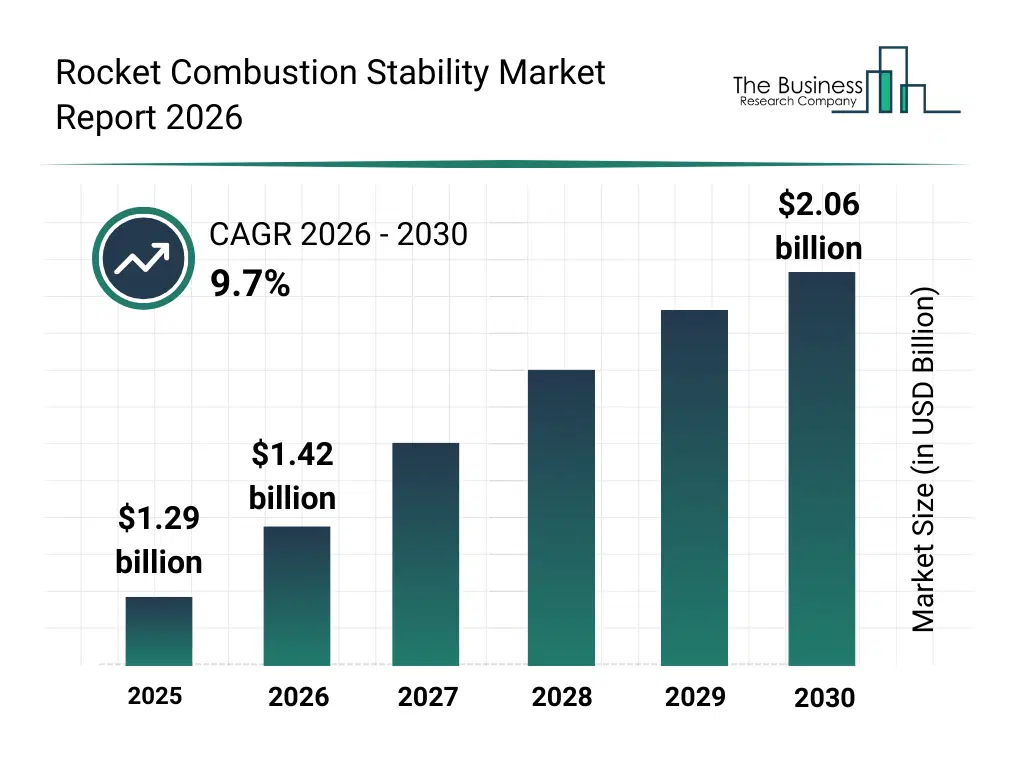
What Is The Rocket Combustion Stability Market Size and Share 2026?
The rocket combustion stability market size has grown rapidly in recent years. It will grow from $1.29 billion in 2025 to $1.42 billion in 2026 at a compound annual growth rate (CAGR) of 10.1%. The growth in the historic period can be attributed to growing adoption of acoustic damping devices to mitigate combustion-induced pressure oscillations in rocket engines, increasing deployment of engine control units to stabilize propellant flow and combustion behavior, rising use of thermal protection liners to prevent heat-driven instability and structural damage, early development of combustion stability testing protocols to improve engine performance, expansion of propulsion system R&D driving demand for instability diagnostics and mitigation solutions.What Is The Rocket Combustion Stability Market Growth Forecast?
The rocket combustion stability market size is expected to see strong growth in the next few years. It will grow to $2.06 billion in 2030 at a compound annual growth rate (CAGR) of 9.7%. The growth in the forecast period can be attributed to rising need for advanced combustion stability solutions to support high-performance and reusable rocket engines, increasing adoption of real-time sensor and data analytics systems for instability prediction and active control, growing development of next-generation thermal liners with improved resistance to extreme combustion environments, expansion of commercial launch providers investing in stability-optimized engine architectures, technological advancements enabling integrated acoustic, thermal, and control-system solutions for enhanced combustion reliability. Major trends in the forecast period include increased use of active combustion damping and real-time control systems, growing adoption of high-fidelity combustion modeling and simulation, rising demand for robust sensors for pressure, temperature, and vibration monitoring, integration of additive-manufactured injector and chamber designs for stability, expansion of test-facility instrumentation and automated hot-fire testing.
Global Rocket Combustion Stability Market Segmentation
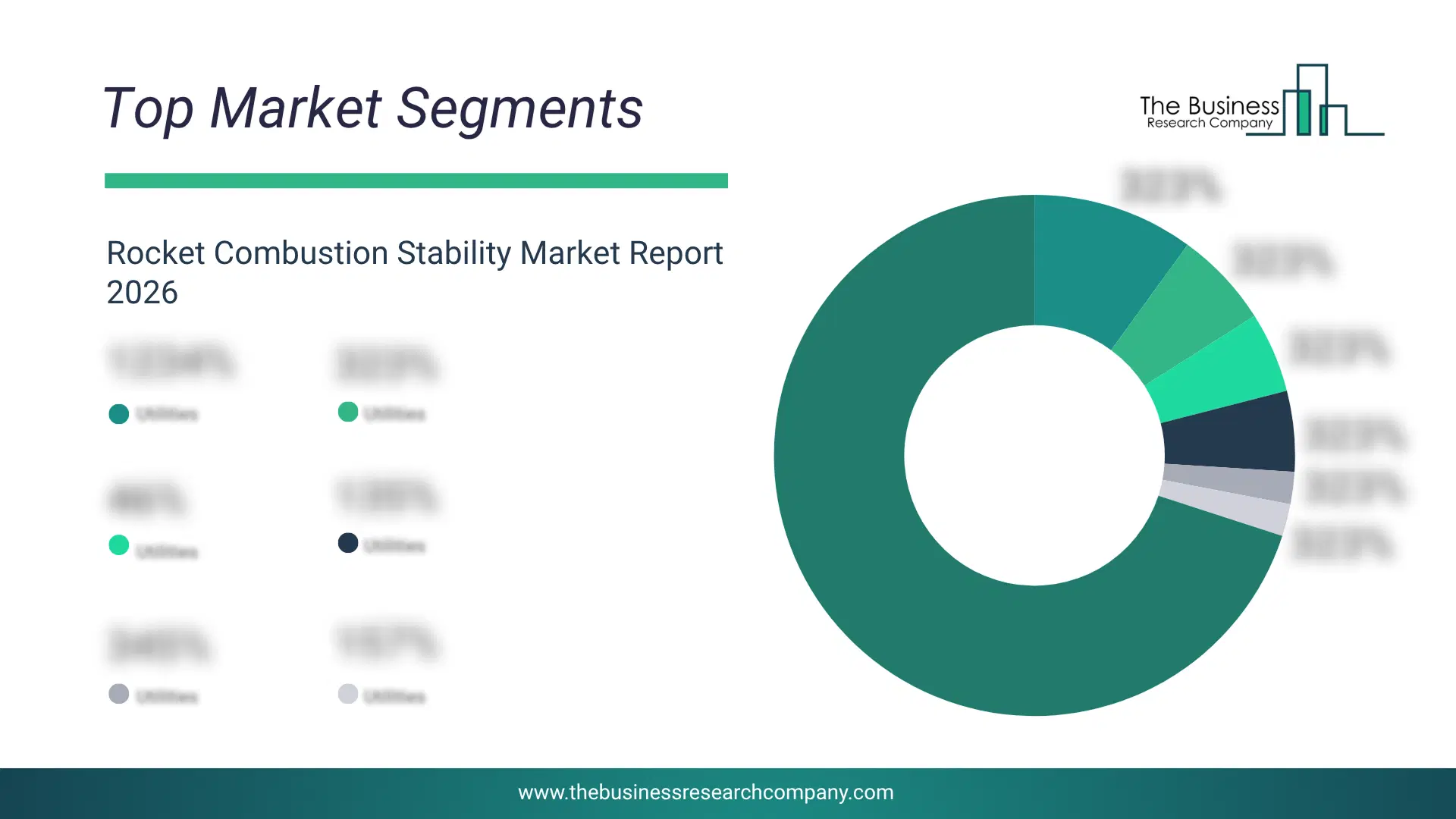
1) By Component: Combustion Chambers, Injectors, Nozzles, Sensors, Other Component 2) By Propellant Type: Liquid Propellants, Solid Propellants, Hybrid Propellants 3) By Application: Aerospace, Defense, Space Exploration, Other Applications 4) By End-User: Government Agencies, Private Space Companies, Research Institutions, Other End-Users Subsegments: 1) By Combustion Chambers: Regeneratively Cooled Chambers, Vortex Combustion Chambers, Ablatively Cooled Chambers 2) By Injectors: Pintle Injectors, Impinging Jet Injectors, Coaxial Injectors 3) By Nozzles: Bell-shaped Nozzles, Expansion-Deflection Nozzles, Aerospike Nozzles 4) By Sensors: Pressure Sensors, Vibration Sensors, Temperature Sensors 5) By Other Component: Turbopumps, Propellant Feed Lines, Ignition SystemsWhat Is Driver Of The Rocket Combustion Stability Market?
The rising demand for satellite launches is anticipated to drive the growth of the rocket combustion stability market in the coming years. Satellite launches involve deploying artificial satellites into space using rockets to place them into designated orbits for communication, navigation, and Earth observation. The frequency of satellite launches is increasing due to growing demand for global connectivity, especially from satellite internet services aiming to serve remote and underserved regions. Rocket combustion stability ensures smooth and continuous thrust, critical for accurate satellite launch and orbit insertion. For instance, in June 2024, as reported by the Satellite Industry Association, a US-based organization, the commercial satellite industry in 2023 witnessed record-breaking growth, launching 2,781 satellites a 20% rise from 2022. The space industry also achieved a new milestone with 190 total launches, the highest ever recorded. By the end of the year, the number of operational satellites reached 9,691, reflecting a 361% increase over the past five years. Therefore, the growing demand for satellite launches is fueling the expansion of the rocket combustion stability industry.Key Players In The Global Rocket Combustion Stability Market
Major companies operating in the rocket combustion stability market are China Aerospace Science and Technology Corporation, Northrop Grumman Innovation Systems, Mitsubishi Heavy Industries Ltd., L3Harris Technologies Inc., IHI Corporation, Blue Origin LLC, ArianeGroup SAS, Ansys Inc., United Launch Alliance, Sierra Space Corporation, Relativity Space Inc., Firefly Aerospace Inc., Gilmour Space Technologies Pty Ltd, Ursa Major Technologies Inc., HyImpulse Technologies GmbH, Chemical Automatics Design Bureau, Indian Space Research Organisation, Nammo AS, China Academy of Launch Vehicle Technology, NPO Energomash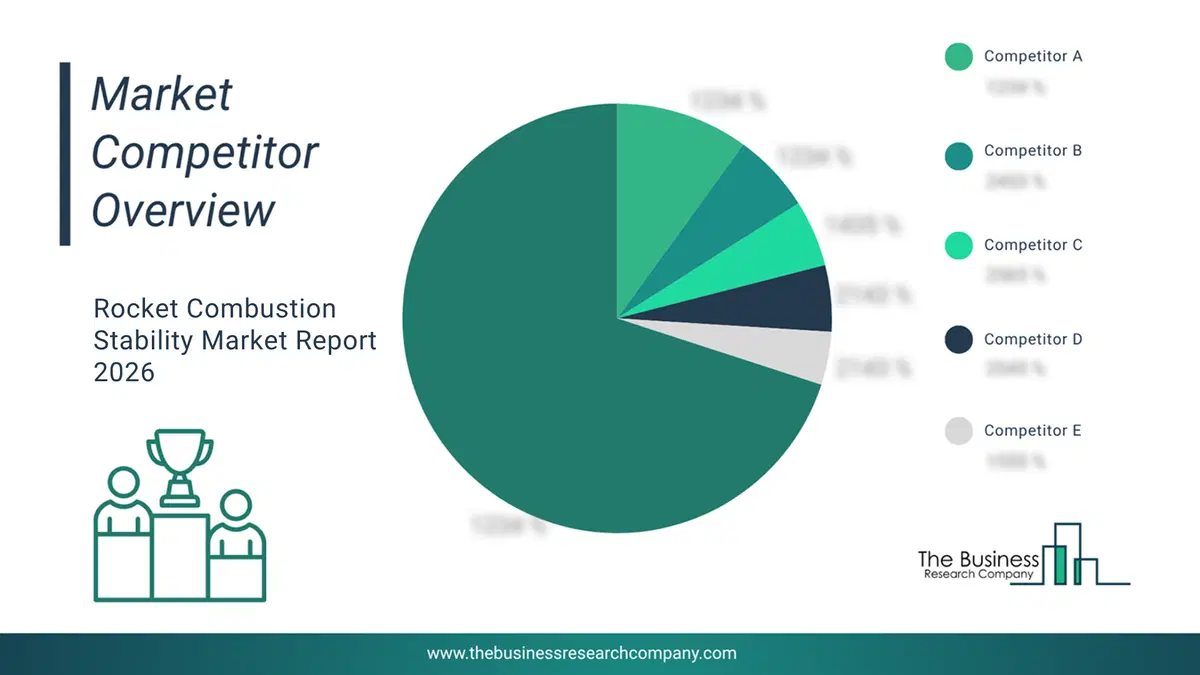
This chart is for illustrative purposes; the full report includes a detailed competitor analysis and comprehensive overview of the top 10 companies in the market.
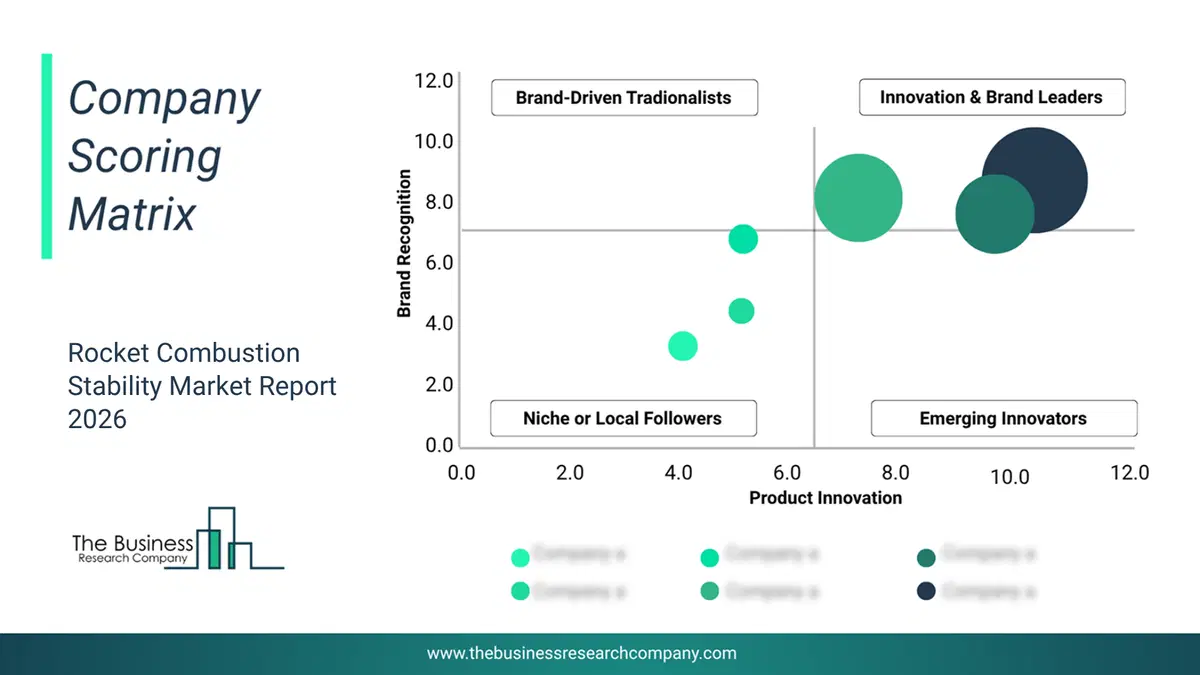
This chart maps companies by product innovation and brand strength, with bubble size indicating relative revenue, helping identify market leaders, challengers, and niche players. This is an illustrative chart; the full report provides a complete and accurate competitive analysis.
Global Rocket Combustion Stability Market Trends and Insights
Major companies operating in the rocket combustion stability market are focusing on developing innovative solutions, such as vortex-cooled, staged-combustion upper-stage engines, to meet the rising demand for higher performance, reusability, and mission flexibility in national security and commercial space sectors. Vortex-cooled staged-combustion engines use centrifugal vortex flows to simultaneously maintain high-pressure combustion and cool chamber walls, offering improved thermal efficiency over traditional gas-generator cycle engines. For instance, in February 2025, Sierra Space, a US-based commercial space company, completed its fully integrated VR35K A upper-stage engine under contract with the US Air Force Research Laboratory. The VR35K-A engine features a fuel-rich staged combustion cycle with LOX or LH2 propellants and a patented VORTEX combustion chamber. The 2024 tests showed stable thrust, precise mixture control, active cooling, and efficient single-shaft turbopump operation. Additive manufacturing enables faster production, while its 35,000 lbf thrust boosts payload capacity by up to 30%.What Are Latest Mergers And Acquisitions In The Rocket Combustion Stability Market? L3Harris Acquires Aerojet Rocketdyne To Boost Propulsion And Space Capabilities
In July 2023, L3Harris Technologies Inc., a US-based defense contractor, acquired Aerojet Rocketdyne Holdings Inc. for 4.7 billion. Through this acquisition, L3Harris Technologies seeks to enhance its propulsion capabilities and advance national security and space innovation. Aerojet Rocketdyne Holdings Inc. is a US-based aerospace company that delivers propulsion systems to ensure rocket combustion stability through cutting-edge engine technologies.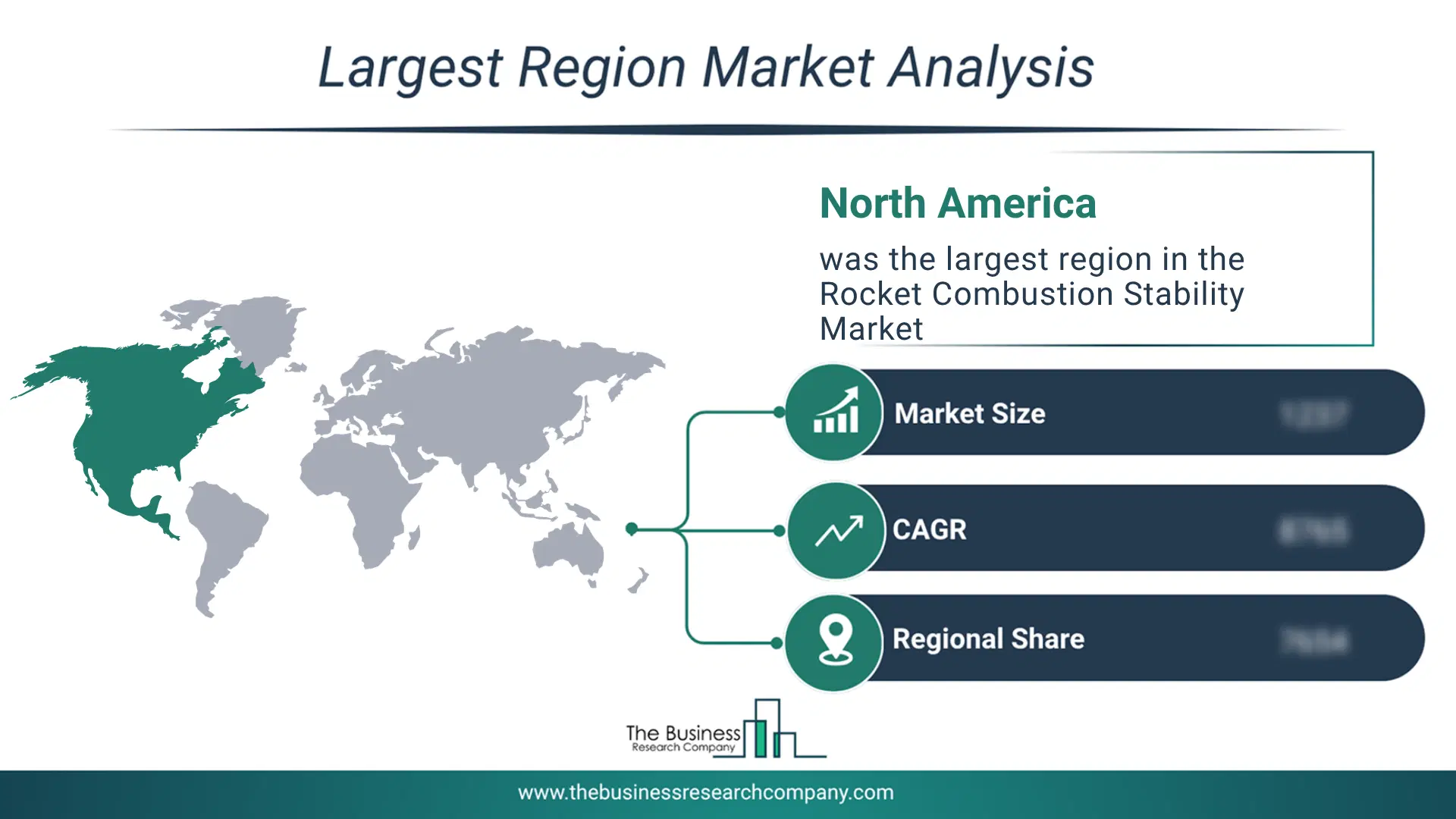
Regional Insights
North America was the largest region in the rocket combustion stability market in 2025. The regions covered in this market report are Asia-Pacific, South East Asia, Western Europe, Eastern Europe, North America, South America, Middle East, Africa. The countries covered in this market report are Australia, Brazil, China, France, Germany, India, Indonesia, Japan, Taiwan, Russia, South Korea, UK, USA, Canada, Italy, SpainWhat Defines the Rocket Combustion Stability Market?
The rocket combustion stability market consists of sales of acoustic damping devices, engine control units, and thermal protection liners. Values in this market are ‘factory gate’ values, that is, the value of goods sold by the manufacturers or creators of the goods, whether to other entities (including downstream manufacturers, wholesalers, distributors, and retailers) or directly to end customers. The value of goods in this market includes related services sold by the creators of the goods.How is Market Value Defined and Measured?
The market value is defined as the revenues that enterprises gain from the sale of goods and/or services within the specified market and geography through sales, grants, or donations in terms of the currency (in USD unless otherwise specified). The revenues for a specified geography are consumption values that are revenues generated by organizations in the specified geography within the market, irrespective of where they are produced. It does not include revenues from resales along the supply chain, either further along the supply chain or as part of other products.
This chart presents market attractiveness based on a quantitative evaluation of growth, competition, strategic alignment, and risk, offering a clear view of opportunity areas for decision-making. This chart is for illustrative purposes; the full report contains the complete analysis.

This chart highlights the Total Addressable Market (TAM) by estimating the maximum revenue opportunity using an assumption-driven approach, supporting strategic planning and opportunity sizing across markets. The chart is illustrative; the full report provides a more comprehensive analysis.
What Key Data and Analysis Are Included in the Rocket Combustion Stability Market Report 2026?
The rocket combustion stability market research report is one of a series of new reports from The Business Research Company that provides market statistics, including industry global market size, regional shares, competitors with the market share, detailed market segments, market trends and opportunities, and any further data you may need to thrive in the rocket combustion stability industry. The market research report delivers a complete perspective of everything you need, with an in-depth analysis of the current and future state of the industry.Rocket Combustion Stability Market Report Forecast Analysis
| Report Attribute | Details |
|---|---|
| Market Size Value In 2026 | $1.42 billion |
| Revenue Forecast In 2030 | $2.06 billion |
| Growth Rate | CAGR of 9.7% from 2026 to 2030 |
| Base Year For Estimation | 2025 |
| Actual Estimates/Historical Data | 2020-2025 |
| Forecast Period | 2026 - 2030 |
| Market Representation | Revenue in USD Billion and CAGR from 2026 to 2030 |
| Segments Covered | Component, Propellant Type, Application, End-User |
| Regional Scope | Asia-Pacific, Western Europe, Eastern Europe, North America, South America, Middle East, Africa |
| Country Scope | The countries covered in the rocket combustion stability market report are Australia, Brazil, China, France, Germany, India, Indonesia, Japan, Taiwan, Russia, South Korea, UK, USA, Canada, Italy, Spain |
| Key Companies Profiled | China Aerospace Science and Technology Corporation, Northrop Grumman Innovation Systems, Mitsubishi Heavy Industries Ltd., L3Harris Technologies Inc., IHI Corporation, Blue Origin LLC, ArianeGroup SAS, Ansys Inc., United Launch Alliance, Sierra Space Corporation, Relativity Space Inc., Firefly Aerospace Inc., Gilmour Space Technologies Pty Ltd, Ursa Major Technologies Inc., HyImpulse Technologies GmbH, Chemical Automatics Design Bureau, Indian Space Research Organisation, Nammo AS, China Academy of Launch Vehicle Technology, NPO Energomash |
| Customization Scope | Request for Customization |
| Pricing And Purchase Options | Explore Purchase Options |