
Rocket Engines Market Report 2026
Global Outlook – By Propulsion Technology (Physically Powered, Chemically Powered, Electrically Powered, Thermal, Nuclear Rocket Engines), By Product Type (Liquid Rocket Engines, Solid Rocket Engines), By Application (Spacecraft, Ballistic Missiles, Others) – Market Size, Trends, Strategies, and Forecast to 2030
Rocket Engines Market Overview
• Rocket Engines market size has reached to $3.91 billion in 2025 • Expected to grow to $4.64 billion in 2030 at a compound annual growth rate (CAGR) of 3.6% • Growth Driver: Rising Space Industry Investment Fuels Rocket Engine Market Growth • Market Trend: Leading Aerospace Firms Invest In Advanced Hypersonic And Reusable Rocket Engine Technologies • North America was the largest region and fastest growing region.What Is Covered Under Rocket Engines Market?
A rocket engine is a component of a propulsion system that uses the combustion of reactive chemicals to supply the necessary energy to run the rocket. The rocket engine uses fuel and a source of oxygen to produce hot exhaust and accelerates the flow and produces thrust. The main types of rocket engines are physically powered, chemically powered, electrically powered, thermal, and nuclear. Electrically powered rocket engines employ electricity to accelerate a propellant using various electrical and/or magnetic techniques. The various products include liquid rocket engines and solid rocket engines that are used in spacecraft, ballistic missiles, and others.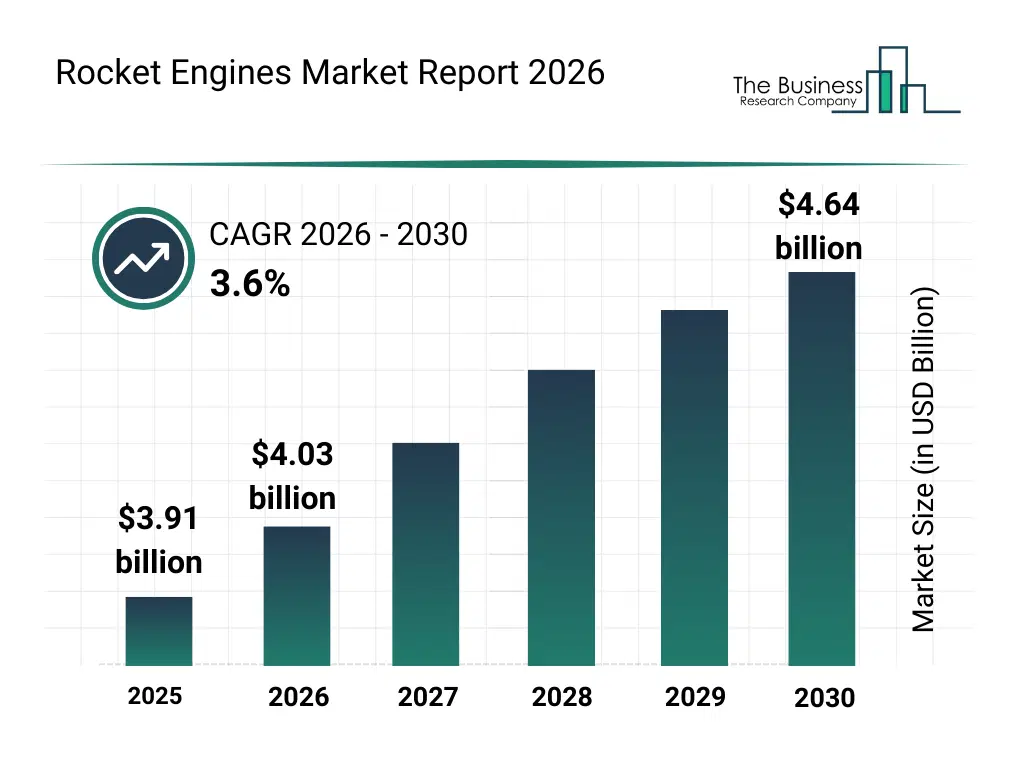
What Is The Rocket Engines Market Size and Share 2026?
The rocket engines market size has grown steadily in recent years. It will grow from $3.91 billion in 2025 to $4.03 billion in 2026 at a compound annual growth rate (CAGR) of 3.1%. The growth in the historic period can be attributed to growth in government-funded space exploration programs increasing rocket engine procurement, rising demand for launch services to deploy commercial and defense satellites, advancements in liquid and solid propulsion technologies improving engine performance, historical expansion of private space companies contributing to engine development contracts, increased reliance on mro and refurbishment services for reusable rocket engines.What Is The Rocket Engines Market Growth Forecast?
The rocket engines market size is expected to see steady growth in the next few years. It will grow to $4.64 billion in 2030 at a compound annual growth rate (CAGR) of 3.6%. The growth in the forecast period can be attributed to expanding commercial spaceflight and tourism driving new rocket engine production, increasing adoption of reusable propulsion systems to reduce launch costs, rising investments in high-thrust and high-efficiency engines for deep space missions, growing demand for small satellite launchers supporting development of compact rocket engines, expected surge in hybrid and green propellant technologies shaping next-generation engine designs. Major trends in the forecast period include advancement in reusable rocket engines, miniaturization of propulsion systems for small satellites, development of hybrid propulsion technologies, focus on high-efficiency fuel and combustion systems, expansion of commercial space launch services.
Global Rocket Engines Market Segmentation
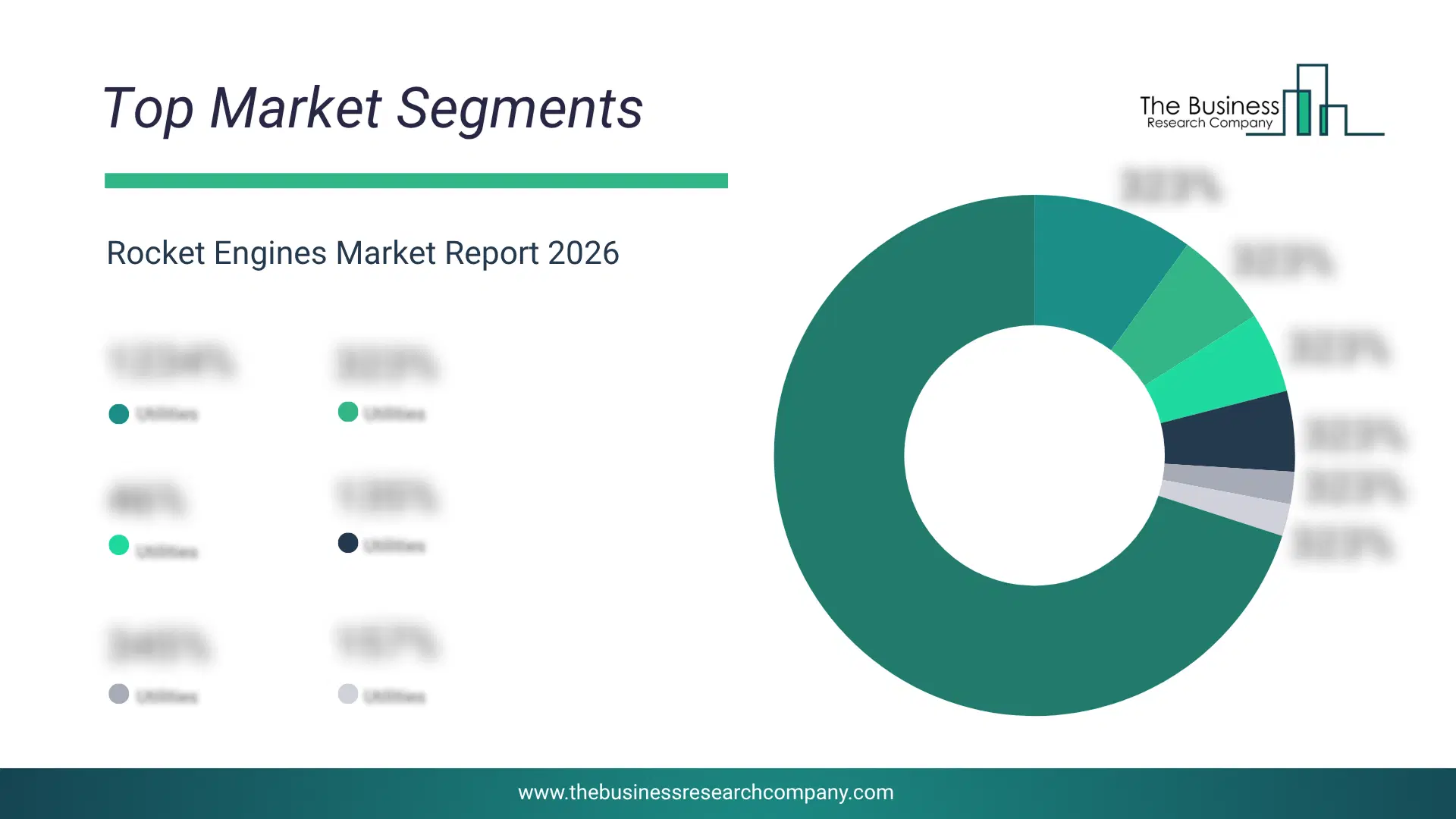
1) By Propulsion Technology: Physically Powered, Chemically Powered, Electrically Powered, Thermal, Nuclear Rocket Engines 2) By Product Type: Liquid Rocket Engines, Solid Rocket Engines 3) By Application: Spacecraft, Ballistic Missiles, Others Subsegments: 1) By Physically Powered: Mechanical Engines, Solid Propulsion Systems 2) By Chemically Powered: Liquid Rocket Engines, Solid Rocket Motors, Hybrid Rocket Engines 3) By Electrically Powered: Ion Thrusters, Hall Effect Thrusters, Electrospray Propulsion Systems 4) By Thermal: Nuclear Thermal Propulsion (NTP), Thermal Rocket Engines 5) By Nuclear Rocket Engines: Fission-Based Propulsion Systems, Fusion-Based Propulsion Systems (In Development)What Is Driver Of The Rocket Engines Market?
The increasing investment in the space industry is expected to propel the growth of the rocket engine market going forward. Investment in the space industry refers to the allocation of funds or resources to support activities related to space exploration, satellite technology, commercial space ventures, or other aerospace projects with the aim of generating financial returns or advancing scientific and technological goals. Investment in the space industry is vital for advancing rocket engine technology, leading to more capable, cost-effective, and sustainable propulsion systems for space exploration and satellite deployment. For instance, in 2023, according to The Space Report by Space Foundation, a US-based organization, the global space economy reached a new high of $570 billion in 2023, an increase of 7.4% from a revised 2022 figure of $531 billion. Therefore, increasing investment in the space industry is driving the growth of the rocket engine industry.Key Players In The Global Rocket Engines Market
Major companies operating in the rocket engines market are Aerojet Rocketdyne Holdings, Inc., Space Exploration Technologies Corp., Northrop Grumman Corporation, Mitsubishi Heavy Industries, Ltd., Blue Origin, LLC, IHI Corporation, National Aeronautics and Space Administration (NASA), Lockheed Martin Corporation, China Aerospace Science and Technology Corporation (CASC), Roscosmos, Skyroot Aerospace, Gilmour Space Technologies, Deep Blue Aerospace, Reaction Engines, Roll- Royce Limited, Skyrora, Safran Aircraft Engines, Roxel, Pangea Aerospace, AVIO, ARCA space, ISAR Aerospace, EDePro, GKN Aerospace, Boeing Defence, Space & Security, Raytheon, Maxar Space, SpaceX, Orbital ATK, Virgin Galactic, Rocket Lab, Avibras Indústria Aeroespacial S/A, Israel Aerospace Industries, The Boeing Company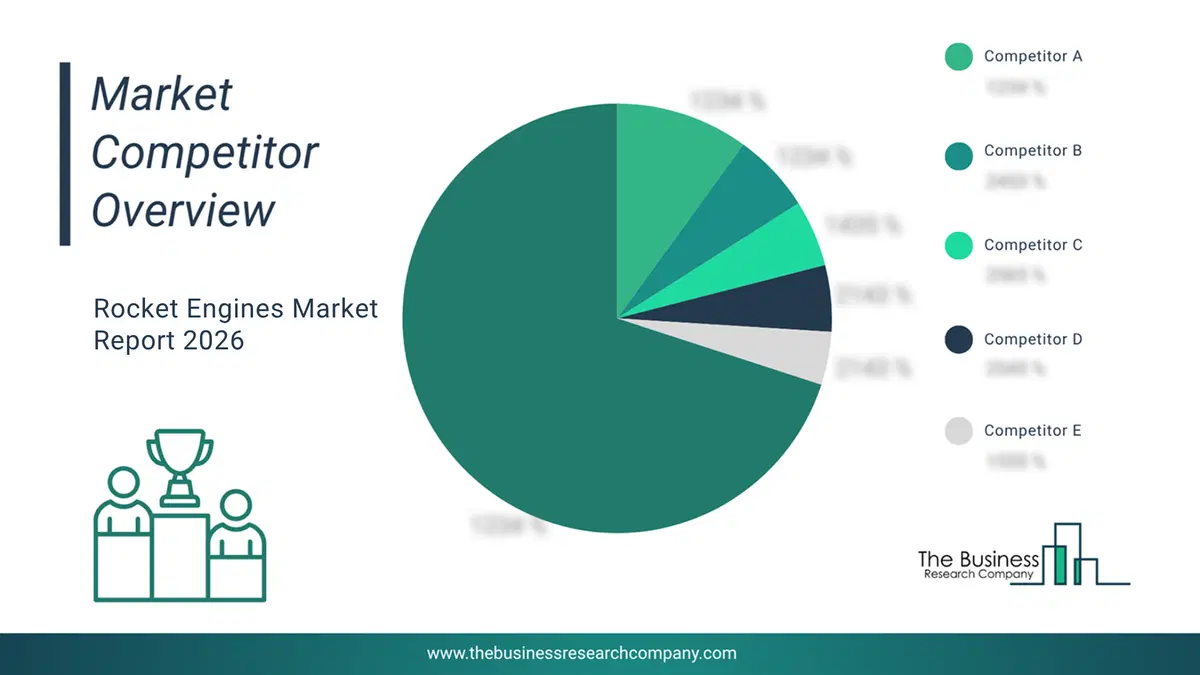
This chart is for illustrative purposes; the full report includes a detailed competitor analysis and comprehensive overview of the top 10 companies in the market.
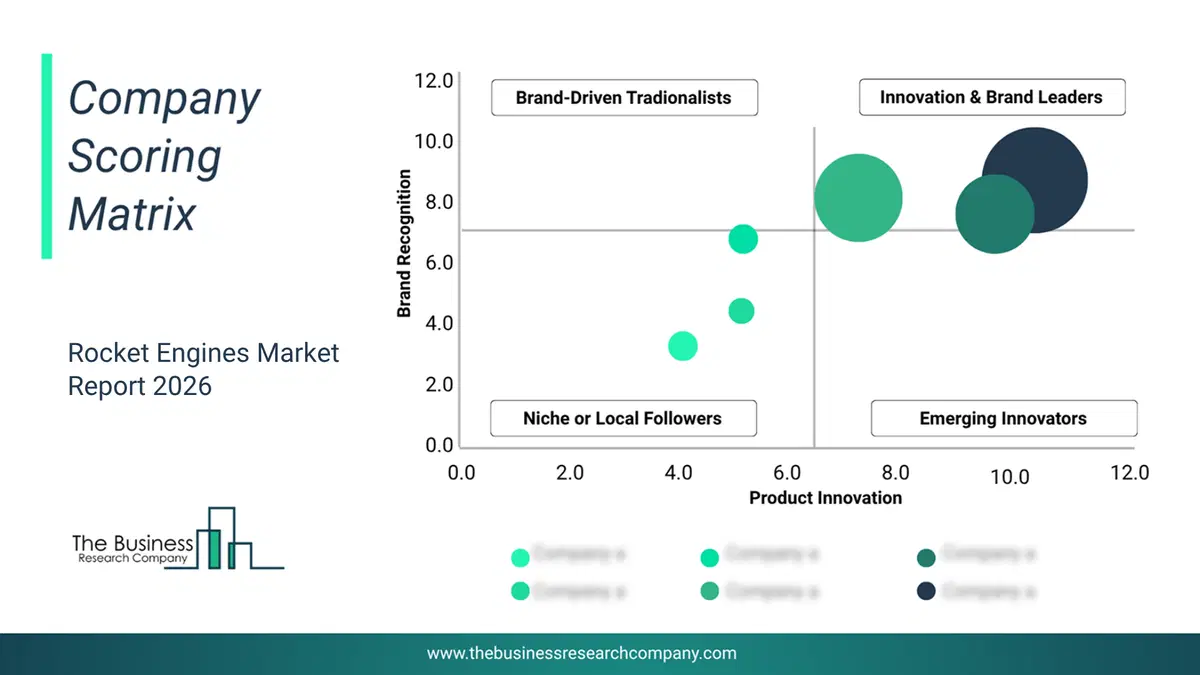
This chart maps companies by product innovation and brand strength, with bubble size indicating relative revenue, helping identify market leaders, challengers, and niche players. This is an illustrative chart; the full report provides a complete and accurate competitive analysis.
Global Rocket Engines Market Trends and Insights
Major companies operating in the rocket engines market are focusing on developing innovative solutions such as hypersonic propulsion demonstration to advance high-speed flight capabilities, enhance engine efficiency, and accelerate next-generation aerospace technologies. Hypersonic propulsion demonstration refers to a test or trial of engine technologies designed to achieve and sustain speeds greater than Mach 5, showcasing the engine’s capability for high-speed flight, thermal management, and efficient thrust generation under extreme aerodynamic conditions. For instance, in October 2025, Lockheed Martin Ventures, a US-based aerospace company, made a strategic investment in Venus Aerospace, a Houston-based rocket propulsion startup specializing in next-generation rotating detonation rocket engine (RDRE) technology. This investment aims to help Venus scale production and deploy its RDRE, which is reusable and throttleable, designed to reduce launch costs and provide mission flexibility for defense, space, and commercial high-speed aviation.What Are Latest Mergers And Acquisitions In The Rocket Engines Market? L3Harris Technologies Acquired Aerojet Rocketdyne To Enhance Propulsion Expertise
In July 2023, L3Harris TechnologiesInc., a US-based aerospace and defense technology innovator, acquired Aerojet Rocketdyne for an undisclosed amount. The acquisition expands L3Harris’s propulsion expertise, and Aerojet Rocketdyne's technologies were already 'key components' of Lockheed's supply chain. Aerojet Rocketdyne is a US-based rocket engine and missile manufacturer.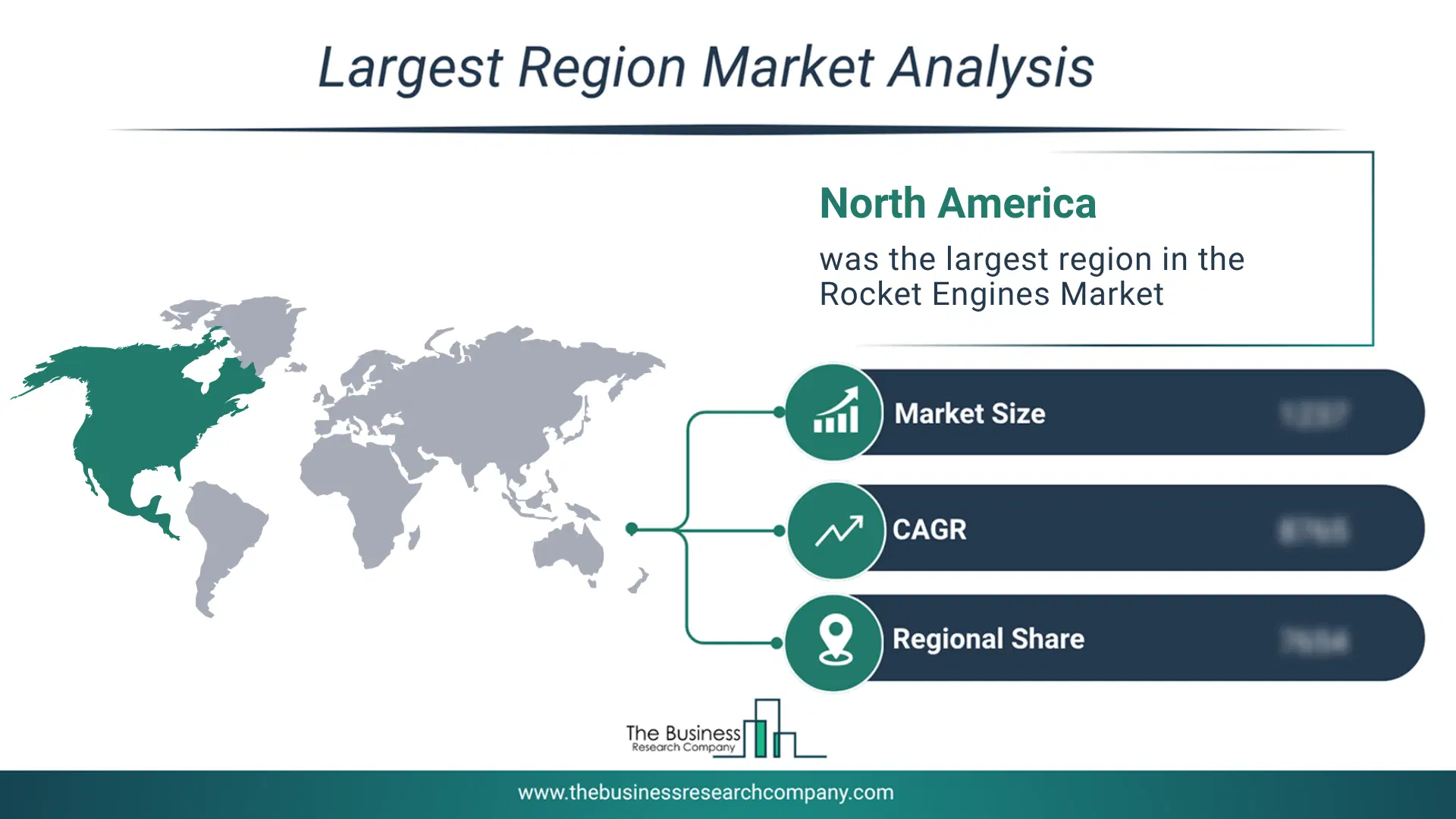
Regional Insights
North America was the largest region in the rocket engines market in 2025. North America is expected to be the fastest-growing region in the global rocket engines market share during the forecast period. The regions covered in this market report are Asia-Pacific, South East Asia, Western Europe, Eastern Europe, North America, South America, Middle East, Africa. The countries covered in this market report are Australia, Brazil, China, France, Germany, India, Indonesia, Japan, Taiwan, Russia, South Korea, UK, USA, Canada, Italy, SpainWhat Defines the Rocket Engines Market?
The rocket engine market consists of sales of rocket engines of various types to run the rockets. Values in this market are factory gate values, that is the value of goods sold by the manufacturers or creators of the goods, whether to other entities (including downstream manufacturers, wholesalers, distributors, and retailers) or directly to end customers. The value of goods in this market includes related services sold by the creators of the goods.How is Market Value Defined and Measured?
The market value is defined as the revenues that enterprises gain from the sale of goods and/or services within the specified market and geography through sales, grants, or donations in terms of the currency (in USD unless otherwise specified). The revenues for a specified geography are consumption values that are revenues generated by organizations in the specified geography within the market, irrespective of where they are produced. It does not include revenues from resales along the supply chain, either further along the supply chain or as part of other products.
This chart presents market attractiveness based on a quantitative evaluation of growth, competition, strategic alignment, and risk, offering a clear view of opportunity areas for decision-making. This chart is for illustrative purposes; the full report contains the complete analysis.

This chart highlights the Total Addressable Market (TAM) by estimating the maximum revenue opportunity using an assumption-driven approach, supporting strategic planning and opportunity sizing across markets. The chart is illustrative; the full report provides a more comprehensive analysis.
What Key Data and Analysis Are Included in the Rocket Engines Market Report 2026?
The rocket engines market research report is one of a series of new reports from The Business Research Company that provides market statistics, including industry global market size, regional shares, competitors with the market share, detailed market segments, market trends and opportunities, and any further data you may need to thrive in the rocket engines industry. The market research report delivers a complete perspective of everything you need, with an in-depth analysis of the current and future state of the industry.Rocket Engines Market Report Forecast Analysis
| Report Attribute | Details |
|---|---|
| Market Size Value In 2026 | $4.03 billion |
| Revenue Forecast In 2030 | $4.64 billion |
| Growth Rate | CAGR of 3.6% from 2026 to 2030 |
| Base Year For Estimation | 2025 |
| Actual Estimates/Historical Data | 2020-2025 |
| Forecast Period | 2026 - 2030 |
| Market Representation | Revenue in USD Billion and CAGR from 2026 to 2030 |
| Segments Covered | Propulsion Technology, Product Type, Application |
| Regional Scope | Asia-Pacific, Western Europe, Eastern Europe, North America, South America, Middle East, Africa |
| Country Scope | The countries covered in the rocket engines market report are Australia, Brazil, China, France, Germany, India, Indonesia, Japan, Taiwan, Russia, South Korea, UK, USA, Canada, Italy, Spain |
| Key Companies Profiled | Aerojet Rocketdyne Holdings, Inc., Space Exploration Technologies Corp., Northrop Grumman Corporation, Mitsubishi Heavy Industries, Ltd., Blue Origin, LLC, IHI Corporation, National Aeronautics and Space Administration (NASA), Lockheed Martin Corporation, China Aerospace Science and Technology Corporation (CASC), Roscosmos, Skyroot Aerospace, Gilmour Space Technologies, Deep Blue Aerospace, Reaction Engines, Roll- Royce Limited, Skyrora, Safran Aircraft Engines, Roxel, Pangea Aerospace, AVIO, ARCA space, ISAR Aerospace, EDePro, GKN Aerospace, Boeing Defence, Space & Security, Raytheon, Maxar Space, SpaceX, Orbital ATK, Virgin Galactic, Rocket Lab, Avibras Indústria Aeroespacial S/A, Israel Aerospace Industries, The Boeing Company |
| Customization Scope | Request for Customization |
| Pricing And Purchase Options | Explore Purchase Options |