
Rocket Multi-Stage Systems Market Report 2026
Global Outlook – By Component (Propulsion Systems, Avionics, Structural Systems, Payload Systems, Other Components), By Launch Vehicle Type (Small-Lift Launch Vehicles, Medium-Lift Launch Vehicles, Heavy-Lift Launch Vehicles, Super Heavy-Lift Launch Vehicles), By End-User (Government, Commercial, Defense) – Market Size, Trends, Strategies, and Forecast to 2030
Rocket Multi-Stage Systems Market Overview
• Rocket Multi-Stage Systems market size has reached to $7.9 billion in 2025 • Expected to grow to $11.66 billion in 2030 at a compound annual growth rate (CAGR) of 8% • Growth Driver: Rising Satellite Constellation Deployment Fuel Demand For Market Growth Due To Expanding Global Internet Connectivity Needs • Market Trend: Innovative Reusable Launch Vehicles Accelerate Rocket Multi-Stage System Evolution • North America was the largest region in 2025.What Is Covered Under Rocket Multi-Stage Systems Market?
A multi-stage rocket system is a launch vehicle designed with two or more sections or stages, each equipped with engines and fuel supply. These stages operate in sequence, with the first stage igniting at launch and being discarded once its fuel is depleted, allowing the next stage to ignite and continue the journey. Multi-stage systems are essential for space missions, as a single-stage rocket typically cannot generate the energy needed to overcome Earth's gravity and reach space. The main component types of rocket multi-stage systems are propulsion systems, avionics, structural systems, payload systems, and others. Propulsion systems comprise the engines and fuel systems that generate the thrust needed to drive the rocket through different flight stages. These systems are integrated into various types of launch vehicles, including small-lift, medium-lift, heavy-lift, and super heavy-lift launch vehicles, and utilized by end-users across government, commercial, and defense.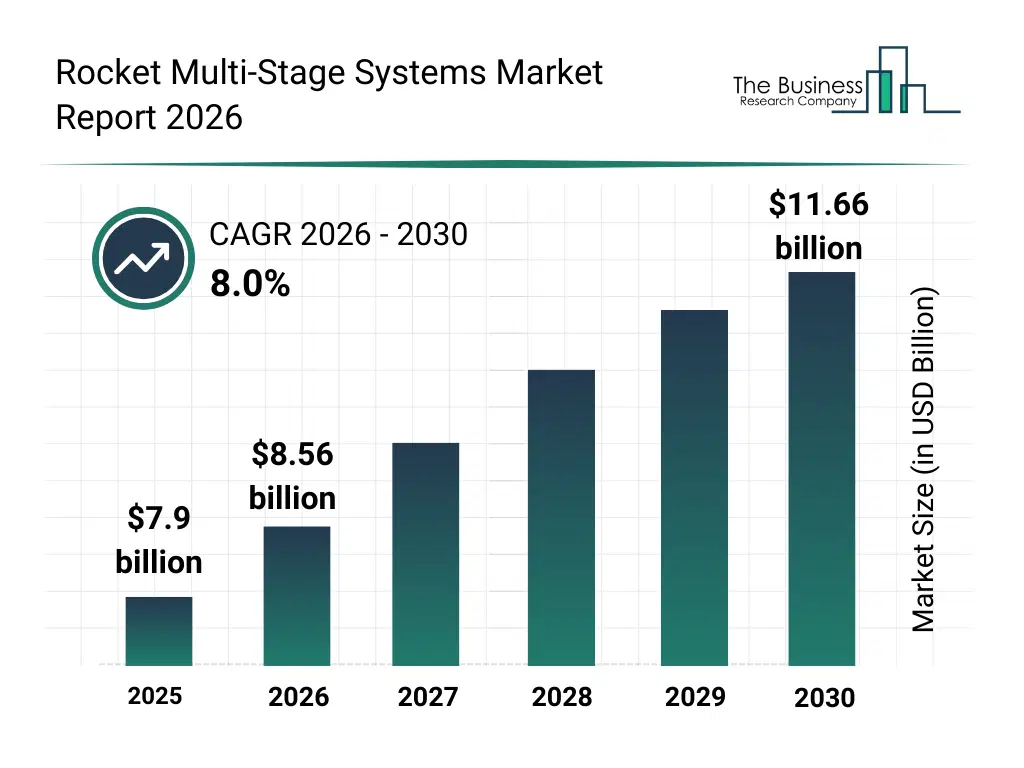
What Is The Rocket Multi-Stage Systems Market Size and Share 2026?
The rocket multi-stage systems market size has grown strongly in recent years. It will grow from $7.9 billion in 2025 to $8.56 billion in 2026 at a compound annual growth rate (CAGR) of 8.4%. The growth in the historic period can be attributed to increasing demand for higher orbital insertion capability driving early adoption of multi-stage architectures, development of advanced airframes enabling efficient stage separation and structural stability, expansion of government deep-space missions requiring multi-stage launch vehicles, advancements in navigation systems improving stage-to-stage transition accuracy, early integration of interplanetary probes necessitating more powerful multi-stage configurations.What Is The Rocket Multi-Stage Systems Market Growth Forecast?
The rocket multi-stage systems market size is expected to see strong growth in the next few years. It will grow to $11.66 billion in 2030 at a compound annual growth rate (CAGR) of 8.0%. The growth in the forecast period can be attributed to rising commercial launch activity increasing demand for cost-efficient multi-stage systems, innovation in lightweight composite airframes enhancing payload capacity and stage performance, advancements in autonomous navigation enabling more precise and reliable stage operations, growing interest in lunar and mars missions requiring high-energy multi-stage vehicles, expansion of reusable and partially reusable stage technologies driving new multi-stage system designs. Major trends in the forecast period include advancements in stage separation mechanism designs, high-durability structural material integration, increased use of modular stage configurations, enhanced precision in multi-stage payload deployment, growing adoption of cost-optimized propulsion architectures.
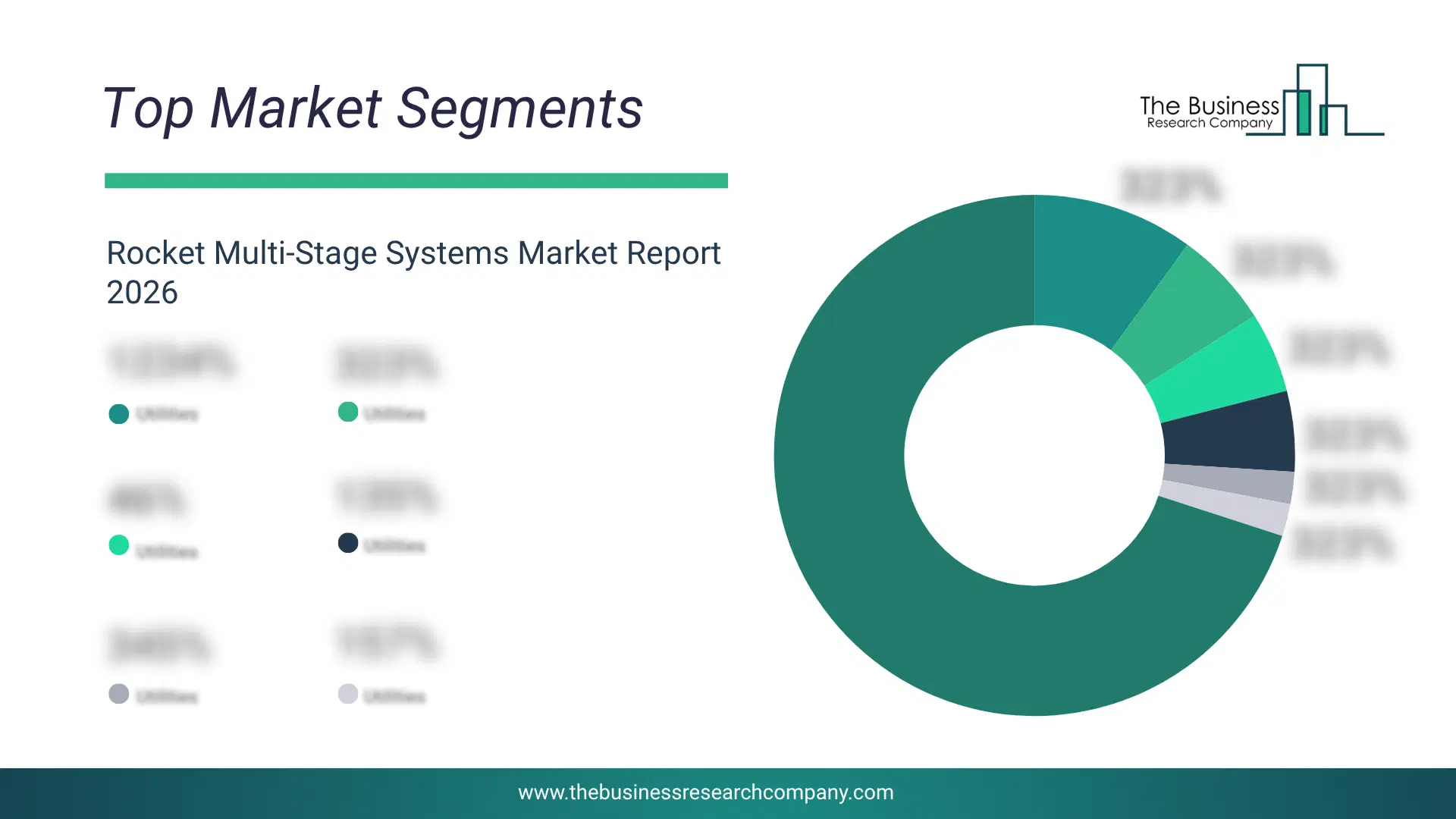
Global Rocket Multi-Stage Systems Market Segmentation
1) By Component: Propulsion Systems, Avionics, Structural Systems, Payload Systems, Other Components 2) By Launch Vehicle Type: Small-Lift Launch Vehicles, Medium-Lift Launch Vehicles, Heavy-Lift Launch Vehicles, Super Heavy-Lift Launch Vehicles 3) By End-User: Government, Commercial, Defense Subsegments: 1) By Propulsion Systems: Liquid Propulsion, Solid Propulsion, Hybrid Propulsion 2) By Avionics: Guidance Systems, Navigation Systems, Control Systems 3) By Structural Systems: Interstage Structures, Airframe, Fairings 4) By Payload Systems: Payload Adapters, Payload Fairings, Deployment Mechanisms 5) By Other Components: Separation Systems, Launch Support Systems, Fuel TanksWhat Is Driver Of The Rocket Multi-Stage Systems Market?
The increasing private investments in launch service providers are expected to propel the growth of the rocket multi-stage systems market in the coming years. Private investments in launch service providers refer to financial support from non-governmental entities to foster the development, scaling, and commercialization of space launch operations. The private investments in launch service providers are rising as advancements in reusable rocket technology offer greater returns by considerably lowering launch expenses. Rocket multi-stage systems aid private investments in launch service providers by boosting payload capacity and enhancing mission adaptability, thereby improving the commercial appeal of launches to investors. For instance, in May 2024, Revolv Space, a space technology startup based in Italy and the Netherlands, raised $3.0 million (€2.6 million) to advance small satellite capabilities using innovative mechanisms and power systems. Therefore, the increasing private investments in launch service providers are driving the growth of the rocket multi-stage systems industry.Key Players In The Global Rocket Multi-Stage Systems Market
Major companies operating in the rocket multi-stage systems market are China Aerospace Science and Technology Corporation, Northrop Grumman Innovation Systems, Mitsubishi Heavy Industries Ltd., L3Harris Technologies Inc., IHI Corporation, Space Exploration Technologies Corp (SpaceX), Blue Origin LLC, ArianeGroup, United Launch Alliance, Relativity Space Inc., Rocket Lab USA Inc., Firefly Aerospace Inc., Avio S.p.A, Indian Space Research Organisation, Rocket Factory Augsburg AG, Isar Aerospace Technologies GmbH, Yuzhnoye Design Office, PLD Space, Skyrora Ltd., Skyroot Aerospace Private Limited, China Academy of Launch Vehicle Technology, LandSpace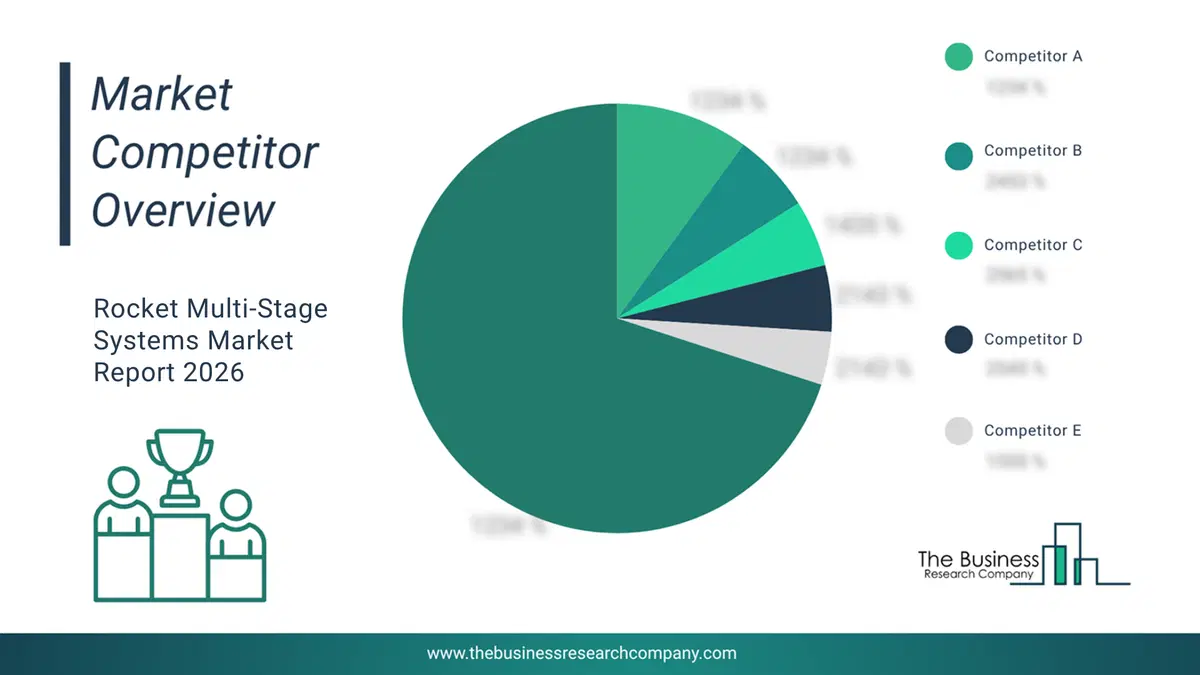
This chart is for illustrative purposes; the full report includes a detailed competitor analysis and comprehensive overview of the top 10 companies in the market.
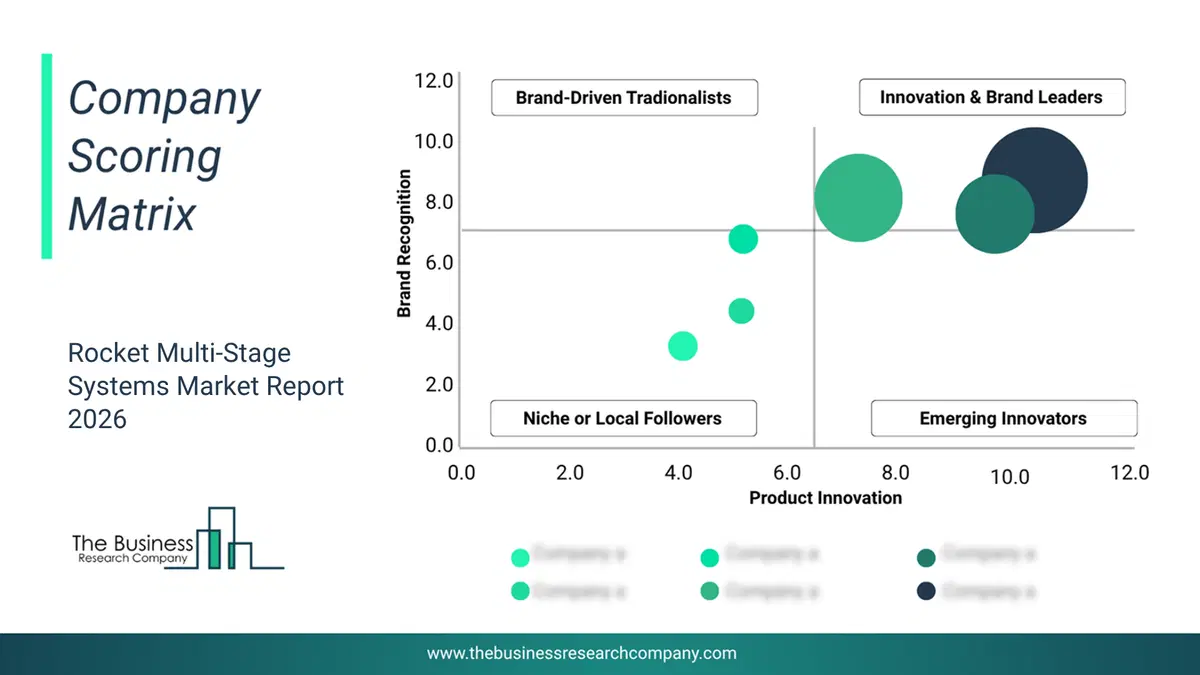
This chart maps companies by product innovation and brand strength, with bubble size indicating relative revenue, helping identify market leaders, challengers, and niche players. This is an illustrative chart; the full report provides a complete and accurate competitive analysis.
Global Rocket Multi-Stage Systems Market Trends and Insights
Major companies operating in the rocket multi-stage systems market are focusing on developing innovative solutions, such as reusable heavy-lift orbital rockets, to meet the rising demand for cost-effective satellite deployment and deep-space missions. Reusable heavy-lift orbital rockets use advanced propulsion and recovery systems to significantly reduce launch costs and turnaround times compared to traditional expendable rockets. For instance, in January 2025, Blue Origin Enterprises LP, a US-based aerospace company, launched the New Glenn, a next-generation, heavy-lift, two-stage orbital rocket designed for reusability and efficiency. Standing over 320 ft tall with a 7-meter fairing, it can deliver up to 45 tons to low Earth orbit (LEO). Its reusable first stage is powered by seven liquid oxygen/liquefied natural gas BE-4 engines, while the upper stage uses a hydrogen-powered BE-3U engine for high-performance orbital delivery. Built to support commercial, national security, and crewed missions, New Glenn offers deep-throttle control and minimal maintenance and is optimized for launching large constellations such as Project Kuiper, helping reduce the cost of space access.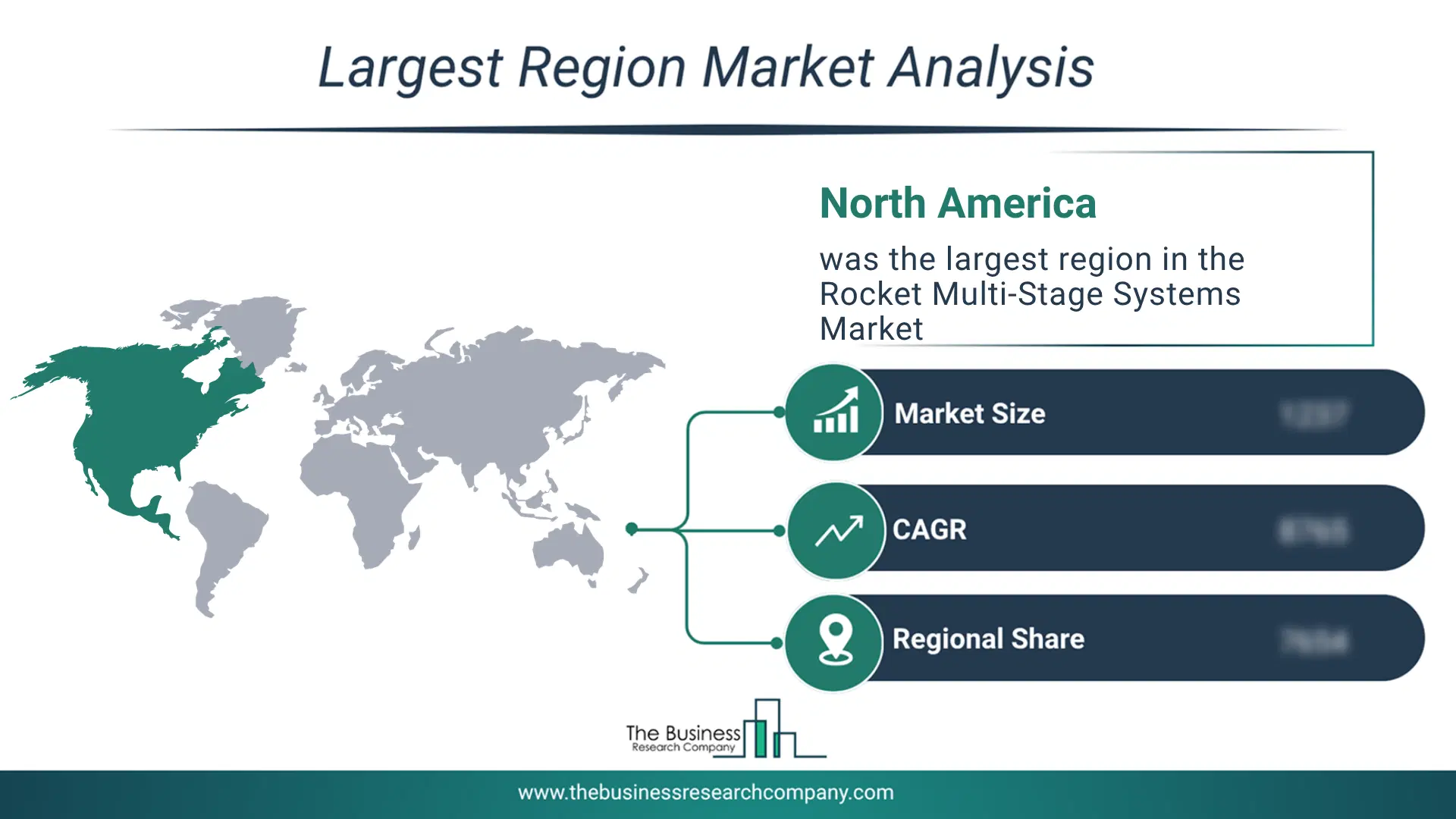
Regional Insights
North America was the largest region in the rocket multi-stage systems market in 2025. The regions covered in the rocket multi-stage systems market report are Asia-Pacific, South East Asia, Western Europe, Eastern Europe, North America, South America, Middle East, Africa. The countries covered in the rocket multi-stage systems market report are Australia, Brazil, China, France, Germany, India, Indonesia, Japan, Taiwan, Russia, South Korea, UK, USA, Canada, Italy, SpainWhat Defines the Rocket Multi-Stage Systems Market?
The rocket multi-stage systems market consists of sales of navigation systems, airframes, and interplanetary probes. Values in this market are ‘factory gate’ values, that is, the value of goods sold by the manufacturers or creators of the goods, whether to other entities (including downstream manufacturers, wholesalers, distributors, and retailers) or directly to end customers. The value of goods in this market includes related services sold by the creators of the goods.How is Market Value Defined and Measured?
The market value is defined as the revenues that enterprises gain from the sale of goods and/or services within the specified market and geography through sales, grants, or donations in terms of the currency (in USD unless otherwise specified). The revenues for a specified geography are consumption values that are revenues generated by organizations in the specified geography within the market, irrespective of where they are produced. It does not include revenues from resales along the supply chain, either further along the supply chain or as part of other products.
This chart presents market attractiveness based on a quantitative evaluation of growth, competition, strategic alignment, and risk, offering a clear view of opportunity areas for decision-making. This chart is for illustrative purposes; the full report contains the complete analysis.

This chart highlights the Total Addressable Market (TAM) by estimating the maximum revenue opportunity using an assumption-driven approach, supporting strategic planning and opportunity sizing across markets. The chart is illustrative; the full report provides a more comprehensive analysis.
What Key Data and Analysis Are Included in the Rocket Multi-Stage Systems Market Report 2026?
The rocket multi-stage systems market research report is one of a series of new reports from The Business Research Company that provides market statistics, including industry global market size, regional shares, competitors with the market share, detailed market segments, market trends and opportunities, and any further data you may need to thrive in the rocket multi-stage systems industry. The market research report delivers a complete perspective of everything you need, with an in-depth analysis of the current and future state of the industry.Rocket Multi-Stage Systems Market Report Forecast Analysis
| Report Attribute | Details |
|---|---|
| Market Size Value In 2026 | $8.56 billion |
| Revenue Forecast In 2030 | $11.66 billion |
| Growth Rate | CAGR of 8% from 2026 to 2030 |
| Base Year For Estimation | 2025 |
| Actual Estimates/Historical Data | 2020-2025 |
| Forecast Period | 2026 - 2030 |
| Market Representation | Revenue in USD Billion and CAGR from 2026 to 2030 |
| Segments Covered | Component, Launch Vehicle Type, End-User |
| Regional Scope | Asia-Pacific, Western Europe, Eastern Europe, North America, South America, Middle East, Africa |
| Country Scope | The countries covered in the rocket multi-stage systems market report are Australia, Brazil, China, France, Germany, India, Indonesia, Japan, Taiwan, Russia, South Korea, UK, USA, Canada, Italy, Spain |
| Key Companies Profiled | China Aerospace Science and Technology Corporation, Northrop Grumman Innovation Systems, Mitsubishi Heavy Industries Ltd., L3Harris Technologies Inc., IHI Corporation, Space Exploration Technologies Corp (SpaceX), Blue Origin LLC, ArianeGroup, United Launch Alliance, Relativity Space Inc., Rocket Lab USA Inc., Firefly Aerospace Inc., Avio S.p.A, Indian Space Research Organisation, Rocket Factory Augsburg AG, Isar Aerospace Technologies GmbH, Yuzhnoye Design Office, PLD Space, Skyrora Ltd., Skyroot Aerospace Private Limited, China Academy of Launch Vehicle Technology, LandSpace |
| Customization Scope | Request for Customization |
| Pricing And Purchase Options | Explore Purchase Options |