
Rocket Solid Propulsion Market Report 2026
Global Outlook – By Type (Boosters, Upper Stages, In-Space Propulsion), By Rocket Type (Launch Vehicles, Spacecraft Propulsion, Military Rockets), By Propellant Type (Ammonium Perchlorate Composite Propellant (APCP), Hydroxyl-Terminated Polybutadiene (HTPB), Polyurethane (PU)), By Application (Earth Observation, Navigation, Communication, Space Exploration), By End User (Government, Commercial, Research Institutions) – Market Size, Trends, Strategies, and Forecast to 2030
Rocket Solid Propulsion Market Overview
• Rocket Solid Propulsion market size has reached to $307.91 billion in 2025 • Expected to grow to $376.37 billion in 2030 at a compound annual growth rate (CAGR) of 4.1% • Growth Driver: The Increasing Number Of Satellite Launches Is Fueling The Market Growth Due To The Rising Demand For Reliable Thrust Systems In Satellite Deployment • Market Trend: The Role Of Solid Propulsion In Small Satellite Launch Services • North America was the largest region in 2025 and Asia-Pacific is the fastest growing region.Market Gains By 2030 – Top Opportunities By Segment
Market Gain identifies the most promising market opportunities by highlighting the segments or products expected to generate the highest incremental revenue growth over the next five years.
What Is Covered Under Rocket Solid Propulsion Market?
Rocket solid propulsion refers to a propulsion system in which the propellant used is in solid form, and both the fuel and oxidizer are mixed together into a solid grain. When ignited, the solid propellant burns from the inside out, producing high-pressure gas that is expelled through a nozzle to generate thrust. The main types of the rocket solid propulsion include boosters, upper stages, and in-space propulsion. Boosters refer to solid propulsion systems designed to provide high initial thrust at launch, enabling rockets to overcome gravitational forces, stabilize ascent, and deliver payloads to the required altitude or velocity during the early phase of flight. The major rocket types include launch vehicles, spacecraft propulsion systems, and military rockets. The key propellant types include ammonium perchlorate composite propellant (APCP), hydroxyl-terminated polybutadiene (HTPB), and polyurethane (PU). The primary applications include earth observation, navigation, communication, and space exploration, and they are used by several end users such as government, commercial entities, and research institutions.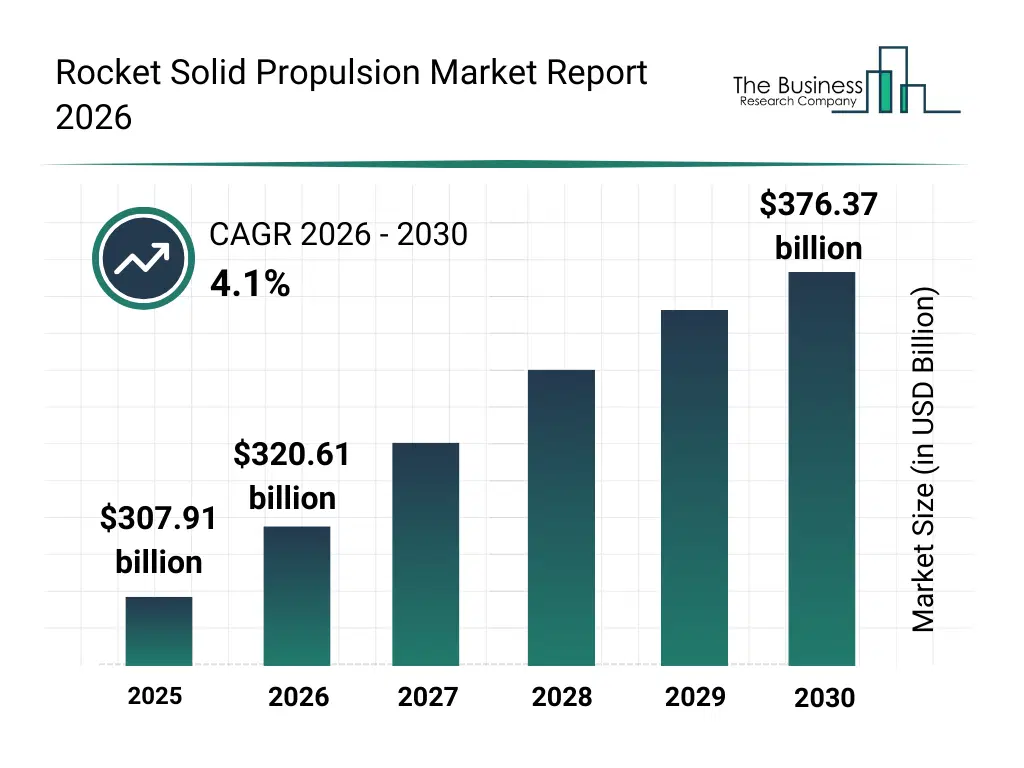
What Is The Rocket Solid Propulsion Market Size and Share 2026?
The rocket solid propulsion market size has grown steadily in recent years. It will grow from $307.91 billion in 2025 to $320.61 billion in 2026 at a compound annual growth rate (CAGR) of 4.1%. The growth in the historic period can be attributed to widespread use of solid propellants in military and space rockets, advancements in grain formulation and combustion stability, expansion of defense and space research programs, development of reliable ignition and control systems, increased production of solid propulsion motors for tactical and strategic applications.What Is The Rocket Solid Propulsion Market Growth Forecast?
The rocket solid propulsion market size is expected to see steady growth in the next few years. It will grow to $376.37 billion in 2030 at a compound annual growth rate (CAGR) of 4.1%. The growth in the forecast period can be attributed to rising demand for high-thrust solid rocket motors in defense and aerospace, focus on environmentally safer and stable propellant compositions, integration of advanced guidance and control systems, growth in commercial space launch activities using solid propulsion, development of modular and versatile solid rocket motor designs. Major trends in the forecast period include advancements in high-energy solid propellants, adoption of lightweight composite motor casings, increased demand for multi-stage solid boosters, growth in commercial satellite launch services, enhanced safety and quality assurance standards.
Global Rocket Solid Propulsion Market Segmentation
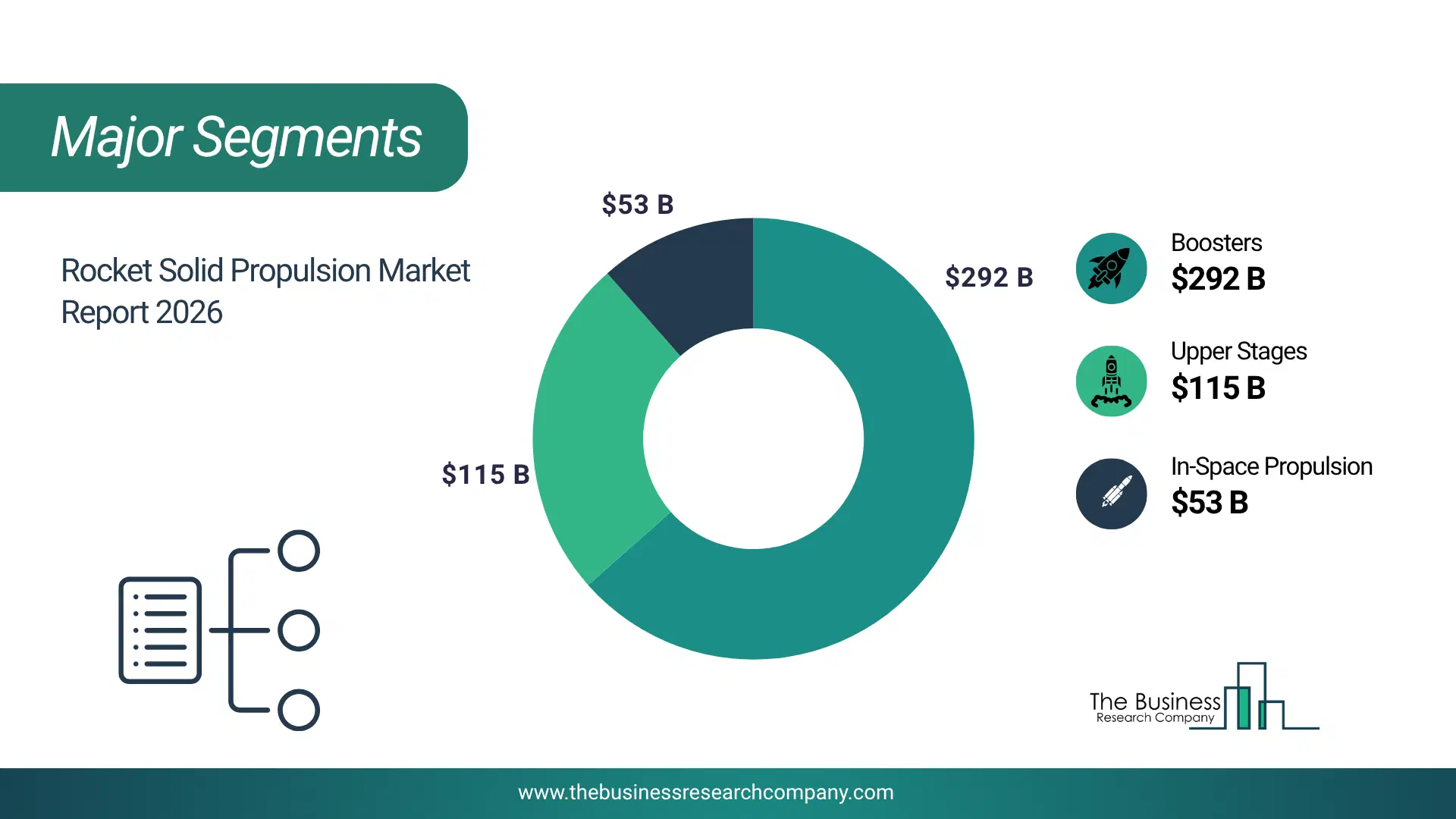
1) By Type: Boosters, Upper Stages, In-Space Propulsion 2) By Rocket Type: Launch Vehicles, Spacecraft Propulsion, Military Rockets 3) By Propellant Type: Ammonium Perchlorate Composite Propellant (APCP), Hydroxyl-Terminated Polybutadiene (HTPB), Polyurethane (PU) 4) By Application: Earth Observation, Navigation, Communication, Space Exploration 5) By End User: Government, Commercial, Research Institutions Subsegments: 1) By Boosters: Strap-On Boosters, First Stage Boosters, Dual Thrust Boosters, Tandem Boosters 2) By Upper Stages: Single-Stage Upper Modules, Multi-Stage Upper Modules, Restartable Upper Stages, Kick Stages 3) By In-Space Propulsion: Apogee Kick Motors (AKM), Orbit Insertion Motors, The top segments in the rocket solid propulsion market will be: • Boosters will reach $292.03 Billion by 2030. • Upper Stages will reach $115.03 Billion by 2030. • In-Space Propulsion will reach $52.72 Billion by 2030.What Is Driver Of The Rocket Solid Propulsion Market?
The increasing number of satellite launches is expected to propel the growth of the rocket solid propulsion market going forward. Satellite launches refer to the process of sending artificial satellites into space using rockets for purposes such as communication, navigation, research, or earth observation. The increasing number of satellite launches is primarily due to the growing demand for communication, as satellites play a crucial role in enhancing connectivity, enabling faster and more reliable data transmission for internet, television, and telecommunications services, especially in remote and underserved areas. Rocket solid propulsion is essential for satellite deployment, delivering the required thrust and reliability to accurately place satellites into their intended orbits. For instance, according to the Government Accountability Office, a US-based government agency, as of spring 2022, there are nearly 5,500 active satellites in orbit, with projections suggesting the launch of an additional 58,000 by 2030. Therefore, the increasing number of satellite launches is driving the growth of the rocket solid propulsion industry.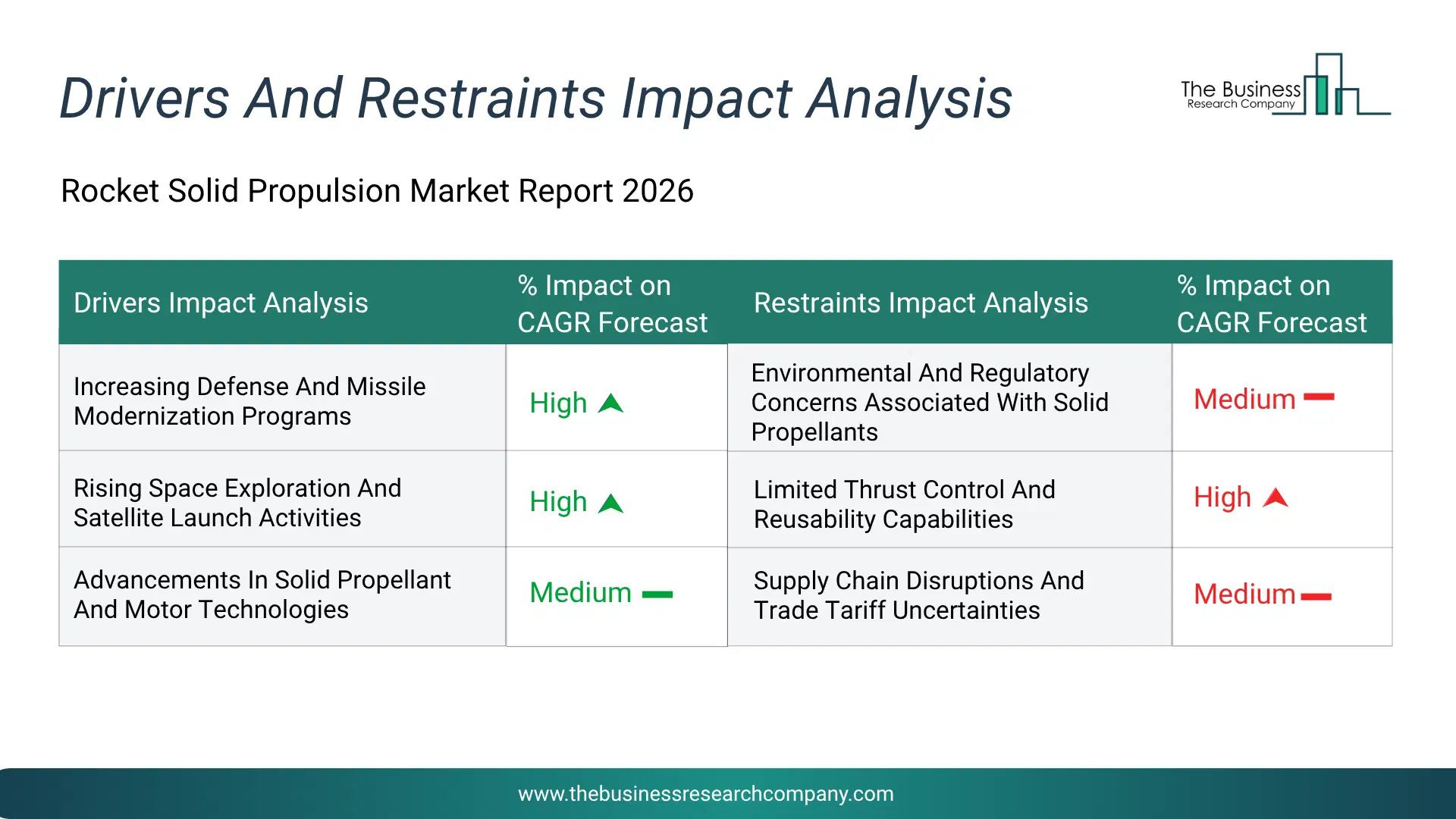
Infographic Chart Showing Key Market Drivers Analysis And Restraints For Rocket Solid Propulsion Market
The chart presents an impact analysis of key drivers and restraints, quantifying their relative influence on the market's growth rate and helping assess the balance between growth enablers and limiting factors. This chart offers a high-level perspective; the full report contains more detailed insights.
How Will The Drivers Impact Growth In The Global Rocket Solid Propulsion Market?
• Increasing Defense And Missile Modernization Programs (High) – During the forecast period, the increasing defense and missile modernization programs are expected to become a key growth driver for the rocket solid propulsion market by 2030. Governments worldwide are strengthening national security capabilities through the deployment of advanced missile systems, strategic deterrence platforms, and next-generation tactical weapons. Solid propulsion systems remain a preferred choice due to their rapid launch readiness, operational reliability, and long-term storage capabilities. Defense agencies are also expanding investments in hypersonic and precision-guided missile technologies, creating sustained demand for high-performance solid rocket motors. This growing focus on military preparedness and modernization is reinforcing steady market expansion. • Rising Space Exploration And Satellite Launch Activities (High) – During the forecast period, the rising space exploration and satellite launch activities are expected to emerge as a major factor driving the expansion of the rocket solid propulsion market by 2030. Growing deployment of satellite constellations, deep-space missions, and lunar exploration programs is increasing the requirement for dependable propulsion systems capable of supporting launch and orbital operations. Solid propulsion technologies are widely utilized in launch vehicle stages and mission-critical applications due to their proven performance characteristics. Expanding participation from commercial space companies and national space agencies is further accelerating launch frequencies worldwide. • Advancements In Solid Propellant And Motor Technologies (Medium) – During the forecast period, the advancements in solid propellant and motor technologies are expected to act as a key growth catalyst for the rocket solid propulsion market by 2030. Continuous innovations in propellant chemistry, grain design, and motor casing materials are enhancing thrust efficiency, burn consistency, and mission flexibility. Manufacturers are focusing on developing propulsion systems with improved energy density, reduced manufacturing complexity, and enhanced operational safety. These technological improvements are enabling more efficient launch systems while supporting a broader range of defense and space applications.How Will The Restraints Impact Growth In The Global Rocket Solid Propulsion Market?
• Environmental And Regulatory Concerns Associated With Solid Propellants (High) – During the forecast period, the environmental and regulatory concerns associated with solid propellants are limiting market growth due to emissions generated during combustion, hazardous material handling requirements, and increasing regulatory scrutiny related to environmental sustainability and workplace safety standards. • Limited Thrust Control And Reusability Capabilities (High) – During the forecast period, the limited thrust control and reusability capabilities restrict the adoption of rocket solid propulsion systems in advanced space missions because solid motors cannot be easily throttled, restarted, or reused once ignited, reducing mission flexibility compared to liquid propulsion alternatives. • Supply Chain Disruptions And Trade Tariff Uncertainties (Medium) – During the forecast period, the supply chain disruptions and trade tariff uncertainties are creating procurement challenges and cost volatility for propulsion components, raw materials, and specialized manufacturing systems, thereby affecting production schedules and investment planning within the global rocket solid propulsion market.Key Players In The Global Rocket Solid Propulsion Market
Major companies operating in the rocket solid propulsion market are The Boeing Company, Northrop Grumman Corporation, Mitsubishi Heavy Industries Ltd., Safran S.A., Aerojet Rocketdyne Holdings Inc., L3Harris Technologies Inc., Rolls-Royce Holdings plc, Aerojet Rocketdyne Holdings Inc., Airbus SE, Sierra Nevada Corporation, Arianespace SA, Anduril Industries Inc., Firefly Aerospace Inc., Avio S.p.A., Gilmour Space Technologies Pty Ltd., EDePro – Engine Development and Production d.o.o., Skyroot Aerospace Private Limited, Firehawk Aerospace Inc., Virgin Galactic Holdings Inc., Thiokol Propulsion.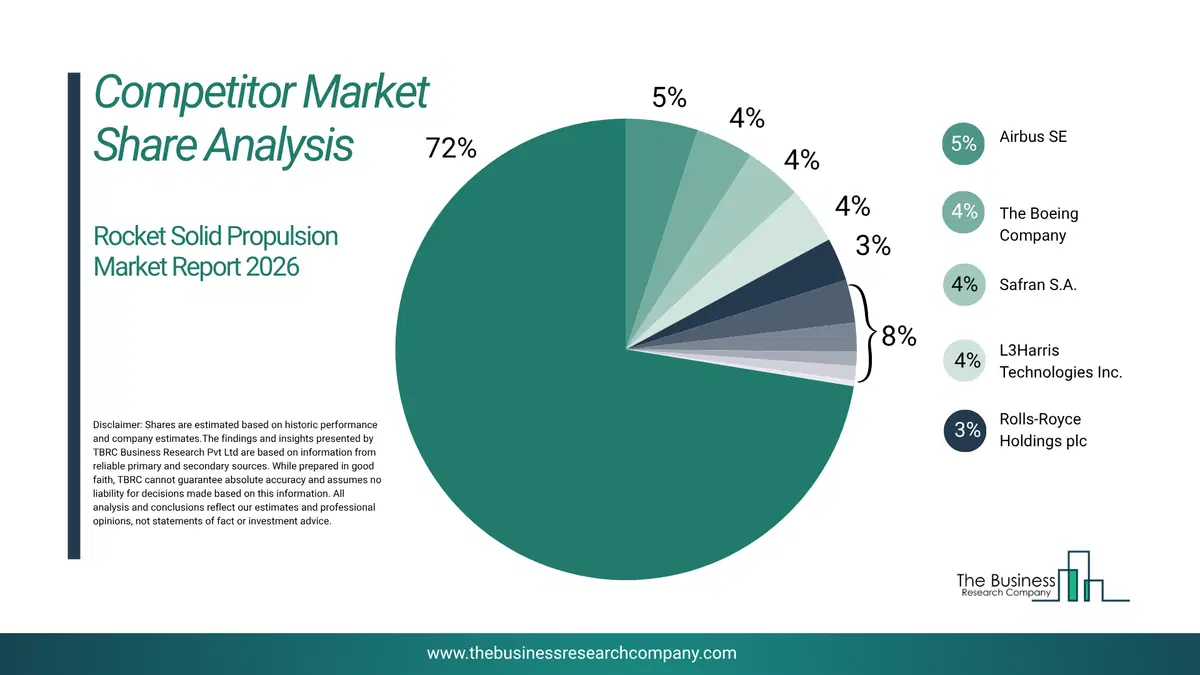
This chart is for illustrative purposes; the full report includes a detailed competitor analysis and comprehensive overview of the top 10 companies in the market.
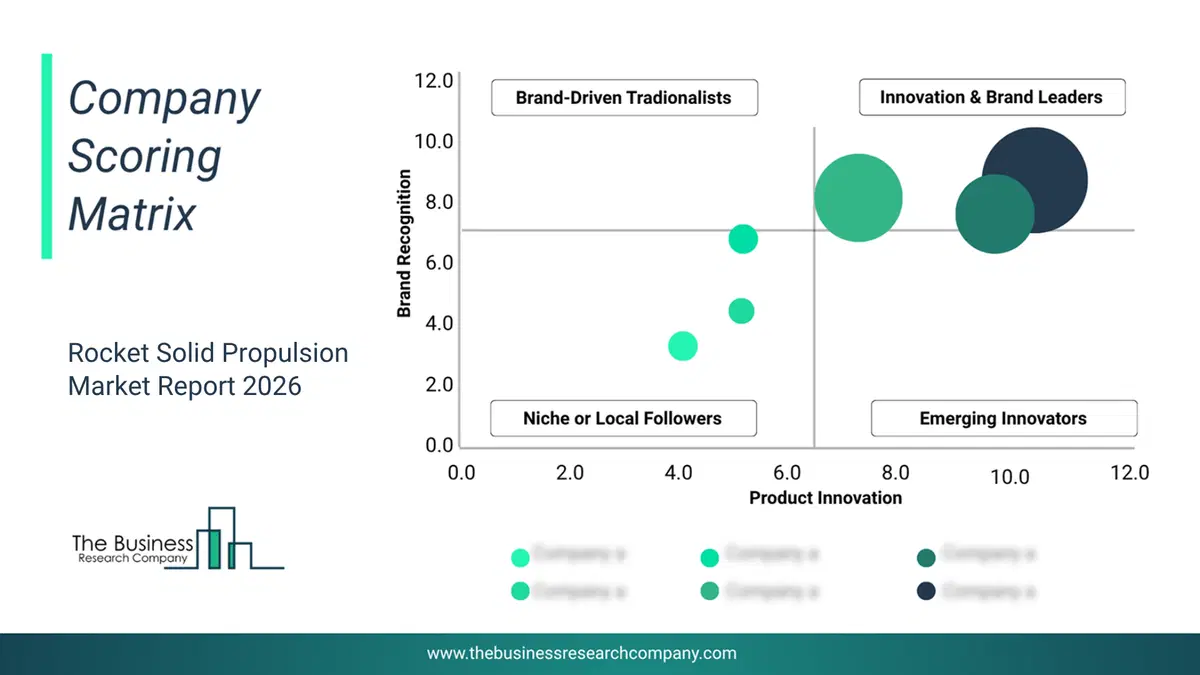
This chart maps companies by product innovation and brand strength, with bubble size indicating relative revenue, helping identify market leaders, challengers, and niche players. This is an illustrative chart; the full report provides a complete and accurate competitive analysis.
Global Rocket Solid Propulsion Market Trends and Insights
Major companies operating in the rocket solid propulsion market are focusing on developing innovative products, such as solid propellant rockets, to enhance launch efficiency and reduce mission costs. A solid propellant rocket refers to a type of rocket that uses a solid mixture of fuel and oxidizer as its propellant, which is pre-packed into the combustion chamber and ignites to produce thrust when launched. For instance, in June 2023, Guangzhou Zhongke Aerospace Exploration Technology Co., Ltd., a China-based commercial space launch provider, successfully launched its largest solid propellant rocket, Lijian-1, deploying 26 satellites into orbit in a single mission, thereby demonstrating enhanced launch efficiency and reduced mission costs through the use of solid propulsion technology. The launch marked the second flight of Lijian-1, indicating growing reliability and technological maturity of the solid propellant system. The rocket incorporated breakthroughs in six key technologies and utilized 13 domestic innovations for the first time, showcasing China's advancements in solid carrier rocket development.What Are Latest Mergers And Acquisitions In The Rocket Solid Propulsion Market? Anduril Industries Acquires Adranos To Strengthen U.S. Solid Rocket Motor Supply Chain
In June 2023, Anduril Industries Inc., a US-based defense and space manufacturing company, acquired Adranos for an undisclosed amount. With this acquisition, Anduril Industries aims to strengthen the United States' solid rocket motor supply base by increasing competition, expanding the industrial supply chain, and accelerating the development and production of critical propulsion systems for defense applications. Adranos Inc. is a US-based manufacturing company that specializes in providing solid rocket motors and solid rocket propulsion.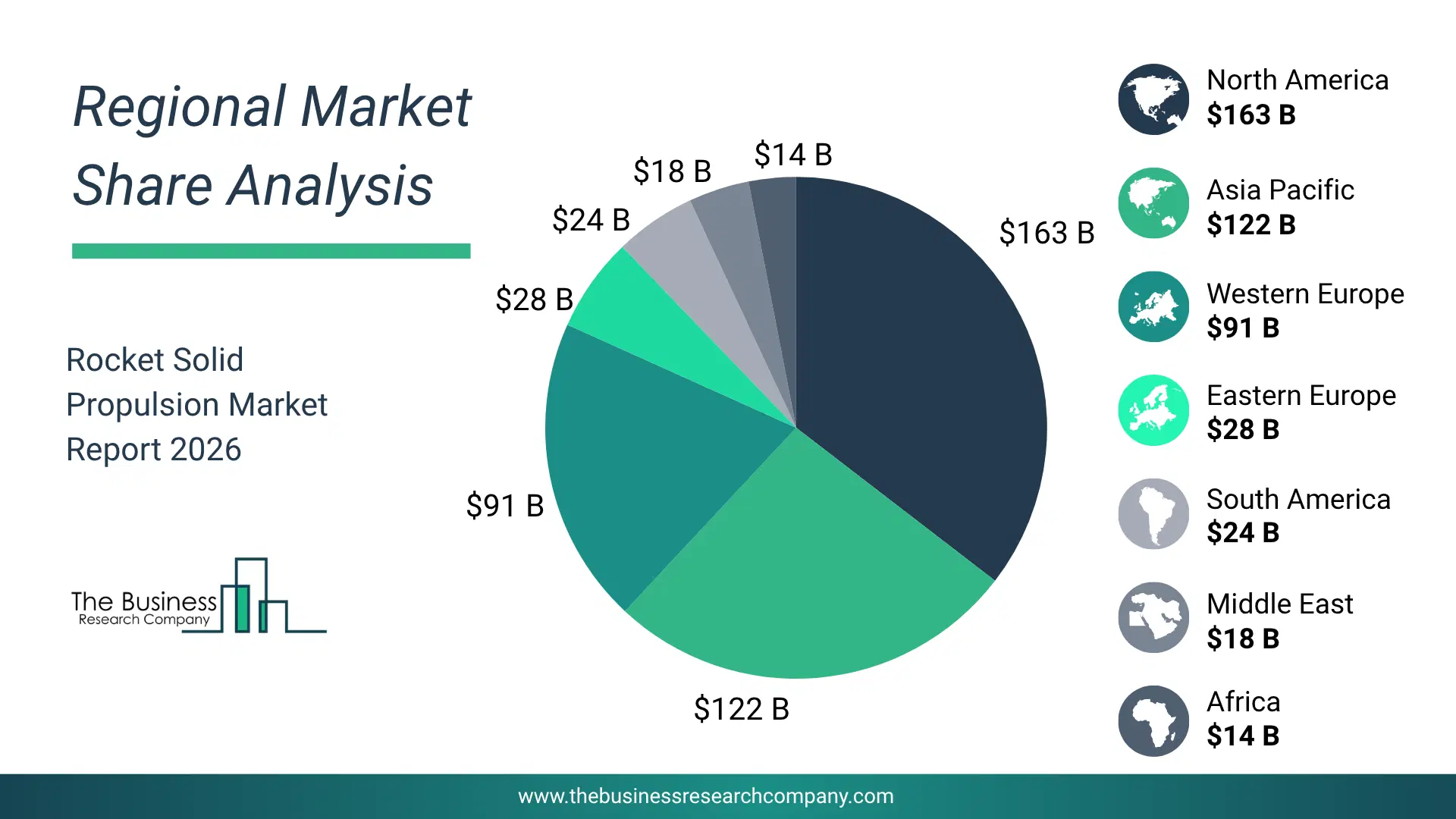
Regional Insights
North America was the largest region in the rocket solid propulsion market in 2025. Asia-Pacific is expected to be the fastest-growing region in the forecast period. The regions covered in this market report are Asia-Pacific, South East Asia, Western Europe, Eastern Europe, North America, South America, Middle East, Africa. The countries covered in this market report are Australia, Brazil, China, France, Germany, India, Indonesia, Japan, Taiwan, Russia, South Korea, UK, USA, Canada, Italy, SpainWhat Defines the Rocket Solid Propulsion Market?
The rocket solid propulsion market consists of sales of solid propellants, propulsion motors, casings and nozzles, ignition systems, and control systems. Values in this market are ‘factory gate’ values, that is the value of goods sold by the manufacturers or creators of the goods, whether to other entities (including downstream manufacturers, wholesalers, distributors and retailers) or directly to end customers. The value of goods in this market includes related services sold by the creators of the goods.How is Market Value Defined and Measured?
The market value is defined as the revenues that enterprises gain from the sale of goods and/or services within the specified market and geography through sales, grants, or donations in terms of the currency (in USD unless otherwise specified). The revenues for a specified geography are consumption values that are revenues generated by organizations in the specified geography within the market, irrespective of where they are produced. It does not include revenues from resales along the supply chain, either further along the supply chain or as part of other products.
This chart presents market attractiveness based on a quantitative evaluation of growth, competition, strategic alignment, and risk, offering a clear view of opportunity areas for decision-making. This chart is for illustrative purposes; the full report contains the complete analysis.

This chart highlights the Total Addressable Market (TAM) by estimating the maximum revenue opportunity using an assumption-driven approach, supporting strategic planning and opportunity sizing across markets. The chart is illustrative; the full report provides a more comprehensive analysis.
What Key Data and Analysis Are Included in the Rocket Solid Propulsion Market Report 2026?
The rocket solid propulsion market research report is one of a series of new reports from The Business Research Company that provides market statistics, including industry global market size, regional shares, competitors with the market share, detailed market segments, market trends and opportunities, and any further data you may need to thrive in the rocket solid propulsion industry. The market research report delivers a complete perspective of everything you need, with an in-depth analysis of the current and future state of the industry.Rocket Solid Propulsion Market Report Forecast Analysis
| Report Attribute | Details |
|---|---|
| Market Size Value In 2026 | $320.61 billion |
| Revenue Forecast In 2030 | $376.37 billion |
| Growth Rate | CAGR of 4.1% from 2026 to 2030 |
| Base Year For Estimation | 2025 |
| Actual Estimates/Historical Data | 2020-2025 |
| Forecast Period | 2026 - 2030 |
| Market Representation | Revenue in USD Billion and CAGR from 2026 to 2030 |
| Segments Covered | Type, Rocket Type, Propellant Type, Application, End User |
| Regional Scope | Asia-Pacific, Western Europe, Eastern Europe, North America, South America, Middle East, Africa |
| Country Scope | The countries covered in the report are Australia, Brazil, China, France, Germany, India, Indonesia, Japan, Taiwan, Russia, South Korea, UK, USA, Canada, Italy, Spain. |
| Key Companies Profiled | The Boeing Company, Northrop Grumman Corporation, Mitsubishi Heavy Industries Ltd., Safran S.A., Aerojet Rocketdyne Holdings Inc., L3Harris Technologies Inc., Rolls-Royce Holdings plc, Aerojet Rocketdyne Holdings Inc., Airbus SE, Sierra Nevada Corporation, Arianespace SA, Anduril Industries Inc., Firefly Aerospace Inc., Avio S.p.A., Gilmour Space Technologies Pty Ltd., EDePro – Engine Development and Production d.o.o., Skyroot Aerospace Private Limited, Firehawk Aerospace Inc., Virgin Galactic Holdings Inc., Thiokol Propulsion. |
| Customization Scope | Request for Customization |
| Pricing And Purchase Options | Explore Purchase Options |