
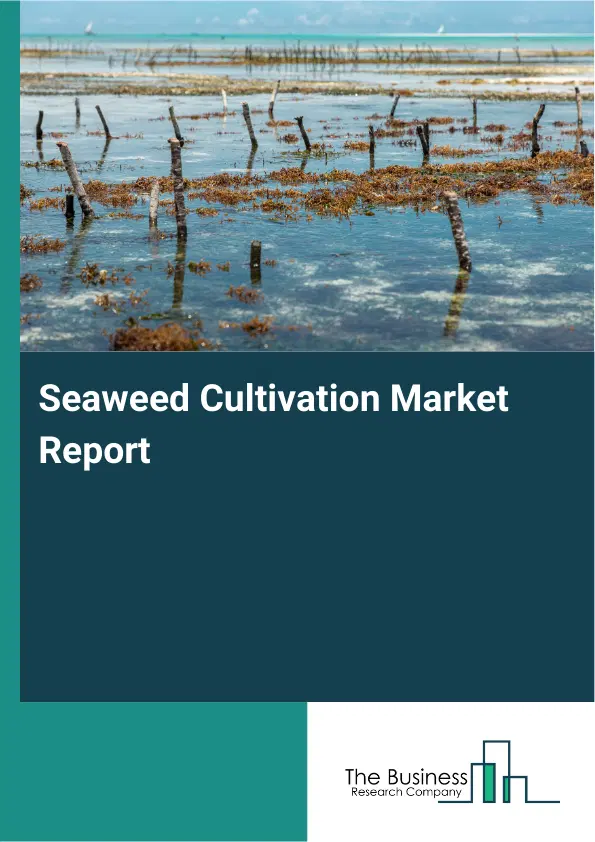
Seaweed Cultivation Market Report 2026
Global Outlook – By Type (Red Seaweeds, Brown Seaweeds, Green Seaweeds), By Form (Seaweed Flakes, Seaweed Powder, Liquid Seaweed, Seaweed Sheets), By Method Of Harvesting (Aquaculture, Wild Harvesting), By Application (Animal Feed Industry, Agriculture, Pharmaceuticals, Other Application) – Market Size, Trends, Strategies, and Forecast to 2030
Seaweed Cultivation Market Overview
• Seaweed Cultivation market size has reached to $25.23 billion in 2025 • Expected to grow to $44.56 billion in 2030 at a compound annual growth rate (CAGR) of 11.9% • Growth Driver: Sustainable Seaweed Farming Practices Ignite Growth In The Seaweed Cultivation Market • Market Trend: Oceanfarmr And Coast 4C Collaborate To Enhance Seaweed Farming Through Mobile Technologies • Asia-Pacific was the largest region in 2025.What Is Covered Under Seaweed Cultivation Market?
Seaweed cultivation refers to the farming of various species of marine algae for commercial use, including food, cosmetics, fertilizers, and biofuels. This sustainable practice takes place in coastal waters and offers ecological benefits such as carbon sequestration and habitat provision for marine life. The types of seaweed cultivation are red seaweeds, brown seaweeds, and green seaweeds. Red seaweed refers to the oldest and largest group of algae, and occurs mainly in protected shallow waters, often attaching themselves to stones, shells, and eelgrass by their holdfast. Seaweed is available in different forms such as seaweed flakes, seaweed powder, liquid seaweed, and seaweed sheets. The methods of harvesting include aquaculture and wild harvesting. The various applications include the animal feed industry, agriculture, pharmaceuticals, and other application.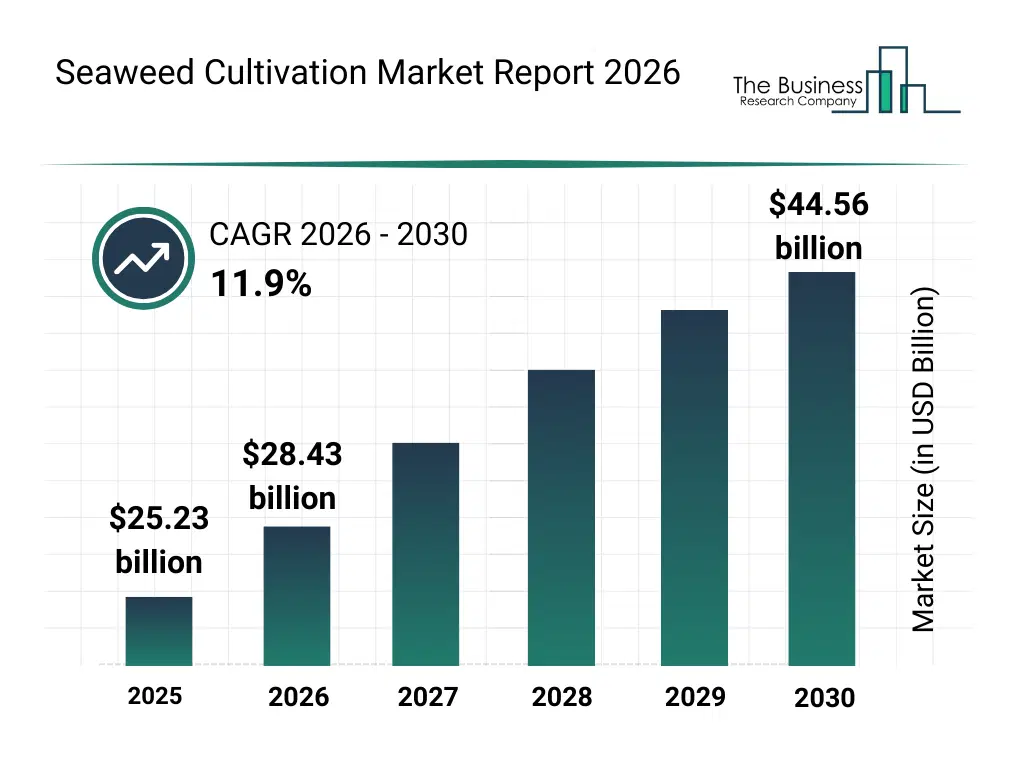
What Is The Seaweed Cultivation Market Size and Share 2026?
The seaweed cultivation market size has grown rapidly in recent years. It will grow from $25.23 billion in 2025 to $28.43 billion in 2026 at a compound annual growth rate (CAGR) of 12.7%. The growth in the historic period can be attributed to traditional coastal farming practices, increasing demand for natural hydrocolloids, growth in aquaculture-linked industries, rising awareness of seaweed nutritional value, limited land-based agricultural resources.What Is The Seaweed Cultivation Market Growth Forecast?
The seaweed cultivation market size is expected to see rapid growth in the next few years. It will grow to $44.56 billion in 2030 at a compound annual growth rate (CAGR) of 11.9%. The growth in the forecast period can be attributed to expanding use of seaweed in sustainable packaging, increasing adoption of seaweed in regenerative agriculture, rising demand for seaweed-derived biostimulants, development of seaweed-based climate solutions, growing interest in marine biomass innovation. Major trends in the forecast period include growing adoption of eco-friendly seaweed farming systems, increasing demand for functional food ingredients from seaweeds, rising interest in seaweed-based biofertilizers and soil enhancers, expansion of seaweed applications in natural cosmetics, growth of seaweed cultivation for biofuel production.
Global Seaweed Cultivation Market Segmentation
1) By Type: Red Seaweeds, Brown Seaweeds, Green Seaweeds 2) By Form: Seaweed Flakes, Seaweed Powder, Liquid Seaweed, Seaweed Sheets 3) By Method Of Harvesting: Aquaculture, Wild Harvesting 4) By Application: Animal Feed Industry, Agriculture, Pharmaceuticals, Other Application Subsegments: 1) By Red Seaweeds: Gracilaria, Porphyra, Chondrus 2) By Brown Seaweeds: Laminaria, Ascophyllum, Sargassum 3) By Green Seaweeds: Chaetomorpha, Ulva (Sea Lettuce), CladophoraWhat Is Driver Of The Seaweed Cultivation Market?
The rise in seaweed farming practices is expected to propel the growth of the seaweed cultivation market going forward. Seaweed farming refers to a cost-effective method of harvesting that, when paired with ease of handling and technical developments, is encouraging individuals to think about it as a career option worldwide. Seaweed farming practices are rising primarily because seaweed cultivation offers significant economic benefits by providing a sustainable and low-cost livelihood opportunity for coastal communities without requiring land, freshwater, or fertilizers, thus supporting economic development in vulnerable regions. Seaweed cultivation helps seaweed farming practices by raising the standard of living for coastal residents and encouraging the use of marine and coastal resources in their daily lives. For instance, in June 2024, according to the Food and Agriculture Organization (FAO), an Italy-based agency of the United Nations, global fisheries and aquaculture production rose to approximately 193 million tonnes in 2024, driven by growth in both aquaculture and capture fisheries. Aquaculture remains the primary driver of this increase and is projected to account for 56% of total global production by 2034, up from 52% currently. Therefore, the rise in seaweed farming practices is driving the growth of the seaweed cultivation industry.Key Players In The Global Seaweed Cultivation Market
Major companies operating in the seaweed cultivation market are Acadian Seaplants Limited, Cargill Incorporated, E. I. du Pont de Nemours and Company, Irish Seaweeds, Beijing Leili Marine Bioindustry Inc., Roullier Group, Seasol International Pty Ltd, CP Kelco US Inc., Gelymar SA, Qingdao Gather Great Ocean Algae Industry Group Co. Ltd., Ocean Harvest Technology Limited, Mara Seaweed, Algaia S. A., Compo Expert GmbH, CEAMSA, Atseanova, Ocean Rainforest, Seaweed Energy Solutions AS, Blue Ocean Mariculture, Ocean Approved LLC, Maine Fresh Sea Farms, Atlantic Sea Farms, Cascadia Seaweed, GreenWave, Oceanium, Sea6 Energy, Sea Forest, The Cornish Seaweed Company, The Scottish Seaweed Company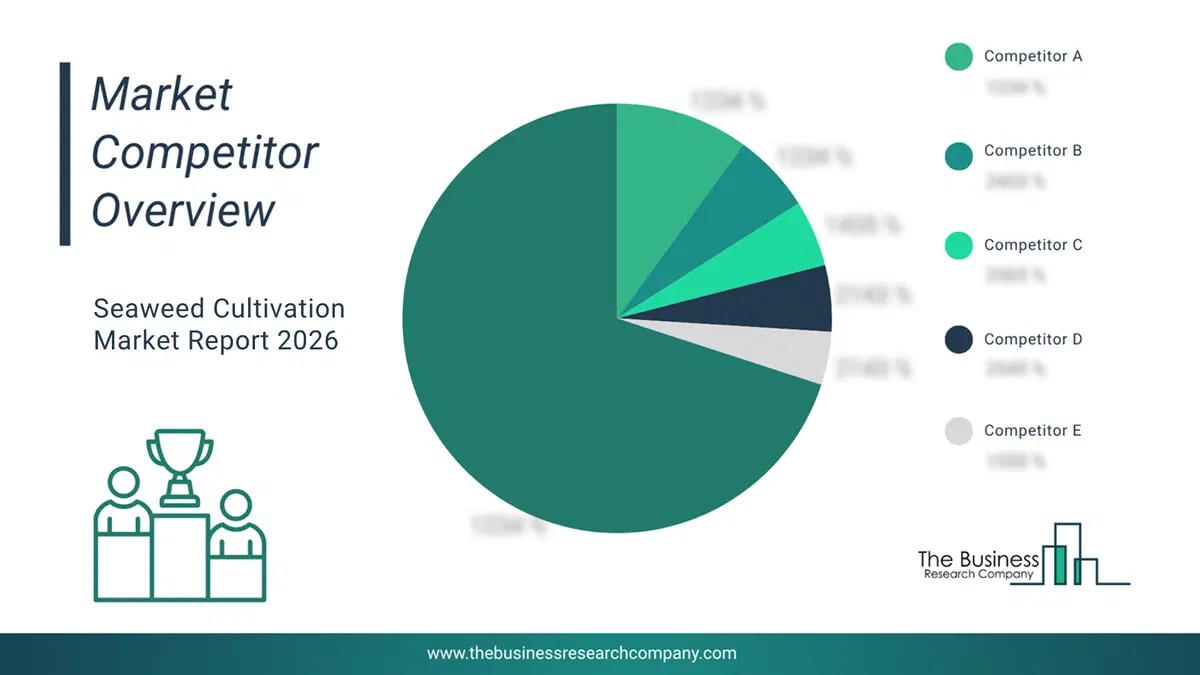
This chart is for illustrative purposes; the full report includes a detailed competitor analysis and comprehensive overview of the top 10 companies in the market.
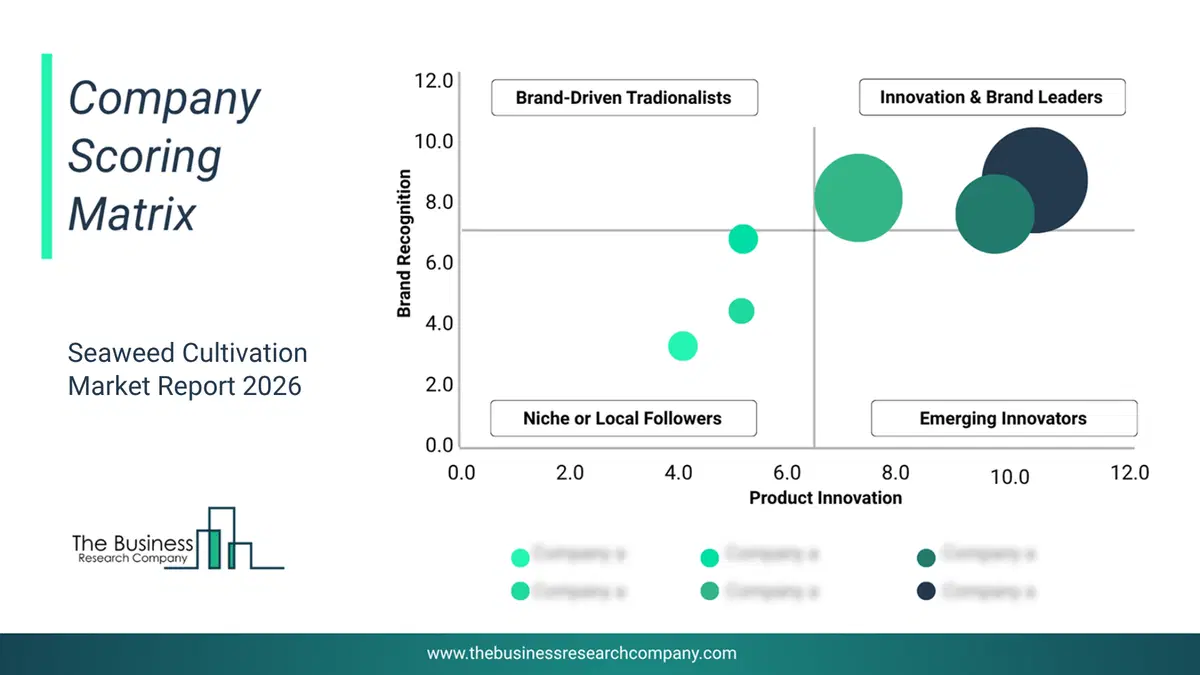
This chart maps companies by product innovation and brand strength, with bubble size indicating relative revenue, helping identify market leaders, challengers, and niche players. This is an illustrative chart; the full report provides a complete and accurate competitive analysis.
Global Seaweed Cultivation Market Trends and Insights
Major companies operating in the seaweed cultivation industry are adopting a strategic partnerships approach to enhance their market presence and continue their growth. Strategic partnerships refer to a process in which companies leverage each other's strengths and resources to achieve mutual benefits and success. For instance, in May 2023, Oceanfarmr, an Australia-based provider of ocean farm operations management solutions, collaborated with Coast 4C, an Australia-based provider of technical assistance to increase seaweed production, to focus on creating mobile technologies that will expedite advancements in farm operations performance, financial aspects, and the monetization of ESG (Environmental, Social, and Governance) for seaweed farmers. In the initial stage of this collaboration, the emphasis will be on capturing and validating the condition of seaweed, employing scoring methods founded on photographs and assessments by managers. Additionally, the company will undertake the scoping, development, testing, and maintenance of customization and configuration, thereby facilitating the use of sensor data for quantity and quality analysis.What Are Latest Mergers And Acquisitions In The Seaweed Cultivation Market? The JRS Group Acquired Algaia S.A.
In March 2023, JRS Group, a Germany-based provider of plant-based functional ingredients and hydrocolloids, acquired Algaia S.A. for an undisclosed amount. With this acquisition, JRS Group sought to accelerate its entry and scale in the sustainable seaweed-based ingredient segment, strengthening its alginate and hydrocolloid business through Algaia’s proven biorefinery and fresh seaweed sourcing capabilities. Algaia S.A. is a France-based producer of sustainably harvested seaweed extracts and hydrocolloids for the food, feed, cosmetics, medical, and agri-industrial sectors.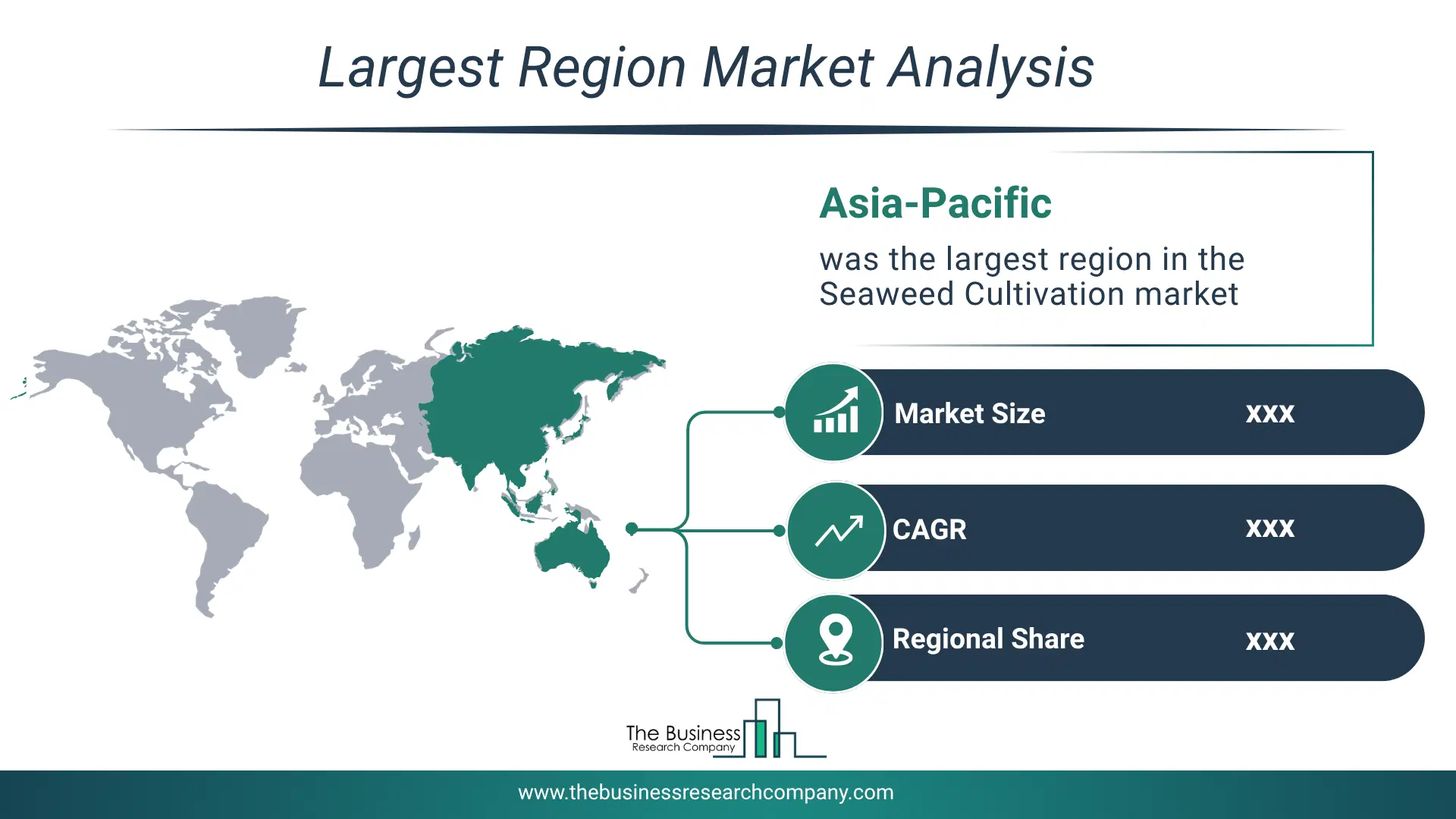
Regional Outlook
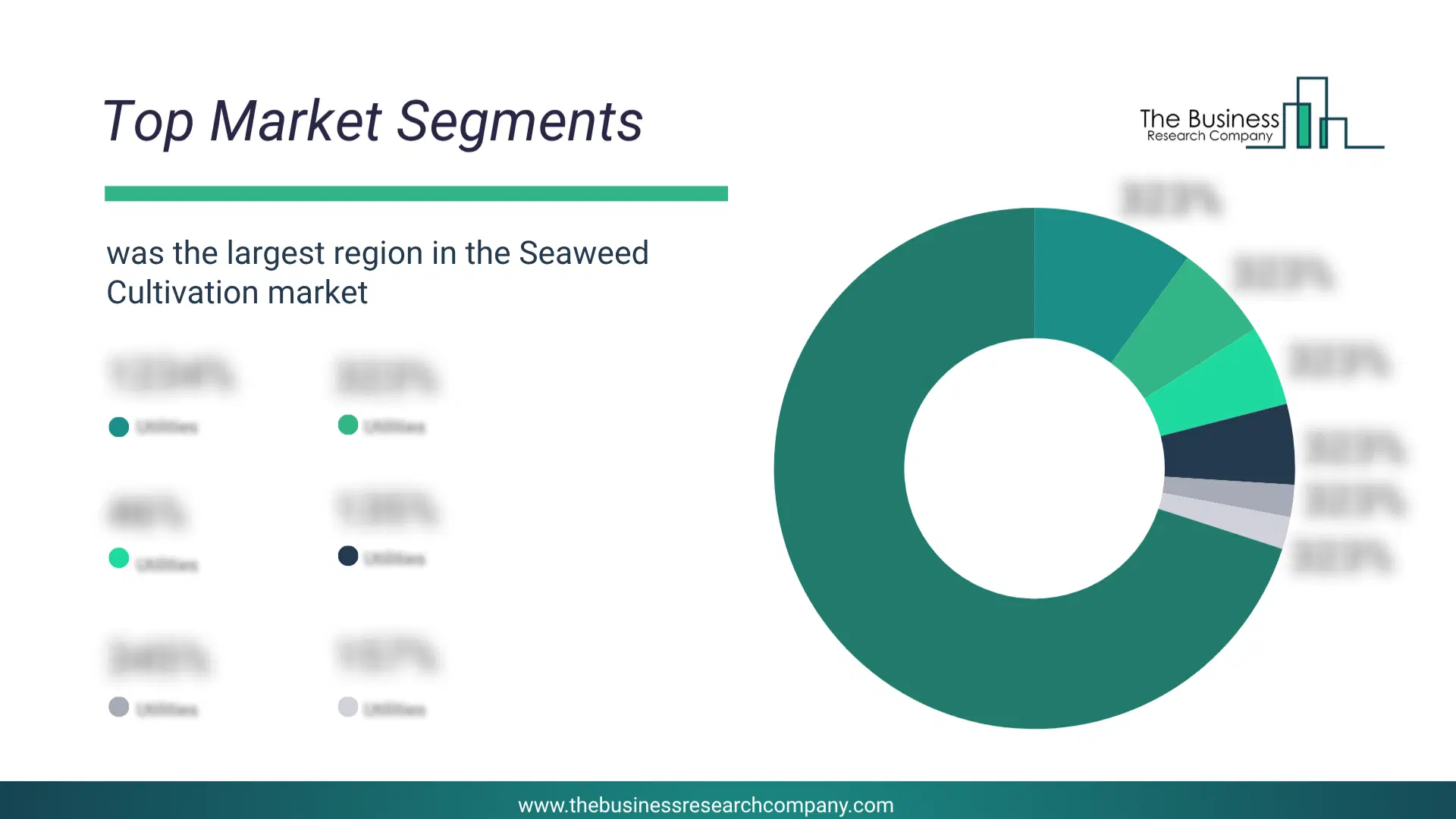
Asia-Pacific was the largest region in the seaweed cultivation market in 2025. The regions covered in this market report are Asia-Pacific, South East Asia, Western Europe, Eastern Europe, North America, South America, Middle East, Africa. The countries covered in this market report are Australia, Brazil, China, France, Germany, India, Indonesia, Japan, Taiwan, Russia, South Korea, UK, USA, Canada, Italy, SpainWhat Defines the Seaweed Cultivation Market?
The seaweed cultivation market revenues earned by entities by the floating bamboo method, the mangrove stakes and net method and tubular net method. The market value includes the value of related goods sold by the service provider or included within the service offering. Only goods and services traded between entities or sold to end consumers are included.How is Market Value Defined and Measured?
The market value is defined as the revenues that enterprises gain from the sale of goods and/or services within the specified market and geography through sales, grants, or donations in terms of the currency (in USD unless otherwise specified). The revenues for a specified geography are consumption values that are revenues generated by organizations in the specified geography within the market, irrespective of where they are produced. It does not include revenues from resales along the supply chain, either further along the supply chain or as part of other products.
This chart presents market attractiveness based on a quantitative evaluation of growth, competition, strategic alignment, and risk, offering a clear view of opportunity areas for decision-making. This chart is for illustrative purposes; the full report contains the complete analysis.

This chart highlights the Total Addressable Market (TAM) by estimating the maximum revenue opportunity using an assumption-driven approach, supporting strategic planning and opportunity sizing across markets. The chart is illustrative; the full report provides a more comprehensive analysis.
What Key Data and Analysis Are Included in the Seaweed Cultivation Market Report 2026?
The seaweed cultivation market research report is one of a series of new reports from The Business Research Company that provides market statistics, including industry global market size, regional shares, competitors with the market share, detailed market segments, market trends and opportunities, and any further data you may need to thrive in the seaweed cultivation industry. The market research report delivers a complete perspective of everything you need, with an in-depth analysis of the current and future state of the industry.Seaweed Cultivation Market Report Forecast Analysis
| Report Attribute | Details |
|---|---|
| Market Size Value In 2026 | $28.43 billion |
| Revenue Forecast In 2030 | $44.56 billion |
| Growth Rate | CAGR of 11.9% from 2026 to 2030 |
| Base Year For Estimation | 2025 |
| Actual Estimates/Historical Data | 2020-2025 |
| Forecast Period | 2026 - 2030 |
| Market Representation | Revenue in USD Billion and CAGR from 2026 to 2030 |
| Segments Covered | Type, Form, Method Of Harvesting, Application |
| Regional Scope | Asia-Pacific, Western Europe, Eastern Europe, North America, South America, Middle East, Africa |
| Country Scope | The countries covered in the report are Australia, Brazil, China, France, Germany, India, Indonesia, Japan, Taiwan, Russia, South Korea, UK, USA, Canada, Italy, Spain |
| Key Companies Profiled | Acadian Seaplants Limited, Cargill Incorporated, E. I. du Pont de Nemours and Company, Irish Seaweeds, Beijing Leili Marine Bioindustry Inc., Roullier Group, Seasol International Pty Ltd, CP Kelco US Inc., Gelymar SA, Qingdao Gather Great Ocean Algae Industry Group Co. Ltd., Ocean Harvest Technology Limited, Mara Seaweed, Algaia S. A., Compo Expert GmbH, CEAMSA, Atseanova, Ocean Rainforest, Seaweed Energy Solutions AS, Blue Ocean Mariculture, Ocean Approved LLC, Maine Fresh Sea Farms, Atlantic Sea Farms, Cascadia Seaweed, GreenWave, Oceanium, Sea6 Energy, Sea Forest, The Cornish Seaweed Company, The Scottish Seaweed Company |
| Customization Scope | Request for Customization |
| Pricing And Purchase Options | Explore Purchase Options |