
Seed Treatment Fungicides Market Report 2026
Global Outlook – By Type (Synthetic Chemical, Biological), By Form (Liquid, Powder), By Crop Type (Cereals And Grains, Oilseeds And Pulses, Other Crop Types), By Application (Coating, Dressing, Pelleting) – Market Size, Trends, Strategies, and Forecast to 2030
Seed Treatment Fungicides Market Overview
• Seed Treatment Fungicides market size has reached to $2.21 billion in 2025 • Expected to grow to $3.46 billion in 2030 at a compound annual growth rate (CAGR) of 9.5% • Growth Driver: Rise In Organic Farming Drives The Growth Of The Seed Treatment Fungicide Market • Market Trend: Corteva, Inc. Launches Straxan Fungicide Seed Treatment In Canada • North America was the largest region in 2025.What Is Covered Under Seed Treatment Fungicides Market?
Seed treatment fungicides are chemicals that offer defense against seed-borne and soil-borne microorganisms that may disrupt the germination of seeds or infect the seedling shortly following germination. The main types of seed treatment fungicides are synthetic chemical and biological. Synthetic chemical types of seed treatment fungicides are used to control fungal diseases in crops. The structures of synthetic chemical compounds may or may not be present in nature, but they are created by people through non-natural processes. Chemical fungicides and insecticides are administered to seeds to manage infections of seeds and saplings; insecticides are employed to combat insect pests. Some seed treatment solutions are available as fungicide or insecticide combos. The seed treatment fungicides are available in liquid and powder forms that are suitable for treating cereals and grains, oilseeds and pulses, and others. Seed treatment fungicides are used in applications such as coating, dressing, and pelleting.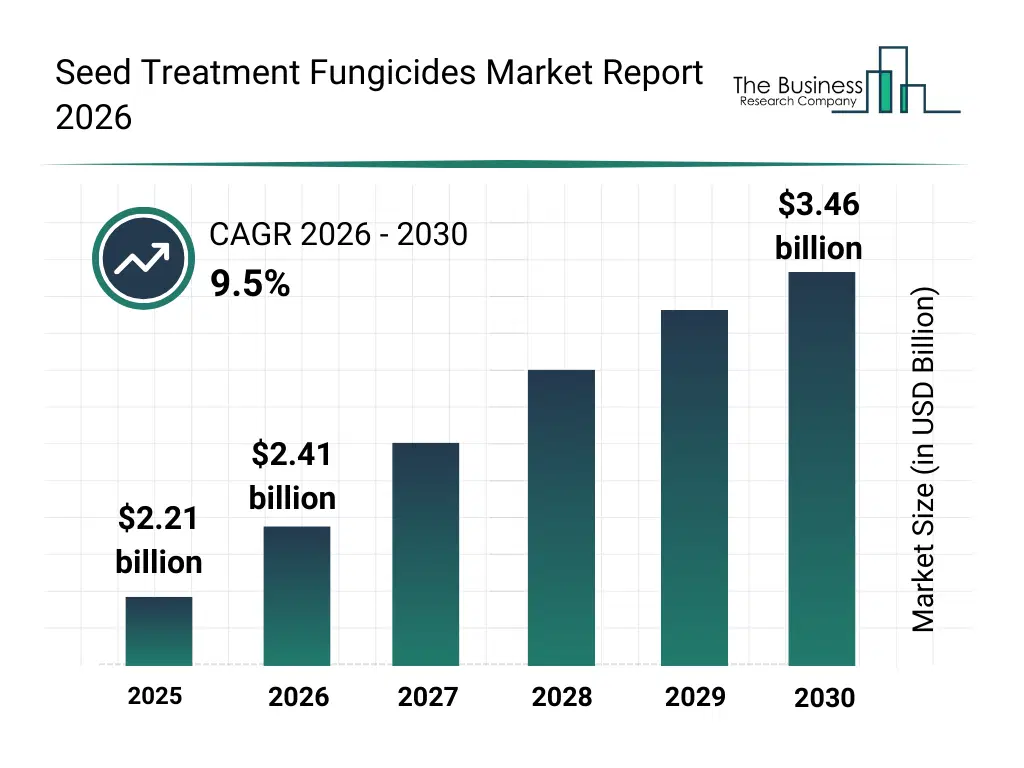
What Is The Seed Treatment Fungicides Market Size and Share 2026?
The seed treatment fungicides market size has grown strongly in recent years. It will grow from $2.21 billion in 2025 to $2.41 billion in 2026 at a compound annual growth rate (CAGR) of 9.2%. The growth in the historic period can be attributed to increasing incidence of seed-borne diseases, expansion of commercial seed production, rising adoption of treated seeds, availability of synthetic fungicide formulations, growth of cereal and grain cultivation.What Is The Seed Treatment Fungicides Market Growth Forecast?
The seed treatment fungicides market size is expected to see strong growth in the next few years. It will grow to $3.46 billion in 2030 at a compound annual growth rate (CAGR) of 9.5%. The growth in the forecast period can be attributed to increasing shift toward sustainable crop protection, rising demand for residue-free inputs, expansion of high-value seed markets, growing use of biological fungicides, increasing integration of seed enhancement technologies. Major trends in the forecast period include increasing adoption of biological seed treatments, rising demand for broad-spectrum disease protection, growing use of combination fungicide formulations, expansion of precision seed coating technologies, enhanced focus on early crop establishment.
Global Seed Treatment Fungicides Market Segmentation
1) By Type: Synthetic Chemical, Biological 2) By Form: Liquid, Powder 3) By Crop Type: Cereals And Grains, Oilseeds And Pulses, Other Crop Types 4) By Application: Coating, Dressing, Pelleting Subsegments: 1) By Synthetic Chemical: Triazoles, Strobilurins, Carboxamides 2) By Biological: Fungal Biocontrol Agents, Bacterial Biocontrol AgentsWhat Is The Driver Of The Seed Treatment Fungicides Market?
The rise in organic farming is expected to boost the growth of the seed treatment fungicide market. Organic farming refers to an agricultural approach that emphasizes sustainable and environmentally friendly practices to cultivate crops and raise livestock. Organic farming practices often emphasize integrated pest management (IPM), which includes preventive measures like seed treatment. This can drive the demand for eco-friendly seed treatment fungicides. For instance, in May 2023, according to the Organic Trade Association, a US-based organic industry, in 2022 total organic sales, including organic non-food products, reached a milestone of $60 billion. By 2023, this figure had surged to a record $67.6 billion, indicating a significant increase in the organic sector's market value. This growth was fueled by a 0.8% increase in the area of entirely organic land. Therefore, the rise in organic farming is driving the growth of the seed treatment fungicide industry.Key Players In The Global Seed Treatment Fungicides Market
Major companies operating in the seed treatment fungicides market are Bayer AG, Syngenta AG, Corteva Agriscience, BASF SE, UPL Limited, FMC Corporation, Nufarm Limited, ADAMA Ltd., Sumitomo Chemical Company, Limited, PI Industries Limited, Rallis India Limited, Isagro S.p.A., Valent BioSciences LLC, Gowan Company, LLC, Albaugh LLC, Nissan Chemical Corporation, Arysta LifeScience Corporation, Certis Biologicals, Marrone Bio Innovations, Inc., Koppert Biological Systems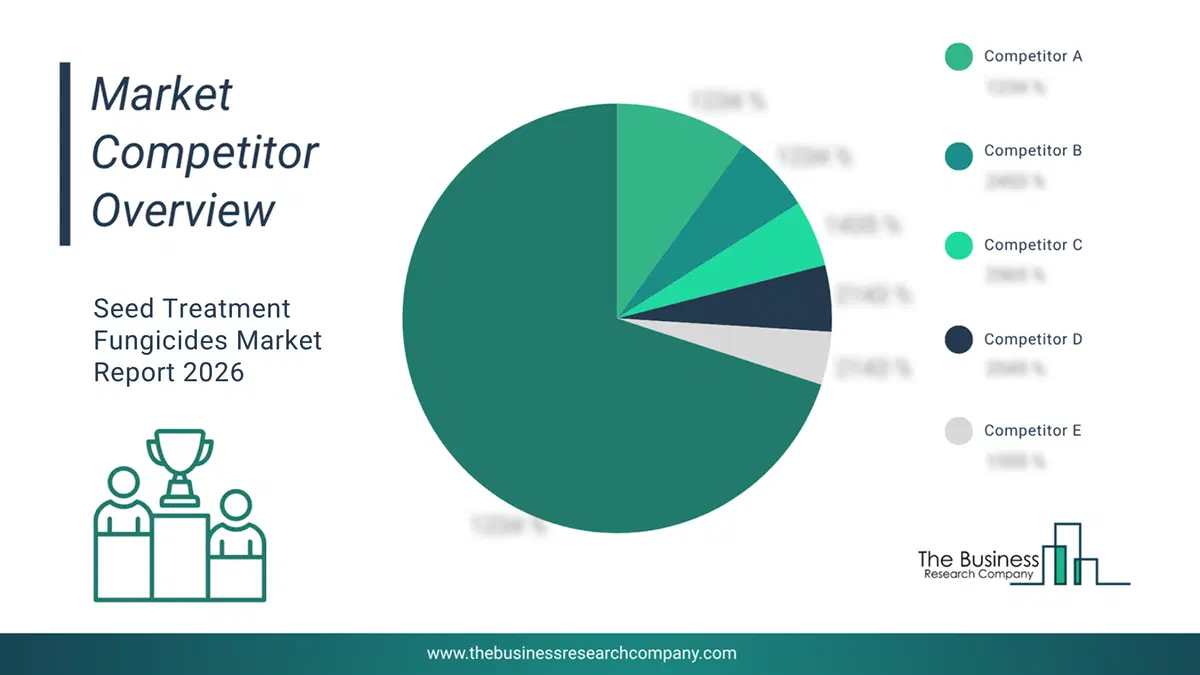
This chart is for illustrative purposes; the full report includes a detailed competitor analysis and comprehensive overview of the top 10 companies in the market.
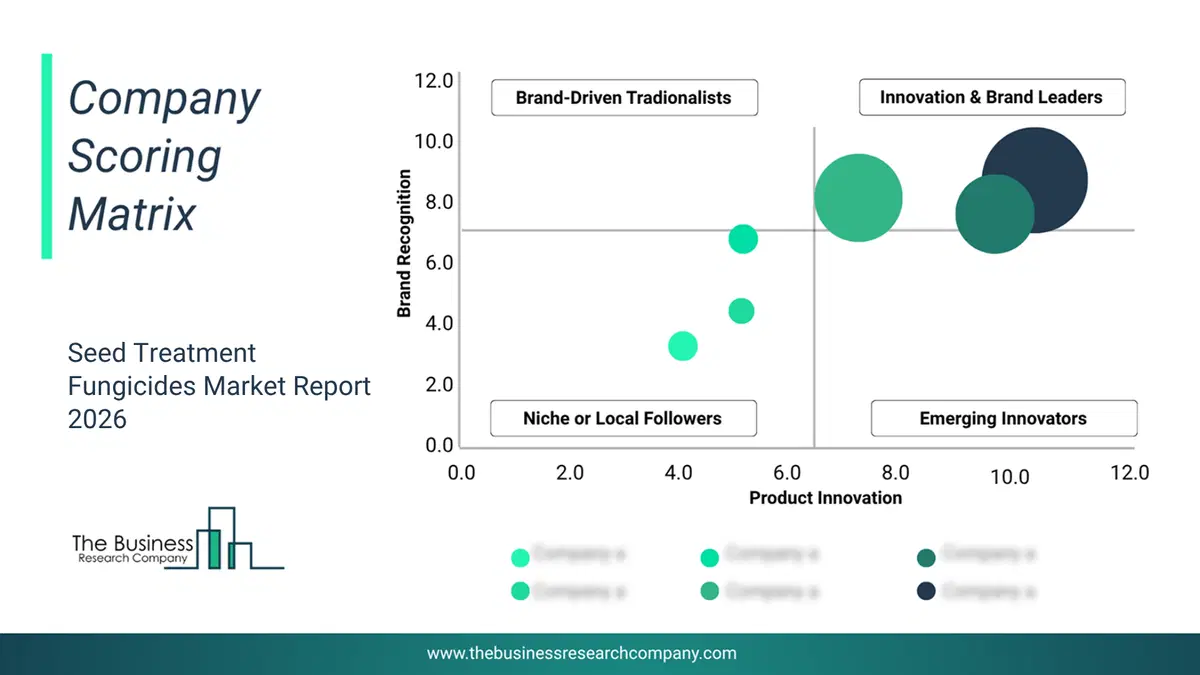
This chart maps companies by product innovation and brand strength, with bubble size indicating relative revenue, helping identify market leaders, challengers, and niche players. This is an illustrative chart; the full report provides a complete and accurate competitive analysis.
Global Seed Treatment Fungicides Market Trends and Insights
Major companies operating in the seed treatment fungicide market are focusing on product development and launches such as fungicide seed treatment to sustain their position in the market. Fungicide seed treatment is a technique used to protect seeds from fungal diseases during germination and early seedling growth. For instance, in October 2023, Corteva, Inc., a US-based agricultural chemical and seed company, announced the commercial launch of Straxan fungicide seed treatment in Canada. This new offering from Corteva Agriscience’s cereal protection portfolio provides farmers with an easy-to-use formulation designed to combat prevalent seed and soil-borne cereal diseases. Straxan fungicide seed treatment offers advanced protection against early-season diseases such as Fusarium species, Rhizoctonia, true loose smut, and more. The formulation, featuring proven active ingredients, aims to maximize crop stand establishment and yield potential.What Are Latest Mergers And Acquisitions In The Seed Treatment Fungicides Market?
In April 2024, UPL Corp., an India-based agricultural solutions company, acquired Corteva Agriscience for an undisclosed amount. With this acquisition, UPL Corp enhances its portfolio and leadership in the multisite fungicide market and improves crop protection solutions for farmers. Corteva Agriscience is a US-based agricultural chemical and seed company, that provides seed treatment fungicides.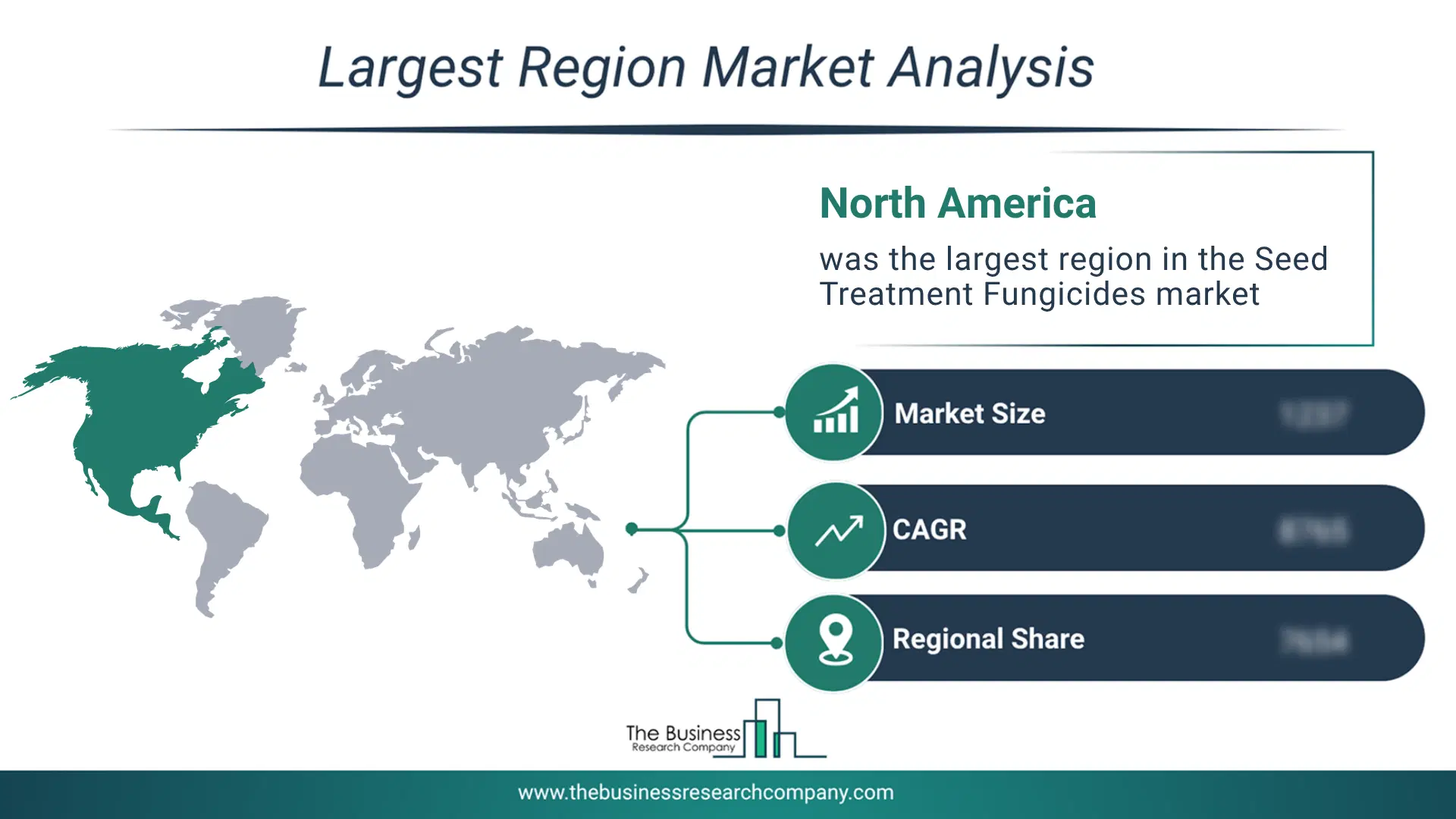
Regional Insights
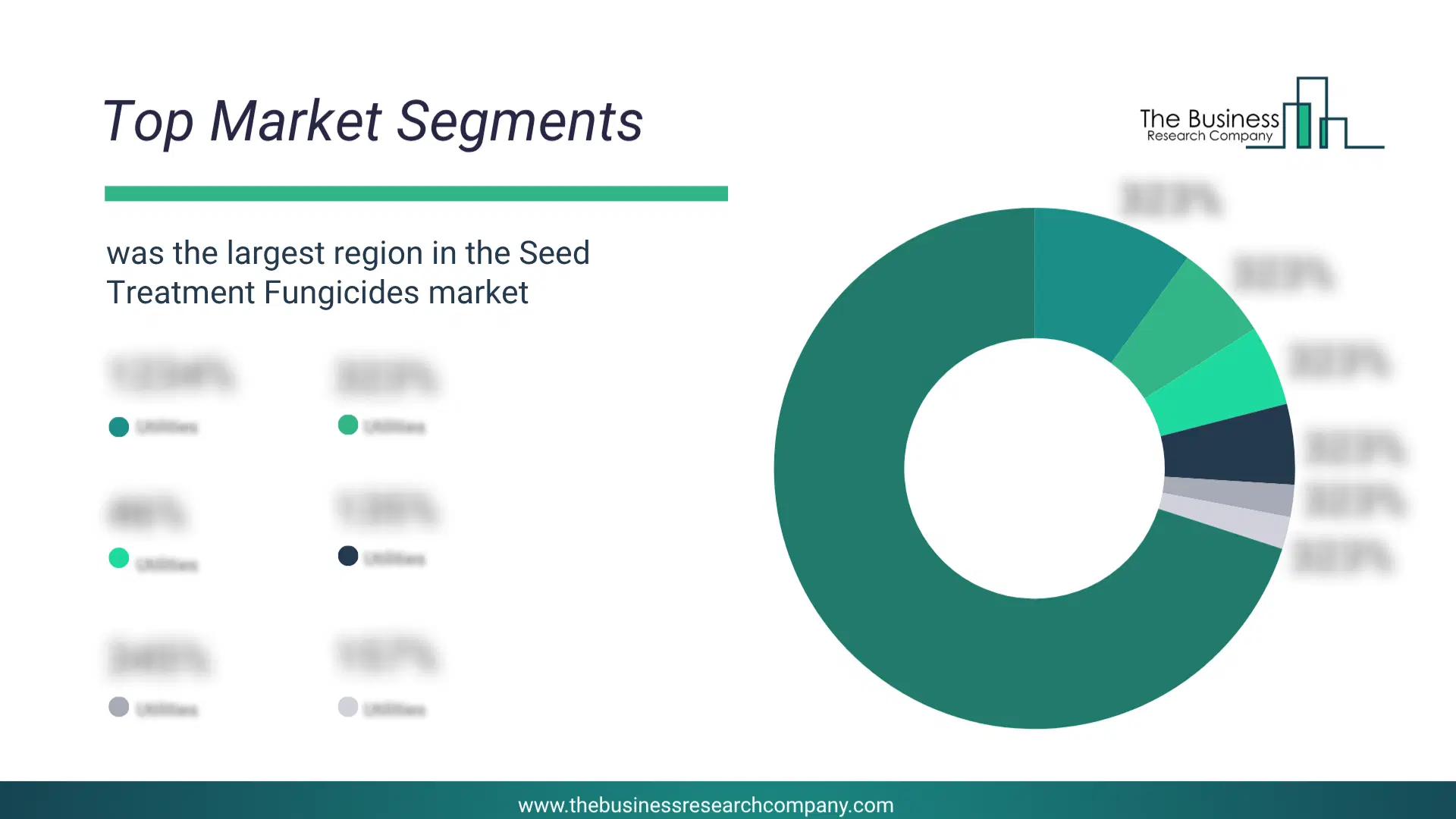
North America was the largest region in the seed treatment fungicides market in 2025. The regions covered in this market report are Asia-Pacific, South East Asia, Western Europe, Eastern Europe, North America, South America, Middle East, Africa The countries covered in this market report are Australia, Brazil, China, France, Germany, India, Indonesia, Japan, Taiwan, Russia, South Korea, UK, USA, Canada, Italy, SpainWhat Defines the Seed Treatment Fungicides Market?
The seed treatment fungicides market consists of sales of methyl benzimidazole carbamate (MBC), phenylpyrroles, phenyl amides, strobilurin, triazoles, and benzimidazoles. Values in this market are ‘factory gate’ values, that is the value of goods sold by the manufacturers or creators of the goods, whether to other entities (including downstream manufacturers, wholesalers, distributors and retailers) or directly to end customers. The value of goods in this market includes related services sold by the creators of the goods.How is Market Value Defined and Measured?
The market value is defined as the revenues that enterprises gain from the sale of goods and/or services within the specified market and geography through sales, grants, or donations in terms of the currency (in USD unless otherwise specified). The revenues for a specified geography are consumption values that are revenues generated by organizations in the specified geography within the market, irrespective of where they are produced. It does not include revenues from resales along the supply chain, either further along the supply chain or as part of other products.
This chart presents market attractiveness based on a quantitative evaluation of growth, competition, strategic alignment, and risk, offering a clear view of opportunity areas for decision-making. This chart is for illustrative purposes; the full report contains the complete analysis.

This chart highlights the Total Addressable Market (TAM) by estimating the maximum revenue opportunity using an assumption-driven approach, supporting strategic planning and opportunity sizing across markets. The chart is illustrative; the full report provides a more comprehensive analysis.
What Key Data and Analysis Are Included in the Seed Treatment Fungicides Market Report 2026?
The seed treatment fungicides market research report is one of a series of new reports from The Business Research Company that provides market statistics, including industry global market size, regional shares, competitors with the market share, detailed market segments, market trends and opportunities, and any further data you may need to thrive in the seed treatment fungicides industry. The market research report delivers a complete perspective of everything you need, with an in-depth analysis of the current and future state of the industry.Seed Treatment Fungicides Market Report Forecast Analysis
| Report Attribute | Details |
|---|---|
| Market Size Value In 2026 | $2.41 billion |
| Revenue Forecast In 2030 | $3.46 billion |
| Growth Rate | CAGR of 9.2% from 2026 to 2030 |
| Base Year For Estimation | 2025 |
| Actual Estimates/Historical Data | 2020-2025 |
| Forecast Period | 2026 - 2030 |
| Market Representation | Revenue in USD Billion and CAGR from 2026 to 2030 |
| Segments Covered | Type, Form, Crop Type, Application |
| Regional Scope | Asia-Pacific, Western Europe, Eastern Europe, North America, South America, Middle East, Africa |
| Country Scope | The countries covered in this market report are Australia, Brazil, China, France, Germany, India, Indonesia, Japan, Taiwan, Russia, South Korea, UK, USA, Canada, Italy, Spain |
| Key Companies Profiled | Bayer AG, Syngenta AG, Corteva Agriscience, BASF SE, UPL Limited, FMC Corporation, Nufarm Limited, ADAMA Ltd., Sumitomo Chemical Company, Limited, PI Industries Limited, Rallis India Limited, Isagro S.p.A., Valent BioSciences LLC, Gowan Company, LLC, Albaugh LLC, Nissan Chemical Corporation, Arysta LifeScience Corporation, Certis Biologicals, Marrone Bio Innovations, Inc., Koppert Biological Systems |
| Customization Scope | Request for Customization |
| Pricing And Purchase Options | Explore Purchase Options |