

Self-Injections Market Report 2026
Global Outlook – By Type (Devices, Formulations), By Dosage (Single Dose, Multi Dose), By Application (Autoimmune Diseases, Hormonal Disorders, Orphan Diseases, Pain Management, Other Applications), By Distribution Channel (Chemist, Online Pharmacies) – Market Size, Trends, Strategies, and Forecast to 2030
Self-Injections Market Overview
• Self-Injections market size has reached to $10.22 billion in 2025 • Expected to grow to $15.05 billion in 2030 at a compound annual growth rate (CAGR) of 8.1% • Growth Driver: Surging Diabetic Cases Fueling Growth In The Self-Injections Market • Market Trend: Product Innovations Transforming The Self Injections Market • North America was the largest region in 2025 and Asia-Pacific is the fastest growing region.What Is Covered Under Self-Injections Market?
Self-injection refers to a device used for the act of injecting oneself. Self-injections enable patients and users to administer medicines and drugs that need to be injected into them by themselves without the need for a physician or a medical professional. The main type of self-injections are devices and formulations. The devices are used to enables patients and users to give medications and pharmaceuticals that require injection into them without the help of a doctor or other medical professional. Self-injection devices refer to devices that can be used by patients to self-administer medication that needs to be injected. The various route of administration includes skin, circulatory or musculoskeletal, organs, central nervous system. The various types of dosage include single dose and multi dose. The various types of applications include autoimmune diseases, hormonal disorders, oncology, orphan diseases, pain management, respiratory therapy, and other applications and distribution channel includes hospitals pharmacies, clinics, chemist, and online pharmacies.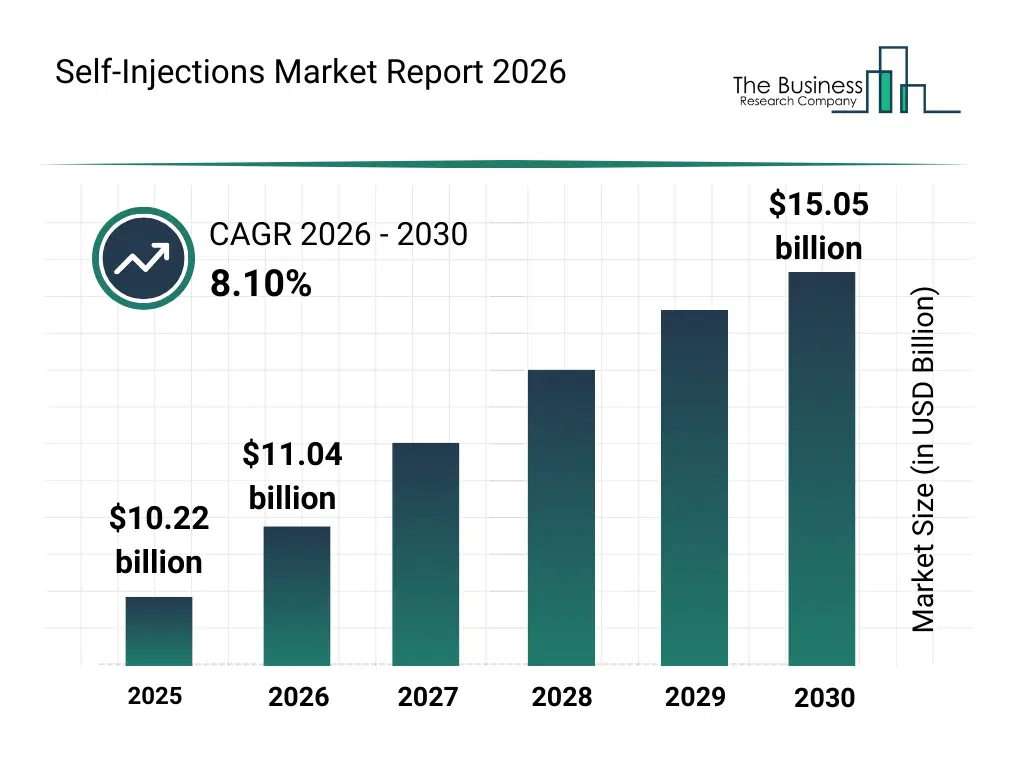
What Is The Self-Injections Market Size and Share 2026?
The self-injections market size has grown strongly in recent years. It will grow from $10.22 billion in 2025 to $11.04 billion in 2026 at a compound annual growth rate (CAGR) of 8.1%. The growth in the historic period can be attributed to growth in chronic disease prevalence, increasing availability of injectable biologics, rising preference for home-based treatment, expansion of specialty pharmaceuticals, improvements in injection device ergonomics.What Is The Self-Injections Market Growth Forecast?
The self-injections market size is expected to see strong growth in the next few years. It will grow to $15.05 billion in 2030 at a compound annual growth rate (CAGR) of 8.1%. The growth in the forecast period can be attributed to increasing demand for self-care therapies, rising adoption of digital health-enabled injectors, expansion of biologics pipelines, growing focus on adherence-enhancing drug delivery, increasing use of connected medical devices. Major trends in the forecast period include increasing adoption of auto-injector devices, rising demand for wearable injection systems, growing use of biologic self-administered therapies, expansion of patient-centric drug delivery designs, enhanced focus on safety and dose accuracy.
Global Self-Injections Market Segmentation
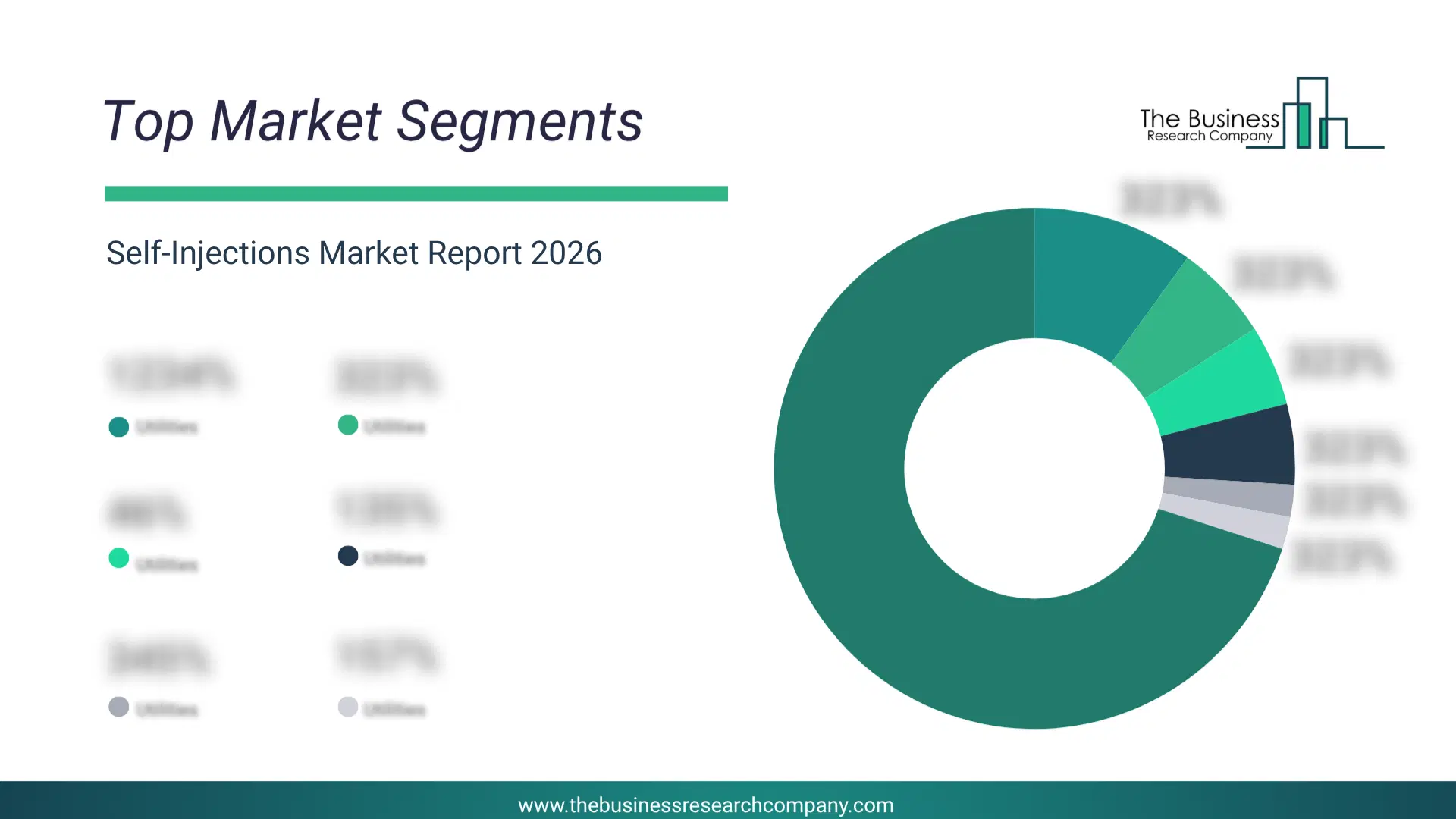
1) By Type: Devices, Formulations 2) By Dosage: Single Dose, Multi Dose 3) By Application: Autoimmune Diseases, Hormonal Disorders, Orphan Diseases, Pain Management, Other Applications 4) By Distribution Channel: Chemist, Online Pharmacies Subsegments: 1) By Devices: Pre-Filled Syringes, Auto-Injectors, Microneedle Devices, Wearable Injectors 2) By Formulations: Biologics, Small Molecules, Combination ProductsWhat Is The Driver Of The Self-Injections Market?
The growing number of diabetic patients is expected to propel the growth of the self-injections market going forward. Diabetes refers to a condition where the pancreas, a human organ that produces insulin, produce less than an adequate level of insulin which leads to the breakdown of blood sugars and causes serious health conditions like heart disease, vision loss, and kidney diseases. Self-injections can be used by diabetic patients for injecting insulin and other medications which help maintain optimum blood sugar levels and block any excess blood sugars at any given point of time without the help of a medical professional. For instance, in November 2025, according to Diabetes Care, a US-based international peer reviewed medical journal, an estimated 634.8 million adults which represents 12.0 percent of the global adult population were living with impaired glucose tolerance in 2024, with this number expected to increase to 846.5 million adults or 12.9 percent of the world’s adult population by 2050. Therefore, the growing number of diabetic patients is driving the growth of the self-injections industry.Key Players In The Global Self-Injections Market
Major companies operating in the self-injections market are AbbVie Inc., Antares Pharma Inc., Baxter International Inc., Bayer AG, Becton Dickinson and Company, Bristol-Myers Squibb Company, Credence MedSystems Inc., Dali Medical Devices Ltd., Eli Lilly and Company, Enable Injections Inc., Gerresheimer AG, Insulet Corporation, Merck & Co. Inc., Owen Mumford Limited, Pfizer Inc., PharmaJet Inc., Recipharm AB, Schott AG, SHL Group Limited, Terumo Corporation, West Pharmaceutical Services Inc., Wilhelm Haselmeier GmbH & Co. KG, Ypsomed Holding AG, APTAR PHARMA INDIA PVT LTD, Bespak Europe Ltd., Bioject Medical Technologies Inc., Catalent Inc., Crossject SA, Injex Pharma AG, Medeca Pharma AB, Medimop Medical Projects Ltd., Mylan N.V., Nemera Development S.A., Noble Medical Inc.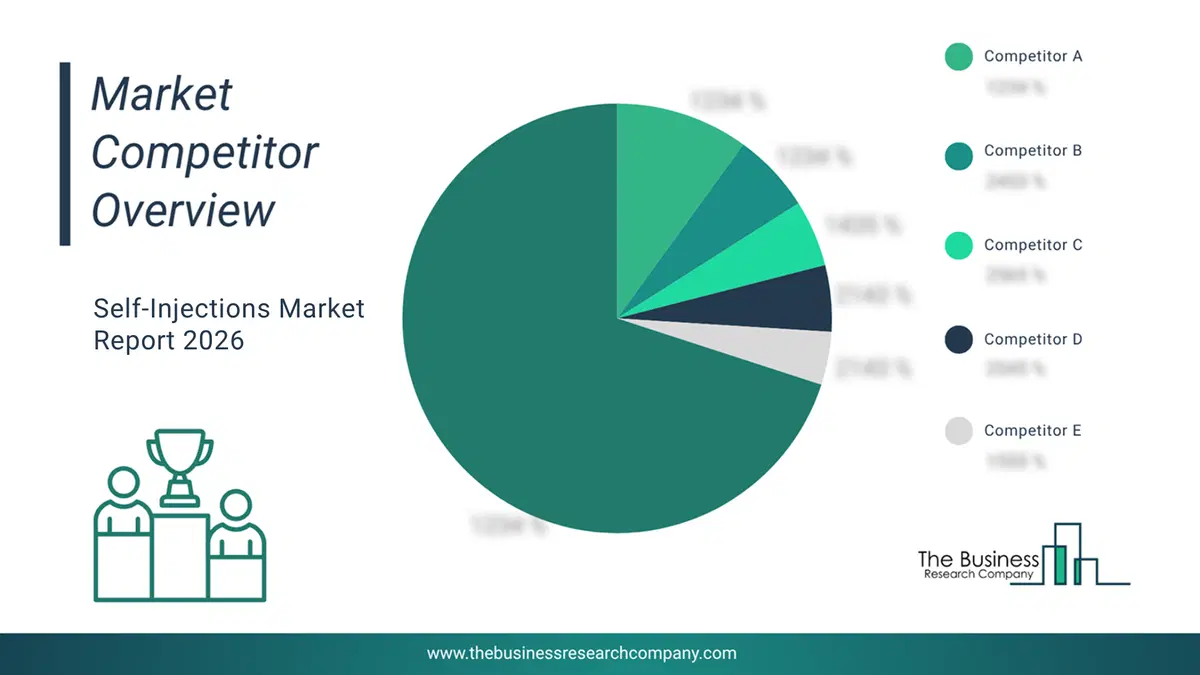
This chart is for illustrative purposes; the full report includes a detailed competitor analysis and comprehensive overview of the top 10 companies in the market.
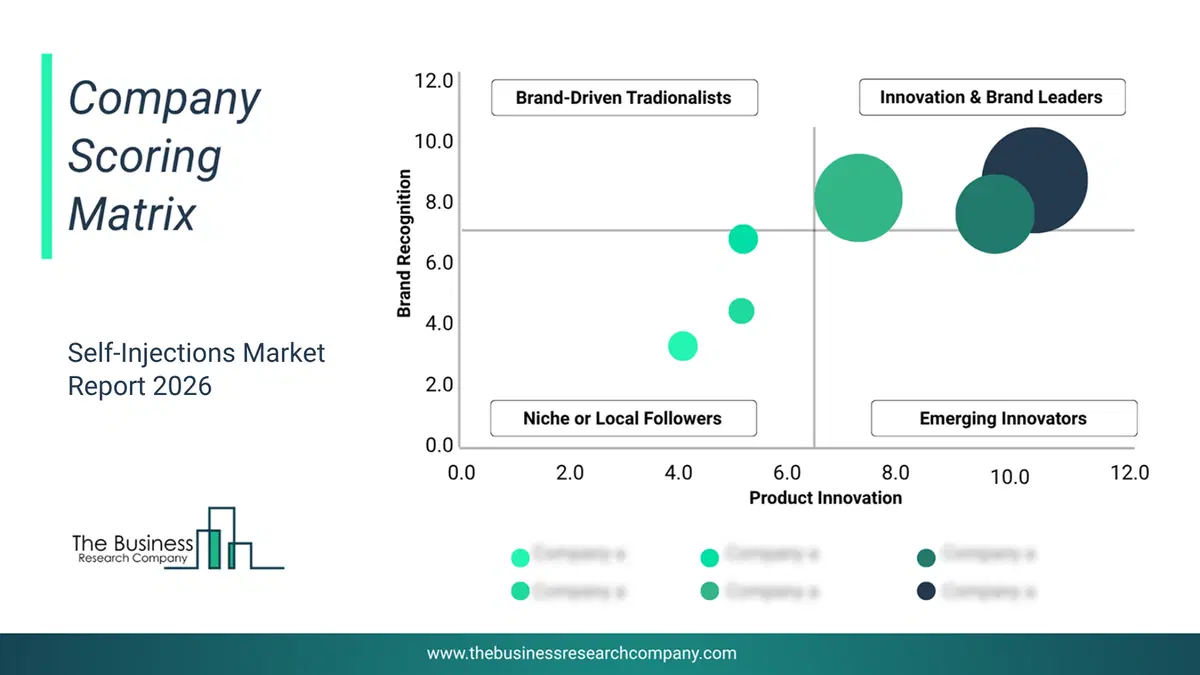
This chart maps companies by product innovation and brand strength, with bubble size indicating relative revenue, helping identify market leaders, challengers, and niche players. This is an illustrative chart; the full report provides a complete and accurate competitive analysis.
Global Self-Injections Market Trends and Insights
Major companies operating in the self-injections market are focusing on innovation in drug delivery, such as hands-free, hidden-needle subcutaneous delivery to simplify patient self-administration of large-volume biologics. Hands-free, hidden-needle subcutaneous delivery refers to a wearable injector that discreetly delivers medication without manual actuation while keeping the needle concealed for improved comfort and safety. For instance, in November 2023, Enable Injections Inc., a US-based drug-delivery technology company, received its first US Food and Drug Administration (FDA) approval for the enFuse large-volume wearable injector for use with EMPAVELI (pegcetacoplan). The compact, mechanical, body-worn system delivers up to 25 mL subcutaneously, enabling self-administration or in-clinic administration with features such as hands-free operation and reduced disruption to patients’ daily routines. The enFuse platform enhances convenience, supports home-based care, and improves the overall patient experience for large-volume therapy delivery.What Are Latest Mergers And Acquisitions In The Self-Injections Market?
In May 2024, Enable Injections, Inc., a US-based developer and manufacturer of the enFuse wearable drug-delivery platform, partnered with Roche Holding AG to apply the enFuse system to selected Roche molecules for subcutaneous delivery. Through this collaboration, Enable Injections aims to expand access to large-volume self-administration by enabling more patients to shift from intravenous to at-home subcutaneous treatment. Roche Holding AG is a Switzerland-based pharmaceutical company specializing in biologics and drug-device combination development.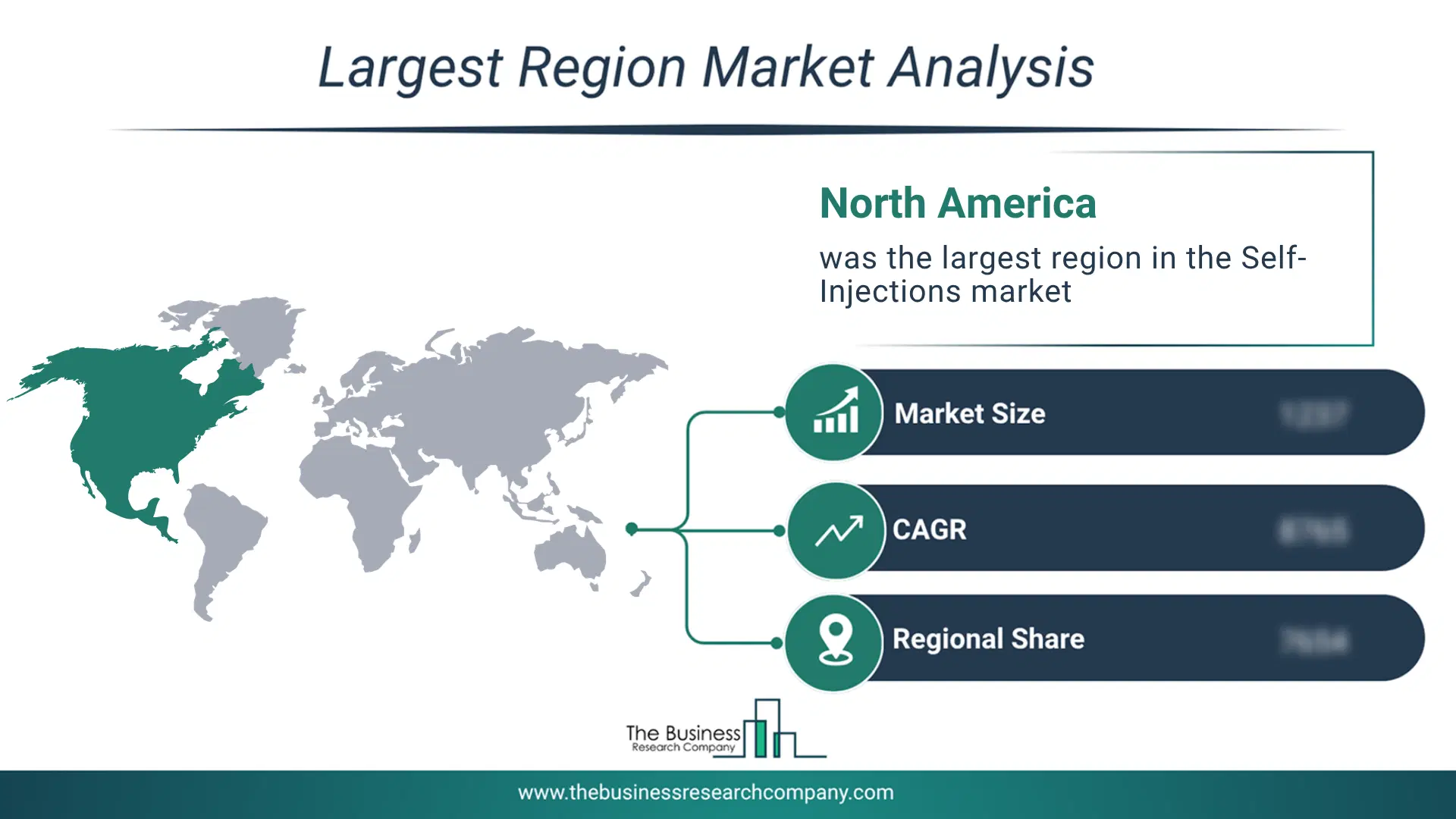
Regional Outlook
North America was the largest region in the self-injections market in 2025. Asia-Pacific is expected to be the fastest-growing region in the forecast period. The regions covered in this market report are Asia-Pacific, South East Asia, Western Europe, Eastern Europe, North America, South America, Middle East, Africa. The countries covered in this market report are Australia, Brazil, China, France, Germany, India, Indonesia, Japan, Taiwan, Russia, South Korea, UK, USA, Canada, Italy, SpainWhat Defines the Self-Injections Market?
The self-injections market consists of sales of auto-injectors, needle-free injectors, pen injectors and wearable injectors. Values in this market are ‘factory gate’ values, that is the value of goods sold by the manufacturers or creators of the goods, whether to other entities (including downstream manufacturers, wholesalers, distributors and retailers) or directly to end customers. The value of goods in this market includes related services sold by the creators of the goods.How is Market Value Defined and Measured?
The market value is defined as the revenues that enterprises gain from the sale of goods and/or services within the specified market and geography through sales, grants, or donations in terms of the currency (in USD unless otherwise specified). The revenues for a specified geography are consumption values that are revenues generated by organizations in the specified geography within the market, irrespective of where they are produced. It does not include revenues from resales along the supply chain, either further along the supply chain or as part of other products.
This chart presents market attractiveness based on a quantitative evaluation of growth, competition, strategic alignment, and risk, offering a clear view of opportunity areas for decision-making. This chart is for illustrative purposes; the full report contains the complete analysis.

This chart highlights the Total Addressable Market (TAM) by estimating the maximum revenue opportunity using an assumption-driven approach, supporting strategic planning and opportunity sizing across markets. The chart is illustrative; the full report provides a more comprehensive analysis.
What Key Data and Analysis Are Included in the Self-Injections Market Report 2026?
The self-injections market research report is one of a series of new reports from The Business Research Company that provides market statistics, including industry global market size, regional shares, competitors with the market share, detailed market segments, market trends and opportunities, and any further data you may need to thrive in the self-injections industry. The market research report delivers a complete perspective of everything you need, with an in-depth analysis of the current and future state of the industry.Self-Injections Market Report Forecast Analysis
| Report Attribute | Details |
|---|---|
| Market Size Value In 2026 | $11.04 billion |
| Revenue Forecast In 2030 | $15.05 billion |
| Growth Rate | CAGR of 8.1% from 2026 to 2030 |
| Base Year For Estimation | 2025 |
| Actual Estimates/Historical Data | 2020-2025 |
| Forecast Period | 2026 - 2030 |
| Market Representation | Revenue in USD Billion and CAGR from 2026 to 2030 |
| Segments Covered | Type, Dosage, Application, Distribution Channel |
| Regional Scope | Asia-Pacific, Western Europe, Eastern Europe, North America, South America, Middle East, Africa |
| Country Scope | The countries covered in the report are Australia, Brazil, China, France, Germany, India, Indonesia, Japan, Taiwan, Russia, South Korea, UK, USA, Canada, Italy, Spain. |
| Key Companies Profiled | AbbVie Inc., Antares Pharma Inc., Baxter International Inc., Bayer AG, Becton Dickinson and Company, Bristol-Myers Squibb Company, Credence MedSystems Inc., Dali Medical Devices Ltd., Eli Lilly and Company, Enable Injections Inc., Gerresheimer AG, Insulet Corporation, Merck & Co. Inc., Owen Mumford Limited, Pfizer Inc., PharmaJet Inc., Recipharm AB, Schott AG, SHL Group Limited, Terumo Corporation, West Pharmaceutical Services Inc., Wilhelm Haselmeier GmbH & Co. KG, Ypsomed Holding AG, APTAR PHARMA INDIA PVT LTD, Bespak Europe Ltd., Bioject Medical Technologies Inc., Catalent Inc., Crossject SA, Injex Pharma AG, Medeca Pharma AB, Medimop Medical Projects Ltd., Mylan N.V., Nemera Development S.A., Noble Medical Inc. |
| Customization Scope | Request for Customization |
| Pricing And Purchase Options | Explore Purchase Options |