
Semiochemicals Market Report 2026
Global Outlook – By Type (Pheromones, Allelochemicals), By Crop Type (Field Crops, Orchard Crops, Vegetable Crops), By Application (Detection And Monitoring, Mass Trapping, Mating Disruption) – Market Size, Trends, Strategies, and Forecast to 2030
Semiochemicals Market Overview
• Semiochemicals market size has reached to $6.16 billion in 2025 • Expected to grow to $12.91 billion in 2030 at a compound annual growth rate (CAGR) of 15.9% • Growth Driver: Surging Adoption Of Organic Farming Practices Drives Semiochemical Market • Market Trend: Advanced Pheromone Solutions For Sustainable Pest Control • North America was the largest region in 2025 and Asia-Pacific is the fastest growing region.What Is Covered Under Semiochemicals Market?
Semiochemicals refer to organic substances employed by insects to transmit specialized chemical instructions that alter physiology or behavior. Semiochemicals are used for organic pest control in farming. The main types of semiochemicals are pheromones and allelochemicals. Pheromones refer to any endogenous substance released in minute amounts by one organism in order to provoke a certain reaction from another organism of the same species. Semiochemicals are used for different crop types such as field crops, orchard crops, and vegetable crops for applications such as detection and monitoring, mass trapping, and mating disruption.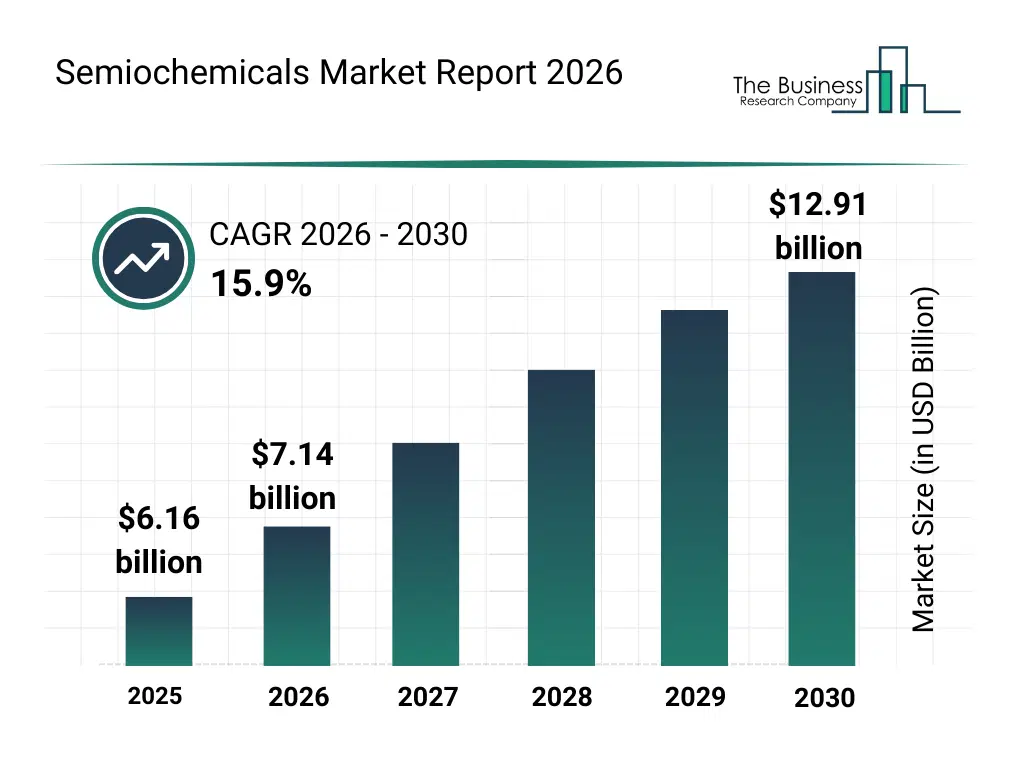
What Is The Semiochemicals Market Size and Share 2026?
The semiochemicals market size has grown rapidly in recent years. It will grow from $6.16 billion in 2025 to $7.14 billion in 2026 at a compound annual growth rate (CAGR) of 16.0%. The growth in the historic period can be attributed to increasing adoption of organic farming practices, rising regulatory restrictions on chemical pesticides, growing awareness of eco-friendly crop protection, expansion of high-value crop cultivation, availability of commercial pheromone formulations.What Is The Semiochemicals Market Growth Forecast?
The semiochemicals market size is expected to see rapid growth in the next few years. It will grow to $12.91 billion in 2030 at a compound annual growth rate (CAGR) of 15.9%. The growth in the forecast period can be attributed to increasing demand for sustainable agriculture inputs, rising investments in bio-based pest control solutions, expansion of precision agriculture practices, growing adoption in large-scale farming, increasing research in insect behavior management. Major trends in the forecast period include increasing adoption of pheromone-based pest control, rising use of mating disruption techniques, growing demand for residue-free crop protection, expansion of monitoring and detection applications, enhanced focus on integrated pest management.
Global Semiochemicals Market Segmentation
1) By Type: Pheromones, Allelochemicals 2) By Crop Type: Field Crops, Orchard Crops, Vegetable Crops 3) By Application: Detection And Monitoring, Mass Trapping, Mating Disruption Subsegments: 1) By Pheromones: Sex Pheromones, Aggregation Pheromones 2) By Allelochemicals: Plant Allelochemicals, Microbial Allelochemicals, Fungal AllelochemicalsWhat Are The Drivers Of The Semiochemicals Market?
The rapid adoption of organic farming is significantly contributing to the semiochemicals market going forward. Organic farming refers to the agricultural method that uses biological fertilizers made chiefly from animal and plant wastes, nitrogen-fixing cover crops, and insect treatments with an ecological basis. Semiochemicals are used in organic farming for pest control as they are generated naturally from plants, making them suitable for organic farming methods. Semiochemicals in agriculture have become increasingly used due to their effectiveness and low environmental impact. For instance, in May 2023, according to the Organic Trade Association, a US-based organic industry, in 2022 total organic sales, including organic non-food products, reached a milestone of $60 billion. By 2023, this figure had surged to a record $67.6 billion, indicating a significant increase in the organic sector's market value. Therefore, the rapid adoption of organic farming will drive the semiochemical industry. Increased cultivation of high-value crops is expected to propel the growth of the semiochemical market going forward. High-value crops are plants cultivated for their substantial economic worth or significant market value per unit area. Increased cultivation of high-value crops uses semiochemicals for pest management and crop protection, reducing reliance on chemical pesticides due to their targeted and environmentally friendly nature. For instance, in January 2025, according the United States Department of Agriculture, a US-based government organization, reported that Sorghum grain production in 2024 is estimated at 344 million bushels, representing an 8% increase compared to 2023. Therefore, the increased cultivation of high-value crops is driving the growth of the semiochemical industry.Key Players In The Global Semiochemicals Market
Major companies operating in the semiochemicals market are BASF SE, Bayer AG, Syngenta Group, Shin-Etsu Chemical Co., Ltd., Suterra LLC, Russell IPM Ltd., Provivi, Inc., ISCA Technologies, Inc., Koppert Biological Systems, Biobest Group NV, Trécé, Inc., Pherobank B.V., Certis Biologicals, FMC Corporation, Sumitomo Chemical Company, Limited, UPL Limited, Corteva Agriscience, Gowan Company, LLC, Bedoukian Research, Inc., Novozymes A/S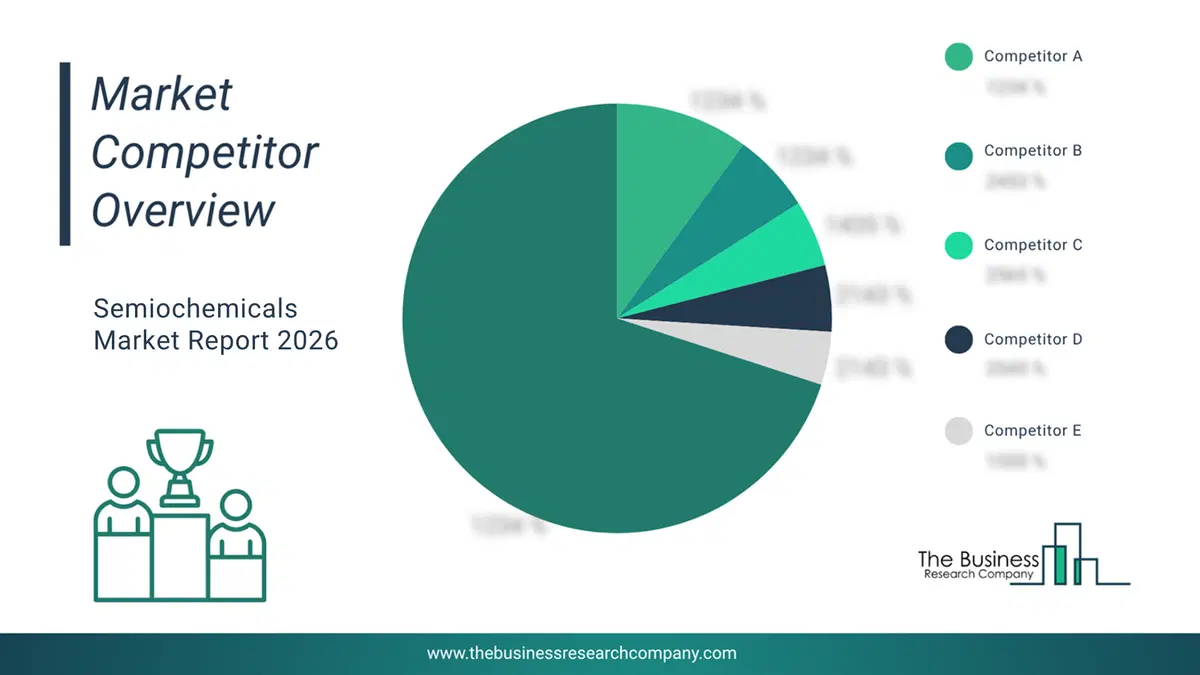
This chart is for illustrative purposes; the full report includes a detailed competitor analysis and comprehensive overview of the top 10 companies in the market.
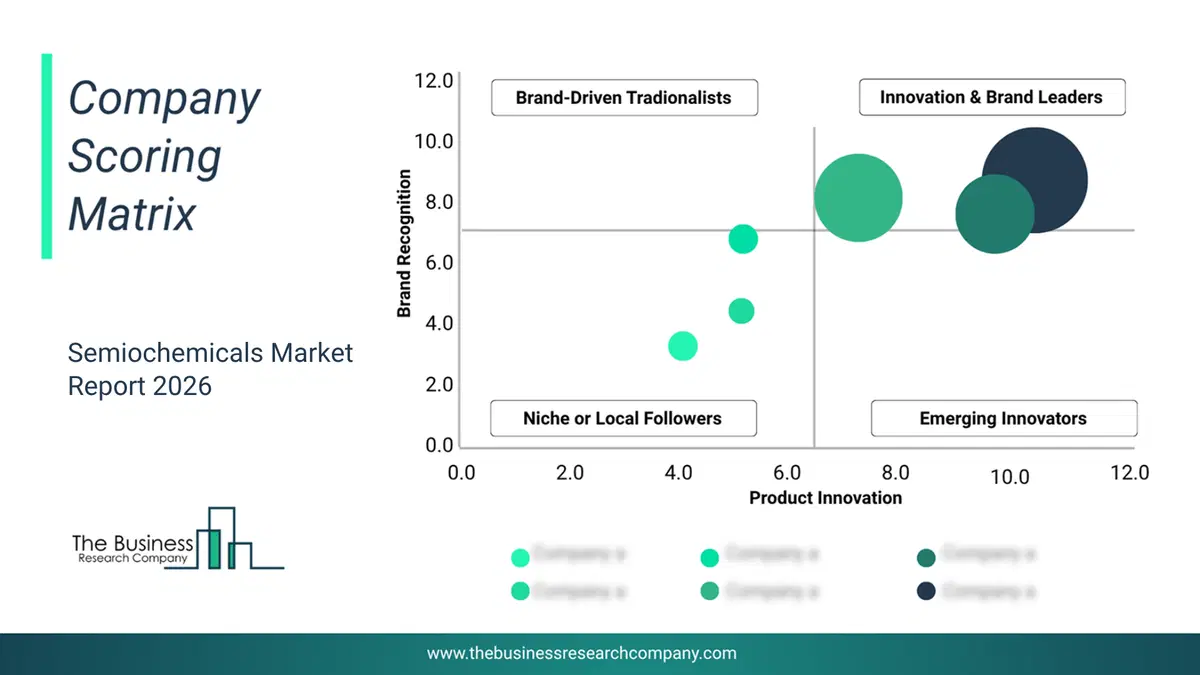
This chart maps companies by product innovation and brand strength, with bubble size indicating relative revenue, helping identify market leaders, challengers, and niche players. This is an illustrative chart; the full report provides a complete and accurate competitive analysis.
Global Semiochemicals Market Trends and Insights
Major companies operating in the semiochemicals market are focusing on developing advanced pheromone products to enhance pest control strategies. A pheromone is a chemical substance produced and released by an organism to trigger a specific behavioral or physiological response in other members of the same species. For instance, in October 2024, HortiPro, a Netherland-based company, has introduced a new pheromone product designed to enhance sustainable pest management. Recent innovations in this field focus on developing highly species-specific pheromones and improving application methods to achieve more precise, effective control. These advancements support targeted approaches such as mass trapping and mating disruption, which help reduce the reliance on chemical pesticides. By tailoring pheromones to individual pest species and optimizing their deployment, growers can manage infestations more efficiently while minimizing environmental impact. HortiPro’s latest launch reflects this ongoing progress, offering modern horticulture a safer, more eco-friendly tool for maintaining healthy crop production.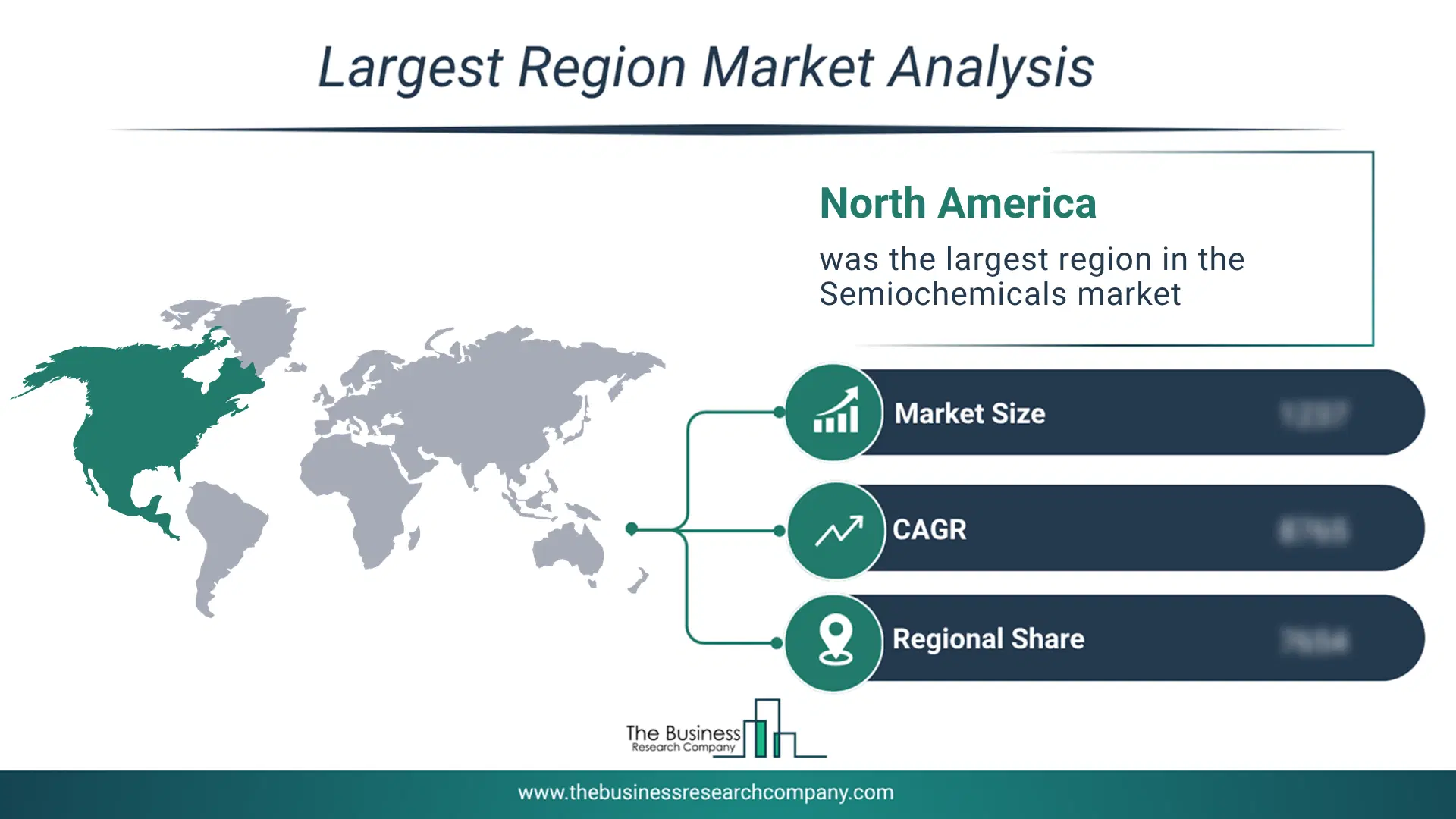
Regional Insights
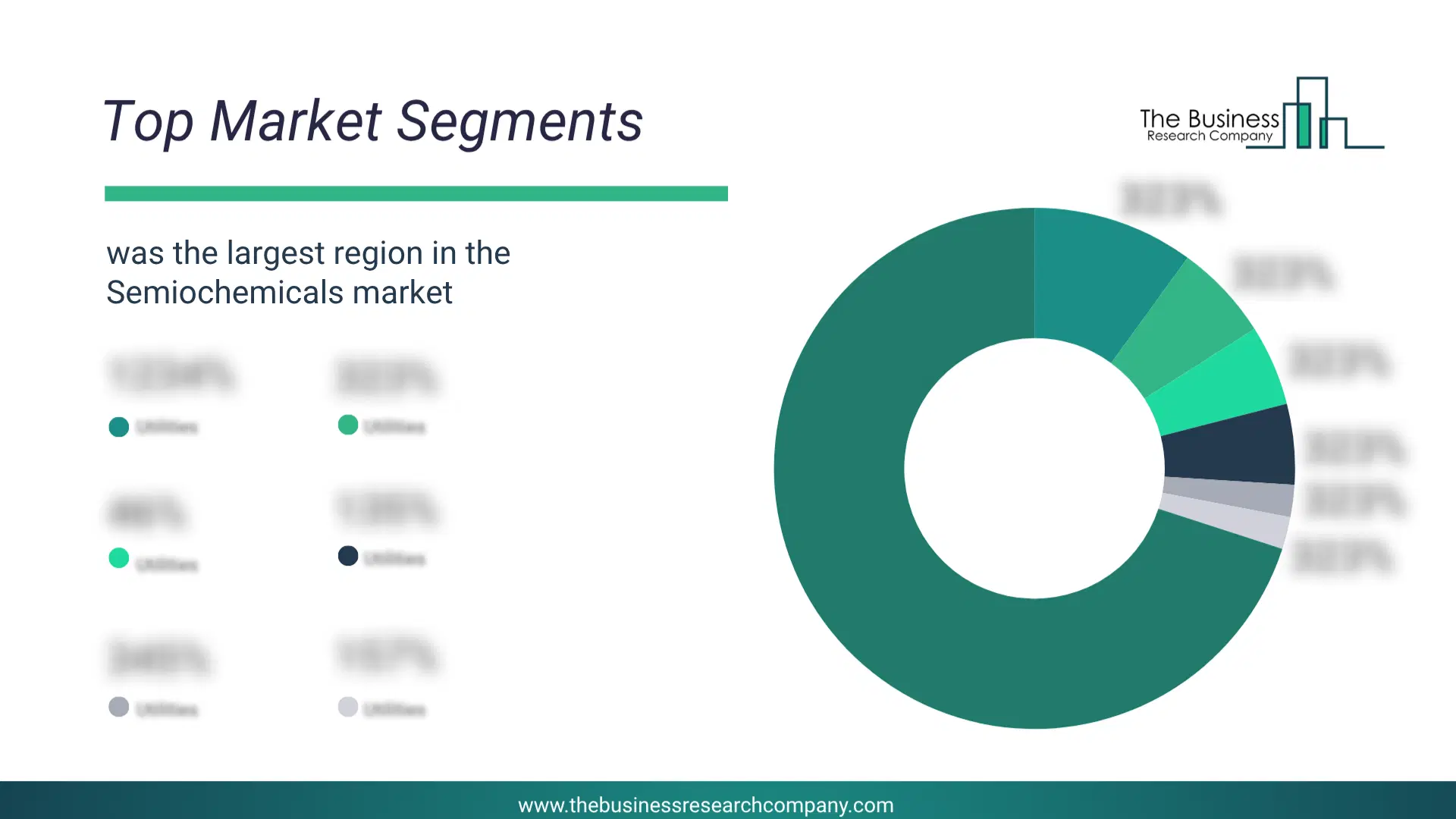
North America was the largest region in the semiochemicals market in 2025 and is expected to be the fastest-growing region in the global semiochemicals market report during the forecast period. The regions covered in this market report are Asia-Pacific, South East Asia, Western Europe, Eastern Europe, North America, South America, Middle East, Africa The countries covered in this market report are Australia, Brazil, China, France, Germany, India, Indonesia, Japan, Taiwan, Russia, South Korea, UK, USA, Canada, Italy, SpainWhat Defines the Semiochemicals Market?
The semiochemicals market consists of sales of kairomones, allomones, synomones and apneumones. Values in this market are ‘factory gate’ values, that is the value of goods sold by the manufacturers or creators of the goods, whether to other entities (including downstream manufacturers, wholesalers, distributors and retailers) or directly to end customers. The value of goods in this market includes related services sold by the creators of the goods.How is Market Value Defined and Measured?
The market value is defined as the revenues that enterprises gain from the sale of goods and/or services within the specified market and geography through sales, grants, or donations in terms of the currency (in USD unless otherwise specified). The revenues for a specified geography are consumption values that are revenues generated by organizations in the specified geography within the market, irrespective of where they are produced. It does not include revenues from resales along the supply chain, either further along the supply chain or as part of other products.
This chart presents market attractiveness based on a quantitative evaluation of growth, competition, strategic alignment, and risk, offering a clear view of opportunity areas for decision-making. This chart is for illustrative purposes; the full report contains the complete analysis.

This chart highlights the Total Addressable Market (TAM) by estimating the maximum revenue opportunity using an assumption-driven approach, supporting strategic planning and opportunity sizing across markets. The chart is illustrative; the full report provides a more comprehensive analysis.
What Key Data and Analysis Are Included in the Semiochemicals Market Report 2026?
The semiochemicals market research report is one of a series of new reports from The Business Research Company that provides market statistics, including industry global market size, regional shares, competitors with the market share, detailed market segments, market trends and opportunities, and any further data you may need to thrive in the semiochemicals industry. The market research report delivers a complete perspective of everything you need, with an in-depth analysis of the current and future state of the industry.Semiochemicals Market Report Forecast Analysis
| Report Attribute | Details |
|---|---|
| Market Size Value In 2026 | $7.14 billion |
| Revenue Forecast In 2030 | $12.91 billion |
| Growth Rate | CAGR of 16.0% from 2026 to 2030 |
| Base Year For Estimation | 2025 |
| Actual Estimates/Historical Data | 2020-2025 |
| Forecast Period | 2026 - 2030 |
| Market Representation | Revenue in USD Billion and CAGR from 2026 to 2030 |
| Segments Covered | Type, Crop Type, Application |
| Regional Scope | Asia-Pacific, Western Europe, Eastern Europe, North America, South America, Middle East, Africa |
| Country Scope | The countries covered in this market report are Australia, Brazil, China, France, Germany, India, Indonesia, Japan, Taiwan, Russia, South Korea, UK, USA, Canada, Italy, Spain |
| Key Companies Profiled | BASF SE, Bayer AG, Syngenta Group, Shin-Etsu Chemical Co., Ltd., Suterra LLC, Russell IPM Ltd., Provivi, Inc., ISCA Technologies, Inc., Koppert Biological Systems, Biobest Group NV, Trécé, Inc., Pherobank B.V., Certis Biologicals, FMC Corporation, Sumitomo Chemical Company, Limited, UPL Limited, Corteva Agriscience, Gowan Company, LLC, Bedoukian Research, Inc., Novozymes A/S |
| Customization Scope | Request for Customization |
| Pricing And Purchase Options | Explore Purchase Options |