
Sensor Hub Market Report 2026
Global Outlook – By Processor Type ( Application Sensor Processor, Discrete Sensor Processor, Sensor Integrated Microcontroller, Other Processor Types), By Devices ( Smart Phones, Tablets, Wearable Devices, Internet Of Things And Connected Devices, Other Devices), By Applications ( Positioning And Navigation, Health And Fitness, Augmented Reality And Gaming, Activity Monitoring, Voice Command, Gestures Navigations, Other Applications), By End-Use Application ( Consumer Electronics, Automotive, Industrial, Military, Healthcare, Telecommunications, Other End-Use Applications) – Market Size, Trends, Strategies, and Forecast to 2030
Sensor Hub Market Overview
• Sensor Hub market size has reached to $42.95 billion in 2025 • Expected to grow to $103.93 billion in 2030 at a compound annual growth rate (CAGR) of 18.9% • Growth Driver: Sensor Hubs Fueling The Digitalization Revolution • Market Trend: Sensor Kit Revolutionizes IoT Sensor Engineering With Printed Electronics • Asia-Pacific was the largest region in 2025.What Is Covered Under Sensor Hub Market?
A sensor hub is a specialized processor that gathers and handles data from multiple sensors, easing the main processor's workload and boosting efficiency. They are designed to offload sensor data processing from a device's main CPU, thereby conserving battery power and enhancing overall performance. The main processor types of sensor hubs are application sensor processors, discrete sensor processors, sensor-integrated microcontrollers, and others. The application sensor processor segment refers to biochips that incorporate a sensor to detect specific biological elements and a processor to analyze and process the detected signals. The various devices include smartphones, tablets, wearable devices, the internet of things, and connected devices and others for different applications including positioning and navigation, health and fitness, augmented reality and gaming, activity monitoring, voice command, gesture navigation and other. The end users are consumer electronics, automotive, industrial, military, healthcare, telecommunications, and others.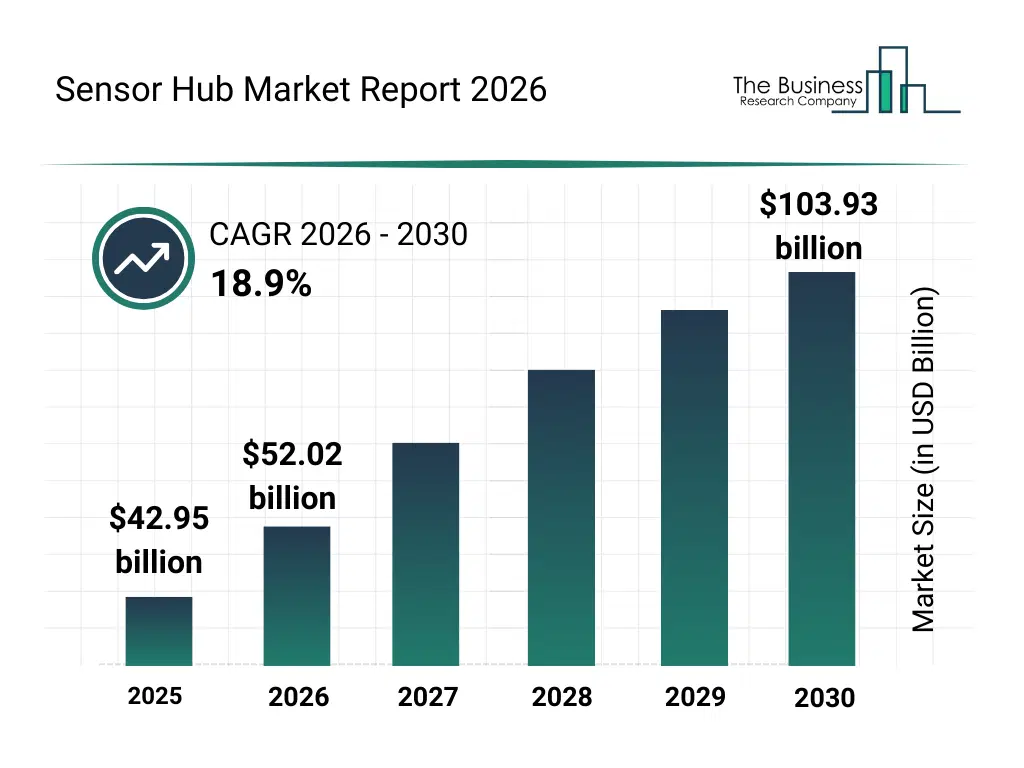
What Is The Sensor Hub Market Size 2026 And Growth Rate?
The sensor hub market size has grown exponentially in recent years. It will grow from $42.95 billion in 2025 to $52.02 billion in 2026 at a compound annual growth rate (CAGR) of 21.1%. The growth in the historic period can be attributed to growth of smartphone adoption, rising demand for battery efficiency, increased integration of motion and environmental sensors, early adoption in consumer electronics, expansion of wearable devices.What Is The Sensor Hub Market Growth Forecast?
The sensor hub market size is expected to see rapid growth in the next few years. It will grow to $103.93 billion in 2030 at a compound annual growth rate (CAGR) of 18.9%. The growth in the forecast period can be attributed to proliferation of IoT devices, rising adoption in autonomous vehicles, increasing demand for always-on sensing, advancements in low-power semiconductors, growth of edge AI applications. Major trends in the forecast period include increasing integration of sensor hubs in smartphones and wearables, rising adoption of low-power sensor processing architectures, growing use of sensor hubs for context-aware computing, advancements in multi-sensor data fusion capabilities, expansion of sensor hubs in edge and embedded systems.
Global Sensor Hub Market Segmentation
1) By Processor Type: Application Sensor Processor, Discrete Sensor Processor, Sensor Integrated Microcontroller, Other Processor Types 2) By Devices: Smart Phones, Tablets, Wearable Devices, Internet Of Things And Connected Devices, Other Devices 3) By Applications: Positioning And Navigation, Health And Fitness, Augmented Reality And Gaming, Activity Monitoring, Voice Command, Gestures Navigations, Other Applications 4) By End-Use Application: Consumer Electronics, Automotive, Industrial, Military, Healthcare, Telecommunications, Other End-Use Applications Subsegments: 1) By Application Sensor Processor: Multi-Core Application Processors, Low-Power Application Processors 2) By Discrete Sensor Processor: Dedicated Sensor Processing Units, High-Performance Discrete Processors for Sensor Integration 3) By Sensor Integrated Microcontroller: Microcontrollers, Low-Power Microcontrollers 4) By Other Processor Types: Hybrid Processors, Digital Signal Processors (DSPs), System-on-Chip (SoC)What Is The Driver Of The Sensor Hub Market?
The increase in popularity of digitalization is expected to propel the growth of the sensor hub market going forward. Digitalization refers to the integration of digital technologies into business operations and everyday activities to transform processes and enhance efficiency. The rising adoption of digitalization is largely driven by the proliferation of smart devices and Internet of Things (IoT) applications, as businesses and consumers increasingly rely on interconnected systems for automation, data collection, and real-time decision-making. The growing digitalization boosts demand for sensor hubs as they serve as central processing units that integrate multiple sensors, manage data flow, and enable efficient communication between connected devices in digital ecosystems. For instance, in August 2024, according to Eurostat, the Luxembourg-based statistical office of the European Union, in 2023, 59% of enterprises in the EU achieved at least a basic level of digital intensity. Among small and medium-sized enterprises (SMEs), 58% reached this level, whereas 91% of large enterprises attained at least a basic level of digital intensity. Therefore, the rise in digitalisation is driving the growth of the sensor hub industry.Key Players In The Global Sensor Hub Market
Major companies operating in the sensor hub market are Robert Bosch GmbH, Intel Corporation, Broadcom Limited, Qualcomm Technologies Inc., Infineon Technologies AG, STMicroelectronics N.V., TE Connectivity Ltd., NXP Semiconductors N.V., TDK Corporation, Renesas Electronics Corporation, Microchip Technology Inc., Marvell Technology Group Ltd., Rohm Co. Ltd., Imagination Technologies Limited, Bosch Sensortec GmbH, Hillcrest Labs, Memsic Inc., Montronix GmbH, LAPIS Semiconductor Co. Ltd., Omega Engineering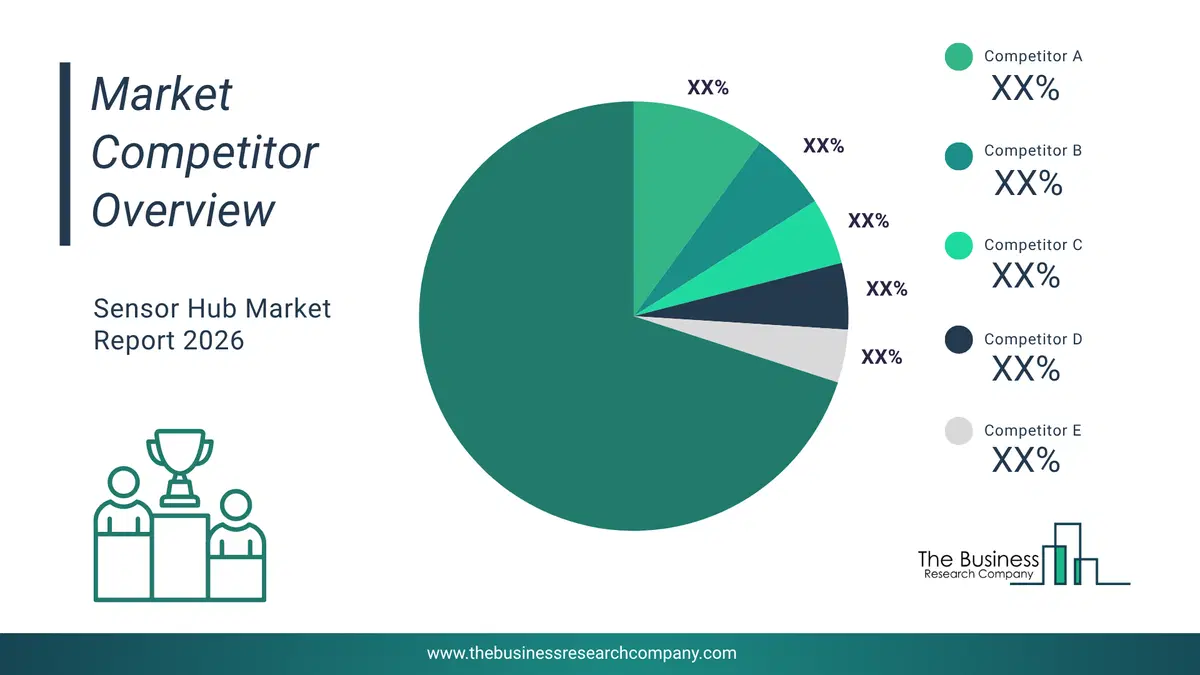
This chart is for illustrative purposes; the full report includes a detailed competitor analysis and comprehensive overview of the top 10 companies in the market.
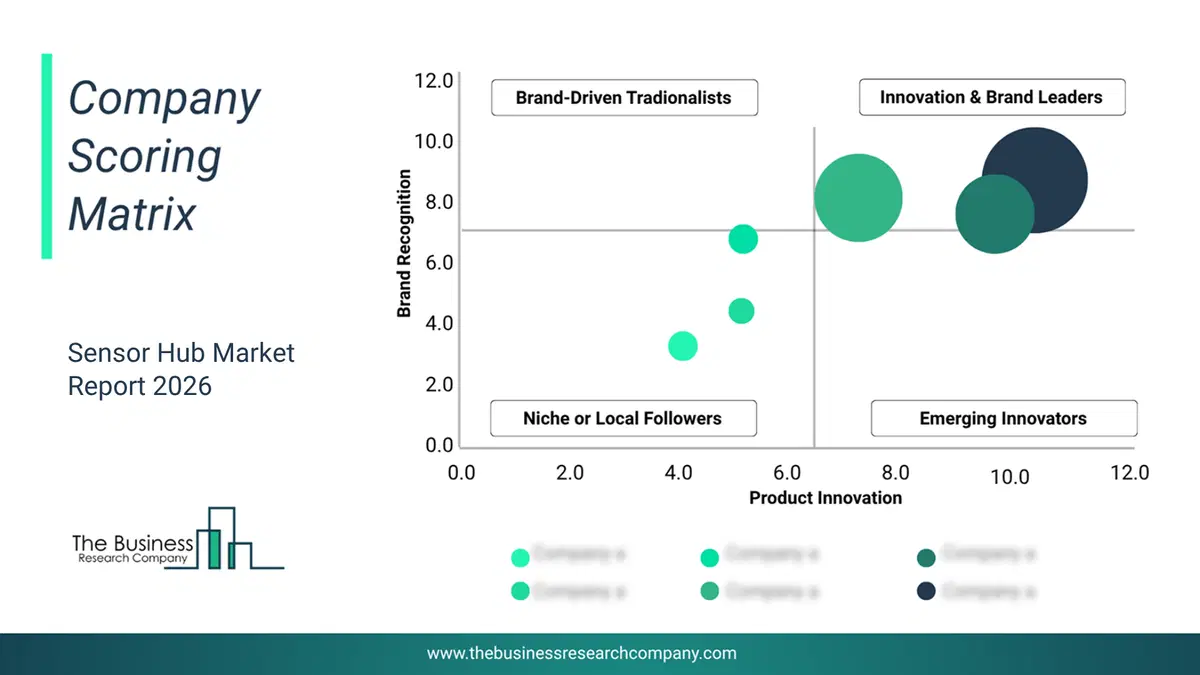
This chart maps companies by product innovation and brand strength, with bubble size indicating relative revenue, helping identify market leaders, challengers, and niche players. This is an illustrative chart; the full report provides a complete and accurate competitive analysis.
Global Sensor Hub Market Trends and Insights
Major companies operating in the sensor hub market are developing kits for IOT sensor engineering with printed electronics technologies. Kits for IoT sensor engineering with printed electronics technologies are tools and components designed to help engineers, researchers, and hobbyists create and prototype Internet of Things (IoT) sensors using printed electronics. For instance, in February 2023, Henkel, a Germany-based multinational chemical and consumer goods company, launched the Henkel Qhesive Solutions Sensor INKxperience Kit. The kit showcases Henkel's innovative inks for smart product applications. It includes four core technologies, such as a leak detection sensor, a non-contact liquid level sensor, a positive temperature coefficient (PTC) heater, and single and multi-zone force-sensitive resistors (FSR). The component is reusable and pre-configured with hardware and software for quick data readout, making it easier to design, prototype, and engineer next-generation IoT sensors.What Are Latest Mergers And Acquisitions In The Sensor Hub Market?
In June 2024, Actility, a France-based provider of IoT connectivity platforms, formed a strategic collaboration with Wyld Networks to connect IoT everywhere, from ground to satellite. this partnership aims to provide seamless, reliable global IoT connectivity by integrating terrestrial LoRaWAN networks with Wyld Networks’ satellite IoT service, enabling efficient IoT deployment in remote and underserved areas across industries like agriculture, energy, logistics, and transportation. Wyld Networks is a Canada-based provider of satellite-enabled Internet of Things solutions that support remote monitoring, data collection, and sensor integration for industrial, agricultural, and environmental applications.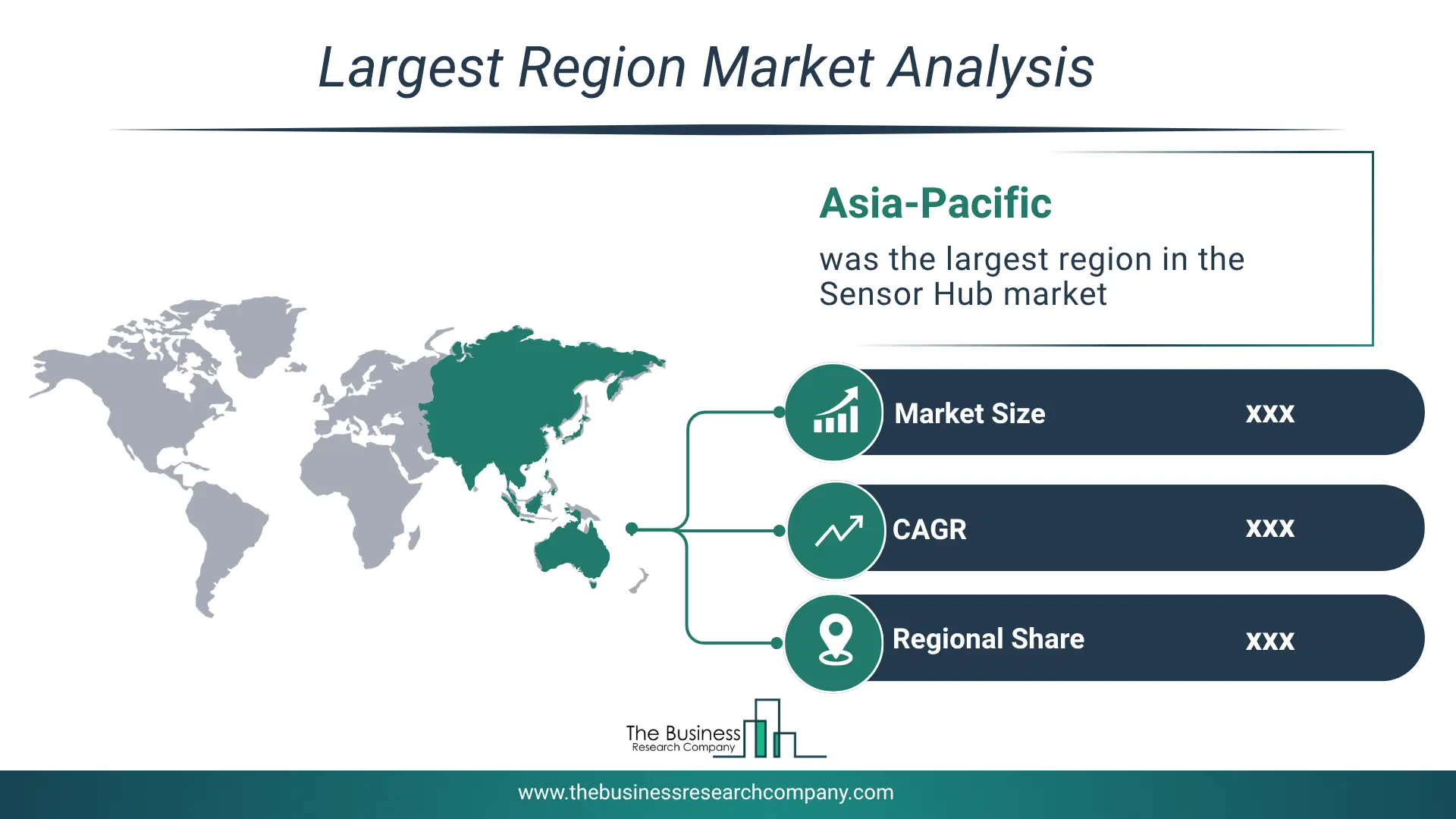
Regional Outlook
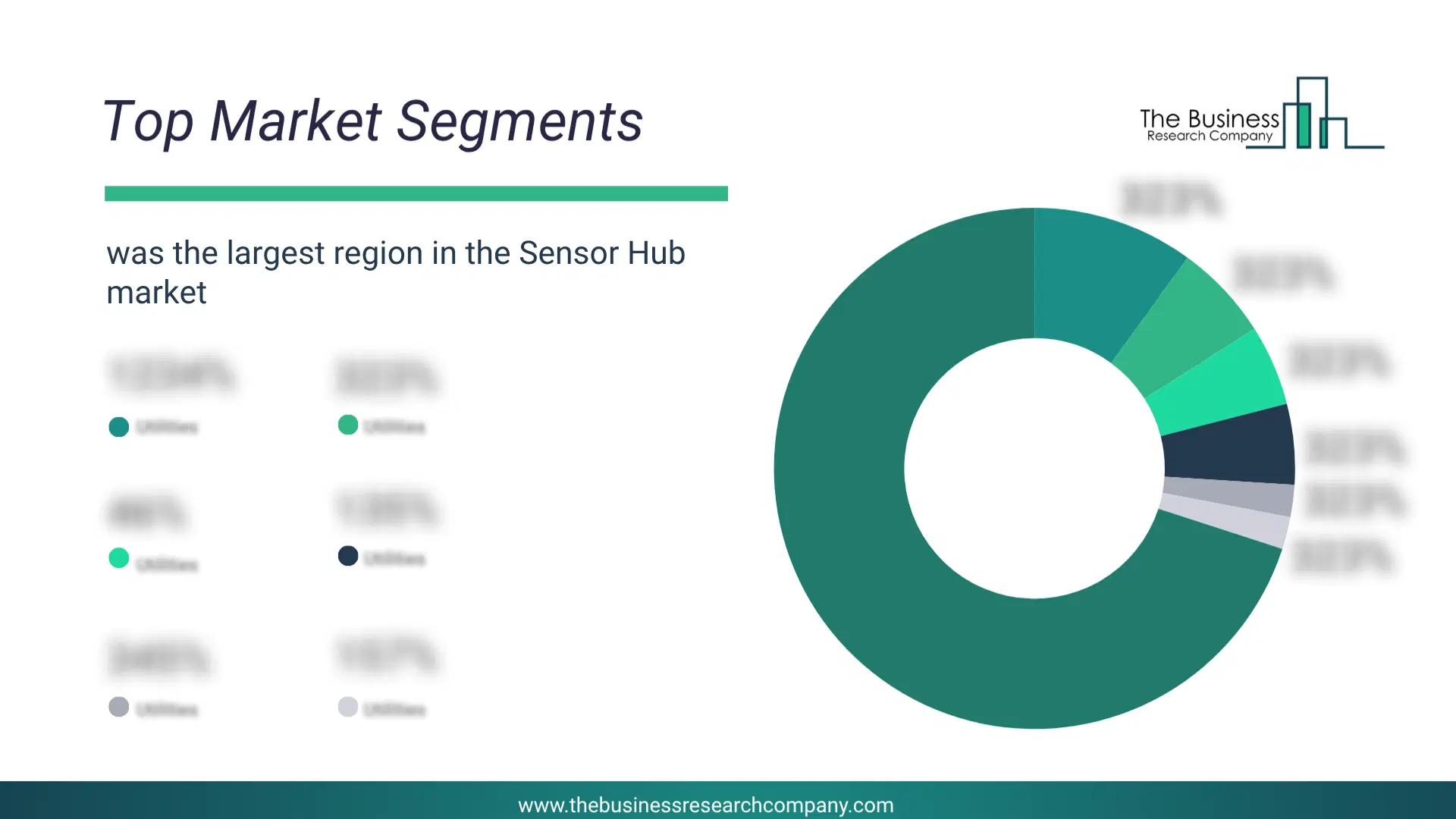
Asia-Pacific was the largest and fastest region in the sensor hub market in 2025. The regions covered in this market report are Asia-Pacific, South East Asia, Western Europe, Eastern Europe, North America, South America, Middle East, Africa. The countries covered in this market report are Australia, Brazil, China, France, Germany, India, Indonesia, Japan, Taiwan, Russia, South Korea, UK, USA, Canada, Italy, Spain.What Defines the Sensor Hub Market?
The sensor hub market consists of revenues earned by entities by providing services such as software support, analytic support, technical support, and maintenance. The market value includes the value of related goods sold by the service provider or included within the service offering. The sensor hub market also includes sales of motion and environmental sensors, automotive sensors, industrial sensors, health monitoring sensors, and integrated sensors. Values in this market are ‘factory gate’ values, that is, the value of goods sold by the manufacturers or creators of the goods, whether to other entities (including downstream manufacturers, wholesalers, distributors, and retailers) or directly to end customers. The value of goods in this market includes related services sold by the creators of the goods.How is Market Value Defined and Measured?
The market value is defined as the revenues that enterprises gain from the sale of goods and/or services within the specified market and geography through sales, grants, or donations in terms of the currency (in USD unless otherwise specified). The revenues for a specified geography are consumption values that are revenues generated by organizations in the specified geography within the market, irrespective of where they are produced. It does not include revenues from resales along the supply chain, either further along the supply chain or as part of other products.
This chart presents market attractiveness based on a quantitative evaluation of growth, competition, strategic alignment, and risk, offering a clear view of opportunity areas for decision-making. This chart is for illustrative purposes; the full report contains the complete analysis.

This chart highlights the Total Addressable Market (TAM) by estimating the maximum revenue opportunity using an assumption-driven approach, supporting strategic planning and opportunity sizing across markets. The chart is illustrative; the full report provides a more comprehensive analysis.
What Key Data and Analysis Are Included in the Sensor Hub Market Report 2026?
The sensor hub market research report is one of a series of new reports from The Business Research Company that provides market statistics, including industry global market size, regional shares, competitors with the market share, detailed market segments, market trends and opportunities, and any further data you may need to thrive in the sensor hub industry. The market research report delivers a complete perspective of everything you need, with an in-depth analysis of the current and future state of the industry.Sensor Hub Market Report Forecast Analysis
| Report Attribute | Details |
|---|---|
| Market Size Value In 2026 | $52.02 billion |
| Revenue Forecast In 2030 | $103.93 billion |
| Growth Rate | CAGR of 18.9% from 2026 to 2030 |
| Base Year For Estimation | 2025 |
| Actual Estimates/Historical Data | 2020-2025 |
| Forecast Period | 2026 - 2030 |
| Market Representation | Revenue in USD Billion and CAGR from 2026 to 2030 |
| Segments Covered | Processor Type, Devices, Applications, End-Use Application |
| Regional Scope | Asia-Pacific, Western Europe, Eastern Europe, North America, South America, Middle East, Africa |
| Country Scope | The countries covered in the report are Australia, Brazil, China, France, Germany, India, Indonesia, Japan, Taiwan, Russia, South Korea, UK, USA, Canada, Italy, Spain. |
| Key Companies Profiled | Robert Bosch GmbH, Intel Corporation, Broadcom Limited, Qualcomm Technologies Inc., Infineon Technologies AG, STMicroelectronics N.V., TE Connectivity Ltd., NXP Semiconductors N.V., TDK Corporation, Renesas Electronics Corporation, Microchip Technology Inc., Marvell Technology Group Ltd., Rohm Co. Ltd., Imagination Technologies Limited, Bosch Sensortec GmbH, Hillcrest Labs, Memsic Inc., Montronix GmbH, LAPIS Semiconductor Co. Ltd., Omega Engineering |
| Customization Scope | Request for Customization |
| Pricing And Purchase Options | Explore Purchase Options |