
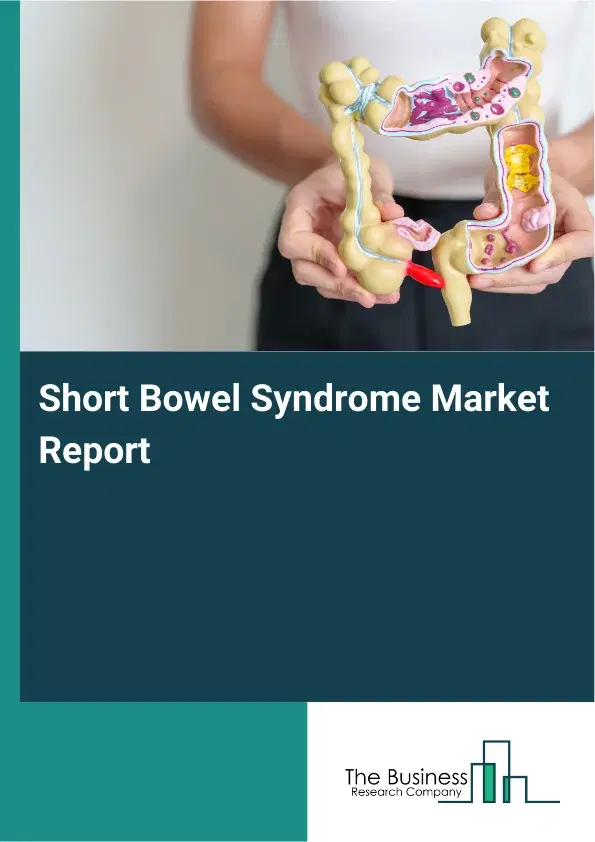
Short Bowel Syndrome Market Report 2026
Global Outlook – By Type (Glucagon-Like Peptide (GLP-2), Growth Hormone, Glutamine), By Diagnosis (Physical Exam, Blood Tests, Fecal Fat Tests, Imaging Procedures, Other Diagnosis), By Treatment (Nutritional Therapy, Medications, Surgery, Transplant), By Distribution Channel (Hospital Pharmacies, Specialty Pharmacies, Other Distribution Channels) - Market Size, Trends, Strategies, and Forecast to 2030
Short Bowel Syndrome Market Overview
• Short Bowel Syndrome market size has reached to $3.08 billion in 2025 • Expected to grow to $6.02 billion in 2030 at a compound annual growth rate (CAGR) of 14.2% • Growth Driver: Rising Prevalence Of Gastrointestinal Diseases Fueling The Growth Of The Market Due To Increasing Surgical Interventions And Nutrient Malabsorption • Market Trend: Advancements In GLP-2 Analog Therapies For Short Bowel Syndrome And Intestinal Failure • North America was the largest region in 2025 and Asia-Pacific is the fastest growing region.What Is Covered Under Short Bowel Syndrome Market?
Short bowel syndrome (SBS) is a malabsorption disorder caused by the loss or dysfunction of a significant portion of the small intestine, leading to impaired nutrient and fluid absorption. It often results in diarrhea, dehydration, electrolyte imbalances, and malnutrition. The severity of symptoms depends on the remaining intestinal length and its ability to adapt. SBS can significantly impact overall health, requiring careful dietary and medical management. The main types in short bowel syndrome are glucagon-like peptide (GLP-2), growth hormone, and glutamine. Glucagon-Like Peptide-2 (GLP-2) is an intestinal hormone that plays a crucial role in enhancing nutrient absorption, promoting intestinal growth, and reducing gut inflammation, making it a key target for therapies in conditions like Short Bowel Syndrome. These are diagnosed by physical exam, blood tests, fecal fat tests, imaging procedures, and others, and given treatment of nutritional therapy, medications, surgery, and transplant, which are distributed by various channels such as hospital pharmacies, specialty pharmacies, and others.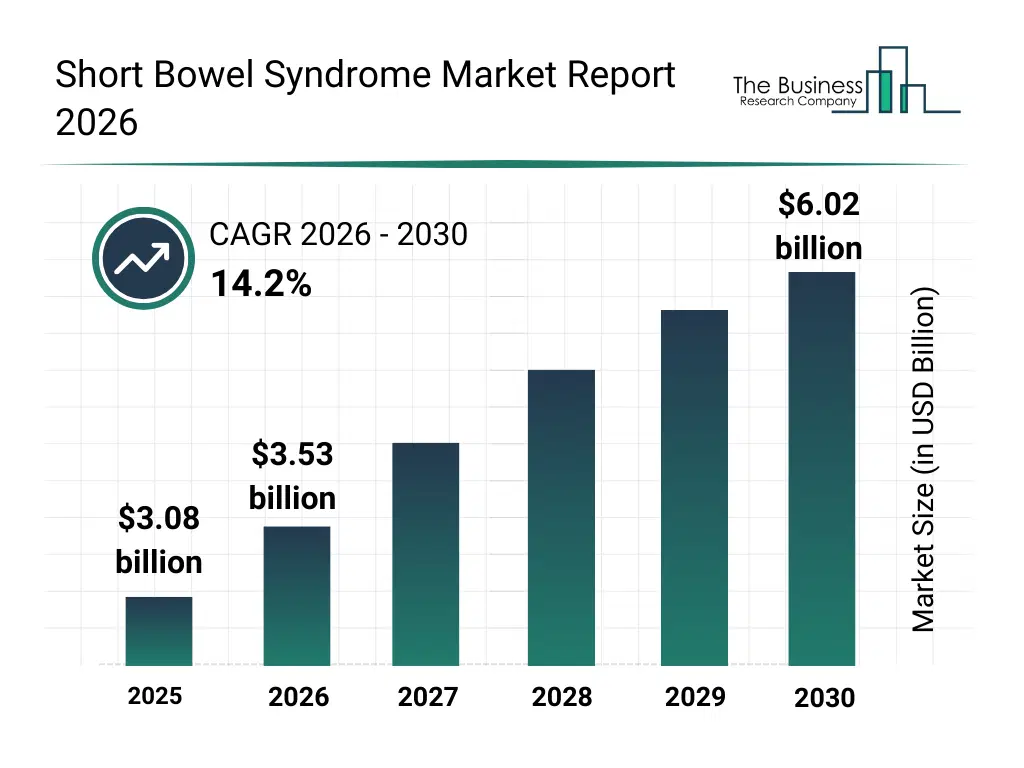
What Is The Short Bowel Syndrome Market Size and Share 2026?
The short bowel syndrome market size has grown rapidly in recent years. It will grow from $3.08 billion in 2025 to $3.53 billion in 2026 at a compound annual growth rate (CAGR) of 14.6%. The growth in the historic period can be attributed to increasing prevalence of short bowel syndrome, limited treatment options historically, reliance on parenteral nutrition, rise in gastrointestinal surgeries, growing hospital awareness.What Is The Short Bowel Syndrome Market Growth Forecast?
The short bowel syndrome market size is expected to see rapid growth in the next few years. It will grow to $6.02 billion in 2030 at a compound annual growth rate (CAGR) of 14.2%. The growth in the forecast period can be attributed to development of novel therapeutics, increasing availability of home infusion services, personalized treatment approaches, integration of microbiome therapies, increasing clinical trials for SBS interventions. Major trends in the forecast period include rise in parenteral nutrition solutions, increasing development of intestinal rehabilitation therapies, adoption of novel surgical interventions, growing focus on gut microbiome modulation, expansion of patient support programs.
Global Short Bowel Syndrome Market Segmentation
1) By Type: Glucagon-Like Peptide (GLP-2), Growth Hormone, Glutamine 2) By Diagnosis: Physical Exam, Blood Tests, Fecal Fat Tests, Imaging Procedures, Other Diagnosis 3) By Treatment: Nutritional Therapy, Medications, Surgery, Transplant 4) By Distribution Channel: Hospital Pharmacies, Specialty Pharmacies, Other Distribution Channels Subsegments: 1) By Glucagon-Like Peptide (GLP-2): Teduglutide, Other GLP-2 Analogues 2) By Growth Hormone: Somatropin, Other Growth Hormone Therapies 3) By Glutamine: Oral Glutamine, Intravenous GlutamineWhat Is The Driver Of The Short Bowel Syndrome Market?
The increasing prevalence of gastrointestinal diseases is expected to propel the growth of the short bowel syndrome market going forward. Gastrointestinal diseases refer to a broad range of disorders affecting the digestive tract, including conditions impacting the stomach, intestines, liver, and pancreas, often leading to impaired digestion and nutrient absorption. The growing prevalence of gastrointestinal diseases is largely driven by unhealthy dietary habits that disrupt gut health and promote inflammation. Gastrointestinal diseases can contribute to the development of short bowel syndrome by necessitating surgical removal of damaged intestinal segments, leading to reduced absorptive capacity. For instance, in September 2023, according to the Inflammatory Bowel Disease (IBD) Clinical and Research Centre, a Canada-based organization that aims to improve the lives of patients with Crohn's disease and ulcerative colitis, with a prevalence of 825 per 100,000 in 2023, over 320,000 people in Canada have inflammatory bowel disease (IBD), and as the prevalence is expected to increase by 2.44% annually, 1.1% of the population, or 470,000 Canadians, is projected to be living with IBD by 2035. Therefore, the increasing prevalence of gastrointestinal diseases is driving the growth of the short bowel syndrome industry.Key Players In The Global Short Bowel Syndrome Market
Major companies operating in the short bowel syndrome market are Nestlé SA, Pfizer Inc, Johnson & Johnson, Sanofi SA, Nutrinia, GlaxoSmithKline plc, Takeda Pharmaceutical Company Limited, Zealand Pharma, Baxter International Inc., OPKO Health Inc, Ironwood Pharmaceuticals Inc., Hanmi Pharm Co Ltd, Emmaus Life Sciences Inc, Jaguar Health, 9 Meters Biopharma Inc, OxThera Inc, EnteraBio Ltd, GLyPharma Therapeutic Inc, Fresenius Kabi AG, Danone S A, B Braun Melsungen AG, Medtronic plc
This chart is for illustrative purposes; the full report includes a detailed competitor analysis and comprehensive overview of the top 10 companies in the market.
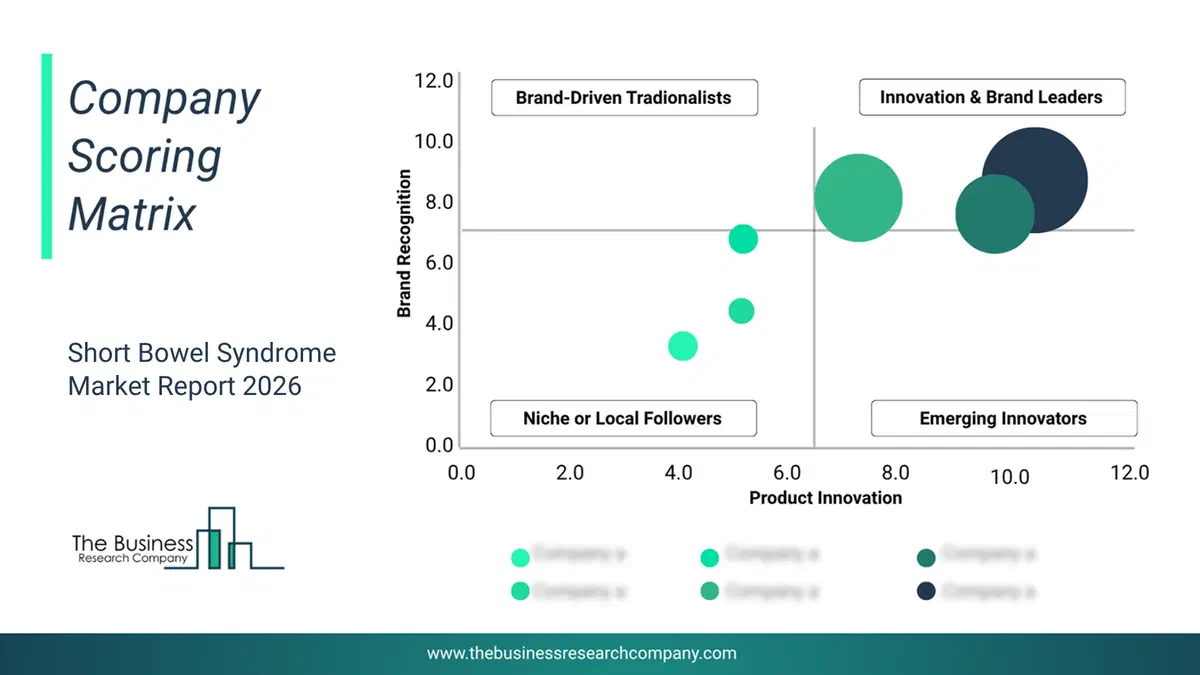
This chart maps companies by product innovation and brand strength, with bubble size indicating relative revenue, helping identify market leaders, challengers, and niche players. This is an illustrative chart; the full report provides a complete and accurate competitive analysis.
Global Short Bowel Syndrome Market Trends and Insights
Major companies operating in the short bowel syndrome market are focusing on developing innovative advancements in medical science, such as treatments for intestinal failure, to provide an advanced therapeutic option that improves treatment outcomes for patients with gastrointestinal disorders. Intestinal failure is a critical condition where the small intestine cannot absorb enough nutrients, fluids, and electrolytes to maintain proper hydration and nutrition. For instance, in May 2024, Ironwood Pharmaceuticals, Inc., a US-based healthcare company, unveiled new data from studies evaluating apraglutide in adults with short bowel syndrome and intestinal failure (SBS-IF). As a next-generation GLP-2 analog, apraglutide demonstrated potential to enhance intestinal absorption and reduce reliance on parenteral support. The findings underscore the drug’s efficacy, safety, and long-term benefits, reflecting Ironwood’s commitment to developing innovative therapies for gastrointestinal disorders.What Are Latest Mergers And Acquisitions In The Short Bowel Syndrome Market?
In May 2024, Takeda Pharmaceutical Company Limited, a Japan-based pharmaceutical company, collaborated with Inspire (Patient Community Platform) to improve the overall understanding of patient experiences and challenges in managing complex gastrointestinal conditions. This collaboration aims to leverage real-world patient insights through multidisciplinary research to identify gaps in care, enhance patient support, and drive innovation in treatment approaches for short bowel syndrome. Inspire (Patient Community Platform) is a US-based online health and wellness community that connects patient engagement and real-world data platforms.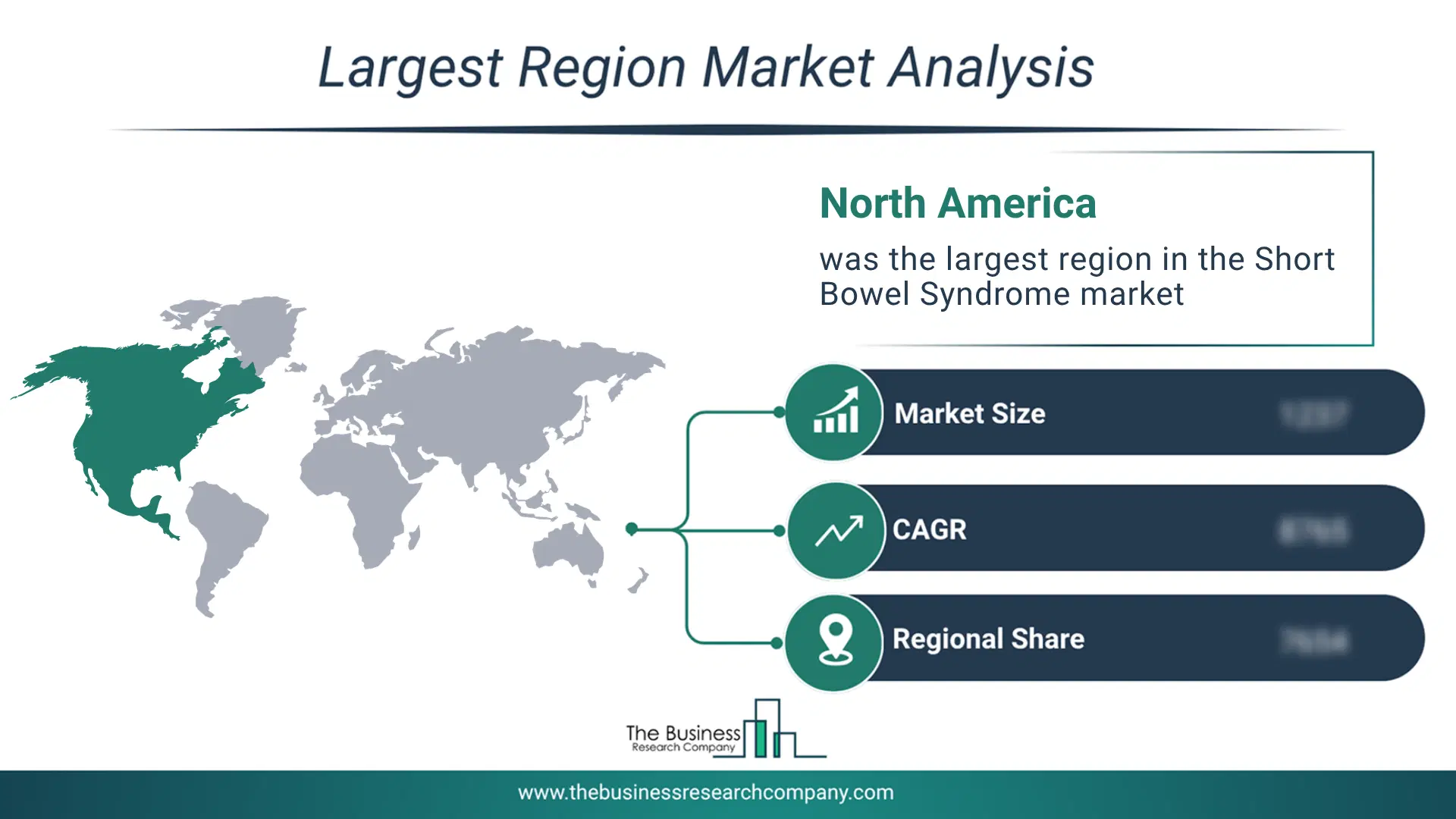
Regional Outlook
North America was the largest region in the short bowel syndrome market in 2025. Asia-Pacific is expected to be the fastest-growing region in the forecast period. The regions covered in this market report are Asia-Pacific, South East Asia, Western Europe, Eastern Europe, North America, South America, Middle East, Africa. The countries covered in this market report are Australia, Brazil, China, France, Germany, India, Indonesia, Japan, Taiwan, Russia, South Korea, UK, USA, Canada, Italy, Spain.What Defines the Short Bowel Syndrome Market?
The short bowel syndrome market consists of revenues earned by entities by providing services such as medical care, diagnostic testing, nutritional support, and ongoing patient management. The market value includes the value of related goods sold by the service provider or included within the service offering. The short bowel syndrome market also includes sales of oral rehydration solutions, antidiarrheal medications, proton pump inhibitors, antimotility agents, bile acid binders, antimicrobials, and specialized enteral nutrition formulas. Values in this market are ‘factory gate’ values, that is the value of goods sold by the manufacturers or creators of the goods, whether to other entities (including downstream manufacturers, wholesalers, distributors and retailers) or directly to end customers. The value of goods in this market includes related services sold by the creators of the goods.How is Market Value Defined and Measured?
The market value is defined as the revenues that enterprises gain from the sale of goods and/or services within the specified market and geography through sales, grants, or donations in terms of the currency (in USD unless otherwise specified). The revenues for a specified geography are consumption values that are revenues generated by organizations in the specified geography within the market, irrespective of where they are produced. It does not include revenues from resales along the supply chain, either further along the supply chain or as part of other products.
This chart presents market attractiveness based on a quantitative evaluation of growth, competition, strategic alignment, and risk, offering a clear view of opportunity areas for decision-making. This chart is for illustrative purposes; the full report contains the complete analysis.

This chart highlights the Total Addressable Market (TAM) by estimating the maximum revenue opportunity using an assumption-driven approach, supporting strategic planning and opportunity sizing across markets. The chart is illustrative; the full report provides a more comprehensive analysis.
What Key Data and Analysis Are Included in the Short Bowel Syndrome Market Report 2026?
The short bowel syndrome market research report is one of a series of new reports from The Business Research Company that provides market statistics, including industry global market size, regional shares, competitors with the market share, detailed market segments, market trends and opportunities, and any further data you may need to thrive in the short bowel syndrome industry. The market research report delivers a complete perspective of everything you need, with an in-depth analysis of the current and future state of the industry.Short Bowel Syndrome Market Report Forecast Analysis
| Report Attribute | Details |
|---|---|
| Market Size Value In 2026 | $3.53 billion |
| Revenue Forecast In 2030 | $6.02 billion |
| Growth Rate | CAGR of 14.2% from 2026 to 2030 |
| Base Year For Estimation | 2025 |
| Actual Estimates/Historical Data | 2020-2025 |
| Forecast Period | 2026 - 2030 |
| Market Representation | Revenue in USD Billion and CAGR from 2026 to 2030 |
| Segments Covered | Type, Diagnosis, Treatment, Distribution Channel |
| Regional Scope | Asia-Pacific, Western Europe, Eastern Europe, North America, South America, Middle East, Africa |
| Country Scope | The countries covered in the report are Australia, Brazil, China, France, Germany, India, Indonesia, Japan, Taiwan, Russia, South Korea, UK, USA, Canada, Italy, Spain |
| Key Companies Profiled | Nestlé SA, Pfizer Inc, Johnson & Johnson, Sanofi SA, Nutrinia, GlaxoSmithKline plc, Takeda Pharmaceutical Company Limited, Zealand Pharma, Baxter International Inc., OPKO Health Inc, Ironwood Pharmaceuticals Inc., Hanmi Pharm Co Ltd, Emmaus Life Sciences Inc, Jaguar Health, 9 Meters Biopharma Inc, OxThera Inc, EnteraBio Ltd, GLyPharma Therapeutic Inc, Fresenius Kabi AG, Danone S A, B Braun Melsungen AG, Medtronic plc |
| Customization Scope | Request for Customization |
| Pricing And Purchase Options | Explore Purchase Options |