

Sleep Disorder Market Report 2026
Global Outlook – By Disorder Type (Insomnia, Sleep Apnea, Restless Legs Syndrome, Narcolepsy, Circadian Rhythm Disorders), By Treatment (Cognitive Behavioral Therapy, Medication Therapy, Psychiatric Treatment, Behavioral Treatment), By Diagnostic Method (Polysomnography, Home Sleep Testing, Actigraphy, Sleep Diaries, Questionnaires and Screening), By Distribution Channel (Retail Pharmacies, Online Sales, Hospital Pharmacies), By End-User (Hospitals And Sleep Centers, Home Care Settings, Academic ) – Market Size, Trends, Strategies, and Forecast to 2030
Sleep Disorder Market Overview
• Sleep Disorder market size has reached to $33.32 billion in 2025 • Expected to grow to $65.51 billion in 2030 at a compound annual growth rate (CAGR) of 14.4% • Growth Driver: Rising Stress And Anxiety Levels Fueling The Growth Of The Market Due To Disruption Of Normal Sleep Patterns • Market Trend: Improving Sleep Disorders Treatment With Non-Invasive Electrical Vestibular Nerve Stimulation, Home Use Accessibility, And Clinically Backed Insomnia Relief • North America was the largest region in 2025 and Asia-Pacific is the fastest growing region.Market Gains By 2030 – Top Opportunities By Segment
Market Gain identifies the most promising market opportunities by highlighting the segments or products expected to generate the highest incremental revenue growth over the next five years.
What Is Covered Under Sleep Disorder Market?
Sleep disorder refers to a group of conditions that disrupt the body’s natural sleep patterns, affecting the ability to fall asleep, stay asleep, or achieve restorative rest. These disorders can stem from physiological, neurological, or behavioral factors that interfere with healthy sleep cycles. They often lead to impaired daytime functioning, reduced concentration, and negative impacts on overall well-being. The main disorder types of sleep disorder management include insomnia, sleep apnea, restless legs syndrome, narcolepsy, and circadian rhythm disorders. Insomnia refers to a condition characterized by difficulty falling asleep, staying asleep, or experiencing restorative sleep, often requiring targeted interventions to improve sleep quality and overall health. The various treatment options, including cognitive behavioral therapy, medication therapy, psychiatric treatment, and behavioral treatment. The diagnostic methods such as polysomnography, home sleep testing, actigraphy, sleep diaries, and questionnaires or screening. The distributed through retail pharmacies, online sales, and hospital pharmacies and the key end users, including hospitals and sleep centers, home care settings, and academic and research institutes.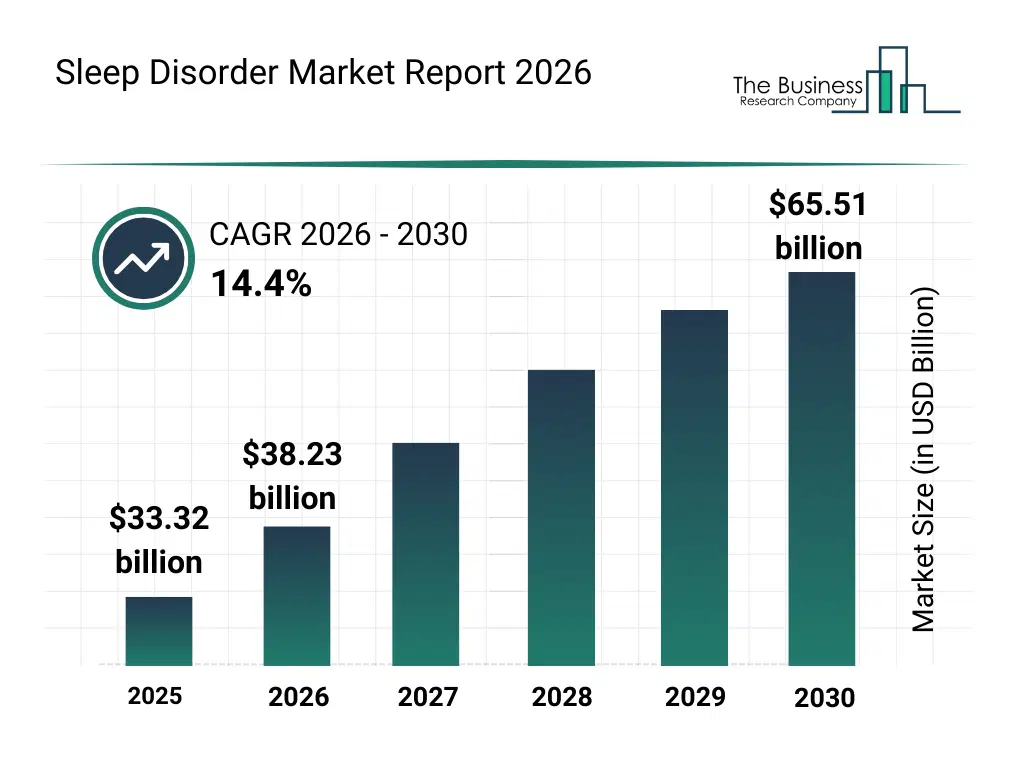
What Is The Sleep Disorder Market Size and Share 2026?
The sleep disorder market size has grown rapidly in recent years. It will grow from $33.32 billion in 2025 to $38.23 billion in 2026 at a compound annual growth rate (CAGR) of 14.7%. The growth in the historic period can be attributed to increasing awareness about sleep health, rising prevalence of insomnia and sleep apnea, growing adoption of sleep diagnostic services, increasing geriatric population, rising stress and lifestyle-related sleep issues, growing smartphone and wearable device usage for sleep tracking.What Is The Sleep Disorder Market Growth Forecast?
The sleep disorder market size is expected to see rapid growth in the next few years. It will grow to $65.51 billion in 2030 at a compound annual growth rate (CAGR) of 14.4%. The growth in the forecast period can be attributed to expansion of telemedicine services for sleep disorders, rising adoption of wearable sleep trackers, increasing home-based diagnostic testing, growth of cognitive behavioral therapy applications, rising government initiatives on sleep health awareness. Major trends in the forecast period include advancement in wearable sleep monitoring devices, advancement in home-based sleep diagnostic tools, advancement in AI-driven sleep analysis, innovation in non-invasive therapies for sleep apnea, innovation in telemedicine for sleep consultation, innovation in cognitive behavioral therapy apps.
Global Sleep Disorder Market Segmentation
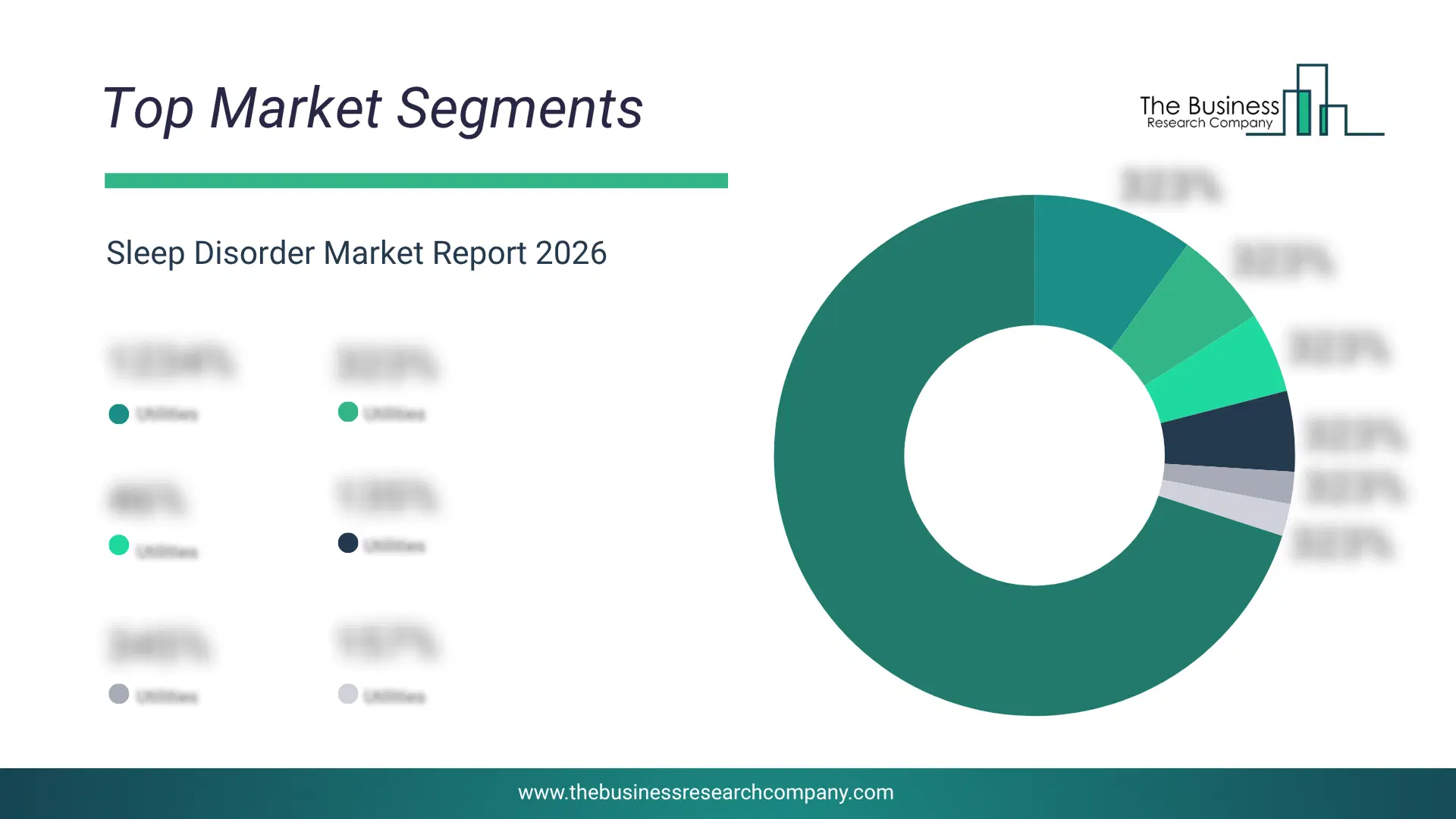
1) By Disorder Type: Insomnia, Sleep Apnea, Restless Legs Syndrome, Narcolepsy, Circadian Rhythm Disorders 2) By Treatment: Cognitive Behavioral Therapy, Medication Therapy, Psychiatric Treatment, Behavioral Treatment 3) By Diagnostic Method: Polysomnography, Home Sleep Testing, Actigraphy, Sleep Diaries, Questionnaires and Screening 4) By Distribution Channel: Retail Pharmacies, Online Sales, Hospital Pharmacies 5) By End-User: Hospitals And Sleep Centers, Home Care Settings, Academic Subsegments: 1) By Insomnia: Acute Insomnia, Chronic Insomnia, Onset Insomnia, Maintenance Insomnia, Behavioral Insomnia, Medication-Induced Insomnia 2) By Sleep Apnea: Obstructive Sleep Apnea, Central Sleep Apnea, Complex Sleep Apnea Syndrome, Mild Sleep Apnea, Moderate Sleep Apnea, Severe Sleep Apnea, Pediatric Sleep Apnea, Treatment-Resistant Sleep Apnea 3) By Restless Legs Syndrome: Primary Restless Legs Syndrome, Secondary Restless Legs Syndrome, Mild Restless Legs Syndrome, Moderate Restless Legs Syndrome, Severe Restless Legs Syndrome, Intermittent Restless Legs Syndrome, Chronic Persistent Restless Legs Syndrome 4) By Narcolepsy: Narcolepsy Type 1, Narcolepsy Type 2, Idiopathic Hypersomnia, Pediatric Narcolepsy, Treatment-Resistant Narcolepsy, Secondary Narcolepsy 5) By Circadian Rhythm Disorders: Delayed Sleep Phase Disorder, Advanced Sleep Phase Disorder, Shift Work Sleep Disorder, Jet Lag Disorder, Irregular Sleep-Wake Rhythm Disorder, Non-24-Hour Sleep-Wake Disorder The top segments in the sleep disorder market will be: • Insomnia will reach $20.85 Billion by 2030. • Sleep Apnea will reach $16.2 Billion by 2030. • Circadian Rhythm Disorders will reach $9.66 Billion by 2030. • Restless Legs Syndrome will reach $6.81 Billion by 2030. • Narcolepsy will reach $4.63 Billion by 2030.What Is The Driver Of The Sleep Disorder Market?
The increasing stress and anxiety levels are expected to propel the growth of the sleep disorder market going forward. Stress and anxiety levels refer to the prevalence of psychological strain and excessive worry within a population, often resulting from environmental, social, or economic pressures. The stress and anxiety levels are increasing due to work-related pressures, as employees face heavier workloads, tight deadlines, and job insecurity. Stress and anxiety levels contribute to sleep disorders by disrupting normal sleep patterns and increasing difficulty in falling or staying asleep. They worsen overall health by impairing restorative sleep, leading to fatigue, cognitive decline, and heightened risk of chronic conditions. For instance, in May?2024, according to the American Psychiatric Association (APA), a US-based professional association, 43% of U.S. adults said they felt more anxious in 2024 than the previous year, up from 37% in 2023 and 32% in 2022. Therefore, increasing stress and anxiety levels are driving the growth of the sleep disorder industry.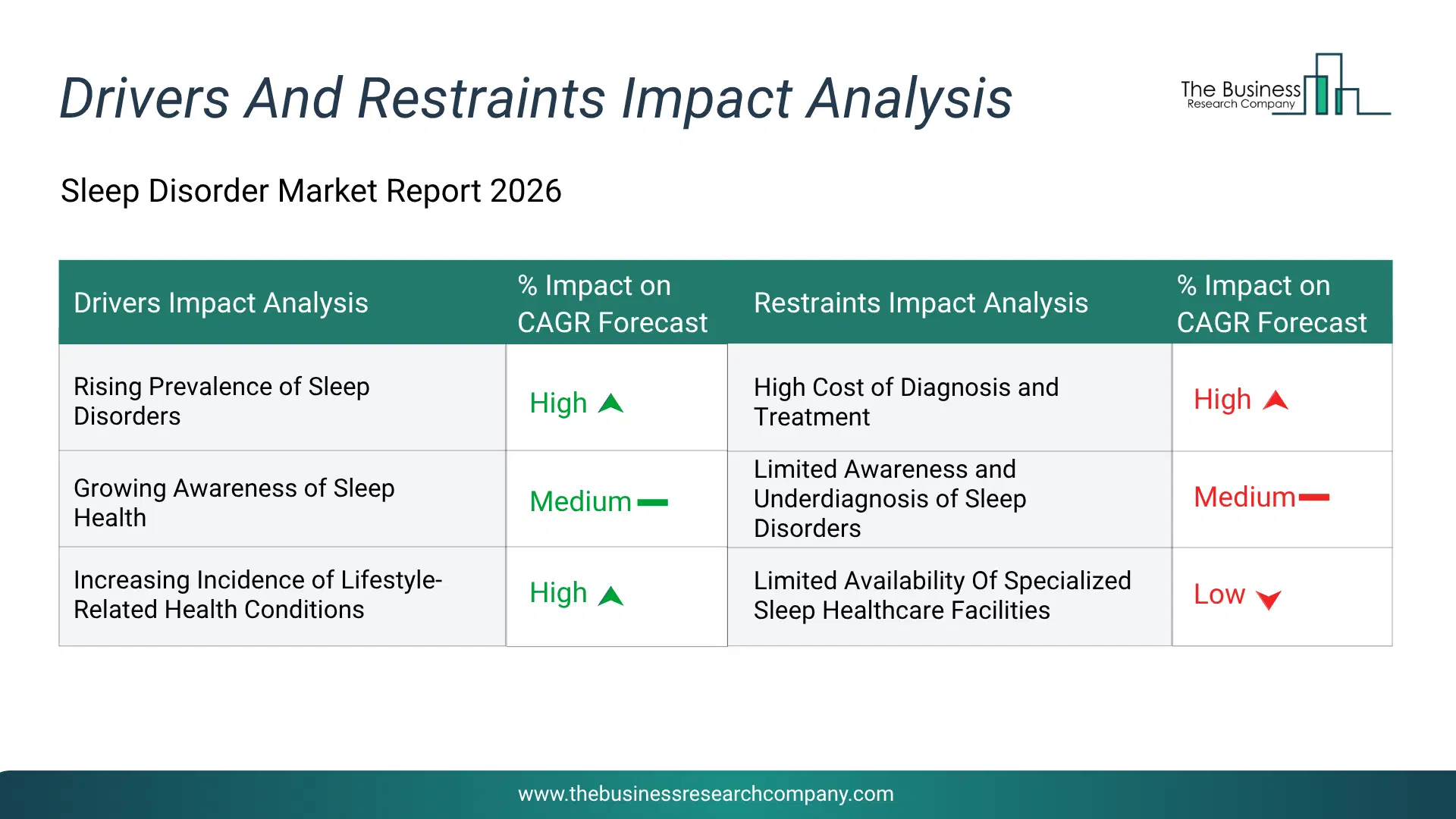
Infographic Chart Showing Key Market Drivers Analysis And Restraints For Sleep Disorder Market
The chart presents an impact analysis of key drivers and restraints, quantifying their relative influence on the market's growth rate and helping assess the balance between growth enablers and limiting factors. This chart offers a high-level perspective; the full report contains more detailed insights.
How Will The Drivers Impact Growth In The Global Sleep Disorder Market?
• Rising Prevalence of Sleep Disorders (High) – During the forecast period, the rising prevalence of sleep disorders is expected to become a key growth driver for the sleep disorder market by 2030. Rising prevalence of sleep disorders acts as a major driver for the sleep disorder market because the number of people suffering from conditions such as insomnia, obstructive sleep apnea, restless legs syndrome, and circadian rhythm disorders continue to increase worldwide. Aging populations, unhealthy lifestyles, rising stress levels, and the growing burden of chronic diseases are contributing to poor sleep quality. As more individuals experience persistent sleep-related symptoms, demand for sleep consultations, diagnostic sleep studies, and treatment services continues to rise. Healthcare providers are expanding sleep clinics and specialized care programs to address this growing patient population. • Growing Awareness of Sleep Health (Medium) – During the forecast period, the growing awareness of sleep health is expected to emerge as a major factor driving the expansion of the sleep disorder market by 2030. Growing awareness of sleep health acts as a major driver for the sleep disorder market because people are becoming more aware of the importance of quality sleep for maintaining physical health, mental well-being, and daily productivity. Public health campaigns, healthcare professionals, employers, and digital health platforms are encouraging individuals to recognize the symptoms of sleep disorders and seek timely medical care. As awareness improves, more patients undergo diagnosis and treatment rather than ignoring sleep-related problems. This leads to greater utilization of sleep clinics, behavioral therapy, and monitoring services. • Increasing Incidence of Lifestyle-Related Health Conditions (High) – During the forecast period, the increasing incidence of lifestyle-related health conditions is expected to act as a key growth catalyst for the sleep disorder market by 2030. Increasing incidence of lifestyle-related health conditions acts as a major driver for the sleep disorder market because conditions such as obesity, diabetes, cardiovascular diseases, anxiety, and depression are strongly associated with sleep disorders. Healthcare providers increasingly include sleep evaluations as part of chronic disease management to improve overall patient outcomes. Patients with these health conditions are more likely to require ongoing sleep diagnosis, monitoring, and therapy. The growing recognition of the relationship between sleep quality and overall health encourages greater utilization of sleep-related healthcare services.How Will The Restraints Impact Growth In The Global Sleep Disorder Market?
• High Cost of Diagnosis and Treatment (High) – During the forecast period, the high cost of diagnosis and treatment acts as a major restraint for the Sleep disorder market because comprehensive sleep evaluations, overnight sleep studies, continuous monitoring, and long-term therapies can be expensive for many patients. In several countries, limited insurance coverage and high out-of-pocket healthcare costs discourage individuals from seeking timely diagnosis and treatment. Many patients delay or avoid professional care due to financial concerns, especially when symptoms appear manageable. This reduces the number of diagnosed cases and limits the overall adoption of sleep disorder services, slowing market growth. • Limited Awareness and Underdiagnosis of Sleep Disorders (Medium) – During the forecast period, the limited awareness and underdiagnosis of sleep disorders acts as a major restraint for the Sleep disorder market because many people fail to recognize sleep problems as medical conditions that require professional treatment. Symptoms such as daytime fatigue, snoring, and poor sleep quality are often ignored or considered part of a normal lifestyle. As a result, a large number of individuals remain undiagnosed and do not receive appropriate medical care. This lowers the utilization of sleep clinics, diagnostic services, and treatment programs, restricting overall market expansion. • Limited Availability Of Specialized Sleep Healthcare Facilities (High) – During the forecast period, the limited availability of specialized sleep healthcare facilities acts as a major restraint for the Sleep Disorder market because accurate diagnosis and treatment often require access to sleep clinics, trained specialists, and advanced monitoring equipment. Many regions, particularly rural and developing areas, lack adequate sleep healthcare infrastructure and qualified professionals. Patients may face long waiting periods or need to travel significant distances to receive proper evaluation and treatment. These accessibility challenges reduce the number of diagnosed cases and limit the utilization of sleep disorder management solutions. As a result, insufficient healthcare infrastructure continues to restrict market expansion.Key Players In The Global Sleep Disorder Market
Major companies operating in the sleep disorder market are Johnson & Johnson, Merck & Co. Inc., Pfizer Inc., Sanofi S.A., GlaxoSmithKline plc, Eli Lilly and Company, Takeda Pharmaceutical Company Limited, Teva Pharmaceutical Industries Ltd., Otsuka Holdings Co. Ltd., Biogen Inc., Union Chimique Belge S.A., Sun Pharmaceutical Industries Ltd., Eisai Co. Ltd., Jazz Pharmaceuticals plc, Aurobindo Pharma Ltd., Dr. Reddy’s Laboratories Limited, H. Lundbeck A/S, Sumitomo Pharma Co. Ltd., Neurocrine Biosciences Inc., Harmony Biosciences Holdings Inc., Vanda Pharmaceuticals Inc.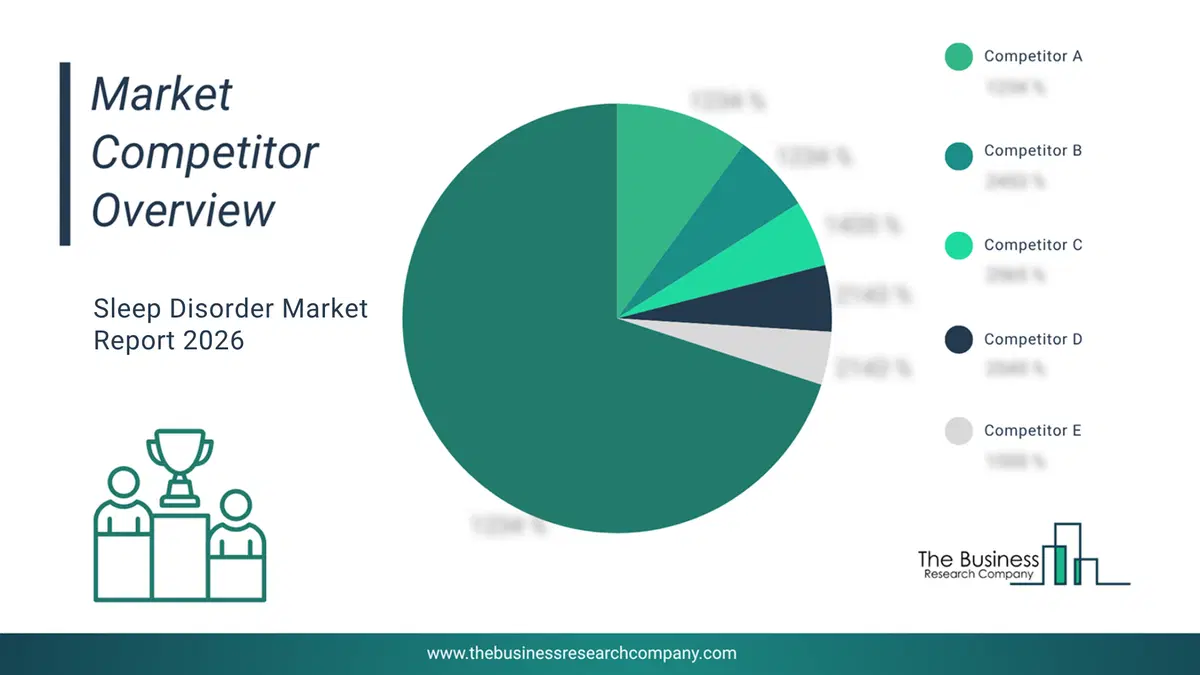
This chart is for illustrative purposes; the full report includes a detailed competitor analysis and comprehensive overview of the top 10 companies in the market.
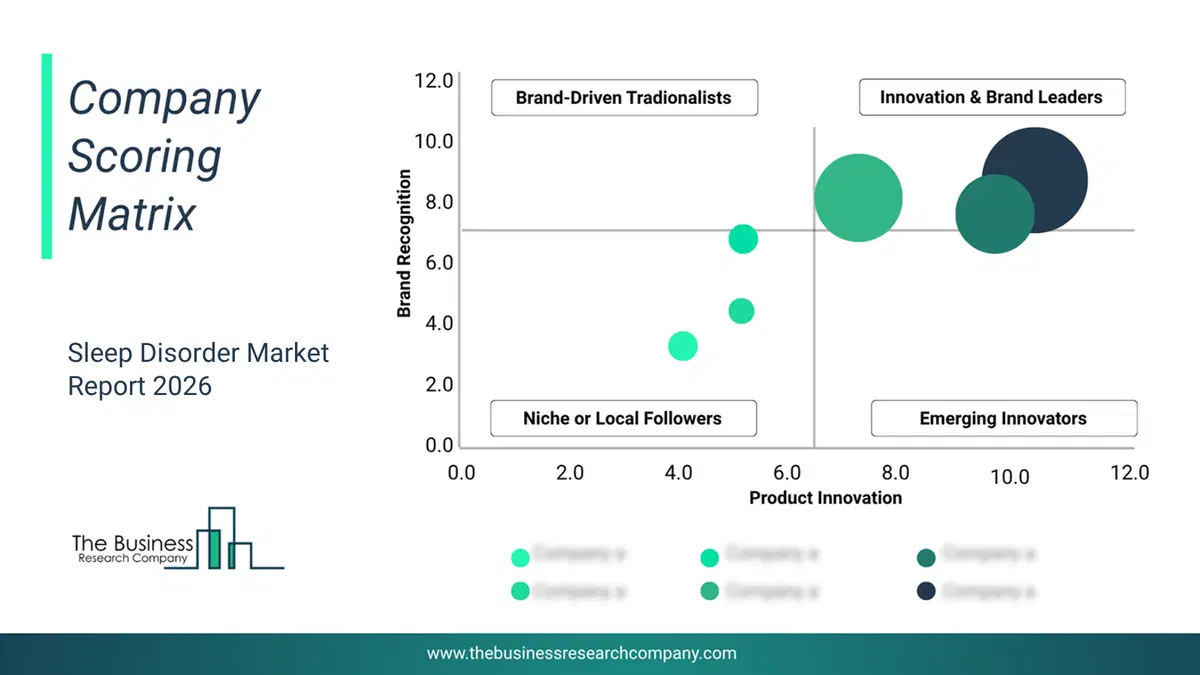
This chart maps companies by product innovation and brand strength, with bubble size indicating relative revenue, helping identify market leaders, challengers, and niche players. This is an illustrative chart; the full report provides a complete and accurate competitive analysis.
Global Sleep Disorder Market Trends and Insights
Major companies operating in the sleep disorder market are focusing on developing advanced therapeutic technologies, such as electrical vestibular nerve stimulation (VeNS) methods, to provide non-drug treatment options that enhance sleep quality, regulate circadian rhythms, and support patients with chronic insomnia. Electrical vestibular nerve stimulation (VeNS) method refers to a non-invasive therapeutic approach that delivers low-level electrical pulses to the vestibular nerve, a key neural pathway to influence brain regions involved in sleep regulation without surgical intervention or pharmaceuticals. For instance, in October 2024, Neurovalens Ltd., a UK–based health-tech company, launched Modius Sleep, an FDA-cleared non-invasive device designed to treat chronic insomnia using electrical vestibular nerve stimulation (VeNS). The headset-style medical device is worn for about 30 minutes each evening, sending safe electrical pulses to the vestibular nerve to influence the hypothalamus and brainstem areas that control circadian rhythm and sleep patterns, helping users fall asleep faster and stay asleep longer.What Are Latest Mergers And Acquisitions In The Sleep Disorder Market?
In July 2023, ResMed Inc., a US‑based provider of sleep and respiratory care solutions, acquired Somnoware Healthcare Systems Inc. for an undisclosed amount. With this acquisition, ResMed expanded its digital health and diagnostic capabilities, integrating Somnoware’s software to enhance the management of sleep disorder diagnosis and patient care across clinics and sleep labs. Somnoware Healthcare Systems Inc. is a US‑based healthcare software company specializing in sleep disorder diagnosis and management solutions.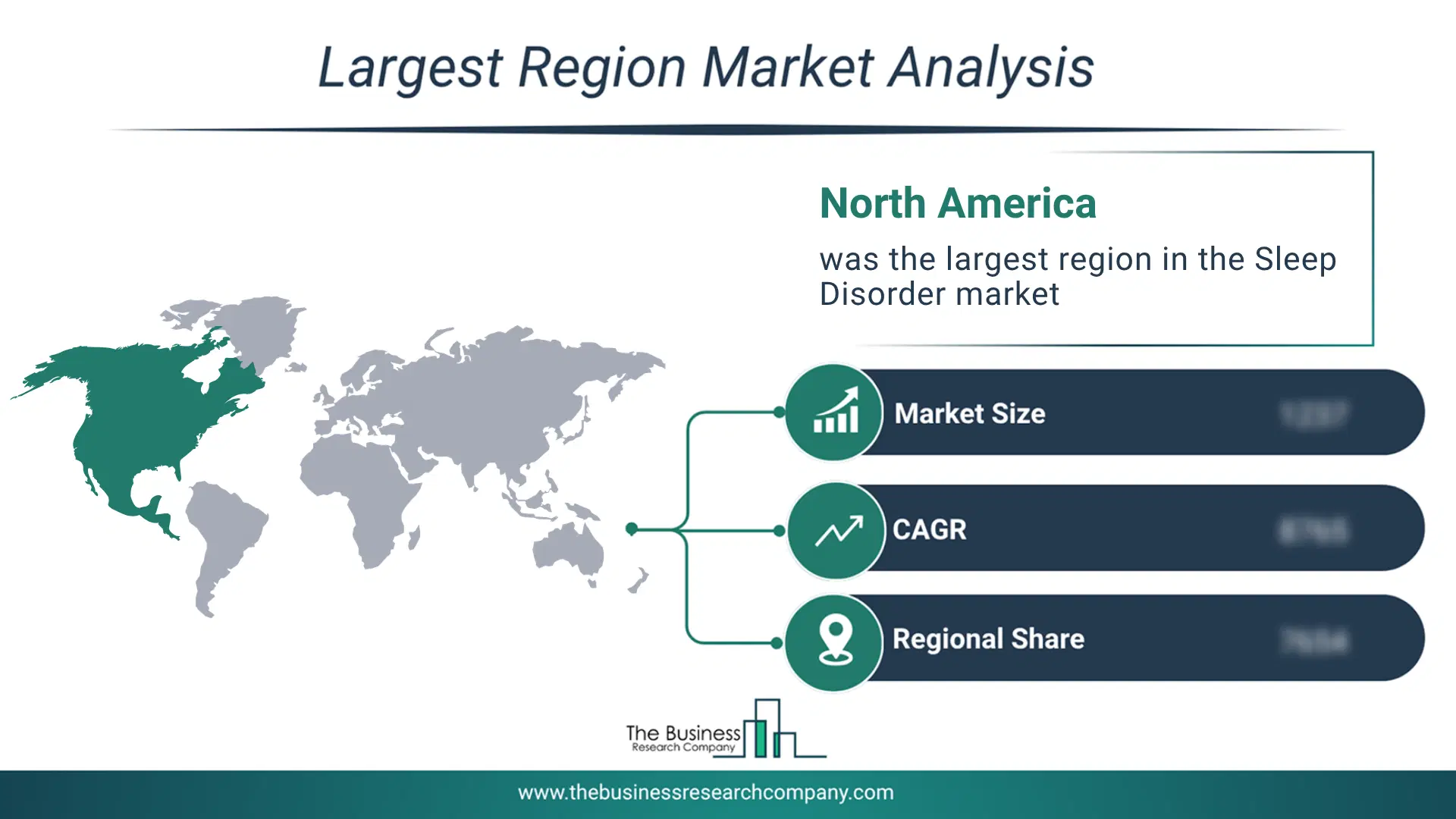
Regional Insights
North America was the largest region in the sleep disorder market in 2025. Asia-Pacific is expected to be the fastest-growing region in the forecast period. The regions covered in this market report are Asia-Pacific, South East Asia, Western Europe, Eastern Europe, North America, South America, Middle East, Africa. The countries covered in this market report are Australia, Brazil, China, France, Germany, India, Indonesia, Japan, Taiwan, Russia, South Korea, UK, USA, Canada, Italy, Spain.What Defines the Sleep Disorder Market?
The sleep disorder market consists of revenues earned by entities through sleep clinics, diagnostic sleep studies (polysomnography), cognitive and behavioral sleep therapy, sleep consultation, and monitoring services for sleep-related conditions. The market value includes the value of related goods sold by the service provider or included within the service offering. Only goods and services traded between entities or sold to end consumers are included.How is Market Value Defined and Measured?
The market value is defined as the revenues that enterprises gain from the sale of goods and/or services within the specified market and geography through sales, grants, or donations in terms of the currency (in USD unless otherwise specified). The revenues for a specified geography are consumption values that are revenues generated by organizations in the specified geography within the market, irrespective of where they are produced. It does not include revenues from resales along the supply chain, either further along the supply chain or as part of other products.
This chart presents market attractiveness based on a quantitative evaluation of growth, competition, strategic alignment, and risk, offering a clear view of opportunity areas for decision-making. This chart is for illustrative purposes; the full report contains the complete analysis.

This chart highlights the Total Addressable Market (TAM) by estimating the maximum revenue opportunity using an assumption-driven approach, supporting strategic planning and opportunity sizing across markets. The chart is illustrative; the full report provides a more comprehensive analysis.
What Key Data and Analysis Are Included in the Sleep Disorder Market Report 2026?
The sleep disorder market research report is one of a series of new reports from The Business Research Company that provides market statistics, including industry global market size, regional shares, competitors with the market share, detailed market segments, market trends and opportunities, and any further data you may need to thrive in the sleep disorder industry. The market research report delivers a complete perspective of everything you need, with an in-depth analysis of the current and future state of the industry.Sleep Disorder Market Report Forecast Analysis
| Report Attribute | Details |
|---|---|
| Market Size Value In 2026 | $38.23 billion |
| Revenue Forecast In 2030 | $65.51 billion |
| Growth Rate | CAGR of 14.7% from 2026 to 2030 |
| Base Year For Estimation | 2025 |
| Actual Estimates/Historical Data | 2020-2025 |
| Forecast Period | 2026 - 2030 |
| Market Representation | Revenue in USD Billion and CAGR from 2026 to 2030 |
| Segments Covered | Disorder Type, Treatment, Diagnostic Method, Distribution Channel, End-User |
| Regional Scope | Asia-Pacific, Western Europe, Eastern Europe, North America, South America, Middle East, Africa |
| Country Scope | The countries covered in the report are Australia, Brazil, China, France, Germany, India, ... |
| Key Companies Profiled | Johnson & Johnson, Merck & Co. Inc., Pfizer Inc., Sanofi S.A., GlaxoSmithKline plc, Eli Lilly and Company, Takeda Pharmaceutical Company Limited, Teva Pharmaceutical Industries Ltd., Otsuka Holdings Co. Ltd., Biogen Inc., Union Chimique Belge S.A., Sun Pharmaceutical Industries Ltd., Eisai Co. Ltd., Jazz Pharmaceuticals plc, Aurobindo Pharma Ltd., Dr. Reddy’s Laboratories Limited, H. Lundbeck A/S, Sumitomo Pharma Co. Ltd., Neurocrine Biosciences Inc., Harmony Biosciences Holdings Inc., Vanda Pharmaceuticals Inc. |
| Customization Scope | Request for Customization |
| Pricing And Purchase Options | Explore Purchase Options |