

Smart Education Market Report 2026
Global Outlook – By Component (Hardware, Software, Services), By Technology (Artificial Intelligence, Augmented Reality And Virtual Reality, Big Data And Analytics, Cloud Computing, Internet Of Things), By Deployment Mode (Cloud Based Deployment, On Premises Deployment, Hybrid Cloud Models), By Application (Learning Management Systems, Virtual Classrooms, Content Digitization, Assessment And Evaluation, Simulation-Based Training, Education Analytics), By End-User (K-12 Schools, Higher Education, Enterprises, Government Institutions, Corporate Training) – Market Size, Trends, Strategies, and Forecast to 2030
Smart Education Market Overview
• Smart Education market size has reached to $319.16 billion in 2025 • Expected to grow to $361.6 billion in 2030 at a compound annual growth rate (CAGR) of 13.5% • Growth Driver: Surge In Demand For Personalized Learning Fueling The Growth Of The Market Due To Improving Academic Outcomes • Market Trend: Innovation In AI And Interactive Technologies Driving Next-Generation Education Experiences • North America was the largest region in 2025 and Asia-Pacific is the fastest growing region.What Is Covered Under Smart Education Market?
Smart education refers to a digitally enabled approach to teaching and learning that leverages connected technologies, interactive tools, and data-driven systems to enhance instructional delivery, skill development, and learner engagement. It integrates online platforms, adaptive content, and real-time feedback mechanisms to improve accessibility, personalization, and efficiency in education and training environments. The main components of smart education are hardware, software, and services. Hardware refers to the physical digital devices such as smart boards, tablets, and interactive learning equipment used to enable technology-driven education environments. These solutions are enabled by various technologies, including artificial intelligence, augmented reality and virtual reality, big data and analytics, cloud computing, and internet of things. They are deployed through different deployment modes, such as cloud-based deployment, on-premises deployment, and hybrid cloud models. The solutions are applied across multiple applications, including learning management systems, virtual classrooms, content digitization, assessment and evaluation, simulation-based training, and education analytics, and are used by various end-users, such as K-12 schools, higher education institutions, enterprises, government institutions, and corporate training providers.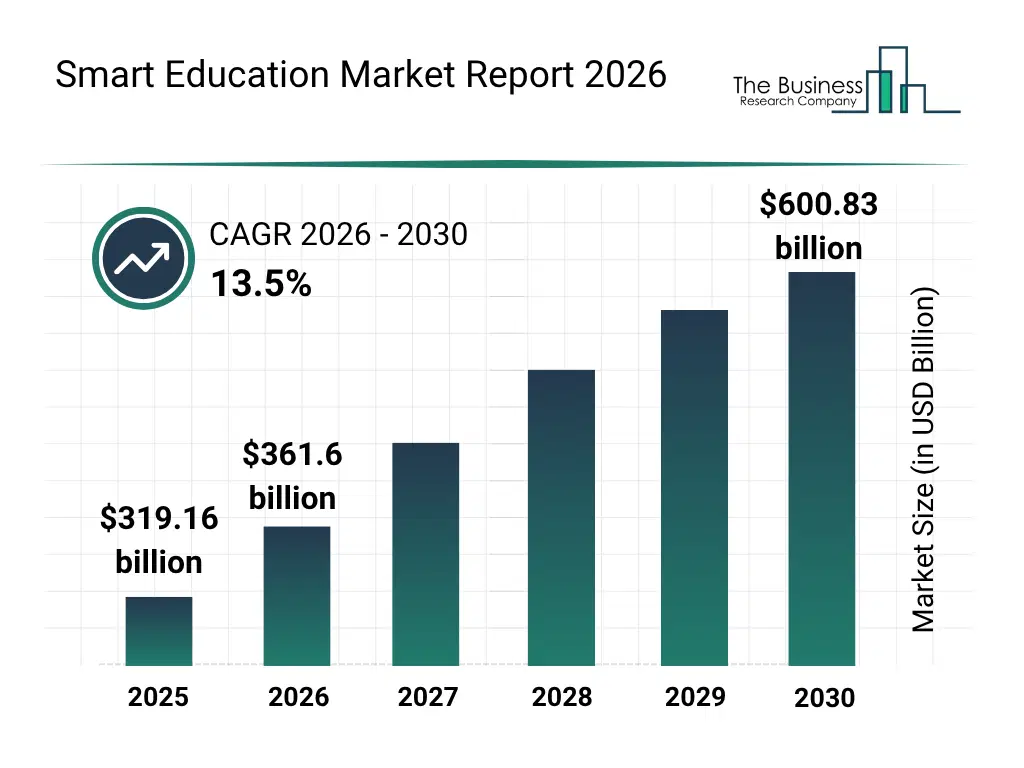
What Is The Smart Education Market Size and Share 2026?
The smart education market size has grown rapidly in recent years. It will grow from $319.16 billion in 2025 to $361.6 billion in 2026 at a compound annual growth rate (CAGR) of 13.3%. The growth in the historic period can be attributed to increasing internet penetration in educational institutions, growing adoption of e-learning platforms, rising demand for flexible learning environments, expansion of digital content libraries, increasing investment in education technology infrastructure.What Is The Smart Education Market Growth Forecast?
The smart education market size is expected to see rapid growth in the next few years. It will grow to $600.83 billion by 2030 at a compound annual growth rate (CAGR) of 13.5%. The growth in the forecast period can be attributed to growing demand for adaptive learning solutions, increasing deployment of cloud-based education platforms, rising adoption of immersive virtual learning environments, expansion of data-driven education analytics, growing focus on workforce upskilling and reskilling programs. Major trends in the forecast period include increasing adoption of personalized learning platforms, rising demand for real-time student performance monitoring, growing integration of gamified learning content, expansion of remote and hybrid learning models, rising focus on digital skill development programs.
Global Smart Education Market Segmentation
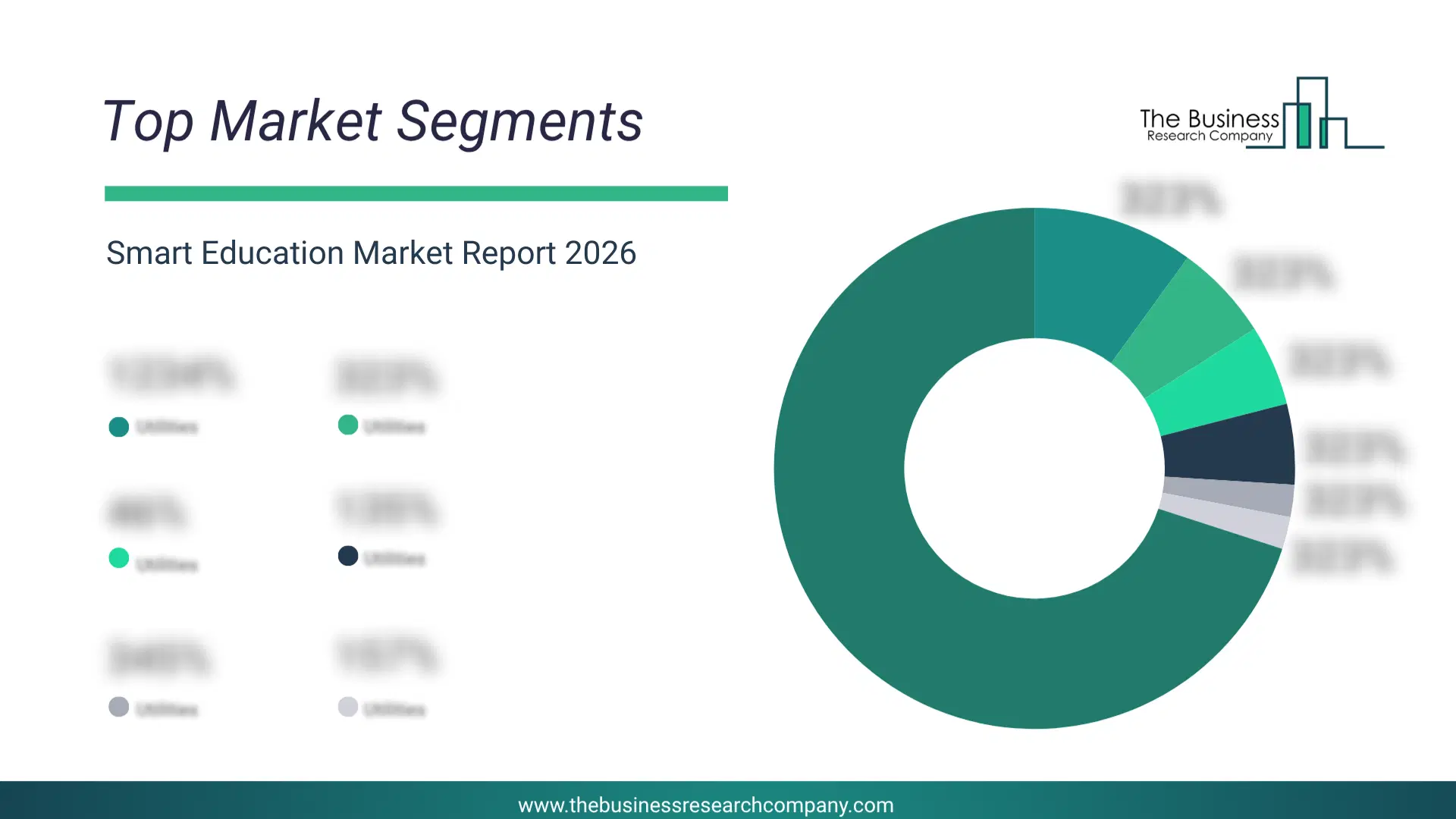
1) By Component: Hardware, Software, Services 2) By Technology: Artificial Intelligence, Augmented Reality And Virtual Reality, Big Data And Analytics, Cloud Computing, Internet Of Things 3) By Deployment Mode: Cloud Based Deployment, On Premises Deployment, Hybrid Cloud Models 4) By Application: Learning Management Systems, Virtual Classrooms, Content Digitization, Assessment And Evaluation, Simulation-Based Training, Education Analytics 5) By End-User: K-12 Schools, Higher Education, Enterprises, Government Institutions, Corporate Training Subsegments: 1) By Hardware: Interactive Displays, Student Devices, Teacher Devices, Servers And Storage Devices, Networking Equipment, Sensors And Internet Connected Devices 2) By Software: Learning Management Platforms, Virtual Classroom Platforms, Content Authoring Tools, Assessment And Evaluation Software, Education Analytics Platforms, Student Information Systems 3) By Services: Consulting Services, Implementation And Integration Services, Training And Professional Development Services, Support And Maintenance Services, Content Development ServicesWhat Is The Driver Of The Smart Education Market?
The increasing demand for personalized learning experiences is expected to propel the growth of the smart education market going forward. Personalized learning experiences refer to instructional approaches that tailor content, pacing, and assessments to match individual student needs and abilities. The rise in demand for personalized learning experiences is driven by the need for better academic outcomes, higher student engagement, and more learner-centered education models. Smart education supports personalized learning by using adaptive technologies, artificial intelligence, and data analytics to customize lessons, monitor progress, and adjust difficulty levels in real time based on learner performance. For instance, in June 2025, according to the University of Chicago Education Lab, a US-based academic research organization, a study involving 17,330 students found that personalized tutoring interventions resulted in a 0.06–0.09 standard deviation improvement, equivalent to 1–2 months of additional learning, while high-participation programs showed up to 38% higher math learning gains compared to non-participants. Therefore, the increasing demand for personalized learning experiences is driving the growth of the smart education industry.Key Players In The Global Smart Education Market
Major companies operating in the smart education market are upGrad Education Private Limited, Anthology Inc., Simplilearn Solutions Private Limited, LEAD School Private Limited, MasterClass Inc., Vedantu Innovations Private Limited, D2L Corporation, Go1.com Pty Ltd., InterviewBit Technologies Private Limited, Age of Learning Inc., Degreed Inc., Kajabi LLC, Thinkific Labs Inc., Classplus, Adda247, Teachmint Technologies Private Limited, ClassDojo Inc., Testbook Edu Solutions Private Limited, Skillshare Inc., MagicSchool AI Inc., IXL Learning Inc.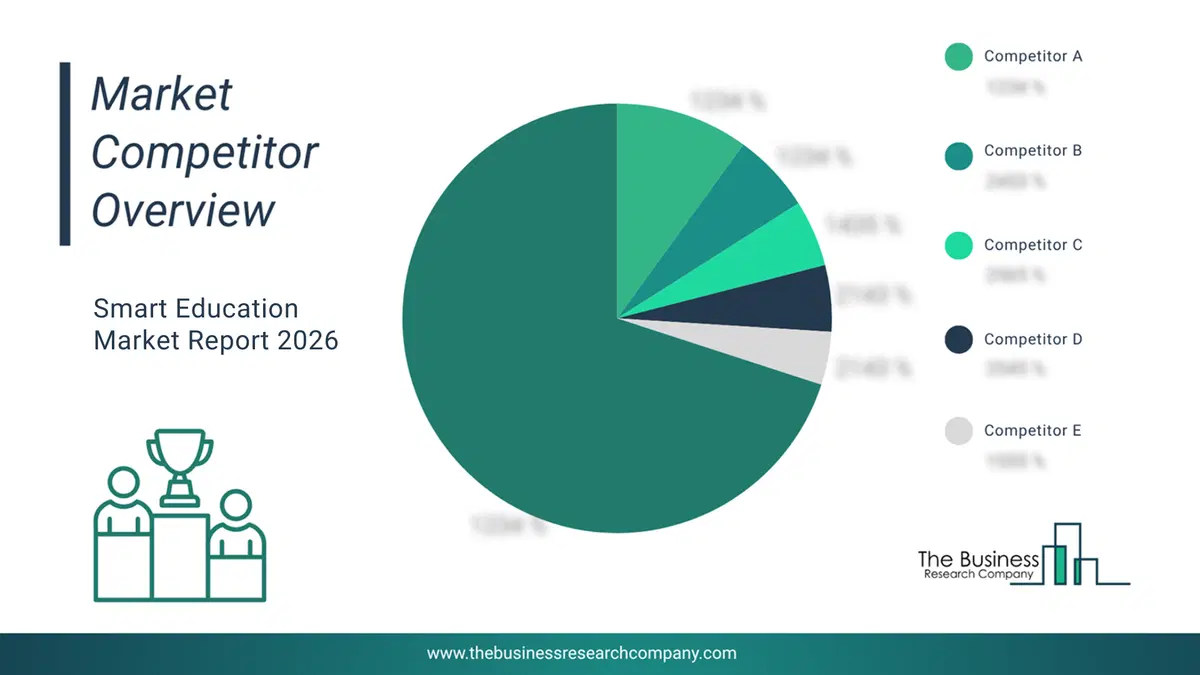
This chart is for illustrative purposes; the full report includes a detailed competitor analysis and comprehensive overview of the top 10 companies in the market.
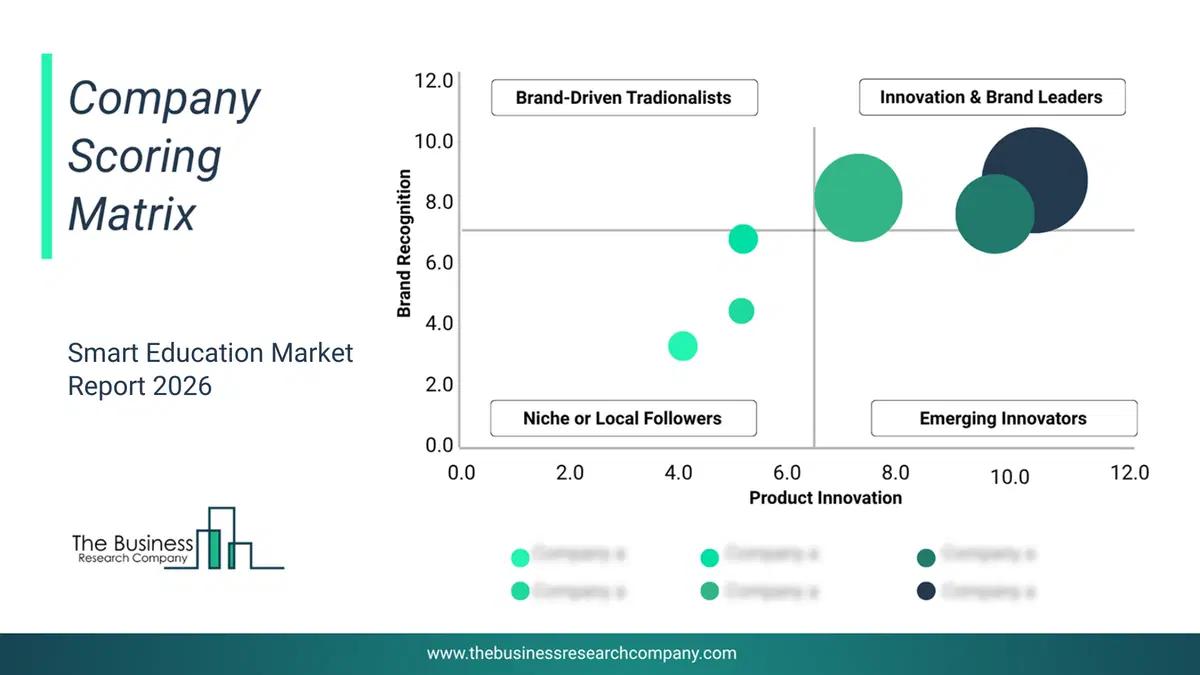
This chart maps companies by product innovation and brand strength, with bubble size indicating relative revenue, helping identify market leaders, challengers, and niche players. This is an illustrative chart; the full report provides a complete and accurate competitive analysis.
Global Smart Education Market Trends and Insights
Major companies operating in the smart education market are focusing on developing innovative solutions, such as AI-powered interactive flat panels, to enhance personalized learning, improve classroom collaboration through data-driven teaching tools, streamline hybrid education delivery, and provide scalable digital learning environments to a broader user base. AI-powered interactive flat panels are technology-enabled smart classroom displays that integrate touch-enabled screens, cloud connectivity, annotation software, collaboration tools, and artificial intelligence features to deliver engaging lessons, real-time interaction, and improved learning outcomes compared to traditional whiteboards and projectors. For instance, in November 2025, SMART Technologies, a Canada-based education technology company, launched its first Make in India SMART interactive flat panels designed for education at DIDAC 2025. The panels are locally manufactured for the Indian market and offer superior energy efficiency, enabling cost-effective deployment for schools and institutions. They feature SMART Ink technology for seamless annotation across files, websites, and applications, allowing more interactive teaching experiences. Integrated with Lumio’s AI capabilities, the solution enables educators to create adaptive lessons, collaborative activities, and engaging classroom sessions. It supports intuitive teaching workflows, multi-user touch functionality, and scalable deployment across classrooms, universities, and corporate learning environments seeking advanced digital education infrastructure.What Are Latest Mergers And Acquisitions In The Smart Education Market?
In December 2024, Global Brain, a Japan-based venture capital firm, acquired the shares of Smart Education Ltd. for an undisclosed amount. With this acquisition, Global Brain aims to support the expansion of Smart Education’s childcare and digital learning solutions for preschools, strengthen its position in Japan’s evolving early childhood education sector, and enhance value creation through collaboration with Canon Marketing Japan Inc. via its MIRAI Fund. Smart Education, Ltd. is a Japan-based company specializing in providing ICT-based educational tools and nature-integrated preschool environments designed to foster children’s independence and development.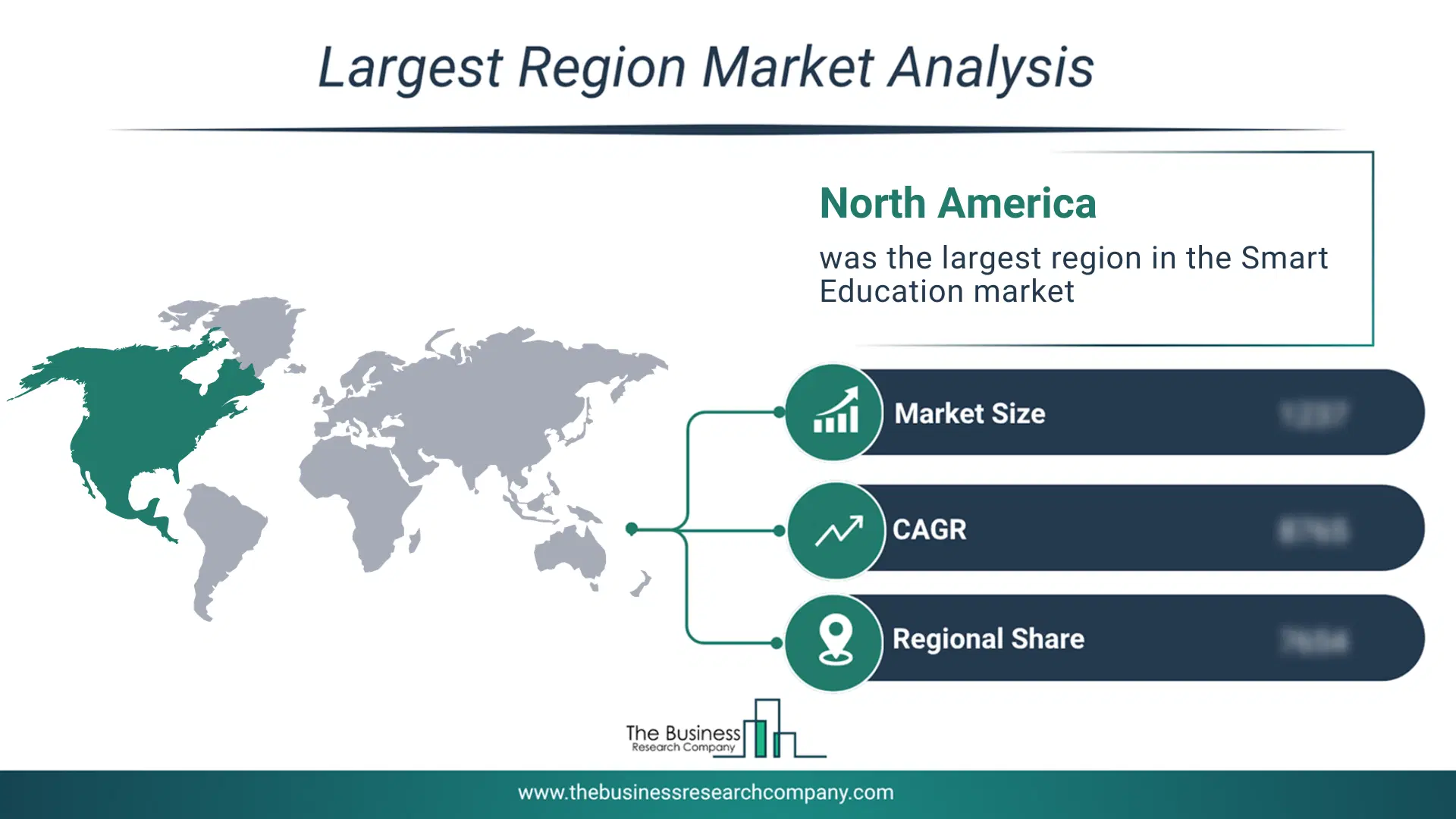
Regional Insights
North America was the largest region in the smart education market in 2025. Asia-Pacific is expected to be the fastest-growing region in the forecast period. The regions covered in this market report are Asia-Pacific, South East Asia, Western Europe, Eastern Europe, North America, South America, Middle East, Africa. The countries covered in this market report are Australia, Brazil, China, France, Germany, India, Indonesia, Japan, Taiwan, Russia, South Korea, UK, USA, Canada, Italy, Spain.What Defines the Smart Education Market?
The smart education market consists of revenues earned by entities by providing services such as AI-based personalized learning services, digital content development services, skill development and certification services, academic support services, and gamified learning services. The market value includes the value of related goods sold by the service provider or included within the service offering. The smart education market also includes sales of interactive flat panels, smart projectors, interactive whiteboards, smart classroom speakers, and biometric attendance systems. Values in this market are ‘factory gate’ values, that is the value of goods sold by the manufacturers or creators of the goods, whether to other entities (including downstream manufacturers, wholesalers, distributors and retailers) or directly to end customers. The value of goods in this market includes related services sold by the creators of the goods.How is Market Value Defined and Measured?
The market value is defined as the revenues that enterprises gain from the sale of goods and/or services within the specified market and geography through sales, grants, or donations in terms of the currency (in USD unless otherwise specified). The revenues for a specified geography are consumption values that are revenues generated by organizations in the specified geography within the market, irrespective of where they are produced. It does not include revenues from resales along the supply chain, either further along the supply chain or as part of other products.
This chart presents market attractiveness based on a quantitative evaluation of growth, competition, strategic alignment, and risk, offering a clear view of opportunity areas for decision-making. This chart is for illustrative purposes; the full report contains the complete analysis.

This chart highlights the Total Addressable Market (TAM) by estimating the maximum revenue opportunity using an assumption-driven approach, supporting strategic planning and opportunity sizing across markets. The chart is illustrative; the full report provides a more comprehensive analysis.
What Key Data and Analysis Are Included in the Smart Education Market Report 2026?
The smart education market research report is one of a series of new reports from The Business Research Company that provides market statistics, including industry global market size, regional shares, competitors with the market share, detailed market segments, market trends and opportunities, and any further data you may need to thrive in the smart education industry. The market research report delivers a complete perspective of everything you need, with an in-depth analysis of the current and future state of the industry.Smart Education Market Report Forecast Analysis
| Report Attribute | Details |
|---|---|
| Market Size Value In 2026 | $361.6 billion |
| Revenue Forecast In 2030 | $600.83 billion |
| Growth Rate | CAGR of 13.50% from 2026 to 2030 |
| Base Year For Estimation | 2025 |
| Actual Estimates/Historical Data | 2020-2025 |
| Forecast Period | 2026 - 2030 - 2030 |
| Market Representation | Revenue in USD Billion and CAGR from 2026 to 2030 |
| Segments Covered | Component, Technology, Deployment Mode, Application, End-User |
| Regional Scope | Asia-Pacific, Western Europe, Eastern Europe, North America, South America, Middle East, Africa |
| Country Scope | The countries covered in the report are Australia, Brazil, China, France, Germany, India, Indonesia, Japan, Taiwan, Russia, South Korea, UK, USA, Canada, Italy, Spain. |
| Key Companies Profiled | upGrad Education Private Limited, Anthology Inc., Simplilearn Solutions Private Limited, LEAD School Private Limited, MasterClass Inc., Vedantu Innovations Private Limited, D2L Corporation, Go1.com Pty Ltd., InterviewBit Technologies Private Limited, Age of Learning Inc., Degreed Inc., Kajabi LLC, Thinkific Labs Inc., Classplus, Adda247, Teachmint Technologies Private Limited, ClassDojo Inc., Testbook Edu Solutions Private Limited, Skillshare Inc., MagicSchool AI Inc., IXL Learning Inc. |
| Customization Scope | Request for Customization |
| Pricing And Purchase Options | Explore Purchase Options |