
Smart Space Market Report 2026
Global Outlook – By Component (Hardware, Software, Services), By Space Type (Smart Indoor Space, Smart Outdoor Space), By Application (Energy Management And Optimization, Layout And Space management, Emergency And Disaster Management, Security Management, Other Applications), By Industry (Banking, Financial Services And Insurance (BFSI), Retail And E-Commerce, Government, Media And Entertainment, Food And Beverages, Healthcare, Other Industries) – Market Size, Trends, Strategies, and Forecast to 2030
Smart Space Market Overview
• Smart Space market size has reached to $22.65 billion in 2025 • Expected to grow to $43.12 billion in 2030 at a compound annual growth rate (CAGR) of 13.7% • Growth Driver: Sustainable Building Practices Drive Growth In The Smart Space Market • Market Trend: Innovative IOT Solutions Transforming Real Estate • North America was the largest region in 2025 and Asia-Pacific is the fastest growing region.What Is Covered Under Smart Space Market?
Smart spaces are facilities or public spaces that have sensors installed to collect data that may be used to provide insights into the environment, services provided, and how occupants interact with their surroundings. These smart space insights can be acquired in real-time or from historical data, and then used to improve safety, operations, or the user experience. Smart spaces are used to collect data and generate insights about environmental conditions. The main types of smart space are hardware, software, and services. Software consists of a set of programs, procedures, and routines that are related to the operation of a computer system. Every aspect of the working day, in and around the building, can be conducted from a mobile device. The different space types include smart indoor space and smart outdoor space. These are used in various industries such as banking, financial services and insurance (BFSI), retail and e-commerce, government, media and entertainment, food and beverages, healthcare, automotive, and others. The various applications include energy management and optimization, layout and space management, emergency and disaster management, security management, and others.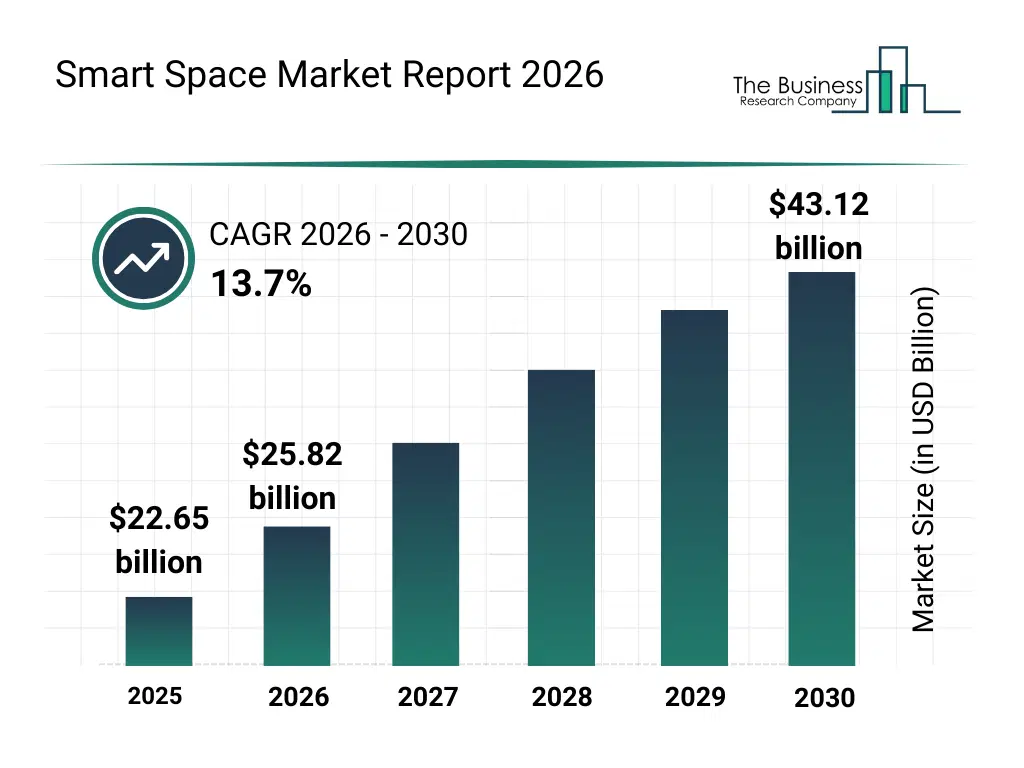
What Is The Smart Space Market Size and Share 2026?
The smart space market size has grown rapidly in recent years. It will grow from $22.65 billion in 2025 to $25.82 billion in 2026 at a compound annual growth rate (CAGR) of 14.0%. The growth in the historic period can be attributed to growing urban infrastructure digitization, increased adoption of iot sensors in buildings, rising focus on operational efficiency in public spaces, expansion of smart city initiatives, availability of cloud-based analytics platforms.What Is The Smart Space Market Growth Forecast?
The smart space market size is expected to see rapid growth in the next few years. It will grow to $43.12 billion in 2030 at a compound annual growth rate (CAGR) of 13.7%. The growth in the forecast period can be attributed to increasing investments in smart infrastructure projects, rising demand for data-driven space optimization, expansion of ai-powered space management solutions, growing focus on sustainability-driven building operations, increasing integration of smart spaces with city-wide platforms. Major trends in the forecast period include increasing deployment of sensor-rich environments, rising adoption of real-time space analytics platforms, growing integration of intelligent energy management systems, expansion of occupant-centric space design solutions, enhanced focus on safety and environmental monitoring.
Global Smart Space Market Segmentation
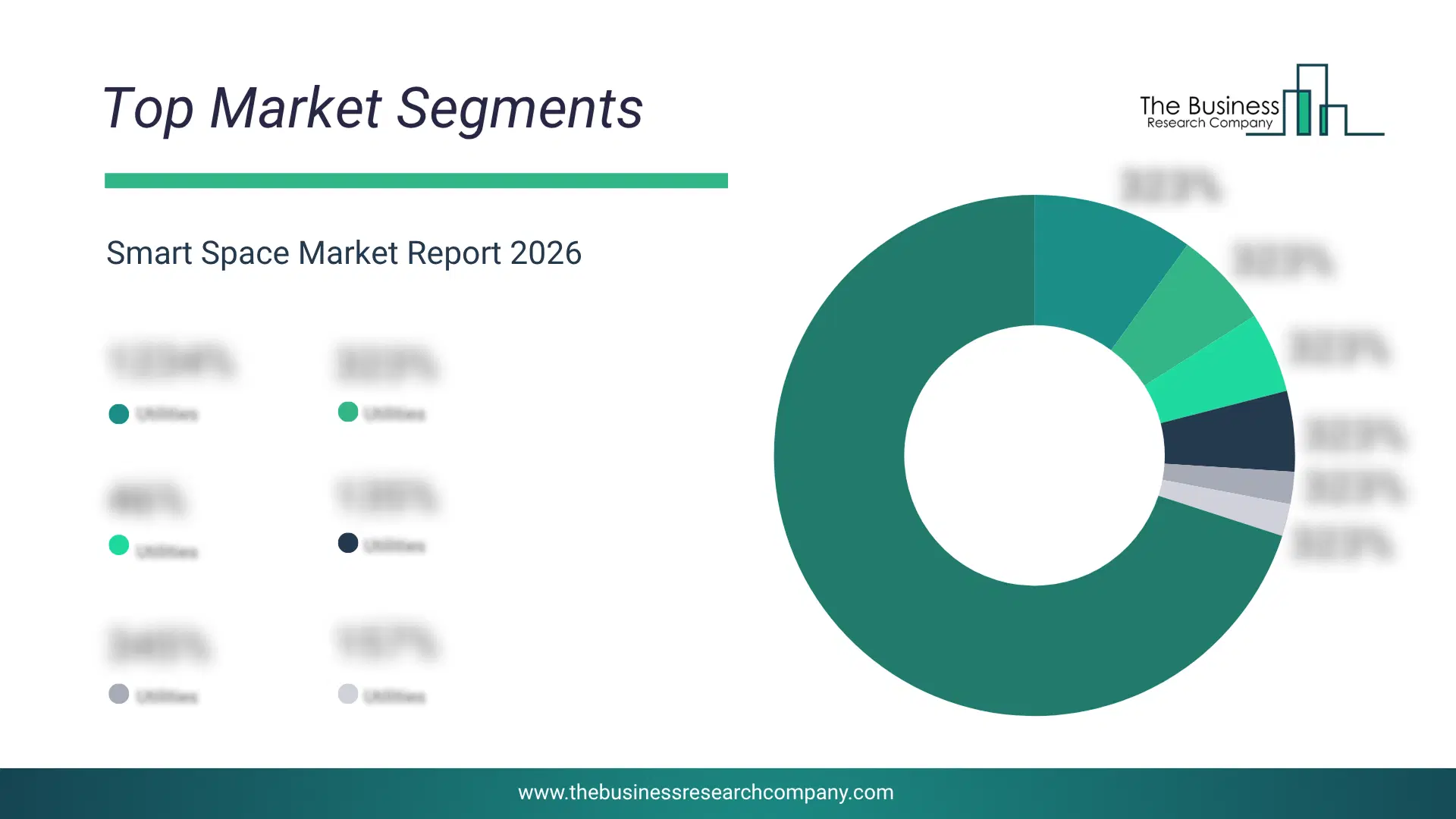
1) By Component: Hardware, Software, Services 2) By Space Type: Smart Indoor Space, Smart Outdoor Space 3) By Application: Energy Management And Optimization, Layout And Space management, Emergency And Disaster Management, Security Management, Other Applications 4) By Industry: Banking, Financial Services And Insurance (BFSI), Retail And E-Commerce, Government, Media And Entertainment, Food And Beverages, Healthcare, Other Industries Subsegments: 1) By Hardware: IoT Devices And Sensors, Smart Lighting Systems, Smart Thermostats, Security Cameras And Systems, Networking Equipment 2) By Software: Management Platforms, Data Analytics Software, Security Software, User Interface Applications, Integration Solutions 3) By Services: Consulting Services, Installation And Deployment Services, Maintenance And Support Services, Managed Services, Training And Education ServicesWhat Is The Driver Of The Smart Space Market?
Green building initiatives and environmental concerns are expected to propel the growth of the smart space market going forward. A green or sustainable building is a building that maintains or improves the quality of life of the environment in which it is located. These buildings rely on smart technology that is incorporated into the entire system to improve the building's performance and functionalities. These technologies not only store data but also analyze it and deliver relevant results. For instance, in July 2024, according to the U.S. Green Building Council, a US-based non-profit organization, in 2024, they were part of over 46,000 residential projects certified under the LEED green building rating system, with 2023 seeing nearly a 5% rise in new LEED residential project registrations. Therefore, green building initiatives and environmental concerns are driving the smart space industry growth.Key Players In The Global Smart Space Market
Major companies operating in the smart space market are Cisco Systems Inc.; Microsoft Corporation; International Business Machines Corporation; Schneider Electric SE; Siemens AG; ABB Ltd.; Honeywell International Inc.; Johnson Controls International plc; Huawei Technologies Co. Ltd.; Hitachi Ltd.; Mitsubishi Electric Corporation; Legrand SA; Juniper Networks Inc.; Hewlett Packard Enterprise Company; Spacewell; SmartSpace Software PLC; ICONICS Inc.; Ubisense Limited; Adappt Intelligence Inc.; Smarten Spaces Inc.; Metrikus Ltd.; SpaceOS Limited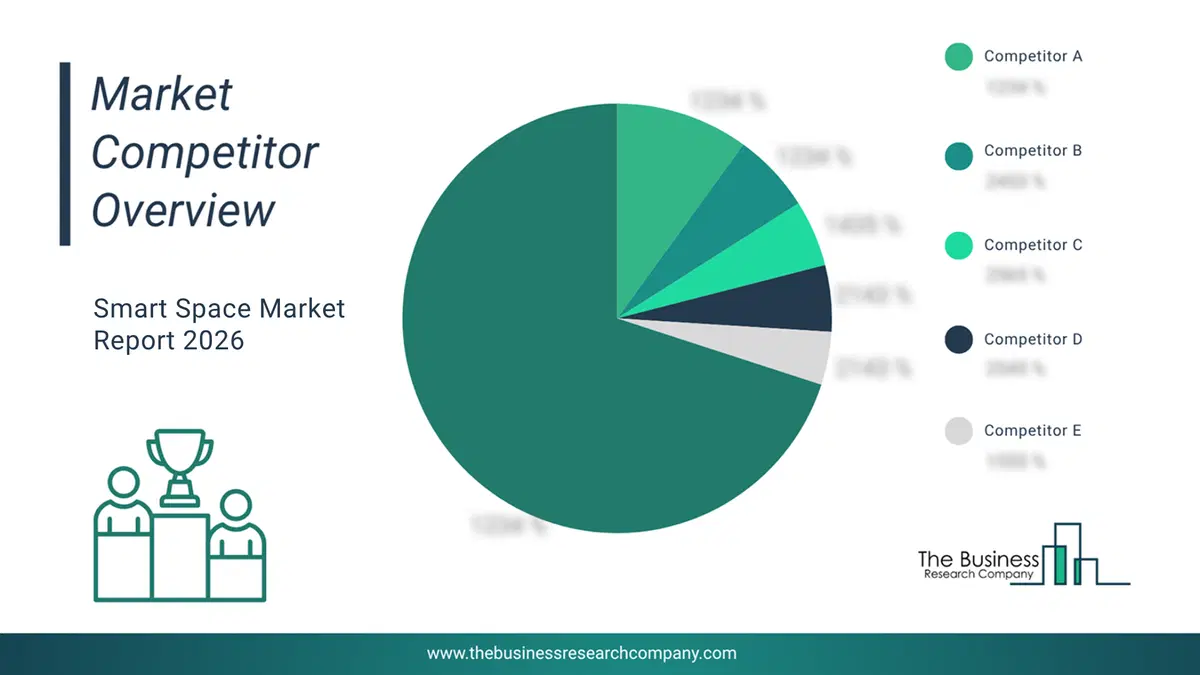
This chart is for illustrative purposes; the full report includes a detailed competitor analysis and comprehensive overview of the top 10 companies in the market.
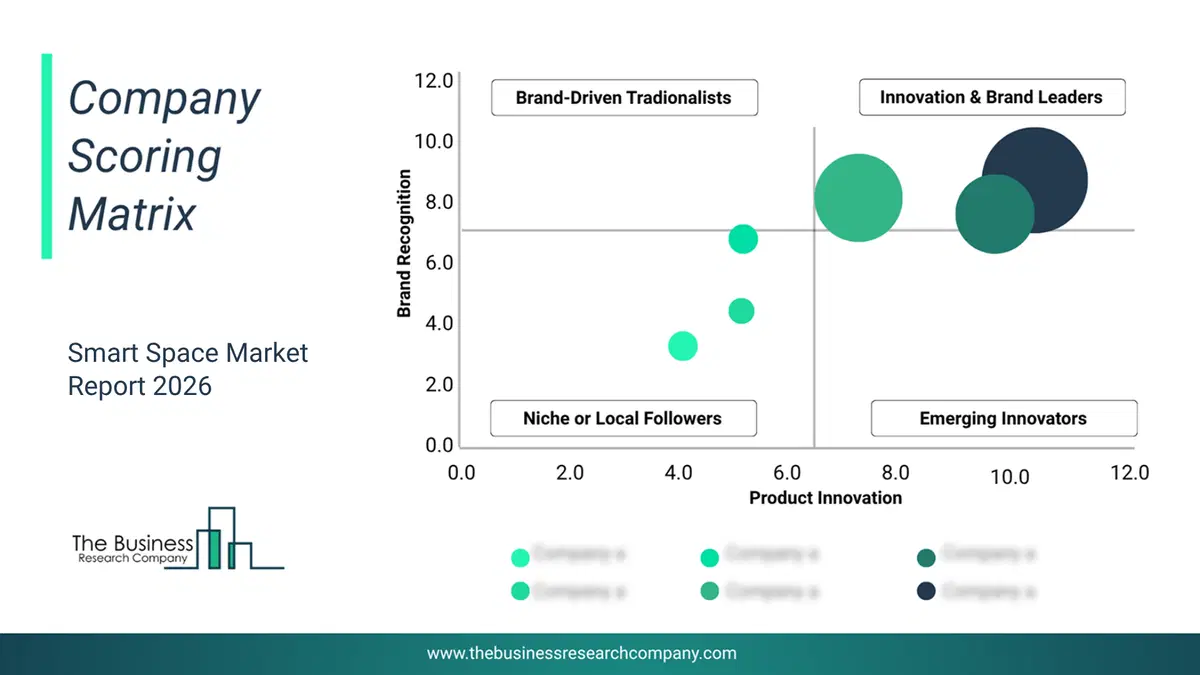
This chart maps companies by product innovation and brand strength, with bubble size indicating relative revenue, helping identify market leaders, challengers, and niche players. This is an illustrative chart; the full report provides a complete and accurate competitive analysis.
Global Smart Space Market Trends and Insights
Major companies operating in the smart space market are using IoT technology to increase their profitability in the market. The use of IoT in smart spaces enables real-time data collection and analysis to optimize and automate processes, enhance user experiences, and improve resource management in various environments, such as homes, offices, and cities. For instance, in September 2023, Vantiva SA, a France-based broadband company launched a technology called Vantiva Smart Storage. Vantiva Smart Storage is an end-to-end IoT SaaS solution that transforms self-storage facilities into smart spaces. The system's goal is to give managers and owners of real estate an integrated hardware and software solution that boosts productivity and opens up new revenue opportunities. Incorporating cutting-edge IoT technology, the solution is easy to implement and administer and guarantees a risk-free investment with a predictable and quantifiable return on investment. The platform supports many communication protocols, integrates third-party linked devices and subsystems, and is fully configurable and future-proof.What Are Latest Mergers And Acquisitions In The Smart Space Market?
In May 2024, Sign In Solutions Inc., a U.S.-based provider of cloud-based visitor management solutions, acquired SmartSpace Software PLC for an undisclosed amount. With this acquisition, Sign In Solutions, Inc. aims to combine SmartSpace’s “SwipedOn” and “Space Connect” brands with its own platform to deliver a more comprehensive suite of visitor, desk, and meeting room management software, better optimizing safety, security, space utilization, and compliance across hybrid workplace environments. SmartSpace Software PLC is a UK-based technology company that designs SaaS solutions for visitor management, desk booking, meeting room booking, and workspace analytics.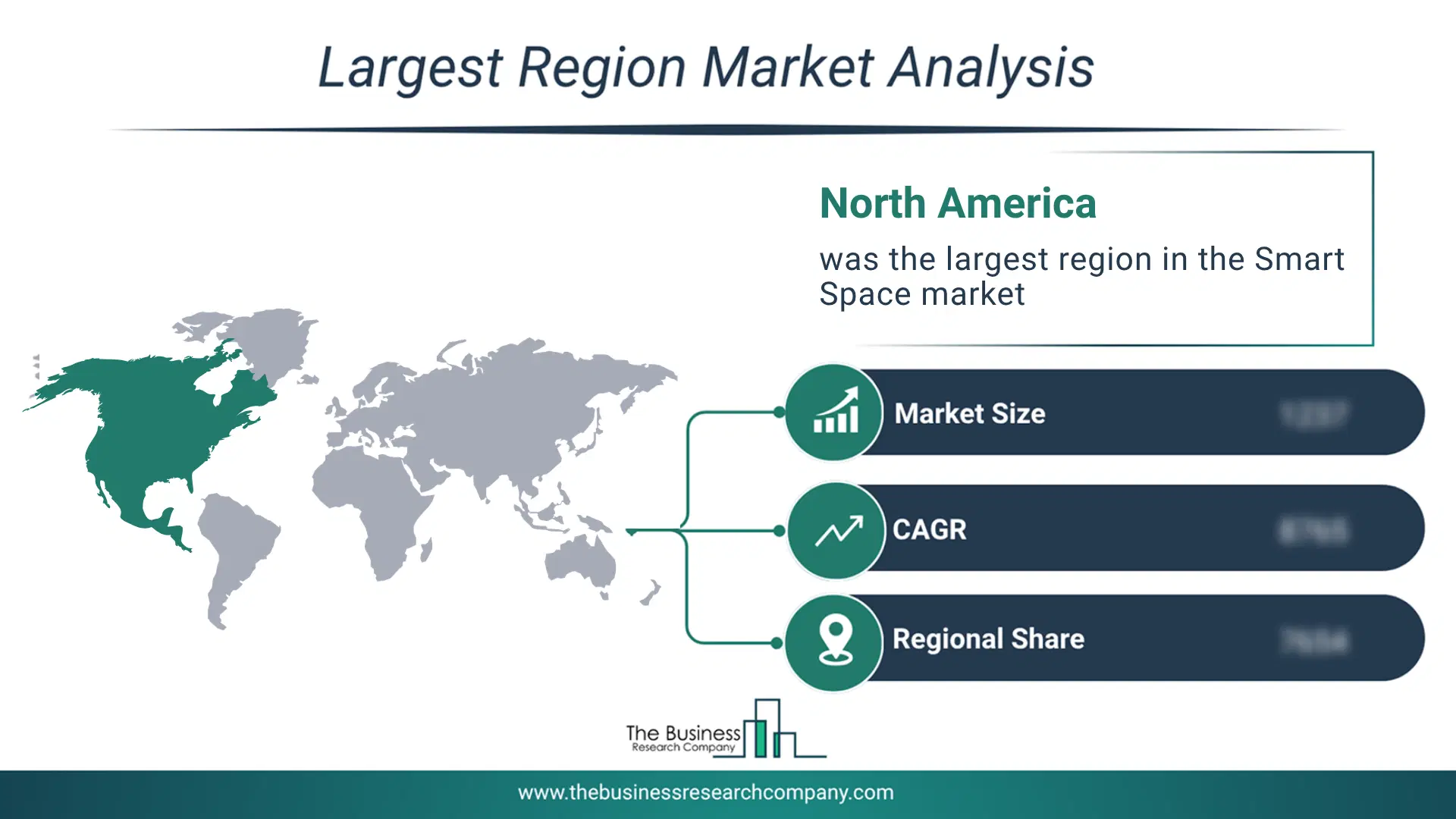
Regional Insights
North America was the largest region in the smart space market in 2025. Asia-Pacific is expected to be the fastest-growing region in the forecast period. The regions covered in this market report are Asia-Pacific, South East Asia, Western Europe, Eastern Europe, North America, South America, Middle East, Africa. The countries covered in this market report are Australia, Brazil, China, France, Germany, India, Indonesia, Japan, Taiwan, Russia, South Korea, UK, USA, Canada, Italy, SpainWhat Defines the Smart Space Market?
The smart spaces market includes revenues earned by entities by providing services such as speed control, lane positioning, and communication. The market value includes the value of related goods sold by the service provider or included within the service offering. Only goods and services traded between entities or sold to end consumers are included.How is Market Value Defined and Measured?
The market value is defined as the revenues that enterprises gain from the sale of goods and/or services within the specified market and geography through sales, grants, or donations in terms of the currency (in USD unless otherwise specified). The revenues for a specified geography are consumption values that are revenues generated by organizations in the specified geography within the market, irrespective of where they are produced. It does not include revenues from resales along the supply chain, either further along the supply chain or as part of other products.
This chart presents market attractiveness based on a quantitative evaluation of growth, competition, strategic alignment, and risk, offering a clear view of opportunity areas for decision-making. This chart is for illustrative purposes; the full report contains the complete analysis.

This chart highlights the Total Addressable Market (TAM) by estimating the maximum revenue opportunity using an assumption-driven approach, supporting strategic planning and opportunity sizing across markets. The chart is illustrative; the full report provides a more comprehensive analysis.
What Key Data and Analysis Are Included in the Smart Space Market Report 2026?
The smart space market research report is one of a series of new reports from The Business Research Company that provides market statistics, including industry global market size, regional shares, competitors with the market share, detailed market segments, market trends and opportunities, and any further data you may need to thrive in the smart space industry. The market research report delivers a complete perspective of everything you need, with an in-depth analysis of the current and future state of the industry.Smart Space Market Report Forecast Analysis
| Report Attribute | Details |
|---|---|
| Market Size Value In 2026 | $25.82 billion |
| Revenue Forecast In 2030 | $43.12 billion |
| Growth Rate | CAGR of 13.7% from 2026 to 2030 |
| Base Year For Estimation | 2025 |
| Actual Estimates/Historical Data | 2020-2025 |
| Forecast Period | 2026 - 2030 |
| Market Representation | Revenue in USD Billion and CAGR from 2026 to 2030 |
| Segments Covered | Component, Space Type, Application, Industry |
| Regional Scope | Asia-Pacific, Western Europe, Eastern Europe, North America, South America, Middle East, Africa |
| Country Scope | The Countries Covered In This Market Report Are Australia, Brazil, China, France, Germany, India, Indonesia, Japan, Taiwan, Russia, South Korea, Uk, Usa, Canada, Italy, Spain. |
| Key Companies Profiled | Cisco Systems Inc., Microsoft Corporation, International Business Machines Corporation, Schneider Electric SE, Siemens AG, ABB Ltd., Honeywell International Inc., Johnson Controls International plc, Huawei Technologies Co. Ltd., Hitachi Ltd., Mitsubishi Electric Corporation, Legrand SA, Juniper Networks Inc., Hewlett Packard Enterprise Company, Spacewell, SmartSpace Software PLC, ICONICS Inc., Ubisense Limited, Adappt Intelligence Inc., Smarten Spaces Inc., Metrikus Ltd., SpaceOS Limited |
| Customization Scope | Request for Customization |
| Pricing And Purchase Options | Explore Purchase Options |