
Solar Electricity Market Report 2026
Global Outlook – By Technology (Photovoltaic Systems, Concentrated Solar Power Systems), By Solar Module (Monocrystalline, Polycrystalline, Cadmium Telluride, Amorphous Silicon Cells, Other Solar Modules), By End User (Residential, Commercial) – Market Size, Trends, Strategies, and Forecast to 2035
Solar Electricity Market Overview
• Solar Electricity market size has reached to $117.74 billion in 2025 • Expected to grow to $236.19 billion in 2030 at a compound annual growth rate (CAGR) of 14.3% • Growth Driver: Increasing Adoption Of Renewable Energy Sources For Electricity Generation To Drive Market Growth • Market Trend: Community Solar Projects Transforming The Solar Electricity Market • Asia-Pacific was the largest region in 2025 and Western Europe is the fastest growing region.Market Gains By 2030 – Top Opportunities By Segment
Market Gain identifies the most promising market opportunities by highlighting the segments or products expected to generate the highest incremental revenue growth over the next five years.
What Is Covered Under Solar Electricity Market?
Solar electricity refers to renewable energy obtained from sunlight by using the sun's energy either directly as thermal energy or through the use of photovoltaic cells in solar panels and transparent photovoltaic glass to generate electricity. The electricity produced is then supplied to electric power transmission systems, which are used to move large quantities of power from generating facilities to substations and to distribution systems, which are used for short distances to transport electricity to customers locally. The main types of technologies in solar electricity are photovoltaic systems and concentrated solar power systems. A photovoltaic (PV) system is made up of one or more solar panels, an inverter, and other electrical and mechanical components that use the sun’s radiation to generate power. The different solar modules include monocrystalline, polycrystalline, cadmium telluride, amorphous silicon cells, and others, and are used in various sectors such as residential, commercial, and industrial.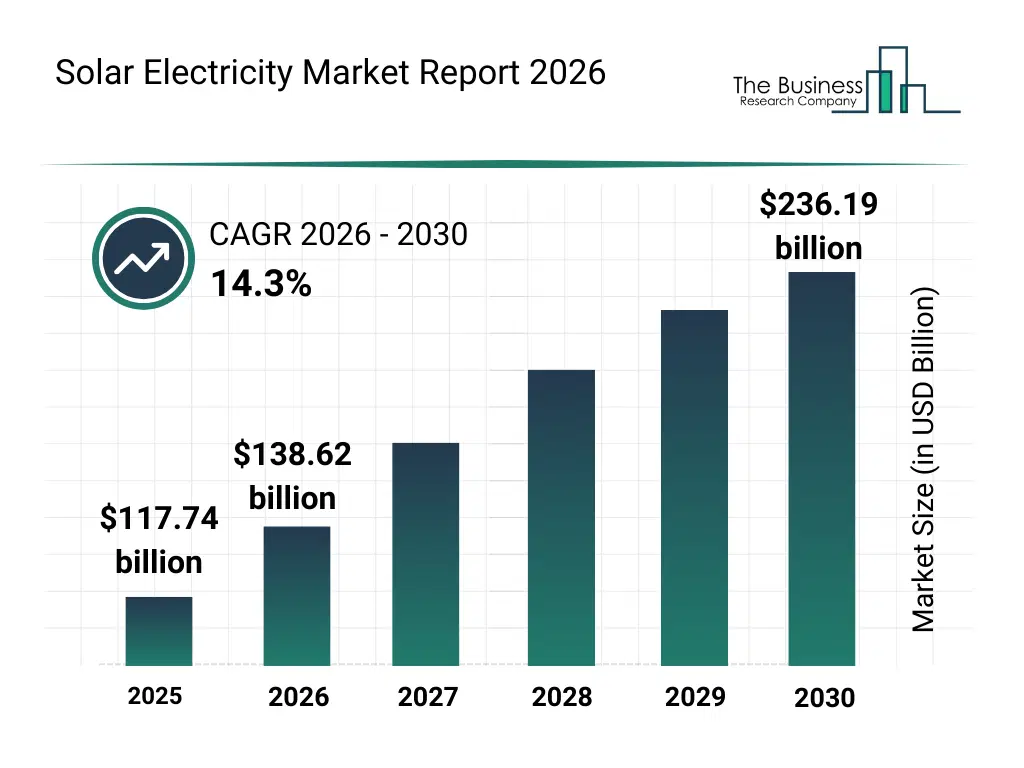
What Is The Solar Electricity Market Size and Share 2026?
The solar electricity market size has grown rapidly in recent years. It will grow from $117.74 billion in 2025 to $138.62 billion in 2026 at a compound annual growth rate (CAGR) of 17.7%. The growth in the historic period can be attributed to declining solar module costs, expansion of grid-connected renewable projects, increasing electricity demand, supportive renewable energy policies, growth of distributed generation models.What Is The Solar Electricity Market Growth Forecast?
The solar electricity market size is expected to see rapid growth in the next few years. It will grow to $236.19 billion in 2030 at a compound annual growth rate (CAGR) of 14.3%. The growth in the forecast period can be attributed to increasing investments in grid modernization, rising adoption of high-efficiency PV technologies, expansion of utility-scale solar auctions, growing demand for clean electricity, increasing electrification across end-use sectors. Major trends in the forecast period include expansion of utility-scale solar power plants, rising deployment of distributed rooftop solar systems, growing adoption of bifacial solar panels, increasing grid integration of solar power, enhanced focus on transmission efficiency.
Global Solar Electricity Market Segmentation
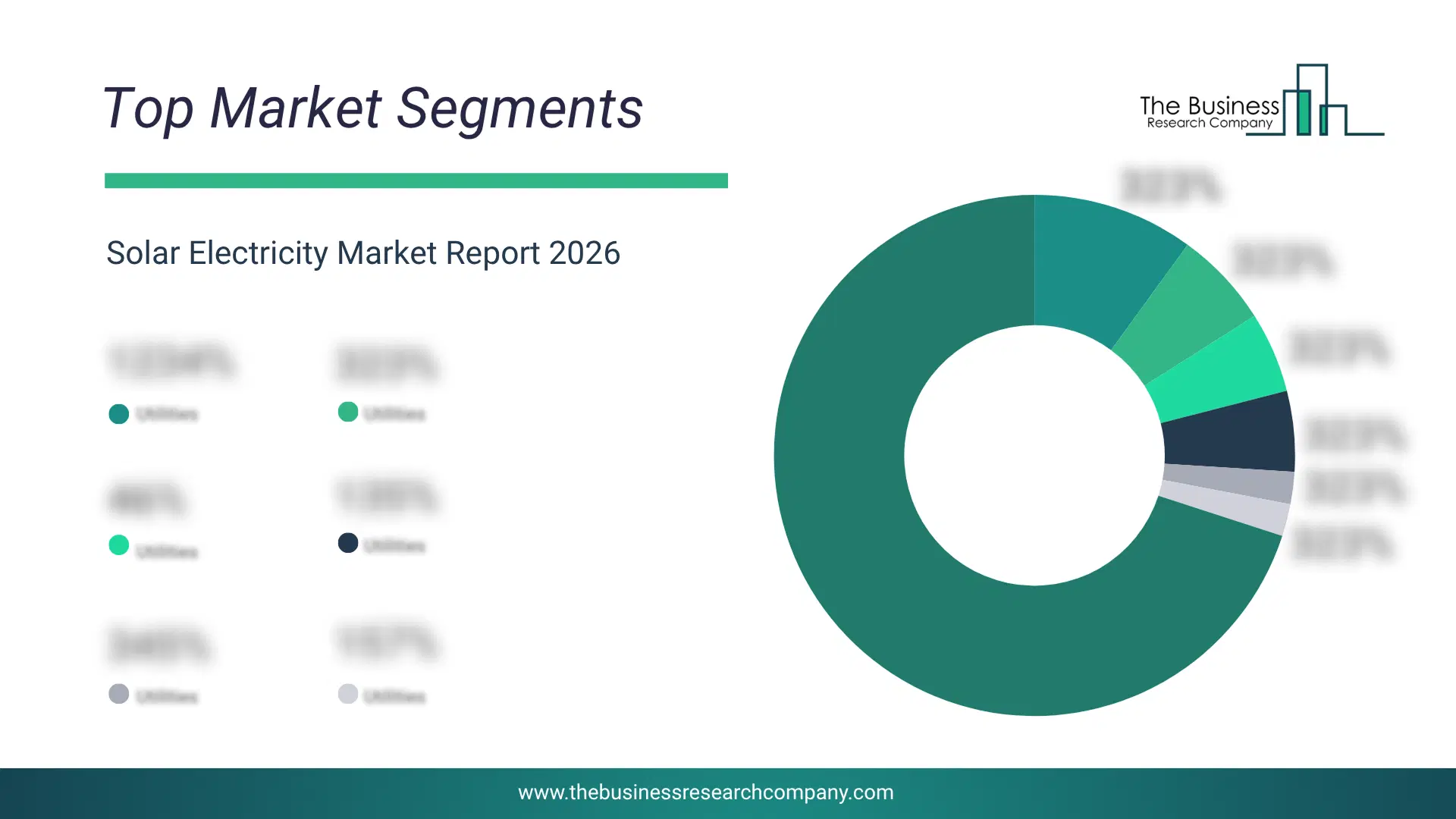
1) By Technology: Photovoltaic Systems, Concentrated Solar Power Systems 2) By Solar Module: Monocrystalline, Polycrystalline, Cadmium Telluride, Amorphous Silicon Cells, Other Solar Modules 3) By End User: Residential, Commercial Subsegments: 1) By Photovoltaic Systems: Crystalline Silicon Photovoltaic (C-Si) Systems, Thin-Film Photovoltaic Systems, Bifacial Solar Panels, Building-Integrated Photovoltaics (Bipv) 2) By Concentrated Solar Power Systems: Parabolic Trough Systems, Solar Power Towers, Fresnel Reflectors, Dish Or Engine Systems The top segments in the solar electricity market will be: • Photovoltaic Systems will reach $142205.1 Million by 2025. • Monocrystalline will reach $116257 Million by 2025. • Utilities will reach $66068.2 Million by 2025. • Residential will reach $41259 Million by 2025. • Commercial will reach $35814.1 Million by 2025.What Is The Driver Of The Solar Electricity Market?
The growing adoption of renewable energy sources for electricity generation is expected to propel the growth of the solar electricity market. Renewable energy refers to energy derived from naturally replenishing sources, such as sunlight, wind, water, geothermal heat, and organic matter, which are not depleted when used for power generation and have minimal environmental impact. Renewable energy sources are particularly essential at this juncture to address environmental concerns, reduce greenhouse gas emissions, and transition away from fossil fuels to mitigate climate change and ensure a sustainable energy future. Renewable energy sources boost the growth of the solar electricity market by fostering a supportive environment and consumer demand for sustainable energy solutions, which leads to increased investments, incentives, and interest in solar power technologies and installations. For instance, in February 2023, according to the International Energy Agency, a France-based autonomous intergovernmental organization, the global contribution of renewable energy in the power generation mix is projected to increase from 29% to 35% by the year 2025. Therefore, the growing adoption of renewable energy sources for electricity generation is driving the growth of solar electricity industry.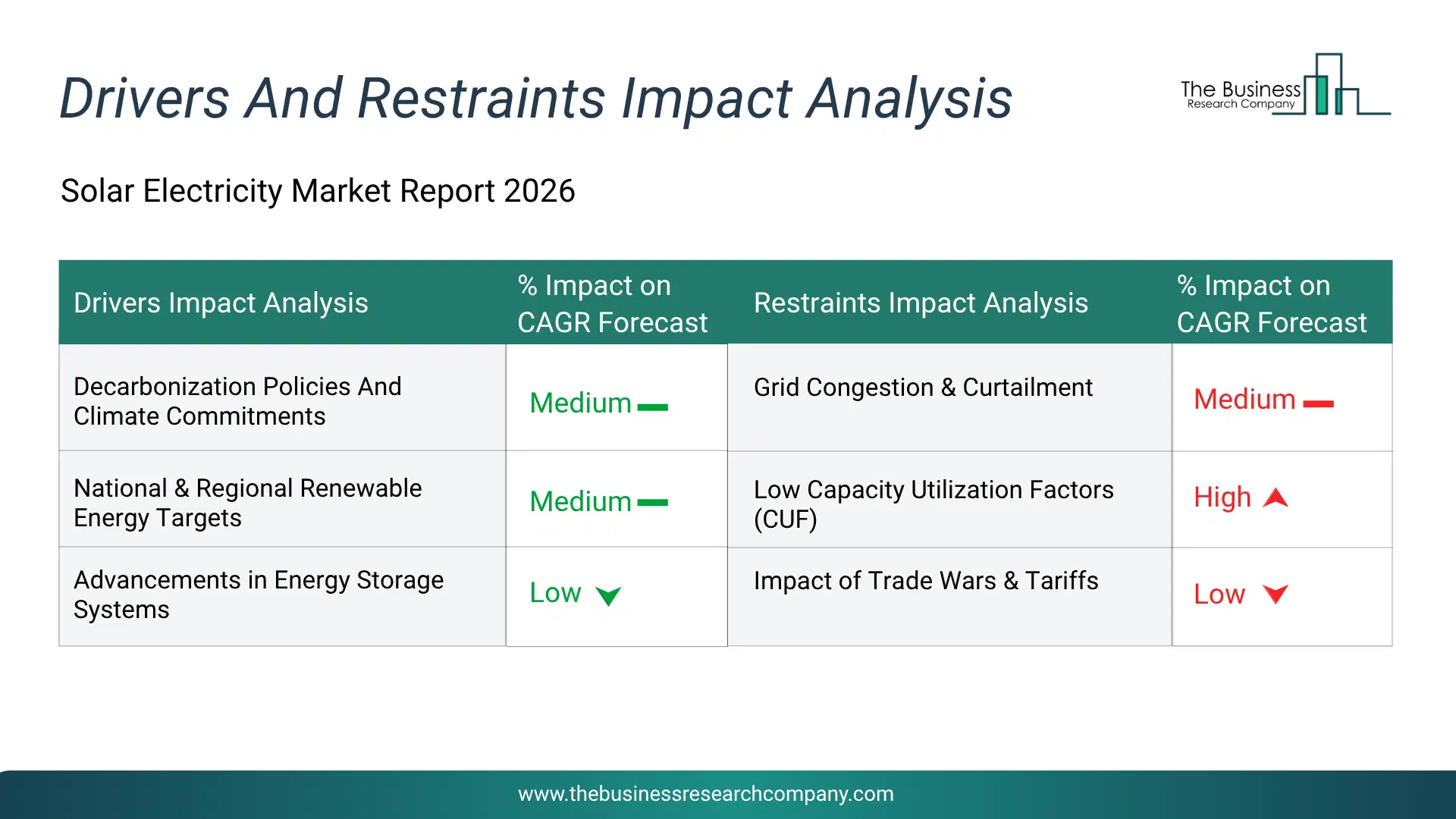
Infographic Chart Showing Key Market Drivers Analysis And Restraints For Solar Electricity Market
The chart presents an impact analysis of key drivers and restraints, quantifying their relative influence on the market's growth rate and helping assess the balance between growth enablers and limiting factors. This chart offers a high-level perspective; the full report contains more detailed insights.
How Will The Drivers Impact Growth In The Global Solar Electricity Market?
• Decarbonization Policies And Climate Commitments (Medium) – The decarbonization policies and climate commitments and targets will become a key driver of growth in the solar electricity market by 2030. as governments and international bodies intensify efforts to reduce greenhouse gas emissions and transition toward low-carbon energy systems. Increasing enforcement of net-zero targets, carbon neutrality goals, and emission reduction mandates is expected to accelerate large-scale solar deployment across both developed and emerging economies. These policy frameworks will significantly boost demand for solar photovoltaic installations as a primary clean electricity source, encouraging investments and long-term project pipelines globally. The decarbonization policies and climate commitments growth contribution during the forecast period. As a result, the decarbonization policies and climate commitments and targets is anticipated to contributing to a 1.5% annual growth in the market. • National & Regional Renewable Energy Targets (Medium) – The national and regional renewable energy targets will emerge as a major factor driving the expansion of the market by 2030. as countries establish mandatory renewable capacity goals and energy mix diversification strategies. Governments are increasingly setting ambitious solar capacity targets within broader renewable portfolios, supported by regulatory frameworks, auctions, and incentives to ensure achievement. This structured target-driven expansion is expected to accelerate solar project development, grid integration, and investment inflows, thereby strengthening market growth across multiple regions. Consequently, the accelerating national and regional renewable energy targets is projected to contributing to a 1.0% annual growth in the market. • Advancements in Energy Storage Systems (Low) – The advancements in energy storage systems will serve as a key growth catalyst for the market by 2030, as improved battery technologies enhance the reliability, flexibility, and dispatchability of solar power. The integration of storage solutions such as lithium-ion and emerging long-duration energy storage systems enables better management of intermittency issues associated with solar generation. This is expected to increase the adoption of solar-plus-storage projects across utility-scale and distributed applications, thereby expanding market opportunities and improving grid stability. Therefore, this advancements in energy storage systems is projected to supporting to a 0.8% annual growth in the market. • Expansion of Decentralized & Off-Grid Solar Solutions (Low) – The expansion of decentralized and off-grid solar solutions will become a significant driver contributing to the growth of the market by 2030 as rising demand for energy access in remote and underserved regions promotes the adoption of distributed solar systems. Increasing deployment of rooftop solar, microgrids, and standalone solar home systems is expected to reduce dependency on centralized grid infrastructure and improve electricity accessibility. This trend is further supported by declining system costs and innovative financing models, thereby accelerating adoption in developing economies and rural areas. Consequently, the expansion of decentralized and off-grid solar solutions is projected to contributing to a 0.5% annual growth in the market.How Will The Restraints Impact Growth In The Global Solar Electricity Market?
• Grid Congestion & Curtailment (Medium) – Grid congestion & curtailment is expected to restrain market growth during the forecast period. It creates operational, financial, regulatory, or commercial challenges that can increase costs, delay projects, reduce investments, or discourage purchasing decisions depending on the market. These challenges can reduce product adoption, affect business confidence, and limit the ability of companies to expand efficiently across key regions. This can disrupt long-term growth strategies and reduce the ability of companies to capitalize on emerging market opportunities. • Low Capacity Utilization Factors (CUF) (Medium) – During the forecast period, low capacity utilization factors (cuf) is likely to limit market expansion. It creates operational, financial, regulatory, or commercial challenges that can increase costs, delay projects, reduce investments, or discourage purchasing decisions depending on the market. These challenges can reduce product adoption, affect business confidence, and limit the ability of companies to expand efficiently across key regions. As a result, organizations may postpone purchasing decisions, limiting demand across both established and emerging markets. • Impact of Trade Wars & Tariffs (Low) – The market is expected to face challenges due to impact of trade wars & tariffs over the forecast period. It creates operational, financial, regulatory, or commercial challenges that can increase costs, delay projects, reduce investments, or discourage purchasing decisions depending on the market. These challenges can reduce product adoption, affect business confidence, and limit the ability of companies to expand efficiently across key regions. This may reduce production efficiency, extend project timelines, and create challenges in meeting evolving customer requirements.Key Players In The Global Solar Electricity Market
Major companies operating in the solar electricity market are SPIC Solar, Enel SpA, Canadian Solar Inc, Engie, Adani Green Energy Limited, Datang International Power Generation Company Limited, Acciona Energia S.A, Electricite De France SA, Huaneng Power International Inc., Trina Solar Limited, Waaree Group, Tata Power Solar Systems Ltd., Urja Global Limited, Wuxi Suntech Power Co. Ltd., Azure Power, Vivaan Solar, Ja Solar Holdings Co. Ltd, Aiko Solar, Zhongli, Suntech, IBC Solar AG, Centrotherm International Ag, Schott Solar Ag, Ecotricity Group Ltd, Lightsource BP Renewable Energy Investments Limited, Hive Energy, Solaria Energia Y Medio Ambiente Sa, Iberdrola SA, EDF En, Wagner Solar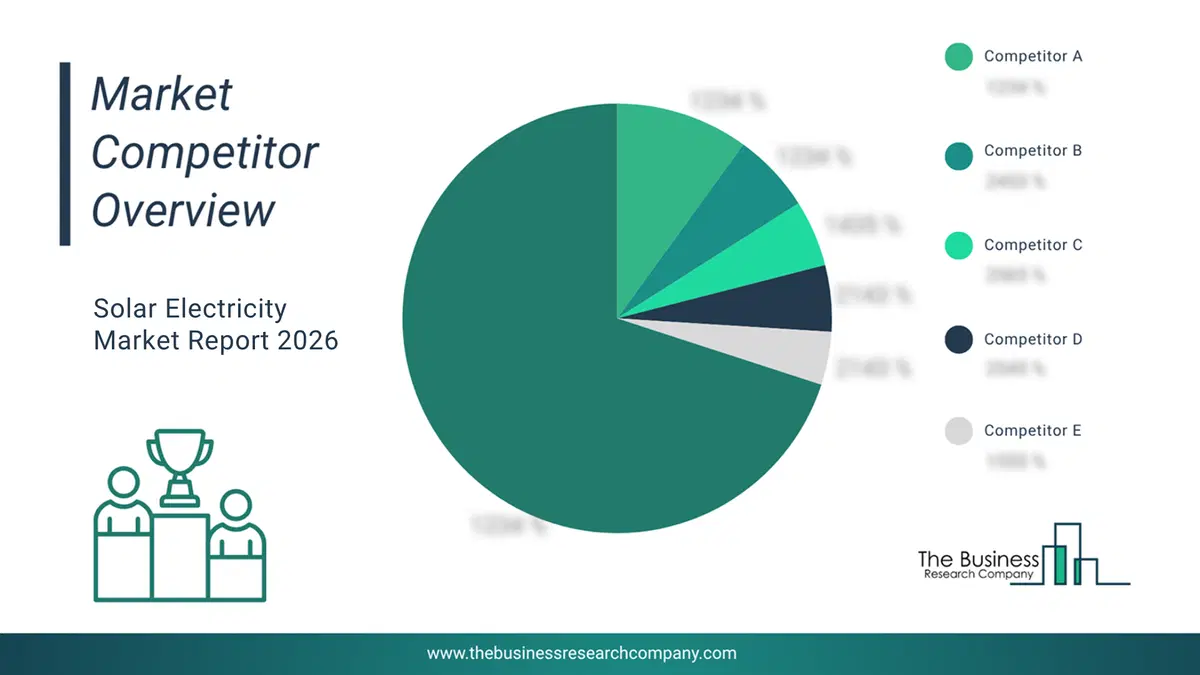
This chart is for illustrative purposes; the full report includes a detailed competitor analysis and comprehensive overview of the top 10 companies in the market.
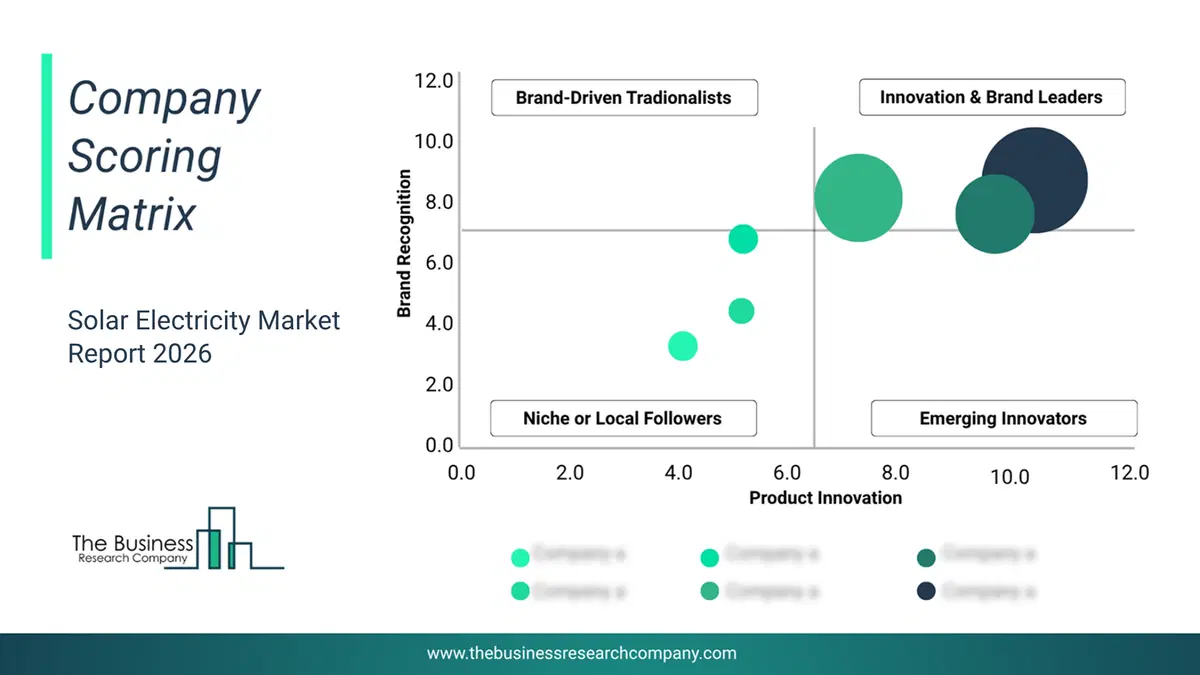
This chart maps companies by product innovation and brand strength, with bubble size indicating relative revenue, helping identify market leaders, challengers, and niche players. This is an illustrative chart; the full report provides a complete and accurate competitive analysis.
Global Solar Electricity Market Trends and Insights
Major companies operating in the solar electricity market are developing community solar projects to sustain their position in the market. Community solar projects are initiatives that enable multiple individuals, businesses, or organizations to collectively invest in and share the benefits of a centralized solar energy installation. For instance, in September 2023, SolarEdge Technologies Inc., an Israel-based renewable energy semiconductor manufacturing company launched the high-power three-phase SolarEdge 330kW Inverter, along with the H1300 Power Optimizer designed for applications in community solar, agri-PV, and small-to-medium scale ground mount utility PV projects. This advanced inverter and optimizer solution aims to enhance energy production efficiency and reduce costs in the utility solar segment. It offers improved ROI, design flexibility, safety features, module-level monitoring, and a lower Levelized Cost of Energy (LCOE). The technology is particularly well-suited for the growing community solar market, providing developers with flexibility in site selection and aiding in conserving resources by reducing the need for extensive site grading.What Are Latest Mergers And Acquisitions In The Solar Electricity Market?
In September 2023, EDF Renewables, a UK-based renewable energy production, development, and operation company, acquired SAS Energy for an undisclosed amount. This acquisition aims to accelerate EDF’s growth in renewable energy by adding over 45 solar projects in construction and development to its portfolio. SAS Energy is a UK-based solar energy provider for commercial and industrial sectors.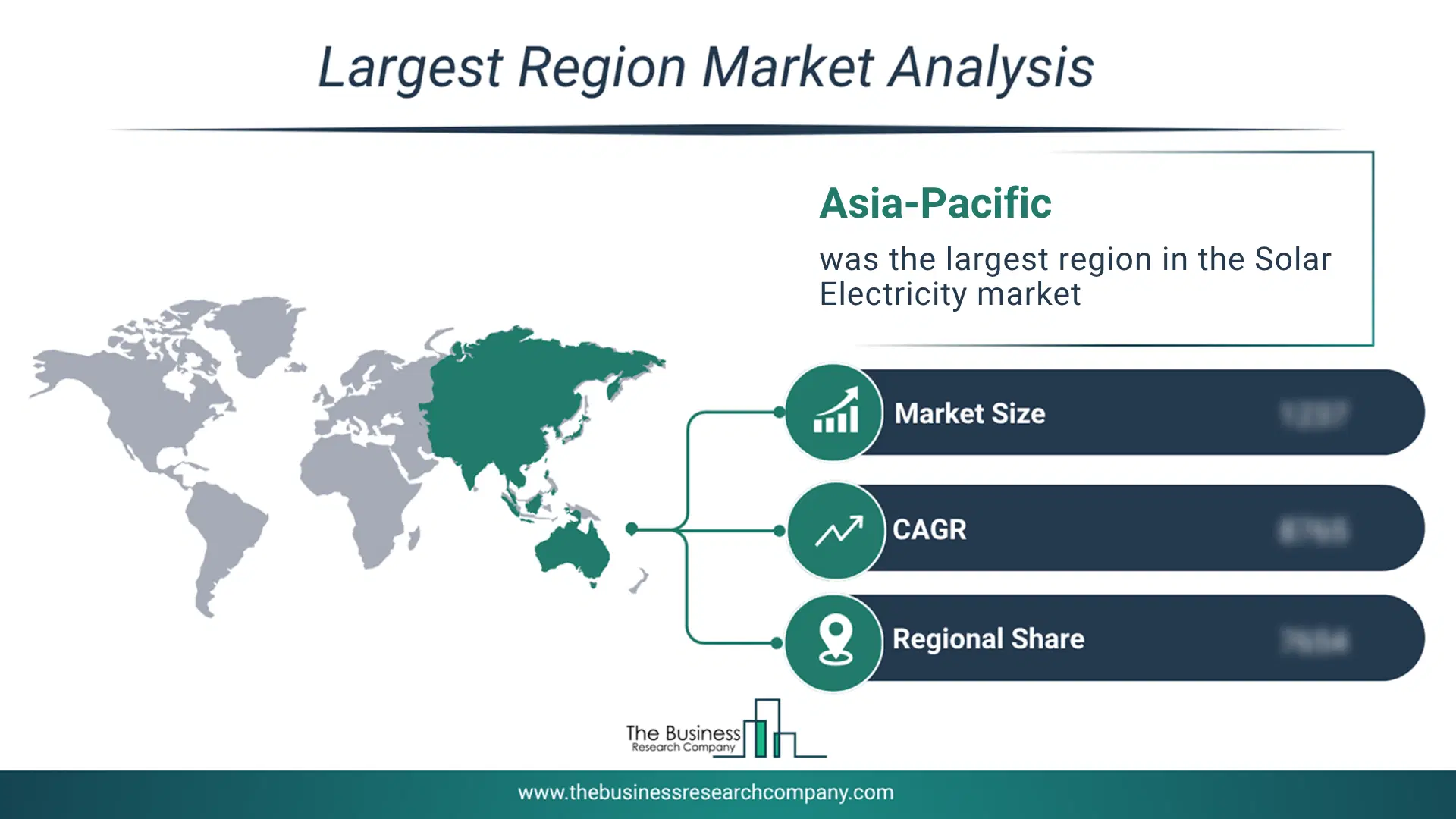
Regional Outlook
Asia-Pacific was the largest region in the solar electricity market in 2025. Western Europe was the second largest region in the global solar electricity market analysis. The regions covered in this market report are Asia-Pacific, South East Asia, Western Europe, Eastern Europe, North America, South America, Middle East, Africa. The countries covered in this market report are Australia, Brazil, China, France, Germany, India, Indonesia, Japan, Taiwan, Russia, South Korea, UK, USA, Canada, Italy, SpainWhat Defines the Solar Electricity Market?
The solar electricity market consists of sales of passive solar gain, solar thermal, concentrated solar power, and solar photovoltaics. Values in this market are factory gate values, that is the value of goods sold by the manufacturers or creators of the goods, whether to other entities (including downstream manufacturers, wholesalers, distributors, and retailers) or directly to end customers. The value of goods in this market includes related services sold by the creators of the goods.How is Market Value Defined and Measured?
The market value is defined as the revenues that enterprises gain from the sale of goods and/or services within the specified market and geography through sales, grants, or donations in terms of the currency (in USD unless otherwise specified). The revenues for a specified geography are consumption values that are revenues generated by organizations in the specified geography within the market, irrespective of where they are produced. It does not include revenues from resales along the supply chain, either further along the supply chain or as part of other products.
This chart presents market attractiveness based on a quantitative evaluation of growth, competition, strategic alignment, and risk, offering a clear view of opportunity areas for decision-making. This chart is for illustrative purposes; the full report contains the complete analysis.

This chart highlights the Total Addressable Market (TAM) by estimating the maximum revenue opportunity using an assumption-driven approach, supporting strategic planning and opportunity sizing across markets. The chart is illustrative; the full report provides a more comprehensive analysis.
What Key Data and Analysis Are Included in the Solar Electricity Market Report 2026?
The solar electricity market research report is one of a series of new reports from The Business Research Company that provides market statistics, including Market Report 2026?global market size, regional shares, competitors with the market share, detailed market segments, market trends and opportunities, and any further data you may need to thrive in the solar electricity Market Report 2026? The market research report delivers a complete perspective of everything you need, with an in-depth analysis of the current and future state of the Market Report 2026?Solar Electricity Market Report Forecast Analysis
| Report Attribute | Details |
|---|---|
| Market Size Value In 2026 | $138.62 billion |
| Revenue Forecast In 2035 | $236.19 billion |
| Growth Rate | CAGR of 17.7% from 2026 to 2035 |
| Base Year For Estimation | 2025 |
| Actual Estimates/Historical Data | 2020-2025 |
| Forecast Period | 2026 - 2030 - 2035 |
| Market Representation | Revenue in USD Billion and CAGR from 2026 to 2035 |
| Segments Covered | Technology, Solar Module, End User |
| Regional Scope | Asia-Pacific, Western Europe, Eastern Europe, North America, South America, Middle East, Africa |
| Country Scope | The countries covered in the report are Australia, Brazil, China, France, Germany, India, ... |
| Key Companies Profiled | SPIC Solar, Enel SpA, Canadian Solar Inc, Engie, Adani Green Energy Limited, Datang International Power Generation Company Limited, Acciona Energia S.A, Electricite De France SA, Huaneng Power International Inc., Trina Solar Limited, Waaree Group, Tata Power Solar Systems Ltd., Urja Global Limited, Wuxi Suntech Power Co. Ltd., Azure Power, Vivaan Solar, Ja Solar Holdings Co. Ltd, Aiko Solar, Zhongli, Suntech, IBC Solar AG, Centrotherm International Ag, Schott Solar Ag, Ecotricity Group Ltd, Lightsource BP Renewable Energy Investments Limited, Hive Energy, Solaria Energia Y Medio Ambiente Sa, Iberdrola SA, EDF En, Wagner Solar |
| Customization Scope | Request for Customization |
| Pricing And Purchase Options | Explore Purchase Options |