
Space Biodiversity Preservation Market Report 2026
Global Outlook – By Technology (Cryopreservation, Seed Banks, Genetic Engineering, Other Technologies), By Application (Space Missions, Space Colonization, Research And Development, Other Applications), By End-User (Government Agencies, Private Space Companies, Research Institutions, Other End Users) – Market Size, Trends, Strategies, and Forecast to 2030
Space Biodiversity Preservation Market Overview
• Space Biodiversity Preservation market size has reached to $3.34 billion in 2025 • Expected to grow to $5.45 billion in 2030 at a compound annual growth rate (CAGR) of 10.2% • Growth Driver: Rising Investments In Space Missions Fueling The Growth Of The Market Due To Increasing Focus On Long-Term Space Habitation And Life-Support Systems • Market Trend: Advancing Ecosystem Monitoring With Hyperspectral Imaging And Innovative Satellite Technology • North America was the largest region in 2025.What Is Covered Under Space Biodiversity Preservation Market?
Space biodiversity preservation refers to efforts aimed at protecting and maintaining diverse biological species in extraterrestrial environments, such as on space stations or other celestial bodies. It includes studying how life adapts in space and developing strategies to sustain ecosystems beyond Earth. This is essential for long-term space exploration and the potential colonization of other planets. The main technologies of space biodiversity preservation include cryopreservation, seed banks, genetic engineering, and others. Cryopreservation refers to the process of preserving living cells, tissues, or organs at extremely low temperatures, typically using liquid nitrogen, to maintain their long-term viability. These technologies find applications in space missions, space colonization, research and development, and others, and are utilized by end-users such as government agencies, private space companies, research institutions, and others.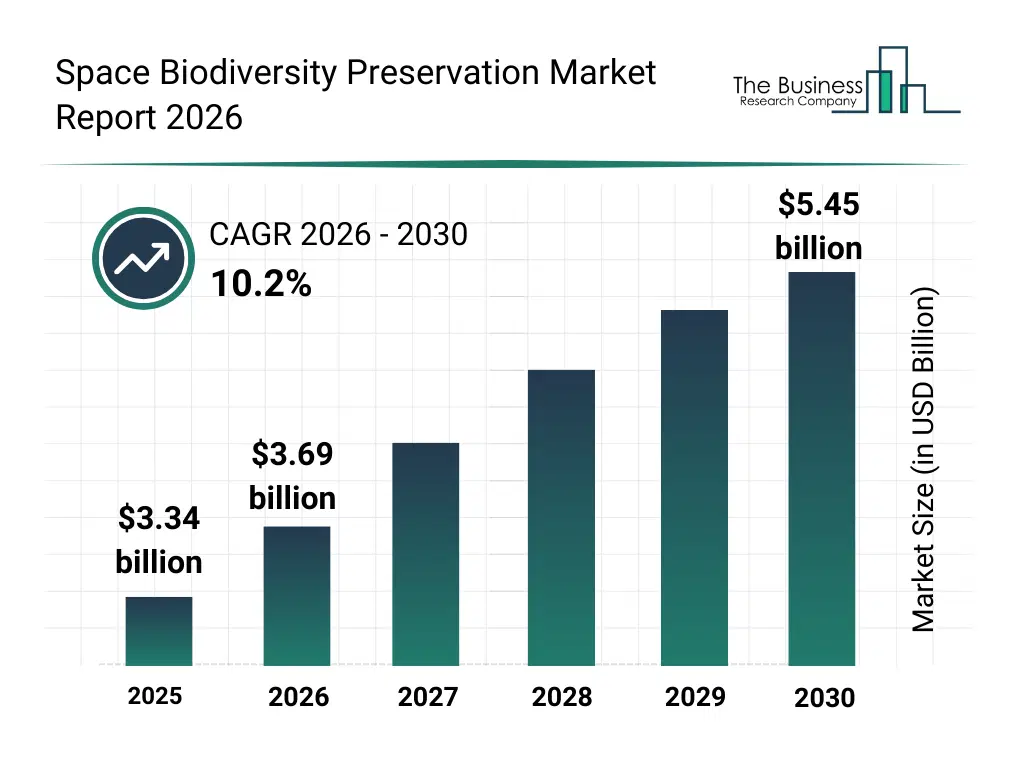
What Is The Space Biodiversity Preservation Market Size and Share 2026?
The space biodiversity preservation market size has grown rapidly in recent years. It will grow from $3.34 billion in 2025 to $3.69 billion in 2026 at a compound annual growth rate (CAGR) of 10.5%. The growth in the historic period can be attributed to early development of satellite-based biodiversity monitoring systems, advancements in remote sensing technologies for ecological assessment, increased government funding for space-based environmental research, initial experiments on organism adaptation and survival in microgravity environments, rise of geospatial data platforms supporting early conservation planning.What Is The Space Biodiversity Preservation Market Growth Forecast?
The space biodiversity preservation market size is expected to see rapid growth in the next few years. It will grow to $5.45 billion in 2030 at a compound annual growth rate (CAGR) of 10.2%. The growth in the forecast period can be attributed to expansion of satellite constellations dedicated to extraterrestrial ecosystem monitoring, integration of artificial intelligence and spatial analytics for predictive conservation planning, growing investment in long-term space habitat sustainability initiatives, development of advanced environmental monitoring equipment for off-earth ecosystems, increasing collaboration between space agencies and biotech firms for space-adapted species research. Major trends in the forecast period include expansion of space-based biodiversity observation missions, rising investment in extraterrestrial genetic resource banks, integration of in-situ and ex-situ conservation strategies for space habitats, standardization of space biodiversity data formats and protocols, increased public–private partnerships for long-term off-earth ecosystem preservation.
Global Space Biodiversity Preservation Market Segmentation
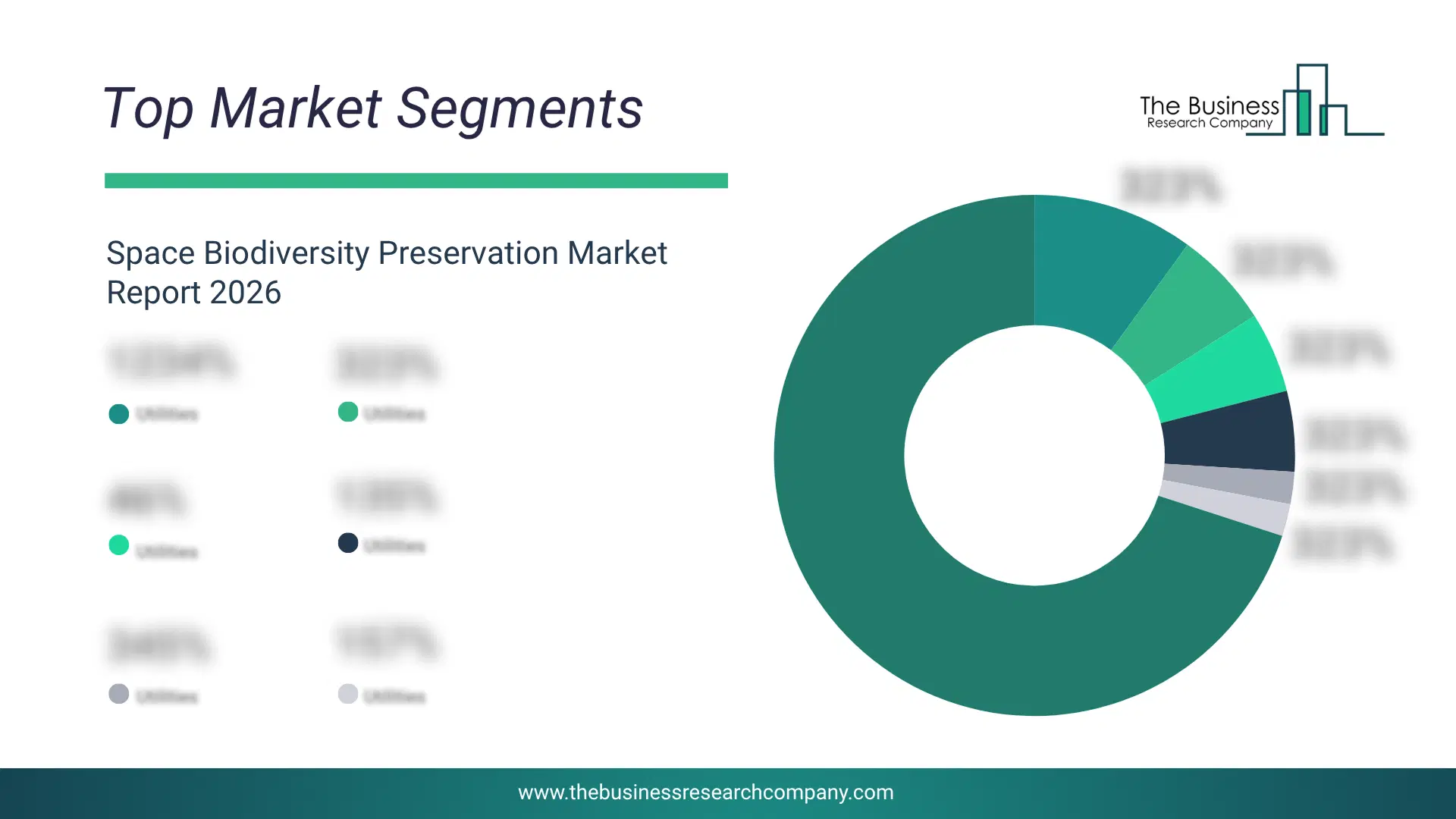
1) By Technology: Cryopreservation, Seed Banks, Genetic Engineering, Other Technologies 2) By Application: Space Missions, Space Colonization, Research And Development, Other Applications 3) By End-User: Government Agencies, Private Space Companies, Research Institutions, Other End Users Subsegments: 1) By Cryopreservation: Embryo Cryopreservation, Sperm And Egg Cell Preservation, Tissue Cryobanking, Plant Cell And Seed Cryostorage, Cryogenic Freezers And Storage Systems 2) By Seed Banks: Space-Based Seed Storage, Heritage Crop Seed Collections, Genetically Modified Seed Vaults, Automated Seed Retrieval Systems, Climate-Resilient Seed Libraries. 3) By Genetic Engineering: Gene Editing, Synthetic Biology Applications, Transgenic Organism Development, Genomic Data Storage And Analysis, Bioinformatics Platforms For Biodiversity 4) By Other Technologies: Bio-Encapsulation And Biobanking, In Vitro Propagation, Microgravity Biological Preservation Systems, Artificial Intelligence In Biodiversity Management, Robotic Sample Handling SystemsWhat Is Driver Of The Space Biodiversity Preservation Market?
The rising investments in space missions are expected to propel the growth of the space biodiversity preservation market going forward. Space missions are organized operations carried out beyond Earth's atmosphere using spacecraft or satellites, aimed at exploration, research, or technological advancement. The increasing investments in space missions are driven by the pursuit of advanced technologies that boost national security, scientific discovery, and economic opportunities. Increasing investments in space missions support space biodiversity preservation by enabling the development of technologies and habitats that protect and study life in extraterrestrial environments. For instance, in March 2024, according to the National Aeronautics and Space Administration, a US-based independent agency, NASA's budget is projected to rise from $25.384 billion in 2024 to $26.40 billion in 2027. Therefore, the rising investments in space missions are driving the growth of the space biodiversity preservation industry.Key Players In The Global Space Biodiversity Preservation Market
Major companies operating in the space biodiversity preservation market are Maxar Technologies Inc., Planet Labs PBC, ICEYE Ltd., EarthDaily Analytics Inc., Spire Global Inc., Pixxel Space Technologies Pvt. Ltd., Satsure Pvt. Ltd., Pachama Inc., GeoVille GmbH, NorthStar Earth & Space Inc., Asterra Inc., Satellogic Inc., SkyWatch Space Inc., Eleaf, Satelligence B.V., Farmonaut Pvt. Ltd., Genvision Geo Pvt. Ltd., PlanetWatchers Ltd., LiveEO Inc., Spottitt GmbH.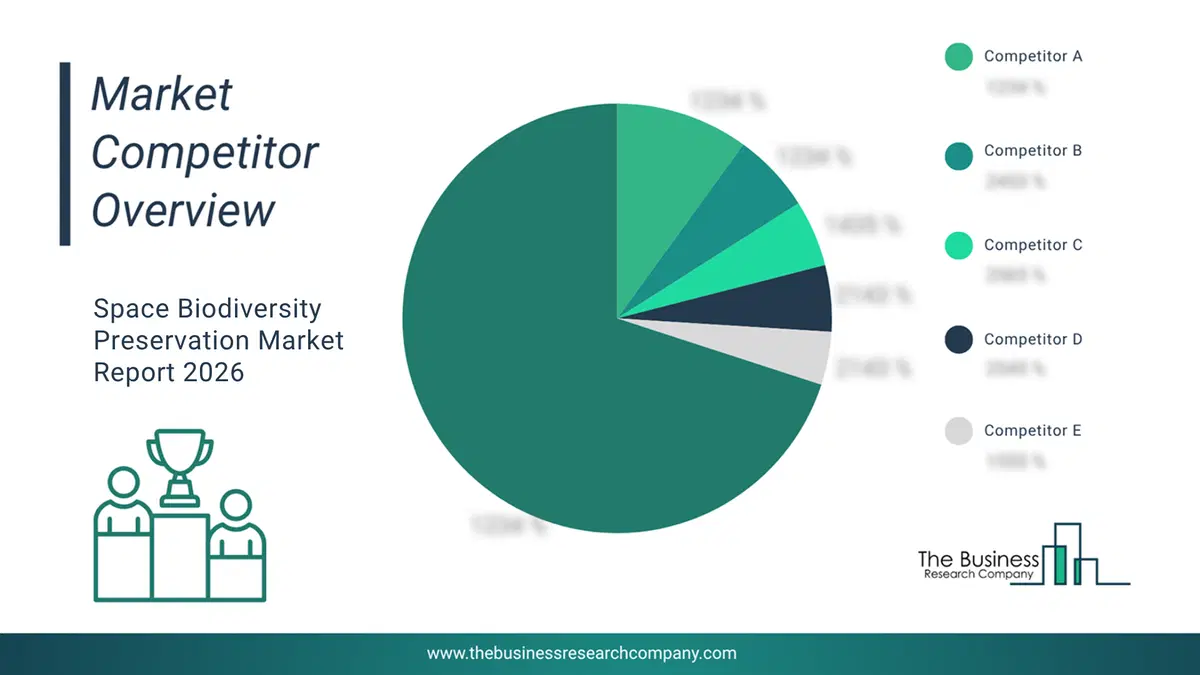
This chart is for illustrative purposes; the full report includes a detailed competitor analysis and comprehensive overview of the top 10 companies in the market.
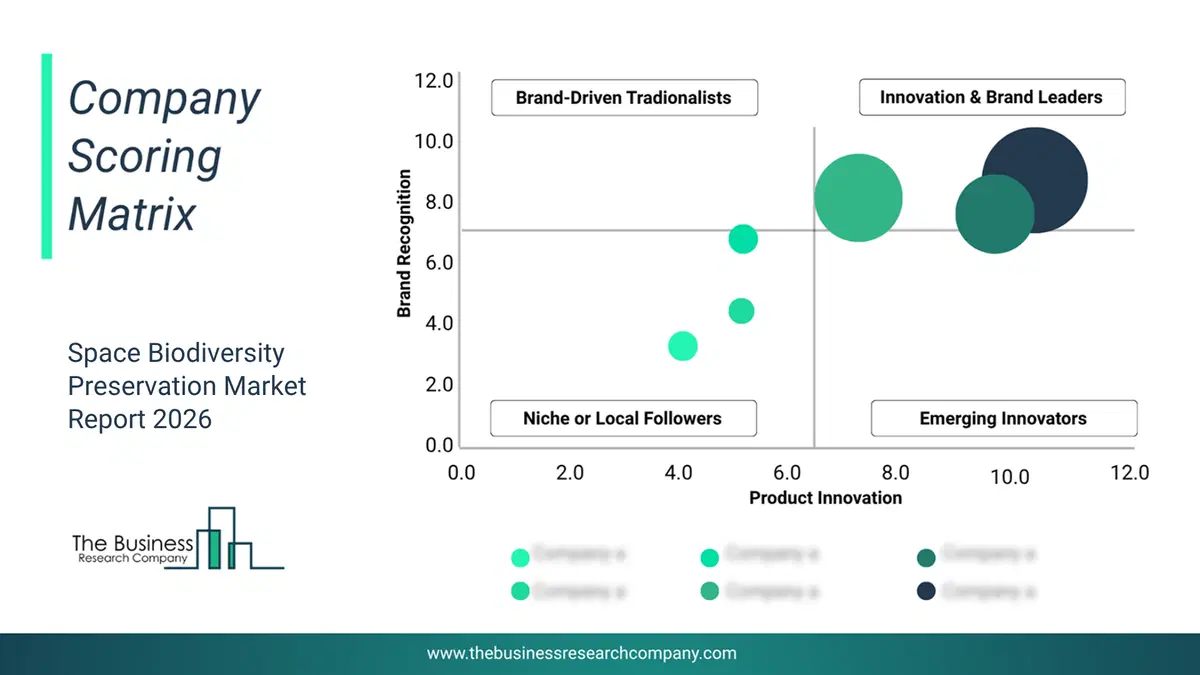
This chart maps companies by product innovation and brand strength, with bubble size indicating relative revenue, helping identify market leaders, challengers, and niche players. This is an illustrative chart; the full report provides a complete and accurate competitive analysis.
Global Space Biodiversity Preservation Market Trends and Insights
Major companies operating in the space biodiversity preservation market are focusing on developing advanced solutions, such as high-definition hyperspectral cameras, to enhance ecosystem monitoring, improve species-specific data resolution, and support actionable conservation strategies. A high-definition hyperspectral camera is an advanced imaging device that captures data across hundreds to thousands of narrow, contiguous spectral bands, far beyond the 3-color RGB or typical multispectral sensors. For instance, in August 2024, Lemu, a Chile-based technology company, launched Lemu Nge. It is a 6U hyperspectral nanosatellite and the first satellite globally designed exclusively to monitor Earth's biodiversity. Outfitted with a high-definition hyperspectral camera, it provides over 20 times the resolution of traditional Earth observation satellites, enabling detailed analysis of vegetation and land cover. Positioned in Low Earth Orbit (LEO), it collects vital data on ecosystems, land use, and species distribution, playing a crucial role in advancing global conservation efforts and addressing the biodiversity data gap.What Are Latest Mergers And Acquisitions In The Space Biodiversity Preservation Market? Wyvern Partnered With Lemu To Enhance Environmental Monitoring
In March 2025, Wyvern, a Canada-based space data company, partnered with Lemu to enhance environmental monitoring solutions through advanced satellite imagery. With this partnership, they aim to develop innovative solutions that will enable organizations to leverage advanced satellite imagery and environmental data, enhance decision-making for sustainability initiatives, and drive greater efficiency and impact in environmental monitoring and management. Lemu is a Chile-based nature intelligence company.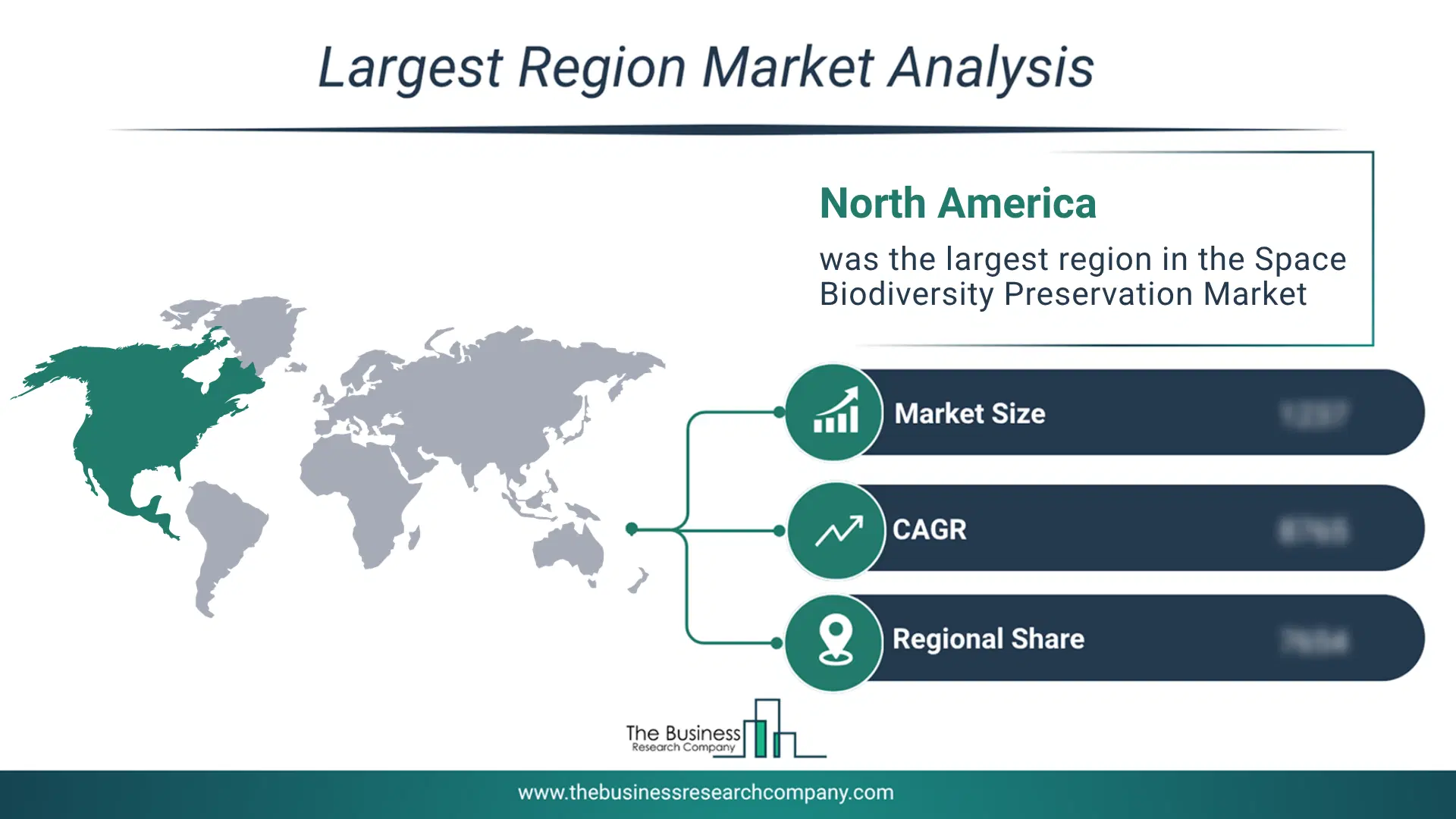
Regional Insights
North America was the largest region in the space biodiversity preservation market in 2025. The regions covered in this market report are Asia-Pacific, South East Asia, Western Europe, Eastern Europe, North America, South America, Middle East, Africa. The countries covered in this market report are Australia, Brazil, China, France, Germany, India, Indonesia, Japan, Taiwan, Russia, South Korea, UK, USA, Canada, Italy, SpainWhat Defines the Space Biodiversity Preservation Market?
The space biodiversity preservation market consists of revenues earned by entities providing services such as satellite-based biodiversity monitoring, remote sensing for habitat and ecosystem assessment, and spatial intelligence for conservation planning. The market value includes the value of related goods sold by the service provider or included within the service offering. The space biodiversity preservation market also includes sales of satellite sensors, remote sensing devices, geospatial data platforms, and environmental monitoring equipment. Values in this market are ‘factory gate’ values, that is the value of goods sold by the manufacturers or creators of the goods, whether to other entities (including downstream manufacturers, wholesalers, distributors and retailers) or directly to end customers. The value of goods in this market includes related services sold by the creators of the goods.How is Market Value Defined and Measured?
The market value is defined as the revenues that enterprises gain from the sale of goods and/or services within the specified market and geography through sales, grants, or donations in terms of the currency (in USD unless otherwise specified). The revenues for a specified geography are consumption values that are revenues generated by organizations in the specified geography within the market, irrespective of where they are produced. It does not include revenues from resales along the supply chain, either further along the supply chain or as part of other products.
This chart presents market attractiveness based on a quantitative evaluation of growth, competition, strategic alignment, and risk, offering a clear view of opportunity areas for decision-making. This chart is for illustrative purposes; the full report contains the complete analysis.

This chart highlights the Total Addressable Market (TAM) by estimating the maximum revenue opportunity using an assumption-driven approach, supporting strategic planning and opportunity sizing across markets. The chart is illustrative; the full report provides a more comprehensive analysis.
What Key Data and Analysis Are Included in the Space Biodiversity Preservation Market Report 2026?
The space biodiversity preservation market research report is one of a series of new reports from The Business Research Company that provides market statistics, including industry global market size, regional shares, competitors with the market share, detailed market segments, market trends and opportunities, and any further data you may need to thrive in the space biodiversity preservation industry. The market research report delivers a complete perspective of everything you need, with an in-depth analysis of the current and future state of the industry.Space Biodiversity Preservation Market Report Forecast Analysis
| Report Attribute | Details |
|---|---|
| Market Size Value In 2026 | $3.69 billion |
| Revenue Forecast In 2030 | $5.45 billion |
| Growth Rate | CAGR of 10.2% from 2026 to 2030 |
| Base Year For Estimation | 2025 |
| Actual Estimates/Historical Data | 2020-2025 |
| Forecast Period | 2026 - 2030 |
| Market Representation | Revenue in USD Billion and CAGR from 2026 to 2030 |
| Segments Covered | Technology, Application, End-User |
| Regional Scope | Asia-Pacific, Western Europe, Eastern Europe, North America, South America, Middle East, Africa |
| Country Scope | The countries covered in the space biodiversity preservation market report are Australia, Brazil, China, France, Germany, India, Indonesia, Japan, Taiwan, Russia, South Korea, UK, USA, Canada, Italy, Spain |
| Key Companies Profiled | Maxar Technologies Inc., Planet Labs PBC, ICEYE Ltd., EarthDaily Analytics Inc., Spire Global Inc., Pixxel Space Technologies Pvt. Ltd., Satsure Pvt. Ltd., Pachama Inc., GeoVille GmbH, NorthStar Earth & Space Inc., Asterra Inc., Satellogic Inc., SkyWatch Space Inc., Eleaf, Satelligence B.V., Farmonaut Pvt. Ltd., Genvision Geo Pvt. Ltd., PlanetWatchers Ltd., LiveEO Inc., Spottitt GmbH. |
| Customization Scope | Request for Customization |
| Pricing And Purchase Options | Explore Purchase Options |